Leg curl alternatives: hamstring work when the machine is taken or missing

The best leg curl alternative is the seated leg curl: it is the same knee curl, done with your hips bent so your hamstrings work from a longer stretch. With no curl machine, a cable leg curl or a glute ham raise on the lat pulldown keeps the curl, and a Romanian deadlift trains your hamstrings at the hip. At home, a stability ball leg curl or Nordic hamstring curl curls your knees with no machine, and a mini band is enough for a standing band leg curl.

What a lying leg curl alternative has to replace

The lying leg curl trains your hamstrings by bending your knees against a load while your hips stay straight. It loads them through the whole curl, and hardest near the top, when your heels come close to your glutes.

Your hamstrings also straighten your hips, so there are two ways to replace the curl: keep the knee bend with another curl, or train the hips with a hinge like the Romanian deadlift.

How to do the lying leg curl

Machines and cables

Another curl machine or a cable stack keeps the knee curl, so you can use the same sets and reps.

Closest machine swap

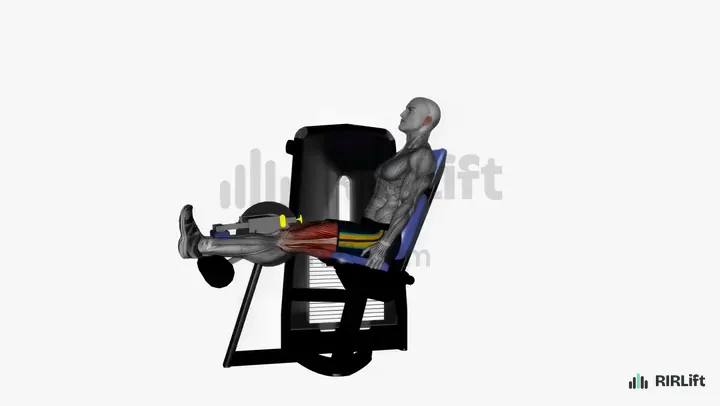
Seated Leg Curl

Hamstrings

The same knee curl as the lying machine, but your hips are bent, so your hamstrings start each rep more stretched. Use the same sets and reps you ran on the lying curl.

How to do it

  1. Set the backrest so your knees line up with the machine's pivot, and lock the thigh pad down firmly.
  2. Rest the lower pad just above your heels with your legs straight.
  3. Curl your heels down and back under the seat as far as they go.
  4. Let the pad rise slowly until your legs are straight again, and repeat.

Cues

  • Thigh pad snug
  • Pull heels under the seat
  • Two seconds on the way up

Common mistakes

  • Lifting your hips off the seat to finish the rep: tighten the thigh pad and lighten the stack.
  • Letting the stack crash between reps: control it all the way to straight legs.

One leg at a time on a machine

Single-Leg Leg Curl

Hamstrings

A lying curl one leg at a time, so your stronger leg can't carry the weaker one. Use it when a single-leg machine is free or one hamstring lags.

How to do it

  1. Lie chest-down on the bench with both ankles under their pads and your knees just past the end of the bench.
  2. Hold the handles and keep your hips pressed down.
  3. Curl one leg toward your glutes while the other stays straight and relaxed.
  4. Lower it under control, finish all reps on that side, then switch. Start each set with your weaker leg.

Cues

  • Weaker leg first
  • Hips flat the whole set
  • Same reps both sides

Common mistakes

  • Twisting your pelvis toward the working leg: lighten the load until both hip bones stay on the pad.
  • Doing more reps on the strong side: match the weaker leg's count, then stop.

Another curl machine

Kneeling Leg Curl

Hamstrings

A one-leg curl on a kneeling machine, with your hip slightly bent. Treat it like the lying curl, counted per leg.

How to do it

  1. Kneel with one knee on the knee rest and the other leg's ankle hooked under the roller pad, forearms on the support.
  2. Keep your back flat and your hips square to the machine.
  3. Curl your heel toward your glutes as far as the machine allows.
  4. Return over two to three seconds to an almost straight leg, finish the set, and switch legs.

Cues

  • Square hips
  • Heel to glutes
  • Long, slow return

Common mistakes

  • Arching your lower back to swing the weight up: brace your abs and use a weight you can lift with the knee alone.
  • Rushing the lowering half: the slow return is where most of the work happens on a curl.

Best swap with a cable stack

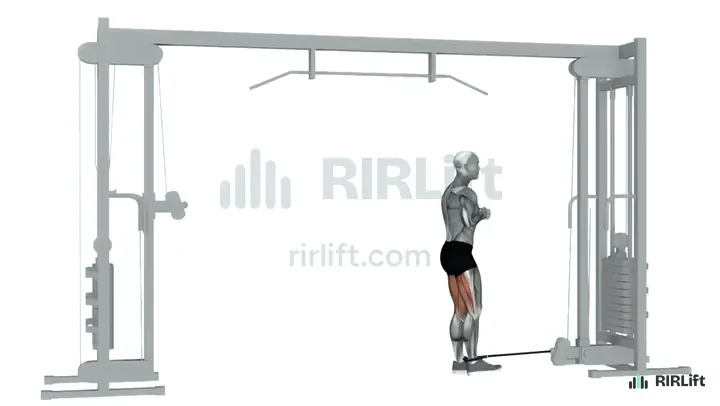
Cable Leg Curl

Hamstrings

An ankle strap on a low pulley turns any cable stack into a standing leg curl, with small weight jumps. It works one leg at a time, so expect lighter loads than on the machine.

How to do it

  1. Strap your working ankle to the low pulley, face the machine, and hold the frame for balance.
  2. Stand tall with your thighs lined up and the working knee slightly behind the standing one.
  3. Curl your heel up toward your glutes without letting the thigh swing forward.
  4. Pause at the top, then lower slowly until the leg is straight. Finish the set and switch legs.

Cues

  • Thigh stays put
  • Heel to glute
  • Slow on the way down

Common mistakes

  • Swinging the thigh forward to finish the rep: keep the knee pointed at the floor.
  • Rushing the lowering: take two seconds to straighten the leg.

Curl on the lat pulldown

Glute Ham Raise

Hamstrings, Glutes

Locking your calves under the pulldown pads turns the seat into a glute ham bench, and the stack takes off some of your bodyweight. It trains your hamstrings at the knee and hip together and is much harder than a machine curl.

How to do it

  1. Face away from a lat pulldown and kneel on its seat, calves locked under the thigh pads.
  2. Hold the pulldown bar across the back of your shoulders; a heavier stack gives you more help.
  3. Keep your hips straight and lean your body forward as one piece until it is close to level with the floor.
  4. Curl yourself back up by pulling your heels into the pads.

Cues

  • Hips locked straight
  • Lean as one piece
  • Heavier stack if form breaks

Common mistakes

  • Folding at the hips on the way up: add assistance until you can rise in one straight line.
  • Falling through the bottom: control the lowering just as much as the lift.

Barbell and dumbbell hinges

These train your hamstrings at the hip instead of the knee. They replace the curl well on their own and best alongside a curl.

Heaviest hamstring swap

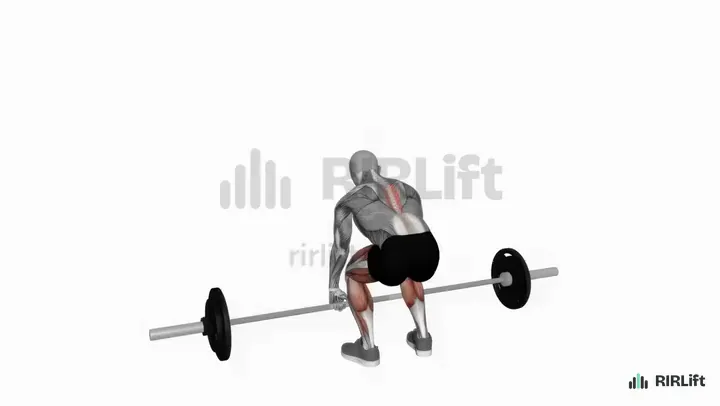
Romanian Deadlift

Hamstrings, Glutes

It trains your hamstrings at the hip, through a long stretch, with more weight than any curl. Pair it with a curl variation if you can; on its own, it leaves out the knee bend.

How to do it

  1. Stand with a barbell at your thighs, hands just outside your legs, feet under your hips.
  2. Soften your knees and push your hips back, sliding the bar down your thighs.
  3. Stop when your hamstrings are fully stretched, usually just below the knee, with your back flat.
  4. Push your hips forward to stand up, glutes tight at the top.

Cues

  • Hips back
  • Bar stays on your legs
  • Back flat

Common mistakes

  • Bending the knees into a squat: keep them soft and still.
  • Reaching for the floor: stop where your back would round.

Best swap with dumbbells

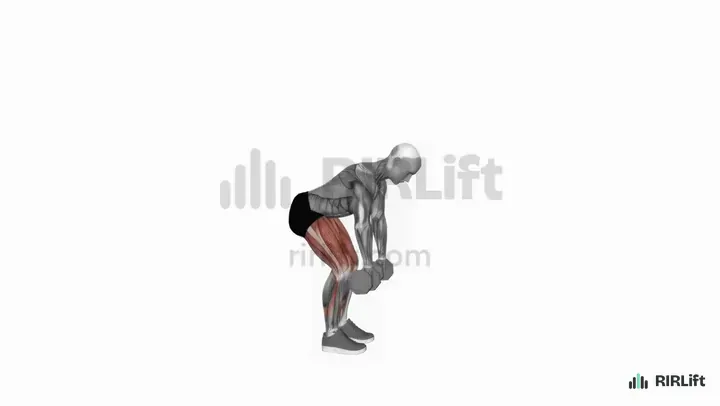
Dumbbell Romanian Deadlift

Hamstrings, Glutes

The same hinge with two dumbbells, so it works in any home gym. With light dumbbells, slow the lowering and stop each set close to failure.

How to do it

  1. Stand hip-width apart with a dumbbell in each hand resting against the front of your thighs, palms facing you.
  2. Push your hips straight back and let your torso fold forward, knees softly bent, the dumbbells brushing your legs.
  3. Lower until the dumbbells pass your knees and you feel a strong stretch in your hamstrings, with your back still flat.
  4. Drive your hips forward to stand back up, squeezing your glutes at the top, and repeat.

Cues

  • Hips back, not down
  • Dumbbells slide down your legs
  • Flat back, chin tucked

Common mistakes

  • Bending the knees into a squat so the dumbbells go lower: the depth comes from your hips, and most people stop just past the knees.
  • Rounding your lower back at the bottom: end the rep where your back stays flat, and lighten the load if that is high.

Dumbbell or bodyweight, one leg

Single-Leg RDL

Hamstrings, Glutes

Hinging on one leg makes light weight, or none, hard enough for your hamstrings. It also trains the balance most lifts skip.

How to do it

  1. Stand on your left leg with a dumbbell in your left hand and the standing knee softly bent.
  2. Hinge forward at the left hip while your right leg extends straight behind you, keeping your hips level.
  3. Lower until your torso and back leg are close to parallel to the floor or the standing hamstring stops you.
  4. Drive the left hip forward to come back up, then finish the set before switching sides.

Cues

  • Back leg and torso move as one
  • Hips level, back toes down
  • Slow on the way down

Common mistakes

  • Opening the hip so the back leg rotates out: point the back toes at the floor the whole time.
  • Touching the free foot down between reps to rebalance: slow down and hold a wall with your free hand if needed.

At home: bodyweight, a ball, straps or a band

No machine at all: these keep the knee curl with your bodyweight or a band as the load, and a band good morning covers the hinge.

Hardest bodyweight swap

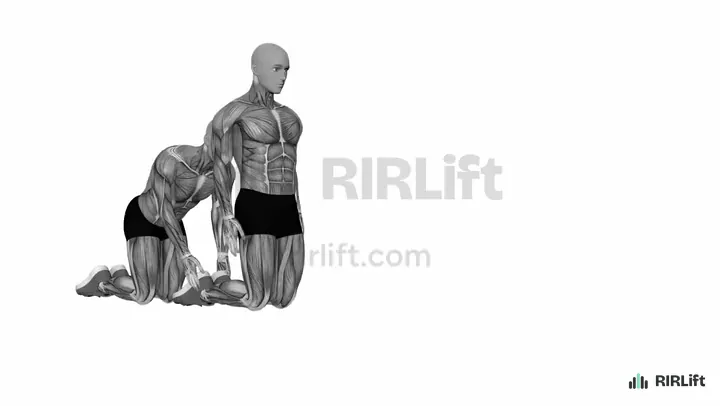
Nordic Hamstring Curl

Hamstrings

A knee curl with your whole bodyweight as the load, worked mostly on the way down. Hook your feet under a couch or have someone hold your ankles; most people can only control part of the lowering at first.

How to do it

  1. Kneel on a cushion with your ankles pinned under a couch or held by a partner, your body upright from knees to head.
  2. Squeeze your glutes and lower your torso forward as slowly as you can, bending only at the knees.
  3. When your hamstrings can't hold you, catch yourself with your hands on the floor.
  4. Push off the floor lightly and pull with your hamstrings to come back up to kneeling.

Cues

  • Hips stay open, no folding
  • Lower as slowly as possible
  • Hands catch, then help up

Common mistakes

  • Bending at the hips to make the lowering easier: keep a straight line from knees to shoulders.
  • Dropping to the floor after a few inches: fight it the whole way down; the slow lowering is the rep.

Best swap with an exercise ball

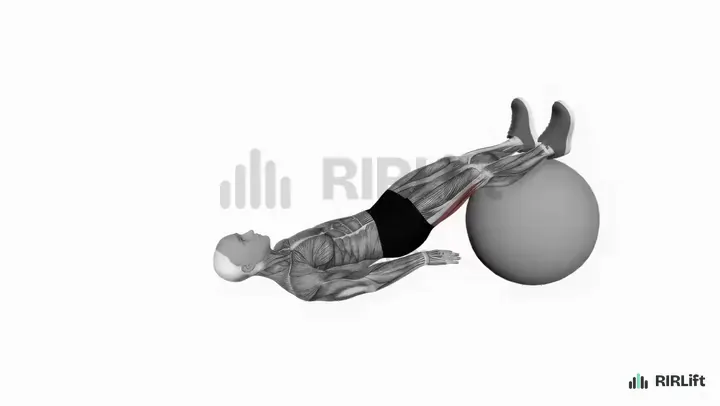
Stability Ball Leg Curl

Hamstrings

Holding your hips up while you roll the ball in gives you a knee curl that is surprisingly hard for bodyweight. It is the closest home copy of the lying curl.

How to do it

  1. Lie face up with your heels and lower calves on a stability ball and your arms flat on the floor beside you.
  2. Dig your heels into the ball and raise your hips until shoulders, hips and feet line up.
  3. Keeping your hips high, pull the ball in toward your glutes until your feet are flat on top of it.
  4. Roll the ball back out slowly until your legs are straight again, without letting your hips sag.

Cues

  • Hips up before you curl
  • Heels dig into the ball
  • Slow on the way out

Common mistakes

  • Letting your hips drop as the ball rolls in: the curl gets easier because your hamstrings stop holding the bridge.
  • Rushing the roll-out: take two to three seconds on it.

Best swap with a suspension trainer

TRX Leg Curl

Hamstrings

The same curl as the ball version with your heels in the straps, so it is steadier and easier to load by changing the strap height.

How to do it

  1. Set the straps so the foot cradles hang about knee height, then lie face up with your heels in them.
  2. Raise your hips until your shoulders, hips and heels line up.
  3. Pull your heels toward your glutes, keeping your hips lifted as your knees bend.
  4. Straighten your legs under control and keep your hips off the floor between reps.

Cues

  • Drive the hips up as the knees bend
  • Squeeze the backs of the thighs at the top
  • Arms flat for balance

Common mistakes

  • Starting with the straps too high, so your hips sink: lower the cradles until you can hold the bridge.
  • Swinging the legs in and out: pause a moment with your knees fully bent before you extend.

Lightest swap, one mini band

Band Leg Curl

Hamstrings

A mini band around your ankles is all you need for a standing curl. It is light, so use it for high reps or as a finisher after a hinge.

How to do it

  1. Put a mini loop band around both ankles and stand tall, holding a wall or chair for balance.
  2. Keep your thighs side by side.
  3. Bend one knee and lift that heel toward your glutes as high as you can.
  4. Lower it slowly. Finish the set, then switch legs.

Cues

  • Knees side by side
  • Heel to glutes
  • Slow return

Common mistakes

  • Swinging the thigh back to finish the curl: keep both knees level.
  • Leaning forward: stand tall and hold onto support.

Hinge with just a band

Band Good Morning

Hamstrings, Lower Back

Standing on a band with the handles at your shoulders gives you a hamstring hinge at the hip with no weights. Pair it with a bodyweight curl so you cover both jobs of the hamstrings.

How to do it

  1. Stand on the band with your feet hip-width and hold the handles at the fronts of your shoulders.
  2. Soften your knees and keep that bend for the whole set.
  3. Push your hips back and tip your chest forward with a flat back until you feel your hamstrings stretch.
  4. Drive your hips forward to come back to standing.

Cues

  • Hips go back first
  • Spine stays long
  • Stop at the hamstring stretch

Common mistakes

  • Rounding your upper back: keep your chest open and the handles pinned to your shoulders.
  • Bending your knees more and more: the hips move, the knees stay where they started.

Example sessions without the lying leg curl

Session 1

Gym, lying curl taken or missing

Open in the session builder
  • Workouts2× a week
  • Working sets22 a week
  • Per workout~30 min
  • EquipmentBarbells, Seated Leg Curl, Glute-Ham Bench, Adjustable Cable

You train in a gym with a barbell, cables and a lat pulldown, but the lying leg curl is busy or not there.

The Romanian deadlift trains your hamstrings heavy at the hip, the seated curl and glute ham raise keep the knee curl, and a cable curl finishes one leg at a time. 11 working sets.

Hamstrings
ExerciseSets × repsRIRRest
Romanian Deadlift1 warm-up set first 3 × 6–10 2 2:30 min
Seated Leg Curl 3 × 10–12 1 90 s
Glute Ham Raise 3 × 6–10 2 2 min
Cable Leg CurlSets are per leg. 2 × 12–15 1 1 min
How to run it
Run it as the hamstring half of your leg day, once or twice a week.
How to progress
When every set reaches the top of its rep range at the RIR shown, add the smallest weight jump next session and start again at the bottom. On the glute ham raise the stack helps you, so take weight off it as you get stronger.

Session 2

Home, dumbbells, a ball and a band

Open in the session builder
  • Workouts2× a week
  • Working sets20 a week
  • Per workout~20 min
  • EquipmentDumbbells, Exercise Ball, Resistance Bands

You have dumbbells, an exercise ball and a mini band at home, and no curl machine.

Dumbbell Romanian deadlifts give you the heavy hamstring work, and the ball curl and band curl keep the knee curl with higher reps, stopping close to failure because the loads are light. 10 working sets.

Hamstrings
ExerciseSets × repsRIRRest
Dumbbell Romanian Deadlift1 warm-up set first 4 × 10–15 1 90 s
Stability Ball Leg Curl 3 × 10–15 1 1 min
Band Leg CurlSets are per leg. 3 × 15–25 1 45 s
How to run it
Twice a week on non-consecutive days. Take three seconds to roll the ball back out on every rep.
How to progress
Add reps until every set hits the top of the range. Then move up a dumbbell on the Romanian deadlift, and on the ball curl hold the top for two seconds.

Session 3

No weights: straps, a band, a couch

Open in the session builder
  • Workouts2× a week
  • Working sets20 a week
  • Per workout~20 min
  • EquipmentResistance Bands, Suspension Trainer

You train at home or on the road with your bodyweight, something to hook your feet under, suspension straps and one long band.

Bodyweight is heavy enough here because each exercise makes it hard: Nordic curls overload the lowering, band good mornings cover the hinge with high reps, and suspended curls add volume. 10 working sets.

Hamstrings
ExerciseSets × repsRIRRest
Nordic Hamstring CurlLower as slowly as you can. 3 × 3–6 1 2:30 min
Band Good Morning 3 × 15–25 1 1 min
TRX Leg Curl 4 × 10–15 1 1 min
How to run it
Twice a week, never on back-to-back days; Nordic curls leave your hamstrings sore at first.
How to progress
On the Nordic curl, add one rep or lower a little further each week. On the rest, add reps to the top of the range, then use a thicker band or pause two seconds at the hardest point.

Make it fit you

Questions

What exercise can replace a leg curl?

The seated leg curl is the closest, since it is the same knee curl. With no curl machine, use a cable leg curl, a stability ball leg curl or a Nordic hamstring curl, and add a Romanian deadlift for the hip half of your hamstrings.

Can I do RDLs instead of hamstring curls?

Yes, Romanian deadlifts train your hamstrings hard, but at the hip, not the knee. You will get the most from your hamstrings by doing both a hinge and a curl each week.

What muscles do lying leg curls work?

Mainly your hamstrings, with some help from your calves. Your glutes and lower back do very little, which is why the curl pairs well with a hinge.

How do you do a leg curl at home without a machine?

Lie on your back with your heels on an exercise ball or in suspension straps, lift your hips and curl your heels in. With no gear, hook your feet under a couch and do Nordic hamstring curls.

What are the best exercises for hamstrings?

A Romanian deadlift, a leg curl (seated or lying) and the Nordic hamstring curl cover most of what your hamstrings need: a heavy hinge, a loaded knee curl and a hard lowering.

Is the lying leg curl the same as an RDL?

No. The leg curl bends your knee with your hips still, and the Romanian deadlift bends at the hips with your knees still. Both train your hamstrings, from different ends.