
Hamstring exercises at home: curls, hinges and bridges with no machine
Published October 19, 2026
The best hamstring exercises at home are the Nordic hamstring curl and the stability ball leg curl, which bend the knee like a gym leg curl, plus the single-leg Romanian deadlift and the dumbbell Romanian deadlift, which stretch the hamstrings from the hip. With no equipment at all, Nordic curls with your feet hooked under a couch, single-leg RDLs and single-leg bridges are enough. Train one curl and one hinge in each session, two sessions a week, and stop each set 1 to 3 reps short of failure.
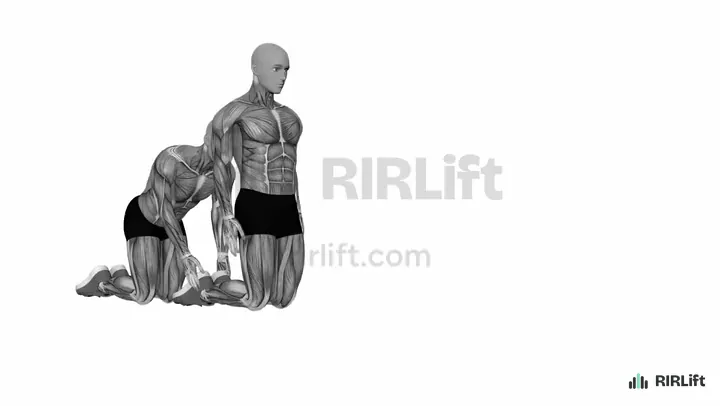
- Nordic Hamstring Curl Hamstrings
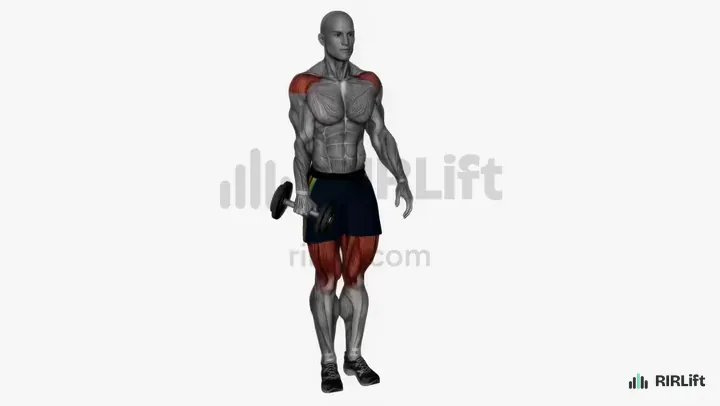
- Single-Leg RDL Hamstrings, Glutes
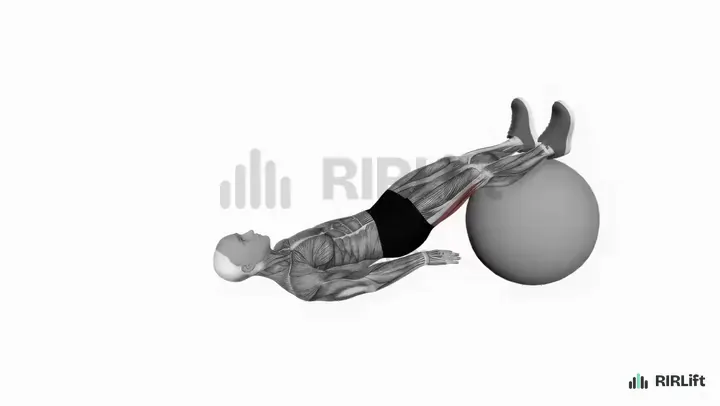
- Stability Ball Leg Curl Hamstrings
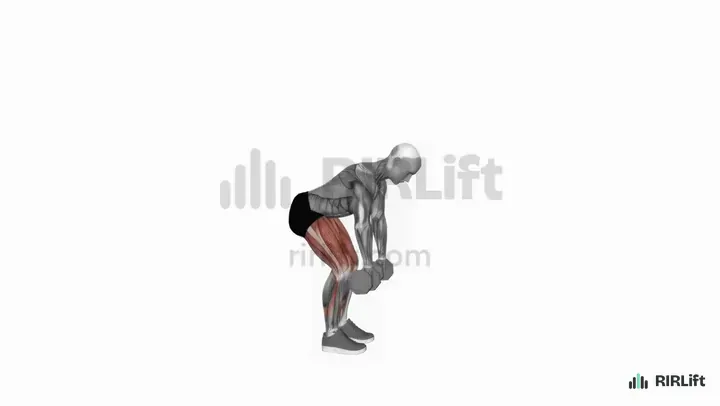
- Dumbbell Romanian Deadlift Hamstrings, Glutes
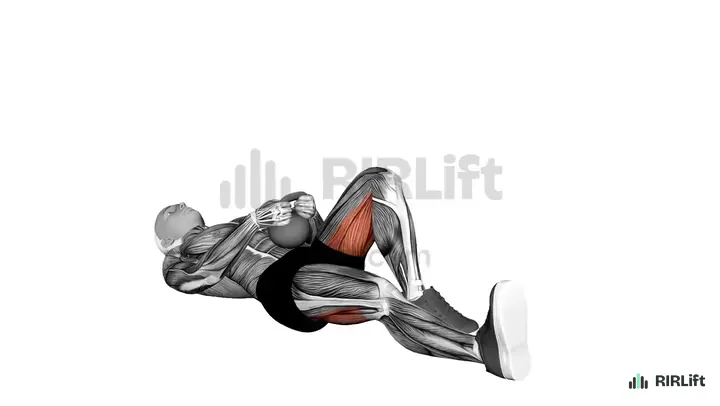
- Single-Leg Glute Bridge Glutes
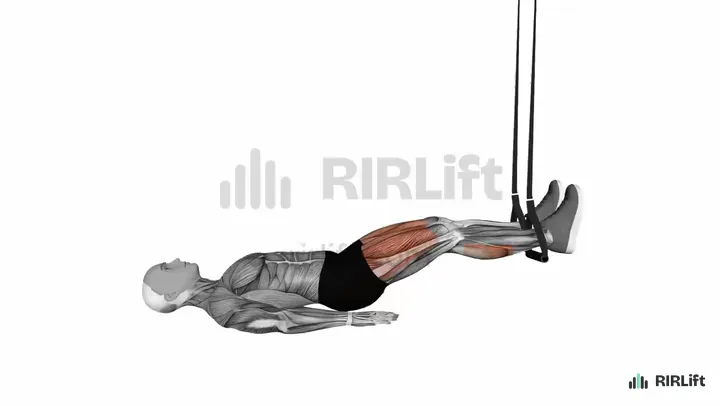
- TRX Leg Curl Hamstrings
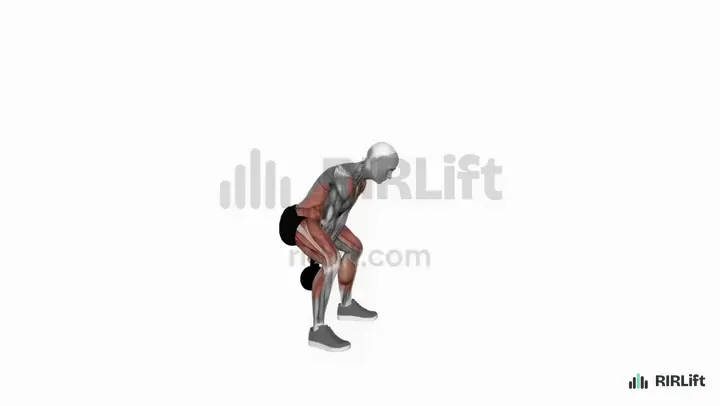
- Kettlebell Swing Glutes, Hamstrings
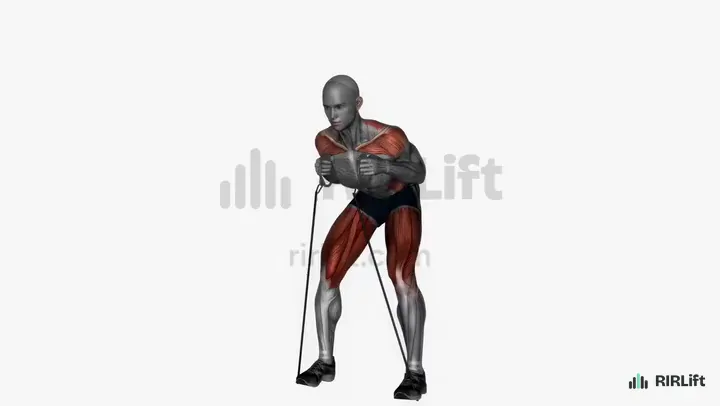
- Band Good Morning Hamstrings, Lower Back
Put them together: example sessions
Each session below picks from the exercises above for one situation, with the sets, reps, rest and RIR filled in. Open one in the session builder to change a pick, price it from a recent set, and add it to RIRLift.
-
Session 1
No equipment, just a floor and a couch
You have nothing but a floor, a couch or heavy bed to hook your heels under, and a towel for your knees.
2× a week · 20 sets a week · ~25 min
-
Session 2
A pair of dumbbells and a stability ball
You train at home with adjustable or fixed dumbbells and own a stability ball, or can get one cheaply.
2× a week · 20 sets a week · ~25 min
-
Session 3
Bands and a suspension trainer, 25 minutes
You train at home or while traveling with a set of bands and a suspension trainer on a door anchor, and you have about 25 minutes.
3× a week · 36 sets a week · ~20 min
Session 1
No equipment, just a floor and a couch
- Workouts2× a week
- Working sets20 a week
- Per workout~25 min
- EquipmentDumbbells
You have nothing but a floor, a couch or heavy bed to hook your heels under, and a towel for your knees.
Without weights, the only way to make a hamstring set hard is to put a long lever or one leg against your bodyweight. The Nordic curl does that at the knee, the single-leg RDL does it at the hip, and the single-leg bridge adds volume without loading your back, so the session covers both jobs of the hamstrings with 10 sets. Nordics stop 2 reps short of failure because a failed rep is an uncontrolled fall; the RDL and bridge go to 1 because a missed rep there is harmless.
| Exercise | Sets × reps | RIR | Rest |
|---|---|---|---|
| Nordic Hamstring CurlHeels under the couch. Lower as far as you control. | 3 × 3–8 | 2 | 2 min |
| Single-Leg RDLPer leg. Bodyweight or a backpack. 3 s down. | 4 × 10–20 | 1 | 1 min |
| Single-Leg Glute BridgePer leg. Heel far out. 1 s pause at the top. | 3 × 12–25 | 1 | 1 min |
- How to run it
- Run the session twice a week with two days between. Hook your heels under the couch for the Nordics, do the RDLs with no weight or a full backpack in the opposite hand, and finish with the bridges on the floor.
- How to progress
- On Nordics, lower a little further under control each week before you catch yourself. For the RDL and bridge, add reps until you reach the top of the range at the target RIR, then slow the lowering to three seconds or hold a backpack or water jug.
Session 2
A pair of dumbbells and a stability ball
- Workouts2× a week
- Working sets20 a week
- Per workout~25 min
- EquipmentDumbbells, Exercise Ball
You train at home with adjustable or fixed dumbbells and own a stability ball, or can get one cheaply.
Dumbbells finally let you load the hinge heavily, so each session starts with a two-leg or staggered RDL for 3 to 4 sets at 1 to 2 reps in reserve, where the stretch under load does the most. The ball curl handles the knee side of the hamstrings, and the second day swaps in single-leg work so each leg is trained alone at least once a week. That gives 10 hard sets per session, 20 a week, which is plenty for most lifters.
| Exercise | Sets × reps | RIR | Rest |
|---|---|---|---|
| Dumbbell Romanian Deadlift2 warm-up sets first3 s down. Stop at mid-shin. | 4 × 8–12 | 1 | 2 min |
| Stability Ball Leg CurlHips up the whole set. | 3 × 10–15 | 1 | 75 s |
| Single-Leg Glute BridgePer leg. Dumbbell on the hip. | 3 × 10–15 | 1 | 1 min |
Open Hamstrings A in the session builder
| Exercise | Sets × reps | RIR | Rest |
|---|---|---|---|
| Dumbbell B-Stance RDL1 warm-up set firstPer leg. Weight on the front heel. | 3 × 8–12 | 1 | 90 s |
| Single-Leg RDLPer leg. One dumbbell, opposite hand. | 3 × 8–12 | 2 | 75 s |
| Stability Ball Leg CurlSingle leg once two legs pass 15. | 4 × 8–15 | 1 | 75 s |
Open Hamstrings B in the session builder
- How to run it
- Do Session A and Session B once each per week, with at least two days between them. Start each one with the hinge while you are fresh, then the ball curl.
- How to progress
- When every set of the RDL reaches the top of its range at the target RIR, use the next dumbbell. Progress the ball curl from two legs to one leg once two-leg sets pass 15 reps.
Session 3
Bands and a suspension trainer, 25 minutes
- Workouts3× a week
- Working sets36 a week
- Per workout~20 min
- EquipmentSuspension Trainer, Resistance Bands
You train at home or while traveling with a set of bands and a suspension trainer on a door anchor, and you have about 25 minutes.
Bands and straps cannot load a heavy hinge, so this plan leans on the knee curl, where bodyweight and straps already make the work hard. The TRX curl and bridge are paired back to back to save time, the band good morning gives the hinge, and the band curl finishes with high reps at 0 reps in reserve because a band curl to failure costs almost no recovery. Twelve sets, three times a week, makes up in frequency what the gear lacks in load.
| Exercise | Sets × reps | RIR | Rest |
|---|---|---|---|
| A1 TRX Leg CurlHips up. 2 s back out. | 3 × 8–15 | 1 | 45 s |
| A2 TRX Hip BridgePull the heels down and back. | 3 × 10–20 | 1 | 1 min |
| Band Good MorningBand over the neck or at the shoulders. | 3 × 15–25 | 1 | 1 min |
| Band Leg CurlPer leg. Hold 1 s at the top. | 3 × 15–30 | 0 | 45 s |
- How to run it
- Do the session three times a week on non-consecutive days. Alternate the TRX curl and TRX bridge with a short rest between, then do the good mornings and band curls.
- How to progress
- Lower the strap cradles closer to the floor, move to single-leg TRX curls, or pick a thicker band when you hit the top of the range at the target RIR.
Make it fit you
-
Nordics are too hard to lower at all
Loop a band around your chest and anchor it to something behind you, or do only the top third of the lowering and hold there for three seconds. Each week, let yourself travel a little lower before you catch yourself.
-
Only one dumbbell or kettlebell
Make every hinge single-leg: hold the weight in the hand opposite the working leg for the single-leg RDL, and rest it on your hip for single-leg bridges. One weight on one leg feels about twice as heavy.
-
Hamstrings cramp on curls
Cramping usually comes from the hamstring working fully shortened without warning. Do a set of bridges first, keep the first ball or strap curl set easy, and stop the curl a little short of full knee bend for the first week.
-
You also run or play sports
Keep the Nordic curl in every week even if you drop other sets, and place it after your run rather than before. Take Nordics 2 reps short of failure, not to it, during heavy running weeks.
-
Training legs in one home session
Pick one curl and one hinge from this page and add them after your squats or lunges. Two hard sets of each is enough when the rest of the session already loads your legs.
-
Track RIR, not just reps
Note how many more reps you could have done on each set. RIRLift takes the RIR you log and suggests when a dumbbell RDL is ready for the next weight, which matters at home where the jumps between dumbbells are large.
Questions
What are the top 3 exercises for hamstrings at home?
The Nordic hamstring curl, the single-leg Romanian deadlift and the stability ball leg curl. The Nordic and ball curl bend the knee, the single-leg RDL stretches the hamstrings from the hip, and all three work with little or no equipment.
How can I work my hamstrings at home without equipment?
Hook your heels under a couch for Nordic curls, do single-leg RDLs with nothing in your hands, and add single-leg bridges with your heel planted far from your hips. Make sets hard by slowing the lowering and working on one leg, and the no-equipment session above covers all three.
What is the best workout for your hamstrings?
One that pairs a knee curl with a hip hinge, about 10 to 20 hard sets a week split over two sessions, each set ending 0 to 2 reps short of failure. At home that means a Nordic, ball or strap curl plus a Romanian deadlift in some form.
What are the symptoms of weak hamstrings?
In training, you notice it when hinges feel mostly in your lower back, when you cannot control even a short Nordic lowering, or when your hamstrings cramp during bridges and curls. Those are signs to add direct hamstring work, not a diagnosis.
Can walking strengthen your hamstrings?
Walking keeps your legs active but does not load the hamstrings hard enough to make them noticeably stronger or bigger. Uphill walking helps a little; curls and hinges taken close to failure do far more.
How many reps should I do for hamstrings at home?
Use 3 to 8 reps for Nordic curls, which are very hard, and 8 to 20 for hinges, ball curls and bridges. With lighter home weights, go higher in that range and stop 0 to 2 reps short of failure so the sets stay hard.
Are kettlebell swings enough for hamstrings?
Swings train the hamstrings to extend the hip fast, but the load is light and the stretch is short. Keep them for power or conditioning, and pair them with a slow Romanian deadlift and a curl for muscle growth.
Related templates
-
Hamstring exercises at the gym: barbell hinges, curl machines and cables
The leg curl machines, cables and barbell hinges you can add when you have gym access.
-
Dumbbell hamstring exercises: hinges, swings and thrusts
Heavier dumbbell hinges and thrusts when you own a full rack or adjustable pair.
-
Nordic hamstring curl: how to do it, scale it, and program it
Setup options, regressions and programming for the hardest home hamstring exercise.
-
The best workout for hamstrings, built for your situation
Complete hamstring programs that combine home and gym options across the week.
-
Leg exercises at home: squats, lunges, hinges, glutes and calves without a gym
Squats, lunges and calves to round these hamstring sessions into a full home leg day.
-
How to use reps in reserve (RIR)
How to judge 1 or 2 reps left, especially on Nordics where failing is a fall.