Lower back exercises at the gym: machines, deadlifts and hinges

The best lower back exercises at the gym are the back extension on the hyperextension bench, the Romanian deadlift, the deadlift and the good morning. Add the cable pull-through or reverse hyper when you want lower-back work without a heavy bar. Your lower back works by holding your spine still while your hips hinge, so every exercise here is a hinge or an extension, done with a flat back.

  1. Weighted Back Extension Lower Back
  2. 45-Degree Back Extension Glutes, Hamstrings
  3. Romanian Deadlift Hamstrings, Glutes
  4. Barbell Deadlift Glutes, Lower Back
  5. Good Morning Hamstrings, Glutes
  6. Cable Pull-Through Glutes, Hamstrings
  7. Band Reverse Hyperextension Glutes, Hamstrings
  8. Rack Pull Glutes, Lower Back, Traps
Lower back machines: the back extension bench and reverse hyper

The hyperextension bench is the gym's machine for the lower back: lean forward over the pad and rise back up. Start on the 45-degree bench with bodyweight, add a plate when 15 reps are easy, and use the reverse hyper on a flat bench when you want lower-back work with nothing on your spine.

Lower back, 45-degree bench

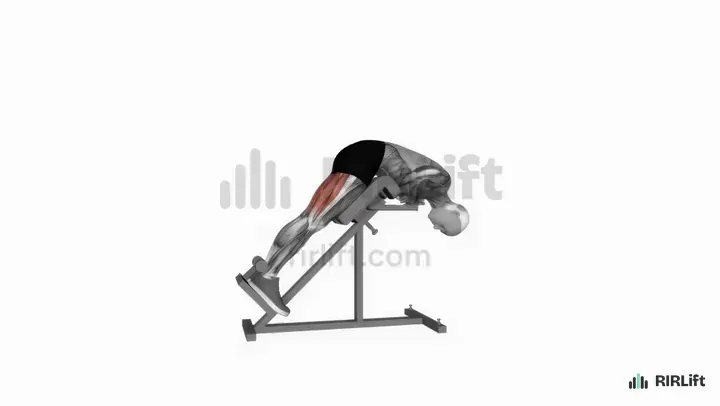
45-Degree Back Extension

Glutes, Hamstrings

The 45-degree bench is the friendliest lower-back exercise in the gym: you lean forward from the hips over a pad and rise back up, with your bodyweight as the load. It teaches you what your spinal erectors feel like working before you load them with a bar.

How to do it

  1. Adjust the pad so its top edge sits just under your hip bones, then hook your heels under the rollers.
  2. Cross your forearms over your chest, then lower your torso by hinging at the hips, back flat, until you feel your hamstrings stretch.
  3. Lift your torso back up until heels, hips and head line up from heels to head.
  4. Pause for a second, lower slowly, and repeat.

Cues

  • Hinge at the hips, not the waist
  • Finish in a straight line
  • Slow on the way down

Common mistakes

  • Overarching past a straight line at the top: the work ends when your body is in line.
  • Pad set too high, so you bend at the stomach: lower it until the hips can fold over the edge.

Swap for: Weighted Back Extension, Band Reverse Hyperextension, Good Morning

Lower back and glutes, loaded hyperextension

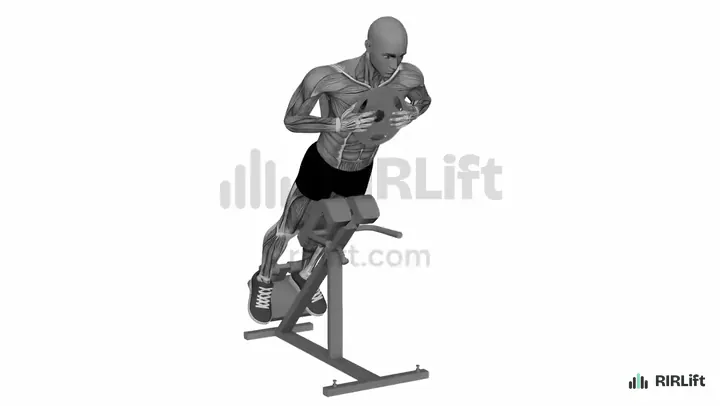
Weighted Back Extension

Lower Back

Hold a plate or dumbbell against your chest on the hyperextension bench and the same movement becomes a real strength exercise for your erectors and glutes. Most people can progress this one for months, a few pounds at a time, without the recovery cost of a heavy deadlift.

How to do it

  1. Set the pad just under your hip bones and lock your heels under the rollers.
  2. Hug a weight plate to your chest, or hold it behind your head once you are stronger.
  3. Lower your torso by hinging at the hips with a flat back until your hamstrings stretch.
  4. Rise until your body is straight, squeeze your glutes, and lower again.

Cues

  • Plate stays pinned to the chest
  • Glutes squeeze at the top
  • Two seconds down

Common mistakes

  • Rounding to get extra depth: stop where your back stays flat.
  • Jerking up from the bottom: rise smoothly and own the top position.

Swap for: 45-Degree Back Extension, Romanian Deadlift, Good Morning

Lower back and glutes, reverse hyperextension

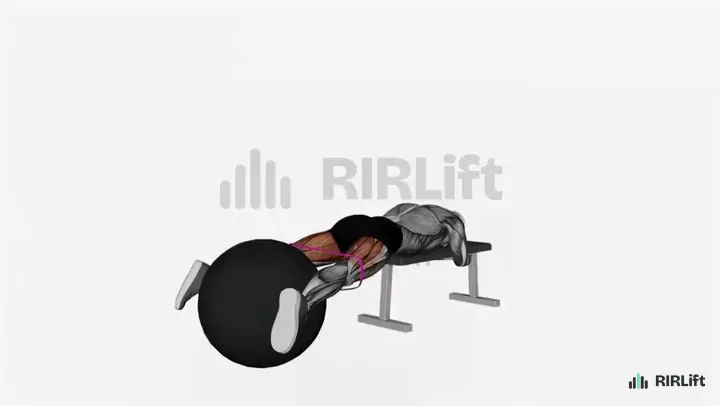
Band Reverse Hyperextension

Glutes, Hamstrings

Here your torso stays still on the bench and your legs swing up behind you, so the lower back works without anything pressing down on your spine. Many gyms lack a reverse hyper machine, and a bench with a band around your feet does the same job.

How to do it

  1. Lie face down with your hips at the end of a flat bench, holding the bench for support, legs hanging toward the floor.
  2. Loop a band around both feet and anchor it low under the bench so it pulls your legs down.
  3. Lift both legs up behind you until they are level with your torso, squeezing your glutes.
  4. Lower your legs slowly against the band and repeat.

Cues

  • Legs straight and together
  • Lift to level, not higher
  • Slow lowering

Common mistakes

  • Swinging the legs with momentum: pause at the top of each rep.
  • Lifting above level and arching hard: the range ends when legs and torso are in line.

Swap for: 45-Degree Back Extension, Cable Pull-Through, Weighted Back Extension

Deadlifts for the lower back

Your lower back has its hardest job in the gym during a deadlift: keeping the spine still while the heaviest load you lift pulls on it. The full deadlift and the rack pull are low-rep strength lifts; use one, once or twice a week.

Lower back, glutes and hamstrings, heavy pull from the floor

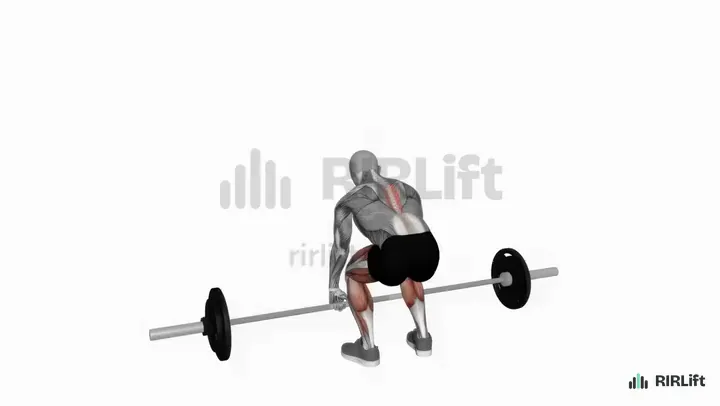
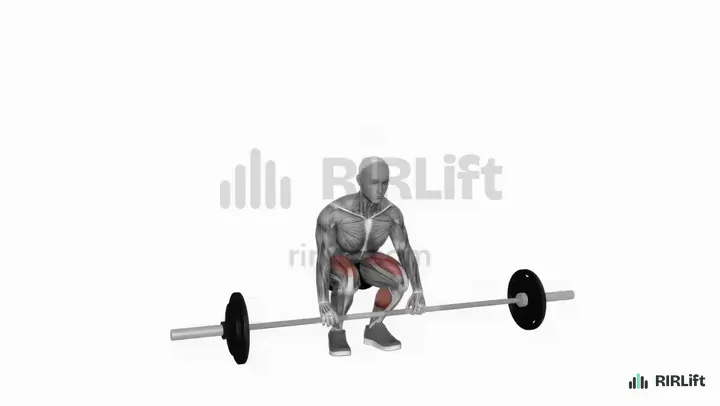
Barbell Deadlift

Glutes, Lower Back

The deadlift loads your whole back chain more heavily than anything else in the gym, and your lower back works the hardest it ever will to keep the bar close and your spine still. Use it for low reps with plenty of rest, at most once or twice a week.

How to do it

  1. Stand with the bar over the middle of your feet, feet under your hips.
  2. Hinge down and grip the bar just outside your shins, then bend your knees until your shins touch it and pull your chest up so your back is flat.
  3. Push the floor away and stand up, keeping the bar against your legs until your hips are fully through.
  4. Lower the bar the same way, hips back first, and set it down before the next rep.

Cues

  • Bar over midfoot
  • Pull the slack out first
  • Bar stays on your legs

Common mistakes

  • Letting the bar drift away from your shins: drag it up your legs the whole way.
  • Yanking the bar off the floor with a rounded back: tighten up, then push.

Swap for: Rack Pull, Romanian Deadlift, Kettlebell Deadlift

Upper and lower back, partial deadlift

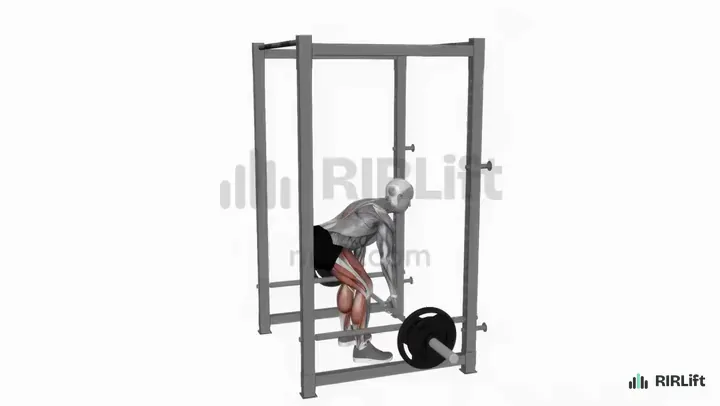
Rack Pull

Glutes, Lower Back, Traps
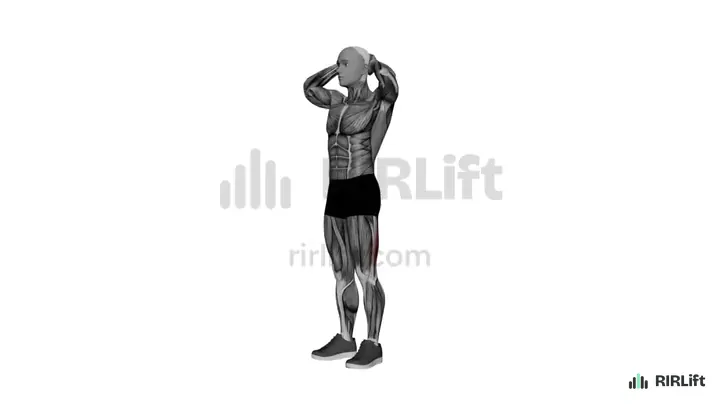
Starting from pins just below the knee cuts out the bottom of the deadlift, where your legs help most, and leaves the lockout where your back holds the heaviest load. You can handle more weight than in a full deadlift, so keep it to low reps.

How to do it

  1. Set the rack safeties so the bar rests just below your knees, and stand close with feet under your hips.
  2. Hinge to the bar, grip it outside your thighs, and set a flat back with your chest up.
  3. Stand up by driving your hips forward until you are fully upright with the shoulders back.
  4. Lower the bar under control to the pins, reset, and repeat.

Cues

  • Flat back before you pull
  • Hips through at the top
  • Lower, do not drop

Common mistakes

  • Leaning back at the top: stand straight with glutes squeezed.
  • Setting the pins too high: just below the knee is the most useful height.

Swap for: Barbell Deadlift, Romanian Deadlift, Good Morning

Build a session with Rack Pull

Hinges for the lower back and hamstrings

Hinges that start from standing let you train the lower back for more reps with less fatigue than a deadlift. The Romanian and stiff-leg deadlift hold the bar in your hands, the good morning puts it on your back, and the landmine version keeps the bar on a guided arc.

Lower back and hamstrings, barbell hinge

Romanian Deadlift

Hamstrings, Glutes

The Romanian deadlift starts from standing and lowers the bar only as far as your hamstrings allow, so your erectors hold your back flat under load the whole set. It is the hinge to use for 8 to 12 reps, and easier to recover from than full deadlifts.

How to do it

  1. Stand tall with a barbell at your thighs, gripping it just outside your legs.
  2. Push your hips back with soft knees, sliding the bar down your thighs with a flat back.
  3. Stop just below the knees or wherever your back would start to round.
  4. Push your hips forward to stand up, bar against your legs, and repeat.

Cues

  • Hips back like closing a car door
  • Bar touches the legs
  • Stop at a flat back

Common mistakes

  • Squatting down instead of pushing the hips back: the knees barely bend more as you go down.
  • Chasing depth with a rounded back: the range ends where the hinge ends.

Swap for: Landmine RDL, Stiff-Leg Deadlift, Dumbbell Romanian Deadlift

Lower back and hamstrings, bar-on-back hinge

Good Morning

Hamstrings, Glutes

With the bar on your upper back, the load is far from your hips, so a light weight trains your erectors hard. It needs less weight than an RDL and no grip, which makes it a good choice on days your hands or upper back are tired.

How to do it

  1. Set a barbell on your upper back as you would for a squat and stand with feet hip-width apart.
  2. Push your hips back with soft knees and tilt your torso forward with a flat back.
  3. Lower until your torso is close to level with the floor or your hamstrings stop you.
  4. Push your hips forward to stand up and repeat.

Cues

  • Bar stays on the upper back
  • Hips back first
  • Flat back the whole way

Common mistakes

  • Loading it like a squat: start with the empty bar and add weight slowly.
  • Bending your knees into a squat as you go down: the hips go back, the knees stay soft.

Swap for: Romanian Deadlift, Weighted Back Extension, Dumbbell Good Morning

Lower back and hamstrings, landmine hinge

Landmine RDL

Hamstrings, Glutes

Holding the end of a landmine bar, the load moves in an arc that stays close to you, so the Romanian deadlift is easier to keep in the right path. It is a good first loaded hinge for anyone new to barbells.

How to do it

  1. Load the end of a barbell set in a landmine, stand facing it and hold the end with both hands at arm's length.
  2. Push your hips back with soft knees, letting the bar lower toward your shins.
  3. Stop when your hamstrings stretch and your back is still flat.
  4. Push your hips forward to stand tall and repeat.

Cues

  • Hips back
  • Bar close to the legs
  • Stand tall with glutes

Common mistakes

  • Lifting with the arms: keep the arms long and the hips do the work.
  • Rounding to get the plates lower: stop where the back stays flat.

Swap for: Romanian Deadlift, Dumbbell Romanian Deadlift, Cable Pull-Through

Lower back and hamstrings, straight-leg pull

Stiff-Leg Deadlift

Hamstrings, Glutes

Keeping your knees nearly straight and lowering the bar further than in a Romanian deadlift loads the hamstrings and erectors at a longer stretch. It suits lifters who already hinge well and want a second hinge that feels different.

How to do it

  1. Stand with the bar at your thighs, gripping it shoulder-width, knees almost straight.
  2. Hinge forward, letting the bar travel down your legs, back held flat.
  3. Lower toward mid-shin or until your hamstrings stop you.
  4. Push the hips forward to stand back up and repeat.

Cues

  • Knees nearly straight
  • Flat back
  • Slow lowering

Common mistakes

  • Locking the knees hard: keep a tiny bend.
  • Rounding the back to reach the floor: lower only as far as your back stays flat.

Swap for: Romanian Deadlift, Good Morning, Landmine RDL

Cable and kettlebell lower back exercises

The pull-through and the swing train the hinge without a heavy bar. They load the lower back and glutes, take little recovery, and fit at the end of a leg or back day.

Lower back and glutes, cable hinge

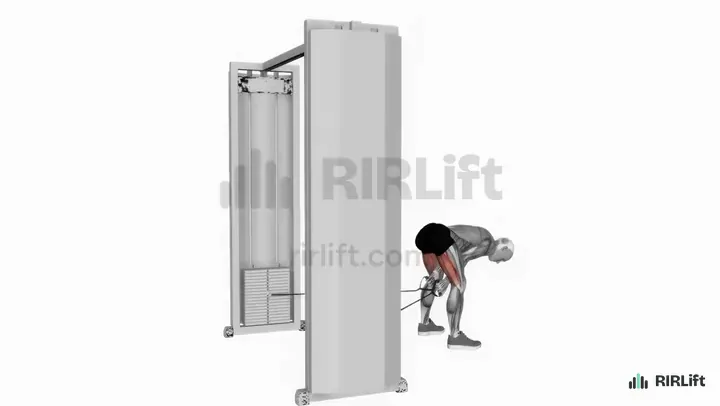
Cable Pull-Through

Glutes, Hamstrings

Facing away from a low pulley with a rope between your legs, the cable pulls you back into the hinge and you stand against it. There is nothing on your spine and the load is easy to control, which makes it a gentle way to add lower-back and glute volume.

How to do it

  1. Attach a rope to a low pulley, face away from it, and hold the rope between your legs with both hands.
  2. Walk forward until the cable is tight and stand with feet a little wider than your hips.
  3. Push your hips back and let the rope pull your hands back between your legs, back flat.
  4. Push your hips forward to stand up tall, squeezing your glutes, and repeat.

Cues

  • Hips back toward the stack
  • Arms are just hooks
  • Squeeze at the top

Common mistakes

  • Squatting the movement: the knees stay soft, the hips go back.
  • Pulling the rope with your arms: keep them long and relaxed.

Swap for: Kettlebell Swing, Band Reverse Hyperextension, Romanian Deadlift

Lower back and glutes, explosive hinge

Kettlebell Swing

Glutes, Hamstrings

The swing trains the hinge with speed: your lower back holds firm while your hips snap the kettlebell forward. It is a good way to finish a session with fast, light sets that do not cost much recovery.

How to do it

  1. Set the kettlebell a little in front of you, hinge to grip it with both hands, and hike it back between your thighs.
  2. Push your hips forward to stand tall, letting the bell rise to chest height on long arms.
  3. Let it fall back between your legs as you hinge again.
  4. Keep the rhythm going until the set is done, then park the bell in front of you.

Cues

  • Hips snap
  • Stand tall at the top
  • Hinge, not squat

Common mistakes

  • Lifting the bell with your arms: the hips drive it.
  • Arching back at the top: finish in a straight line.

Swap for: Cable Pull-Through, Romanian Deadlift, Kettlebell Deadlift

Put them together: example sessions

Each session below picks from the exercises above for one situation, with the sets, reps, rest and RIR filled in. Open one in the session builder to change a pick, price it from a recent set, and add it to RIRLift.

Session 1

New to training the lower back

Open in the session builder
  • Workouts2× a week
  • Working sets16 a week
  • Per workout~15 min
  • EquipmentHyperextension, Adjustable Cable, Landmine

You have not trained your lower back directly, or have never deadlifted, and want to start in the gym.

Starting with the 45-degree bench and the cable pull-through lets you learn to hinge from the hips with loads you can stop at any time, then the landmine RDL adds a bar on a guided path. Sets stop at 2 to 3 reps in reserve while the technique is new, 8 working sets, placed after your leg or back day.

Lower Back
ExerciseSets × repsRIRRest
45-Degree Back ExtensionBodyweight. Pause at the top. 3 × 10–15 3 75 s
Cable Pull-ThroughHips back toward the stack. 3 × 12–15 2 75 s
Landmine RDLBar close to the legs. 2 × 10–12 3 90 s
How to run it
Do it twice a week after another session, with at least two days between. Film one set from the side in the first week to check your back stays flat.
How to progress
Add reps until each set hits the top of the range at the target RIR, then add load. After 6 to 8 weeks, move the landmine RDL to a barbell Romanian deadlift.

Session 2

Strength day built on the deadlift

Open in the session builder
  • Workouts1× a week
  • Working sets9 a week
  • Per workout~35 min
  • EquipmentBarbells, Hyperextension

You deadlift already and want your lower back to get stronger along with it.

The deadlift is the heaviest lower-back exercise in the gym, so it gets the first slot at 3 to 6 reps and 2 reps in reserve to keep technique sharp. The rack pull follows for 2 sets of heavier lockouts, and the weighted back extension finishes with higher reps. That is 9 sets, heavy but short.

Deadlift Day
ExerciseSets × repsRIRRest
Barbell Deadlift2 warm-up sets firstReset each rep. 4 × 3–6 2 4 min
Rack PullPins just below the knee. 2 × 4–6 2 3 min
Weighted Back ExtensionPlate to the chest. 3 × 10–15 1 90 s
How to run it
Do it once a week. Keep it at least two days away from your squat day.
How to progress
Add 5 pounds to the deadlift when all sets reach the top of the range at 2 in reserve. Add 5 pounds to the back extension plate when you reach 15.

Session 3

Lower back work that spares your spine

Open in the session builder
  • Workouts2× a week
  • Working sets22 a week
  • Per workout~25 min
  • EquipmentFlat Bench, Resistance Bands, Hyperextension, Adjustable Cable +1

You already squat heavy and want more lower back work, but without heavy bars loading your spine further.

Every exercise here loads the lower back without a heavy bar on your back or in your hands: the reverse hyper moves your legs, the 45-degree extension uses bodyweight plus a plate, and the pull-through and swing are light and fast. Sets stop at 1 to 2 reps in reserve, 11 sets per session.

Lower Back
ExerciseSets × repsRIRRest
Band Reverse HyperextensionPause at the top. 3 × 12–20 1 1 min
Weighted Back ExtensionLight plate. 3 × 10–15 1 90 s
Cable Pull-ThroughSqueeze glutes at the top. 3 × 12–15 1 75 s
Kettlebell SwingStop when the snap fades. 2 × 15–20 2 90 s
How to run it
Do it once or twice a week, after an upper-body or leg session.
How to progress
Add reps first; on the back extension add a plate at 15 reps, and on the reverse hyper use a stronger band.

Make it fit you

Questions

Which exercises train the lower back?

Any exercise where your spine stays still while your hips hinge or your torso extends: back extensions, Romanian deadlifts, deadlifts, good mornings, cable pull-throughs and swings.

What machines work the lower back?

The hyperextension bench at 45 degrees or flat, the reverse hyperextension machine where gyms have one, and the low cable pulley for pull-throughs. Most gyms have at least the 45-degree bench.

What muscles support the lower back?

The spinal erectors running either side of your spine, the deeper multifidus, the quadratus lumborum at the side, and your glutes and hamstrings, which move the hips while the back holds still.

How often should I train my lower back?

One or two sessions a week, about 4 to 10 hard sets total. If you squat and deadlift heavy, your lower back already gets a lot of work, so keep direct sets at the low end.

Are deadlifts good for the lower back?

Yes. They train your erectors with the heaviest load in the gym. Keep the bar close, start every rep with a flat back, and stop sets 1 to 2 reps before your form slips.

What are good lower back exercises for men at the gym?

The same ones for anyone: back extensions, Romanian deadlifts, deadlifts and good mornings. Pick them by how strong and experienced you are, not by sex.