Back exercises at the gym: machines, cables and barbells

The best back exercises at the gym are the lat pulldown and pull-up for your lats, the seated cable row and chest-supported machine row for your mid-back, the barbell or T-bar row for heavy loading, and the reverse pec deck or face pull for your rear delts. Pick one vertical pull, one machine or cable row, one free-weight row and one rear delt move. Machines are the gym's advantage: they let you load a pull at any weight and take rows close to failure without your lower back limiting you.

  1. Lat Pulldown Lats
  2. Pull-Up Lats
  3. Seated Cable Row Upper Back, Lats
  4. Chest-Supported Row Upper Back, Lats
  5. Barbell Row Upper Back, Lats
  6. T-Bar Row Upper Back, Lats
  7. Straight-Arm Pulldown Lats
  8. Face Pull Shoulders, Upper Back
  9. Weighted Back Extension Lower Back
Gym back exercises for lats: pulldowns and pull-ups

The gym's biggest upgrade over a home workout is the vertical pull you can load to any weight. Start with the pulldown or the assisted machine, add the single-arm pulldown or straight-arm pulldown as a second lat exercise, and move the pull-up into the first slot once you can do sets of 6 or more.

Lats, machine vertical pull

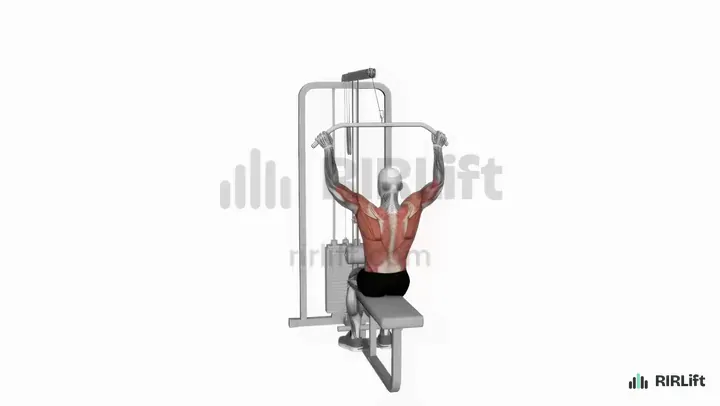
Lat Pulldown

Lats

The pulldown is the reason a gym beats a home setup for back: you can set the load to any number below your bodyweight, so you can train a vertical pull for 8 to 15 hard reps long before you can do that many pull-ups. Most gyms have two or three of them, so it is rarely taken.

How to do it

  1. Set the thigh pad so your legs are locked under it, then stand up and take the bar a little wider than your shoulders, palms forward.
  2. Sit down with your arms fully stretched overhead and lean back only slightly.
  3. Pull the bar to your upper chest by driving your elbows down toward your hips.
  4. Let the bar rise until your arms are straight and your shoulders lift toward your ears, then pull again.

Cues

  • Elbows to your back pockets
  • Bar to the top of the chest
  • Let the stack lift you at the top

Common mistakes

  • Leaning far back and rowing the bar to your stomach: stay nearly upright so it remains a vertical pull.
  • Stopping with the arms still bent at the top: the stretch overhead is half of what makes the pulldown work.

Swap for: Pull-Up, Single-Arm Lat Pulldown, Assisted Pull-Up

Lats and upper back, bodyweight vertical pull

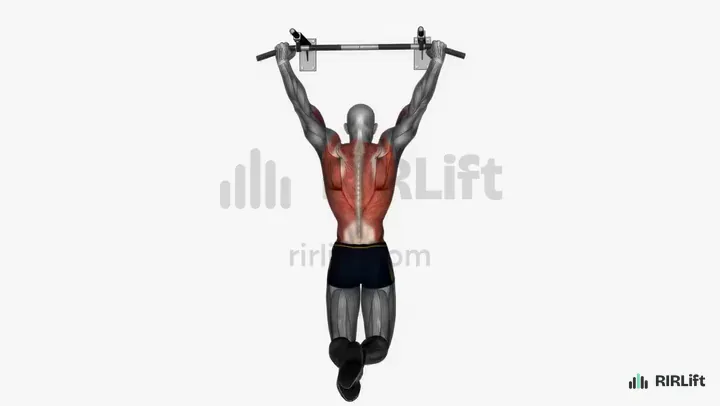
Pull-Up

Lats

Once you can do 6 or more clean reps, the pull-up trains the lats harder than a pulldown at the same effort, because your whole body has to stay rigid while you pull. Use it as the first exercise of your heavy back day and add a dip belt once sets of 10 come easily.

How to do it

  1. Grab the bar overhand, hands a little wider than your shoulders, and hang from fully straight arms.
  2. Pull your shoulders down away from your ears before your elbows start to bend.
  3. Drive the elbows toward your ribs until your chin passes over the bar.
  4. Lower slowly to a dead hang and pull again.

Cues

  • Shoulders down, then pull
  • Legs still and together
  • Two seconds on the way down

Common mistakes

  • Swinging the legs to cheat reps: cross your ankles and brace the abs.
  • Half reps from a bent-arm start: finish each rep at a full hang.

Swap for: Assisted Pull-Up, Lat Pulldown, Neutral-Grip Pull-Up

Build a session with Pull-Up

Lats, machine-assisted vertical pull

Assisted Pull-Up

Lats

The assisted pull-up machine puts a counterweight under your knees or feet, so you do the real pull-up movement with part of your bodyweight removed. It is the bridge between the pulldown and unassisted pull-ups, and the more weight you select, the easier it gets.

How to do it

  1. Select an assistance weight, step up and kneel or stand on the platform, and grip the handles above you.
  2. Let the platform lower you until your arms are straight overhead.
  3. Pull your chest toward the handles, driving your elbows down beside your body, until your chin is over them.
  4. Lower yourself slowly back to straight arms and repeat.

Cues

  • Less assistance over time
  • Upright torso
  • Slow lowering

Common mistakes

  • Choosing so much assistance that the set never gets hard: pick the setting that leaves you 1 to 2 reps short of failure at 8 to 12 reps.
  • Pushing off the platform with your legs: keep your knees still and let the counterweight do the helping.

Swap for: Lat Pulldown, Pull-Up, Band-Assisted Pull-Up

Lats, one-arm cable pulldown

Single-Arm Lat Pulldown

Lats

Pulling a single handle from a high cable lets your arm travel further than a bar allows, both up past your head at the stretch and down past your side at the finish. It also shows you if one lat is weaker, which is common.

How to do it

  1. Attach a single handle to a high pulley and kneel or sit facing the stack, holding the handle with one hand overhead.
  2. Let the cable pull your arm up and slightly in front of you until your lat is fully stretched.
  3. Drive your elbow down toward your hip, finishing with the handle beside your shoulder.
  4. Let the handle rise back to the stretch slowly, finish your reps, and switch sides.

Cues

  • Reach long at the top
  • Elbow to the hip
  • Torso stays square

Common mistakes

  • Rotating your torso to finish the rep: keep your chest facing the stack.
  • Rushing the lowering: the stretched top is where this exercise earns its place.

Swap for: Lat Pulldown, Single-Arm Cable Row, Straight-Arm Pulldown

Lats, straight-arm cable isolation

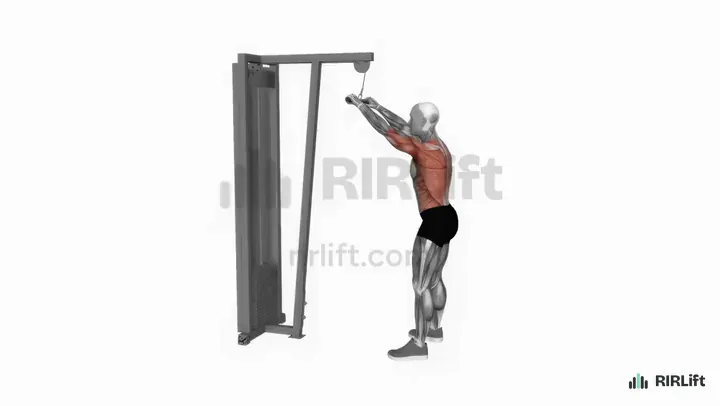
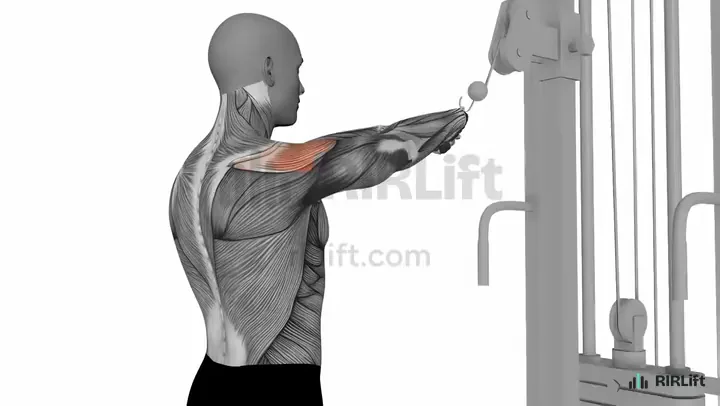
Straight-Arm Pulldown

Lats

With your arms almost straight, your biceps cannot help, so the lats do the whole pull. Done at the end of a back day, it lets you add hard lat sets without tiring your grip and arms further.

How to do it

  1. Attach a straight bar or rope to a high pulley, step back a couple of feet, and hinge forward slightly with your arms extended toward the pulley.
  2. Keep a small, fixed bend in your elbows and brace your abs.
  3. Sweep the bar down in an arc until it reaches your thighs, squeezing your lats at the bottom.
  4. Let it rise back up under control until your arms are overhead and the lats stretch, then repeat.

Cues

  • Arms long, elbows fixed
  • Bar to the thighs
  • Torso angle never changes

Common mistakes

  • Bending the elbows and turning it into a triceps pushdown: lighten the stack and keep the arms long.
  • Bobbing the torso up and down to move the weight: lock your hinge and move only the arms.

Swap for: Single-Arm Lat Pulldown, Dumbbell Lat Pullover, Lat Pulldown

Back machines and cable rows

Cable and machine rows keep tension on the back from the first inch to the last and let you change weight in small steps. The chest-pad machine is the one that spares your lower back completely; the cable rows let your shoulders reach forward for more range.

Lats and mid-back, cable row

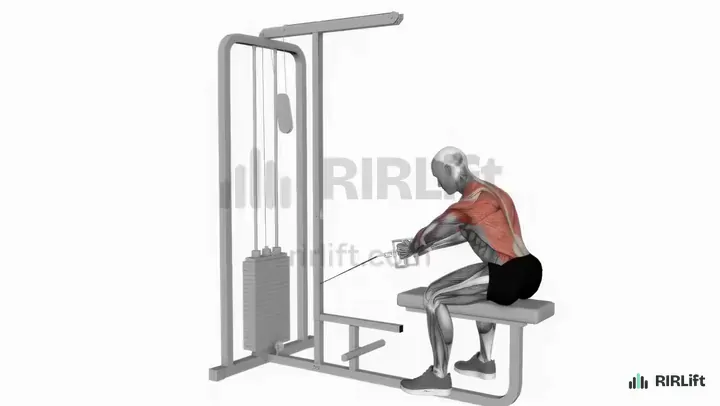
Seated Cable Row

Upper Back, Lats

The seated cable row keeps tension on your back through the whole rep and lets you change the load in small jumps. It is the row most people can do well from day one, and with a close grip it reaches both the lats and the middle of your back.

How to do it

  1. Sit at the cable row with your feet on the platform and knees slightly bent, holding a close-grip handle with your arms straight.
  2. Sit tall with your chest up and let the cable pull your shoulder blades forward a little.
  3. Row the handle to your lower ribs, driving your elbows back past your torso.
  4. Return it under control until your arms are straight and your shoulders reach forward, then repeat.

Cues

  • Sit tall, no rocking
  • Handle to the belly button
  • Shoulders reach at the front

Common mistakes

  • Rocking back and forth to move the stack: your torso should stay close to upright throughout.
  • Shrugging the handle up toward your neck: pull your shoulders down before the elbows bend.

Swap for: Chest-Supported Row, Single-Arm Cable Row, Barbell Row

Upper back and lats, chest-pad machine row

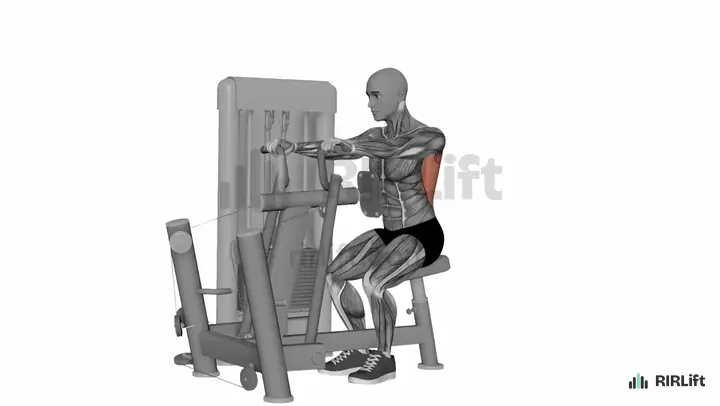
Chest-Supported Row

Upper Back, Lats

A pad against your chest stops any body English, so the only way to move the weight is with your back. It is the row to take to failure safely, and the one to use on a day your lower back is tired from squats or deadlifts.

How to do it

  1. Set the seat so the handles are at chest height and the pad sits against your upper chest.
  2. Grab the handles with arms straight and your shoulders stretched forward.
  3. Pull the handles back by driving your elbows behind you until your hands reach your torso.
  4. Return slowly to straight arms and repeat without lifting off the pad.

Cues

  • Chest stays on the pad
  • Wide elbows for upper back, tucked for lats
  • Full stretch each rep

Common mistakes

  • Pulling your chest off the pad to finish reps: the set is over when you cannot finish with the chest down.
  • Setting the seat too low so you pull toward your neck: handles should line up with your mid-chest.

Swap for: Seated Cable Row, Seal Row, Incline Dumbbell Row

Lats, one-arm cable row

Single-Arm Cable Row

Upper Back, Lats

Rowing one handle at a time lets your shoulder reach further forward at the start and your elbow travel further back at the end, a longer pull than the two-handed row. It is a good second row on a lat-focused day.

How to do it

  1. Sit at the cable row with a single handle attached and hold it with one hand, arm extended and palm facing in.
  2. Let your shoulder reach toward the stack with a slight turn of the torso.
  3. Row the handle toward your hip as you square your chest, elbow tight to your side.
  4. Return slowly to the reach, finish the set, then switch hands.

Cues

  • Reach, then pull
  • Elbow tight to the side
  • Finish square

Common mistakes

  • Twisting far back at the finish to move more weight: the rotation stays small.
  • Letting the stack yank your arm forward: control the return.

Swap for: Seated Cable Row, Single-Arm Lat Pulldown, One-Arm Dumbbell Row

Barbell and landmine rows

Barbell rows load the whole back heavily, and gyms give you three ways to do them: bent over, anchored in a landmine, or lying on a raised bench. Pick one per heavy day and keep the reps around 6 to 10.

Lats and mid-back, heavy free-weight row

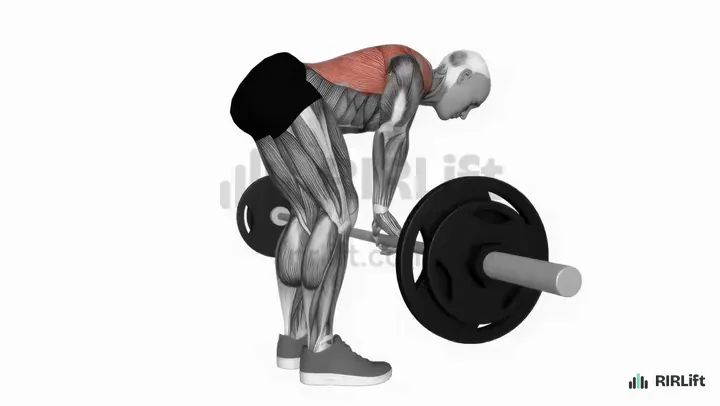
Barbell Row

Upper Back, Lats

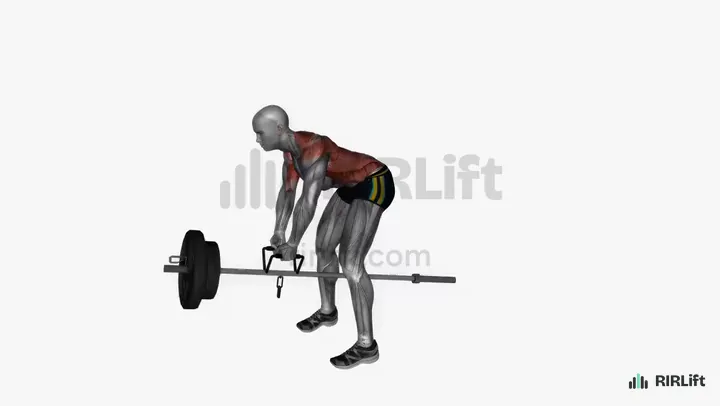
The bent-over barbell row is the heaviest row in the gym, and it trains your whole back plus the lower back that holds the hinge. Use it for 6 to 10 reps on your heavy day if your lower back is fresh.

How to do it

  1. Stand with your feet hip-width apart, grip the bar just outside your thighs with palms down, and hinge forward until your torso is around 30 to 45 degrees from the floor.
  2. Let the bar hang at arm's length just below your knees with your back flat.
  3. Row the bar to your lower ribs, keeping your elbows at about 45 degrees from your sides.
  4. Lower until your arms are straight without letting your torso rise, then repeat.

Cues

  • Same back angle every rep
  • Bar to the lower ribs
  • Brace before each pull

Common mistakes

  • Standing up with each rep and using the hips: if the torso rises, the load is too heavy.
  • Rounding the lower back late in the set: stop the set there.

Swap for: T-Bar Row, Seal Row, Underhand Barbell Row

Mid-back and lats, landmine row

T-Bar Row

Upper Back, Lats

With one end of a barbell sitting in a landmine sleeve and a handle around the other end, the bar travels in an arc that matches your rowing path. It lets you load heavily with a more comfortable hand position than the barbell row.

How to do it

  1. Load the free end of a barbell sitting in a landmine and stand over the bar with your feet on either side of it.
  2. Hinge forward, put a close-grip handle under the bar near the plates and grip it with both hands, arms straight.
  3. Row the plates toward your chest, elbows tight to your torso, until they nearly touch.
  4. Lower until your arms are straight while holding your hinge, then repeat.

Cues

  • Chest up, back flat
  • Pull to the chest
  • Small plates for a longer pull

Common mistakes

  • Shrugging the weight up with your legs and back: the elbows do the pulling.
  • Big plates that hit your chest early: use 25-pound plates to get more range.

Swap for: Barbell Row, Meadows Row, Chest-Supported Row

Build a session with T-Bar Row

Upper back and lats, bench-supported barbell row

Seal Row

Upper Back, Lats

Lying face down on a raised bench and rowing a barbell from underneath, your legs and lower back can do nothing, so it is the strictest heavy row there is. The bar touches the underside of the bench, giving each rep a clear finish.

How to do it

  1. Set a flat bench on blocks or boxes high enough that your arms hang straight without the plates hitting the floor, and lie on it face down.
  2. Grab the barbell under the bench overhand, hands a little wider than shoulder-width.
  3. Row the bar up until it touches the underside of the bench, elbows out at about 45 degrees.
  4. Lower to a full hang and repeat.

Cues

  • Bar to the bench
  • Stay flat on the pad
  • Full hang at the bottom

Common mistakes

  • Lifting your head and chest off the bench to finish: stay down, the bench is the limit.
  • A bench too low, so the plates touch the floor: raise it until your arms hang free.

Swap for: Chest-Supported Row, Barbell Row, Incline Dumbbell Row

Build a session with Seal Row

Rear delt and trap exercises at the gym

Rows reach the middle of your back but leave the rear delts and upper traps short of sets. A machine fly or face pull and a heavy shrug cover them in a few minutes at the end of a session.

Rear delts and upper back, machine fly

Reverse Pec Deck

Shoulders

Facing into the pec deck and sweeping the handles back trains the rear delts with a fixed path and constant tension. It is the gym's easiest rear delt exercise to take to failure, and the rear delts grow best from high reps.

How to do it

  1. Set the handles to the rear position, sit facing the pad, and adjust the seat so the handles are at shoulder height.
  2. Hold the handles with arms straight in front of you, palms down or facing in.
  3. Sweep your arms out and back in a wide arc until they are in line with your body.
  4. Return slowly, stopping just before the weight touches the stack, and repeat.

Cues

  • Wide arc, not a row
  • Arms almost straight
  • Keep the stack off the rest

Common mistakes

  • Pulling the elbows back like a row: the arms move out to the side.
  • Too much weight with jerky reps: these grow on 12 to 20 controlled reps.

Swap for: Face Pull, Rear Delt Cable Fly, Dumbbell Rear Delt Fly

Rear delts and upper back, rope cable pull

Face Pull

Shoulders, Upper Back

A rope from a high pulley pulled toward your face trains the rear delts and the upper back together, with your shoulders rotating outward at the end. Gyms put it at every cable station, so it fits into a superset with a row.

How to do it

  1. Set a rope at about forehead height on a cable and grab both ends with palms facing down.
  2. Step back until your arms are straight and there is tension on the cable.
  3. Pull the rope toward your face, spreading the ends apart and finishing with your hands beside your ears and elbows high.
  4. Return slowly to straight arms and repeat.

Cues

  • Hands beside the ears
  • Elbows high
  • Pause at the face

Common mistakes

  • Pulling toward the chest with low elbows, which turns it into a row: aim at the eyes.
  • Leaning far back to move a heavy stack: use a lighter weight and stand tall.

Swap for: Reverse Pec Deck, Band Face Pull, Rear Delt Cable Fly

Build a session with Face Pull

Upper traps, barbell shrug

Barbell Shrug

Traps

A barbell shrug loads your upper traps more heavily than any dumbbell pair, and gyms have the bar and the rack to set it up at hip height. Short range, heavy load and a pause at the top are what make it work.

How to do it

  1. Set a barbell in a rack at mid-thigh height, grip it a little wider than your thighs with palms down, and stand tall with it at arm's length.
  2. Raise your shoulders straight toward your ears, as far as they travel.
  3. Pause for a full second at the top.
  4. Lower slowly to the bottom and repeat.

Cues

  • Straight up and down
  • One-second pause
  • Arms stay long

Common mistakes

  • Rolling the shoulders: lift straight up and lower straight down.
  • Bouncing the bar off the thighs with the knees: the legs stay still.

Swap for: Trap Bar Shrug, Dumbbell Shrug, Cable Shrug

Lower back exercise for a back day

If you deadlift on another day, your lower back already gets heavy work. If you do not, a few sets on the hyperextension bench close the session without another heavy hinge.

Lower back and glutes, hyperextension bench

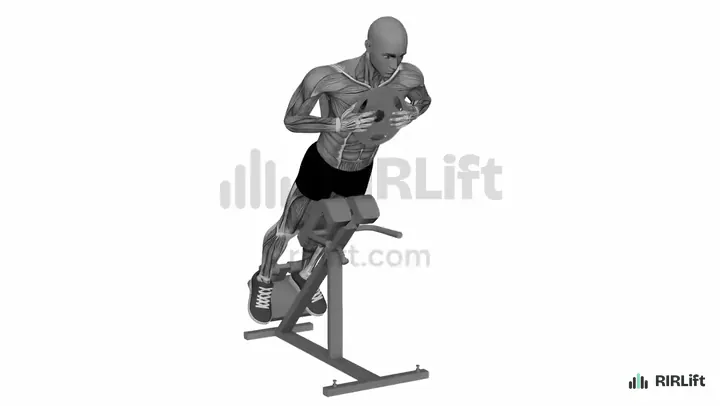
Weighted Back Extension

Lower Back
The hyperextension bench lets you train your spinal erectors through their own range, holding a plate to load it. It is the lower-back exercise to use on a back day without adding another heavy deadlift.

How to do it

  1. Set the pad so it sits just below your hip bones, lock your heels under the foot rollers, and hold a plate against your chest.
  2. Lower your torso toward the floor by bending at the hips, keeping your back flat.
  3. Rise until your body is in a straight line from heels to head, squeezing your glutes at the top.
  4. Lower slowly and repeat.

Cues

  • Hips just over the pad edge
  • Rise to a straight line
  • No arch at the top

Common mistakes

  • Overextending at the top, arching past straight: stop when your body is in line.
  • Swinging up from the bottom: take a full second to rise and two to lower.

Swap for: Back Extension, Romanian Deadlift, Good Morning

Put them together: example sessions

Each session below picks from the exercises above for one situation, with the sets, reps, rest and RIR filled in. Open one in the session builder to change a pick, price it from a recent set, and add it to RIRLift.

Session 1

First months in the gym, machines only

Open in the session builder
  • Workouts2× a week
  • Working sets22 a week
  • Per workout~25 min
  • EquipmentLat Pulldown, Seated Row Machine, Fly Machine, Hyperextension +3

You are new to the gym, or new to training back, and want exercises you can learn in one session and load safely.

Machines and cables guide the path, so you can focus on feeling your back work instead of balancing a bar. The pulldown and assisted pull-up cover the lats from overhead, the chest-pad machine and seated cable row cover the rows, and the back extension and reverse pec deck finish the session. Sets stop 2 to 3 reps short of failure while you learn the movements, 13 to 14 sets per session.

Back A
ExerciseSets × repsRIRRest
Lat Pulldown1 warm-up set firstBar to the top of the chest. 3 × 10–15 2 90 s
Chest-Supported RowChest on the pad. 3 × 10–15 2 90 s
Reverse Pec DeckWide arc. 3 × 12–20 2 1 min
Weighted Back ExtensionBodyweight to start. 2 × 10–15 3 90 s

Open Back A in the session builder

Back B
ExerciseSets × repsRIRRest
Assisted Pull-Up1 warm-up set firstLess assistance over time. 3 × 8–12 2 2 min
Seated Cable RowSit tall, no rocking. 3 × 10–15 2 90 s
Straight-Arm PulldownArms long. 3 × 12–15 2 1 min
Face PullHands to the ears. 2 × 15–20 2 1 min

Open Back B in the session builder

How to run it
Do Back A and Back B once each per week, or alternate them after a push or leg session if you train full body. Write down the seat and pad settings the first day.
How to progress
Add a rep to each set until you hit the top of the range at the target reps in reserve, then add one plate on the stack. After 8 weeks, drop the target to 1 to 2 reps in reserve.

Session 2

Two back days, full gym

Open in the session builder
  • Workouts2× a week
  • Working sets31 a week
  • Per workout~40 min
  • EquipmentPull-Up Bar, Barbells, Landmine, Hyperextension +5

You have trained for a year or more, the whole gym is open to you, and back gets two sessions a week.

A heavy day built on the pull-up and a free-weight row at 6 to 10 reps sits next to a volume day of one-arm cables and machines at 10 to 15. The heavy day stops at 1 to 2 reps in reserve because barbell rows tire your lower back; the volume day takes the cable and machine work to 0 to 1, where it is safe to go close. That is 15 and 16 working sets, 31 for the week.

Heavy
ExerciseSets × repsRIRRest
Pull-Up2 warm-up sets firstAdd weight past 10 clean reps. 4 × 6–10 1 3 min
Barbell Row1 warm-up set firstSame back angle every rep. 4 × 6–10 2 2:30 min
T-Bar RowSmall plates for range. 3 × 8–12 1 2 min
Barbell ShrugPause 1 s at the top. 2 × 8–12 1 90 s
Weighted Back ExtensionPlate on the chest. 2 × 10–15 2 90 s

Open Heavy in the session builder

Volume
ExerciseSets × repsRIRRest
Single-Arm Lat PulldownPer arm. Full reach at top. 3 × 10–15 1 75 s
Single-Arm Cable RowPer arm. 3 × 10–15 1 75 s
Chest-Supported RowLast set to failure. 3 × 10–15 0 90 s
Straight-Arm PulldownSqueeze at the thighs. 3 × 12–20 1 1 min
Reverse Pec DeckSlow lowering. 2 × 15–25 0 1 min
Face PullPause at the face. 2 × 15–20 1 1 min

Open Volume in the session builder

How to run it
Heavy early in the week, Volume 2 to 3 days later. Rotate the free-weight row every 6 to 8 weeks: barbell, then landmine, then seal row.
How to progress
On the pull-up, add reps to 10, then add weight. On rows, add 5 pounds once every set hits the top of the range at the target RIR. On cables, add reps first.

Session 3

Busy gym, one cable station

Open in the session builder
  • Workouts1× a week
  • Working sets14 a week
  • Per workout~30 min
  • EquipmentLat Pulldown, Cable Row, Adjustable Cable

Your gym is crowded at peak hours and you can claim one cable station or a pulldown and row combo for the whole session.

Every exercise here runs off the same two pulleys, so you never have to wait for another machine. Supersets of a pull and a rear delt move keep the session under 45 minutes. The lat and row work stops 1 rep short of failure and the face pull and straight-arm sets at 0, 14 sets total.

Cable Back
ExerciseSets × repsRIRRest
Lat Pulldown1 warm-up set firstWide bar. 4 × 8–12 1 2 min
A1 Seated Cable RowClose grip. Go straight into face pulls. 3 × 8–12 1 0 s
A2 Face PullRope. Hands to ears. 3 × 15–20 0 90 s
Single-Arm Cable RowPer arm. 2 × 10–15 1 1 min
Straight-Arm PulldownRope or bar. 2 × 12–20 0 1 min
How to run it
Do it once or twice a week. Set up the pulldown first, then switch the attachment for the rows and the rope work without leaving the station.
How to progress
Add reps until all sets reach the top of the range at the target RIR, then add one pin on the stack. If a superset runs long, drop the straight-arm pulldown.

Make it fit you

Questions

What are the best back machines at the gym?

The lat pulldown, the seated cable row, the chest-supported row machine, the assisted pull-up machine and the reverse pec deck. A pulldown and a row machine alone cover most of your back; add the hyperextension bench for your lower back.

What are the best back exercises for beginners at the gym?

The lat pulldown, the chest-supported machine row and the seated cable row. They guide the path, let you pick light loads, and are easy to learn. Add the assisted pull-up and back extension in the first month.

What is the best exercise for the lower back at the gym?

The back extension on a hyperextension bench, with a plate once bodyweight gets easy, and the Romanian deadlift. For more options, see the lower back exercises at the gym page.

How many back exercises should I do at the gym?

Three to five per session: one vertical pull, one or two rows and one rear delt or trap move. Aim for 10 to 20 hard sets a week for your back, split over one or two sessions.

Should I use machines or free weights for back?

Both. Machines and cables let you take sets close to failure safely and are easier to learn. Barbell rows and pull-ups build strength and train your trunk at the same time. The heavy-and-volume plan uses both on purpose.

Pulldown or pull-up: which is better?

Use whichever you can do for 6 to 12 hard reps. If you cannot do 6 pull-ups, the pulldown or assisted machine will train your lats better; once you can, the pull-up is a stronger choice, with the pulldown as a second exercise.