Lower body exercises for women: glutes, thighs, hips and calves

The best lower body exercises for women are the Bulgarian split squat and the back squat for your thighs and glutes, the Romanian deadlift and seated leg curl for your hamstrings, the hip thrust and cable kickback for your glutes, the adduction machine and band walk for your inner and outer hips, and the seated calf raise. A good lower body workout picks one exercise from four of those groups and takes each set within 1 to 2 reps of failure. If you are starting at 50 or after years off, the same exercises work on machines and with your bodyweight first.

  1. Bulgarian Split Squat Quads, Glutes
  2. Romanian Deadlift Hamstrings, Glutes
  3. Smith Machine Hip Thrust Glutes
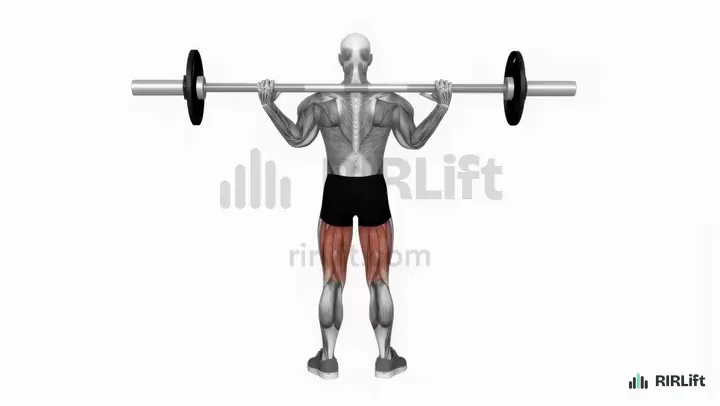
  4. Barbell Back Squat Quads, Glutes, Adductors
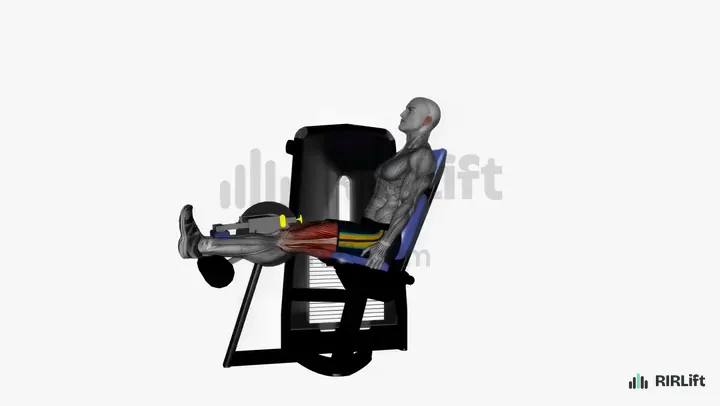
  5. Seated Leg Curl Hamstrings
  6. Cable Glute Kickback Glutes
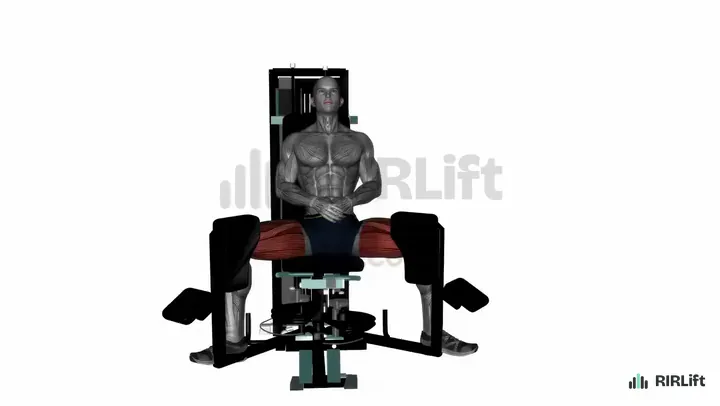
  7. Hip Adduction Machine Adductors
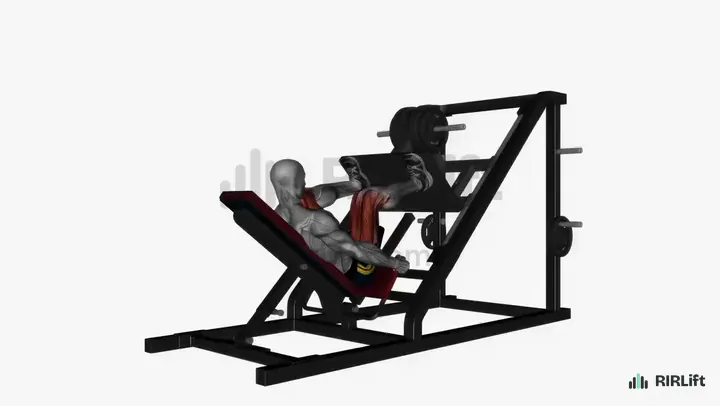
  8. Wide-Stance Leg Press Glutes, Quads
Squats and presses: the whole lower body at once

A squat moves your knees and hips together, so your quads, glutes and inner thighs all work in one exercise. The barbell back squat is the heaviest version, the wide-stance leg press gives the same work with your back supported, and the bodyweight squat to a bench is where you start if getting up from a low chair already feels like effort.

Quads, glutes and adductors, heavy bilateral squat

Barbell Back Squat

Quads, Glutes, Adductors

With the bar on your upper back you can load your legs more than in any other free-weight squat, and as you get stronger it keeps paying off. It asks for a squat rack and some practice, so it belongs in the plan for women who train in a full gym.

How to do it

  1. Set the bar in a rack at about armpit height, step under it, and rest it across the meaty part of your upper back with your hands just outside your shoulders.
  2. Stand up to lift it off the hooks, take two small steps back, and set your feet about shoulder-width apart with toes slightly turned out.
  3. Breathe in, brace your stomach, and sit down by bending your hips and knees together until your hip crease is level with or just below your knees.
  4. Stand up by driving your back into the bar and your feet into the floor, keeping your chest and hips rising at the same speed.

Cues

  • Brace before every rep
  • Knees out over the toes
  • Chest and hips rise together

Common mistakes

  • Hips shooting up first so the squat turns into a good morning: lower the weight and lead with your upper back.
  • Cutting depth as the weight climbs: set a bench or box behind you as a depth marker if you need one.

Swap for: Smith Squat, Front Squat, Goblet Squat

Glutes, adductors and quads, machine press

Wide-Stance Leg Press

Glutes, Quads
Setting your feet wide and high on the platform sends more of the press into your glutes and inner thighs, and the backrest means your lower back never has to hold a load. It is the squat substitute for anyone returning after a long break or whose back does not like a bar.

How to do it

  1. Sit back in the machine and place your feet in the upper half of the platform, wider than your shoulders, toes turned out a little.
  2. Release the handles and let the platform sink as your knees fold out toward your shoulders.
  3. Lower until your knees are bent past 90 degrees, stopping before your tailbone rolls off the seat.
  4. Press the platform up through your heels until your legs are almost straight, then repeat.

Cues

  • Feet high and wide
  • Knees track the toes
  • Tailbone stays down

Common mistakes

  • Letting your knees fall inward as you press: push them out in line with your feet.
  • Locking your knees hard at the top: stop just short of straight so the muscles keep the load.

Swap for: Leg Press, 45-Degree Leg Press, Sumo Squat

Quads and glutes, unloaded squat

Bodyweight Squat

Quads

Squatting to a bench or chair is the most useful strength you have for daily life: it is how you get up from a seat, a car or the floor. If you are starting out later in life, getting to 15 easy reps here comes before any weight.

How to do it

  1. Face away from a bench or sturdy chair with your feet a little wider than your hips, arms reaching forward for balance.
  2. Sit your hips back and down as if you were about to take a seat, knees moving out over your toes.
  3. Lightly touch the bench with your glutes without settling onto it.
  4. Stand straight back up by pushing through your whole foot, finishing tall.

Cues

  • Tap, do not sit
  • Arms forward for balance
  • Stand up tall

Common mistakes

  • Dropping onto the seat and rocking up: lower slowly and stand up without momentum.
  • Staying at the same bench height for months: once 15 reps are easy, use a lower seat or hold a dumbbell.

Swap for: Goblet Squat, Box Squat, Wall Sit

Split squats and lunges

One-leg exercises show you where one side is weaker and train the small hip muscles that keep you steady. The Bulgarian split squat is the hardest and most effective of them for glutes and thighs; the curtsy lunge crosses one leg behind the other and reaches the side of the glute that straight lunges miss.

Glutes and quads, rear-foot-elevated split squat

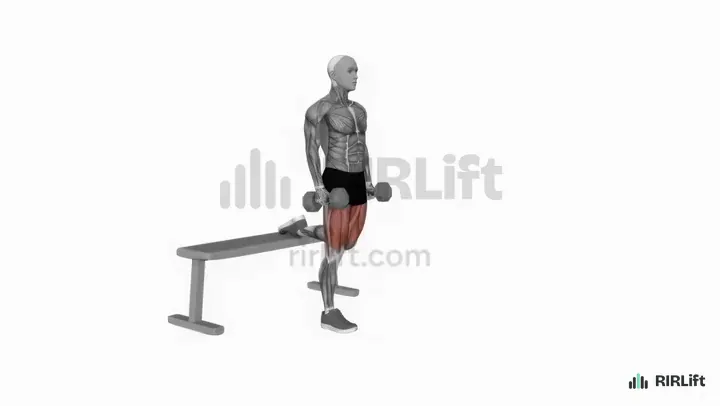
Bulgarian Split Squat

Quads, Glutes

With your back foot on a bench, almost all of your weight goes through the front leg, so it trains your glutes and thighs hard with modest dumbbells. It is often the answer to which single exercise does the most for a woman's lower body, because it builds the glutes, quads and balance at once.

How to do it

  1. Set up about two feet ahead of a bench, holding one dumbbell per hand, and prop the laces of your back foot on the bench.
  2. Sink straight down, front knee bending, until your back knee is close to the floor.
  3. Lean your torso forward slightly to bring more glute into it, keeping your front heel down.
  4. Push through the front foot to rise to the start, finish all reps on that leg, then switch.

Cues

  • Drop the back knee straight down
  • Front heel stays heavy
  • Slight forward lean for glutes

Common mistakes

  • Standing too close to the bench, so the front knee runs far past the toes and the heel lifts: hop forward a few inches.
  • Pushing off the back foot: it only balances, the front leg lifts you.

Swap for: Dumbbell Split Squat, Smith Machine Bulgarian Split Squat, Dumbbell Reverse Lunge

Side glutes and quads, crossing lunge

Dumbbell Curtsy Lunge

Quads, Glutes

Stepping one leg diagonally behind the other loads the outer glute of the front leg while it controls your knee, which a straight lunge does less. It adds variety to a lower-body day and makes light dumbbells work hard.

How to do it

  1. Set your feet at hip width, one dumbbell per hand at your sides.
  2. Step your right foot back and across, behind your left leg, as if curtsying.
  3. Bend both knees and lower until your left thigh is close to level with the floor, hips still facing forward.
  4. Drive the left heel down to stand and bring your right foot back to the start, then repeat or switch sides.

Cues

  • Hips face forward
  • Front knee over the middle toes
  • Push through the front heel

Common mistakes

  • Twisting your hips toward the back leg: shorten the cross until your pelvis stays square.
  • Front knee collapsing inward: keep it in line with your foot, and lighten the load if it caves.

Swap for: Landmine Curtsy Lunge, Barbell Curtsy Lunge, Dumbbell Lateral Lunge

Hamstrings: the back of your thighs

A hinge stretches your hamstrings from the hip and a curl shortens them at the knee, so use one of each. The barbell Romanian deadlift is the main hinge, the single-leg version adds balance and needs much less weight, and the seated leg curl trains the hamstrings in a long position that suits them well.

Hamstrings and glutes, barbell hinge

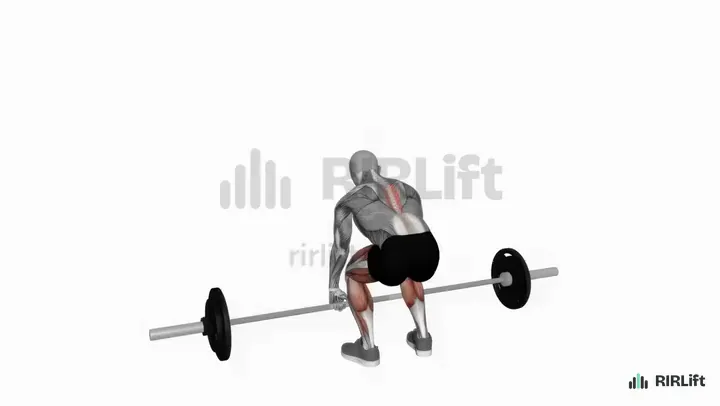
Romanian Deadlift

Hamstrings, Glutes

A barbell lets you load the hinge heavier than dumbbells, and your hamstrings and glutes grow from that loaded stretch at the bottom. It is the main back-of-thigh exercise in the gym plans here.

How to do it

  1. Stand holding a barbell at your thighs with an overhand grip just outside your legs, feet hip-width apart.
  2. Soften your knees, then push your hips back while the bar slides along your thighs.
  3. Lower until your hamstrings are fully stretched and your back is still flat, which for most people is around the middle of the shin.
  4. Squeeze your glutes and push your hips forward to stand tall again.

Cues

  • Bar skims the legs
  • Shoulders over the bar
  • Hips forward to finish

Common mistakes

  • Letting the bar drift out in front: keep it in contact with your legs all the way down.
  • Leaning back at the top: stand straight and stop there.

Swap for: Dumbbell Romanian Deadlift, Stiff-Leg Deadlift, Landmine RDL

Hamstrings and glutes, one-leg hinge

Single-Leg RDL

Hamstrings, Glutes

Hinging on one leg doubles the load on that hamstring and glute and makes your hips work to stay level, so a single dumbbell is plenty. It also trains the balance that matters more every decade.

How to do it

  1. Balance on your left leg with one dumbbell in the right hand, left knee slightly bent. Touch a wall or rack with your free hand if you need balance.
  2. Hinge forward from your left hip while your right leg extends straight behind you, so your body tilts like a seesaw.
  3. Lower the dumbbell toward the floor until your torso is near level and you feel the stretch in your left hamstring.
  4. Drive your left hip forward to stand back up, then finish the set before switching legs.

Cues

  • Hips stay square to the floor
  • Back leg and torso move as one
  • Free hand on support is fine

Common mistakes

  • Opening your hip toward the ceiling as the back leg rises: point the back toes at the floor.
  • Rounding to reach the floor: the stretch, not the floor, decides where you stop.

Swap for: Dumbbell B-Stance RDL, Dumbbell Romanian Deadlift, Romanian Deadlift

Hamstrings, seated knee flexion

Seated Leg Curl

Hamstrings

Sitting upright puts your hamstrings in a long position while they curl, and training them stretched builds them well. The machine is simple and safe for any age, which makes it a fixture in every plan here.

How to do it

  1. Adjust the seat so your knees line up with the machine's pivot, then sit with the lower pad behind your ankles and the thigh pad snug on your legs.
  2. Hold the handles and sit tall against the backrest.
  3. Pull your heels down and back under the seat as far as they go.
  4. Let the pad return slowly until your legs are almost straight, then curl again.

Cues

  • Knees at the pivot
  • Thigh pad snug
  • Two seconds back up

Common mistakes

  • Leaving the thigh pad loose so your hips lift: tighten it until you cannot slide.
  • Cutting the return short: let the legs nearly straighten each rep for the full stretch.

Swap for: Lying Leg Curl, Single-Leg Leg Curl, Stability Ball Leg Curl

Glutes and outer hips

Your largest glute muscle straightens your hip and the smaller ones move your leg out to the side. The Smith machine hip thrust loads the first heavily with no balancing, the cable kickback isolates one side at a time, and the band walk works the outer hip with nothing but a loop band.

Glutes, guided hip thrust

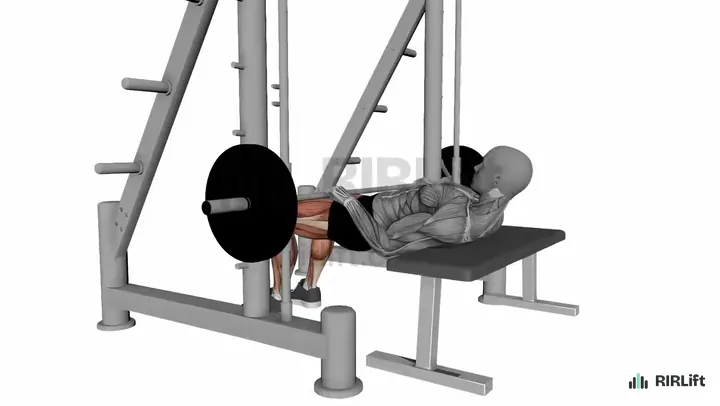
Smith Machine Hip Thrust

Glutes

The Smith machine keeps the bar on a fixed track, so you skip the awkward setup of rolling a loose barbell over your hips and can focus only on squeezing your glutes. It is the easiest way to hip thrust heavy in a gym.

How to do it

  1. Place a bench lengthwise beside the Smith machine, sit on the floor with your shoulder blades against its edge, and set the padded bar across your hip crease.
  2. Plant feet hip-width apart so your shins end up vertical at lockout, and unhook the bar.
  3. Press your hips up until your torso is flat from shoulders to knees, chin tucked.
  4. Hold one second with your glutes tight, lower your hips a few inches above the floor, and repeat.

Cues

  • Tuck the chin
  • Shins vertical at lockout
  • Squeeze, then lower

Common mistakes

  • Arching your lower back to finish the rep: stop when your hips are level with your shoulders and knees.
  • Bar rolling toward your belly: line it up on the hip crease before you unhook it.

Swap for: Hip Thrust, Dumbbell Hip Thrust, Glute Bridge

Glutes, single-leg cable kickback

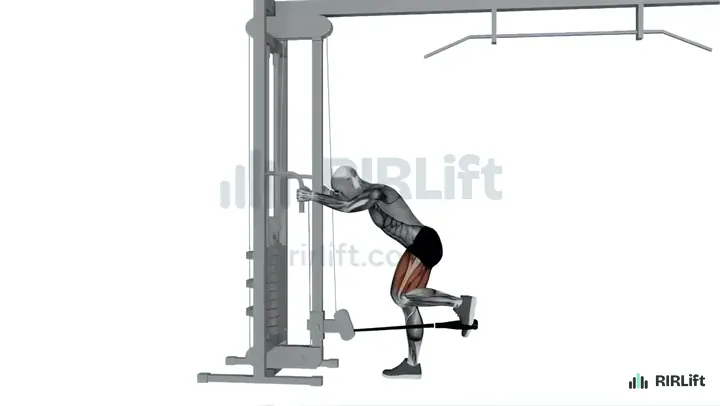
Cable Glute Kickback

Glutes

Kicking one leg back against a low cable isolates the glute on that side without your back or thighs taking over, so you can feel exactly what is working. It is a good finisher once the heavy hip thrust or squat is done.

How to do it

  1. Strap an ankle cuff to a low cable and around one ankle, then face the machine holding the frame with both hands, hinging slightly forward.
  2. Stand on the other leg with a soft knee.
  3. Kick the cuffed leg back and slightly up, leading with the heel, until your glute is fully squeezed.
  4. Return slowly until the foot is just behind the standing foot, finish the set, and switch legs.

Cues

  • Heel leads the kick
  • Hips stay square
  • Small range, hard squeeze

Common mistakes

  • Swinging the leg high by arching your back: stop where your hip is straight and your back is still.
  • Turning your toes and hips out: keep the foot pointing at the floor.

Swap for: Machine Glute Kickback, Band Glute Kickback, Donkey Kick

Outer hips, banded side steps

Lateral Band Walk

Abductors

A loop band above your knees or ankles turns sideways steps into steady work for the outer hip muscles that keep your knees in line. It costs almost nothing, works anywhere, and suits a warm-up or a finisher.

How to do it

  1. Place a loop band around your legs just above the knees or around the ankles, and set your feet at hip width so the band is taut.
  2. Bend your knees and hips into a quarter squat.
  3. Step sideways with one foot, then follow with the other, keeping tension on the band the whole time.
  4. Take 10 to 20 steps one way, then the same number back.

Cues

  • Stay low
  • Band never goes slack
  • Toes forward

Common mistakes

  • Standing up tall between steps: hold the quarter squat for the whole set.
  • Letting the trailing foot snap in: control it so the band stays tight.

Swap for: Hip Abduction Machine, Clamshell, Fire Hydrant

Inner thighs and calves

Two areas a squat-and-lunge routine leaves under-trained. The adduction machine squeezes your legs together against resistance, which is the inner thigh's whole job, and the seated calf raise works the lower calf muscle that standing raises reach less.

Inner thighs, hip adduction

Hip Adduction Machine

Adductors

The adductors make up a large share of your thigh, and this machine trains their main job of drawing your legs together. It is the direct answer to inner-thigh training and rounds out a lower-body day in a few sets.

How to do it

  1. Settle into the machine, back on the pad and the inside of your knees against the leg pads, set as wide as is comfortable.
  2. Hold the handles and sit tall.
  3. Squeeze your knees together until the pads meet or nearly meet.
  4. Let the pads open slowly to the starting stretch and repeat.

Cues

  • Squeeze, do not slam
  • Slow open
  • Back on the pad

Common mistakes

  • Setting the start so wide it strains the groin: begin narrower and widen over a few weeks.
  • Rocking forward to close the pads: sit tall and lighten the stack.

Swap for: Band Hip Adduction, Copenhagen Plank, Sumo Squat

Calves, bent-knee raise

Seated Calf Raise

Calves

With your knees bent, the calf raise shifts to the soleus, the flat muscle under the visible calf that gives the lower leg its fullness. The machine is easy to load and to take to failure.

How to do it

  1. Settle into the machine with the balls of your feet on the platform edge and the pad snug on your lower thighs.
  2. Release the safety and lower your heels as far as they go.
  3. Hold the stretch for a second.
  4. Push up onto the balls of your feet as high as you can, pause, and repeat.

Cues

  • Full stretch at the bottom
  • Pause at both ends
  • No bouncing

Common mistakes

  • Bouncing out of the bottom: stop, then rise.
  • Rolling onto the little toes: press through the big toe.

Swap for: Dumbbell Seated Calf Raise, Standing Calf Raise, Leg Press Calf Raise

Put them together: example sessions

Each session below picks from the exercises above for one situation, with the sets, reps, rest and RIR filled in. Open one in the session builder to change a pick, price it from a recent set, and add it to RIRLift.

Session 1

Starting at 50+, or after years away from training

Open in the session builder
  • Workouts2× a week
  • Working sets24 a week
  • Per workout~25 min
  • EquipmentLeg Press, Seated Leg Curl, Flat Bench, Smith Machine +3

You are starting strength training later in life or coming back after a long break, and you train in a gym with machines.

Machines and a bench squat let you load your legs without balancing a bar, and every set ends 2 to 3 reps short of failure so your joints and tendons can catch up with your muscles over the first months. Both days pair a squat or press with a leg curl, a glute exercise and an inner or outer hip move, because hip strength is what keeps you steady on stairs and uneven ground. Day A is 12 sets and day B is 12, which is enough to build muscle at this stage without leaving you sore for days.

Day A
ExerciseSets × repsRIRRest
Wide-Stance Leg Press1 warm-up set firstFeet high and wide. Tailbone down. 3 × 10–15 2 2 min
Seated Leg CurlKnees at the pivot. 3 × 10–15 2 90 s
Smith Machine Hip ThrustLight bar first week. Hold 1 s up. 2 × 10–15 2 90 s
Hip Adduction MachineComfortable start width. 2 × 12–20 2 1 min
Seated Calf RaisePause at the bottom. 2 × 12–20 2 1 min

Open Day A in the session builder

Day B
ExerciseSets × repsRIRRest
Bodyweight SquatTap a bench each rep. Arms forward. 3 × 8–15 2 90 s
Smith Machine Hip ThrustChin tucked. Shins vertical. 3 × 10–15 2 90 s
Seated Leg CurlSlow return. 2 × 10–15 2 90 s
Lateral Band WalkSteps each way. Stay low. 2 × 10–20 2 1 min
Seated Calf RaiseFull range. 2 × 12–20 2 1 min

Open Day B in the session builder

How to run it
Do Day A and Day B once each per week, with two or three days between them. Walk or cycle for five minutes before you start. For the bodyweight squat, start on a bench or chair at a height you can rise from without your hands.
How to progress
Add reps first, until every set reaches the top of its range at the target reps in reserve. Then add the smallest weight step on machines, or lower the seat for the bodyweight squat. Stay at 2 reps in reserve for the first two months, then let the machine sets move to 1.

Session 2

A full gym, glutes and shape first

Open in the session builder
  • Workouts2× a week
  • Working sets27 a week
  • Per workout~40 min
  • EquipmentFlat Bench, Smith Machine, Barbells, Dumbbells +4

You have lifted for a few months, train in a full gym, and your main goal is rounder glutes and firmer thighs.

Day A opens with the hip thrust and a barbell Romanian deadlift while you are fresh, then the Bulgarian split squat and kickback finish the glutes from two more angles. Day B is built around the back squat, with the curtsy lunge and band walk for the side glutes and the adduction machine for the inner thighs. Heavy free-weight lifts sit at 1 to 2 reps in reserve with a warm-up set, and the kickbacks, curls and machine work go to 0 to 1, which is where small isolation exercises need to be to work. Day A is 13 sets and day B is 14, so your glutes get around 15 hard sets a week counting both days.

Day A
ExerciseSets × repsRIRRest
Smith Machine Hip Thrust2 warm-up sets firstHeavy. 1 s squeeze at lockout. 4 × 6–10 1 2:30 min
Romanian Deadlift1 warm-up set firstBar skims the legs. 3 × 8–12 2 2:30 min
Bulgarian Split SquatPer leg. Lean forward slightly. 3 × 8–12 1 90 s
Cable Glute KickbackPer leg. Heel leads. 3 × 12–20 0 1 min

Open Day A in the session builder

Day B
ExerciseSets × repsRIRRest
Barbell Back Squat2 warm-up sets firstBrace every rep. Full depth. 4 × 6–10 2 3 min
Dumbbell Curtsy LungePer leg. Hips square. 3 × 8–12 1 90 s
Seated Leg Curl2 s return. 3 × 10–15 1 75 s
Lateral Band WalkSteps each way. 2 × 15–25 0 1 min
Hip Adduction MachineSlow open. 2 × 12–20 1 1 min

Open Day B in the session builder

How to run it
Run Day A early in the week and Day B three or four days later. Upper-body days fit between them.
How to progress
Double progression on every lift: reach the top of the rep range on all sets at the target reps in reserve, then add weight. On the hip thrust and back squat, aim to add load every one or two weeks while the reps stay in range.

Session 3

35 minutes, twice a week

Open in the session builder
  • Workouts2× a week
  • Working sets30 a week
  • Per workout~30 min
  • EquipmentDumbbells, Seated Leg Curl, Barbells, Hip Adductor +2

You have about 35 minutes for lower body, twice a week, in a gym, and you want the whole lower body covered without long rests.

Pairing exercises that do not tire the same muscle lets you rest one area while you train another: the split squat with the leg curl, the Romanian deadlift with the adduction machine, and the kickback with the calf raise. That keeps rests short without making the next set weaker. The big lifts stop at 1 to 2 reps in reserve, and the machine and kickback sets go to 0 to 1. It is one routine of 15 sets, done twice a week.

Lower Body Pairs
ExerciseSets × repsRIRRest
A1 Bulgarian Split Squat1 warm-up set firstPer leg. 3 × 8–12 1 1 min
A2 Seated Leg CurlRest after this one. 3 × 10–15 1 90 s
B1 Romanian Deadlift1 warm-up set firstHips back. 3 × 8–12 2 1 min
B2 Hip Adduction MachineRest after this one. 3 × 12–20 1 90 s
C1 Cable Glute KickbackPer leg. 2 × 12–20 0 30 s
C2 Seated Calf RaisePause in the stretch. 1 × 12–20 0 1 min
How to run it
Do the routine twice a week with at least two days between. Within each pair, do one set of the first exercise, then one of the second, then rest the listed time and repeat until the sets are done.
How to progress
Add reps until every set hits the top of its range at the target reps in reserve, then add weight. If you have more than 35 minutes some days, add one set to the split squat and the Romanian deadlift.

Make it fit you

Questions

What is a good lower body workout for women?

One squat or press, one hinge, one glute exercise and one hip or calf exercise, 3 to 4 sets each, twice a week. For example: Bulgarian split squat, Romanian deadlift, hip thrust and adduction machine. Each set should end 1 to 2 reps short of failure, and the weight should go up as the reps get easier.

What is the best exercise for the lower body?

The Bulgarian split squat is the strongest single pick for most women, because it trains the glutes, quads and inner thighs one leg at a time with modest weight. If you can only do one heavy lift, the back squat covers the same muscles with both legs. Neither replaces a hinge for your hamstrings.

What is the best workout for women's buttocks?

A hip thrust for heavy glute work, a Bulgarian split squat or curtsy lunge for the glutes at a stretch, and a kickback or band walk for the upper side of the glutes. The glutes-first plan on this page uses exactly that, with about 15 hard glute sets a week across two days.

How do you tone your legs as an older woman?

The same way at any age: build muscle with strength training and keep it. Start with machines and a bench squat at 2 to 3 reps in reserve, twice a week, and add weight slowly over months. The starting-later plan on this page is built for this, with hip and balance work that also makes stairs and getting up easier.

Can I train lower body two days in a row?

It is better to leave at least one day between them. Muscles grow during recovery, and a second hard session on tired legs gives worse sets. If your schedule forces back-to-back days, make the second one the lighter 35-minute routine.

How long until I see results from lower body exercises?

Most people feel stronger within two to four weeks, mostly from learning the movements. Visible change in shape usually takes two to three months of consistent training with the weights going up, and it shows faster if you also eat enough protein.