
Leg exercises for women: squats, hinges, lunges and glute work
Published October 19, 2026
The best leg exercises for women are the goblet squat and leg press for the front of your thighs, the dumbbell Romanian deadlift and lying leg curl for your hamstrings, the hip thrust and hip abduction machine for your glutes, and the reverse lunge and step-up to train one leg at a time. Women build leg muscle the same way men do, so the plan is the same: one squat, one hinge, one glute move and one single-leg move, each taken within 0 to 2 reps of failure. What makes legs look toned is muscle you have built, which these exercises do.
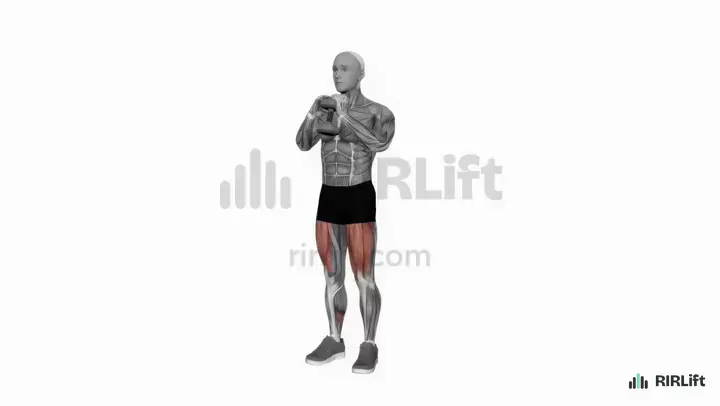
- Goblet Squat Quads, Glutes
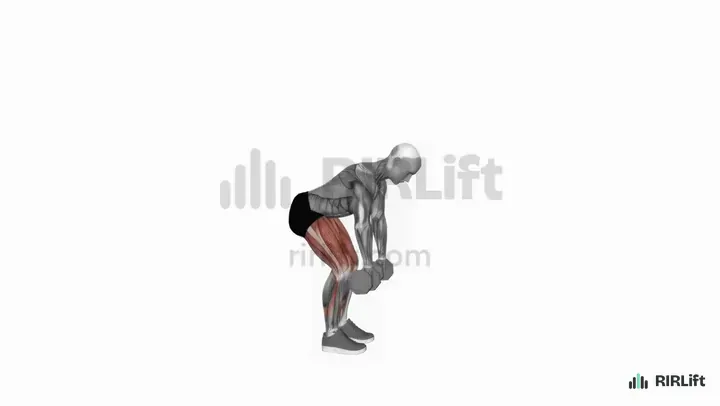
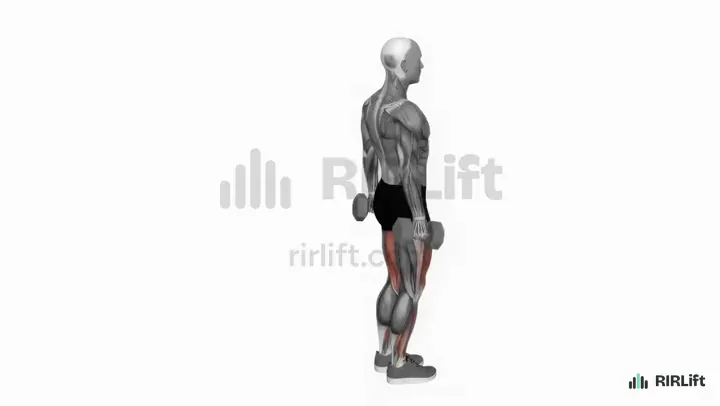
- Dumbbell Romanian Deadlift Hamstrings, Glutes
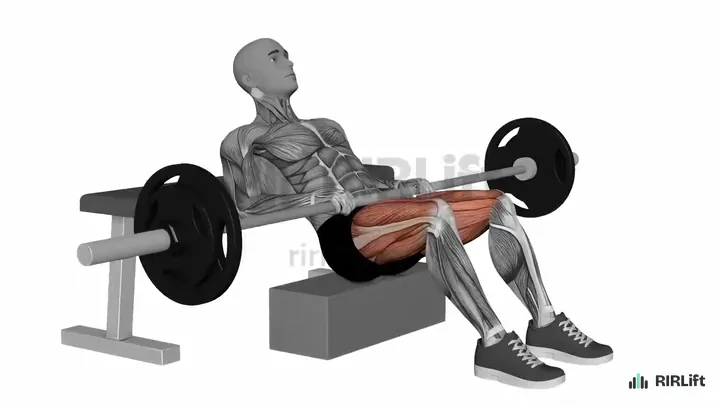
- Hip Thrust Glutes
- Dumbbell Reverse Lunge Quads, Glutes
- Step-Up Quads, Glutes
- Leg Press Quads, Glutes
- Lying Leg Curl Hamstrings
- Hip Abduction Machine Abductors
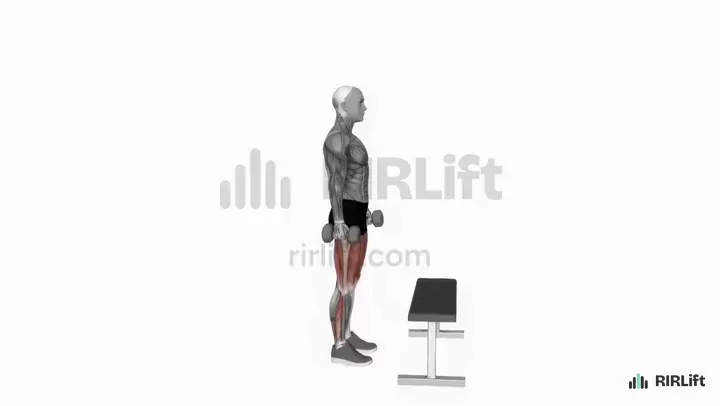
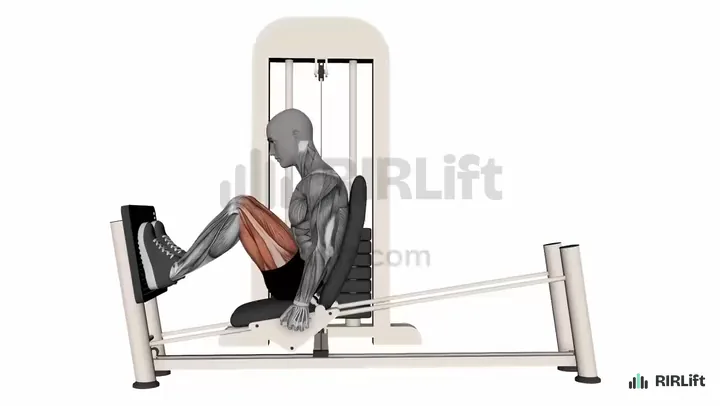
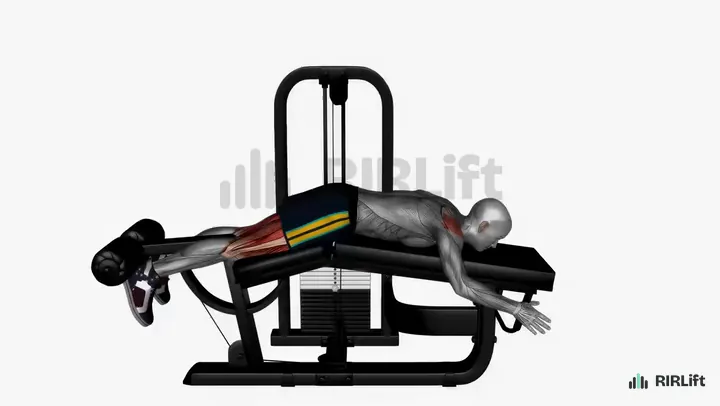
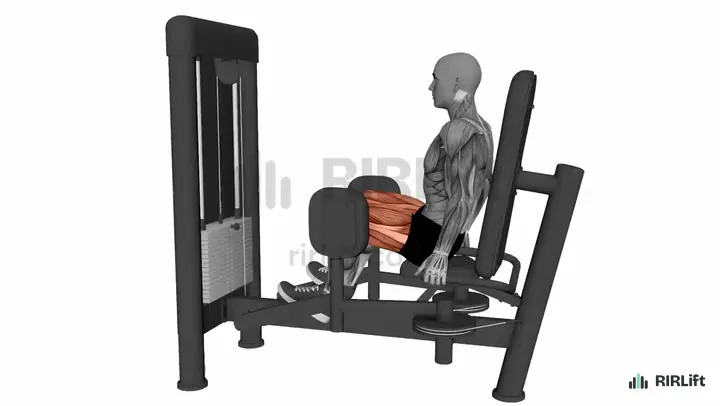
Put them together: example sessions
Each session below picks from the exercises above for one situation, with the sets, reps, rest and RIR filled in. Open one in the session builder to change a pick, price it from a recent set, and add it to RIRLift.
-
Session 1
Training at home with a pair of dumbbells
You train legs at home with one pair of dumbbells, a sturdy step or stair, and floor space, and you want firmer, stronger legs and glutes.
2× a week · 27 sets a week · ~30 min
-
Session 2
A gym with machines and a barbell, two leg days
You train in a gym with a leg press, curl and abduction machines and a barbell for hip thrusts, and you give your legs and glutes two days a week.
2× a week · 27 sets a week · ~35 min
-
Session 3
Knees that ache on squats and lunges
You want strong legs, but deep squats and forward lunges make your knees ache, and you train in a gym.
2× a week · 24 sets a week · ~30 min
Session 1
Training at home with a pair of dumbbells
- Workouts2× a week
- Working sets27 a week
- Per workout~30 min
- EquipmentDumbbells, Flat Bench
You train legs at home with one pair of dumbbells, a sturdy step or stair, and floor space, and you want firmer, stronger legs and glutes.
A light pair of dumbbells stops being hard on two-leg squats quickly, so both days lean on single-leg work (reverse lunges, step-ups, lateral lunges) and higher reps to make the same weight count. Each day has one squat, one hinge, one single-leg move and one glute move, so every part of the leg gets trained twice a week. Squats, lunges and bridges end 0 to 1 reps short of failure because a light weight only builds muscle when the set is close to the end, while the Romanian deadlift stops at 2 to keep your back fresh. Day A is 14 sets and day B is 13.
| Exercise | Sets × reps | RIR | Rest |
|---|---|---|---|
| Goblet Squat1 warm-up set firstOne dumbbell at the chest. Elbows inside the knees. | 3 × 10–20 | 1 | 90 s |
| Dumbbell Romanian Deadlift3 s down. Stop at the hamstring stretch. | 3 × 10–15 | 2 | 90 s |
| Dumbbell Reverse LungePer leg. Long step back. | 3 × 8–15 | 1 | 90 s |
| Dumbbell Glute BridgeBoth dumbbells on the hips. Pause 1 s at the top. | 3 × 12–25 | 0 | 1 min |
| Dumbbell Standing Calf RaiseOn a stair. Pause in the stretch. | 2 × 12–20 | 0 | 1 min |
Open Legs A in the session builder
| Exercise | Sets × reps | RIR | Rest |
|---|---|---|---|
| Sumo Squat1 warm-up set firstBoth dumbbells held together between the legs. | 3 × 12–20 | 1 | 90 s |
| Step-UpPer leg. Back toes lifted. | 3 × 8–12 | 1 | 90 s |
| Dumbbell Romanian DeadliftPause 1 s in the stretch. | 3 × 10–15 | 2 | 90 s |
| Dumbbell Lateral LungePer side. Sit the hips back. | 2 × 8–12 | 1 | 1 min |
| Dumbbell Standing Calf RaiseHold 1 s at the top. | 2 × 12–20 | 0 | 1 min |
Open Legs B in the session builder
- How to run it
- Do Legs A and Legs B once each per week with at least two days between them. Use a stair or a knee-height bench that does not slide for the step-ups.
- How to progress
- Add reps until every set hits the top of its range at the target reps in reserve. When the pair is too light even at 20 reps, slow the lowering to three seconds and add a one-second pause at the bottom of squats and lunges before buying heavier dumbbells.
Session 2
A gym with machines and a barbell, two leg days
- Workouts2× a week
- Working sets27 a week
- Per workout~35 min
- EquipmentBarbells, Flat Bench, Dumbbells, Lying Leg Curl +2
You train in a gym with a leg press, curl and abduction machines and a barbell for hip thrusts, and you give your legs and glutes two days a week.
Splitting the week into a glute-and-hamstring day and a quad day lets the hip thrust and the leg press each open a session while you are fresh, at 1 rep in reserve with a warm-up set. Machines take balance out of the picture, so the leg curl and abduction sets go to 0 to 1 reps in reserve without risk, while the Romanian deadlift stays at 2. Day A is 13 sets and day B is 14, which puts your glutes, quads and hamstrings each at roughly 10 hard sets a week counting the overlap.
| Exercise | Sets × reps | RIR | Rest |
|---|---|---|---|
| Hip Thrust2 warm-up sets firstPause 1 s at the top. Shins vertical. | 4 × 8–12 | 1 | 2 min |
| Dumbbell Romanian DeadliftHeavy pair. Hips back. | 3 × 8–12 | 2 | 2 min |
| Lying Leg Curl2 s down. | 3 × 10–15 | 1 | 75 s |
| Hip Abduction MachinePause wide on every rep. | 3 × 12–20 | 0 | 1 min |
Open Glutes and Hamstrings in the session builder
| Exercise | Sets × reps | RIR | Rest |
|---|---|---|---|
| Leg Press2 warm-up sets firstFeet mid-platform. Back flat. | 4 × 8–12 | 1 | 2 min |
| Step-UpPer leg. Knee-height bench. | 3 × 8–12 | 1 | 90 s |
| Dumbbell Reverse LungePer leg. Lean forward slightly. | 2 × 8–12 | 1 | 90 s |
| Lying Leg CurlLast set to failure. | 2 × 10–15 | 0 | 75 s |
| Dumbbell Standing Calf RaisePause in the stretch. | 3 × 10–15 | 0 | 1 min |
Open Quads and Glutes in the session builder
- How to run it
- Run Glutes and Hamstrings early in the week and Quads and Glutes three or four days later. If you also train upper body, put those days between the two leg days.
- How to progress
- Double progression: when every set of an exercise reaches the top of its range at the target reps in reserve, add the smallest weight step and work back up. On the hip thrust and leg press, add load every week or two while the reps stay in range.
Session 3
Knees that ache on squats and lunges
- Workouts2× a week
- Working sets24 a week
- Per workout~30 min
- EquipmentBarbells, Flat Bench, Leg Press, Lying Leg Curl +2
You want strong legs, but deep squats and forward lunges make your knees ache, and you train in a gym.
This plan moves most of the work to your hips: the hip thrust, Romanian deadlift and leg curl train glutes and hamstrings while your knees stay still or barely bend. The front of your thighs still gets work from a leg press done with high feet and a range you control, and from a low step-up where your shin stays nearly vertical. Abduction sets strengthen the side of the hip that keeps your knees tracking over your toes. Everything sits at 1 to 2 reps in reserve so the knees never take a grinding rep. Day A is 12 sets and day B is 12.
| Exercise | Sets × reps | RIR | Rest |
|---|---|---|---|
| Hip Thrust2 warm-up sets firstKnees stay at 90 degrees at the top. | 4 × 8–12 | 1 | 2 min |
| Leg PressFeet high on the platform. Pain-free depth only. | 3 × 10–15 | 2 | 2 min |
| Lying Leg CurlSlow lowering. | 3 × 10–15 | 1 | 75 s |
| Hip Abduction MachinePause wide. | 2 × 15–20 | 1 | 1 min |
Open Day A in the session builder
| Exercise | Sets × reps | RIR | Rest |
|---|---|---|---|
| Dumbbell Romanian Deadlift1 warm-up set firstKnees softly bent and still. | 4 × 8–12 | 2 | 2 min |
| Step-UpPer leg. Low step, shin near vertical. | 3 × 8–12 | 2 | 90 s |
| Dumbbell Glute BridgePause 2 s at the top. | 3 × 12–20 | 1 | 1 min |
| Hip Abduction MachineLean slightly forward for more glute. | 2 × 15–20 | 1 | 1 min |
Open Day B in the session builder
- How to run it
- Do Day A and Day B once each per week. On the leg press, set your feet high on the platform and stop each rep where your knees still feel fine, even if that is above 90 degrees. Use a step low enough that your knee stays behind your toes.
- How to progress
- Add reps first, then weight. On the leg press and step-up, earn depth before load: once a range feels fine for two weeks, lower an inch further before adding weight.
Make it fit you
-
Glutes matter more than thighs to you
Move the hip thrust or bridge to the first slot on both days and add a third set of abduction. Take a longer step on lunges and lean your torso forward a little, which turns them into glute exercises too.
-
Only bodyweight for now
Run the home plan without the dumbbells and use single-leg versions to keep it hard: single-leg glute bridges, slow reverse lunges, and step-ups with a three-second lowering. Stop each set 0 to 1 reps short of failure, which may mean 20 to 30 reps.
-
You worry about getting bulky
Train the way the plans say anyway. Building visible muscle on your legs takes months of hard sets and eating enough to grow, and the toned look most people want is that muscle with less fat over it. You can stop adding sets whenever you like the shape.
-
One leg day a week
Do Legs A from the home plan or Glutes and Hamstrings from the gym plan, and add one set to each exercise. That is about 16 hard sets in one session, which maintains and slowly builds your legs.
-
One side is stronger
Start the lunges and step-ups with your weaker leg, and do the same number of reps with the stronger one even if it could do more. After a few weeks the gap usually closes.
-
Log how close you got to failure
Note the reps you had left after every working set, not only the weight. If you log in RIRLift, it uses that number to suggest your next weight, so a set at 3 reps in reserve gets nudged up and a grinder at 0 keeps the load where it is.
Questions
What exercises tone your legs?
Squats, Romanian deadlifts, hip thrusts, lunges and step-ups. Toned legs are legs with some muscle on them and less fat over it, so the exercises that build muscle are the ones that tone. Do each for 8 to 20 reps and stop 0 to 2 reps short of failure, and add weight or reps over the weeks so the muscle keeps growing.
Are 4 exercises enough for leg day?
Yes, if they are a squat, a hinge, a glute exercise and a single-leg exercise, done for 3 to 4 hard sets each. That is 12 to 16 hard sets, which covers your quads, hamstrings and glutes. The plans on this page use four or five exercises per day; add a calf raise when you have time.
What leg exercises are good for bad knees?
Exercises where the knee bends little or not at all: the hip thrust, glute bridge, Romanian deadlift and leg curl. For the front of your thighs, use a leg press with your feet high and a depth that does not hurt, and step-ups on a low step. The knee-friendly plan on this page is built from exactly these.
How many times a week should women train legs?
Twice a week works well for most people. It lets you spread 10 to 20 hard sets per muscle across two sessions so each one stays short and focused. Once a week also builds muscle if that one session is hard enough, about 15 sets across your legs and glutes.
Should women train legs differently from men?
No. Muscle grows the same way in women and men, from hard sets taken close to failure with more weight or reps over time. What changes is the goal: many women want more glute work, so the plans here give the hip thrust and abduction machine a bigger share than a typical leg day would.
How heavy should my dumbbells be for leg exercises?
Heavy enough that you finish each set within 0 to 2 reps of failure inside the rep range. For many women starting out, that is 10 to 20 pounds per hand for lunges and step-ups and 20 to 35 pounds for a goblet squat or Romanian deadlift. If you can do 20 reps with reps to spare, go heavier or switch to a single-leg version.
Related templates
-
Lower body exercises for women: glutes, thighs, hips and calves
A wider lower-body list with plans for starting later in life and for short sessions.
-
Glute exercises for women: thrusts, hinges and side glute work
When your glutes are the main goal and you want more than one or two glute moves per day.
-
The best workout for women, for your week
Full-week programs that fit these leg days around upper-body training.
-
Leg exercises with dumbbells: quads, hamstrings, glutes and calves
More dumbbell leg moves when you train at home with heavier pairs or a bench.
-
How to use reps in reserve (RIR)
How to judge the 0 to 2 reps in reserve targets in these plans.