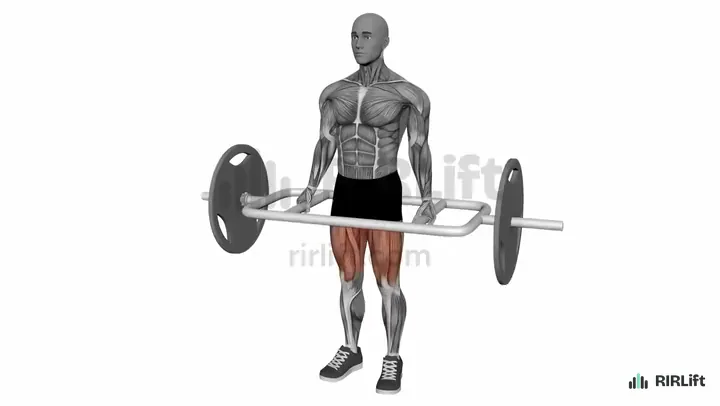
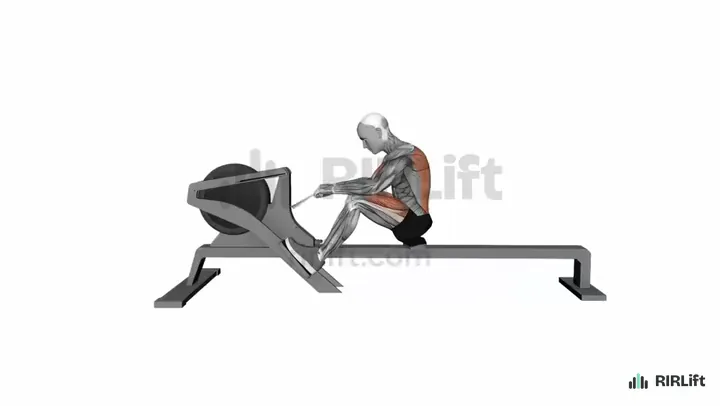
Motocross exercises: grip, pull, legs and engine

The best motocross exercises are the dead hang and farmers walk for grip endurance, pull-ups and one-arm rows for holding your position, the goblet squat, goblet split squat and wall sit for the attack position, the trap bar deadlift for your back, and the rowing machine for your engine. Train them two or three times a week with moderate weights and higher reps, a couple of reps short of failure, and keep heavy grip work out of the days before a race. Riding is still the main training; the gym makes the last laps feel like the first.

  1. Dead Hang Forearms
  2. Farmer's Walk Forearms, Traps, Shoulders
  3. Pull-Up Lats
  4. Goblet Squat Quads, Glutes
  5. Dumbbell Goblet Split Squat Quads, Glutes
  6. Wall Sit Quads
  7. Trap Bar Deadlift Quads, Glutes
  8. Rowing Machine Quads, Hamstrings, Glutes, Lats
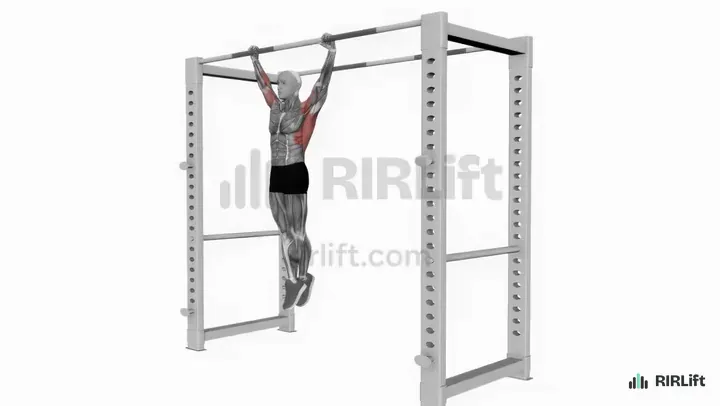
Grip and forearms for the bars

Holding on is the job, and it is endurance, not a one-time squeeze. Train long holds and carries, balance the forearm with wrist extensions, and keep heavy grip work away from race days.

Grip endurance, hanging hold

Dead Hang

Forearms

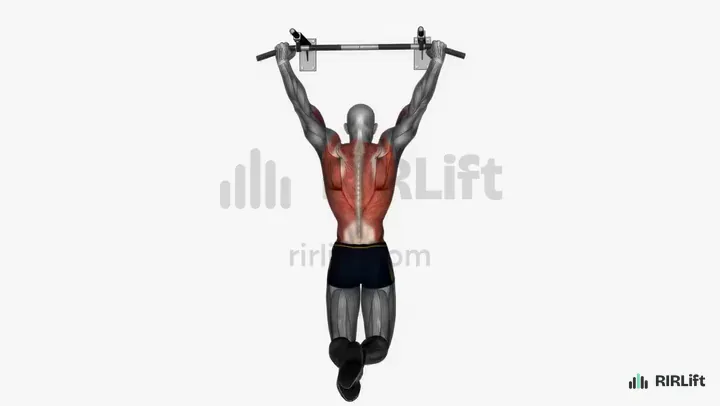
A moto is twenty-plus minutes of holding the bars while the bike tries to rip them out of your hands. Hanging from a bar for time builds the same kind of grip: long, steady holds rather than one heavy squeeze, and it decompresses your spine after a day hunched in the attack position.

How to do it

  1. Reach up and grip a bar with your hands about shoulder width, thumbs wrapped around.
  2. Lift your feet so you hang with straight arms and relaxed legs.
  3. Keep your shoulders gently engaged so you are not hanging off the joint, and breathe slowly.
  4. Hold for the target time, then step down.

Cues

  • Full grip, thumbs around
  • Shoulders slightly active
  • Breathe, do not clench your jaw

Common mistakes

  • Gripping so hard you burn out in twenty seconds: hold just tight enough to stay on, the way you want to hold the bars.
  • Letting the shoulders shrug up to your ears: pull them down a touch and keep them there.

Swap for: Farmer's Walk, Plate Pinch Deadlift, Pull-Up

Build a session with Dead Hang

Grip, traps and trunk, loaded carry

Farmer's Walk

Forearms, Traps, Shoulders

Walking with heavy dumbbells at your sides trains grip, upper back and the trunk all at once, under the same kind of long, constant tension you feel through a rough section. It builds a stronger grip so each squeeze on the bars costs a smaller share of what you have.

How to do it

  1. Deadlift two heavy dumbbells off the floor with a flat back, as if deadlifting them.
  2. Stand tall with your shoulders pulled back and down.
  3. Walk forward with short, quick steps for the target distance or time, keeping the dumbbells still at your sides.
  4. Set them down with the same flat back you used to lift them.

Cues

  • Tall and proud
  • Short, quick steps
  • Bells do not swing

Common mistakes

  • Leaning to one side or letting the shoulders round forward: use a weight you can carry standing straight.
  • Dropping the dumbbells at the end: lower them under control, because grip ends the set, not your back.

Swap for: Dumbbell Suitcase Carry, Trap Bar Shrug, Dead Hang

Forearm extensors, palms-down wrist lift

Reverse Wrist Curl

Forearms

Riders train the gripping side of the forearm endlessly and forget the muscles on the back of it, which lift the wrist and work every time you roll the throttle off or cover the clutch. Light, high-rep wrist extensions balance the forearm without adding heavy grip work.

How to do it

  1. Sit with your forearms resting on your thighs or a bench, palms facing down, light dumbbells held with the wrists past the edge.
  2. Let your hands drop toward the floor as far as is comfortable.
  3. Lift the backs of your hands up toward the ceiling as high as they go, keeping your forearms flat.
  4. Lower slowly and repeat.

Cues

  • Forearms stay pinned
  • Lift with the back of the hand
  • Light and slow

Common mistakes

  • Lifting the forearms off your legs to move the weight: go lighter, the range is small on purpose.
  • Bouncing at the bottom: lower for two seconds every rep.

Swap for: Kettlebell Wrist Extension, Cable Wrist Extension, Reverse Curl

Pulling strength to hold your position

Braking bumps throw you forward and acceleration pulls you back. Strong lats and upper back keep your body where you put it.

Lats and upper back, vertical pull

Pull-Up

Lats

Pulling yourself up trains the lats, upper back and biceps that hold your body over the bike when it decelerates and that pull you forward when it launches out of a corner. Pull-ups also double as grip training, so they do two jobs in one exercise.

How to do it

  1. Hang from a bar with an overhand grip a little wider than your shoulders.
  2. Pull your shoulder blades down, then drive your elbows toward your ribs to lift your chest to the bar.
  3. Get your chin over the bar without craning your neck.
  4. Lower all the way to straight arms under control, then pull again.

Cues

  • Chest to the bar
  • Elbows down to your pockets
  • Full hang every rep

Common mistakes

  • Kicking or swinging to finish reps: if you need momentum, the set is done, or use band help.
  • Stopping halfway down: straight arms at the bottom make the rep count.

Swap for: Band-Assisted Pull-Up, Lat Pulldown, Neutral-Grip Pull-Up

Build a session with Pull-Up

Lats and mid-back, supported one-arm row

One-Arm Dumbbell Row

Lats, Upper Back

Rowing one side at a time lets you pull hard without your lower back giving out, which matters for riders whose backs already take a beating from the track. It builds the pulling strength to hold your position as the bike drops into braking bumps.

How to do it

  1. Put one hand and the same-side knee on a bench so your torso is close to flat.
  2. Let a dumbbell hang from your other hand under your shoulder.
  3. Row it up to your lower ribs, keeping your elbow close to your side.
  4. Lower to a straight arm and repeat. Finish the side, then switch.

Cues

  • Elbow toward your hip
  • Shoulders level
  • Full reach at the bottom

Common mistakes

  • Twisting the torso open to lift more: keep both shoulders square to the floor.
  • Cutting the bottom of the rep short: let the arm straighten fully each time.

Swap for: Kettlebell Row, Seated Cable Row, Dumbbell Lawnmower Row

Legs for the attack position

Your legs are the suspension between you and the bike. Squat with a front load, train each leg alone, hold a static half-squat, and give the calves their own sets.

Quads and hips, front-loaded squat

Goblet Squat

Quads, Glutes

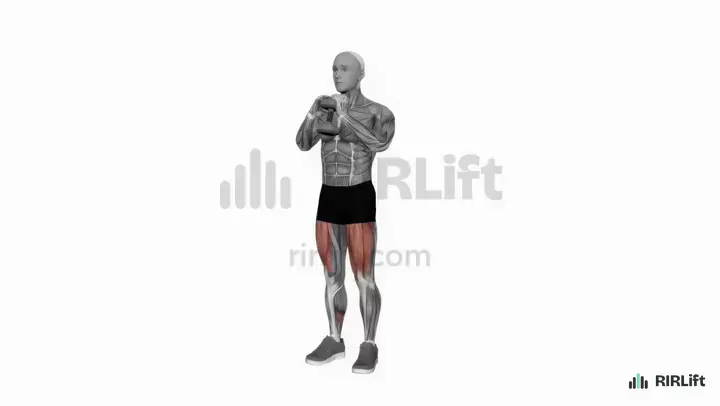
Standing on the pegs through whoops and landings is a long series of partial squats that absorb hits. Holding a weight at your chest keeps your torso upright and puts the work on the quads, and it is easy to learn, so it is the main squat for riders who do not live in a gym.

How to do it

  1. Cup one end of a dumbbell in both palms and hold it upright at your sternum.
  2. Stand with your feet a bit wider than your hips and your toes slightly out.
  3. Sit down between your heels until your hip crease drops to knee height or lower, chest up.
  4. Drive through your whole foot to stand back up.

Cues

  • Elbows inside the knees
  • Chest tall
  • Sit between the heels

Common mistakes

  • Letting the heels lift at the bottom: widen your stance a little or stop slightly higher.
  • Leaning forward so the weight drifts off your chest: keep it pinned, it is what keeps you upright.

Swap for: Dumbbell Front Squat, Front Squat, Leg Press

Single-leg strength, front-loaded split squat

Dumbbell Goblet Split Squat

Quads, Glutes

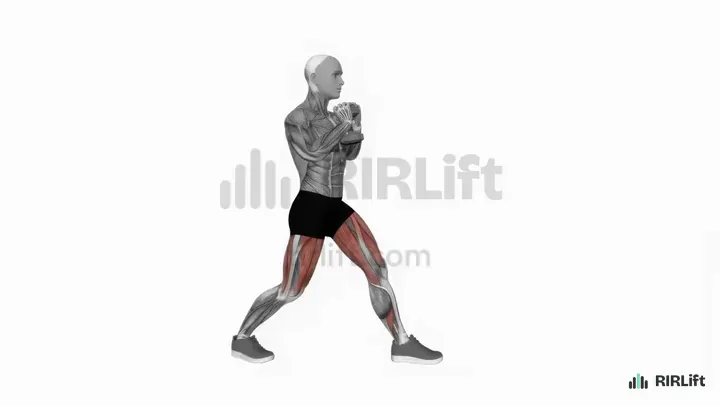
On the bike your legs rarely work evenly; one leg takes more load every time you weight a peg into a corner. A split squat with the weight held at the chest trains each leg on its own and asks your trunk to stay upright, much like standing in a corner rut.

How to do it

  1. Hold a dumbbell at your chest and step one foot forward into a long split stance.
  2. Lower straight down until your back knee nearly reaches the floor.
  3. Stay tall, front heel planted.
  4. Drive through the front foot to rise. Finish the reps, then switch legs.

Cues

  • Straight down, not forward
  • Front heel heavy
  • Dumbbell stays at the chest

Common mistakes

  • Stance too short so the front heel lifts: lengthen the step.
  • Drifting forward on each rep: move up and down like an elevator.

Swap for: Bulgarian Split Squat, Dumbbell Split Squat, Reverse Lunge

Quad endurance, isometric hold

Wall Sit

Quads

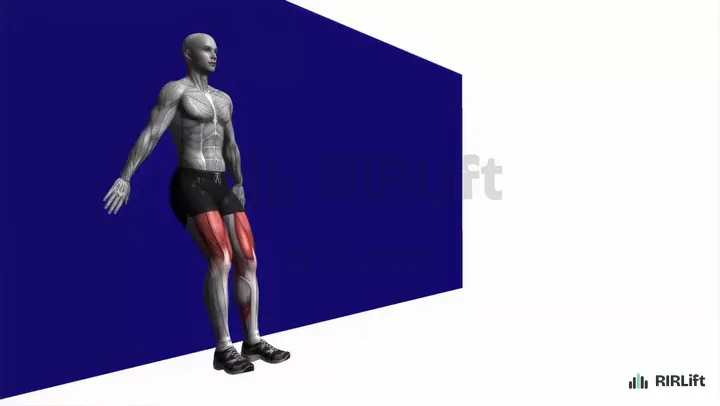
The attack position is a half-squat you hold, and your quads are what burn first late in a moto. A wall sit trains that kind of long static effort with zero equipment and no impact.

How to do it

  1. Stand with your back flat against a wall and walk your feet out about two feet.
  2. Slide down until your knees are bent close to 90 degrees.
  3. Press your shoulder blades into the wall and keep your weight in your heels.
  4. Hold for the target time, then slide back up.

Cues

  • Knees over ankles
  • Back flat on the wall
  • Breathe through the burn

Common mistakes

  • Resting your hands on your thighs: keep them off your legs or out in front.
  • Sliding up a little as it gets hard: hold the angle, or end the set.

Swap for: Goblet Squat, Bodyweight Squat, Leg Press

Build a session with Wall Sit

Calves and ankles, one-leg raise

Single-Leg Calf Raise

Calves

Your feet grip the pegs and steer the bike through your ankles, and your calves soak up landings. Raising on one leg at a time trains each calf through a full range and shows you quickly if one side is weaker.

How to do it

  1. Stand on one foot on the edge of a step with your heel hanging off, holding a dumbbell in the same-side hand and a rail with the other.
  2. Drop the heel below the step until your calf is stretched.
  3. Rise as high onto the ball of your foot as you can and pause.
  4. Lower slowly and repeat. Then switch sides.

Cues

  • Deep stretch at the bottom
  • Pause at the top
  • Slow down

Common mistakes

  • Bouncing out of the bottom: pause for a second in the stretch.
  • Bending the knee to push up: keep the leg straight so the calf does the work.

Swap for: Standing Calf Raise, Dumbbell Standing Calf Raise, Seated Calf Raise

Hinge and trunk for a strong back

A tired back folds the attack position. One heavy hinge and one side hold cover the back, glutes and obliques.

Whole posterior chain, hinge

Trap Bar Deadlift

Quads, Glutes

Holding the attack position is a hip hinge, and the back, glutes and hamstrings that keep it are the same muscles that tire and let the bike push you around. The trap bar puts the load at your sides, so you can deadlift strong with less strain on the lower back than a straight bar.

How to do it

  1. Stand in the middle of the hex frame, feet hip-width apart.
  2. Hinge down and grip the handles, hips higher than your knees, back flat.
  3. Push the floor away and stand up tall, squeezing your glutes at the top.
  4. Reverse it, hips back and then knees, until the plates touch.

Cues

  • Push the floor away
  • Flat back, chest up
  • Hips and shoulders rise together

Common mistakes

  • Jerking the bar off the floor: pull the slack out first, then drive.
  • Leaning back at the top: stand tall and stop.

Swap for: Romanian Deadlift, Kettlebell Deadlift, Barbell Deadlift

Obliques and hips, side hold

Side Plank

Abs

Riding is constant side-to-side load: weighting a peg, steering with your knees, getting thrown in ruts. A side plank trains the obliques and the outside of the hip to hold you level against that pull.

How to do it

  1. Lie on your side with your forearm under your shoulder and your legs stacked.
  2. Lift your hips until your body is one straight line from ankles to head.
  3. Hold without letting your hips sink or roll forward.
  4. Lower, then switch sides.

Cues

  • Hips high
  • Elbow under shoulder
  • Push the floor away

Common mistakes

  • Hips drooping as you tire: end the hold when the line goes.
  • Rolling the top shoulder forward: stack it over the bottom one.

Swap for: Dumbbell Side Plank, Copenhagen Plank, Pallof Press

Conditioning engine

Riding builds riding fitness, but a rower gives you hard, full-body cardio on days you cannot get to a track.

Engine, full-body conditioning

Rowing Machine

Quads, Hamstrings, Glutes, Lats
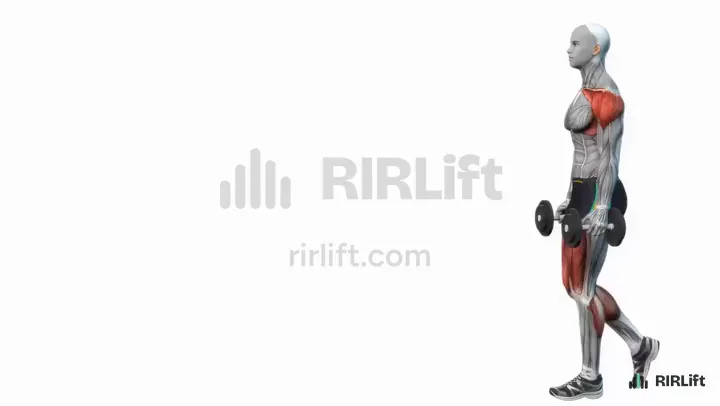
Rowing uses legs, back and grip together for long stretches, which is the closest gym match to the work of a moto. It builds the aerobic base that lets you ride the last laps at the pace of the first.

How to do it

  1. Strap your feet in and grab the handle with straight arms, shins vertical.
  2. Push with your legs first, then lean back a little, then pull the handle to your lower ribs.
  3. Return in reverse order: arms out, body forward, then knees bend.
  4. Keep a steady rhythm for the target time or distance.

Cues

  • Legs, body, arms
  • Arms, body, legs on the way back
  • Relaxed grip

Common mistakes

  • Pulling with the arms before the legs finish: let the leg drive do the work.
  • Squeezing the handle hard: hold it loosely to save your forearms for the bike.

Swap for: Ski Erg, Air Bike, Stationary Bike

Put them together: example sessions

Each session below picks from the exercises above for one situation, with the sets, reps, rest and RIR filled in. Open one in the session builder to change a pick, price it from a recent set, and add it to RIRLift.

Session 1

Race season, riding every weekend

Open in the session builder
  • Workouts2× a week
  • Working sets30 a week
  • Per workout~35 min
  • EquipmentDumbbells, Pull-Up Bar, Rowing Machine

You ride or race most weekends and practice midweek, and the gym has to keep you strong without leaving you sore or with tired forearms on the gate.

In season, riding is the hard training, so this is one session repeated twice a week with moderate weights, higher reps and 2 reps in reserve. There is no heavy grip work in it at all: the dead hang and carries live in the off-season plan, because tired forearms before a race make holding on harder. Session volume is 15 sets.

Race-Week Strength
ExerciseSets × repsRIRRest
Goblet Squat 3 × 10–15 2 90 s
Pull-UpBand help if needed. 3 × 6–12 2 90 s
Dumbbell Goblet Split SquatPer leg. 2 × 10–12 2 75 s
One-Arm Dumbbell RowPer arm. 2 × 10–12 2 1 min
Side PlankSeconds per side. 2 × 30–45 2 45 s
Rowing Machine2 min steady, 90 s easy. 3 × 1 3 90 s
How to run it
Lift Monday or Tuesday and again Wednesday or Thursday, and leave at least two full days before a race. The rowing finisher is optional on a week with a lot of riding.
How to progress
Hold the loads steady through the season and add reps only. If a set feels like 4 or more reps left, add the smallest weight step next time.

Session 2

Off-season build

Open in the session builder
  • Workouts3× a week
  • Working sets41 a week
  • Per workout~30 min
  • EquipmentTrap Bar, Dumbbells, Pull-Up Bar, Rowing Machine

Racing has stopped for the winter or you have a break of six weeks or more, and you want to come back with more strength and grip endurance.

With less riding you can lift three times a week and push closer to failure, at 1 to 2 reps in reserve. Session A is legs and hinge, B is pull and grip, C is conditioning-style strength with higher reps and short rest to build the endurance a moto needs. Grip shows up in two sessions here because you have the recovery for it.

A: Legs and Hinge
ExerciseSets × repsRIRRest
Trap Bar Deadlift 4 × 5–8 2 2:30 min
Goblet Squat 3 × 8–12 1 2 min
Single-Leg Calf RaisePer leg. 3 × 10–15 1 1 min
Side PlankSeconds per side. 3 × 45 1 45 s

Open A: Legs and Hinge in the session builder

B: Pull and Grip
ExerciseSets × repsRIRRest
Pull-Up 4 × 5–10 1 2 min
One-Arm Dumbbell RowPer arm. 3 × 8–12 1 75 s
Farmer's Walk40 m or 40 s. 3 × 1 2 90 s
Reverse Wrist Curl 2 × 15–25 1 45 s
Dead HangSeconds. 3 × 30–60 1 1 min

Open B: Pull and Grip in the session builder

C: Moto Endurance
ExerciseSets × repsRIRRest
A1 Dumbbell Goblet Split SquatPer leg. 3 × 12–15 2 1 min
A2 Pull-Up 3 × 6–10 2 1 min
Wall Sit45 to 75 s. 3 × 1 2 45 s
Rowing Machine3 min hard, 1 min easy. 4 × 1 3 1 min

Open C: Moto Endurance in the session builder

How to run it
Do A, B and C on three non-consecutive days, for example Monday, Wednesday and Friday. Keep one ride or trail day if you can.
How to progress
Add reps until each set reaches the top of its range at the target RIR, then add load. In the last two weeks before riding again, cut each session by one set per exercise.

Session 3

Weekend rider who lifts twice a week

Open in the session builder
  • Workouts2× a week
  • Working sets26 a week
  • Per workout~30 min
  • EquipmentDumbbells, Pull-Up Bar, Trap Bar, Rowing Machine

You ride trail or practice a couple of weekends a month, work a full week, and have two short sessions for the gym.

Two full-body sessions cover everything a casual rider needs: a squat or hinge, a pull, grip, a single-leg exercise and the trunk, at 2 to 3 reps in reserve so they fit around work and riding. Each has 13 working sets and takes about 45 minutes.

Day 1
ExerciseSets × repsRIRRest
Goblet Squat 3 × 8–12 2 90 s
Pull-UpBand help if needed. 3 × 5–10 2 90 s
Single-Leg Calf RaisePer leg. 2 × 10–15 2 1 min
Farmer's Walk30 m. 2 × 1 2 90 s
Side PlankSeconds per side. 3 × 30 2 45 s

Open Day 1 in the session builder

Day 2
ExerciseSets × repsRIRRest
Trap Bar Deadlift 3 × 6–10 2 2 min
One-Arm Dumbbell RowPer arm. 3 × 10–12 2 1 min
Wall SitSeconds. 2 × 45 3 1 min
Dead HangSeconds. 2 × 30 2 1 min
Rowing Machine2 min steady. 3 × 1 3 1 min

Open Day 2 in the session builder

How to run it
Do Day 1 early in the week and Day 2 two or three days later. Skip Day 2 if you ride that weekend and Day 2 falls on Friday.
How to progress
When you reach the top of the reps on every set at 2 reps in reserve, add weight. Move to the off-season plan in a winter break.

Make it fit you

Questions

How do you get in shape for motocross?

Ride as much as you can, then add two or three gym sessions a week for grip endurance, pulling strength, legs and the trunk, plus steady cardio like rowing, running or cycling. Moderate weights for 8 to 15 reps, a couple of reps short of failure, build the stamina riding asks for without leaving you sore on the bike.

What muscles does motocross work the most?

Forearms and grip, the lats and upper back that hold you over the bars, the quads and glutes that keep you in the attack position, and the trunk that ties them together. The heart and lungs work hard throughout, which is why riders train cardio as seriously as strength.

Should motocross riders lift heavy?

Some heavy work helps in the off-season, like deadlifts for 5 to 8 reps, but most of a rider's lifting sits at moderate weights and higher reps. Heavy grip work close to a race is the one thing to avoid, because tired forearms make it harder to hold on.

Is rowing good for motocross?

Yes. The rower works legs, back and grip together for minutes at a time, which matches the demands of a moto better than most cardio machines. Hold the handle loosely so the forearms do not tire before your legs and lungs.

How many days a week should a motocross rider work out?

Two days in race season and three in the off-season works for most riders. Leave at least two days between your last lifting session and a race.