
Forearm exercises with dumbbells: wrist curls, hammer curls and carries
Published October 19, 2026
The best forearm exercises with dumbbells are the reverse wrist curl for the top of the forearm, the hammer curl and Zottman curl for the thick muscle near the elbow, a rotation exercise for the muscles that turn your palm, and the farmer's walk for grip. Three of those, one from each of the curl, wrist and carry groups, cover the forearm. Do 2 to 4 hard sets of each two times a week; forearms recover fast and handle high reps well.
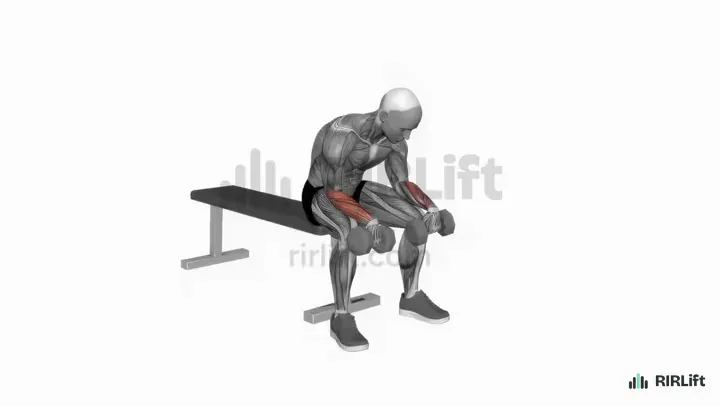
- Reverse Wrist Curl Forearms
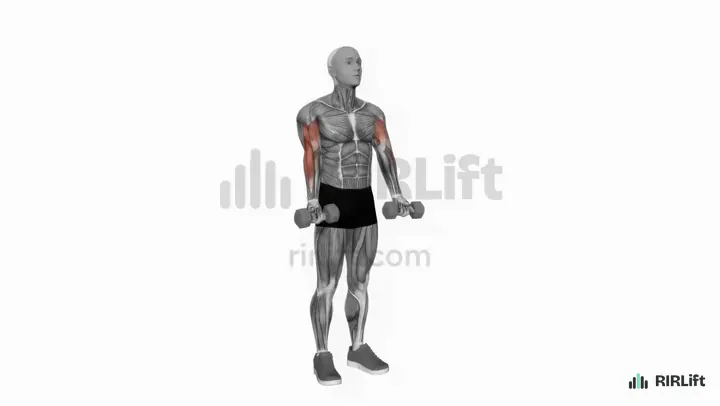
- Zottman Curl Biceps, Forearms
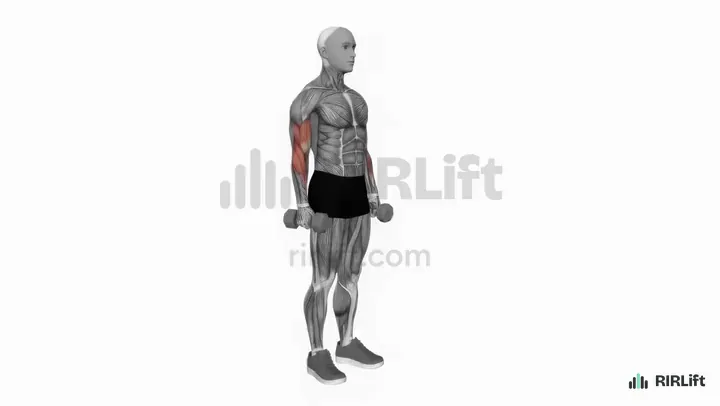
- Hammer Curl Biceps, Forearms
- Dumbbell Wrist Pronation-Supination Forearms
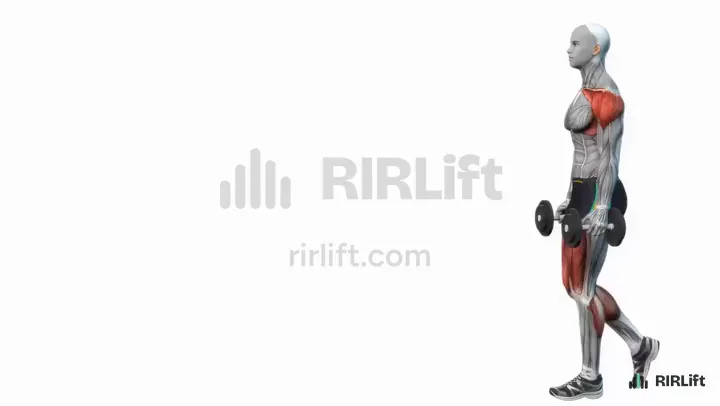
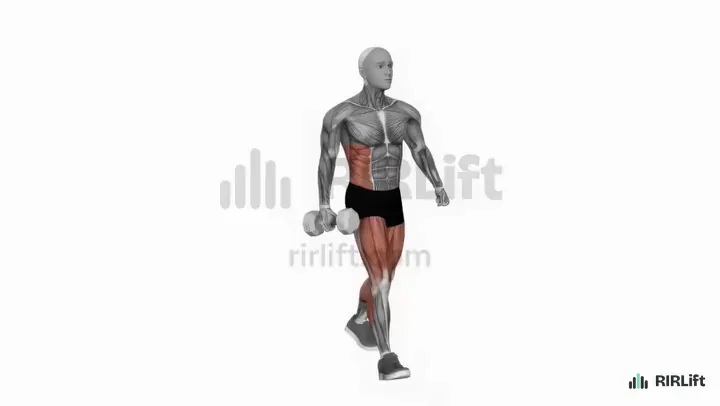
- Farmer's Walk Forearms, Traps, Shoulders
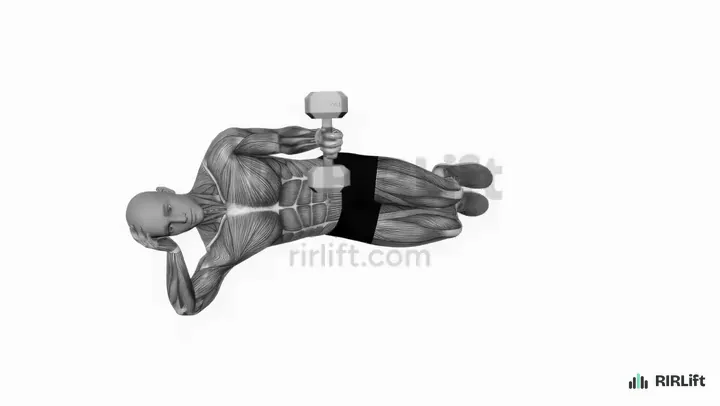
- Dumbbell Suitcase Carry Abs, Quads
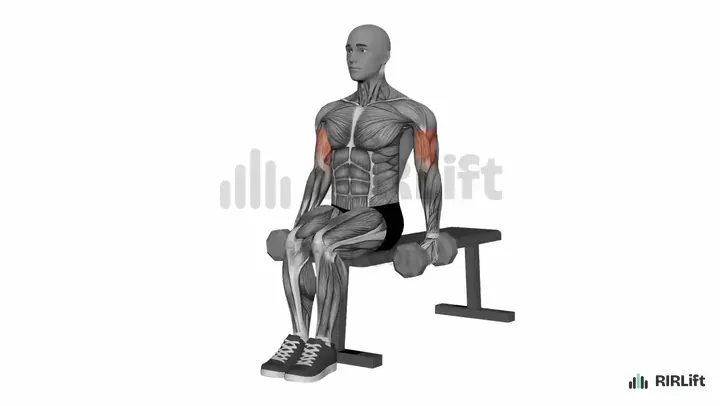
- Seated Dumbbell Hammer Curl Biceps
Put them together: example sessions
Each session below picks from the exercises above for one situation, with the sets, reps, rest and RIR filled in. Open one in the session builder to change a pick, price it from a recent set, and add it to RIRLift.
-
Session 1
Ten minutes at the end of an arm or pull day
You already train arms or back and want bigger forearms without adding a workout.
2× a week · 16 sets a week · ~15 min
-
Session 2
One pair of dumbbells at home, forearms as a focus
You train at home with one pair and want a dedicated forearm session, for size or for wrists that feel weak.
2× a week · 26 sets a week · ~25 min
-
Session 3
Grip gives out on deadlifts and rows
Your hands fail before your back does on heavy pulls, and you can get to a gym or have heavy dumbbells.
1× a week · 10 sets a week · ~25 min
Session 1
Ten minutes at the end of an arm or pull day
- Workouts2× a week
- Working sets16 a week
- Per workout~15 min
- EquipmentDumbbells
You already train arms or back and want bigger forearms without adding a workout.
Curls and rows already work the grip, so this add-on covers what they miss: the Zottman curl for the brachioradialis and extensors, and the reverse wrist curl for the top of the forearm, finished with one heavy carry for the flexors. That is 8 sets in about ten minutes. Forearms recover quickly and tolerate going to failure, so the curls end at 0 to 1 RIR; the carry stops 1 short of dropping the dumbbells.
| Exercise | Sets × reps | RIR | Rest |
|---|---|---|---|
| Zottman Curl3 s down, palms down. | 3 × 8–15 | 1 | 1 min |
| Reverse Wrist CurlForearms on thighs. | 3 × 15–25 | 0 | 45 s |
| Farmer's WalkReps are steps. Heaviest pair you can hold. | 2 × 30–40 | 1 | 90 s |
- How to run it
- Do it at the end of two sessions a week, after your other curls.
- How to progress
- Add reps to the Zottman and reverse wrist curls until you reach the top of the range, then go up a dumbbell. On the carry, add steps each week, and add weight once you reach 40.
Session 2
One pair of dumbbells at home, forearms as a focus
- Workouts2× a week
- Working sets26 a week
- Per workout~25 min
- EquipmentDumbbells
You train at home with one pair and want a dedicated forearm session, for size or for wrists that feel weak.
With one pair, the hammer curl is the heaviest forearm load, and the alternating version lets the pair work in two ways. The reverse wrist curl and the rotation exercise are light work where your pair is likely already heavy enough, and the suitcase carry puts the whole dumbbell in one hand, which is a bigger grip challenge than carrying both. Every set ends 0 to 1 short of failure, 13 sets per session.
| Exercise | Sets × reps | RIR | Rest |
|---|---|---|---|
| Hammer CurlGrip hard. | 4 × 8–15 | 1 | 1 min |
| Reverse Wrist Curl | 3 × 15–25 | 0 | 45 s |
| Dumbbell Wrist Pronation-SupinationPer arm. Elbow stays on your hip. | 3 × 12–20 | 1 | 45 s |
| Dumbbell Suitcase CarrySteps per hand. | 3 × 20–40 | 1 | 1 min |
Open Forearms A in the session builder
| Exercise | Sets × reps | RIR | Rest |
|---|---|---|---|
| Alternating Hammer CurlCount each arm. | 4 × 8–15 | 1 | 1 min |
| Zottman Curl3 s down. | 3 × 10–15 | 0 | 1 min |
| Dumbbell Suitcase CarrySteps per hand. Don't lean. | 3 × 20–40 | 1 | 1 min |
| Reverse Wrist Curl | 3 × 15–25 | 0 | 45 s |
Open Forearms B in the session builder
- How to run it
- Do Forearms A and B on different days, two or more days apart. They are short enough to stack onto any other workout.
- How to progress
- Add reps until the top of the range, then slow the lowering on the curls to three seconds. On carries, add steps before anything else.
Session 3
Grip gives out on deadlifts and rows
- Workouts1× a week
- Working sets10 a week
- Per workout~25 min
- EquipmentDumbbells
Your hands fail before your back does on heavy pulls, and you can get to a gym or have heavy dumbbells.
The flexors that hold the bar respond to heavy holding, so this session leads with the farmer's walk using the heaviest dumbbells you can carry, then a one-sided carry, then a strict seated hammer curl for the brachioradialis. The carries stop 1 RIR short of dropping the weight so your form holds; the curl goes to 1 RIR because your grip is already tired. Ten sets once a week, on a day without heavy deadlifts.
| Exercise | Sets × reps | RIR | Rest |
|---|---|---|---|
| Farmer's Walk1 warm-up set firstReps are steps. Heaviest pair you can hold. | 4 × 20–40 | 1 | 2 min |
| Dumbbell Suitcase CarrySteps per hand. | 3 × 20–30 | 1 | 90 s |
| Seated Dumbbell Hammer CurlStrict. Squeeze the handles. | 3 × 6–12 | 1 | 90 s |
- How to run it
- Do it once a week, two or more days before your heaviest pulling day.
- How to progress
- Add 5 to 10 steps per carry each week, then go up a dumbbell size and start again at the low end. Curls: reps first, then weight.
Make it fit you
-
Only light dumbbells
Light dumbbells are already enough for reverse wrist curls and rotation. For grip, hold one dumbbell in one hand for the suitcase carry, or hold the farmer's walk standing still until your grip fails.
-
Wrists feel sore
Keep the wrist exercises at 15 to 25 reps with a smooth tempo, and start the session with hammer curls to warm the joint before the reverse wrist curls.
-
Inner forearm lags
The flexors on the palm side get their most direct work from carries. Add a set of farmer's walks, and try finishing each carry with a 10-second hold standing still.
-
Pressed for time
Do just the Zottman curl and the farmer's walk. That covers the top of the forearm, the brachioradialis and grip in four sets.
-
Climbing, racket or grappling sports
Keep the rotation exercise in every session and do the forearm work after your sport rather than before, so your grip is fresh when you need it.
-
Log the RIR, not just the weight
Forearm sets feel similar from week to week, so write down how many reps you had left. In RIRLift you log that RIR next to each set, and for carries you can log steps as reps, so you can see the numbers move.
Questions
How do I make my forearms bigger with dumbbells?
Train both sides of the forearm and the brachioradialis: a reverse wrist curl, a hammer or Zottman curl and a heavy carry, 2 to 4 hard sets each, twice a week. Add reps and then weight over time. Forearm size also depends a lot on genetics, so progress is slow for some people.
Is 3 exercises enough for forearms?
Yes, if the three cover different jobs: a curl with palms in or down, a wrist exercise, and a carry or hold for grip. Two sessions a week with 6 to 12 total hard sets is enough for most people.
What are the 3 best exercises for strong forearms?
The farmer's walk for grip strength, the hammer curl for the brachioradialis, and the reverse wrist curl for the extensors on top of the forearm.
What are the best forearm workouts with dumbbells?
The add-on plan above (Zottman curl, reverse wrist curl and farmer's walk after an arm or pull day) suits most lifters. If you want a full forearm session, the home plan adds the hammer curl, rotation and suitcase carry.
How long does it take to see forearm gains?
Strength and grip improve within a few weeks. Visible size takes longer, usually a few months of steady training, and depends on body fat and genetics.
What are some good stretches for the forearms?
Two cover most of it. With your arm straight in front of you, palm up, gently pull your fingers down and back with the other hand to stretch the inner forearm; turn the palm down and press the back of the hand toward you to stretch the top. Hold each for 20 to 30 seconds after a forearm session.
How many sets for forearms per week?
About 6 to 12 hard sets a week, split across two sessions, on top of the grip work your curls and rows already give. Add sets only if your forearms stop progressing.
Do I need wrist curls if I already curl and deadlift?
Curls and deadlifts train the flexors and brachioradialis, but almost nothing in a normal program works the extensors on the back of the forearm directly. A few sets of reverse wrist curls fill that gap.
Related templates
-
The best workout for forearms, for your situation
Forearm programs that also use barbells, cables and pull-up bar hangs.
-
Forearm exercises at home: grip, wrist and elbow work with the gear you own
Grip and forearm work with bands, towels and bodyweight.
-
Wrist curl: how to do it for bigger forearms and a stronger grip
The palms-up wrist curl for the inner forearm, with variations.
-
Farmer's walk: how to do it, what it works, and what to swap it for
How heavy, how far and how often to carry for grip.
-
Dumbbell arm exercises for biceps, triceps and forearms
Put the forearm work into a full dumbbell arm day.