Exercises for skiing: leg strength, lateral power and ski workouts

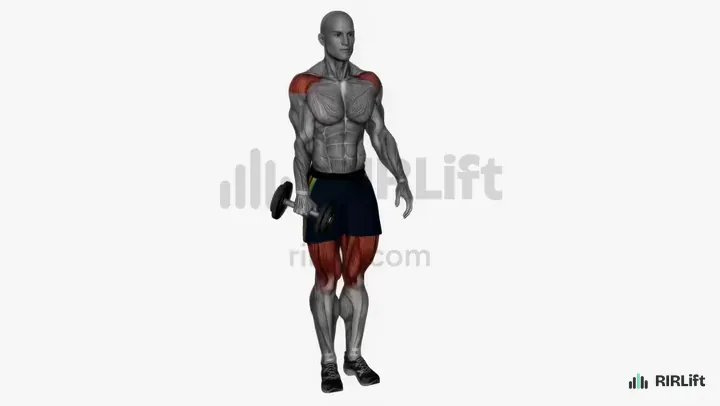
The best exercises for skiing are squats (front squat or heels-elevated goblet squat) for quad strength, the wall sit for holding your stance, lateral lunges and Cossack squats for side-to-side strength, the reverse lunge and single-leg Romanian deadlift for each leg, skater hops and jump squats for power and landings, and the Copenhagen plank and Pallof press for your inner thighs and trunk. Start six to eight weeks before the season, train twice a week, and stop most sets 1 to 2 reps short of failure so you build strength without arriving sore.

  1. Front Squat Quads, Glutes, Adductors
  2. Heels-Elevated Goblet Squat Quads
  3. Wall Sit Quads
  4. Dumbbell Lateral Lunge Quads, Glutes, Adductors
  5. Single-Leg RDL Hamstrings, Glutes
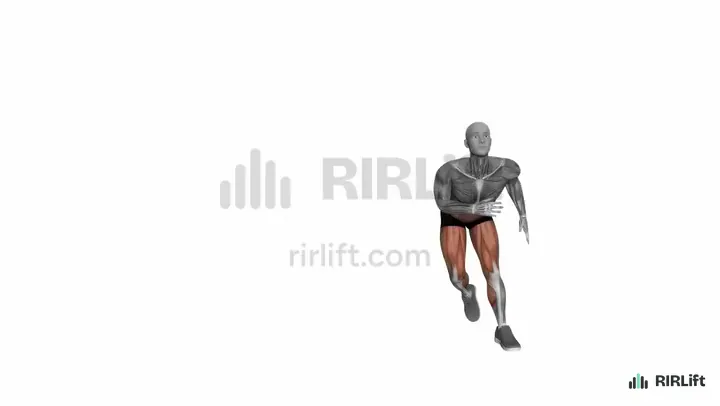
  6. Skater Hop Glutes, Quads, Abductors
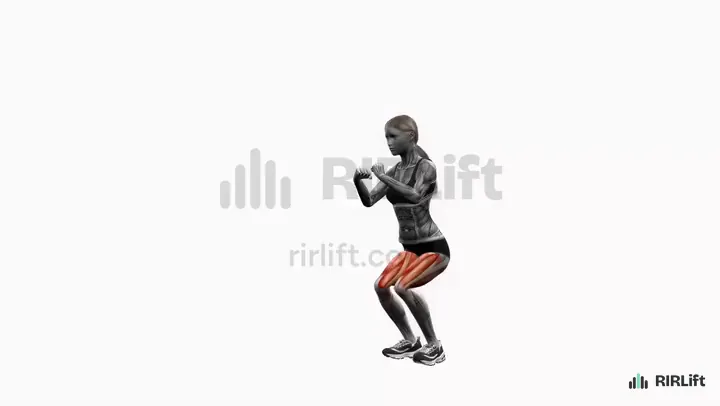
  7. Jump Squat Quads, Glutes
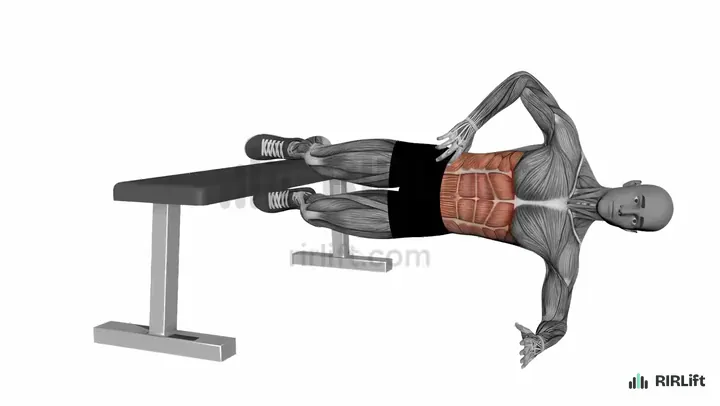
  8. Copenhagen Plank Adductors, Abs
Leg strength: quads, glutes and hamstrings

Strong legs are the center of ski fitness. One squat and one single-leg exercise for the quads, plus a hinge for the hamstrings and glutes, cover the muscles that keep you in a good stance all day.

Leg strength, quads

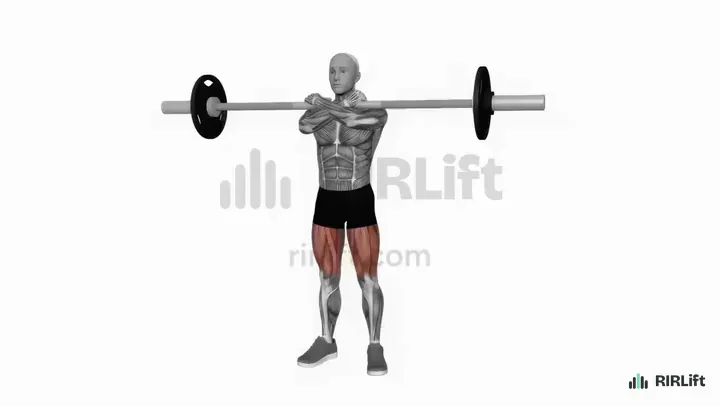
Front Squat

Quads, Glutes, Adductors

Skiing is a long fight between your quads and gravity, and the front squat trains the quads hard while keeping your chest up, the same tall-but-flexed posture you hold over your skis. It is the heavy leg lift for the gym plan.

How to do it

  1. Rest the bar across the front of your shoulders, close to your throat, elbows pointing forward.
  2. Stand with feet about shoulder-width and brace your trunk.
  3. Bend your knees and hips and sit down between your heels, elbows high, until your thighs are about parallel.
  4. Stand back up while keeping the bar over the middle of your feet.

Cues

  • Elbows forward and up
  • Chest proud
  • Knees track over toes

Common mistakes

  • Dropping the elbows so the bar slides forward: lift them before each rep.
  • Knees caving in on the way up: push them out over the little toes.

Swap for: Goblet Squat, Barbell Back Squat, Leg Press

Leg strength, deep knee bend

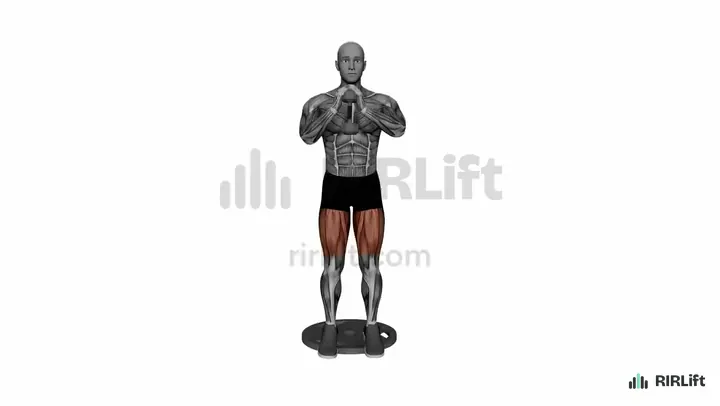
Heels-Elevated Goblet Squat

Quads

Raising your heels on a small plate or wedge tilts your shins forward the way ski boots do, and puts the work squarely on the quads. A dumbbell held at the chest keeps it simple at home or in the gym.

How to do it

  1. Set your heels on a small plate or wedge, feet close together, and hold one dumbbell upright against your chest.
  2. Sit straight down, letting your knees travel forward over your toes.
  3. Go as deep as you can with your chest up, ideally until your hamstrings touch your calves.
  4. Stand back up without letting the heels leave the wedge.

Cues

  • Knees forward, like in boots
  • Chest stays up
  • Slow on the way down

Common mistakes

  • Leaning forward over the dumbbell: hold it high against your chest and stay upright.
  • Cutting the depth short: lower the load and use the full range.

Swap for: Goblet Squat, Sissy Squat, Leg Extension

Single-leg strength

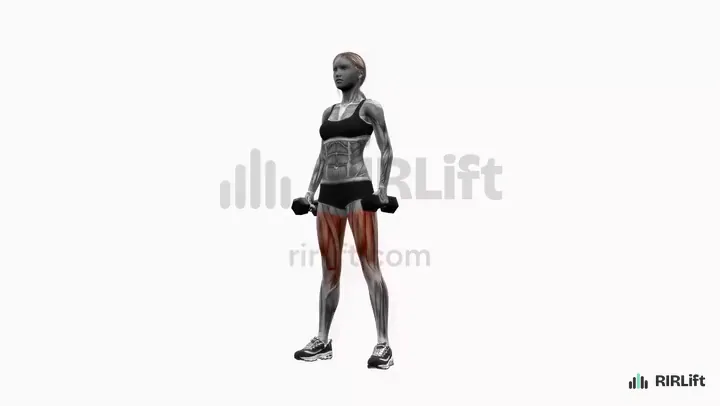
Dumbbell Reverse Lunge

Quads, Glutes

Each turn loads one leg more than the other, and stepping back into a lunge builds each leg alone while sparing the knee compared with a forward lunge. It is easy to load with two dumbbells.

How to do it

  1. Stand tall holding a dumbbell at each side.
  2. Step one foot well behind you and lower the back knee toward the floor.
  3. Keep the front shin close to vertical and most of your weight on the front foot.
  4. Push through the front foot to bring the back leg forward again and stand. Alternate legs or finish one side.

Cues

  • Big step back
  • Front foot does the work
  • Tall torso

Common mistakes

  • Stepping back so short the front knee shoots forward: lengthen the step.
  • Falling onto the back knee: lower under control and stop just above the floor.

Swap for: Reverse Lunge, Bulgarian Split Squat, Dumbbell Split Squat

Hamstrings, glutes and balance

Single-Leg RDL

Hamstrings, Glutes

The hamstrings and glutes help your quads hold you in position and keep your weight from sitting back on your tails. Doing the hinge on one leg adds the balance you need when one ski catches.

How to do it

  1. Stand on one leg holding a dumbbell in the opposite hand, standing knee slightly bent.
  2. Tip forward from the hip while the free leg extends straight behind you.
  3. Keep your hips level until you feel a strong pull in the back of the standing leg.
  4. Return to standing by pushing the standing foot into the floor.

Cues

  • Level hips
  • Long line from head to back heel
  • Stand tall to finish

Common mistakes

  • Rotating the hips open toward the ceiling: keep the back foot's toes pointing down.
  • Rushing to stay balanced: slow down and touch down the free foot between reps if you need to.

Swap for: Romanian Deadlift, Dumbbell B-Stance RDL, Single-Leg Glute Bridge

Holding a flexed stance

A long run is a long isometric hold. Wall sits train that directly and need no equipment, so they finish almost any session.

Isometric leg endurance

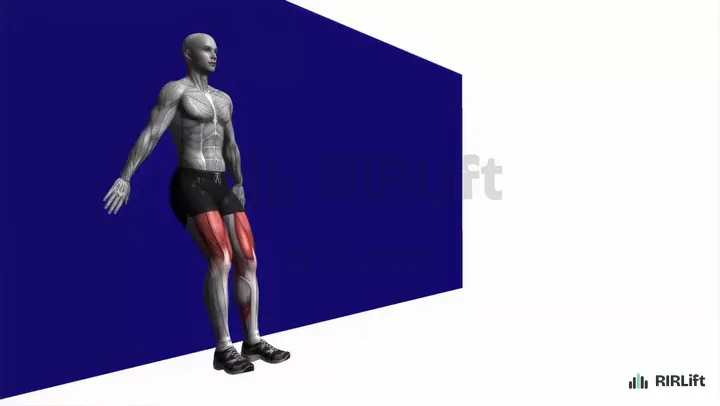
Wall Sit

Quads

Holding a deep knee bend for a long run is what burns your quads on the hill, and the wall sit trains that hold directly. Build up the time and the burn arrives later in the day.

How to do it

  1. Rest your shoulder blades and hips on a wall and walk your feet out in front of you, hip-width apart.
  2. Slide down until your knees are bent to roughly a right angle.
  3. Hold, with your weight spread over your whole foot and your arms relaxed.
  4. Slide back up when the time is done.

Cues

  • Knees over ankles
  • Back stays on the wall
  • Breathe through the burn

Common mistakes

  • Sitting too high to make it easier: get your thighs near level with the floor.
  • Pushing on your thighs with your hands: let your arms hang.

Swap for: Heels-Elevated Goblet Squat, Goblet Squat, Leg Press

Build a session with Wall Sit

Side-to-side strength

Turns push you sideways, and most gym exercises go only forward and back. These two train strength and range out to the side.

Side-to-side strength

Dumbbell Lateral Lunge

Quads, Glutes, Adductors

Turns load you sideways, and a lateral lunge trains the outside-leg push and the inner thigh together. Holding dumbbells at your sides and alternating sides keeps both legs even.

How to do it

  1. Stand with feet together, holding two dumbbells by your hips.
  2. Take a wide step out to one side and sit your hips back over that foot, keeping the other leg straight.
  3. Lower until the bent thigh is close to level with the floor, chest up.
  4. Push off the bent leg back to the start, then step to the other side.

Cues

  • Sit back, not down
  • Trailing leg straight
  • Push back to center

Common mistakes

  • Letting the bent knee cave inward: point the knee over the toes of that foot.
  • Stepping too narrow to sink: widen the step until you can sit your hips back.

Swap for: Kettlebell Lateral Lunge, Cossack Squat, Landmine Lateral Lunge

Lateral strength and hip mobility

Cossack Squat

Quads, Adductors

The Cossack squat goes deeper sideways than a lateral lunge and stretches the inner thigh of the straight leg, which helps when you get pushed low and wide in bumps or deep snow.

How to do it

  1. Stand with your feet very wide, toes slightly out.
  2. Shift your weight to one side and sit down over that heel while the other leg stays straight with its toes lifted to the ceiling.
  3. Go as deep as you can with the bent heel down and the chest up.
  4. Push back up to the middle and shift to the other side.

Cues

  • Heel of the bent leg stays down
  • Straight leg toes up
  • Move slowly

Common mistakes

  • Lifting the heel of the working foot: limit the depth until it stays flat.
  • Collapsing forward: hold your arms out in front to counterbalance.

Swap for: Dumbbell Lateral Lunge, Kettlebell Lateral Lunge, Goblet Squat

Power and landings

Bumps, crud and quick edge changes ask you to push and absorb fast. Do these early in a session for low reps, focusing on soft, controlled landings as much as on the jump.

Lateral power and landing

Skater Hop

Glutes, Quads, Abductors

Jumping from one leg to the other sideways trains the push and the landing of a turn: you load the outside leg, then absorb the next landing on the other. It also gets your heart rate up.

How to do it

  1. Stand on one leg with the knee bent.
  2. Push off sideways and jump to land on the other foot.
  3. Absorb the landing by bending the knee and hip, letting the free leg swing behind.
  4. Hold for a moment, then hop back the other way.

Cues

  • Land soft and hold
  • Knee over toes on landing
  • Distance before speed

Common mistakes

  • Landing on a straight leg: bend into each landing and stick it for a second.
  • Knee falling inward on landing: shorten the hop until it stays in line.

Swap for: Lateral Box Jump, Dumbbell Lateral Lunge, Jump Squat

Lateral power

Lateral Box Jump

Quads, Glutes, Abductors

Jumping sideways onto a box builds power for moving across the hill while keeping the landing gentle. It pairs well with skater hops as the main power work of a session.

How to do it

  1. Stand side-on next to a low box, feet hip-width.
  2. Dip into a quarter squat and swing your arms.
  3. Jump sideways onto the box, landing with both feet and soft knees.
  4. Step down on the far side or back to the start, and jump from the other side next.

Cues

  • Low box, fast feet
  • Land soft
  • Both sides equally

Common mistakes

  • Using a box that is too high: choose one you can land on without tucking.
  • Rushing: reset fully between reps.

Swap for: Skater Hop, Box Jump, Jump Squat

Vertical power and absorbing landings

Jump Squat

Quads, Glutes

Moguls and rolling terrain ask you to push and absorb quickly. Jump squats train both, and the landing practice is as useful as the jump.

How to do it

  1. Stand with feet about shoulder-width, arms at your sides.
  2. Drop into a quarter to half squat while your arms swing back.
  3. Jump straight up as high as you can, arms swinging up.
  4. Land on the balls of your feet and sink into the next squat to absorb the force.

Cues

  • Quiet landings
  • Knees track over toes
  • Quality over number

Common mistakes

  • Landing stiff-legged: bend through the ankles, knees and hips as you touch down.
  • Long sets where every jump gets lower: stop the set when height drops.

Swap for: Box Jump, Skater Hop, Jumping Lunge

Trunk and inner thighs

A steady trunk keeps your upper body quiet over moving legs, and strong inner thighs keep your knees and skis aligned.

Inner thighs and trunk

Copenhagen Plank

Adductors, Abs

Your inner thighs hold your skis together and steady your knees, and the Copenhagen plank loads them hard in a side plank with the top leg on a bench. It also trains the side of the trunk.

How to do it

  1. Lie on your side next to a bench and place the inside of your top knee or ankle on it.
  2. Prop yourself on your forearm, elbow under your shoulder.
  3. Lift your hips until your body is straight, letting the bottom leg hang or lift toward the bench.
  4. Hold for the time, lower, then switch sides.

Cues

  • Knee on the bench is the easier version
  • Hips up and forward
  • Breathe and hold

Common mistakes

  • Hips sagging toward the floor: lower your hips and lift again, and shorten the hold if they drop.
  • Starting with the ankle on the bench: begin with the knee, which is easier.

Swap for: Side Plank, Hip Adduction Machine, Band Hip Adduction

Trunk stability against rotation

Pallof Press

Abs

Skiing asks your upper body to stay facing downhill while your legs turn underneath. The Pallof press builds that resistance to twisting.

How to do it

  1. Stand side-on to a cable set at chest height, holding the handle at your sternum.
  2. Step away until there is tension and set your feet hip-width, knees soft.
  3. Press the handle straight forward and hold for a second without turning.
  4. Pull it back to your chest and repeat, then switch sides.

Cues

  • Square to the front
  • Press and pause
  • Soft knees, like a ski stance

Common mistakes

  • Twisting toward the stack: move closer to the machine.
  • Holding your breath: breathe out as you press.

Swap for: Side Plank, Dead Bug, Cable Woodchop

Conditioning

Two or three short bike sessions a week build the endurance to ski a full day. Keep most of the riding easy and add a few hard intervals once a week.

Leg endurance and conditioning

Stationary Bike

Quads, Hamstrings

The bike builds the quad endurance and aerobic base that let you ski the last run as well as the first, without the impact of running. Intervals of 30 to 60 seconds mirror the length of a hard run.

How to do it

  1. Set the seat so your knee keeps a slight bend when the pedal is lowest.
  2. Warm up five minutes at an easy pace.
  3. Ride hard intervals of 30 to 60 seconds with equal or longer easy spinning between.
  4. Cool down with a few minutes easy.

Cues

  • Seat height first
  • Hard means you cannot talk
  • Easy between efforts

Common mistakes

  • Seat too low, which overloads the knees: raise it until the knee is almost straight at the bottom.
  • Making every ride hard: keep most riding easy and only a few intervals hard.

Swap for: Air Bike, Elliptical, Stair Climber

Put them together: example sessions

Each session below picks from the exercises above for one situation, with the sets, reps, rest and RIR filled in. Open one in the session builder to change a pick, price it from a recent set, and add it to RIRLift.

Session 1

Preseason in the gym: eight weeks before your first day

Open in the session builder
  • Workouts2× a week
  • Working sets32 a week
  • Per workout~40 min
  • EquipmentBarbells, Dumbbells, Adjustable Cable

You have two months until ski season and access to a gym twice a week.

Two months is enough to build real strength. Each session opens with jumps while you are fresh, then a heavy two-leg squat, a single-leg or lateral exercise, a hinge, and finishes with a wall sit and trunk work. Main lifts stop 2 reps short of failure, so you can still ski or hike on weekends. Day A is 16 hard sets and day B is 16.

Day A
ExerciseSets × repsRIRRest
Jump SquatSoft landings. 3 × 5 3 90 s
Front Squat2 warm-up sets first 4 × 5–8 2 2:30 min
Dumbbell Reverse LungeReps per leg. 3 × 8–10 2 90 s
Single-Leg RDLReps per leg. 3 × 8–10 2 1 min
Wall SitSeconds. 3 × 30–60 1 1 min

Open Day A in the session builder

Day B
ExerciseSets × repsRIRRest
Skater HopReps per side. Stick each landing. 3 × 6–8 3 90 s
Heels-Elevated Goblet Squat 4 × 8–12 2 90 s
Dumbbell Lateral LungeReps per side. 3 × 8–10 2 90 s
Copenhagen PlankSeconds per side. 3 × 15–30 2 45 s
Pallof PressReps per side. 3 × 10–12 2 45 s

Open Day B in the session builder

How to run it
Do day A and day B once each per week with two days between them. Add two short bike sessions on other days.
How to progress
Each week, add a rep to the strength exercises or 5 pounds once you reach the top of the range, and add 10 seconds to the wall sit. Lighten everything in the week before your trip.

Session 2

At home with one dumbbell

Open in the session builder
  • Workouts3× a week
  • Working sets51 a week
  • Per workout~35 min
  • EquipmentDumbbells

You train at home with a dumbbell or two and a chair or bench, and you want your legs ready for ski season.

Without heavy weights, the burn comes from higher reps, slow lowering and long holds. This single session puts every ski quality in one circuit-like workout: a deep squat, a lateral lunge, a Cossack squat, a hop, a wall sit and the Copenhagen plank. Sets end at 1 to 2 reps in reserve because the loads are light. That adds up to 17 hard sets.

Home Session
ExerciseSets × repsRIRRest
Heels-Elevated Goblet SquatHeels on a book or plate. 3 × 12–20 1 1 min
Dumbbell Lateral LungeReps per side. 3 × 10–12 2 1 min
Cossack SquatReps per side. 2 × 6–8 2 1 min
Skater HopReps per side. 3 × 8–10 3 1 min
Wall SitSeconds. 3 × 45–60 1 1 min
Copenhagen PlankSeconds per side. Knee on the chair. 3 × 15–25 2 45 s
How to run it
Do it two or three times a week with a rest day in between. Rest the times shown; do not rush it into a circuit until you can hold form.
How to progress
Add reps and seconds each week. When the goblet squat passes 20 reps, slow the lowering to four seconds instead.

Session 3

In season: one midweek session between ski weekends

Open in the session builder
  • Workouts1× a week
  • Working sets13 a week
  • Per workout~35 min
  • EquipmentBarbells, Dumbbells, Adjustable Cable, Exercise Bike

You ski most weekends and want to keep your legs strong without arriving tired.

Once you ski every weekend, the hill does much of the training. A single midweek session with a few heavy sets keeps the strength from fading, and 3 reps in reserve keeps you fresh for Saturday. Jumps drop out because skiing already covers them. The lifting is 9 hard sets, followed by four short bike efforts.

Midweek
ExerciseSets × repsRIRRest
Front Squat2 warm-up sets first 3 × 4–6 3 2:30 min
Single-Leg RDLReps per leg. 2 × 6–8 3 1 min
Dumbbell Lateral LungeReps per side. 2 × 6–8 3 1 min
Pallof PressReps per side. 2 × 10 3 45 s
Stationary BikeSeconds hard; spin easy between. 4 × 30–45 2 90 s
How to run it
Do it on Tuesday or Wednesday. Skip it after an unusually long ski weekend.
How to progress
Keep the preseason weights. Add load only if every set moves easily at 3 reps in reserve.

Make it fit you

Questions

What are the best exercises for skiers?

A squat for quad strength, the wall sit for holding your stance, the lateral lunge for side-to-side strength, a single-leg exercise such as the reverse lunge, a hinge such as the single-leg Romanian deadlift, and skater hops for power. Add the Copenhagen plank for your inner thighs.

How long before ski season should I start training?

Six to eight weeks is enough to notice a difference on your first day. Train two or three times a week, and start with lighter loads for the first two weeks.

Is skiing a good workout?

Yes. Downhill skiing works your legs and trunk hard, especially your quads, and a full day is a long endurance effort. Cross-country skiing adds a lot of aerobic work for the whole body.

What is a ski jump exercise?

Usually it means lateral jumps: hopping side to side over a line or low object with both feet, like linked turns. Skater hops, landing on one foot at a time, are the harder version.

Can I do a ski workout at home?

Yes. Goblet squats with your heels raised, lateral lunges, Cossack squats, skater hops, wall sits and Copenhagen planks need one dumbbell and a chair. The home plan on this page puts them in one session.

Should I do cardio for skiing?

Two or three sessions a week help you ski the whole day. Bike or stepmill intervals of 30 to 60 seconds match the length of a hard run, with easier sessions in between.