
Rear delt fly alternatives that hit the back of your shoulders
Published October 23, 2026
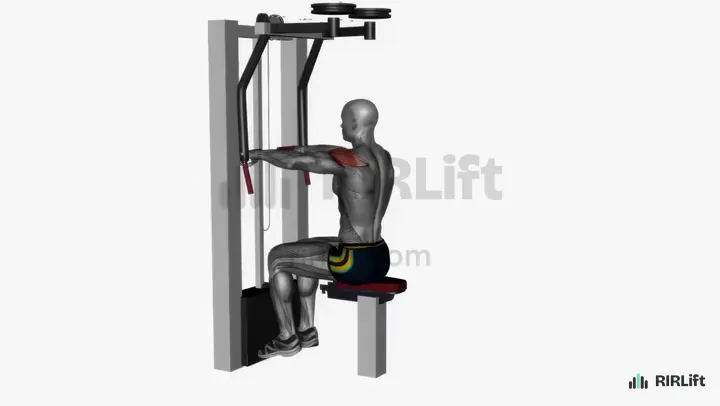
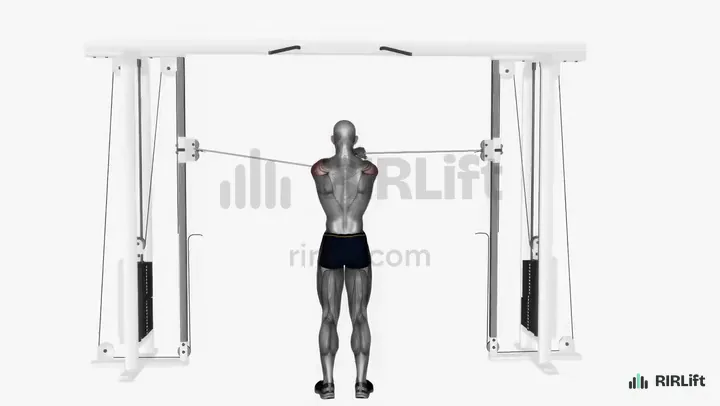
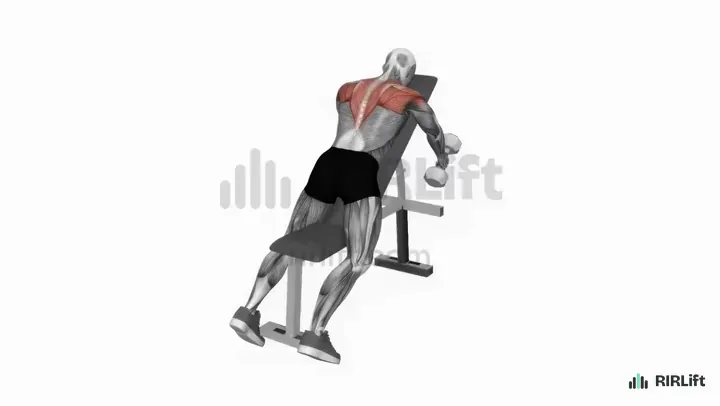
The best rear delt fly alternative is the reverse pec deck, because the pad holds your chest still and your rear delts do all the work. If no machine is free, a rear delt cable fly keeps tension the whole way and lets you stand upright. With dumbbells, lie chest-down on an incline bench for incline rear delt raises, which take your lower back out of it; with a band, do band rear delt flies or pull-aparts.
- Gym with machines Reverse Pec Deck The pad holds your chest; you just sweep your arms.
- Cable crossover free Rear Delt Cable Fly Tension the whole way, standing upright.
- Lower back tires bent over Incline Dumbbell Rear Delt Raise Chest on an incline bench, so your back rests.
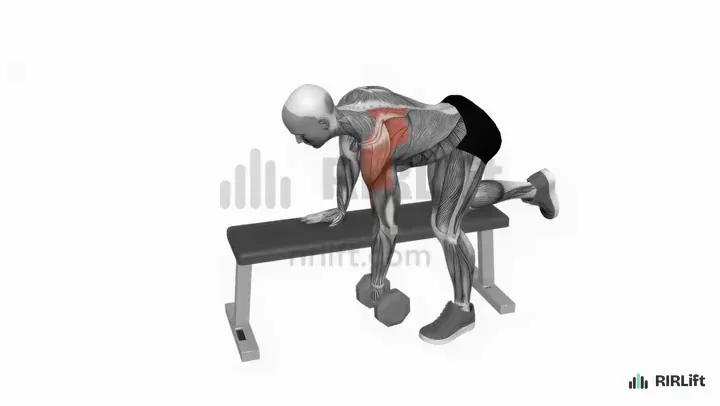
- Dumbbells too heavy to fly Dumbbell Rear Delt Row A wide-elbow row uses the weight you have.
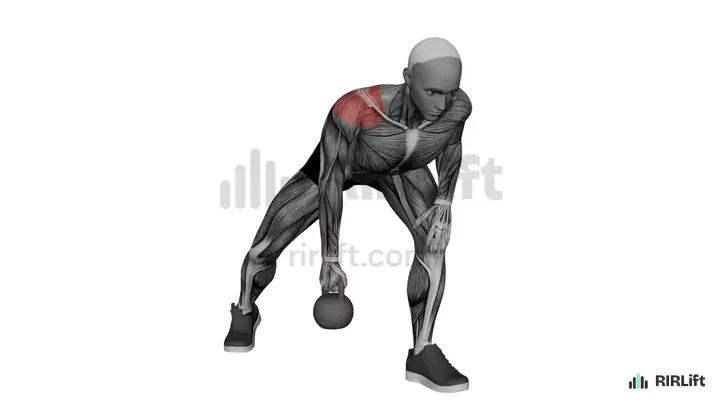
- One kettlebell Kettlebell Rear Delt Fly One arm at a time, braced on your thigh.
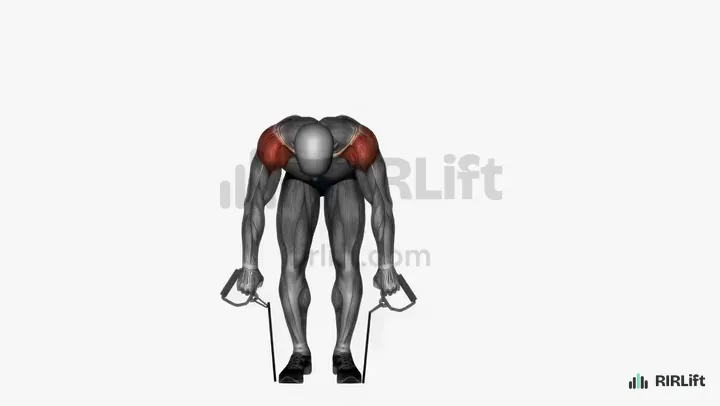
- Resistance band Band Rear Delt Fly Same bent-over fly, hardest at the top.
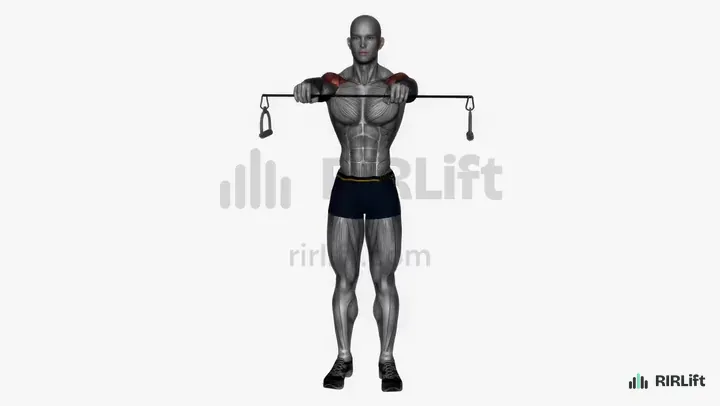
- Traveling Band Pull-Apart One light band, standing, anywhere.
What a dumbbell rear delt fly alternative has to replace
The dumbbell rear delt fly, also called the reverse fly, trains your rear delts and the muscles between your shoulder blades. Bent over, you sweep your arms out to shoulder height, and the rear delts work hardest near the top, where the dumbbells are farthest from your body.
The usual reasons to swap it are a tired lower back from holding the bent-over position, swinging that takes the work off the rear delts, or not having light enough dumbbells.
Example sessions without the dumbbell rear delt fly
-
Session 1
Gym with machines and cables
You train in a gym and want rear delt work that does not depend on holding a bent-over position.
2× a week · 26 sets a week · ~30 min
-
Session 2
Home, lower back tires on bent-over work
You train at home with dumbbells and an incline bench, and bent-over flies leave your lower back more tired than your shoulders.
2× a week · 20 sets a week · ~25 min
-
Session 3
Bands and a pull-up bar
You train at home or on the road with resistance bands and a doorway pull-up bar.
3× a week · 33 sets a week · ~20 min
Session 1
Gym with machines and cables
- Workouts2× a week
- Working sets26 a week
- Per workout~30 min
- EquipmentSeated Row Machine, Lat Pulldown, Fly Machine, Cable Crossover
You train in a gym and want rear delt work that does not depend on holding a bent-over position.
A heavy chest-supported row leads at lower reps, the pulldown covers your lats, then the reverse pec deck and cable fly train the rear delts two ways, the last to failure. 13 working sets.
| Exercise | Sets × reps | RIR | Rest |
|---|---|---|---|
| Chest-Supported Row1 warm-up set first | 4 × 6–10 | 2 | 2:30 min |
| Lat Pulldown | 3 × 10–12 | 2 | 90 s |
| Reverse Pec Deck | 3 × 12–20 | 1 | 1 min |
| Rear Delt Cable Fly | 3 × 15–20 | 0 | 45 s |
- How to run it
- Use it as your pull day once or twice a week.
- How to progress
- Add weight to the row and pulldown once every set reaches the top of its range at 2 RIR. On the rear delt work, add reps up to 20, then the smallest weight step.
Session 2
Home, lower back tires on bent-over work
- Workouts2× a week
- Working sets20 a week
- Per workout~25 min
- EquipmentDumbbells, Incline Bench
You train at home with dumbbells and an incline bench, and bent-over flies leave your lower back more tired than your shoulders.
Every exercise supports your torso: a one-arm row braced on the bench, then incline rear delt raises and chest-supported Y raises with your chest on the pad. 10 working sets.
| Exercise | Sets × reps | RIR | Rest |
|---|---|---|---|
| One-Arm Dumbbell Row1 warm-up set firstSets are per arm. | 3 × 10–12 | 2 | 90 s |
| Incline Dumbbell Rear Delt RaisePause 1 s at the top. | 4 × 12–20 | 1 | 1 min |
| Dumbbell Chest-Supported Y Raise | 3 × 12–15 | 1 | 1 min |
- How to run it
- Twice a week, at the end of an upper-body or back session.
- How to progress
- Add reps until every set reaches the top of its range, then move up the smallest dumbbell step. Keep a one-second pause at the top of every raise.
Session 3
Bands and a pull-up bar
- Workouts3× a week
- Working sets33 a week
- Per workout~20 min
- EquipmentPull-Up Bar, Resistance Bands
You train at home or on the road with resistance bands and a doorway pull-up bar.
Pull-ups are the heavy back work, then band face pulls, band rear delt flies and pull-aparts train the rear delts at high reps with short rest. 11 working sets.
| Exercise | Sets × reps | RIR | Rest |
|---|---|---|---|
| Pull-Up | 3 × 5–10 | 2 | 2 min |
| Band Face Pull | 3 × 15–20 | 1 | 45 s |
| Band Rear Delt Fly | 3 × 15–25 | 1 | 45 s |
| Band Pull-Apart | 2 × 20–30 | 1 | 45 s |
- How to run it
- Two or three times a week.
- How to progress
- Add a pull-up rep each week up to 10 on every set. On the band work, add reps to the top of the range, then use a thicker band or a narrower grip.
Make it fit you
-
You can't feel your rear delts
Go lighter than you think, keep your shoulders down, and move your arms out toward the walls rather than squeezing your shoulder blades. Pause one second at the top.
-
Lower back gives out first
Use the reverse pec deck, a cable fly, or the incline dumbbell raise. All three hold your torso so your back is not working to keep you bent over.
-
Lightest dumbbells are too heavy
Switch to the wide-elbow dumbbell row or a band. Both let you train rear delts hard when even your lightest pair is too heavy to fly cleanly.
-
Swinging creeps in
If your torso rises to finish reps, the set is over. Stop there, or switch to a chest-supported version where you cannot swing.
-
Fit them into your week
Do three to six sets two or three times a week, at the end of a pull day or between sets of a press.
Questions
What exercise can I do instead of rear delt flies?
The reverse pec deck is the best swap, then the rear delt cable fly and face pulls. With dumbbells, incline rear delt raises; with bands, band rear delt flies or pull-aparts.
Is a reverse fly the same as a rear delt fly?
Yes. Both names describe raising your arms out to the sides while bent over or chest-down, which trains the rear delts.
How do you do rear delt flies without a machine?
Lie chest-down on an incline bench with light dumbbells and raise them out to shoulder height, or hinge forward on a band and raise your arms into a T.
Why are rear delt flies so hard to do?
The rear delts are small, so the weight has to be light, and most people let their back or momentum take over. A chest-supported version makes it much easier to feel.
Are rear delt flies effective?
Yes, when done strictly with a light weight and taken close to failure. They are one of the few exercises that train the rear delts directly.
Is a reverse fly necessary?
Not the fly itself, but rear delt work is worth doing: presses do not train them, and rows with your elbows tucked train them only a little. Any swap here covers it.
Related templates
-
Reverse fly: how to do it, and what to do instead
Full dumbbell rear delt fly form, for when you want to keep it.
-
Reverse pec deck alternatives for your rear delts
Swaps for the machine version, when it is taken too.
-
Face pull alternatives for the gym, dumbbells and bands
More rear delt and upper-back swaps.
-
Rear delt exercises at home: dumbbells, bands, a kettlebell or a suspension trainer
Every rear delt exercise for a home setup.
-
The best workout for shoulders, for your situation
Full shoulder sessions that include rear delt work.