Rear delt exercises at home: dumbbells, bands, a kettlebell or a suspension trainer

The best rear delt exercises at home are the bent-over dumbbell rear delt fly and the dumbbell rear delt row if you own dumbbells, the band pull-apart and band face pull if you own a resistance band, and the suspension trainer face pull if you have straps on a door. Rear delts are small and respond to light weight, high reps and a hard squeeze, so any home setup can train them well. Do one fly-type move, where your arms sweep out wide, and one row-type move, where your elbows pull back and out, for 6 to 12 hard sets a week.

  1. Dumbbell Rear Delt Fly Shoulders
  2. Dumbbell Rear Delt Row Shoulders
  3. Band Pull-Apart Shoulders, Upper Back
  4. Band Face Pull Shoulders, Upper Back
  5. TRX Face Pull Shoulders, Upper Back
  6. Dumbbell Face Pull Shoulders, Upper Back
  7. Incline Dumbbell Rear Delt Raise Shoulders
Rear delt exercises with dumbbells

A light pair of dumbbells is enough: most people use 5 to 15 pounds for rear delts. You need nothing else for the fly and face pull, a chair seat for the row, and an incline bench only for the chest-supported raise, which is the strictest version if you have one.

Rear delts, bent-over fly

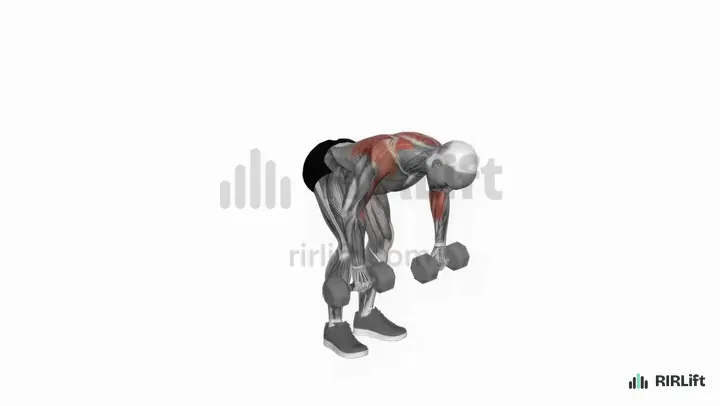
Dumbbell Rear Delt Fly

Shoulders

Sitting at the front of a chair or couch and leaning your chest toward your knees puts the rear delts in line to raise the dumbbells out wide, and sitting stops you from rocking the weight up with your hips. It is the standard rear delt move, and the one to start with if you own dumbbells.

How to do it

  1. Sit on the front edge of a chair with your feet together, a light dumbbell in each hand, and fold forward until your chest nearly rests on your thighs.
  2. Let the dumbbells hang below your knees with your palms turned toward each other and your elbows slightly bent.
  3. Sweep both arms out wide in an arc until they are level with your shoulders.
  4. Pause for a moment, lower slowly back under your knees, and repeat.

Cues

  • Pinkies lead the way up
  • Chest stays on your thighs
  • Arms wide, not back

Common mistakes

  • Sitting up as you lift: if your chest leaves your thighs, the weight is too heavy.
  • Pulling the elbows toward your hips like a row: the arms travel out to the sides in a wide arc.

Swap for: Incline Dumbbell Rear Delt Raise, Band Rear Delt Fly, Kettlebell Rear Delt Fly

Rear delts and upper back, wide-elbow row

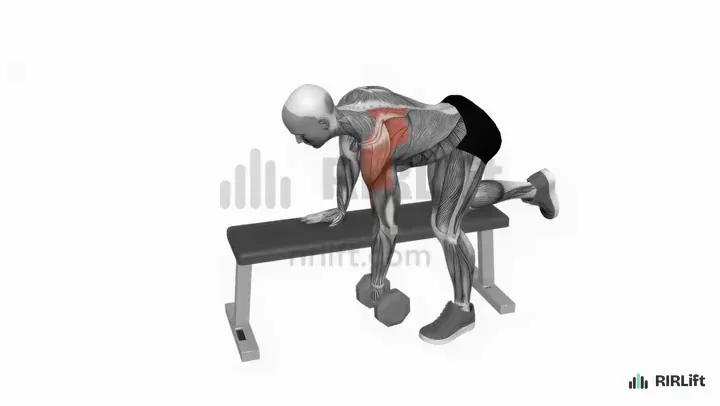
Dumbbell Rear Delt Row

Shoulders

Rowing one dumbbell with your elbow flared wide instead of tucked, moves the work from the lats to the rear delt and upper back. Because it is a row, you can use more weight than on a fly, which makes it a good first exercise in a session.

How to do it

  1. Put your left hand and left knee on a bench, or your left hand on a chair seat with a split stance, so your torso is level with the floor.
  2. Let a dumbbell hang from your right hand with your palm facing behind you.
  3. Pull the dumbbell up with your elbow pointing out to the side, until your upper arm is level with your back.
  4. Lower slowly to a straight arm, finish the set, and switch sides.

Cues

  • Elbow out, not back
  • Upper arm stops level with your back
  • Torso stays square

Common mistakes

  • Tucking the elbow toward the hip: that turns it into a lat row. Keep the upper arm about 70 to 90 degrees from your body.
  • Twisting the chest open to lift the dumbbell higher: the range is short on purpose.

Swap for: Kettlebell Rear Delt Row, TRX Rear Delt Row, Dumbbell Face Pull

Rear delts and rotator cuff, bent-over face pull

Dumbbell Face Pull

Shoulders, Upper Back

A cable face pull is not an option at home, but bending over and pulling two dumbbells up toward your face with the elbows high and wide trains the same rear delts and the small rotator muscles behind the shoulder. It is a good second move after a fly.

How to do it

  1. Hold a light dumbbell in each hand and hinge until your chest faces the floor, back flat and knees soft.
  2. Let the dumbbells hang beneath your chest with your palms facing behind you.
  3. Lift your elbows up and out to the sides, letting the dumbbells rise toward your forehead as your hands turn so your knuckles face the ceiling.
  4. Hold the top for a second, then lower slowly and repeat without standing up.

Cues

  • Elbows high and wide
  • Knuckles up at the top
  • Hold the hinge

Common mistakes

  • Turning it into a row toward your belly: the dumbbells go toward your head, not your hips.
  • Standing up as the set gets hard: if you lose the hinge, end the set.

Swap for: Band Face Pull, TRX Face Pull, Dumbbell Rear Delt Row

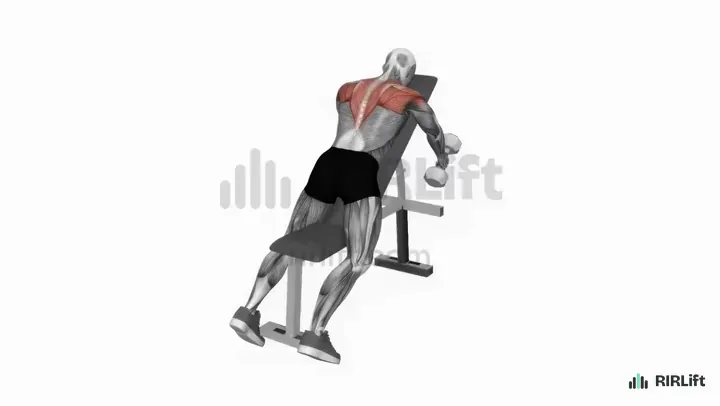
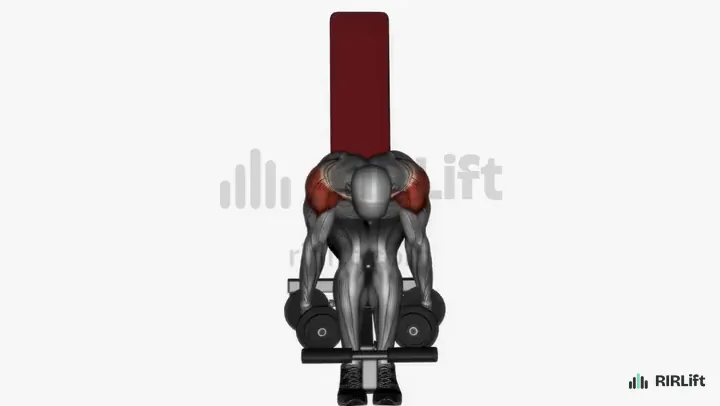
Rear delts, chest-supported fly

Incline Dumbbell Rear Delt Raise

Shoulders
Lying chest-down on an incline bench takes away every way to cheat, so each rep comes from the rear delts alone. If you have an adjustable bench at home, it is the best fly to take to failure.

How to do it

  1. Set a bench to a low incline and lie face down on it with a light dumbbell in each hand, arms hanging toward the floor.
  2. Keep your elbows softly bent and raise both arms out wide until they reach the level of your body.
  3. Pause at the top while keeping your chest on the pad.
  4. Lower back to a full hang and repeat.

Cues

  • Chest on the pad
  • Sweep wide
  • Pause at the top

Common mistakes

  • Lifting your head and chest off the pad to finish reps: keep contact and lower the weight.
  • Bending the elbows more as you tire: fix the angle at the start and hold it.

Swap for: Dumbbell Rear Delt Fly, Kettlebell Rear Delt Fly, Band Rear Delt Fly

Rear delt exercises with a resistance band

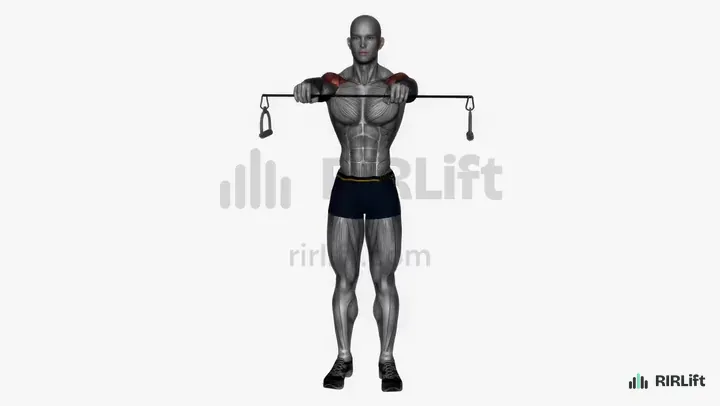
A band is the best value rear delt tool at home: it is hardest near the finish of each rep, which is exactly where the rear delts are working fully contracted. A light loop band or a tube with handles covers all three, and the face pull needs a door anchor or a post at face height.

Rear delts and mid-back, standing pull-apart

Band Pull-Apart

Shoulders, Upper Back

Holding a band at arm's length and stretching it to your chest trains the rear delts and the muscles between your shoulder blades with no anchor and no setup, so you can do sets between other exercises or during a work break. It is the easiest way to get extra rear delt volume during the week.

How to do it

  1. Stand tall and hold a light band at shoulder height with your hands about shoulder-width apart and your arms reaching straight ahead.
  2. With elbows softly bent, stretch the band wide until it touches your chest.
  3. Pinch your shoulder blades toward each other for a second.
  4. Let the band back to the start slowly, without losing tension, and repeat.

Cues

  • Band to the chest
  • Shoulders down, ribs in
  • Slow on the way back

Common mistakes

  • Shrugging the shoulders up as you pull: keep them low and away from your ears.
  • Arching your lower back to finish the rep: use a lighter band or a wider grip.

Swap for: Band Rear Delt Fly, Band Face Pull, Dumbbell Rear Delt Fly

Rear delts and rotator cuff, anchored pull

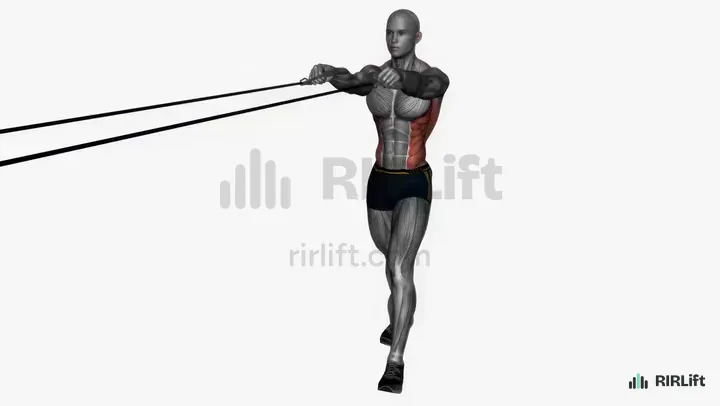
Band Face Pull

Shoulders, Upper Back

With the band anchored at face height, you can pull toward your forehead and rotate your hands back at the end, which trains the rear delts and the external rotators together. It is the home version of the cable face pull and the closest you get to its feel.

How to do it

  1. Anchor a band at about face height in a door or around a post, hold the ends with your palms facing down, and step back until the band is taut.
  2. Stand tall with your arms reaching straight ahead.
  3. Pull the band toward your forehead, driving your elbows out and up, and finish with your hands beside your ears and your knuckles turned back.
  4. Hold for a second, return slowly to straight arms, and repeat.

Cues

  • Pull to your forehead
  • Elbows high
  • Finish like a double-biceps pose

Common mistakes

  • Pulling to your chin with low elbows: keep the elbows at or above shoulder height.
  • Leaning back to move more band: step closer to the anchor instead.

Swap for: TRX Face Pull, Dumbbell Face Pull, Band Pull-Apart

Rear delts, bent-over band fly

Band Rear Delt Fly

Shoulders

Standing on the band and bending over gives you a fly that gets harder the higher your arms go, which suits the rear delts. It is the band version of the dumbbell fly for when you have no weights.

How to do it

  1. Stand on the middle of a band with your feet about hip-width apart and hold one end in each hand.
  2. Hinge forward from the hips with soft knees until your torso is close to level with the floor.
  3. With your elbows slightly bent, lift your arms wide until they reach shoulder height.
  4. Lower back down with control and repeat.

Cues

  • Torso still
  • Arms make a T
  • Control the band down

Common mistakes

  • Letting the band snap your arms back down: take as long to lower as to lift.
  • Standing too upright, which shifts the work to the side delts: keep the hinge.

Swap for: Band Pull-Apart, Dumbbell Rear Delt Fly, Kettlebell Rear Delt Fly

Rear delt exercises with a kettlebell

If a single kettlebell is all you have, train one arm at a time. The handle sits a little further from your hand than a dumbbell's, so start one size lighter than you would expect and keep the bell from swinging.

Rear delts, one-arm fly

Kettlebell Rear Delt Fly

Shoulders

Training one arm at a time lets a single kettlebell do the job of a pair, and bracing your free hand on a chair or your knee keeps your torso still. Use it when one bell is all you own.

How to do it

  1. Hold a light kettlebell in your right hand and fold forward until your chest is nearly level with the floor, left hand resting on a chair or your left knee.
  2. Let the bell hang under your right shoulder, elbow slightly bent.
  3. Raise your arm out to the side until it is level with your shoulder, keeping the bell from swinging.
  4. Lower slowly, finish the set, and switch arms.

Cues

  • Free hand braced
  • Arm out to the side
  • No swing

Common mistakes

  • Rotating your torso open to lift the bell higher: keep both shoulders level with the floor.
  • Using a bell so heavy that the arm bends into a row: keep the elbow angle fixed.

Swap for: Dumbbell Rear Delt Fly, Band Rear Delt Fly, Kettlebell Rear Delt Row

Rear delts and upper back, wide-elbow row

Kettlebell Rear Delt Row

Shoulders, Upper Back

The kettlebell version of the wide-elbow row. It lets a heavier single bell train the rear delts and upper back while your other hand braces, so it pairs well with the lighter kettlebell fly.

How to do it

  1. Brace your left hand on a chair or bench, hinge until your torso is close to level, and hold a kettlebell in your right hand with your palm facing back.
  2. Row the bell up, elbow pointing to the side.
  3. Stop when your upper arm is level with your back and squeeze for a second.
  4. Lower to a straight arm, finish the set, and switch sides.

Cues

  • Elbow points to the side wall
  • Short, controlled range
  • Squeeze at the top

Common mistakes

  • Pulling the bell to your hip: that trains the lats. Keep the elbow wide.
  • Swinging the bell up with your hips: slow the lowering and reset each rep.

Swap for: Dumbbell Rear Delt Row, TRX Rear Delt Row, Kettlebell Rear Delt Fly

Rear delt exercises with a suspension trainer

Straps over a door or a beam turn your bodyweight into the load: the further you lean back, the harder it gets. That makes it easy to adjust between sets with no weights at all.

Rear delts and rotator cuff, suspension face pull

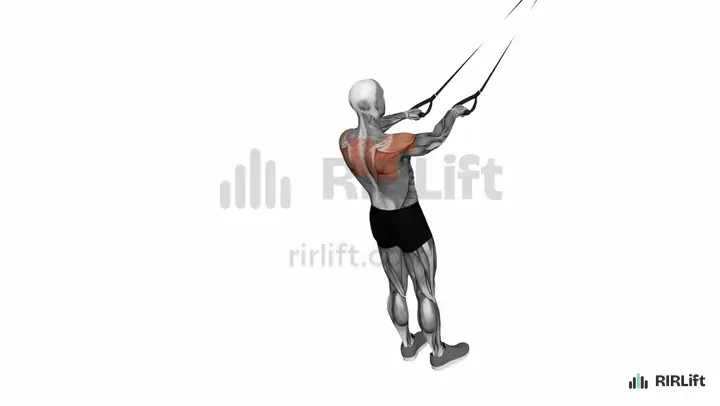
TRX Face Pull

Shoulders, Upper Back

Leaning back on the straps and pulling your face up to your hands trains the rear delts against your bodyweight. Walking your feet forward makes it harder and back makes it easier, so you can adjust in seconds.

How to do it

  1. Set the straps to about chest height, hold a handle in each hand, and walk your feet forward so you lean back with straight arms.
  2. Brace so your body forms one line from your heels to your head.
  3. Pull your face toward the handles with your elbows out and up, until your hands are beside your forehead.
  4. Lower yourself back to straight arms slowly and repeat.

Cues

  • Body like a plank
  • Hands finish by your temples
  • Slow on the way back

Common mistakes

  • Letting your hips sag so they lead the pull: squeeze your glutes and keep the line.
  • Pulling with low elbows, which turns it into a row: keep the elbows at shoulder height or above.

Swap for: Band Face Pull, TRX Rear Delt Row, Dumbbell Face Pull

Rear delts and upper back, suspension row

TRX Rear Delt Row

Shoulders, Upper Back

A row on the straps with your elbows driving out wide, finishing with your upper arms level with the floor. It loads the rear delts and upper back with your bodyweight and makes a good partner for the strap face pull.

How to do it

  1. Set the straps to about chest height, grip the handles with your palms turned in, and lean back with straight arms and your body in a straight line.
  2. Row your chest toward the handles by driving your elbows out to the sides.
  3. Stop when your upper arms are level with the floor and pinch your shoulder blades in.
  4. Lower back to straight arms with control and repeat.

Cues

  • Elbows out to the sides
  • Upper arms level at the top
  • Body stays straight

Common mistakes

  • Tucking the elbows to your ribs: keep them wide to keep the rear delts working.
  • Starting so upright that the row is too easy: walk your feet forward until 15 reps is hard.

Swap for: Dumbbell Rear Delt Row, Kettlebell Rear Delt Row, TRX Face Pull

Put them together: example sessions

Each session below picks from the exercises above for one situation, with the sets, reps, rest and RIR filled in. Open one in the session builder to change a pick, price it from a recent set, and add it to RIRLift.

Session 1

One resistance band, three short sessions

Open in the session builder
  • Workouts3× a week
  • Working sets24 a week
  • Per workout~15 min
  • EquipmentResistance Bands

You own a resistance band and a door anchor, nothing else, and you would rather do three 10-minute sessions a week than one long one.

A band is hardest near the finish of the pull, where rear delts are contracted, so three band moves are enough on their own. Each session has a pull-apart for the mid-back, a face pull for the rear delts and rotators, and a bent-over fly, for 8 working sets three times a week, or 24 a week across rear delts and upper back. Sets stop 0 to 1 reps short of failure because band moves this small recover fast.

Band Rear Delts
ExerciseSets × repsRIRRest
Band Face PullAnchor at face height. Elbows high. 3 × 15–25 1 1 min
Band Rear Delt FlyStand on the band. Hold the hinge. 3 × 15–25 0 1 min
Band Pull-ApartBand to the chest, 1 s squeeze. 2 × 15–30 1 45 s
How to run it
Do the session three times a week, for example at the end of your other workouts or on its own on non-training days.
How to progress
Add reps until you reach 25 at the target reps in reserve, then move to a thicker band or step further from the anchor and work back up from 15.

Session 2

A light pair of dumbbells and a chair

Open in the session builder
  • Workouts2× a week
  • Working sets16 a week
  • Per workout~15 min
  • EquipmentDumbbells

You have a pair of dumbbells around 10 to 20 pounds and a sturdy chair, no bench, and you want rear delts as part of your upper-body or shoulder days.

With dumbbells, the wide-elbow row can take more weight than a fly, so it goes first, followed by the seated fly for a pure rear delt sweep and the bent-over face pull for the rotators. Each session is 8 sets, done twice a week for 16 sets of rear delt and upper-back work. The row stops 1 rep short of failure and the two lighter moves go to 0.

Dumbbell Rear Delts
ExerciseSets × repsRIRRest
Dumbbell Rear Delt RowPer arm. Hand on the chair seat. Elbow wide. 3 × 10–15 1 75 s
Dumbbell Rear Delt FlySeated on the chair edge, chest on thighs. 3 × 12–20 0 1 min
Dumbbell Face PullLighter than the fly. Knuckles up at the top. 2 × 12–20 0 1 min
How to run it
Add the block to the end of two upper-body or shoulder sessions a week, two to three days apart.
How to progress
Double progression: when every set reaches the top of the range, use the next dumbbell. If you only own one pair, slow the lowering to three seconds and add a two-second hold at the top.

Session 3

Suspension straps and one kettlebell

Open in the session builder
  • Workouts1× a week
  • Working sets9 a week
  • Per workout~20 min
  • EquipmentSuspension Trainer, Kettlebells

You train at home with suspension straps over a door and a single kettlebell, and you want one focused rear delt session a week.

The straps let you train both arms at once against your bodyweight, so the strap row and face pull carry most of the volume, and the kettlebell adds a one-arm fly to finish the rear delts in isolation. It is 9 working sets once a week, enough on its own for most people when every set ends 0 to 1 reps from failure.

Straps Rear Delts
ExerciseSets × repsRIRRest
TRX Rear Delt RowElbows wide. Walk feet in to make it harder. 3 × 10–15 1 75 s
TRX Face PullHands finish by your temples. 3 × 12–20 1 1 min
Kettlebell Rear Delt FlyPer arm. Free hand on a chair. 3 × 12–20 0 45 s
How to run it
Run it once a week on an upper-body or pull day, after your main rows or pull-ups.
How to progress
On the straps, walk your feet one step closer to the anchor whenever you hit the top of the range. On the kettlebell fly, add reps up to 20, then add a two-second pause at the top before moving to a heavier bell.

Make it fit you

Questions

How do I target my rear delts at home?

Use exercises where your upper arm moves out to the side and back while your torso is bent over or your arms are in front of you: the bent-over fly, the wide-elbow row, the face pull and the band pull-apart. Keep the weight light, the elbows wide and pause at the end of each rep. Do 6 to 12 hard sets a week across two or three sessions.

What is the difference between a reverse fly and a rear delt fly?

They are the same exercise: bending over and lifting your arms wide. Some people call it a reverse fly when they pull the shoulder blades together hard at the top to train the upper back, and a rear delt fly when they keep the shoulder blades still to isolate the rear delts. Both train both muscles.

What are good alternatives to rear delt rows?

The bent-over dumbbell fly, the band face pull, the suspension trainer face pull and the band pull-apart. Each trains the rear delts without needing more weight than you would use on a row, and the face pulls add work for the rotator cuff.

Can you grow rear delts with just a resistance band?

Yes. Rear delts are small and respond to many light, hard sets more than to heavy weight. A band face pull, band fly and pull-apart, done to within a rep of failure two or three times a week, is enough for most people.

Which 3 shoulder exercises cover all three heads at home?

A press for the front delts, such as the pike push-up or a dumbbell shoulder press, a lateral raise for the side delts, and a rear delt fly or face pull for the back. The shoulder exercises at home page covers the first two; this page is for the third.

How heavy should rear delt dumbbells be?

Light: most people use 5 to 15 pounds for flies and a little more for wide-elbow rows. Pick a weight you can raise for 12 to 20 reps with your torso still and a pause at the top. If you have to swing to finish, go lighter.