
Reverse fly: how to do it, and what to do instead
Published October 17, 2026
The reverse fly is a bent-over raise: with your chest folded toward your thighs, you sweep a pair of light dumbbells out to the sides. It trains the rear delts, the back of the shoulder that presses leave out and rows share with your back, with help from the muscles between your shoulder blades. What makes it work is a weight light enough that your arms travel wide and your torso stays still, so the rear delt moves the dumbbells instead of a swing or a shrug.
- WorksShoulders
- AlsoUpper Back
- EquipmentDumbbells
- Start with3 × 12–20, 2 in reserve, 90 s rest
How to do the dumbbell rear delt fly
Rows pull your elbows back close to your body, which hands most of the work to your lats and upper back. Sweeping your arms out wide puts the rear delt in charge, and the seated version needs only a bench and two light dumbbells, so it fits at the end of any upper-body or pull day.
Steps
- Sit on the end of a bench, feet together and planted, with a light dumbbell in each hand.
- Fold forward from the hips until your chest nearly touches your knees, and let the weights hang below your legs, palms turned in.
- Bend your elbows a little and lock that angle in for the whole set.
- Open your arms out and up in a wide arc, elbows leading, and stop when your upper arms line up with your back.
- Pause for a beat at the top, then take two to three seconds to bring them back down until your arms hang straight again.
Cues
- Arms wide, like spreading wings
- Reach for the walls, not the ceiling
- Chest stays on your knees
Common mistakes
- Sitting up as the weights rise: if your chest leaves your knees to finish the rep, drop to lighter dumbbells and stop where your upper arms reach your back.
- Turning the fly into a row: if your elbows bend more and drift toward your ribs, your lats take over; keep the same small elbow bend from the first rep to the last.
- Shrugging your shoulders toward your ears at the top: keep your neck long and think about reaching your hands toward the walls rather than the ceiling.
- Dropping the weights on the way down: a fast lowering skips the part of the rep that builds the rear delt, so count two to three seconds every time.
Swap for: Reverse Pec Deck, Incline Dumbbell Rear Delt Raise, Rear Delt Cable Fly
Muscles the dumbbell rear delt fly works
The reverse fly works the rear (posterior) delt, with the rhomboids and middle traps helping as your shoulder blades pull together near the top. With dumbbells the load is heaviest where your arms are level with your back and close to nothing at the bottom, which is why cable and machine versions are worth rotating in to load the rear delt across the whole arc.
Sets, reps and reps in reserve for the dumbbell rear delt fly
| Goal | Sets × reps | RIR | Rest |
|---|---|---|---|
| Build muscle | 3 × 12–20 | 2 | 90 s |
| The session builder starts the dumbbell rear delt fly here too. | |||
| Rear delts are the priority | 4–5 × 15–25 | 0–1 | 60–90 s |
| Split these sets across two days of the week so every set in a session stays hard. | |||
| Beginners | 2–3 × 12–15 | 2–3 | 90 s |
| Leave more reps in hand while your chest learns to stay on your knees, and add reps before weight. | |||
| At the end of a session | 2 × 15–20 | 1 | 60 s |
| Done last, use whatever pair you can still lift without sitting up. | |||
Dumbbell rear delt fly variations
-
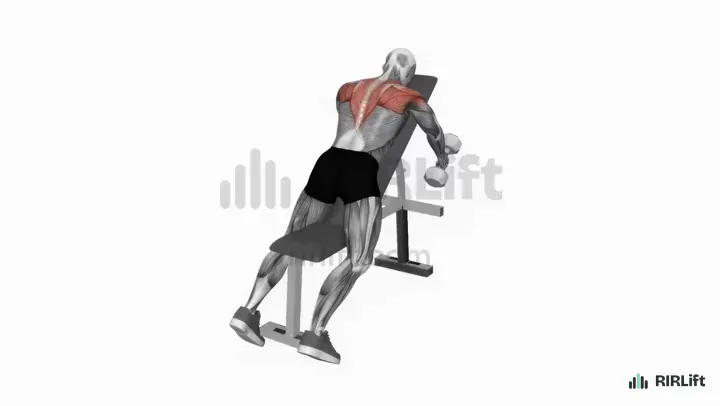
Incline Dumbbell Rear Delt Raise
Pick it when you catch your chest rising mid-set: lie face-down on an incline bench and the pad holds your torso still.
Build a session with it -
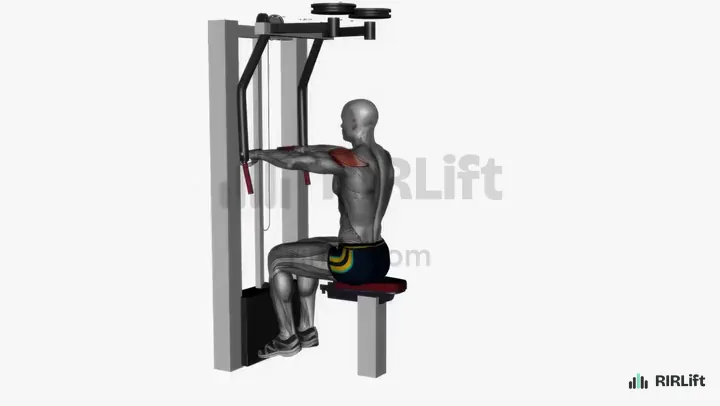
Reverse Pec Deck
Pick it when you want to load the rear delts heavier and take sets closer to failure, since the machine takes balance out of the lift.
Build a session with it -
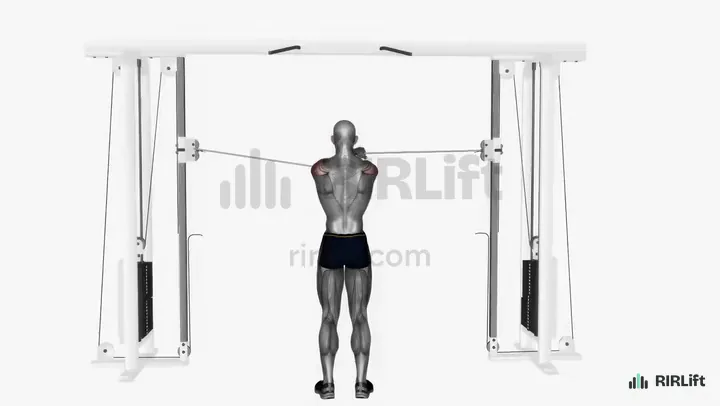
Rear Delt Cable Fly
Pick it to keep tension on the rear delt at the bottom of the rep, where dumbbells feel like nothing; cross the cables at shoulder height.
Build a session with it -
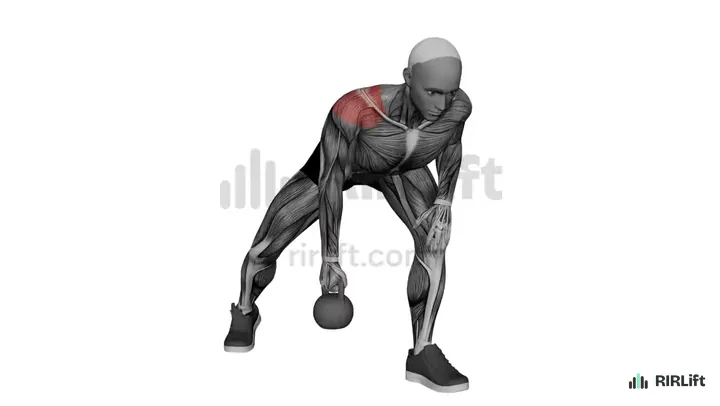
Kettlebell Rear Delt Fly
Pick it when one side lags: brace your free hand on your knee and fly one arm at a time so the weaker side sets the reps.
Build a session with it -
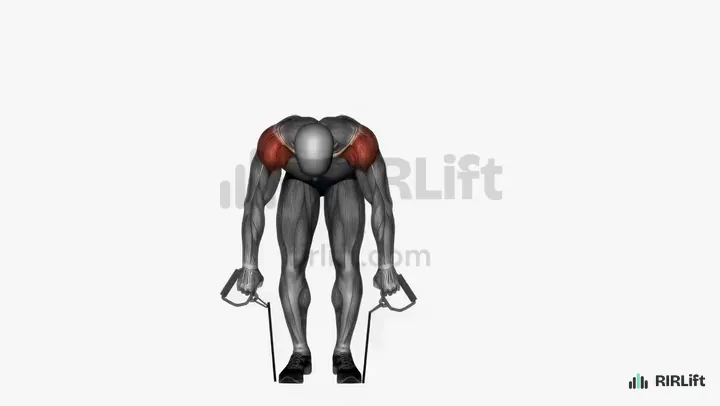
Band Rear Delt Fly
Pick it at home or on the road; the band gets harder as your arms open, so hold the top a little longer.
Build a session with it
Dumbbell rear delt fly alternatives
Rows with the elbows wide
-
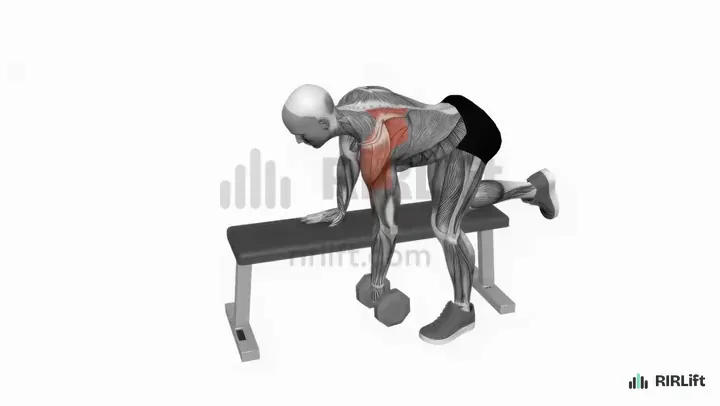
Dumbbell Rear Delt Row
Once flyes stop getting heavier, row the dumbbells to your upper chest with elbows flared to load the rear delts with more weight.
Build a session with it -
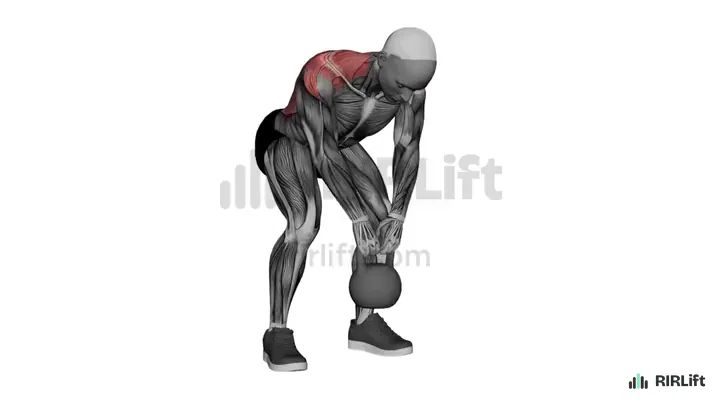
Kettlebell Rear Delt Row
The same wide-elbow row with kettlebells, for when that is what your gym or garage has.
Build a session with it -
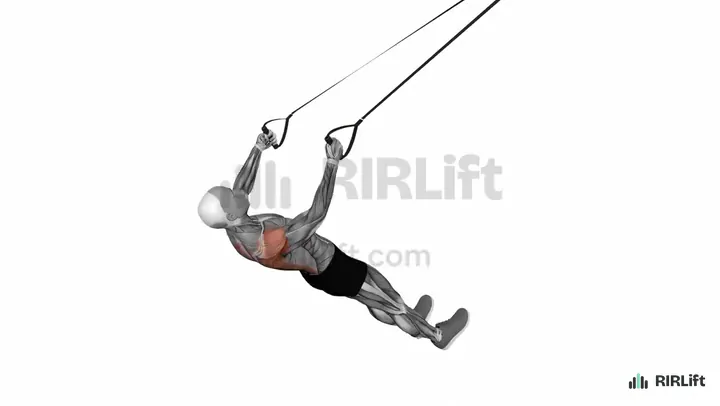
TRX Rear Delt Row
With straps and no weights, lean back and pull your hands toward your face, elbows flared high.
Build a session with it
Face pulls
-
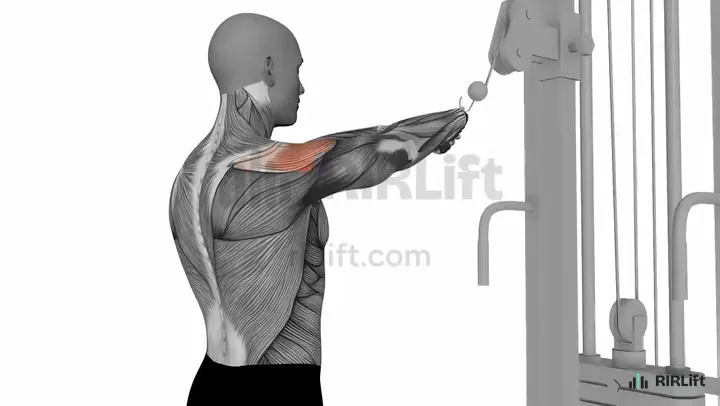
Face Pull
Take it when you want one cable exercise that covers the rear delts, upper back and outward rotation together.
Build a session with it -
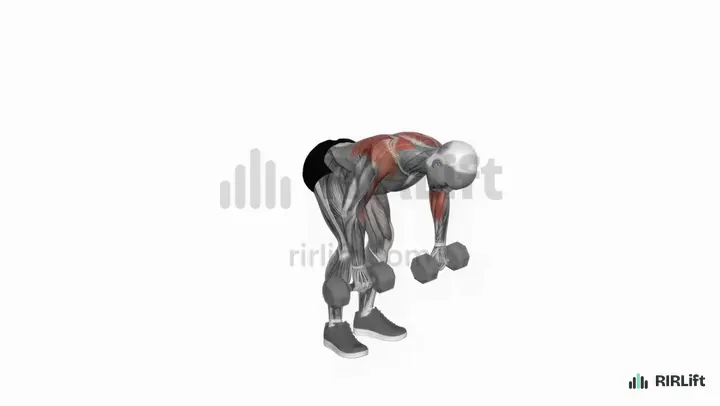
Dumbbell Face Pull
Hinge forward and pull the dumbbells toward your face with your elbows flared when you have only dumbbells but want the face pull's turning-out finish.
Build a session with it -
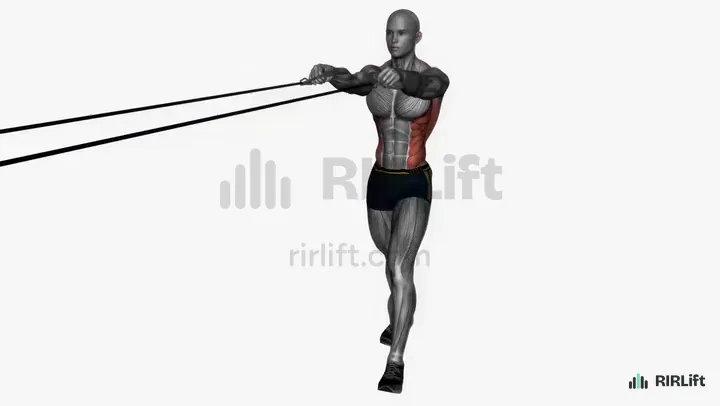
Band Face Pull
Loop a band at head height for a light, high-rep version at home or as a warm-up.
Build a session with it
Bands and light raises
-
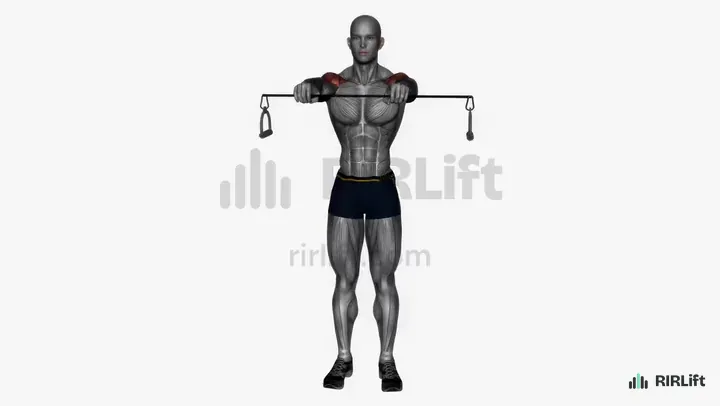
Band Pull-Apart
Stretch a light band apart in front of your shoulders until it touches your chest; no anchor or bench needed.
Build a session with it -
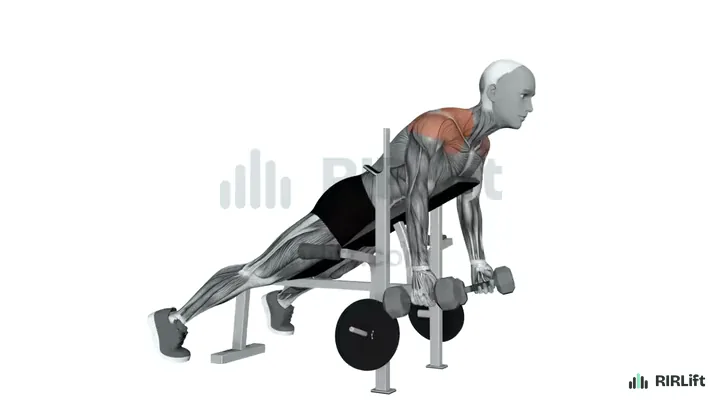
Dumbbell Chest-Supported Y Raise
Chest-down on an incline bench, lift the dumbbells overhead in a Y to bring your lower traps in beside the rear delts.
Build a session with it
Reverse fly vs face pull
The reverse fly does one job: the arms sweep out, so the rear delts lift the load on their own and you can take sets right to the edge of failure. The face pull adds outward rotation and a row, so the rear delts share the rope with your upper back and rotator cuff.
For bigger rear delts, put the fly first. For the whole back of the shoulder in one exercise, use the face pull. Running one of each across the week covers both.
What weight to use for reverse flyes
Go lighter than feels reasonable: the rear delt is small and the dumbbells sit at the end of long, almost straight arms. Start with the lightest pair that reaches the top for 15 reps with your chest still on your knees.
If the rep only finishes when you swing or sit up, the dumbbells are too heavy. Add reps until you hit the top of the range with two in reserve, then move up the smallest step your rack allows.
Questions
What muscles does the reverse fly work?
Mainly the rear delts, the back of your shoulders. The rhomboids and middle traps help as your shoulder blades pull together near the top of each rep.
What exercise can replace the reverse fly?
The reverse pec deck is the closest match if your gym has one, and a cable rear delt fly is next. With only dumbbells, lie chest-down on an incline bench and do the same raise; with only a band, do pull-aparts. A face pull also trains the rear delts but spreads the work across the upper back too.
Why is the reverse fly so hard?
The rear delt is small and the dumbbells sit at the end of long, nearly straight arms, so even light weights feel heavy at the top. Use a pair light enough that your chest stays down and your arms reach level with your back, and the set will feel hard in the right place.
Is a reverse fly the same as a rear delt fly?
Yes. Reverse fly, rear delt fly, bent-over fly and bent-over lateral raise all name the same movement: arms sweeping out to the sides while your torso is folded forward. The reverse pec deck is the machine version.
Should I do reverse flyes seated or standing?
Seated on the end of a bench is easier to keep strict, because your thighs hold your chest in place. Standing and hinged over works too; keep your torso near parallel to the floor and your knees soft, and stop the set when you start rising up to finish reps.
Is the reverse fly a back or a shoulder exercise?
Both, but mostly shoulder. The rear delts do the lifting, and the upper back helps as your shoulder blades come together, which is why it fits on either a shoulder day or a back day.
How many sets of reverse flyes should I do?
Three sets of 12–20, ending each about two reps before failure, with roughly 90 seconds between them. Add them to your face pulls and wide rows and aim for 10–20 hard rear-delt sets a week.
Related templates
-
Face pulls: how to do them, what they work, and what to do instead
The cable pull that trains the rear delts together with the upper back and outward rotation.
-
Lateral raises: how to do them, and what to do instead
The side-delt raise that pairs with reverse flyes for the rest of the shoulder.
-
The best workout for shoulders, for your situation
Where the rear-delt fly goes in a shoulder day built around presses and raises.
-
The best workout for back: width, thickness and traps
Back days where flyes follow the rows and pulldowns.
-
How to use RIR
Judging two reps in reserve on a small muscle that fades fast.