Resistance band leg exercises for quads, hamstrings, glutes and hips

The best resistance band leg exercises are the band Spanish split squat and reverse lunge for your quads, the band deadlift and good morning for your hamstrings, the band hip thrust and pull-through for your glutes, and lateral band walks for your outer hips. Bands are lightest at the bottom of a movement and heaviest at the top, so pick one-leg exercises, use a heavier band than feels comfortable, and take sets to within a rep or two of failure. Two loop bands and one handled band with a door anchor cover every exercise on this page.

  1. Band Spanish Split Squat Quads
  2. Band Reverse Lunge Quads, Glutes
  3. Band Squat Quads
  4. Band Deadlift Glutes, Hamstrings, Lower Back
  5. Band Good Morning Hamstrings, Lower Back
  6. Band Hip Thrust Glutes
  7. Band Pull-Through Glutes
  8. Lateral Band Walk Abductors

Band exercises for quads

Bands give little resistance when your knees are deeply bent, so the one-leg exercises, which put your bodyweight on top of the band, are the ones that make quads work hard. The two-leg band squat is a finisher or a warm-up.

Quads, split squat with the band behind the front knee

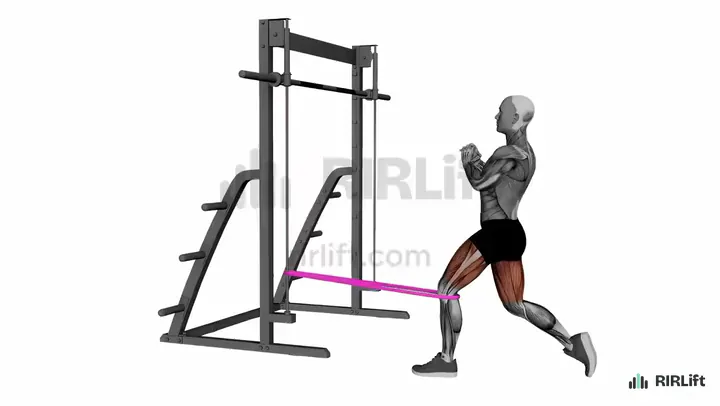
Band Spanish Split Squat

Quads

With the band anchored in front of you and looped behind your front knee, you can sit back into a split squat with an upright shin, which keeps your knee comfortable while your quad works hard.

How to do it

  1. Anchor a long band at knee height on a post or a closed door and loop it behind your front knee.
  2. Step back until the band is tight and set your feet in a long split stance.
  3. Lower straight down, letting the band hold your front shin upright.
  4. Drive back up through the front foot. Finish one side, then switch.

Cues

  • Shin stays vertical
  • Torso tall
  • Let the band hold you

Common mistakes

  • Standing too close so the band goes slack: step back until it pulls on you at the bottom.

Swap for: Band Reverse Lunge, Band Squat, Band Curtsy Lunge

Quads and glutes, stepping back

Band Reverse Lunge

Quads, Glutes

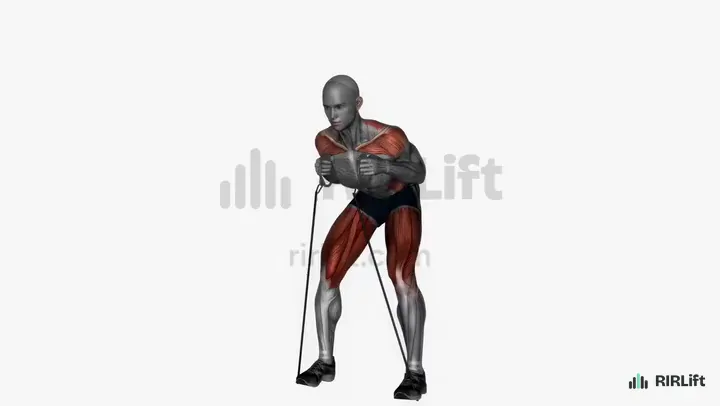
Standing on the band with your front foot and holding the handles at your shoulders, the band is tightest as you stand, right where a bodyweight lunge gets easy.

How to do it

  1. Stand on the middle of a handled band with one foot and hold the handles at your shoulders.
  2. Step the other foot well back and bend both knees.
  3. Drop until the back knee is just above the floor.
  4. Drive through the front heel to return and repeat on the same side before switching.

Cues

  • Front foot pins the band
  • Back knee straight down
  • Push through the front heel

Common mistakes

  • Letting the handles drift forward: keep your elbows down and the band close to your body.

Swap for: Band Spanish Split Squat, Band Curtsy Lunge, Band Squat

Glutes and outer quads, crossing step

Band Curtsy Lunge

Glutes, Quads

Stepping back and across puts more of the stretch on the glute of your front leg than a straight lunge does. The band under your front foot adds load at the top.

How to do it

  1. Pin a handled band under one foot and hold the handles at your shoulders or sides.
  2. Step the other leg back and across behind you, like a curtsy.
  3. Bend both knees until the back knee is near the floor.
  4. Stand up off the front foot and bring the leg back to center.

Cues

  • Step back and across
  • Hips face forward
  • Front knee over the toes

Common mistakes

  • Twisting your hips to follow the back leg: keep your belt buckle facing straight ahead.

Swap for: Band Reverse Lunge, Band Standing Hip Abduction, Band Spanish Split Squat

Quads and glutes, lying single-leg press

Band Leg Press

Quads

Lying on your back and pressing one foot into a band anchored behind your head copies the leg press. The band is lightest with your knee bent and heaviest as your leg straightens.

How to do it

  1. Anchor a long band low behind you and loop the other end or an ankle cuff around one foot.
  2. Lie face up with that knee pulled in toward your chest.
  3. Press the foot out until your leg is straight but not locked.
  4. Bring the knee back to your chest slowly. Do all reps, then switch.

Cues

  • Press through the heel
  • Back flat
  • Slow return

Common mistakes

  • Kicking the leg out fast and letting it snap back: two seconds out, two seconds in.

Swap for: Band Squat, Band Spanish Split Squat, Band Reverse Lunge

Quads and glutes, loop band above the knees

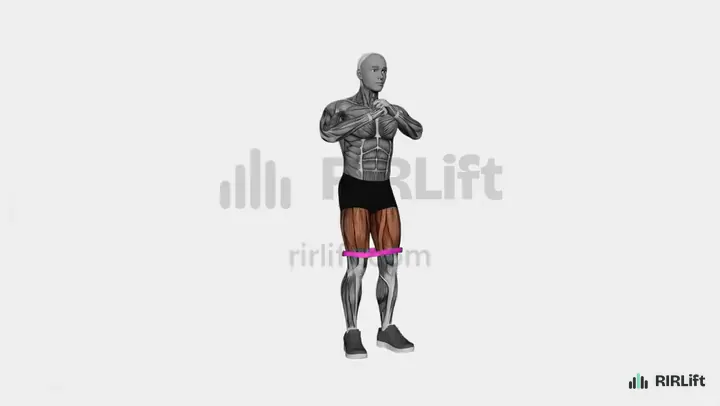
Band Squat

Quads

A loop around your thighs makes you push your knees out on every rep, so the squat trains your glutes and outer hips along with your quads. On its own the band adds little load, so this is a high-rep squat or a finisher.

How to do it

  1. Step into a loop band and pull it up to sit just above your knees.
  2. Stand with feet slightly wider than your hips and hands together at your chest.
  3. Sit down between your heels while pressing your knees out into the band.
  4. Stand up without letting your knees fall inward.

Cues

  • Knees out into the band
  • Sit between the heels
  • Tall chest

Common mistakes

  • Letting the band pull your knees together on the way up: use a lighter loop until you can hold them out.

Swap for: Band Spanish Split Squat, Band Leg Press, Band Standing Hip Abduction

Band exercises for hamstrings

Train the hamstrings with one hinge and one curl. The hinges stand on the band or pull from a low anchor; the curl only needs a loop around your ankles.

Hamstrings, glutes and back, hinge

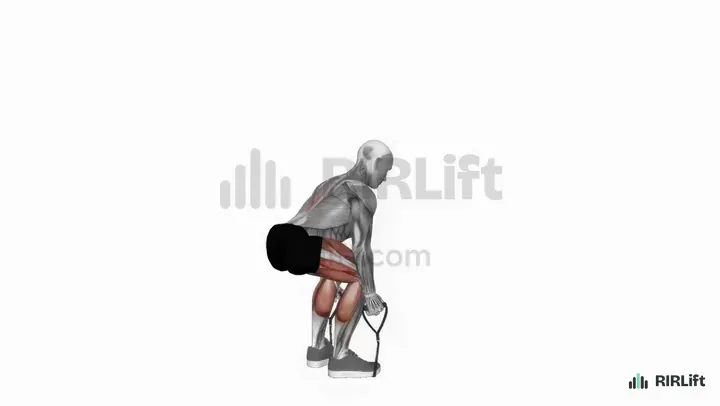
Band Deadlift

Glutes, Hamstrings, Lower Back

Standing on the band and hinging is the band version of a deadlift. Because the band is tightest at lockout, it trains the glutes hard at the top of the hinge.

How to do it

  1. Stand on the middle of a handled band with feet about hip-width and a handle in each hand.
  2. Push your hips back and lower the handles toward your shins with a flat back.
  3. Go down until your torso is close to level with the floor.
  4. Drive your hips forward and stand up straight with a hard glute squeeze.

Cues

  • Hips back first
  • Flat back
  • Squeeze at the top

Common mistakes

  • Pulling with the arms: keep them straight and let your hips do the lifting.

Swap for: Band Good Morning, Band Pull-Through, Band Hip Thrust

Hamstrings and lower back, hinge with the band at the shoulders

Band Good Morning

Hamstrings, Lower Back

Holding the band at your shoulders moves the load away from your hips, so a light band works the hamstrings and lower back as hard as a heavier deadlift would.

How to do it

  1. Stand on a handled band and bring the handles up to rest at the front of your shoulders.
  2. Unlock your knees slightly.
  3. Fold forward from your hips, keeping your back flat, until you feel a deep stretch behind your thighs.
  4. Bring your hips forward to stand tall.

Cues

  • Chest proud
  • Hips travel back
  • Stop at the stretch

Common mistakes

  • Rounding the back to go deeper: the rep ends where your back stays flat.

Swap for: Band Deadlift, Band Pull-Through, Band Leg Curl

Glutes and hamstrings, hinge with a low anchor

Band Pull-Through

Glutes

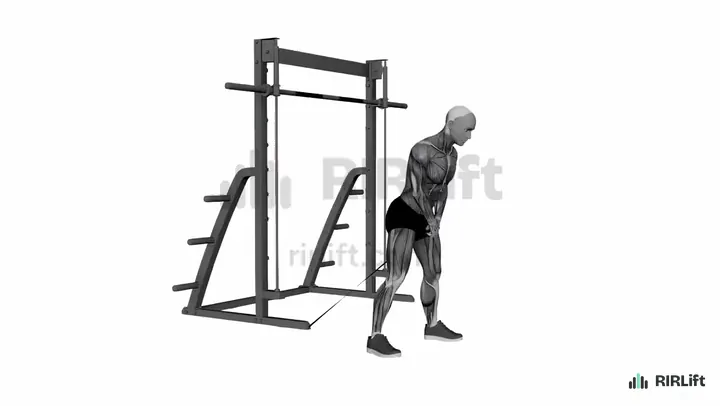
With the band anchored behind you and running between your legs, the pull is backward rather than down. That makes it the band hinge that best isolates your glutes, and it is easy on your lower back.

How to do it

  1. Anchor a band low behind you and face away from it, holding the other end between your legs.
  2. Walk forward until the band is tight and set your feet a bit wider than your hips.
  3. Push your hips back and let your hands drift through your legs.
  4. Snap your hips forward to stand tall and finish with a glute squeeze.

Cues

  • Hips back, hands follow
  • Arms are just hooks
  • Lock out with the glutes

Common mistakes

  • Squatting down instead of hinging: keep the knees soft and send the hips back.

Swap for: Band Deadlift, Band Hip Thrust, Band Good Morning

Hamstrings, standing knee curl

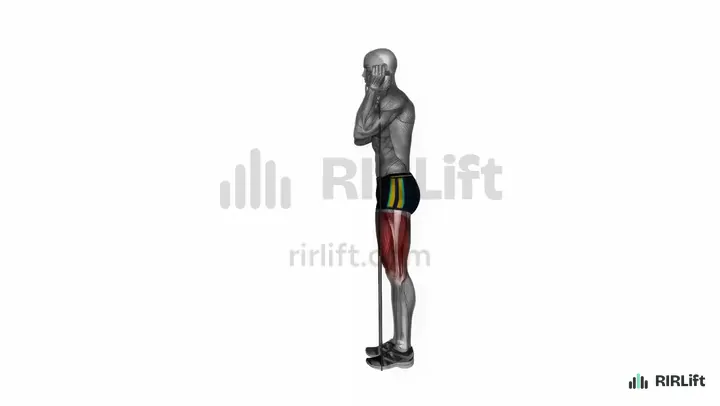
Band Leg Curl

Hamstrings

Curling one heel toward your glute against a loop around both ankles is the only band exercise here that trains the hamstrings through knee bending. Pair it with a hinge so both of the hamstrings' jobs are covered.

How to do it

  1. Put a loop band around both ankles and stand tall, holding a wall for balance.
  2. Keep your working thigh in line with the standing leg.
  3. Curl that heel up toward your glute as far as you can.
  4. Lower it slowly and repeat before switching legs.

Cues

  • Thigh stays still
  • Heel to the glute
  • Slow down

Common mistakes

  • Swinging the thigh back to finish the curl: hold the knee in place and accept a shorter range.

Swap for: Band Good Morning, Band Deadlift, Band Pull-Through

Band exercises for glutes

Bands are at their best for glutes, because the glutes work hardest with the hip fully straight, which is exactly where the band is tightest.

Glutes, floor bridge against a band

Band Hip Thrust

Glutes

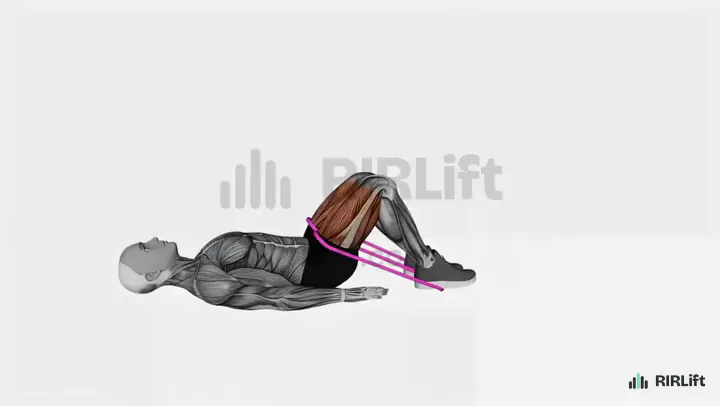
A loop around your heels and over your hips turns a glute bridge into a loaded hip thrust, with the most tension at the top, where the glutes work hardest.

How to do it

  1. Lie face up, feet planted and knees up, and run a loop band under your heels and over the front of your hips.
  2. Press your arms into the floor at your sides.
  3. Drive through your heels and raise your hips until your knees, hips and shoulders line up.
  4. Hold the top for a second and lower with control.

Cues

  • Ribs down
  • Hold the top
  • Heels, not toes

Common mistakes

  • Arching your lower back to finish: tuck your pelvis slightly and squeeze the glutes instead.

Swap for: Band Pull-Through, Band Glute Kickback, Band Deadlift

Glutes, kickback on all fours

Band Glute Kickback

Glutes

On all fours with the band under one foot, driving that leg back trains the glute at full hip extension, one side at a time.

How to do it

  1. Kneel on all fours and hook a loop band around one foot, holding the other end under your hand on the same side.
  2. Brace your stomach so your back stays flat.
  3. Push the foot back until your leg is straight and level with your hips.
  4. Lower the knee slowly back under your hip.

Cues

  • Drive the heel back
  • Back stays flat
  • Pause at the top

Common mistakes

  • Lifting the leg higher than your hips by arching your back: stop at hip height.

Swap for: Band Hip Thrust, Band Pull-Through, Band Standing Hip Abduction

Band exercises for outer hips and inner thighs

A loop band is the easiest way to train the side of your hips without a machine. Use one of the three abduction exercises, and add adduction if your inner thighs are a priority.

Outer hips, side steps

Lateral Band Walk

Abductors

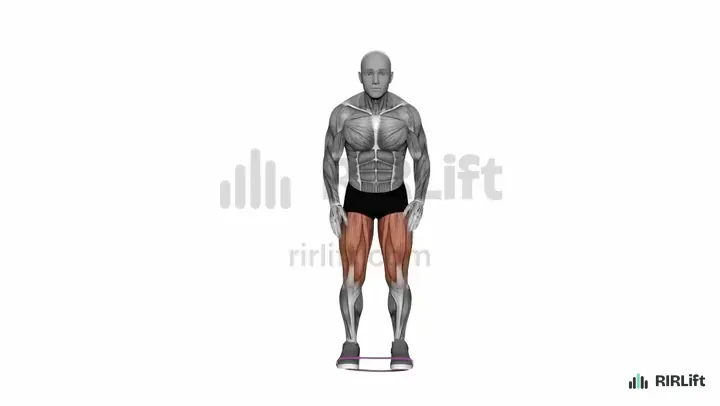
Stepping sideways against a loop trains the glute medius, the muscle that keeps your knees from caving in when you squat, lunge or run.

How to do it

  1. Place a loop band around your thighs, ankles or feet and sink into a quarter squat.
  2. Step sideways with your lead foot, keeping tension on the band.
  3. Bring the trailing foot in, but not all the way, so the band stays tight.
  4. Take all steps in one direction, then come back the other way.

Cues

  • Stay low
  • Band never goes slack
  • Toes forward

Common mistakes

  • Standing up tall between steps: hold the quarter squat the whole time.

Swap for: Band Standing Hip Abduction, Band Seated Hip Abduction, Band Squat

Outer hips, knee press in a half squat

Band Standing Hip Abduction

Abductors

Holding a half squat and pressing your knees out against a loop works both sides of your hips at once. It is a good last exercise because it needs no setup.

How to do it

  1. Pull a loop band up to just above your knees and sit into a half squat.
  2. Lean your chest slightly forward with a flat back.
  3. Push both knees out as far as you can against the band.
  4. Let them come back in slowly without losing the squat.

Cues

  • Hold the squat
  • Knees out, feet planted
  • Slow return

Common mistakes

  • Rolling onto the outer edges of your feet: keep your big toes pressed down.

Swap for: Band Seated Hip Abduction, Lateral Band Walk, Band Squat

Outer hips, seated knee press

Band Seated Hip Abduction

Glutes, Abductors

Seated on a bench or chair, you can push your knees apart without balancing, so you can take each set closer to failure than the standing version allows.

How to do it

  1. Sit near the front of a chair or bench with a loop band just above your knees.
  2. Lift your feet slightly or keep them flat, and sit tall.
  3. Press your knees out as wide as you can.
  4. Bring them back in slowly against the band.

Cues

  • Sit tall
  • Push wide, pause
  • Slow in

Common mistakes

  • Leaning back to get more range: stay upright and let the hips do the moving.

Swap for: Band Standing Hip Abduction, Lateral Band Walk, Hip Abduction Machine

Inner thighs

Band Hip Adduction

Adductors

With a band anchored to the side and looped around your ankle, pulling the leg across your body trains the inner thighs, which most band routines leave out.

How to do it

  1. Anchor a band low beside you and loop it around the ankle closest to the anchor.
  2. Step away until the band is tight and hold a wall or chair for balance.
  3. Sweep the banded leg across in front of the standing leg.
  4. Let it return slowly out to the side.

Cues

  • Stand tall
  • Sweep across
  • Control the way back

Common mistakes

  • Leaning your whole body to move the leg: keep your torso still.

Swap for: Hip Adduction Machine, Band Standing Hip Abduction, Band Squat

Put them together: example sessions

Each session below picks from the exercises above for one situation, with the sets, reps, rest and RIR filled in. Open one in the session builder to change a pick, price it from a recent set, and add it to RIRLift.

Session 1

Only loop bands, no anchor

Open in the session builder
  • Workouts2× a week
  • Working sets28 a week
  • Per workout~25 min
  • EquipmentResistance Bands

You have a set of loop bands of different strengths, nowhere to anchor them, and 30 minutes.

Without an anchor or handles, every exercise has to work with a loop around your legs or under your feet, so the plan is built around the hip thrust, the band squat and the side-hip work, with the standing curl for hamstrings. Loop bands are light, so the reps run 15 to 30 and every set ends at 0 to 1 reps in reserve. 14 working sets in each session.

Legs
ExerciseSets × repsRIRRest
Band Hip ThrustHeaviest loop. 1 s hold. 3 × 15–30 0 1 min
Band SquatPause 1 s at the bottom. 3 × 15–30 1 1 min
Band Leg CurlPer leg. 3 × 15–25 0 45 s
Lateral Band WalkSteps each way. 3 × 15–20 0 45 s
Band Standing Hip Abduction 2 × 15–25 0 45 s
How to run it
Do it twice a week with a day between. Use your heaviest loop for the hip thrust and squat, a medium one for the hip work and curls.
How to progress
Once you reach the top of a range on every set, move to the next-stronger loop, or double up two loops.

Session 2

Handled bands and a door anchor

Open in the session builder
  • Workouts2× a week
  • Working sets24 a week
  • Per workout~25 min
  • EquipmentResistance Bands

You have a set of tube bands with handles, ankle cuffs, a door anchor and loops, and want to build your legs with bands as your main training.

With handles and an anchor you get the band exercises that load hardest: split squats, lunges and hinges you stand on. Each day leads with a one-leg quad lift and a hinge at 1 to 2 reps in reserve, then finishes with glute and hip work at 0 to 1. Each day has 12 working sets.

Legs A
ExerciseSets × repsRIRRest
Band Spanish Split SquatPer leg. 3 × 10–20 1 90 s
Band Deadlift 3 × 12–20 2 90 s
Band Glute KickbackPer leg. 3 × 12–20 0 45 s
Band Hip AdductionPer leg. 3 × 12–20 1 45 s

Open Legs A in the session builder

Legs B
ExerciseSets × repsRIRRest
Band Reverse LungePer leg. 3 × 10–15 1 90 s
Band Pull-Through 3 × 12–20 1 1 min
Band Good Morning 3 × 12–20 2 1 min
Band Seated Hip Abduction 3 × 15–25 0 45 s

Open Legs B in the session builder

How to run it
Do Legs A and Legs B once each per week. For the split squat and pull-through, anchor the band low in the hinge side of a closed door.
How to progress
Shorten your grip on the band or stand further from the anchor to add tension. When that runs out, stack a second band.

Session 3

Strength work for runners

Open in the session builder
  • Workouts2× a week
  • Working sets22 a week
  • Per workout~20 min
  • EquipmentResistance Bands

You run three or more times a week and want two short band sessions for strong hips and legs without sore legs on run days.

Runners need single-leg strength and a stable pelvis more than big muscle soreness, so this plan uses lunges, the single-leg press and side-hip work, and keeps the lunges at 2 reps in reserve to protect your runs. The hip exercises go to 1 in reserve because they cost little recovery. 11 sets per session, about 20 minutes.

Runner A
ExerciseSets × repsRIRRest
Band Curtsy LungePer leg. 3 × 8–12 2 1 min
Band Leg PressPer leg. 3 × 12–20 1 45 s
Lateral Band WalkSteps each way. 3 × 12–20 1 45 s
Band Hip Thrust 2 × 12–20 1 45 s

Open Runner A in the session builder

Runner B
ExerciseSets × repsRIRRest
Band Reverse LungePer leg. 3 × 8–12 2 1 min
Band Leg CurlPer leg. 3 × 12–20 1 45 s
Band Standing Hip Abduction 3 × 15–20 1 45 s
Band Pull-Through 2 × 12–20 2 1 min

Open Runner B in the session builder

How to run it
Do it after an easy run or on a rest day, never the day before a hard run or a race.
How to progress
Add reps first, then a stronger band. During race weeks keep the band and cut each exercise to 2 sets.

Make it fit you

Questions

Are resistance bands effective for legs?

Yes, if the sets are hard. Bands build muscle when you take sets close to failure, and one-leg exercises with a strong band get you there. Their limit is the bottom of deep squats and lunges, where the band is slack, so expect to use more reps than with weights.

How do you use resistance bands to train legs?

Choose one quad exercise, one hinge, one glute exercise and one hip exercise, and do two to three sets of each, ending one or two reps short of failure, twice a week. Stand on handled bands for lunges and hinges; use loops for squats, bridges and side steps.

What do resistance bands do for squats?

A loop above the knees makes you push your knees out, which brings in the glutes and outer hips. A band under your feet and over your shoulders adds load toward the top of the squat. Neither adds much at the bottom.

What is the best leg exercise with a band?

The band split squat. With one leg working and the band adding load as you stand, it is the hardest band exercise for your quads and glutes. For hamstrings, it is the band good morning.

How do older people regain leg strength with bands?

Seated hip abduction, band hip thrusts and band squats to a chair are a safe start. Do two or three sets of each two or three times a week, stopping a couple of reps before failure, and move to stronger bands as the reps get easy.

Can you lose belly fat with resistance band leg workouts?

You cannot choose where you lose fat. Leg training with bands builds muscle and burns some energy, but fat loss comes from an overall calorie deficit. Band workouts help you keep muscle while you diet.