
Resistance band glute exercises for loop bands and long bands
Published October 19, 2026
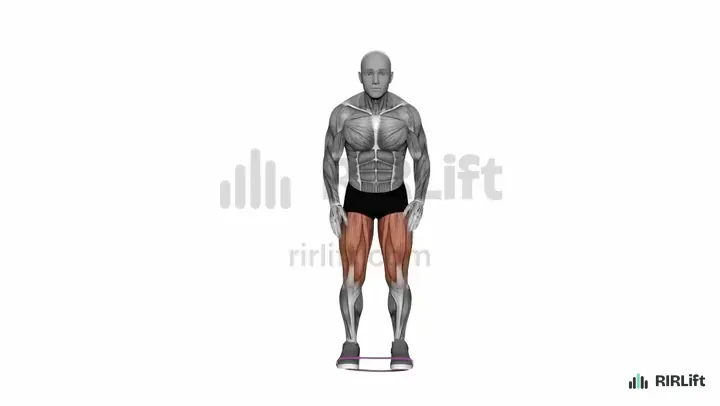
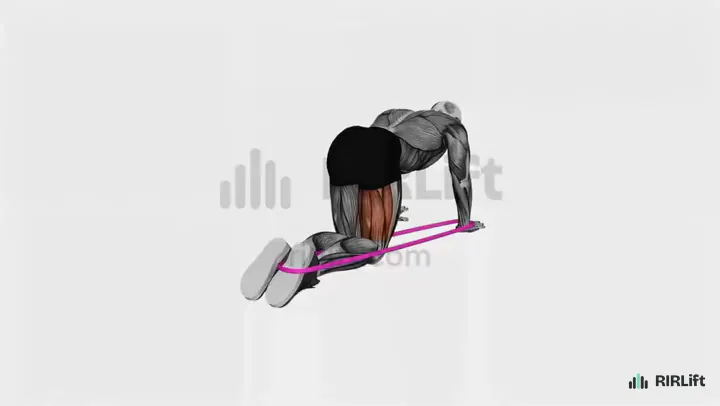
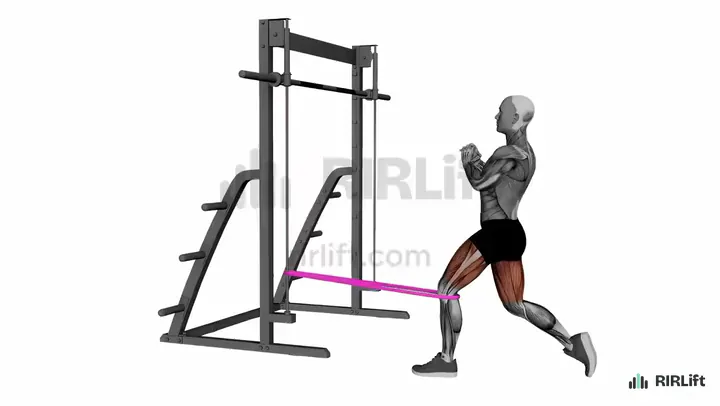
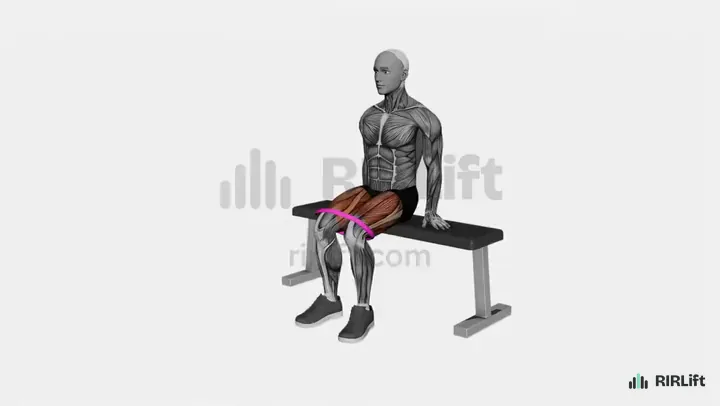
The best resistance band glute exercises are the band hip thrust, band pull-through and band deadlift for hip extension, the band reverse lunge and Spanish split squat for single-leg work, and lateral band walks and band hip abductions for the side of the glutes. A loop band around the thighs covers the bridges, squats and abductions; a long band with handles or an anchor covers the hinges and lunges. Do 4 to 6 exercises, 2 to 4 sets of 12 to 25 reps, stopping 0 to 2 reps short of failure.
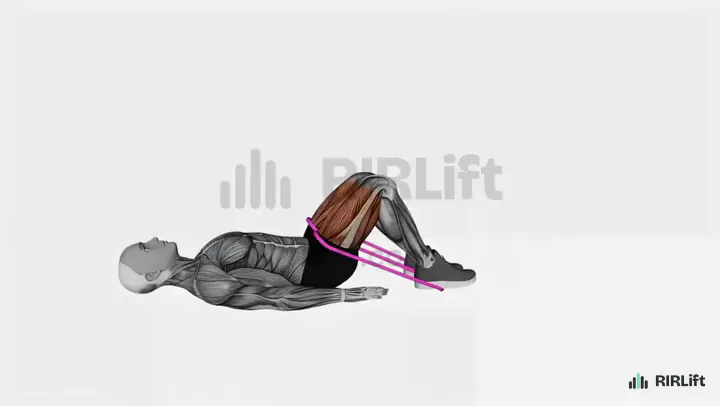
- Band Hip Thrust Glutes
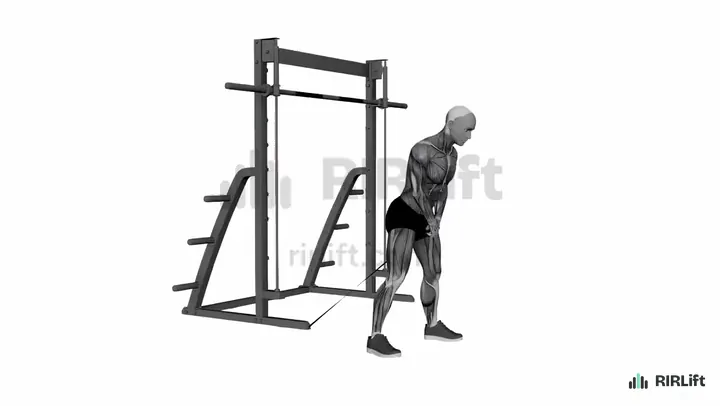
- Band Pull-Through Glutes
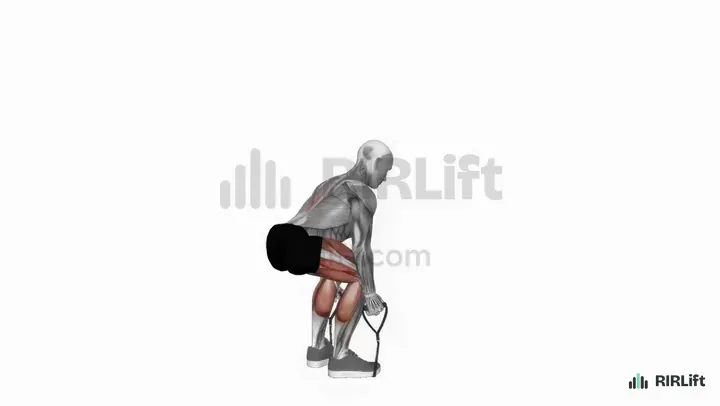
- Band Deadlift Glutes, Hamstrings, Lower Back
- Band Reverse Lunge Quads, Glutes
- Lateral Band Walk Abductors
- Band Glute Kickback Glutes
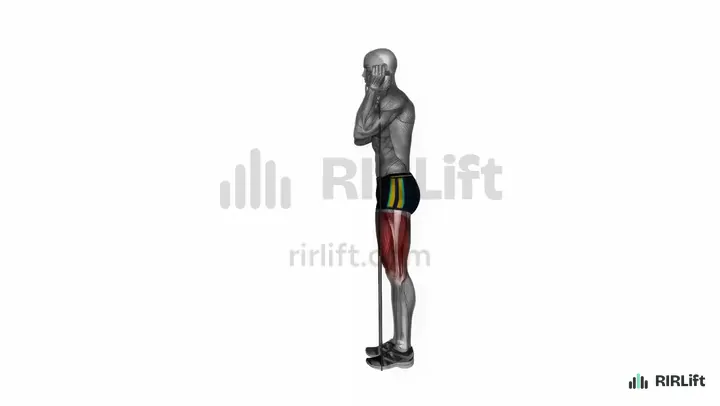
- Band Spanish Split Squat Quads
- Band Seated Hip Abduction Glutes, Abductors
Put them together: example sessions
Each session below picks from the exercises above for one situation, with the sets, reps, rest and RIR filled in. Open one in the session builder to change a pick, price it from a recent set, and add it to RIRLift.
-
Session 1
One loop band, a living room, 30 minutes
You bought a fabric or latex glute loop and nothing else. You want a full glute session from it.
4× a week · 48 sets a week · ~25 min
-
Session 2
Long bands with handles and a door or post anchor
You have a set of tube or power bands and a place to anchor them. You want something closer to a gym glute day.
3× a week · 39 sets a week · ~30 min
-
Session 3
You already lift legs; 12 minutes of bands after
You squat or deadlift once or twice a week and want more glute work without another gym day, using a loop and a long band in your bag.
2× a week · 20 sets a week · ~15 min
Session 1
One loop band, a living room, 30 minutes
- Workouts4× a week
- Working sets48 a week
- Per workout~25 min
- EquipmentResistance Bands
You bought a fabric or latex glute loop and nothing else. You want a full glute session from it.
Everything here uses one loop: the band hip thrust and kickback for hip extension, the band squat for the legs, and abductions standing, walking and seated for the side glutes. A loop band cannot get heavier, so sets run 15 to 25 reps and end 0 to 1 rep short of failure. Day A leans on extension, Day B on abduction, about 12 sets each.
| Exercise | Sets × reps | RIR | Rest |
|---|---|---|---|
| Band Hip ThrustPause at the top. | 4 × 15–25 | 1 | 1 min |
| Band SquatKnees out. | 3 × 12–20 | 1 | 1 min |
| Band Glute KickbackPer leg. | 3 × 15–25 | 0 | 45 s |
| Band Seated Hip AbductionOn a chair. | 2 × 20–30 | 0 | 45 s |
Open Day A in the session builder
| Exercise | Sets × reps | RIR | Rest |
|---|---|---|---|
| Band Hip Thrust3 s down. | 3 × 15–25 | 1 | 1 min |
| Lateral Band WalkSteps per side. | 3 × 12–20 | 0 | 45 s |
| Band Standing Hip AbductionStay in the squat. | 3 × 15–25 | 0 | 45 s |
| Band Glute KickbackPer leg. Hold the top. | 3 × 15–25 | 0 | 45 s |
Open Day B in the session builder
- How to run it
- Alternate Day A and Day B, three or four times a week. Keep rests short between the abduction sets.
- How to progress
- When a move reaches the top of its range, pause for two seconds at the hardest point of each rep. When that tops out too, buy the next band up.
Session 2
Long bands with handles and a door or post anchor
- Workouts3× a week
- Working sets39 a week
- Per workout~30 min
- EquipmentResistance Bands
You have a set of tube or power bands and a place to anchor them. You want something closer to a gym glute day.
Long bands can be doubled up and stretched further than a loop, so this plan uses the heavier patterns: deadlifts, pull-throughs and good mornings for the hinge, and reverse, curtsy and Spanish split squats for single-leg work. The hinges run at 1 to 2 RIR because a band deadlift can be heavy enough to strain your back on sloppy reps; the lunges go to 1 RIR. Each day has 13 sets.
| Exercise | Sets × reps | RIR | Rest |
|---|---|---|---|
| Band DeadliftDoubled band if you can. | 4 × 10–20 | 2 | 90 s |
| Band Pull-ThroughSqueeze at the top. | 3 × 12–20 | 1 | 75 s |
| Band Curtsy LungePer leg. | 3 × 10–15 | 1 | 75 s |
| Band Good MorningSlow stretch. | 3 × 12–20 | 2 | 75 s |
Open Hinge Day in the session builder
| Exercise | Sets × reps | RIR | Rest |
|---|---|---|---|
| Band Reverse LungePer leg. | 4 × 10–15 | 1 | 90 s |
| Band Spanish Split SquatPer leg. | 3 × 10–20 | 1 | 75 s |
| Band Pull-ThroughHold the lockout. | 3 × 15–20 | 1 | 1 min |
| Band DeadliftStanding tall at the top. | 3 × 12–20 | 2 | 75 s |
Open Lunge Day in the session builder
- How to run it
- Do Hinge Day and Lunge Day once or twice a week each, at least a day apart.
- How to progress
- Add reps until the top of the range, then double the band or move to the next band and drop back to the bottom of the range.
Session 3
You already lift legs; 12 minutes of bands after
- Workouts2× a week
- Working sets20 a week
- Per workout~15 min
- EquipmentResistance Bands
You squat or deadlift once or twice a week and want more glute work without another gym day, using a loop and a long band in your bag.
Heavy leg days already work the glutes through squats and hinges, so the add-on targets what they miss: hip thrusts and pull-throughs for the top of hip extension and walks and standing abductions for the side glutes. Two pairs keep it to about 12 minutes. Sets go to 0 to 1 RIR because the load is light and the session is short. Each add-on has 10 sets.
| Exercise | Sets × reps | RIR | Rest |
|---|---|---|---|
| A1 Band Hip ThrustPause at the top. | 3 × 15–25 | 1 | 0 s |
| A2 Lateral Band WalkSteps per side. | 3 × 12–20 | 0 | 1 min |
| B1 Band Pull-Through | 2 × 15–25 | 1 | 0 s |
| B2 Band Standing Hip Abduction | 2 × 20–30 | 0 | 1 min |
- How to run it
- Do Glute Finisher at the end of each leg day, or on a separate day at home. Go between the two exercises in a pair with no rest.
- How to progress
- Add reps each week; once all sets reach the top of the range, use a stronger band.
Make it fit you
-
Only light bands
Stay with the single-leg moves and kickbacks, slow every rep to three seconds down, and hold the hardest point for two seconds. Stack two loop bands for the hip thrust if one is too easy.
-
Fabric or latex loop
Fabric loops stay put around the thighs and do not roll, so use one for hip thrusts, squats and abductions. Latex loops stretch further and work better around the ankles or feet, for kickbacks and walks.
-
Feel it in your thighs, not your glutes
Start each session with two sets of seated abductions or kickbacks, then go to the lunges with your chest tipped forward. In hip thrusts, tuck your chin and keep your ribs down.
-
No anchor point
Skip the pull-through and Spanish split squat. Band deadlifts, good mornings and lunges all anchor the band under your own feet.
-
Back gets tired in the hinges
Replace the deadlift and good morning with extra sets of hip thrusts and kickbacks, which load the glutes with your back on the floor.
-
Track the band and the RIR
Bands are hard to compare by weight, so write down which band you used and how many reps you had left. In RIRLift you log the RIR with every set, and it tells you when a band has become too easy.
Questions
Can I grow glutes with just resistance bands?
Yes, especially if you are new to training. Muscle grows from sets that end close to failure, and bands get you there with higher reps. Bands are lightest at the bottom of each rep, so experienced lifters usually stall sooner than with weights; at that point, single-leg moves and a heavier band keep you progressing.
Do resistance bands for glutes actually work?
They work if you use them for real sets. A loop band makes abductions and hip thrusts hard enough to grow the side and top of the glutes, and long bands load lunges and deadlifts. Using one only as a warm-up before squats does very little on its own.
Which resistance band is best for glutes?
A fabric loop band in medium or heavy for thrusts, squats and abductions, plus a long band with handles, or a loop of the same kind, for deadlifts, pull-throughs and lunges. If you only buy one, the fabric loop covers more of the exercises on this page.
What is the best band exercise for glutes?
The band hip thrust. It loads the glutes hardest at full hip extension, which is where a band's tension is highest, and you can push it close to failure safely. For the side glutes, the lateral band walk is the one to pick.
Do glute bridges actually grow glutes?
They do when they are loaded. A bodyweight bridge is too easy for most people after a few weeks; with a band over the hips and sets taken close to failure, the bridge becomes a real glute builder.
How many reps should I do with resistance bands for glutes?
Usually 12 to 25 per set, stopping 0 to 2 reps short of failure. If you can do more than 25 with good form, the band is too light: use a stronger one or a harder variation.
How often should I do resistance band glute workouts?
Two to four times a week. Band sessions are light on your joints, so you can do more of them than heavy lifting days, as long as you are not still sore from the last session.
Related templates
-
Bodyweight glute exercises you can do without equipment
Glute training when you have no band at all.
-
Glute exercises at home, with or without equipment
Mixing bands with dumbbells and bodyweight at home.
-
Resistance band leg exercises for quads, hamstrings, glutes and hips
Band work for the quads and hamstrings too.
-
Hip thrust: how to do it, what it works, and what to swap it for
The barbell hip thrust in detail, for when you get to a gym.
-
The best workout for your glutes and butt
Full glute programs with weights and machines.