
Seated cable row: form, grip and the best alternatives
Published October 17, 2026
The seated cable row has you sit at a low pulley with your feet on the platform and pull a handle into your stomach. It trains your mid back and lats, with your biceps and rear delts helping. It works when your torso stays nearly still and your elbows travel back past your ribs, not when you rock back to drag the stack.
- WorksUpper Back, Lats
- AlsoBiceps
- EquipmentCable Row
- Start with3 × 10–15, 2 in reserve, 2 min rest
How to do the seated cable row
The cable keeps tension on through the whole pull, including the stretch at the front, and the pin lets you add weight in small steps. With your feet braced and nothing to balance, all that limits a set is your back.
Steps
- Clip a close-grip V-handle to the low pulley, set a light pin and sit with your feet on the platform and your knees slightly bent.
- Lean forward just enough to take the handle, then sit tall with your arms straight and your torso close to vertical.
- Let the weight draw your shoulder blades forward so your upper back starts stretched, while your trunk stays tall.
- Drive your elbows back along your sides until the handle touches your stomach just below the ribs, and hold a beat with your shoulder blades pinched.
- Return the handle slowly until your arms are long and your shoulder blades slide forward again, then start the next pull.
Cues
- Sit tall, then pull
- Elbows past your ribs
- Reach with the shoulders, not the spine
Common mistakes
- Rocking back and forth to move the stack: if your torso swings more than a few degrees, take off a plate and let only your arms and shoulder blades move.
- Stopping the handle short at the front: let your shoulders reach forward on every rep, or you skip the stretched part of the row.
- Shrugging the handle toward your chest: pull to your stomach and keep your shoulders down away from your ears.
- Folding forward at the waist at the front of the rep: your shoulders travel, your trunk stays tall.
Swap for: Single-Arm Cable Row, Chest-Supported Row, One-Arm Dumbbell Row
Muscles the seated cable row works
The seated cable row works your lats, rhomboids and middle traps first, with your biceps, rear delts and forearms helping. The cable keeps them loaded at the front of the rep too, with your arms straight and your shoulder blades pulled apart, so the forward reach counts as much as the squeeze.
Sets, reps and reps in reserve for the seated cable row
| Goal | Sets × reps | RIR | Rest |
|---|---|---|---|
| Build muscle | 3 × 10–15 | 2 | 2 min |
| The builder uses these numbers; once all three sets hit 15 with 2 in reserve, move the pin down a plate. | |||
| Heavier back work | 3–4 × 6–10 | 1–2 | 2–3 min |
| Use it as your first row of the day, as long as your torso stays still on the last rep. | |||
| Second back exercise in a session | 2–3 × 12–15 | 0–1 | 90 s |
| Placed after a heavier row or pulldown, the stack lets you choose an exact load and take these sets near failure. | |||
| Beginners | 2–3 × 10–15 | 2–3 | 2 min |
| Stop well short of failure while you practise reaching forward with your shoulders and holding your torso still. | |||
Seated cable row variations
-
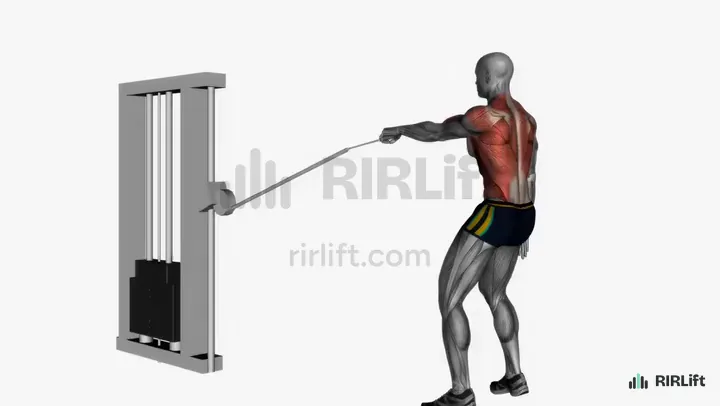
Single-Arm Cable Row
Pick it when one side out-pulls the other, or for a longer reach and a deeper elbow drive on each side.
Build a session with it -
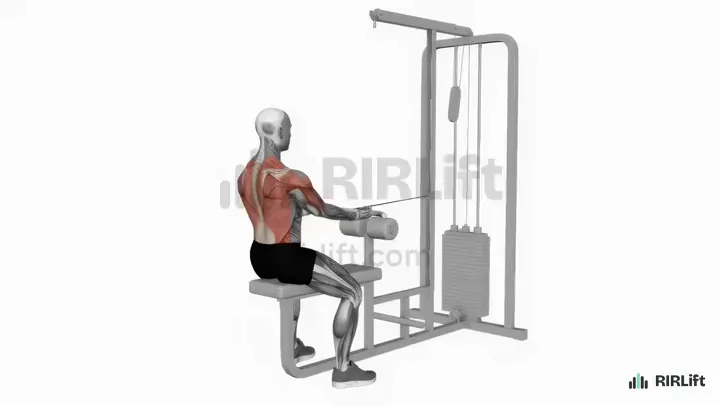
Reverse-Grip Cable Row
Pick it to bring your biceps in and keep your elbows tight to your sides, with a straight bar held palms up.
Build a session with it -
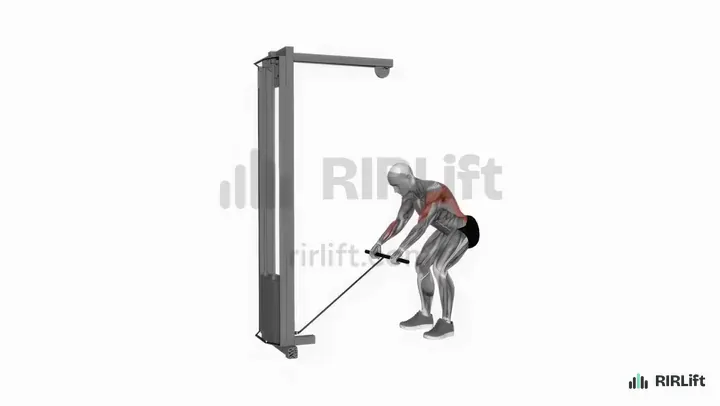
Standing Cable Row
Pick it when the row bench is taken: hinge forward at a low pulley and row the handle toward your hips.
Build a session with it
Seated cable row alternatives
With machines
-
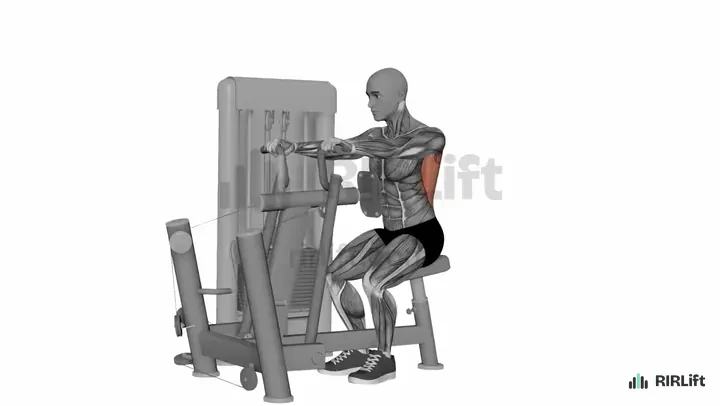
Chest-Supported Row
The closest swap when the cable is busy: the chest pad holds your torso still, so the stack only moves if your back does.
Build a session with it -
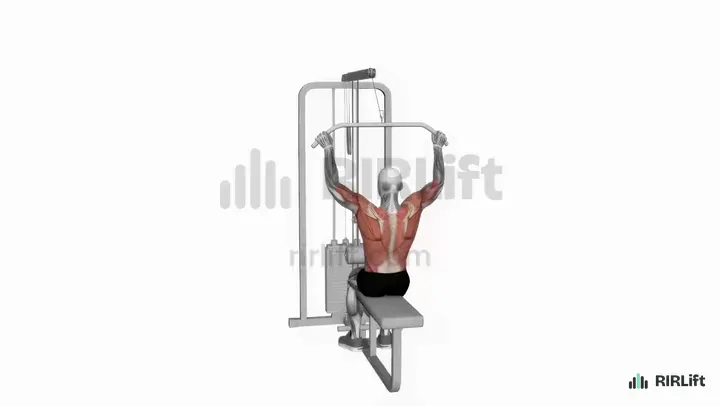
Lat Pulldown
Use it if no row station is free; pulling your elbows down to your ribs trains the same lats from overhead.
Build a session with it
With dumbbells
-
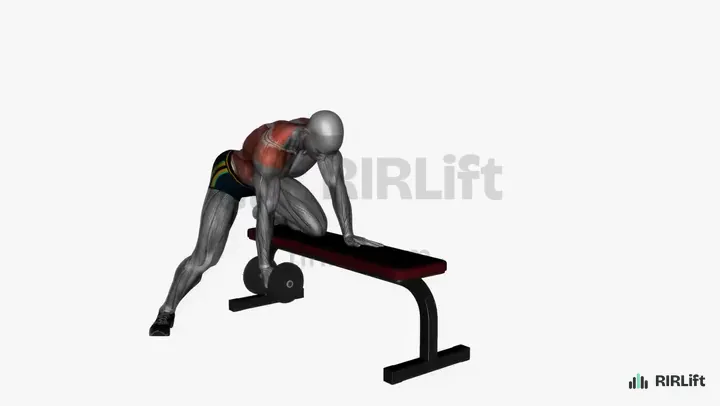
One-Arm Dumbbell Row
One hand and knee on a bench, row the dumbbell to your hip and let it hang long at the bottom; one side at a time.
Build a session with it -
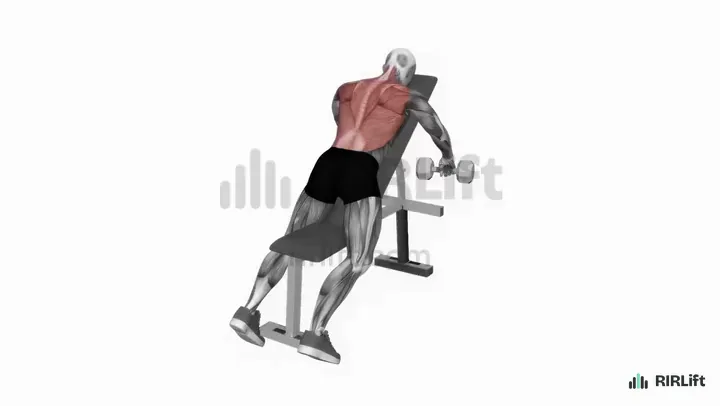
Incline Dumbbell Row
Lie chest-down on an incline bench and row two dumbbells when you want the support of the cable row without a cable.
Build a session with it
With a barbell
-
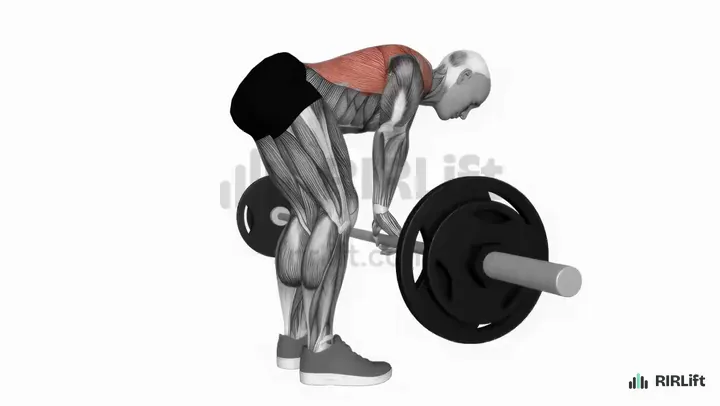
Barbell Row
Pick it to load the row heavier, if you can hold a hinge for the whole set.
Build a session with it -
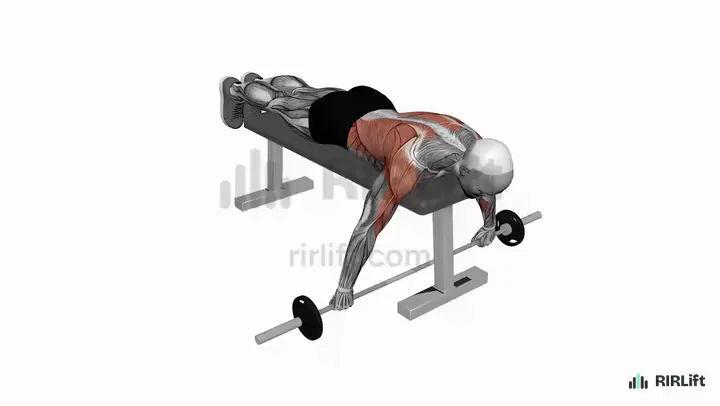
Seal Row
Lie flat on a raised bench and row the bar up to it when you want a heavy row with your torso pinned.
Build a session with it
At home
-
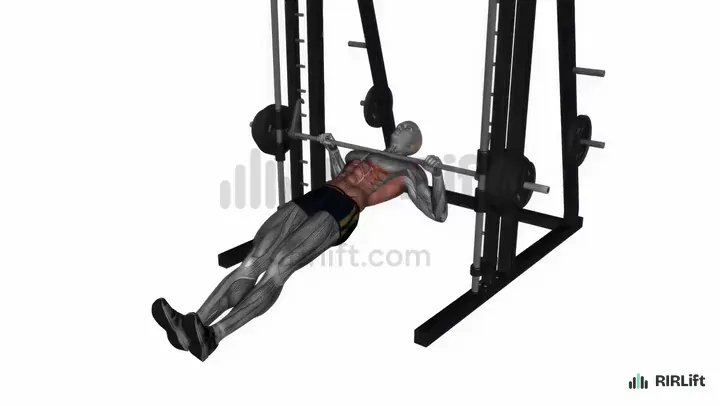
Inverted Row
Set a bar about waist height, hang under it and pull your chest up to it; move your feet closer to make it easier.
Build a session with it -
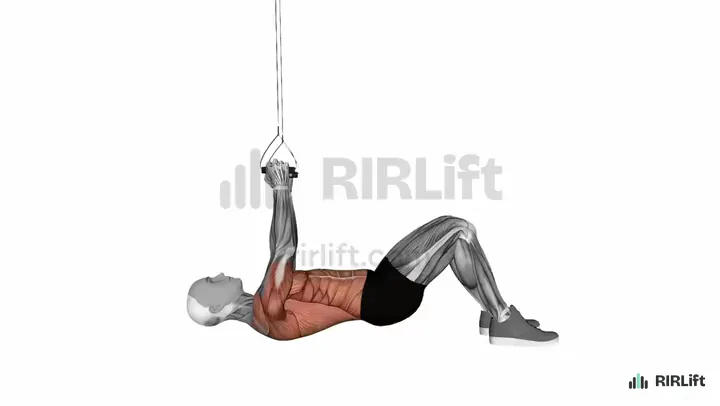
TRX Row
Lean back on suspension straps and row; step your feet forward to add load.
Build a session with it -
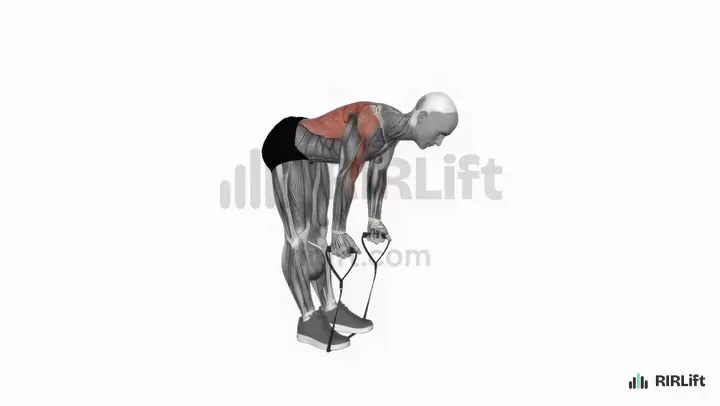
Band Bent-Over Row
With only a band, stand on it, hinge forward and pull the ends to your hips.
Build a session with it
Seated cable row attachment and grip width
Use the close-grip V-handle first. With your palms facing and hands close, your elbows stay by your sides and travel furthest back, which loads your lats and mid back most.
A wider bar held overhand moves your elbows out to about 45 degrees and shifts the work toward your upper back and rear delts, at the cost of a shorter pull. A straight bar held palms up brings your biceps in. A single handle lets one side work at a time. None is better for growth than the others: pick the handle that lets you reach furthest forward and pull furthest back without your torso moving, keep it for a training block, and add reps or weight to it.
Seated cable row vs lat pulldown
Both train your lats, but from different directions. The lat pulldown pulls from overhead and loads your lats most with your arms stretched up. The seated cable row pulls from in front and brings in more of the muscles between your shoulder blades.
A back session works best with one of each: a vertical pull and a horizontal pull. If you only have time for one, rotate them week to week, or use the one your gym has free and log it so you keep adding reps.
Questions
What muscles does the seated cable row work?
Mainly your lats, rhomboids and middle traps, the muscles of your mid back. Your biceps, rear delts and forearms help. The cable loads them most at the front of the rep, with your arms straight and shoulder blades pulled apart.
Should you lean back on a seated cable row?
Barely. Keep your torso close to upright and move only your arms and shoulder blades. If finishing a rep takes a rock backward, the stack is too heavy, so take a plate off.
Which handle should I use for the seated cable row?
Start with the close-grip V-handle, which keeps your elbows by your sides and gives the longest pull. Use a wider overhand bar to shift the work toward your upper back and rear delts, or a single handle to train one side at a time.
What is a good substitute for seated cable rows?
A chest-supported row machine is the closest, since it also keeps your torso still. With dumbbells, use a one-arm dumbbell row or an incline dumbbell row. At home, an inverted row under a bar or a TRX row covers the same pull.
Can I do a seated row with dumbbells?
Not seated, since a dumbbell pulls straight down. Lie chest-down on an incline bench and row two dumbbells instead; it keeps your torso still the way the seated cable row does.
Do rows make your back thicker or wider?
Both. Rows train the lats, which add width, and the muscles between your shoulder blades, which add thickness. Pulling to your stomach with elbows by your sides favours the lats; a wider grip with elbows out favours the upper back.
How many sets of seated cable rows should I do?
A good default is 3 sets of 10–15, each ending about 2 reps before failure. Add those sets to every other pulling exercise you do and aim for 10–20 hard back sets a week.
Related templates
-
Lat pulldown: form, grip width and the best alternatives
The vertical pull to pair with the seated cable row in a back session.
-
Cable exercises by muscle, with sessions for the cables you have
Every cable move for back, chest, shoulders, arms and legs, with sessions for one station or a full gym.
-
The best workout for back: width, thickness and traps
Complete back sessions that put the row and the pulldown together.
-
Face pulls: how to do them, what they work, and what to do instead
A cable pull for your rear delts to add after your rows.
-
Double progression
How to move from 10 to 15 reps and then up a plate.