
Shrugs: how to do them, and what to do instead
Published October 17, 2026
Shrugs lift your shoulders straight up toward your ears while you hold a weight at arm's length. They train the upper traps, the muscle that runs from your neck to the top of your shoulders. What makes them work is the full range: let the weight pull your shoulders all the way down, lift them as high as they go, and pause at the top before lowering.
- WorksTraps
- AlsoForearms
- EquipmentDumbbells
- Start with3 × 10–15, 1 in reserve, 90 s rest
How to do the dumbbell shrug
Dumbbells hang at your sides instead of in front of your thighs, so nothing blocks the bottom of the rep and each shoulder moves on its own path. You can start with a pair from any rack and add weight in small steps.
Steps
- Pick up a pair of dumbbells and stand tall with them at your sides, palms facing your legs and feet about hip width.
- Let your arms hang straight and let the weight pull your shoulders down as far as they will drop.
- Lift your shoulders straight up toward your ears without bending your elbows.
- Hold the top for a full second, with your shoulders as high as they go.
- Lower slowly until your shoulders are fully down again, then start the next rep from there.
Cues
- Shoulders to ears, straight up
- Arms are just hooks
- Pause at the top, full drop at the bottom
Common mistakes
- Bouncing short reps with a weight that is too heavy: if your shoulders barely move, drop the weight until you can reach the same top position on every rep and hold it for a second.
- Rolling your shoulders in circles: the traps lift your shoulders up and down, so the roll adds nothing; move straight up and straight down.
- Bending your elbows to help: once your arms pull, your biceps take part of the load; keep your elbows straight and let your hands only hold.
- Pushing your chin forward at the top: keep your head stacked over your shoulders and look straight ahead so your shoulders rise to your ears, not your ears to your shoulders.
Swap for: Barbell Shrug, Trap Bar Shrug, Cable Shrug
Muscles the dumbbell shrug works
Shrugs work the upper traps, with the levator scapulae beside them helping to lift the shoulder blades and your forearms working to hold the weight. With dumbbells at your sides the load stays the same through the whole lift, so the top of the rep, with your traps fully squeezed, is where a pause adds the most.
Sets, reps and reps in reserve for the dumbbell shrug
| Goal | Sets × reps | RIR | Rest |
|---|---|---|---|
| Build muscle | 3 × 10–15 | 1 | 90 s |
| The session builder starts the dumbbell shrug at these numbers too. | |||
| Heavy shrugs | 3–4 × 6–10 | 1–2 | 2 min |
| For a barbell or trap bar: keep the one-second pause at the top, and when you can't hold it, the weight is too heavy. | |||
| Beginners | 2–3 × 12–15 | 2–3 | 90 s |
| Learn the full drop and the pause first, and add reps before you add weight. | |||
| At the end of a session | 2 × 15–20 | 0–1 | 60 s |
| After rows and deadlifts your grip is the first thing to go, so use straps to keep the sets about your traps. | |||
Dumbbell shrug variations
-
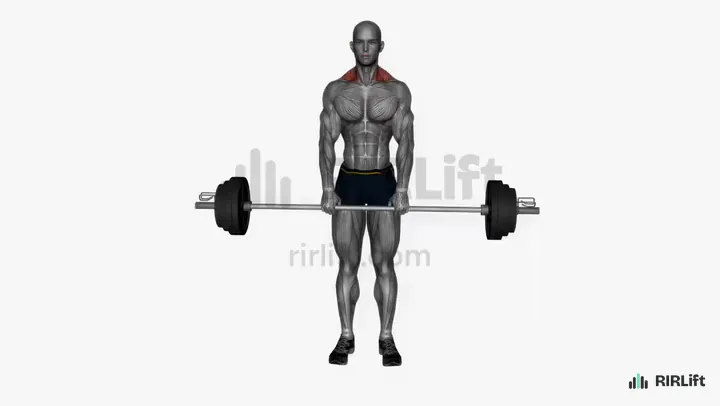
Barbell Shrug
Pick it when you have outgrown your heaviest dumbbells; a bar loads in small plates and goes far heavier.
Build a session with it -
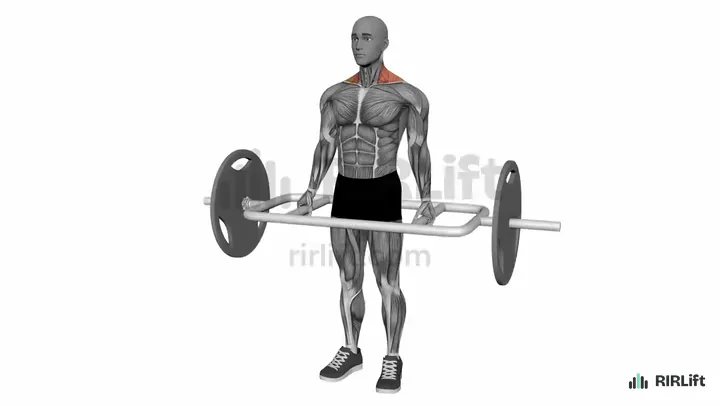
Trap Bar Shrug
Pick it to go heavy with your hands at your sides and palms facing in, so the bar never drags up your thighs.
Build a session with it -
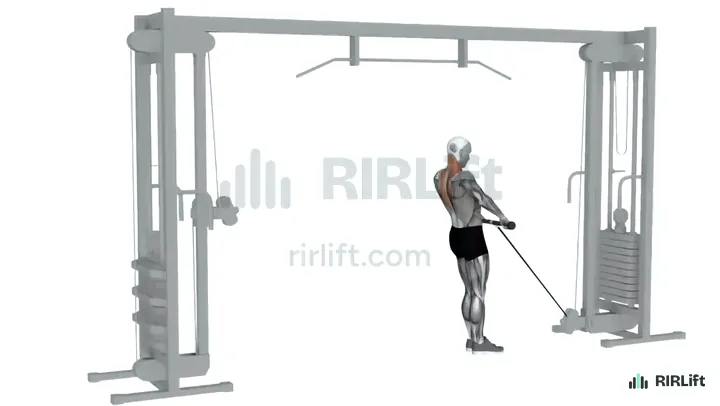
Cable Shrug
Pick it for a low pulley that keeps the load on at the bottom, or to drop the pin for quick drop sets.
Build a session with it -
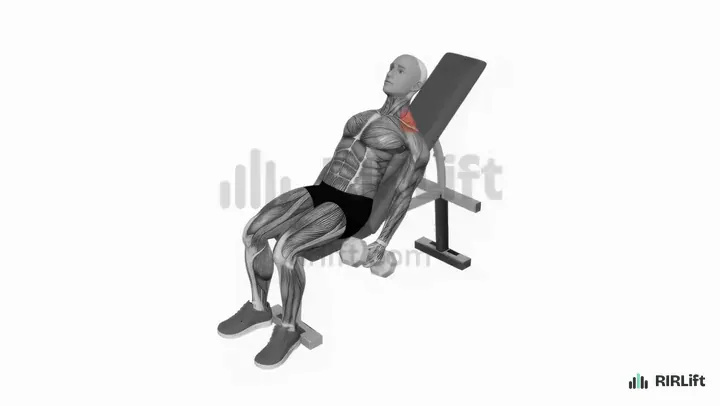
Incline Dumbbell Shrug
Pick it if you catch your legs and torso helping; lying chest down on an incline bench leaves only your shoulder blades free to move.
Build a session with it -
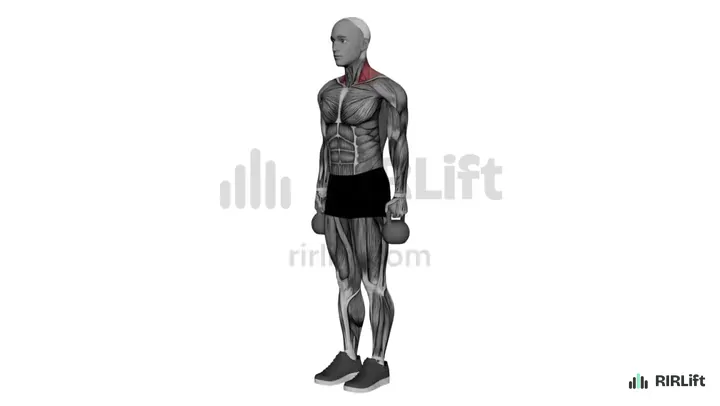
Kettlebell Shrug
Pick it at home with kettlebells; the handle sits higher, so stand tall and keep the bells off your thighs.
Build a session with it -
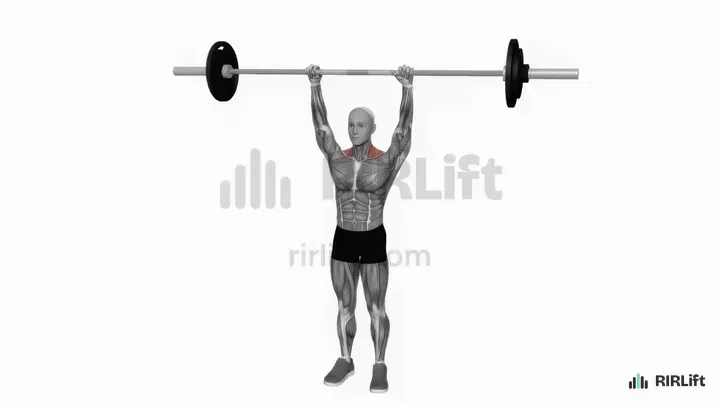
Barbell Overhead Shrug
Pick it if you train for overhead lifts; you shrug with the bar locked out above your head, so your shoulders lift with your arms overhead.
Build a session with it
Dumbbell shrug alternatives
Heavy pulls that load the traps
-
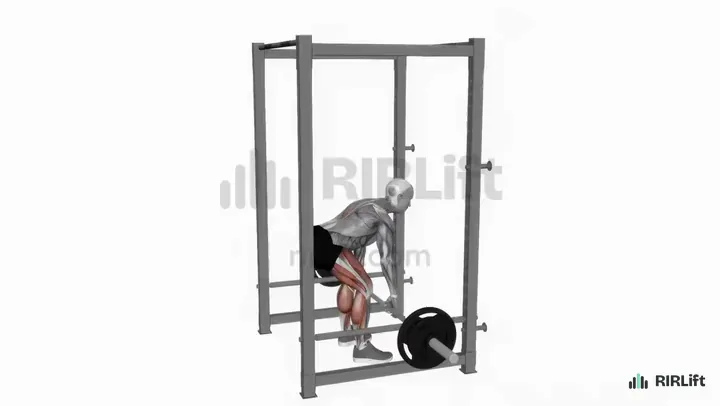
Rack Pull
Pull a heavy bar from about knee height and stand tall with it, so your traps hold a load well past your dumbbell shrug weight.
Build a session with it -
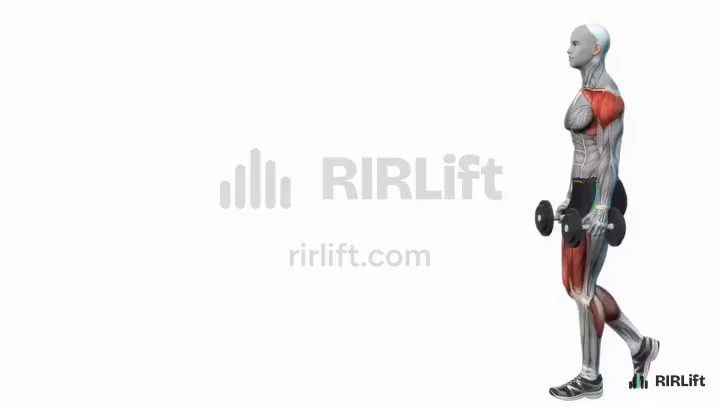
Farmer's Walk
Walk with heavy dumbbells at your sides when you want your traps, grip and trunk working in one exercise.
Build a session with it -
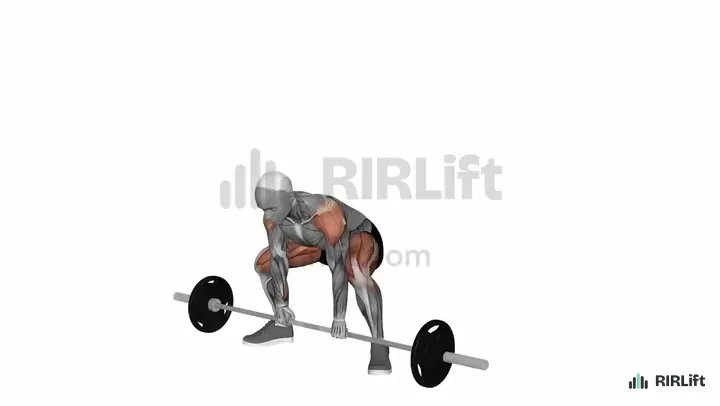
Barbell High Pull
Pull the bar from the floor to your lower chest in one fast move, for traps trained with speed rather than a slow squeeze.
Build a session with it
Upper traps with your arms moving
-
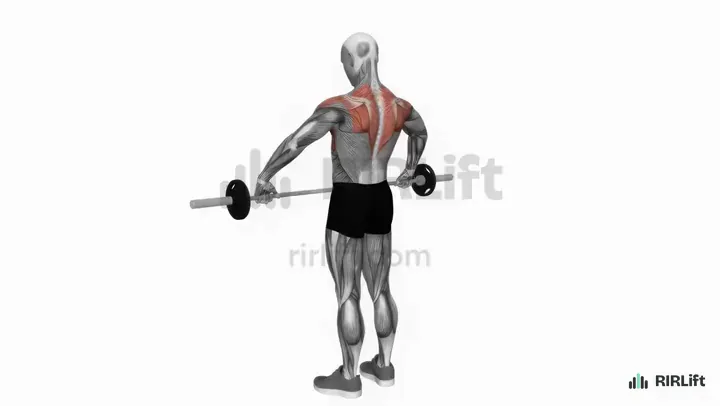
Wide-Grip Upright Row
Pull a barbell up to your lower chest with a wide grip to train the upper traps and side delts together.
Build a session with it -
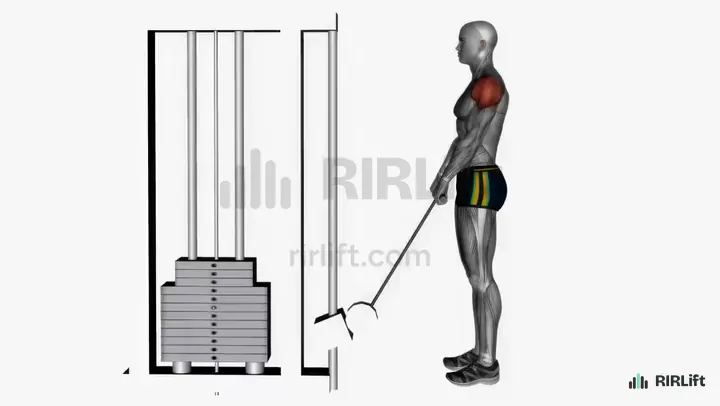
Cable Upright Row
The same pull with a cable bar, which keeps the load on at the bottom and makes weight changes quick.
Build a session with it -
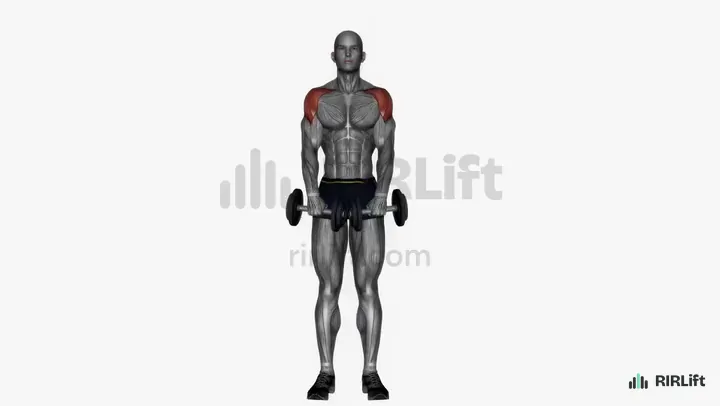
Dumbbell Upright Row
A dumbbell in each hand lets each arm take its own path when a straight bar feels awkward on your wrists.
Build a session with it
Middle traps, between the shoulder blades
-
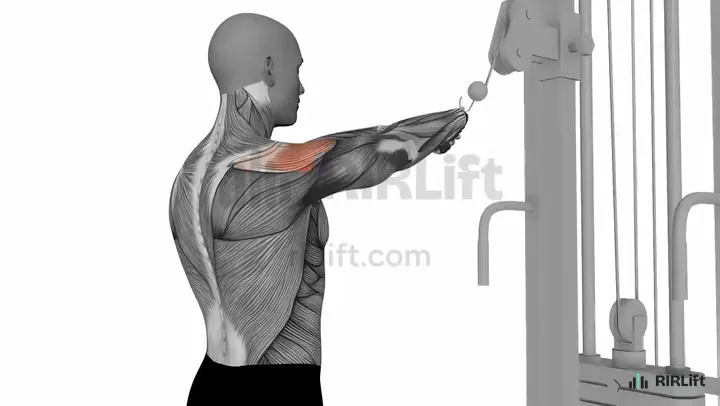
Face Pull
Pull a rope to your face with elbows high to train the middle traps, rear delts and rhomboids that shrugs leave out.
Build a session with it -
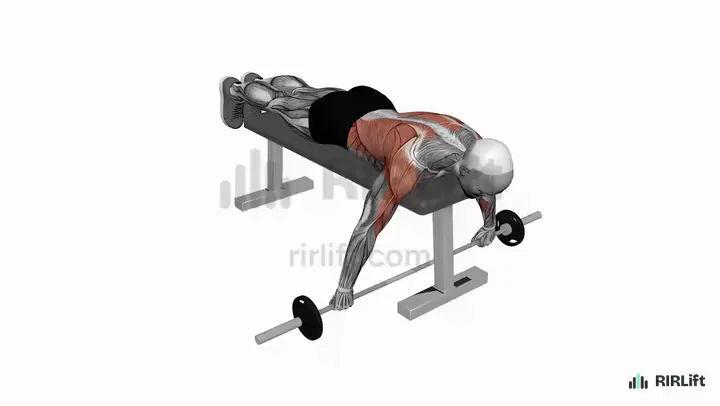
Seal Row
Lie face down on a high bench and row a barbell, so nothing but your back can move the weight.
Build a session with it -
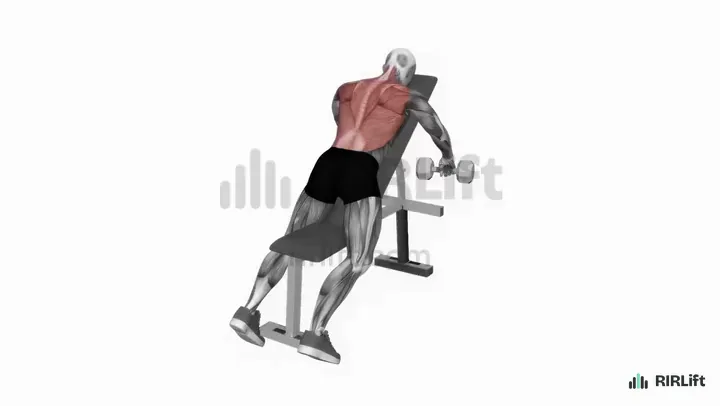
Incline Dumbbell Row
Row dumbbells chest down on an incline bench and pinch your shoulder blades at the top of every rep.
Build a session with it
Dumbbell vs barbell shrugs
Dumbbells hang at your sides, so your shoulders can drop lower at the bottom and each side lifts on its own path. A barbell sits in front of your thighs and loads in smaller plates to far heavier weights.
Start with dumbbells. Move to the barbell or trap bar when your heaviest pair no longer gets you to the top of your rep range, and keep the same pause at the top either way.
Do you need shrugs if you row and deadlift?
Rows train the middle traps and deadlifts make your upper traps hold a heavy bar, but neither moves your shoulders up through a full range. If bigger upper traps are a goal, add 2–3 sets of shrugs at the end of a pull or back day.
If they are not, skip them: your rows and face pulls already train the rest of the traps.
Questions
What muscles do shrugs work?
Shrugs work the upper traps, the muscle running from your neck to the top of your shoulders. The levator scapulae helps lift your shoulder blades, and your forearms work hard to hold the weight.
Should shrugs be heavy or light?
Heavy enough that you reach 0–3 reps from failure in your rep range, light enough that every rep reaches the same top position with a one-second pause. If your shoulders only move an inch, the weight is too heavy.
What is a good alternative to shrugs?
For the upper traps, the trap bar shrug, cable shrug and wide-grip upright row. For the traps as a whole, heavy rack pulls and farmer's walks. For the middle traps between your shoulder blades, face pulls and chest-down rows.
Should you roll your shoulders when you shrug?
No. The upper traps lift your shoulders up and lower them down, so rolling them adds nothing to the work. Move straight up, pause, and lower straight down.
How many sets of shrugs should you do?
Two to four sets once or twice a week. Rows, deadlifts and carries also work your traps, so count shrugs as part of the 10–20 hard sets per muscle per week.
Do shrugs make your neck look bigger?
Shrugs build the upper traps, which sit on either side of your neck, so the slope from your neck to your shoulders gets thicker as they grow.
Can you do shrugs on a Smith machine?
Yes. Stand close to the bar, take it at shoulder width, and use the same full drop and pause; the fixed track lets you focus only on lifting your shoulders.
Related templates
-
Face pulls: how to do them, what they work, and what to do instead
Trains the middle traps and rear delts that shrugs leave out.
-
Lateral raises: how to do them, and what to do instead
The side-delt exercise to pair with shrugs for wider-looking shoulders.
-
The best workout for back: width, thickness and traps
Full back sessions where shrugs fit in as the last exercise.
-
The best workout for shoulders, for your situation
Shoulder sessions that cover every head of the delts alongside the traps.
-
How to use RIR
How to judge 1 rep in reserve on an exercise with a short range like the shrug.