Skull crusher alternatives that are easier on your elbows

The best skull crusher alternative is the dumbbell skull crusher: the same lying extension, but your palms face each other, so your wrists and elbows can sit at their natural angle. If the lying position itself hurts, the overhead cable extension keeps the deep triceps stretch with a smoother pull. For heavy work, the close-grip bench press or JM press loads your triceps more, and with no equipment, close-grip push-ups and floor dips fill in.

What a ez-bar skullcrusher alternative has to replace

The skull crusher trains all three heads of your triceps, with extra work on the long head because your arms tilt back toward your head. It is hardest at the bottom, where the bar is near your forehead and your triceps are stretched.

That stretched bottom is also where elbows tend to complain. A good replacement keeps a deep elbow bend under load, with a grip or path your elbows tolerate.

How to do the ez-bar skullcrusher

Cables and machines

In a gym, a cable or machine keeps the load smooth through the bottom of the rep, which is where skull crushers strain the elbow.

Best cable swap

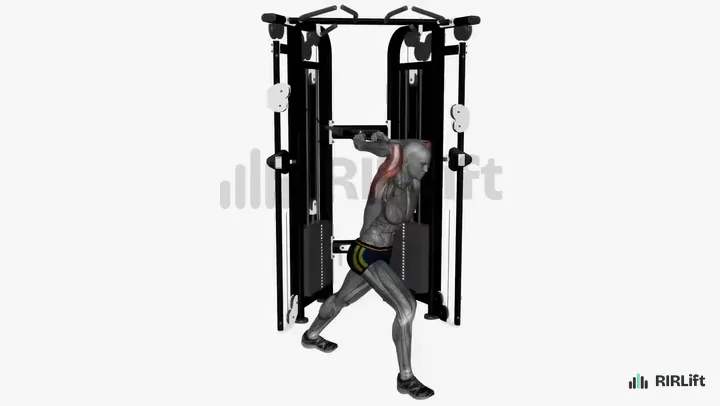
Overhead Cable Triceps Extension

Triceps

Arms overhead stretch the long head of your triceps at least as much as a skull crusher does, and the cable pulls smoothly instead of dropping a bar toward your face. Pick it if lying down or the bottom of the skull crusher bothers you.

How to do it

  1. Attach a rope to a high pulley, grab both ends with your palms facing each other, and turn so your back faces the stack.
  2. Step forward into a split stance so the cable is pulled tight, and lean your torso slightly forward with the rope ends behind your neck and elbows pointing ahead.
  3. Keep your upper arms close to your head and straighten your elbows, pushing the rope forward and up until your arms are straight out in front of your forehead.
  4. Spread the rope ends slightly at the end and hold for a moment.
  5. Let your hands travel back behind your head slowly until your forearms touch your biceps or you feel a strong stretch, then extend again.

Cues

  • Elbows point forward, not out
  • Only the forearms move
  • Deep stretch, every rep

Common mistakes

  • Letting the elbows flare wide: keep them about shoulder-width so the triceps, not your shoulders, extend the arm.
  • Moving the upper arm to help the weight: if your elbows drop and rise with each rep, the lats and shoulders are pressing, so lighten the stack.
  • Cutting the stretch short: the bottom of the rep is the point of the exercise, so lower until your hands are well behind your head.

Elbow-friendly cable swap

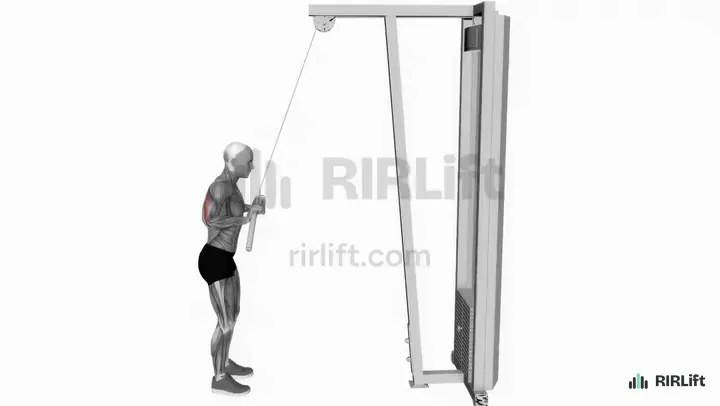
Cable Triceps Pressdown

Triceps

With your arms at your sides, the pushdown is hardest at lockout and easy at the bend, so there is little strain where skull crushers hurt. Pair it with one overhead exercise to keep the stretch.

How to do it

  1. Clip a rope, straight bar or V-bar to a pulley set above head height and pick a weight you could move for about 15 reps.
  2. Grab the attachment, take a small step back and lean your chest slightly forward with your knees soft, so the cable runs just in front of your face.
  3. Pull your upper arms against your sides with your elbows bent and your hands around chest height. This is where every rep starts.
  4. Press the attachment down by straightening your elbows until your arms are fully locked out by your thighs. With a rope, spread the ends apart as your hands pass your hips.
  5. Let your hands rise back to chest height over about two seconds, keeping your elbows in the same spot, then press again.

Cues

  • Elbows glued to your ribs
  • Lock out hard at the bottom
  • Only your forearms move

Common mistakes

  • Leaning over the stack and pushing with your body weight: if your shoulders roll forward to finish a rep, drop the weight until your torso stays still for the whole set.
  • Letting the elbows drift forward on the way up: your shoulders take over and the rep turns into a press. Stop your hands at chest height and keep your upper arms vertical.
  • Cutting the bottom short: the last few inches before lockout are where the triceps work hardest, so finish every rep with straight arms.
  • Letting the stack yank your hands back up: control the return, since a dropped weight gives you half a rep.

Machine swap

Machine Triceps Extension

Triceps

A pad holds your upper arms and a fixed path guides the handles, so you can push close to failure with no bar near your head. Good for high-rep finishing sets.

How to do it

  1. Adjust the seat so your upper arms rest flat on the pad and your elbows line up with the machine's pivot.
  2. Grip the handles and sit tall with your back against the backrest.
  3. Straighten your elbows until your arms are locked out, then pause.
  4. Bend your elbows slowly back to the start, stopping before the weight stack touches down.

Cues

  • Elbows on the pivot
  • Pause at lockout
  • Shoulders down, back on the pad

Common mistakes

  • Seat set too high or too low, so the pad digs into your elbows: move it until the pivot sits next to your elbow joint.
  • Short, bouncy reps near the start: open the elbows all the way until you feel the triceps stretch.

Dumbbells, kettlebells and plates

Free weights you can hold in each hand, or one held in both, let your wrists turn to the angle your elbows like.

Closest swap, easier on elbows

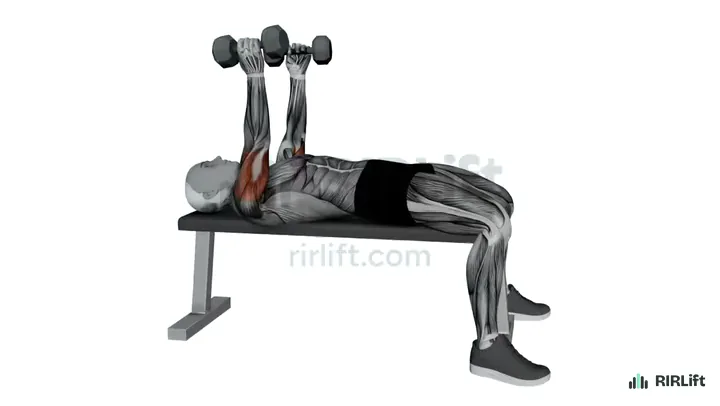
Dumbbell Skullcrusher

Triceps

The same lying extension with a dumbbell in each hand. Turning your palms to face each other lets your wrists and elbows sit where they want, and each arm has to do its own share.

How to do it

  1. Lie back on a flat bench and press two dumbbells up over your chest, palms turned in.
  2. Tilt your upper arms slightly back toward your head and lock them there.
  3. Bend only at the elbows, lowering the dumbbells beside your ears.
  4. Straighten your elbows to bring the weights back up.
  5. Stop just short of lockout to keep the triceps working.

Cues

  • Upper arms still
  • Lower beside your ears
  • Straighten, do not press

Common mistakes

  • Letting the elbows drift and pressing the weight up: that is a close-grip press. Keep the upper arms fixed.
  • Elbows flaring wide: keep them about shoulder width.

Overhead dumbbell swap

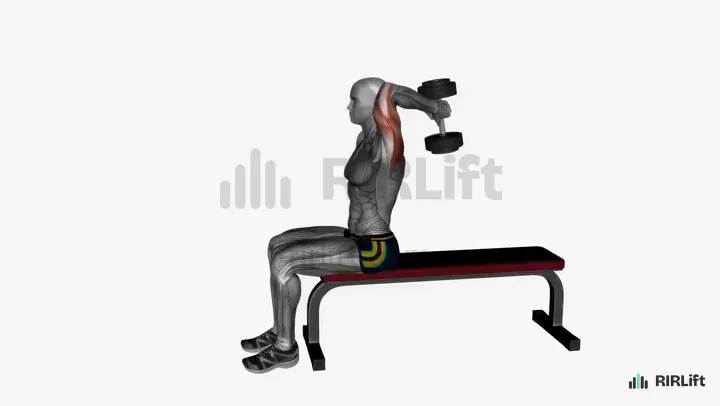
Seated Dumbbell Overhead Triceps Extension

Triceps

One dumbbell lowered behind your head stretches the long head like a skull crusher does, with no bench needed. Sit tall so your lower back stays out of it.

How to do it

  1. Sit tall on a bench or chair with your feet planted and your back upright.
  2. Wrap both hands around the handle of one dumbbell and press it straight overhead.
  3. Bend your elbows so the weight sinks behind your neck, keeping your upper arms close to your ears.
  4. Stop when your forearms are about level with the floor and you feel a deep stretch in the backs of your arms.
  5. Straighten your elbows to bring the dumbbell back overhead, then start the next rep.

Cues

  • Elbows point up
  • Only the elbows bend
  • Deep stretch, every rep

Common mistakes

  • Flaring the elbows wide: keep them about shoulder width so the triceps, not the shoulders, move the weight.
  • Arching your lower back as the dumbbell drops: brace your stomach, or sit against a backrest.
  • Cutting the stretch short: lower until your forearms reach level, since the bottom is the point of the exercise.

Kettlebell swap

Kettlebell Skullcrusher

Triceps

Holding a kettlebell by the horns, your hands sit close and neutral. Lie on the floor or a bench; the bell's weight hangs below your hands, so control the bottom.

How to do it

  1. Lie back with knees bent and hold a kettlebell by the horns over your chest, arms straight.
  2. Angle your arms a little toward your head.
  3. Bend your elbows to lower the bell to just above your forehead.
  4. Extend your elbows to return it above your face.

Cues

  • Shoulders fixed
  • Elbows narrow
  • Two seconds down

Common mistakes

  • Moving the arms from the shoulder: only the elbows bend.
  • Letting the elbows splay out: keep them shoulder-width.

Plate swap

Plate Overhead Triceps Extension

Triceps

A single plate held overhead gives the same stretch with a wide, comfortable grip. Use it in a home gym where the plates are the only free weight left.

How to do it

  1. Sit or stand tall and press a plate overhead, holding it by the rim with both hands.
  2. Your upper arms stay close to your head, pointing up.
  3. Bend your elbows to lower the plate behind your head until you feel a deep stretch in the backs of your arms.
  4. Straighten your elbows to bring the plate back overhead without moving your upper arms.

Cues

  • Elbows point at the ceiling
  • Deep stretch at the bottom
  • Only your forearms move

Common mistakes

  • Elbows flaring out wide: the shoulders start helping and the stretch on the triceps shrinks. Keep them about shoulder width apart.
  • Arching your lower back as the plate drops: sit on a bench with your back supported, or brace harder.

Barbell and landmine

With a bar and a bench, press heavier or move the bar on a fixed arc.

Landmine swap, smooth arc

Landmine Lying Triceps Extension

Triceps

The bar's end moves on a fixed arc from the anchor, so the bottom of the rep is steadier than a free bar. Pick it if you have a landmine and loose skull crushers bother your elbows.

How to do it

  1. Lie on a bench or the floor with your head toward the anchor.
  2. Hold the sleeve over your chest with both hands, arms straight.
  3. Bend your elbows and lower the sleeve behind your head.
  4. Stop when your triceps are fully stretched.
  5. Straighten your arms back over your chest.

Cues

  • Elbows point up
  • Only the elbows move
  • Deep stretch

Common mistakes

  • Letting your elbows flare wide: keep them shoulder width.
  • Pulling the bar over your face with your shoulders: the upper arm stays still.

Heavier barbell swap

JM Press

Triceps

Half close-grip press, half skull crusher: the bar comes down toward your chin with your elbows drifting forward. It loads your triceps heavier than a skull crusher with less of the stretched strain.

How to do it

  1. Lie back on a flat bench, unrack the bar with a grip about shoulder-width apart, and hold it over your upper chest with straight arms.
  2. Bend your elbows and let the bar travel down and slightly back toward your chin while your elbows drift forward toward your feet a little.
  3. Stop when the bar is a few inches above your throat and your forearms are close to your upper arms.
  4. Press the bar back up and slightly forward by straightening your elbows, returning it over your upper chest.
  5. Lock out fully and squeeze the triceps before the next rep; rack the bar when you finish.

Cues

  • Bar toward the chin
  • Elbows a little forward
  • Straighten, don't press

Common mistakes

  • Turning it into a close-grip bench: if the bar lands on your chest with elbows tucked at your sides, you lose the extension part; let the elbows travel forward.
  • Turning it into a skull crusher: if the bar goes behind your head with the upper arms still, you lose the load; keep the bar over your chin and throat.
  • Rushing the bottom: the bar is near your face, so lower slowly, use collars, and set safety pins in a rack or use a Smith machine.
Build a session with JM Press

Heaviest swap

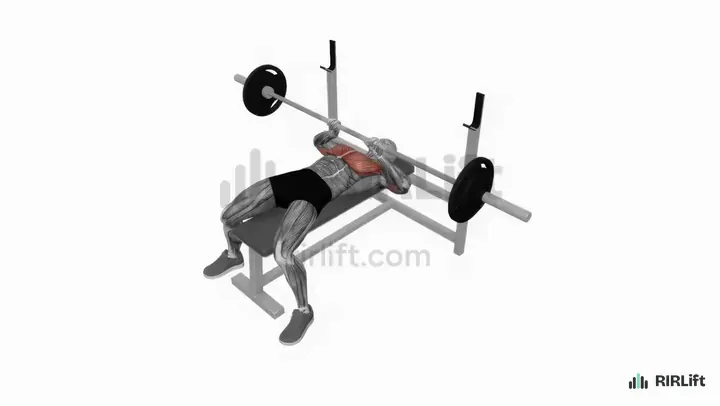
Close-Grip Bench Press

Triceps, Chest

Your chest and shoulders help, so your triceps get the heaviest load of any swap here. Use it as the first exercise of a triceps or push day.

How to do it

  1. Lie back on the bench, eyes under the bar, feet planted, and squeeze your shoulder blades together and down into the bench.
  2. Take the bar with your hands a little inside shoulder width, so your forearms are close to vertical when the bar is on your chest.
  3. Lift the bar out of the rack and hold it over your shoulders with your arms locked.
  4. Lower it to the lower part of your chest, letting your elbows travel down close to your sides at roughly a 30 to 45 degree angle from your torso.
  5. Press the bar back up and slightly toward your face until your arms lock out over your shoulders.

Cues

  • Hands just inside shoulder width
  • Elbows tucked, not pinned
  • Bar to the base of the chest

Common mistakes

  • Gripping so narrow your hands nearly touch: that bends the wrists and loads them, not the triceps. Just inside shoulder width is close enough.
  • Flaring the elbows out wide: that turns it back into a regular bench press. Keep them pointing down toward your hips.
  • Bouncing the bar off your chest: touch lightly and press, so the triceps start the rep instead of momentum.

Bodyweight

No weights: your bodyweight on your hands is enough for your triceps.

Bodyweight press swap

Close-Grip Push-Up

Triceps, Chest

Hands under your shoulders and elbows tucked make a push-up a triceps press. Put your feet on a step to make it harder.

How to do it

  1. Get into a high plank with your hands directly below your shoulders.
  2. Lower yourself with your elbows sliding back past your ribs.
  3. Stop just above the floor, then push up to locked elbows.
  4. Drop to your knees for the last reps if your hips start to sag.

Cues

  • Hands under shoulders
  • Elbows travel back
  • Full lockout

Common mistakes

  • Flaring the elbows into a T: that moves the work to your chest.
  • Half reps near the top: lower until your chest is close to the floor.

Best swap with no equipment

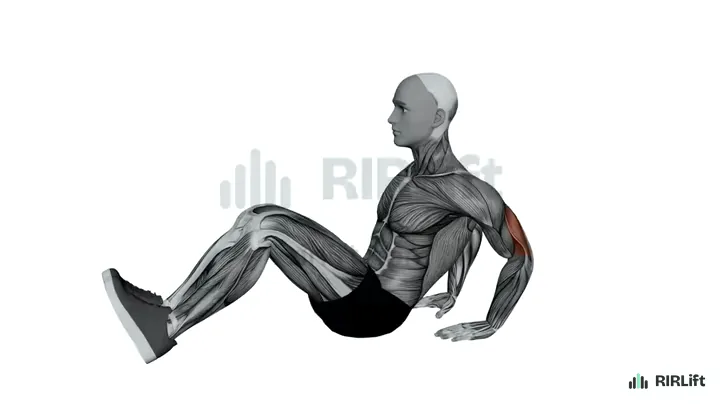
Floor Triceps Dip

Triceps

Sitting on the floor with your hands behind you, you straighten your elbows to lift your hips.

How to do it

  1. Sit with your knees bent and your hands flat behind you, fingers facing forward.
  2. Lift your hips slightly off the floor by straightening your arms.
  3. Bend your elbows to bring your hips down toward the floor, stopping just short of it.
  4. Push back up to straight arms.

Cues

  • Fingers face your feet
  • Hover the hips
  • Elbows straight back

Common mistakes

  • Sitting all the way down between reps: keep the tension on.
  • Letting the feet do the lifting: press from the hands.

Biceps to pair with them

Each example session ends with one biceps exercise, so it works as a full arm day.

Biceps, to pair in the gym

Cable Curl

Biceps

The gym session ends with one biceps exercise so a single visit covers your whole arm.

How to do it

  1. Set the pulley to its lowest position and clip on a straight bar or EZ bar.
  2. Take the bar with your palms up, hands about shoulder-width, and step back far enough that the stack lifts slightly with your arms straight.
  3. Stand tall with soft knees and your elbows just in front of your sides.
  4. Bend your elbows to curl the bar toward your shoulders, keeping your upper arms still and your torso upright.
  5. Squeeze at the top, then let the bar back down slowly until your arms are straight again.

Cues

  • Elbows stay put
  • No leaning back
  • Slow on the way down

Common mistakes

  • Swinging your body to start the rep: soften your knees, stay tall, and drop the weight if you need momentum.
  • Elbows drifting forward at the top: keep them near your sides so the biceps, not the shoulders, finish the rep.
  • Stopping short at the bottom: straighten your arms fully between reps so you train the whole range.

Biceps, to pair with a barbell

Barbell Curl

Biceps

The biceps half of a barbell arm day, using the same bar.

How to do it

  1. Stand tall with your feet hip-width apart and hold the bar with an underhand grip, hands a little wider than your hips.
  2. Let the bar hang at your thighs with your arms straight and your elbows touching your sides.
  3. Curl the bar up in an arc by bending your elbows, with your upper arms still and your wrists straight.
  4. Stop when your forearms are vertical and the bar is in front of your shoulders, and squeeze your biceps for a moment.
  5. Lower the bar under control until your arms are completely straight, then start the next rep.

Cues

  • Elbows pinned to your ribs
  • Ribs down, no lean back
  • Straight arms at the bottom of every rep

Common mistakes

  • Leaning back and using the hips: brace your stomach and squeeze your glutes; if the bar only moves with a swing, it is too heavy.
  • Letting the elbows drift forward at the top: that brings the shoulders in and takes tension off the biceps; stop when the forearms are vertical.
  • Half reps that never straighten the arms: lower all the way every time, or the weight on the bar overstates what your biceps can do.

Biceps, to pair at home

Hammer Curl

Biceps, Forearms

Dumbbells you already have cover the biceps at home.

How to do it

  1. Stand tall with the dumbbells hanging by your thighs, thumbs pointing forward and palms facing your thighs.
  2. Pin your upper arms against your ribs and let your arms hang fully straight.
  3. Curl one dumbbell up until its top end sits just in front of your shoulder, keeping your thumb up the whole way.
  4. Hold the top for a beat with your forearm vertical, then lower for about two seconds until the arm is straight again.
  5. Curl the other arm, and keep alternating sides until the set is done.

Cues

  • Thumbs to the ceiling
  • Elbows glued to your ribs
  • Straight arm at the bottom of every rep

Common mistakes

  • Leaning back and swinging the hips to get the dumbbells moving: stand with your back against a wall or drop the weight until the first inch of each rep comes from your elbows.
  • Letting the elbows drift forward near the top: once they leave your sides your shoulders take over, so stop the rep where your forearms are vertical.
  • Cutting the bottom short and bouncing out of a half-bent arm: lower all the way until your elbows are straight, then curl.

Example sessions without the ez-bar skullcrusher

Session 1

Gym, elbows ache on skull crushers

Open in the session builder
  • Workouts2× a week
  • Working sets24 a week
  • Per workout~25 min
  • EquipmentAdjustable Cable, Triceps Machine

You train in a gym and skull crushers have started to hurt at the bottom.

The overhead cable extension keeps the deep stretch with a smooth pull, the pushdown trains the lockout with no strain at the bend, and the machine finishes with strict high reps. A cable curl covers the biceps. 12 working sets.

Arms
ExerciseSets × repsRIRRest
Overhead Cable Triceps Extension1 warm-up set first 3 × 10–15 2 90 s
Cable Triceps Pressdown 3 × 12–15 1 1 min
Machine Triceps Extension 3 × 12–20 1 1 min
Cable Curl 3 × 10–15 1 1 min
How to run it
Once or twice a week. Use a load that lets you lower slowly without pain, and stop each rep at the deepest point that stays comfortable.
How to progress
When every set reaches the top of its range at the RIR shown, add one plate on the stack next session. Add depth on the overhead extension before you add weight.

Session 2

Barbell and bench, want to go heavy

Open in the session builder
  • Workouts2× a week
  • Working sets26 a week
  • Per workout~40 min
  • EquipmentBarbells, Flat Bench

You have a barbell, a rack and a bench, and you want triceps strength that carries over to your bench press.

The close-grip bench press goes first at low reps because it carries the most load. The JM press keeps the heavy triceps work with a shorter stretch, the plate extension adds the overhead position, and barbell curls cover the biceps. 13 working sets.

Arms
ExerciseSets × repsRIRRest
Close-Grip Bench Press2 warm-up sets first 4 × 5–8 2 3 min
JM Press 3 × 6–10 2 2:30 min
Plate Overhead Triceps Extension 3 × 10–15 1 75 s
Barbell Curl 3 × 8–12 2 90 s
How to run it
Once a week, or twice with at least two days between. Use safety pins for the presses.
How to progress
On the presses, when all sets reach the top of the range at 2 RIR, add the smallest jump. On the plate extension, add reps, then a heavier plate.

Session 3

Home, dumbbells and a bench

Open in the session builder
  • Workouts2× a week
  • Working sets24 a week
  • Per workout~25 min
  • EquipmentDumbbells, Flat Bench

You train at home with adjustable dumbbells and a flat bench.

The dumbbell skull crusher keeps the movement with an elbow-friendly grip, the seated overhead extension adds the stretch, and close-grip push-ups finish without any weight. Hammer curls cover the biceps. Light dumbbells mean higher reps and shorter rest. 12 working sets.

Arms
ExerciseSets × repsRIRRest
Dumbbell Skullcrusher1 warm-up set firstPalms face each other. 3 × 10–15 2 75 s
Seated Dumbbell Overhead Triceps Extension 3 × 12–15 1 1 min
Close-Grip Push-Up 3 × 10–25 1 1 min
Hammer CurlCount each arm. 3 × 10–15 1 1 min
How to run it
Twice a week on non-consecutive days. Rest about a minute; with light dumbbells, short rest keeps the sets hard.
How to progress
Add reps until every set reaches the top of its range, then move up one dumbbell. At your heaviest pair, slow the lowering to three seconds.

Make it fit you

Questions

What can I do instead of skull crushers?

Dumbbell skull crushers are the closest swap and easier on the elbows. Overhead cable or dumbbell extensions keep the stretch, and the close-grip bench press lets you go heavier.

Which skull crusher is best?

The one your elbows tolerate. An EZ bar's angled grip is easier on the wrists than a straight bar, and dumbbells with your palms facing each other let your wrists and elbows find their own angle.

What's another name for a dumbbell skull crusher?

It is also called a lying dumbbell triceps extension.

How do I do an overhead tricep extension without a machine?

Sit on a bench or chair, hold one dumbbell overhead with both hands, lower it behind your head by bending your elbows, and straighten them back up. A plate or kettlebell works the same way.

What is the number one tricep exercise?

There isn't one. A heavy press like the close-grip bench press plus one overhead extension covers your triceps better than any single lift.

Are triceps most of your upper arm?

The triceps are the bigger of the two muscles on your upper arm, so training them hard does more for arm size than adding more curls.