
Dumbbell tricep exercises: extensions, kickbacks and close-grip presses
Published October 19, 2026
The best dumbbell tricep exercises are the overhead extension, the skullcrusher and the kickback for isolation, plus a close-grip press such as the floor press or squeeze press for heavy work. The overhead extension stretches the long head, the largest part of the triceps; the skullcrusher takes the most load of the extensions; the kickback works the triceps hardest with your arm straight. Pair one press with one or two extensions, take each set to 0 to 2 reps in reserve, and do 8 to 16 hard sets a week.
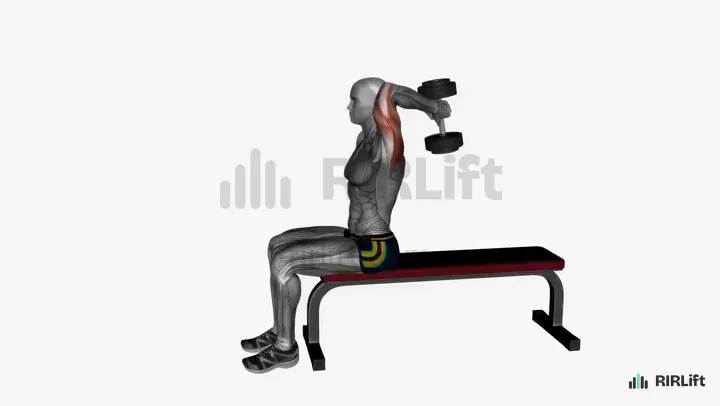
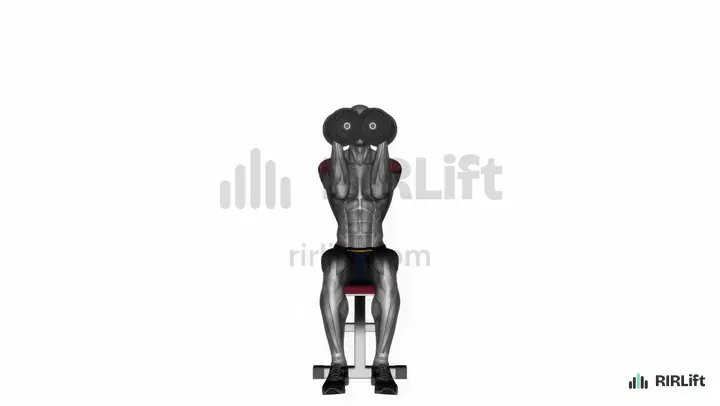
- Seated Dumbbell Overhead Triceps Extension Triceps
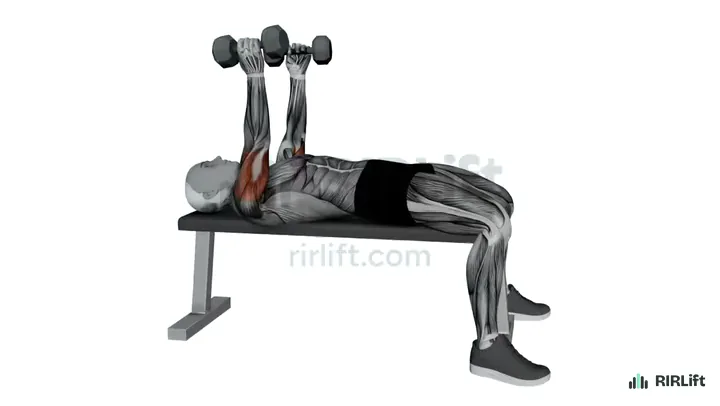
- Dumbbell Skullcrusher Triceps
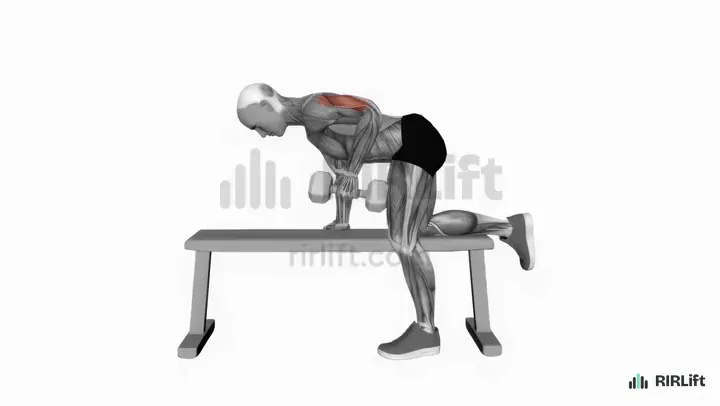
- Triceps Kickback Triceps
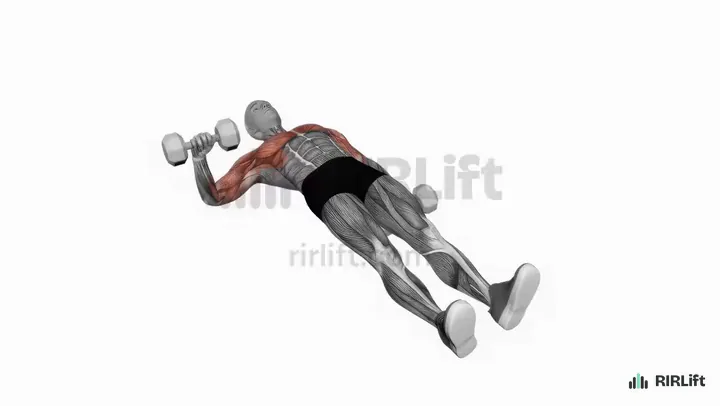
- Single-Arm Dumbbell Floor Press Chest
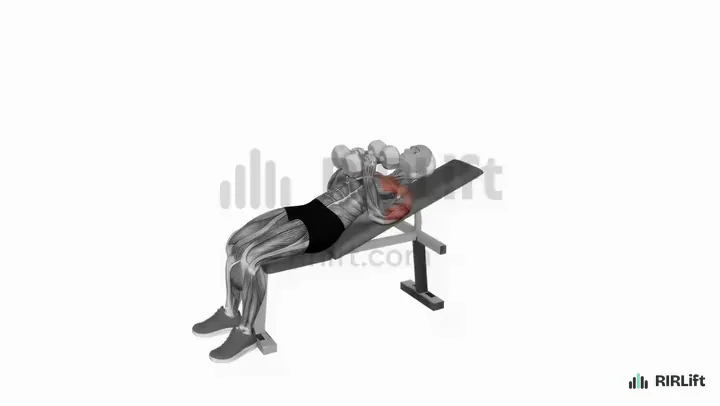
- Incline Dumbbell Squeeze Press Chest
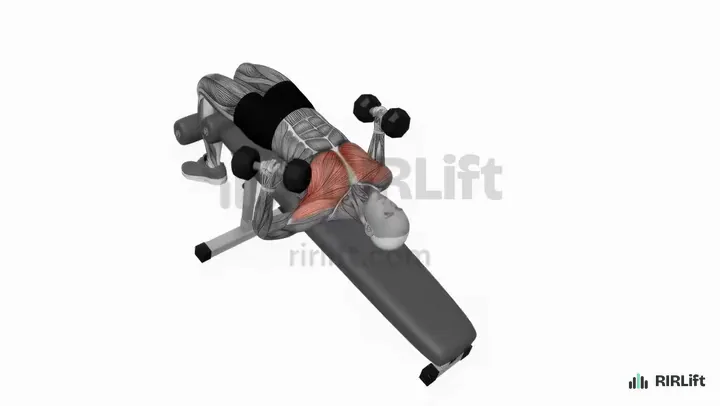
- Decline Dumbbell Neutral-Grip Press Chest
- Neutral-Grip Dumbbell Shoulder Press Shoulders
Put them together: example sessions
Each session below picks from the exercises above for one situation, with the sets, reps, rest and RIR filled in. Open one in the session builder to change a pick, price it from a recent set, and add it to RIRLift.
-
Session 1
One pair of dumbbells, no bench
You train at home with a fixed pair of dumbbells, a chair and floor space.
2× a week · 22 sets a week · ~25 min
-
Session 2
Adjustable bench and dumbbells you can load up
You have a bench that inclines and dumbbells you can make heavier, at home or in a gym.
2× a week · 20 sets a week · ~25 min
-
Session 3
Ten minutes left after a chest or shoulder workout
You already press in your main workout and want direct triceps work in the time left at the end.
2× a week · 12 sets a week · ~10 min
Session 1
One pair of dumbbells, no bench
- Workouts2× a week
- Working sets22 a week
- Per workout~25 min
- EquipmentDumbbells
You train at home with a fixed pair of dumbbells, a chair and floor space.
Without a bench, the floor press is the heavy lift: one arm at a time doubles the load per arm, and the floor cuts the range to the triceps-heavy top half. The seated overhead extension on a chair gives the long head its stretch, the kickback braced on the chair seat covers the lockout, and the palms-in overhead press adds a second compound. A fixed pair stops getting heavier, so reps run high and every set ends 0 to 1 short of failure. Each session is 11 working sets.
| Exercise | Sets × reps | RIR | Rest |
|---|---|---|---|
| Single-Arm Dumbbell Floor PressPer arm. Elbow tucked, pause on the floor. | 4 × 8–15 | 1 | 90 s |
| Seated Dumbbell Overhead Triceps ExtensionSeated on a chair. One dumbbell, both hands. | 4 × 10–20 | 1 | 1 min |
| Triceps KickbackPer arm. Free hand on a chair seat. | 3 × 12–25 | 0 | 1 min |
Open Triceps A in the session builder
| Exercise | Sets × reps | RIR | Rest |
|---|---|---|---|
| Neutral-Grip Dumbbell Shoulder PressStanding or on a chair. Palms in. | 4 × 8–15 | 1 | 90 s |
| Triceps KickbackPer arm. Hold each lockout 1 s. | 3 × 12–25 | 1 | 1 min |
| Seated Dumbbell Overhead Triceps Extension3 s down. Full stretch. | 4 × 10–20 | 0 | 1 min |
Open Triceps B in the session builder
- How to run it
- Do Triceps A and Triceps B once each per week, two or more days apart, or add one of them to the end of an upper-body day.
- How to progress
- Add reps until every set reaches the top of its range at the target RIR. Then slow the lowering to three seconds, and after that add a one-second pause at the bottom of the extensions before buying heavier dumbbells.
Session 2
Adjustable bench and dumbbells you can load up
- Workouts2× a week
- Working sets20 a week
- Per workout~25 min
- EquipmentDumbbells, Incline Bench, Flat Bench, Decline Bench
You have a bench that inclines and dumbbells you can make heavier, at home or in a gym.
With a bench and heavier dumbbells, the squeeze press and the decline press can carry real load in the 6 to 12 range, and the skullcrusher replaces the floor work as the main extension. Each session pairs a press with two extensions that load different parts of the range. Compounds stop 1 to 2 reps short of failure because a missed press is hard to bail out of; the extensions go to 0 to 1. That is 10 sets per session and about 20 per week, the upper end of what most lifters recover from for one muscle.
| Exercise | Sets × reps | RIR | Rest |
|---|---|---|---|
| Incline Dumbbell Squeeze Press2 warm-up sets firstLow incline. Dumbbells touching the whole rep. | 4 × 6–12 | 1 | 2 min |
| Dumbbell SkullcrusherDumbbells to the ears. | 3 × 8–15 | 1 | 90 s |
| Triceps KickbackPer arm. | 3 × 12–20 | 0 | 1 min |
Open Triceps Heavy in the session builder
| Exercise | Sets × reps | RIR | Rest |
|---|---|---|---|
| Decline Dumbbell Neutral-Grip Press1 warm-up set firstPalms in, elbows tucked. | 3 × 8–12 | 2 | 2 min |
| Seated Dumbbell Overhead Triceps ExtensionBack supported. Deep stretch. | 4 × 10–15 | 1 | 75 s |
| Alternating Dumbbell Bench PressPer arm. Top arm stays locked. | 3 × 8–12 | 1 | 90 s |
Open Triceps Volume in the session builder
- How to run it
- Run Triceps Heavy and Triceps Volume on separate days, for example after chest on one day and after shoulders on another.
- How to progress
- When the presses hit 12 reps at 1 RIR, add weight and drop back to 6 to 8. On the extensions, go up a dumbbell size once every set reaches the top of its range.
Session 3
Ten minutes left after a chest or shoulder workout
- Workouts2× a week
- Working sets12 a week
- Per workout~10 min
- EquipmentDumbbells
You already press in your main workout and want direct triceps work in the time left at the end.
After pressing, your triceps already has several hard sets in it, so this adds only the positions presses miss: the overhead stretch and the straight-arm lockout. Doing them as a superset fits 6 hard sets in about ten minutes. Both go to 0 to 1 RIR because a light extension carries little risk when you are tired, and fatigue from the presses means you will use less weight than when fresh.
| Exercise | Sets × reps | RIR | Rest |
|---|---|---|---|
| A1 Seated Dumbbell Overhead Triceps ExtensionSuperset with kickbacks. | 3 × 10–20 | 1 | 45 s |
| A2 Triceps KickbackPer arm. Then back to the extension. | 3 × 12–20 | 0 | 1 min |
- How to run it
- Do it at the end of each push or upper-body day, once or twice a week. Alternate the two exercises with a short rest between them.
- How to progress
- Add a rep per set each week. Once both reach 20, use the next dumbbell up or slow the lowering to three seconds.
Make it fit you
-
Only light dumbbells
Use the no-bench plan and do kickbacks and floor presses one arm at a time, so each arm gets the whole dumbbell. Take every set to 0 RIR and stretch the lowering to three seconds once you pass 20 reps.
-
Elbows ache on extensions
Do skullcrushers to beside your ears rather than your forehead, keep reps at 12 to 20, and put a press before any extension so your elbows are warm. If one exercise still bothers you, drop it and give its sets to the kickback.
-
Arms look soft on the back
Direct triceps work builds the muscle under the skin; how visible it is depends on body fat, which comes down with diet across your whole body, not with high reps on one arm. Keep the sets hard and the rep ranges in this plan.
-
Want a bigger long head
Put the overhead extension first in the session while you are fresh, and add a set to it. The long head is stretched most with your arm overhead, so that is where extra sets do the most.
-
Shoulders already sore from pressing
Swap the shoulder press and the alternating bench press for an extra set of overhead extensions and kickbacks, which ask almost nothing of the front of the shoulder.
-
Log the RIR, not just the weight
Write down how many reps you had left on every set. In RIRLift you log the RIR next to each set, and it uses that to suggest the next weight for the extensions and presses, so you know when to move up a dumbbell.
Questions
How can I work my triceps with dumbbells?
Pick one press that keeps your elbows tucked, such as the floor press or the squeeze press, and one or two extensions: an overhead extension for the long head and a skullcrusher or kickback. Do 3 to 4 sets of each, ending 0 to 2 reps short of failure, two times a week.
What is the best dumbbell exercise for triceps?
The overhead extension, because it trains the long head, the biggest part of the triceps, in its stretched position. If you only do one more, add the skullcrusher, which lets you use more weight.
What dumbbell weight should I use for triceps?
Use the weight you can lift for the rep range with 0 to 2 reps left. For most people that is a much lighter dumbbell than they press with: often 5 to 15 lb for kickbacks, and one heavier dumbbell held in both hands for overhead extensions. If you get more than 25 reps, go heavier or slow down.
Is a 2 kg dumbbell enough for triceps?
For kickbacks, a 2 kg dumbbell can work for a beginner if you do slow, high-rep sets close to failure. For overhead extensions and presses it runs out fast, usually within a few weeks. Expect to need heavier dumbbells to keep progressing.
Can flabby triceps be toned?
Yes, in the sense that training adds muscle under the skin and losing body fat lets you see it. Triceps exercises do the first part; fat loss happens across the whole body and comes mostly from diet, not from working one area.
How many triceps exercises should I do?
Two or three per session is plenty: one press and one or two extensions. What matters is the weekly number of hard sets, about 8 to 16 for triceps, counting presses at roughly half if you already train chest and shoulders.
Can I do dumbbell triceps exercises without a bench?
Yes. Do the floor press on the floor, the overhead extension seated on a chair or standing, and the kickback with your hand on a chair seat. A bench adds the skullcrusher and the incline and decline presses.
Related templates
-
The best workout for triceps, for every setup
Full triceps programs with cables, dips and barbell work alongside dumbbells.
-
Dumbbell arm exercises for biceps, triceps and forearms
Biceps, triceps and forearms in one dumbbell arm day.
-
Tricep exercises at home: from push-ups and dips to one dumbbell
Triceps training with bodyweight and bands when you have no dumbbells.
-
Skull crushers: how to do them, what they work, and what to swap them for
The lying extension in depth, with barbell, EZ-bar and dumbbell versions.
-
Overhead triceps extension: how to do it on a cable and why it hits the long head
Every way to do the long-head stretch, including cable and single-arm.