
Trap exercises at home: upper, middle and lower traps
Published October 19, 2026
The best trap exercises at home are the dumbbell shrug and farmer's walk for your upper traps, the face pull and band pull-apart for your middle traps, and the Y raise and overhead carry for your lower traps. Shrugs build most of the visible size, so start with them; add one exercise for the middle and one for the lower traps to train the whole muscle. A kettlebell or a band can stand in when you have no dumbbells.
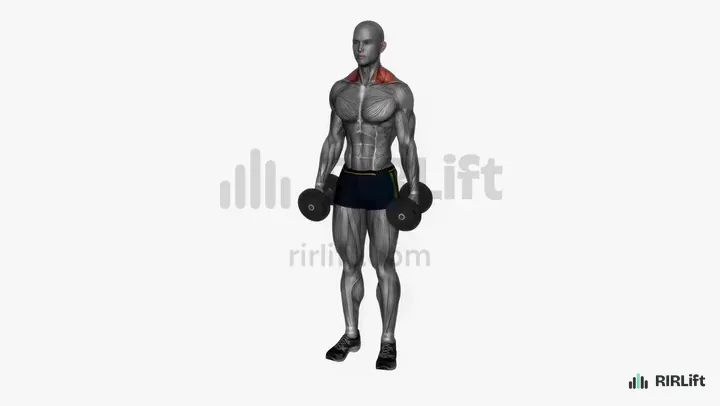
- Dumbbell Shrug Traps
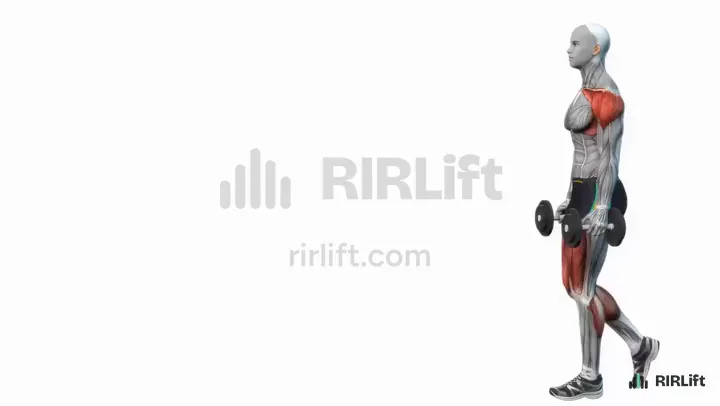
- Farmer's Walk Forearms, Traps, Shoulders
- Dumbbell Face Pull Shoulders, Upper Back
- Band Pull-Apart Shoulders, Upper Back
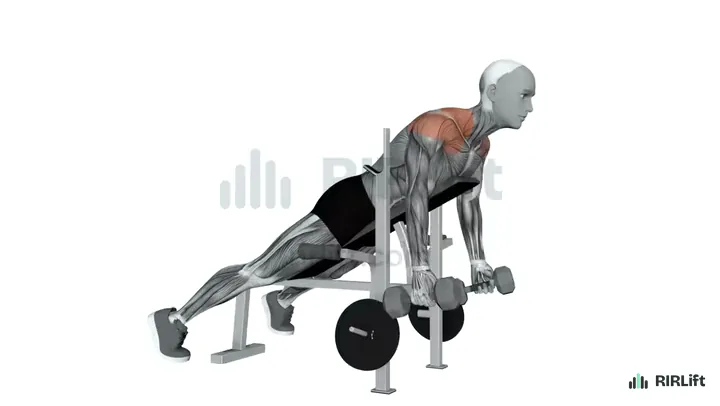
- Dumbbell Chest-Supported Y Raise Shoulders
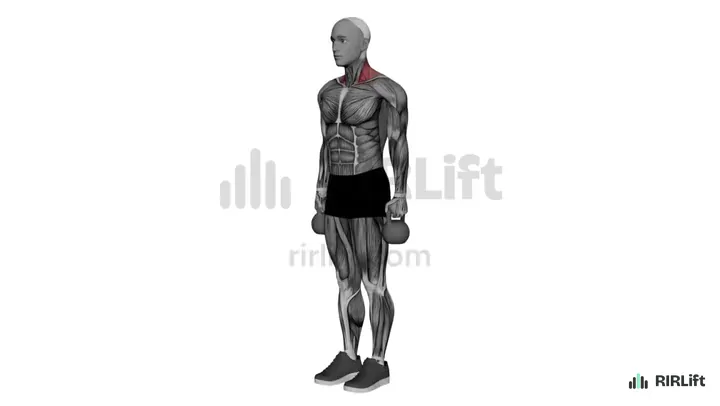
- Kettlebell Shrug Traps
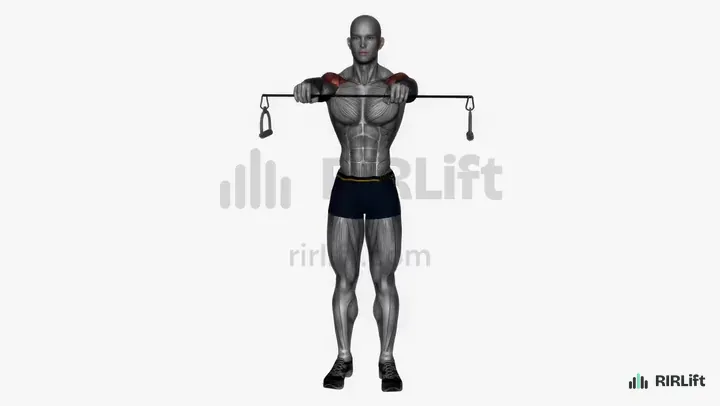
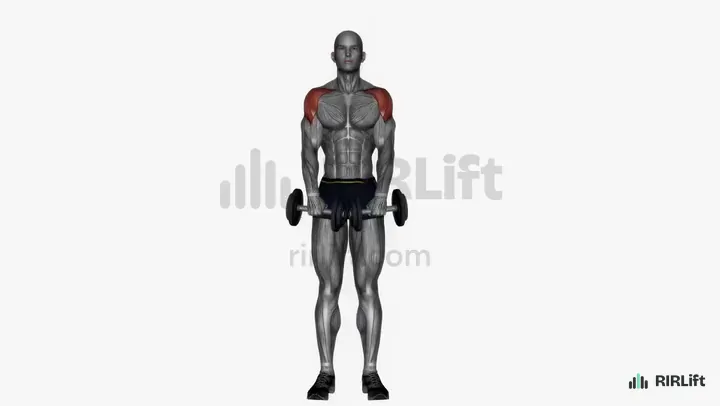
- Dumbbell Upright Row Shoulders, Traps
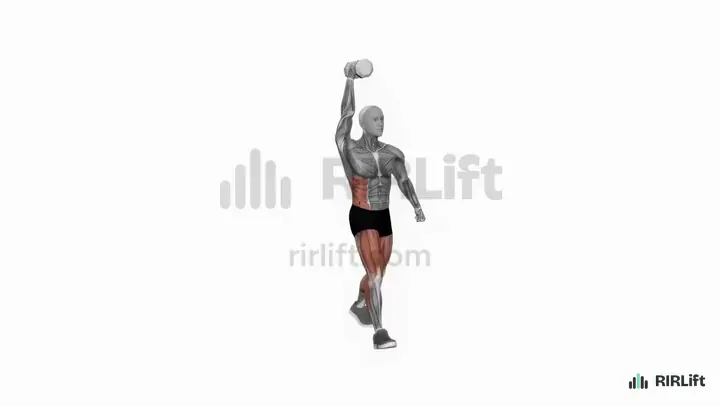
- Dumbbell Single-Arm Overhead Carry Shoulders, Abs
Put them together: example sessions
Each session below picks from the exercises above for one situation, with the sets, reps, rest and RIR filled in. Open one in the session builder to change a pick, price it from a recent set, and add it to RIRLift.
-
Session 1
Dumbbells only, no bench
You have dumbbells, nothing else, and want bigger traps.
2× a week · 20 sets a week · ~20 min
-
Session 2
One kettlebell and a band
You own one kettlebell and a resistance band.
3× a week · 33 sets a week · ~15 min
-
Session 3
Adjustable dumbbells and an incline bench
You have heavier adjustable dumbbells and an incline bench, and want all three parts of the traps.
2× a week · 20 sets a week · ~20 min
Session 1
Dumbbells only, no bench
- Workouts2× a week
- Working sets20 a week
- Per workout~20 min
- EquipmentDumbbells
You have dumbbells, nothing else, and want bigger traps.
Shrugs and carries load the upper traps heavy, the Pendlay row and face pull cover the middle, and the overhead carry adds the lower traps without a bench. Shrugs and rows end at 1 RIR, face pulls at 0, and carries stop a few seconds before your grip or form fails. Each session is 9 to 10 sets.
| Exercise | Sets × reps | RIR | Rest |
|---|---|---|---|
| Dumbbell ShrugHold the top 2 s. | 4 × 10–20 | 1 | 1 min |
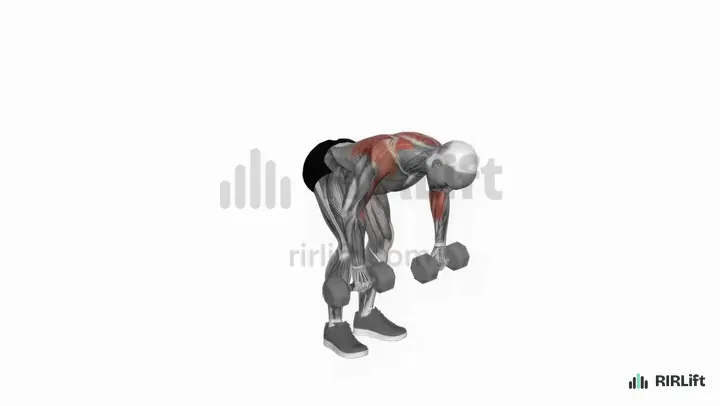
| Dumbbell Pendlay Row | 3 × 8–12 | 1 | 90 s |
| Farmer's WalkSeconds. Heaviest pair. | 3 × 30–45 | 1 | 90 s |
Open Traps A in the session builder
| Exercise | Sets × reps | RIR | Rest |
|---|---|---|---|
| Dumbbell Upright RowElbows to shoulder height. | 3 × 10–15 | 1 | 1 min |
| Dumbbell Face Pull | 3 × 12–20 | 0 | 1 min |
| Dumbbell Single-Arm Overhead CarrySeconds per arm. | 2 × 20–40 | 1 | 1 min |
| Dumbbell Shrug | 2 × 15–25 | 0 | 1 min |
Open Traps B in the session builder
- How to run it
- Do Traps A and Traps B once each per week, on their own or after your back or shoulder work.
- How to progress
- Add reps or seconds every week. When every set of the shrug reaches the top of the range, use the next dumbbell, and hold the top for two seconds when you run out of heavier ones.
Session 2
One kettlebell and a band
- Workouts3× a week
- Working sets33 a week
- Per workout~15 min
- EquipmentKettlebells, Resistance Bands
You own one kettlebell and a resistance band.
One bell held in both hands is heavy enough for shrugs and upright rows, and the band covers the middle traps with face pulls and pull-aparts. A single bell runs out of load fast, so reps run high and sets end at 0 to 1 RIR. That is 11 sets.
| Exercise | Sets × reps | RIR | Rest |
|---|---|---|---|
| Kettlebell ShrugOne bell, both hands. Pause up top. | 4 × 12–25 | 1 | 1 min |
| Kettlebell Upright Row | 3 × 10–20 | 1 | 1 min |
| A1 Band Face Pull | 2 × 15–25 | 0 | 45 s |
| A2 Band Pull-Apart | 2 × 15–25 | 0 | 45 s |
- How to run it
- Do the session two or three times a week with a day between. Anchor the band to a door for the face pull.
- How to progress
- Add reps up to 25 on the kettlebell exercises, then slow the lowering to three seconds and pause at the top. Move to a heavier band when pull-aparts reach 25.
Session 3
Adjustable dumbbells and an incline bench
- Workouts2× a week
- Working sets20 a week
- Per workout~20 min
- EquipmentDumbbells, Incline Bench
You have heavier adjustable dumbbells and an incline bench, and want all three parts of the traps.
The bench adds the incline shrug for the upper and middle traps together and the chest-supported Y raise for the lower traps. The standing shrug stays for heavy upper trap work. Shrugs end at 1 RIR, the Y raise at 1 to 2 because form slips easily when it gets hard, and face pulls at 0. Sessions are 10 sets.
| Exercise | Sets × reps | RIR | Rest |
|---|---|---|---|
| Dumbbell ShrugHeavy. Hold 1 s. | 4 × 8–15 | 1 | 90 s |
| Dumbbell Chest-Supported Y Raise | 3 × 10–20 | 2 | 1 min |
| Dumbbell Face Pull | 3 × 12–20 | 0 | 1 min |
Open Traps A in the session builder
| Exercise | Sets × reps | RIR | Rest |
|---|---|---|---|
| Incline Dumbbell ShrugUp and back. | 4 × 10–15 | 1 | 1 min |
| Dumbbell Upright Row | 3 × 10–15 | 1 | 1 min |
| Dumbbell Chest-Supported Y Raise | 3 × 12–20 | 1 | 1 min |
Open Traps B in the session builder
- How to run it
- Do Traps A and Traps B once each per week.
- How to progress
- Add a dumbbell step on shrugs when every set hits the top of the range. On Y raises, add reps up to 20 before going heavier.
Make it fit you
-
Only light dumbbells
Hold both dumbbells in one hand for one-arm shrugs, which doubles the load per side. Hold the top of every rep for two to three seconds.
-
Traps already sore from deadlifts
Keep the middle and lower trap exercises and cut the shrugs to two sets. Heavy pulling already gives the upper traps plenty of work.
-
Shoulders pinch on upright rows
Stop the pull lower, at chest height, or drop the upright row and add two more sets of shrugs.
-
Want traps without more arm work
Choose shrugs, carries and the Y raise. They involve very little biceps, so they do not tire your arms for other training days.
-
Note the reps left after each set
Log how many reps you had in the tank after each shrug and raise. RIRLift keeps that RIR with the set and suggests your next weight, so you push shrugs hard without guessing how close you were.
Questions
What is a trap workout?
A trap workout trains the three parts of the trapezius: shrugs and carries for the upper traps, rows and face pulls for the middle, and Y raises or overhead work for the lower traps. Two or three exercises, 9 to 12 sets, is a full trap session.
Can you grow traps at home?
Yes. Shrugs with dumbbells or a kettlebell, held at the top and taken close to failure, grow the upper traps at home as they would in a gym. Carries and face pulls fill in the rest.
How do you work traps without weights?
A band handles the middle traps through face pulls and pull-aparts. The upper traps need a load to shrug, so a single kettlebell, a filled backpack or dumbbells make a big difference.
How many times a week should I train traps?
Two to three times a week. Traps recover quickly, and the kettlebell plan on this page runs three short sessions.
Do shrugs work the whole trap?
Standing shrugs mainly work the upper traps. The incline shrug adds the middle part, and the Y raise is needed for the lower traps.
Related templates
-
Trap exercises with dumbbells for upper, middle and lower traps
Every dumbbell trap exercise, including gym setups.
-
Upper back exercises at home: band, dumbbell and bodyweight
Rows and rear delt work for the muscles around your traps.
-
Shoulder exercises at home, with or without weights
Presses and raises for the delts the traps sit next to.
-
The best workout for back: width, thickness and traps
Full back programs that include trap work.