
Upper back exercises at home: band, dumbbell and bodyweight
Published October 19, 2026
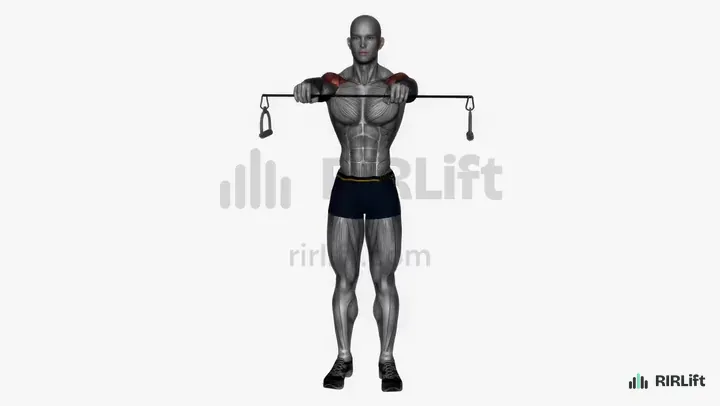
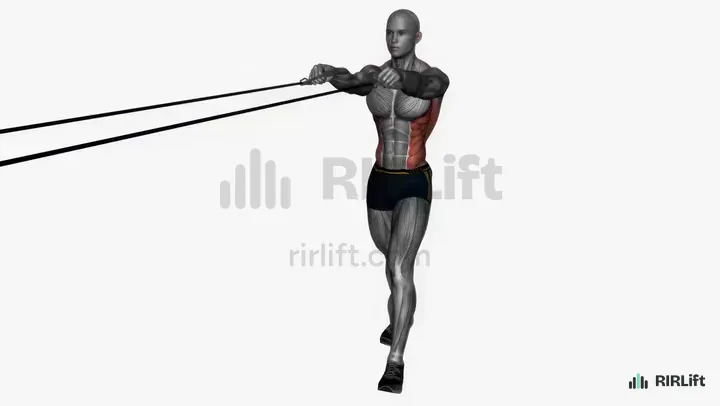
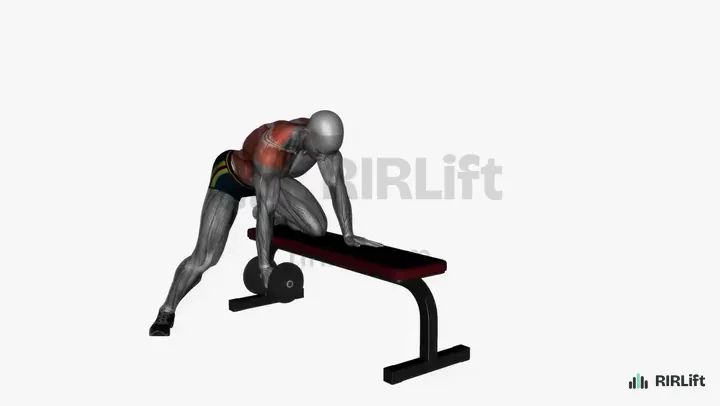
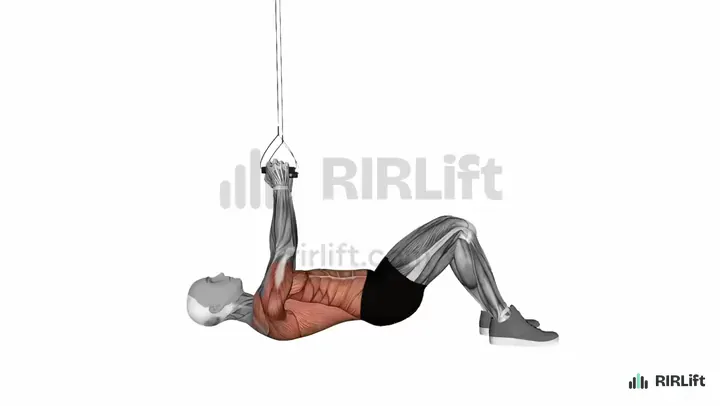
The best upper back exercises at home are the band pull-apart and band face pull, the one-arm dumbbell row and rear delt row if you own a dumbbell, and the suspension-trainer row and plank IYTW with bodyweight. Your upper back's job is to pull your shoulder blades together and your arms back, so each of these does exactly that. One row plus one pull-apart or face pull, two to three times a week, is enough to start.
- Band Pull-Apart Shoulders, Upper Back
- Band Face Pull Shoulders, Upper Back
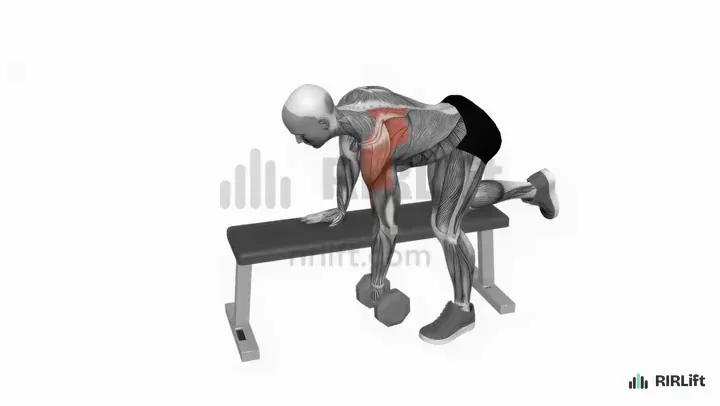
- One-Arm Dumbbell Row Lats, Upper Back
- TRX Row Upper Back, Lats
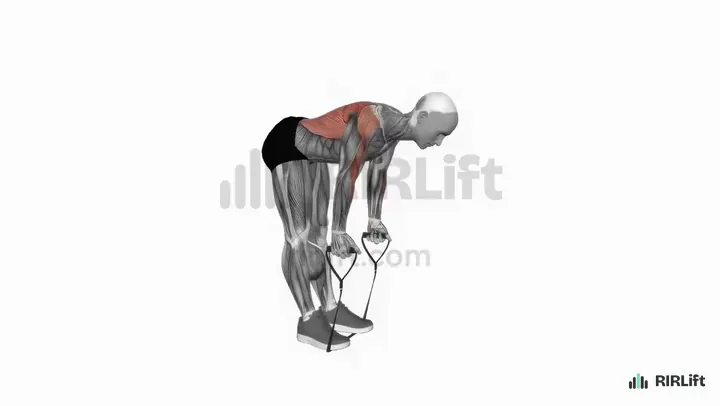
- Band Bent-Over Row Lats, Upper Back
- Dumbbell Rear Delt Row Shoulders
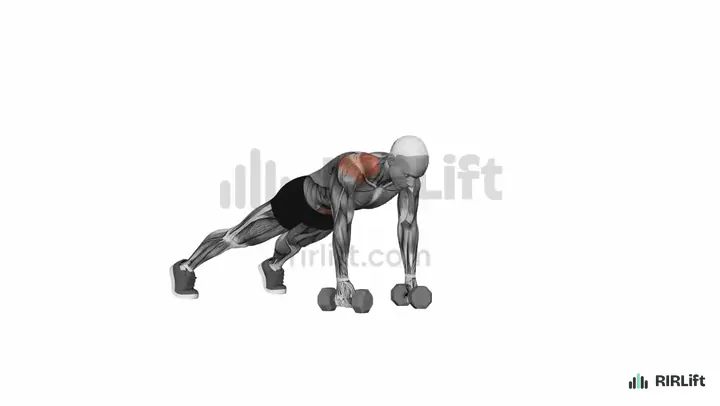
- Plank IYTW Abs, Upper Back
Put them together: example sessions
Each session below picks from the exercises above for one situation, with the sets, reps, rest and RIR filled in. Open one in the session builder to change a pick, price it from a recent set, and add it to RIRLift.
-
Session 1
One resistance band, 15 minutes
You own one band, work at a desk, and want short upper back sessions you will actually do.
3× a week · 27 sets a week · ~15 min
-
Session 2
Dumbbells and a chair
You have a few dumbbells and a chair or bench at home.
2× a week · 20 sets a week · ~25 min
-
Session 3
Suspension trainer and a band
You have a suspension trainer you can hang over a door and a band, but no weights.
2× a week · 20 sets a week · ~20 min
Session 1
One resistance band, 15 minutes
- Workouts3× a week
- Working sets27 a week
- Per workout~15 min
- EquipmentResistance Bands
You own one band, work at a desk, and want short upper back sessions you will actually do.
With a band, the load is light, so you train often and take sets close to failure. Each session pairs a row with a pull-apart or face pull and finishes with the shoulder blade squeeze. Rows and pull-aparts end at 1 RIR, the squeeze at 2 because it is a learning drill. That is 9 sets, about 15 minutes.
| Exercise | Sets × reps | RIR | Rest |
|---|---|---|---|
| Band Bent-Over Row | 3 × 12–25 | 1 | 1 min |
| A1 Band Face Pull | 2 × 15–25 | 1 | 45 s |
| A2 Band Pull-Apart | 2 × 15–25 | 1 | 45 s |
| Band Scapular RetractionArms straight. | 2 × 12–15 | 2 | 45 s |
- How to run it
- Do the session three times a week, on any days. Anchor the band in a door for the face pull.
- How to progress
- Add reps up to 25. Then step further from the anchor or shorten the band to make it harder, or move to the next band.
Session 2
Dumbbells and a chair
- Workouts2× a week
- Working sets20 a week
- Per workout~25 min
- EquipmentDumbbells, Kettlebells
You have a few dumbbells and a chair or bench at home.
Dumbbells allow heavier rows than a band, so this plan uses the one-arm row and the rear delt row as main exercises and finishes with the cuff rotation. Rows end at 1 RIR; the cuff work at 2 to keep it strict. Each session is 10 sets.
| Exercise | Sets × reps | RIR | Rest |
|---|---|---|---|
| One-Arm Dumbbell RowPer arm. Elbow slightly out. | 4 × 8–15 | 1 | 90 s |
| Dumbbell Rear Delt RowPer arm. | 3 × 10–15 | 1 | 1 min |
| Dumbbell Lying External RotationPer arm. | 3 × 12–15 | 2 | 45 s |
Open Upper Back A in the session builder
| Exercise | Sets × reps | RIR | Rest |
|---|---|---|---|
| Kettlebell RowOr a dumbbell. Per arm. | 4 × 8–15 | 1 | 90 s |
| Dumbbell Rear Delt RowPer arm. | 3 × 12–20 | 0 | 1 min |
| Plank IYTWReps per side. | 3 × 4–8 | 2 | 1 min |
Open Upper Back B in the session builder
- How to run it
- Do Upper Back A and Upper Back B once each per week, at least two days apart.
- How to progress
- Add a dumbbell step when every set hits the top of its range at the target RIR. If you have no heavier dumbbells, pause each rep at the top for two seconds.
Session 3
Suspension trainer and a band
- Workouts2× a week
- Working sets20 a week
- Per workout~20 min
- EquipmentSuspension Trainer, Resistance Bands
You have a suspension trainer you can hang over a door and a band, but no weights.
The suspension row and face pull let you train with bodyweight and adjust difficulty by stepping your feet. The band fly and pull-apart add rear delt volume. Sets end at 1 RIR, the last set of each at 0. Session is 10 sets.
| Exercise | Sets × reps | RIR | Rest |
|---|---|---|---|
| TRX RowWalk feet in to make it harder. | 4 × 8–15 | 1 | 90 s |
| TRX Face Pull | 3 × 10–15 | 1 | 1 min |
| Band Rear Delt Fly | 3 × 15–25 | 0 | 45 s |
- How to run it
- Do the session twice a week with at least two days between.
- How to progress
- Walk your feet closer to the anchor each week until every set is hard within the rep range, then add reps. On the band, step to a heavier one when 25 reps feels easy.
Make it fit you
-
Sitting all day
Keep the band plan and split it: one set of pull-aparts and one of face pulls twice a day on workdays, with the full session three times a week.
-
No band, no weights
Do the plank IYTW for three sets per side, and use a heavy backpack held by the strap for one-arm rows until you get a band.
-
Already doing push-ups at home
Pair each push-up set with a set of band rows or suspension rows. That keeps pushing and pulling even without adding time.
-
Want a wider back too
Add the lat work from the lat exercises page. The upper back exercises here thicken the area between your shoulder blades, while lat exercises add width.
-
Only one light dumbbell
Use the dumbbell for the one-arm row and rear delt row and take every set to 0 RIR, since a light weight needs sets close to failure to do much. Slow each lowering to three seconds once you pass 20 reps.
-
Record how many reps you had left
Note the reps in reserve after every set. RIRLift saves that RIR with your reps and suggests the next band, step or weight, so light band sets still progress week to week.
Questions
What are good upper back workouts at home?
One row (band, dumbbell or suspension trainer), one face pull or pull-apart, and one rear delt or shoulder blade exercise, for 9 to 10 sets total. Each plan on this page follows that pattern with the gear you have.
How do I fix rounded shoulders at home?
Strengthening the upper back helps you hold your shoulders back, so train rows, face pulls and pull-aparts two to three times a week. Posture also depends on habits, so moving often during the day matters too.
How do I know if my upper back is weak?
A common sign is that you can push far more than you can pull, for example many push-ups but few rows. Another is that face pulls and pull-aparts with a light band feel hard after 10 reps. Track your rows and pull-aparts with reps in reserve to see where you stand.
Can I train my upper back without equipment?
The plank IYTW works with no gear, but it is light. A resistance band costs little and opens up rows, face pulls and pull-aparts, which do much more.
How often should I do upper back exercises?
Two to three times a week. The upper back recovers quickly, so frequent short sessions work well.
Which upper back exercise should I start with?
The band pull-apart. It needs only a light band, teaches you to pull your shoulder blades back without shrugging, and is easy to do for high reps. Add a row once pull-aparts feel easy for 20 reps.
Related templates
-
Dumbbell upper back exercises: rows, rear delts and rotator cuff
More dumbbell rows and rear delt work if you have a full set.
-
Lat exercises at home: with a bar, dumbbells, a kettlebell or a band
Pull-ups, rows and pullovers for back width.
-
Trap exercises at home: upper, middle and lower traps
Shrugs and carries for the traps above the upper back.
-
Band pull-apart: how to do it for your rear delts and upper back
The full guide to the most useful band exercise on this page.
-
The best workout for home, with little or no equipment
Full-body home plans that include upper back work.