
Shoulder exercises at home, with or without weights
Published October 19, 2026
The best shoulder exercises at home are the pike push-up or a band or dumbbell overhead press for the front delts, a band or dumbbell lateral raise for the side delts, and the band face pull, band pull-apart or bent-over fly for the rear delts. With no weights at all, pike push-ups and a single resistance band cover all three heads. Do one press, one side raise and one or two rear delt moves for 2 to 4 sets each, and take them close to failure, 0 to 2 reps short, since home gear is often light.
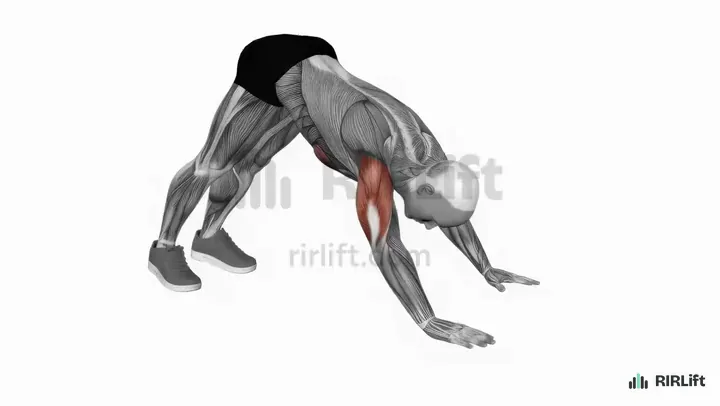
- Pike Push-Up Shoulders
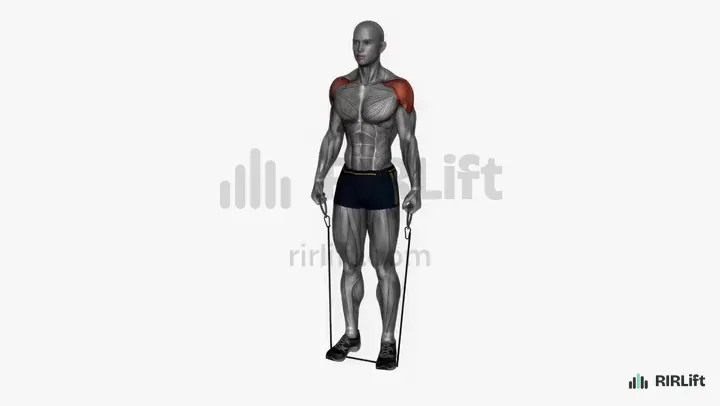
- Band Lateral Raise Shoulders
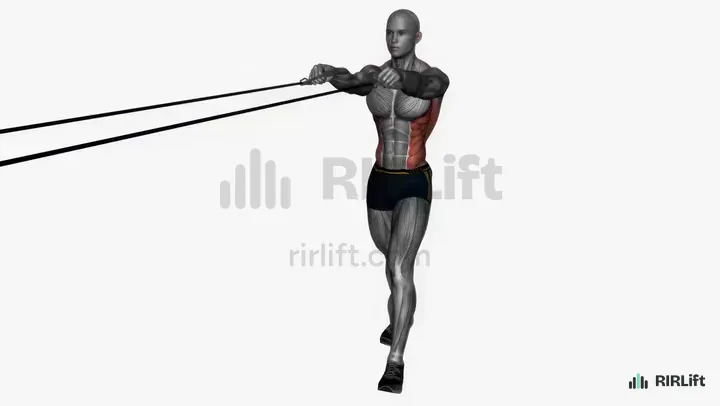
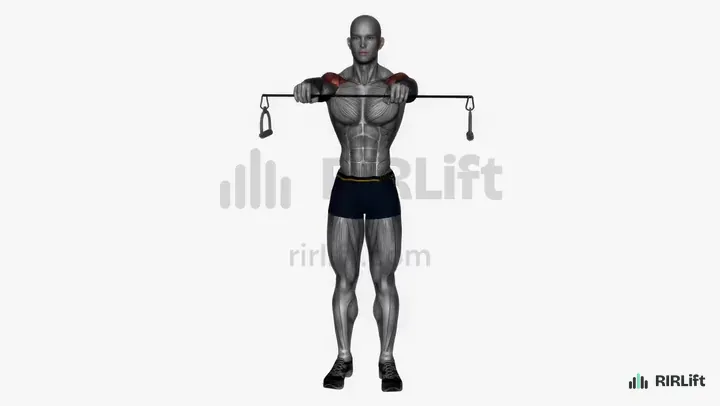
- Band Face Pull Shoulders, Upper Back
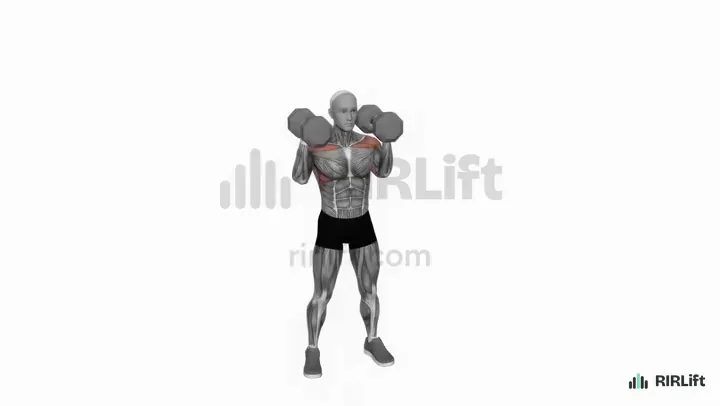
- Alternating Dumbbell Shoulder Press Shoulders
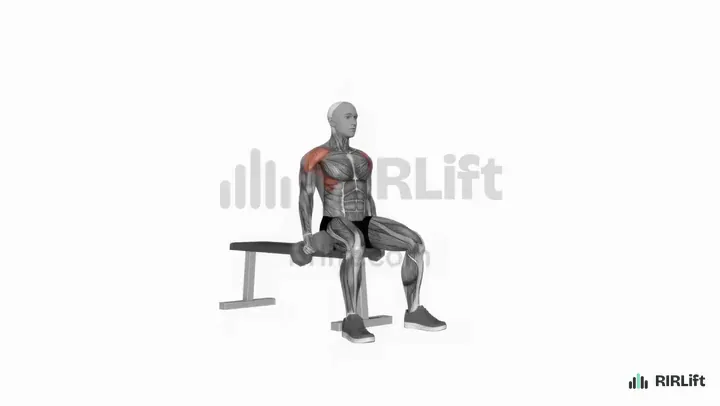
- Seated Dumbbell Lateral Raise Shoulders
- Band Pull-Apart Shoulders, Upper Back
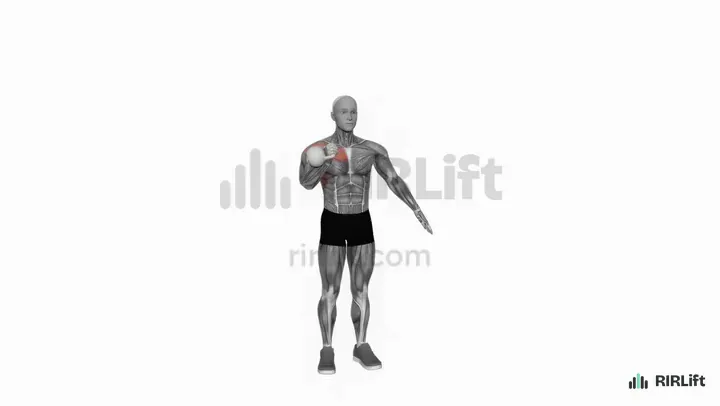
- Kettlebell Overhead Press Shoulders
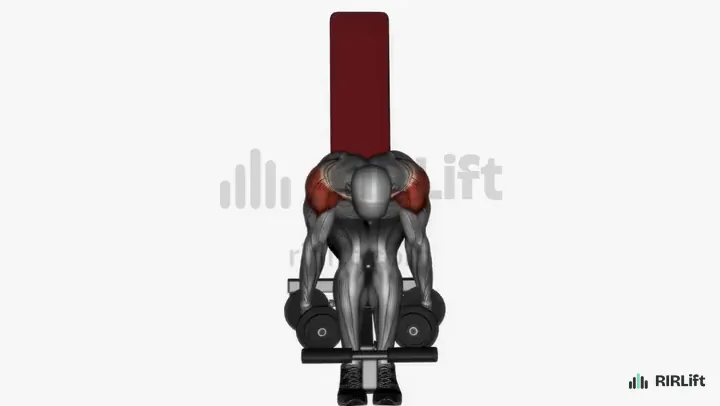
- Dumbbell Rear Delt Fly Shoulders
Put them together: example sessions
Each session below picks from the exercises above for one situation, with the sets, reps, rest and RIR filled in. Open one in the session builder to change a pick, price it from a recent set, and add it to RIRLift.
-
Session 1
No weights: floor space and one resistance band
You have no dumbbells, just a band and a door to anchor it, and want shoulders that still grow.
3× a week · 36 sets a week · ~20 min
-
Session 2
A pair of dumbbells and a chair, no bench
You have dumbbells at home, adjustable or a couple of pairs, but no bench, and want a proper twice-a-week shoulder routine.
2× a week · 21 sets a week · ~25 min
-
Session 3
One kettlebell and a band, 20 minutes
You own a single kettlebell and a band and want a short shoulder block you can fit before work.
2× a week · 24 sets a week · ~20 min
Session 1
No weights: floor space and one resistance band
- Workouts3× a week
- Working sets36 a week
- Per workout~20 min
- EquipmentResistance Bands
You have no dumbbells, just a band and a door to anchor it, and want shoulders that still grow.
Pike push-ups are the heaviest press your body weight can give you, so they lead every session at 1 to 2 RIR. The band then handles everything a pike cannot: a one-arm press that is hardest at the top, the side delts through lateral raises, and the rear delts through face pulls and pull-aparts. Bands get easy fast, so raises and pulls go to 0 RIR for 15 to 25 reps. Each session has 12 working sets.
| Exercise | Sets × reps | RIR | Rest |
|---|---|---|---|
| Pike Push-UpFeet on a chair when 15 is easy. | 4 × 6–15 | 1 | 90 s |
| Band Lateral RaiseStand wide. | 4 × 15–25 | 0 | 45 s |
| Band Face PullAnchor at face height. | 4 × 15–25 | 0 | 45 s |
Open Session A in the session builder
| Exercise | Sets × reps | RIR | Rest |
|---|---|---|---|
| Band Overhead PressPer arm. | 3 × 10–20 | 1 | 45 s |
| Pike Push-Up | 3 × 6–15 | 2 | 90 s |
| A1 Band Lateral Raise | 3 × 15–25 | 0 | 45 s |
| A2 Band Pull-Apart | 3 × 15–25 | 0 | 45 s |
Open Session B in the session builder
- How to run it
- Do Session A and Session B on alternating days, two or three times a week in total. Anchor the band in a door hinge at face height for the face pull.
- How to progress
- On pike push-ups, add reps up to 15, then put your feet on a chair. On band work, stand wider or grip shorter when you pass 25 reps, or move to a stronger band.
Session 2
A pair of dumbbells and a chair, no bench
- Workouts2× a week
- Working sets21 a week
- Per workout~25 min
- EquipmentDumbbells
You have dumbbells at home, adjustable or a couple of pairs, but no bench, and want a proper twice-a-week shoulder routine.
The standing alternating press is the main lift because it needs no bench, done at 8 to 12 reps and 1 to 2 RIR. A chair does the rest: seated lateral raises keep your legs out of it, and folding forward on the chair turns it into a rear delt fly station. The single-arm raise and the cuff rotation fill out Day B. Side and rear delts get 6 to 7 sets each per session, the front delts 3.
| Exercise | Sets × reps | RIR | Rest |
|---|---|---|---|
| Alternating Dumbbell Shoulder Press1 warm-up set firstPalms in. | 3 × 8–12 | 2 | 2 min |
| Seated Dumbbell Lateral RaiseOn a chair. | 4 × 12–20 | 0 | 1 min |
| Dumbbell Rear Delt FlyFolded over your knees. | 3 × 12–20 | 0 | 1 min |
Open Day A in the session builder
| Exercise | Sets × reps | RIR | Rest |
|---|---|---|---|
| Alternating Dumbbell Shoulder Press | 3 × 10–15 | 1 | 90 s |
| Single-Arm Dumbbell Lateral RaisePer arm. Hold a door frame. | 3 × 12–20 | 0 | 45 s |
| Dumbbell Rear Delt Fly | 3 × 15–20 | 0 | 1 min |
| Dumbbell Lying External RotationPer side. Light. | 2 × 15–20 | 2 | 45 s |
Open Day B in the session builder
- How to run it
- Do Day A and Day B each once a week, two or more days apart. Use your heavier pair for the press and the lighter one for raises.
- How to progress
- On the press, move up a dumbbell once every set reaches 12 reps at 1 RIR. On raises and flies, add reps until you reach 20, then add weight.
Session 3
One kettlebell and a band, 20 minutes
- Workouts2× a week
- Working sets24 a week
- Per workout~20 min
- EquipmentKettlebells, Resistance Bands
You own a single kettlebell and a band and want a short shoulder block you can fit before work.
One kettlebell is usually too heavy for raises but right for presses and rows, so it handles the one-arm press and the flared rear delt row. The band covers the side delts and the pull-apart for the upper back. Supersetting the press with the row and the lateral raise with the pull-apart fits 12 sets into about 20 minutes. Presses and rows stop at 1 to 2 RIR; band work goes to 0.
| Exercise | Sets × reps | RIR | Rest |
|---|---|---|---|
| A1 Kettlebell Overhead Press1 warm-up set firstPer arm. | 3 × 5–10 | 2 | 30 s |
| A2 Kettlebell Rear Delt RowPer arm. Elbow wide. | 3 × 10–15 | 1 | 75 s |
| B1 Band Lateral Raise | 3 × 15–25 | 0 | 30 s |
| B2 Band Pull-Apart | 3 × 15–25 | 0 | 1 min |
- How to run it
- Do the session twice a week. Go straight from the first exercise of each pair to the second, then rest before the next round.
- How to progress
- Add reps on the kettlebell press until every set reaches 10 per arm, then slow the lowering to three seconds; move to a heavier bell when that tops out too. On band work, step wider or use a stronger band.
Make it fit you
-
Pike push-ups are too hard
Put your hands on a sturdy chair seat or the edge of a couch so your head goes toward a lower point. Work up to 12 reps there, then return to the floor version.
-
Pike push-ups are too easy
Raise your feet on a chair or step, then on a higher surface. Once 10 reps with feet high is easy, a wall handstand hold builds toward the handstand push-up.
-
Low ceiling
Press seated on the floor or on a chair, or use pike push-ups instead of standing presses. Raises and rear delt moves stay below head height, so they are unaffected.
-
Your dumbbells feel too light
Switch to one-arm presses and raises, lower every rep for three seconds and take sets to 0 RIR. Add band pull-aparts at the end for extra rear delt work without needing more weight.
-
Training around a desk job
Do a set of band pull-aparts or face pulls once or twice a day between sessions. They take a minute, need no warm-up and count toward your rear delt volume.
-
Log the RIR, not just the weight
Band exercises have no number on them, so reps in reserve is the only reliable way to track effort. If you log in RIRLift, write the reps you had left on each set and it tracks your hard shoulder sets per week, whatever gear you used.
Questions
How can I make my shoulders bigger at home?
Train the side delts directly with lateral raises, press overhead with pike push-ups, a band or dumbbells, and add rear delt work. Do 2 to 4 hard sets of each, two or three times a week, and add reps or resistance as you get stronger.
Can you build shoulders without weights?
Yes. Pike push-ups with your feet raised load the front delts heavily, and a resistance band covers lateral raises and rear delt work. Take every set close to failure so the lighter load still does the job.
What is the best shoulder exercise at home without equipment?
The pike push-up. It is an overhead press with your body weight and can be made harder by raising your feet, so it keeps working for a long time.
How do you train the side delts at home?
Lift your arms sideways against resistance: a band under your feet, a pair of light dumbbells, or one dumbbell at a time. Lead with the elbows and stop at shoulder height.
How often should I do shoulder exercises at home?
Two or three sessions a week works for most people. Spread the sets so the side and rear delts each get around 8 or more hard sets across the week.
Are resistance bands enough for shoulders?
For the side and rear delts, yes, since those muscles respond well to light loads taken close to failure. For pressing, a band works but pike push-ups or dumbbells let you load the front delts more over time.
Related templates
-
Dumbbell shoulder exercises for all three delts
More dumbbell presses and raises, including bench versions, for when you add a bench at home.
-
Bodyweight exercises: the 18 that build muscle, by muscle group
No-equipment moves for the rest of the body to build a full home session.
-
Resistance band exercises for every muscle, with the bands you own
Every band exercise sorted by muscle, using the same band as the plans here.
-
Push-ups: how to do them, what they work, and how to make them harder
Push-up variations and how to progress them, including the pike.
-
Lateral raises: how to do them, and what to do instead
Lateral raise variations and set targets for the side delts.