Volleyball warm up: get the hitting shoulder and the jump ready

A good volleyball warm up takes about 12 minutes: 3 minutes of jump rope, 3 minutes of arm circles, walkouts and cossack squats, 3 minutes of band pull-aparts, external rotations and push-up pluses for the hitting shoulder, then 3 minutes of quick feet, overhead med ball throws and a few box jumps or approach jumps at rising effort. Go to pepper and hitting lines straight after, so your first swing and your first block are not cold.

  1. Jump Rope Calves, Quads
  2. Arm Circles Shoulders
  3. Walkout Abs, Shoulders, Chest
  4. Band Pull-Apart Shoulders, Upper Back
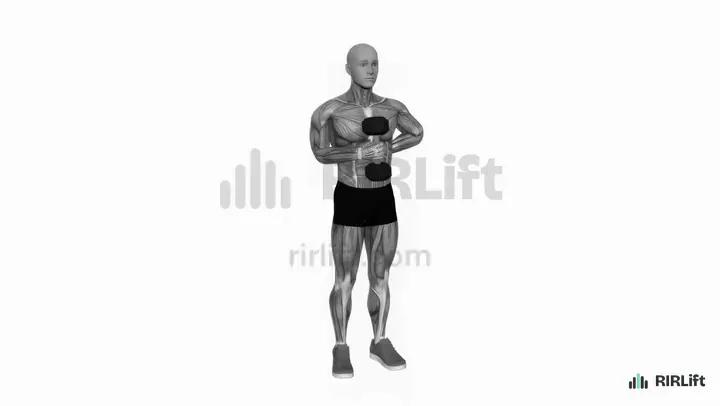
  5. Dumbbell External Rotation Shoulders
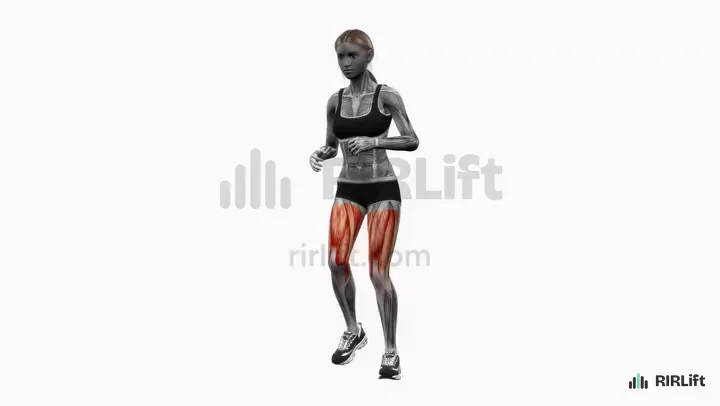
  6. Fast Feet Calves, Quads
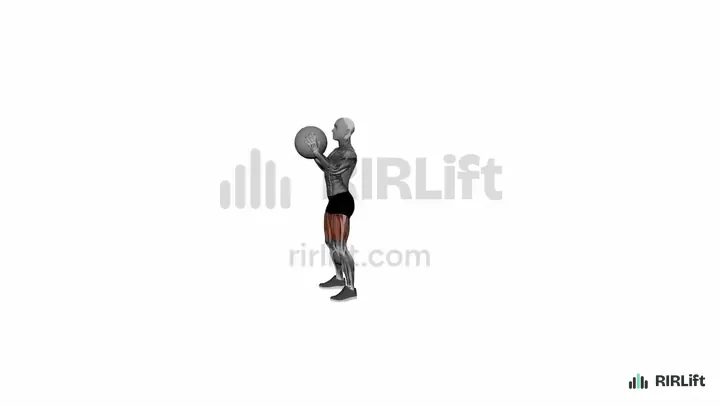
  7. Medicine Ball Overhead Throw Shoulders, Abs
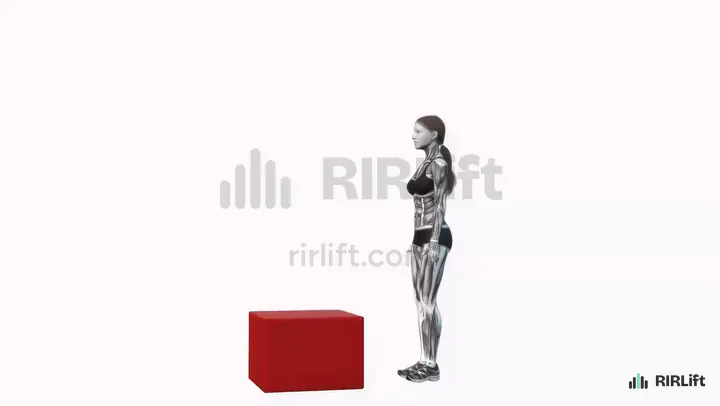
  8. Box Jump Quads, Glutes, Hamstrings
Raise: 3 minutes of jump rope

Volleyball lives on short, bouncy contacts, so jump rope is the natural opener. Two easy minutes and one slightly faster get the calves and heart rate up. Jumping jacks work if you have no rope.

Raise, calves and rhythm

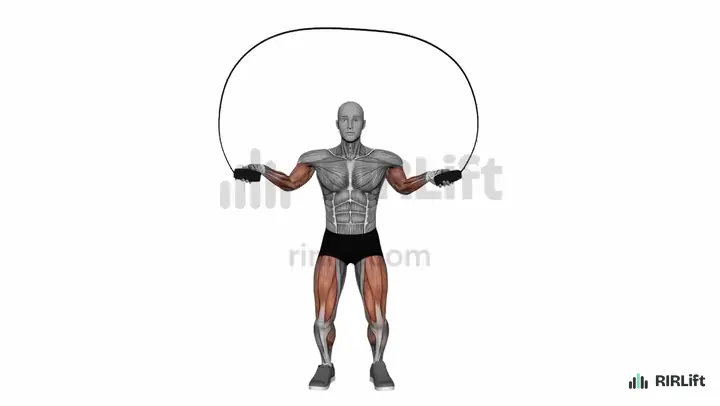
Jump Rope

Calves, Quads

The rope warms the calves and Achilles with the same short, springy ground contacts you use moving to the ball. Keep it light for the first two minutes.

How to do it

  1. Start with the rope behind you and your hands just in front of your hips.
  2. Flick the rope over with your wrists and take a small two-footed bounce as it reaches your toes.
  3. Stay tall with your eyes forward and your knees soft.
  4. Run the set at a pace you could keep talking through.

Cues

  • Small bounce, soft knees
  • Hands stay by your hips
  • Talking pace

Common mistakes

  • Tripping and stopping every few turns: slow the rope down until you can string a minute together.
  • Kicking the heels back on each turn: both feet leave and land together.

Swap for: Jumping Jack, Skipping in Place, High Knees

Build a session with Jump Rope

Raise, no-equipment option

Jumping Jack

Calves, Quads

Jumping jacks get the heart rate up and take the arms overhead at the same time, which is a useful bonus before hitting.

How to do it

  1. Stand with feet together and arms by your sides.
  2. Hop your feet out wider than your shoulders while your arms rise overhead.
  3. Hop back to the start as your arms come down.
  4. Keep a steady, easy rhythm and land softly each time.

Cues

  • Out and up, in and down
  • Soft knees
  • Steady rhythm

Common mistakes

  • Landing stiff-legged: bend the knees a little on every landing.
  • Half-raising the arms: take them all the way overhead.

Swap for: Star Jump, Jump Rope, Skipping in Place

Mobility: shoulders, upper back and hips

The hitting arm goes from far behind the head to across the body in a fraction of a second, and passing asks for a low, wide base. Arm circles both ways, a handful of walkouts and cossack squats per side cover the shoulder, the upper back and the hips in about three minutes.

Shoulder mobility

Arm Circles

Shoulders

Circles in both directions take the shoulder through its full range before you ask it to swing fast. Start small and finish wide.

How to do it

  1. Stand tall with your arms straight out sideways at shoulder height.
  2. Make small forward circles, then let each circle grow larger.
  3. After half the set, reverse and circle backward.
  4. Keep your neck relaxed and your ribs down.

Cues

  • Small to big
  • Forward, then back
  • Shoulders away from ears

Common mistakes

  • Shrugging your shoulders up: keep them low.
  • Arching the lower back on the big circles: keep the ribs tucked.

Swap for: Band Pull-Apart, Plate Halo, Dumbbell Around the World

Hamstrings, shoulders and trunk

Walkout

Abs, Shoulders, Chest

Walkouts load the shoulders in a plank and stretch the hamstrings on the way down, warming both ends of the body in one move.

How to do it

  1. Stand tall, then hinge and reach your hands to the floor, bending your knees as much as you need.
  2. Walk the hands forward one at a time until you reach a push-up position.
  3. Hold the plank for a breath with your hips level.
  4. Walk the hands back toward your feet and stand up. That is one rep.

Cues

  • Hands walk, feet stay
  • Level hips in the plank
  • Bend the knees if you need to

Common mistakes

  • Letting the hips sag at the front: squeeze your glutes in the plank.
  • Locking the knees and straining to touch the floor: bend them; this is a warm-up.

Swap for: Bear Crawl, Plank to Push-Up, Leg Swings

Build a session with Walkout

Hip range for passing

Cossack Squat

Quads, Adductors

A deep, wide stance is how you get under a low dig. The cossack squat moves the hips through that range one side at a time.

How to do it

  1. Take a very wide stance with your hands together in front of your chest.
  2. Bend one knee and slide your hips over that foot, keeping the opposite leg long.
  3. Pause at the bottom of your range for a moment.
  4. Rise and shift across to the other side, alternating each rep.

Cues

  • Long leg, toes up
  • Slide the hips sideways
  • Pause at the bottom

Common mistakes

  • Bouncing into the bottom: lower slowly and own the position.
  • Folding the chest onto the thigh: stay as upright as you can.

Swap for: Dumbbell Lateral Lunge, Barbell Lateral Lunge, Kettlebell Lateral Lunge

Activation: the hitting shoulder

The small muscles at the back of the shoulder slow the arm down after every spike and serve. Two sets of band pull-aparts, a set of light external rotations and a set of push-up pluses switch them on. This is the block most players skip and the one hitters need most. Save long stretches for after.

Upper-back activation

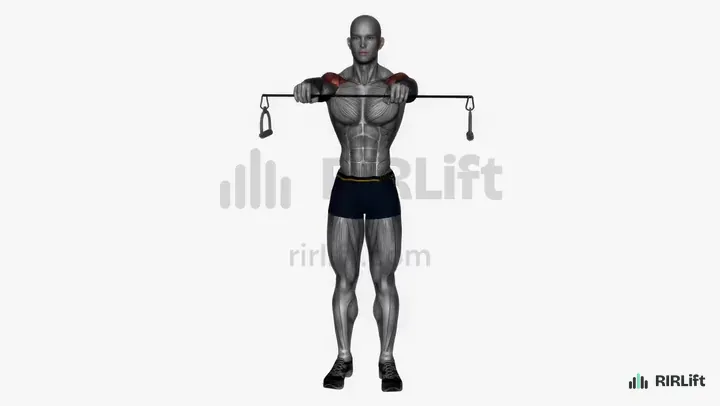
Band Pull-Apart

Shoulders, Upper Back

Pull-aparts switch on the muscles between the shoulder blades that keep the shoulder stable when the arm is overhead.

How to do it

  1. Hold a light band at shoulder height with straight arms and hands about shoulder width apart.
  2. Pull the band apart by sweeping your hands out to the sides until it touches your chest.
  3. Squeeze your shoulder blades together for a moment.
  4. Let the band come back slowly and repeat.

Cues

  • Arms long
  • Squeeze the blades
  • Slow return

Common mistakes

  • Shrugging as you pull: keep the shoulders down.
  • Bending the elbows to cheat the band apart: use a lighter band.

Swap for: Band Face Pull, Band Scapular Retraction, Dumbbell Rear Delt Fly

Rotator cuff activation

Dumbbell External Rotation

Shoulders

The muscles that rotate the arm outward are the ones that slow it down after a spike or a jump serve. One light set gets them ready.

How to do it

  1. Hold a very light dumbbell with your elbow bent to 90 degrees and tucked against your side.
  2. Keeping the elbow pinned, rotate the forearm outward away from your belly.
  3. Go as far as you can without the elbow leaving your side.
  4. Return slowly and finish all reps before switching arms.

Cues

  • Elbow glued to your side
  • Rotate, don't lift
  • Very light

Common mistakes

  • Swinging the elbow away from the body: keep a towel tucked under it if it drifts.
  • Picking a weight that needs momentum: go lighter.

Swap for: Dumbbell Lying External Rotation, Band Pull-Apart, Band Face Pull

Shoulder blade control

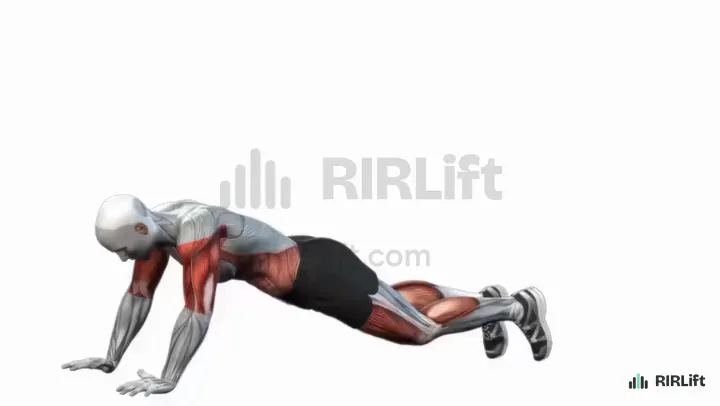
Push-Up Plus

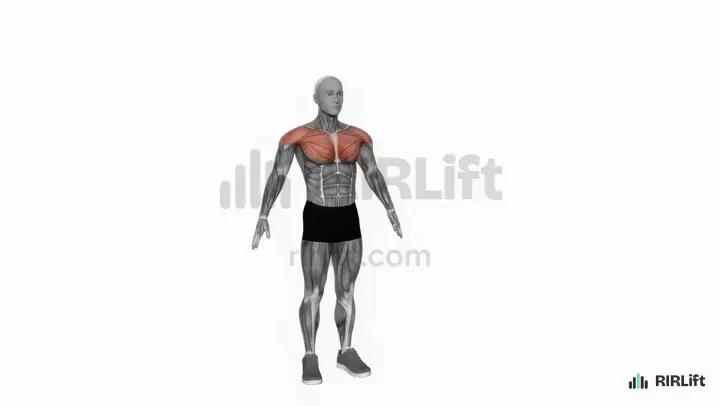
Chest

The extra push at the top works the muscle that holds the shoulder blade against the ribs, which helps the shoulder stay in a good position overhead.

How to do it

  1. Set up in a push-up position with hands under your shoulders.
  2. Do a push-up, and at the top push the floor away a little further so your upper back rounds slightly.
  3. Let the shoulder blades slide back together before the next rep.
  4. Keep your body in a straight line throughout.

Cues

  • Push the floor away at the top
  • Blades spread, then return
  • Straight body

Common mistakes

  • Skipping the extra push at the top: that last bit is the point.
  • Hips sagging: brace as you would in a plank.

Swap for: Push-Up, Plank to Push-Up, Kneeling Push-Up

Primers: feet, throws and jumps

Finish at game speed: quick feet for a few seconds, overhead med ball throws to rehearse the arm swing with the whole body behind it, then three to five box jumps or full approach jumps. Rest a few breaths between sets so every jump is sharp.

Primer, foot speed

Fast Feet

Calves, Quads

A few seconds of quick feet raises the tempo and gets you on the balls of your feet before the first serve receive.

How to do it

  1. Drop into a ready position, weight on the front of your feet.
  2. Chop your feet as fast as you can without moving from the spot.
  3. Hold your posture and keep your eyes up.
  4. Stop crisp when the time ends, then rest.

Cues

  • Chop the feet
  • Eyes up
  • Crisp stop

Common mistakes

  • Letting the heels touch down: stay on the forefoot.
  • Hunching forward: chest up, hips back.

Swap for: Agility Ladder Drill, High Knees, Skater Hop

Build a session with Fast Feet

Primer, arm swing

Medicine Ball Overhead Throw

Shoulders, Abs

An overhead throw with a step uses the legs, trunk and arm in sequence, the same chain as a spike. Use a light ball and throw hard.

How to do it

  1. Hold a light medicine ball with both hands and stand facing a wall or open space.
  2. Take the ball behind your head while stepping forward with one foot.
  3. Throw it forward hard, finishing with your arms pointing at the target.
  4. Retrieve or catch it and reset.

Cues

  • Step and throw
  • Whip from overhead
  • Light ball

Common mistakes

  • Throwing only with the arms: let the step and trunk start the throw.
  • Using a heavy ball: light enough to move fast.

Swap for: Medicine Ball Slam, Med Ball Chest Throw, Wall Ball

Primer, vertical jump

Box Jump

Quads, Glutes, Hamstrings
Three to five box jumps bring the legs to full effort before the hitting lines. Step down each rep so the landings stay easy on the knees.

How to do it

  1. Face a sturdy box with your feet about hip width apart.
  2. Load your hips back as your arms swing behind you, then explode up.
  3. Bring the knees up and land on the box in an athletic stance.
  4. Step off and take a few breaths before the next jump.

Cues

  • Explode up
  • Athletic landing
  • Full reset

Common mistakes

  • Rushing the reps: each jump is fresh and fast.
  • Landing on your toes on the edge: land with your whole foot on the box.

Swap for: Lateral Box Jump, Single-Leg Box Jump, Med Ball Jump

Build a session with Box Jump

Put them together: example sessions

Each session below picks from the exercises above for one situation, with the sets, reps, rest and RIR filled in. Open one in the session builder to change a pick, price it from a recent set, and add it to RIRLift.

Session 1

Match day, before the official warm-up

Open in the session builder
  • Workouts2× a week
  • Working sets32 a week
  • Per workout~15 min
  • EquipmentJump Rope, Resistance Bands, Dumbbells, Medicine Ball +1

You have time before the team warm-up and the timed hitting period.

This is the full 12-minute order, kept at 3 to 5 reps in reserve so you arrive at the net warm and fast, not tired. The shoulder block comes before any hitting so the cuff and upper back are awake by the first swing, and the jumps climb to full effort for a few reps only.

Match Warm-Up
ExerciseSets × repsRIRRest
Jump RopeSeconds. Easy, then a bit faster. 3 × 60 4 0 s
Arm CirclesEach direction. 1 × 10 5 0 s
Walkout 1 × 4 4 0 s
Cossack SquatPer side. 1 × 6 4 15 s
Band Pull-Apart 2 × 15 3 15 s
Dumbbell External RotationPer arm. Very light. 1 × 12 4 15 s
Push-Up Plus 1 × 8 4 15 s
Fast FeetSeconds. 2 × 8 3 20 s
Medicine Ball Overhead ThrowLight ball. 2 × 5 3 20 s
Box JumpStep down every rep. 2 × 3 3 30 s
How to run it
Do it 20 to 30 minutes before the match starts, then join the team for pepper, serving and hitting lines.
How to progress
Keep the order the same every match. If your arm still feels flat in the first set, add a second round of external rotations and two more throws.

Session 2

Practice night with a weight room day in the week

Open in the session builder
  • Workouts3× a week
  • Working sets36 a week
  • Per workout~15 min
  • EquipmentResistance Bands, Dumbbells

You practice three or four times a week and the shoulders take most of the load.

Before practice the jumps can be trimmed, since the drills do that job, and the time moves to the shoulder block with an extra set at 2 to 3 reps in reserve. That turns a few minutes of every practice into steady shoulder work without a separate session.

Practice Warm-Up
ExerciseSets × repsRIRRest
Jumping JackSeconds. 2 × 30 4 0 s
Arm CirclesEach direction. 1 × 10 5 0 s
Walkout 1 × 4 4 0 s
Band Pull-Apart 3 × 12–15 2 20 s
Dumbbell External RotationPer arm. 2 × 10–12 2 20 s
Push-Up Plus 2 × 8–10 3 20 s
Fast FeetSeconds. 1 × 8 3 0 s
How to run it
Run it on the side of the court before practice starts. If the team warm-up already includes jogging, start at the arm circles.
How to progress
Add a rep a week to the external rotations and pull-aparts, up to 20 and 15, then use a slightly heavier band or dumbbell.

Session 3

Tournament day between matches

Open in the session builder
  • Workouts1× a week
  • Working sets7 a week
  • Per workout~10 min
  • EquipmentJump Rope, Resistance Bands, Medicine Ball, Plyo Box

You play three or four matches in a day with 30 to 90 minutes between them.

Between matches you cool off but are not cold, so this is a short rewarm: a few minutes of movement, one shoulder set, and a couple of jumps. Effort stays light, 4 to 5 reps in reserve, because the matches are the hard part and you need the legs for the last one.

Rewarm
ExerciseSets × repsRIRRest
Jump RopeSeconds. 2 × 60 5 0 s
Arm CirclesEach direction. 1 × 10 5 0 s
Cossack SquatPer side. 1 × 5 5 10 s
Band Pull-Apart 1 × 15 4 15 s
Medicine Ball Overhead ThrowLight ball. 1 × 4 4 20 s
Box JumpStep down every rep. 1 × 2 4 0 s
How to run it
Start it 10 minutes before your next match. Skip the box jumps if there is no box and do three approach jumps instead.
How to progress
Use the same rewarm all day; on the final match add one more set of throws if the arm feels heavy.

Make it fit you

Questions

What are good warm-ups to do before volleyball?

Jump rope or jumping jacks, arm circles, walkouts, band pull-aparts, external rotations, quick feet, overhead throws and a few jumps. That order warms you up, opens the shoulders and hips, activates the hitting shoulder and builds to full jumps.

How long should a volleyball warm-up be?

About 10 to 15 minutes before the team's ball warm-up. Between tournament matches, five minutes is enough to get warm again.

How do you warm up your shoulder for volleyball?

Arm circles both ways, two sets of band pull-aparts, a light set of external rotations and a set of push-up pluses, then some overhead med ball throws before your first swing.

Should volleyball players do jumps in the warm-up?

Yes, a few. Three to five box jumps or approach jumps at the end bring your legs to full speed, so your first block is not your first max jump.

Should you static stretch before volleyball?

Keep the moving drills before you play and save long holds for after the match.