Warm-up exercises for strength training, stage by stage

A good strength training warm-up is 4 minutes on the elliptical or 60 seconds of jumping jacks, then 6 cossack squats per side, 8 dead bugs per side and 12 dumbbell external rotations per arm, followed by 2 to 4 ramp-up sets of your first lift: light for 8, medium for 5, close to working weight for 2 or 3. It runs 8 to 10 minutes, and for a full-body session the second and third lifts each get one lighter set instead of a full ramp.

  1. Elliptical Quads, Hamstrings, Glutes
  2. Jumping Jack Calves, Quads
  3. Cossack Squat Quads, Adductors
  4. Dead Bug Abs
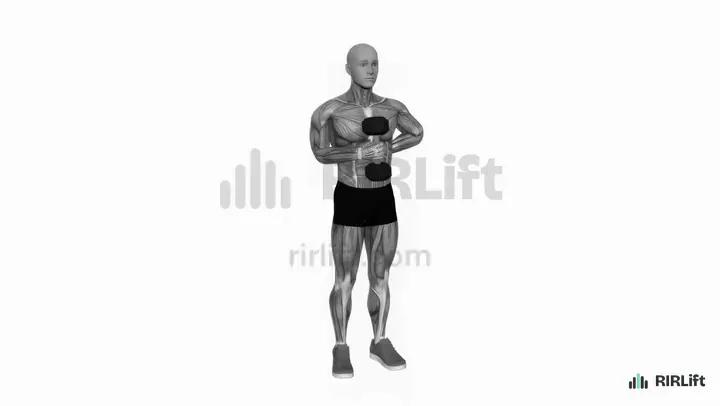
  5. Dumbbell External Rotation Shoulders
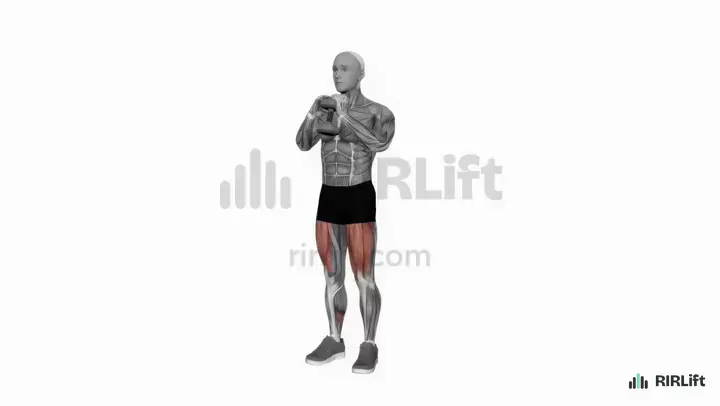
  6. Goblet Squat Quads, Glutes
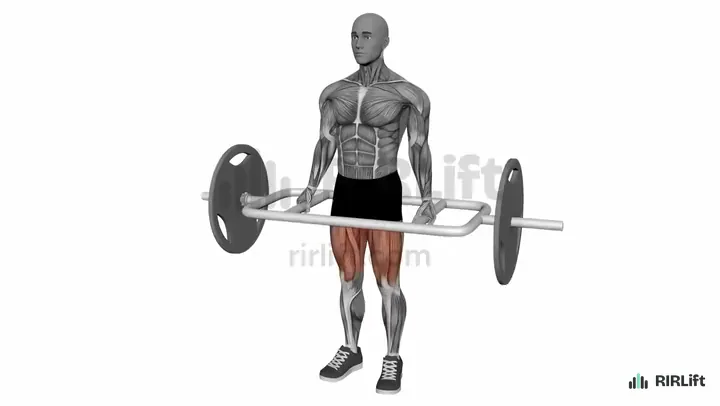
  7. Trap Bar Deadlift Quads, Glutes

General warm-up: get warm and breathing

Spend 3 to 5 minutes on something rhythmic and easy. The elliptical moves your arms and legs with no impact; jumping jacks work in a living room or a crowded gym corner. Aim for a light sweat and a heart rate that has clearly come up, then move on.

General warm-up, low impact

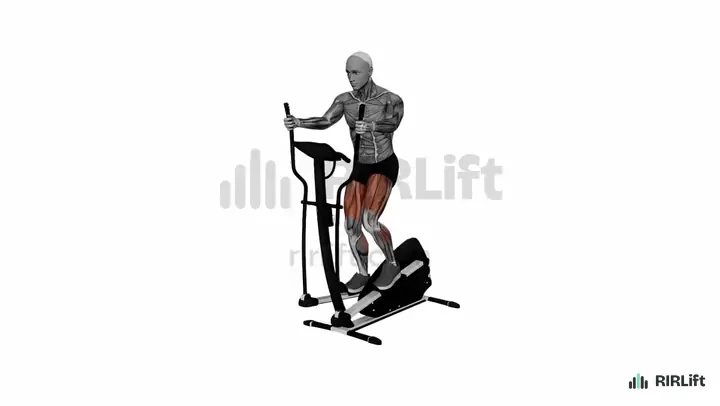
Elliptical

Quads, Hamstrings, Glutes

The elliptical raises your heart rate with arms and legs moving together and no jarring on knees or ankles, so it is an easy first stop before any strength day.

How to do it

  1. Step on and hold the moving handles.
  2. Stride at low resistance, pushing and pulling the handles as your legs move.
  3. Keep it easy for 4 minutes, nudging resistance up for the last 30 seconds if you are still cold.

Cues

  • Push and pull the handles
  • Light sweat, steady breath

Common mistakes

  • Leaning on the handles: stand upright so your legs do their share.
  • Going so hard you need a rest afterward: easy is the goal.

Swap for: Stationary Bike, Rowing Machine, Treadmill Walk

General warm-up, no equipment

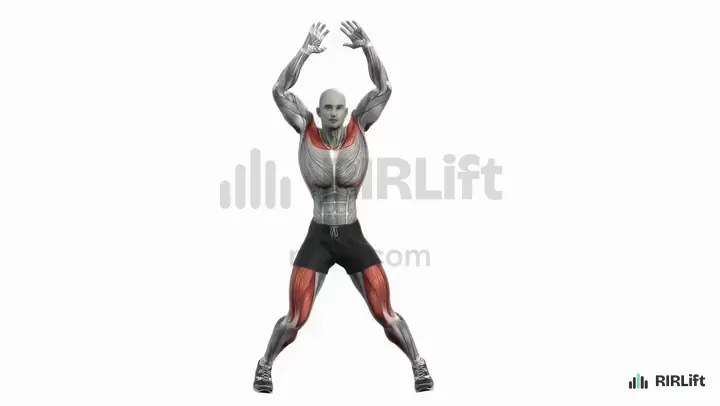
Jumping Jack

Calves, Quads

Jumping jacks need no machine and get your whole body moving in a minute, which suits home sessions or a gym with every cardio machine taken.

How to do it

  1. Start upright, heels touching, hands resting at your thighs.
  2. Hop your feet out wider than your hips while you swing your arms overhead.
  3. Hop back to the start as your arms come down.
  4. Keep a steady rhythm for 60 seconds, or step side to side instead of hopping.

Cues

  • Light on the balls of your feet
  • Arms fully overhead

Common mistakes

  • Landing flat and heavy: stay springy.
  • Holding your breath: breathe in rhythm with the jumps.

Swap for: Star Jump, High Knees, Skipping in Place

Dynamic mobility for a strength session

Strength sessions load the hips, the trunk and the shoulders, so one drill covers each. Cossack squats move the hips sideways and deep; dead bugs teach your ribs to stay down while your limbs move, which is the brace every heavy lift relies on. Six to eight slow reps per side is plenty.

Dynamic mobility, hips and adductors

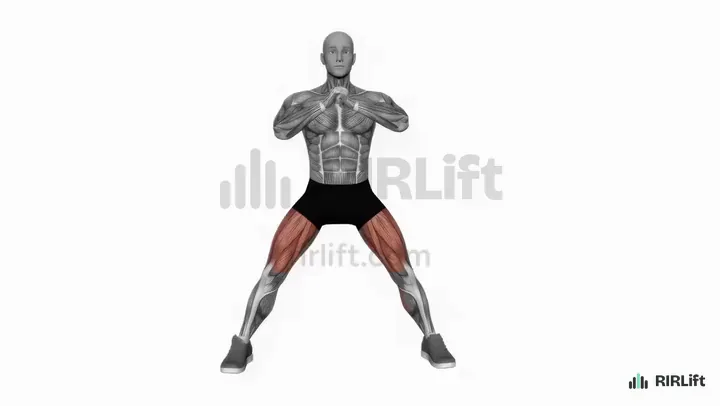
Cossack Squat

Quads, Adductors

Shifting deep into one hip while the other leg stays straight opens the inner thighs and hips, a range that plain squats and deadlifts quietly depend on.

How to do it

  1. Stand with your feet about twice shoulder-width apart, toes slightly out.
  2. Shift your weight to one side and sit down into that hip while the other leg straightens and its toes point up.
  3. Go only as deep as you can with the bent-side heel flat, then push back to the middle.
  4. Alternate sides for 6 reps each.

Cues

  • Bent-side heel stays down
  • Chest up, sit into the hip

Common mistakes

  • Forcing depth on the first rep: let each rep go a little lower.
  • Letting the bent knee cave inward: point it over your toes.

Swap for: Dumbbell Lateral Lunge, Leg Swings, Goblet Squat

Dynamic mobility, trunk bracing

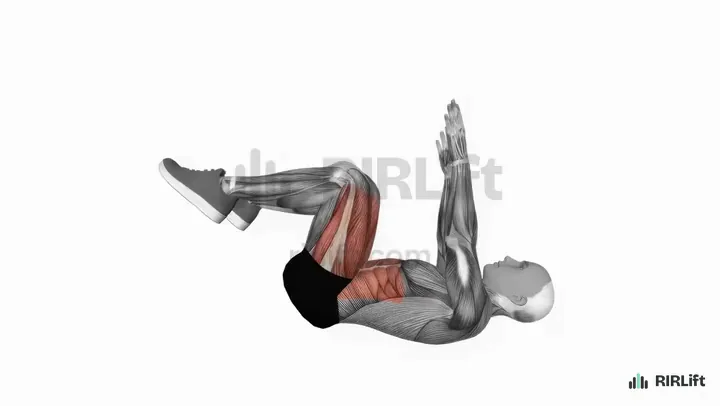
Dead Bug

Abs

The dead bug trains the exact skill of keeping your lower back still while arms and legs move. That same brace is what holds you rigid under a heavy deadlift or press.

How to do it

  1. Lie face up with arms reaching to the ceiling and knees bent at 90 degrees above your hips.
  2. Press your lower back gently into the floor.
  3. Reach one arm overhead and straighten the opposite leg toward the floor, stopping before your back lifts.
  4. Return and switch sides. Do 8 per side, breathing out as you reach.

Cues

  • Lower back glued down
  • Breathe out as you reach

Common mistakes

  • Arching off the floor as the leg lowers: shorten the reach.
  • Moving fast: slow reps work the brace.

Swap for: Plank, Pallof Press, Plank Shoulder Tap

Build a session with Dead Bug

Activation: switch on the rotator cuff

Pressing and rowing both need a steady shoulder. A light set of external rotations warms the small muscles at the back of the shoulder so the big ones can press and pull from a stable joint. Use a dumbbell light enough to do 15 reps without effort.

Activation, rotator cuff

Dumbbell External Rotation

Shoulders

A light external rotation set warms the rotator cuff, the small muscles that keep the ball of your shoulder centered while you press and row.

How to do it

  1. Stand or sit with a light dumbbell in one hand, elbow bent to 90 degrees and tucked against your side.
  2. Swing your forearm away from your belly with the elbow pinned until your hand points out to the side.
  3. Return slowly across your body. Do 12 to 15 reps per arm.

Cues

  • Elbow pinned to your ribs
  • Slow both ways

Common mistakes

  • Using a dumbbell heavy enough to swing: go lighter.
  • Letting the elbow drift away from your body: the rotation should come from the shoulder.

Swap for: Dumbbell Lying External Rotation, Band Pull-Apart, Face Pull

Specific warm-up: ramp into your first lift

Whatever opens the session gets 2 to 4 ramp-up sets: a light set of 8, a moderate set of 5, and one or two heavier sets of 2 or 3 that land just under your working weight. In a full-body session, the second and third lifts get one ramp-up set at about 60 percent, because your body is already warm by then.

Ramp-up, squat pattern

Goblet Squat

Quads, Glutes

Holding the weight at your chest keeps you upright, so goblet squats are both a fine warm-up groove before a barbell squat and the main squat for a dumbbell-only session.

How to do it

  1. Cup the top end of one dumbbell in both palms and hold it upright at your sternum.
  2. Sit down between your heels with your chest tall and elbows inside your knees.
  3. Pause briefly at the bottom, then stand up.
  4. Ramp-up: one set of 8 with half your working dumbbell, then a set of 5 a step lighter than working weight.

Cues

  • Elbows inside the knees
  • Chest proud

Common mistakes

  • Rounding forward as you drop: keep the dumbbell glued to your chest.
  • Rising onto your toes: weight stays across the whole foot.

Swap for: Dumbbell Squat, Heels-Elevated Goblet Squat, Front Squat

Ramp-up, main hinge

Trap Bar Deadlift

Quads, Glutes

The trap bar lets you stand inside the weight, so the pull is easier to learn and to ramp up quickly than a straight-bar deadlift.

How to do it

  1. Step into the trap bar with the handles beside your ankles.
  2. Hinge and bend your knees to grab the handles, chest up and back flat.
  3. Stand by driving the floor down, finishing with hips and knees straight.
  4. Ramp-up: 40 percent for 6, 60 percent for 4, 80 percent for 2.

Cues

  • Feet push the floor down
  • Stand tall at the top

Common mistakes

  • Leaning back at lockout: finish straight up.
  • Rounding your lower back to reach the handles: bend your knees more.

Swap for: Barbell Deadlift, Kettlebell Deadlift, Romanian Deadlift

Ramp-up, overhead press

Dumbbell Shoulder Press

Shoulders

A seated or standing dumbbell press is a common second lift in a full-body strength day. One light set before it is enough once the rotator cuff is already warm.

How to do it

  1. Hold dumbbells at shoulder height with palms facing forward or slightly in.
  2. Press up until your arms are straight over your shoulders.
  3. Bring them back down slowly until they touch your shoulders.
  4. Ramp-up: one set of 6 with about 60 percent of your working dumbbells.

Cues

  • Ribs down, press straight up
  • Wrists stacked over elbows

Common mistakes

  • Arching your back to finish the rep: brace and press.
  • Stopping short at the bottom: lower all the way to your shoulders.

Swap for: Arnold Press, Neutral-Grip Dumbbell Shoulder Press, Landmine Press

Ramp-up, row

One-Arm Dumbbell Row

Lats, Upper Back

The one-arm row is the pulling slot in many strength sessions. One light set lets you settle the bench setup before the working weight.

How to do it

  1. Brace one hand and knee on a bench, the other foot planted.
  2. Row the dumbbell toward your hip, keeping your elbow close to your body.
  3. Lower until your arm is straight.
  4. Ramp-up: one set of 8 with about 60 percent of your working dumbbell.

Cues

  • Elbow toward your hip
  • Flat back, still torso

Common mistakes

  • Twisting to heave the weight up: keep shoulders square.
  • Cutting the bottom short: let the arm straighten.

Swap for: Dumbbell Lawnmower Row, Seated Cable Row, Chest-Supported Row

Put them together: example sessions

Each session below picks from the exercises above for one situation, with the sets, reps, rest and RIR filled in. Open one in the session builder to change a pick, price it from a recent set, and add it to RIRLift.

Session 1

Full-body strength day at the gym

Open in the session builder
  • Workouts3× a week
  • Working sets48 a week
  • Per workout~45 min
  • EquipmentElliptical, Dumbbells, Trap Bar

You train three big lifts in one session, two or three times a week.

The general and mobility work takes 6 minutes, then the trap bar gets a full ramp and the later lifts get one lighter set each. Main sets sit at 2 reps in reserve so each lift keeps its quality after the one before it.

Full Body
ExerciseSets × repsRIRRest
EllipticalSeconds. Four easy minutes. 4 × 60 4 0 s
Cossack SquatPer side. 1 × 6 4 0 s
Dead BugPer side. 1 × 8 4 0 s
Dumbbell External RotationPer arm. Light dumbbell. 1 × 12–15 4 20 s
Trap Bar Deadlift3 warm-up sets first 3 × 4–6 2 3 min
Dumbbell Shoulder Press1 warm-up set first 3 × 6–10 2 2 min
One-Arm Dumbbell Row1 warm-up set firstPer arm. 3 × 8–12 2 90 s
How to run it
Elliptical, cossack squats, dead bugs and external rotations back to back, then the ramp-up sets.
How to progress
Add 5 kg to the deadlift and 1 to 2 kg to the dumbbells when all sets reach the top of the range at 2 reps in reserve.

Session 2

Strength training at home with dumbbells

Open in the session builder
  • Workouts3× a week
  • Working sets27 a week
  • Per workout~20 min
  • EquipmentDumbbells

You lift at home with adjustable dumbbells and little space.

Jumping jacks replace the cardio machine, and the goblet squat leads the session, so it gets two ramp-up sets. Home dumbbells run out of weight sooner, so working sets go to 1 rep in reserve with higher reps.

Home Strength
ExerciseSets × repsRIRRest
Jumping JackSeconds. 1 × 60 4 0 s
Cossack SquatPer side. 1 × 6 4 0 s
Dead BugPer side. 1 × 8 4 0 s
Goblet Squat2 warm-up sets first 3 × 8–15 1 90 s
One-Arm Dumbbell Row1 warm-up set firstPer arm. 3 × 8–15 1 1 min
How to run it
One minute of jacks, then mobility, then ramp up the goblet squat.
How to progress
Add reps until you reach 15 on every set at 1 rep in reserve, then go to the next dumbbell.

Session 3

Busy day, six minutes to warm up

Open in the session builder
  • Workouts2× a week
  • Working sets18 a week
  • Per workout~25 min
  • EquipmentTrap Bar, Dumbbells

You have 40 minutes total and want most of it under the bar.

Two minutes of jacks and the dead bug cover heat and brace; the rest of the warm-up lives inside the ramp-up sets of the first lift, which is the part that most directly helps strength. Working sets at 2 reps in reserve.

Quick Strength
ExerciseSets × repsRIRRest
Jumping JackSeconds. 2 × 60 4 0 s
Dead BugPer side. 1 × 8 4 0 s
Trap Bar Deadlift4 warm-up sets first 3 × 4–6 2 3 min
Dumbbell Shoulder Press1 warm-up set first 3 × 6–10 2 90 s
How to run it
Two minutes of jacks in two rounds, one set of dead bugs, then four ramp-up sets on the trap bar.
How to progress
Same as the full-body day: add weight when every set hits its top reps.

Make it fit you

Questions

What is a good warm-up for strength training?

Three to five minutes of easy cardio, a hip drill, a bracing drill and a shoulder drill, then 2 to 4 ramp-up sets of your first lift. About 8 to 10 minutes.

Should you do warm-up sets?

Yes, for your first lift of the day. They rehearse the movement with rising weight so your working sets start with good form. Later lifts need one light set or none.

What is a dynamic warm-up for strength training?

Movements done for reps through a growing range, such as cossack squats and dead bugs, instead of holding stretches. They match the positions of the lifts that follow.

How long should a strength training warm-up be?

Eight to ten minutes covers it for most sessions. Short on time, keep the ramp-up sets and cut the cardio.

How do I stretch before lifting weights?

Use moving drills instead of holds: cossack squats for the hips, external rotations for the shoulders. Static holds fit after your session.