Tennis workout: strength training for footwork, rotation and a durable shoulder

A tennis workout starts with a few fast power drills (skater hops and medicine ball rotational throws), then one squat and one single-leg lift for the legs (goblet squat, lateral lunge, step-up or single-leg RDL), one rotation and one anti-rotation exercise for the trunk (cable woodchop, Pallof press), and finishes with upper-back, rotator cuff and forearm work (one-arm rows, external rotations, Y raises, wrist curls). Two full-body sessions a week at 1 to 3 reps in reserve fit next to three or four days on court.

  1. Goblet Squat Quads, Glutes
  2. Dumbbell Lateral Lunge Quads, Glutes, Adductors
  3. Single-Leg RDL Hamstrings, Glutes
  4. Skater Hop Glutes, Quads, Abductors
  5. Med Ball Rotational Throw Abs
  6. Pallof Press Abs
  7. One-Arm Dumbbell Row Lats, Upper Back
  8. Dumbbell External Rotation Shoulders
Legs and footwork

Tennis legs need to push off and brake in every direction, mostly on one foot. Pick one two-legged squat and one or two single-leg lifts per session, and finish with calves for the hours you spend on the balls of your feet.

Leg strength base

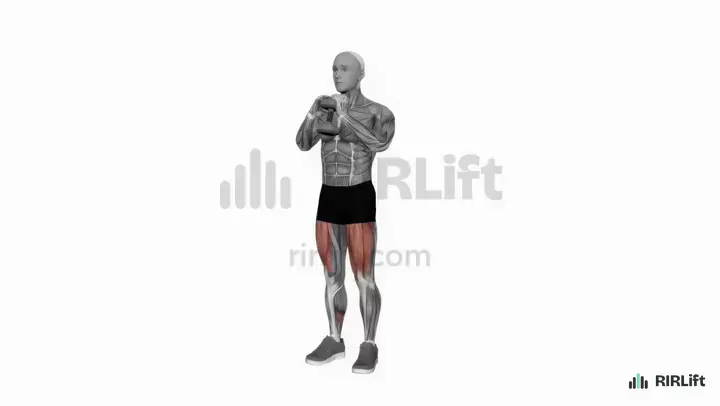
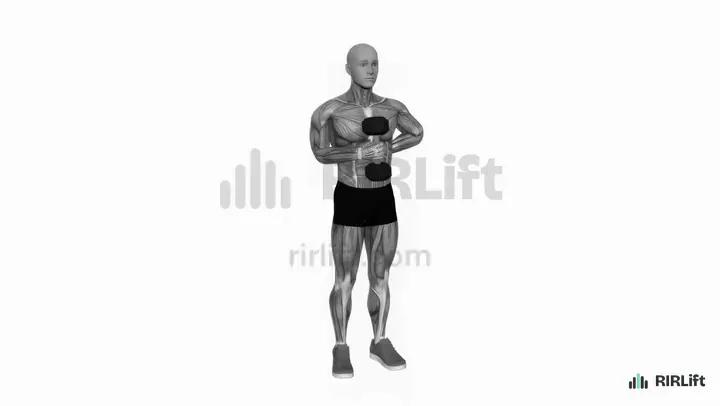
Goblet Squat

Quads, Glutes

Every split step, open stance forehand and serve load starts from bent knees. The goblet squat builds that leg strength with one dumbbell and keeps your torso upright, so it is easy to learn and easy to load.

How to do it

  1. Hold a dumbbell upright against your chest, cupping the top end in both hands.
  2. Set your feet a little wider than your hips, toes turned slightly out.
  3. Sit down between your knees until your elbows reach the inside of your thighs.
  4. Stand back up, pushing your knees out over your toes.

Cues

  • Chest tall behind the bell
  • Knees follow the toes
  • Full foot on the floor

Common mistakes

  • Heels lifting at the bottom: widen your stance or squat a little less deep.
  • Letting the dumbbell pull you forward: keep it pinned to your sternum.

Swap for: Dumbbell Front Squat, Heels-Elevated Goblet Squat

Side-to-side strength

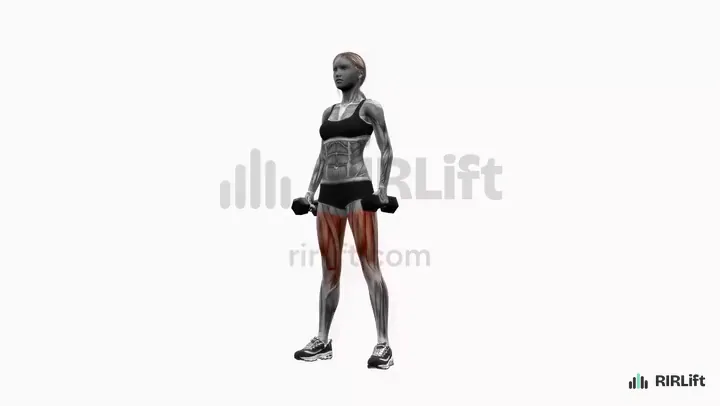
Dumbbell Lateral Lunge

Quads, Glutes, Adductors

Tennis is played moving sideways, and the lateral lunge loads one leg as you push off and brake to the side, the same work as a wide forehand recovery. It also trains the inner thighs in a long stretch.

How to do it

  1. Stand tall, one dumbbell per hand by your sides.
  2. Step one foot wide to the side and sit your hips back over that foot, keeping the other leg straight.
  3. Lower until the working thigh is close to parallel, dumbbells framing the front knee.
  4. Push off the bent leg to return to standing, then alternate sides.

Cues

  • Sit back, not just down
  • Trail leg long
  • Push the floor away to return

Common mistakes

  • Letting the knee cave in: point the knee where the toes point.
  • Stepping too narrow: go wide enough that the trail leg stretches.

Swap for: Cossack Squat, Kettlebell Lateral Lunge

Single-leg drive

Step-Up

Quads, Glutes

The step-up loads one leg at a time through a big range with very little impact, which builds the push-off for a first step and the leg drive under a serve. It is gentle on legs that already absorb hours of court time.

How to do it

  1. Stand facing a bench or box at about knee height, dumbbells hanging at your sides.
  2. Plant one whole foot on the box.
  3. Drive through that foot to stand up on the box without pushing off the floor leg.
  4. Step back down slowly with the same leg leading down, then repeat.

Cues

  • The top leg does the work
  • Stand fully tall
  • Slow on the way down

Common mistakes

  • Bouncing off the bottom foot: keep it light so the top leg lifts you.
  • Using a box so high your hip drops below your knee: lower it.

Swap for: Dumbbell Reverse Lunge, Bulgarian Split Squat

Build a session with Step-Up

Hip control and hamstrings on one leg

Single-Leg RDL

Hamstrings, Glutes

Tennis has you lunging, reaching and recovering on one leg. The single-leg RDL trains balance, the glute that keeps your hip level, and the hamstrings that brake you at the end of a sprint.

How to do it

  1. Stand on one leg holding a dumbbell in the hand on the same side.
  2. Soften the standing knee and hinge forward, letting the free leg float back behind you.
  3. Lower until your torso and back leg are close to parallel with the floor.
  4. Squeeze the standing glute to come back up to tall.

Cues

  • Hips stay square
  • Body moves like a seesaw
  • Slow and balanced

Common mistakes

  • Opening the hip as the leg rises: point the back toes at the floor.
  • Rounding the back to reach lower: stop at the point your hamstring stops you.

Swap for: Romanian Deadlift, Dumbbell B-Stance RDL

Calves and ankles for footwork

Single-Leg Calf Raise

Calves

You spend a whole match on the balls of your feet, and the calves take a beating from every split step. Single-leg raises build each calf alone and expose a weaker side.

How to do it

  1. Stand on one foot holding a dumbbell at your side, other foot lifted, a hand on something for balance if needed.
  2. Lower your heel as far as it comfortably goes.
  3. Rise up as high as you can onto the ball of the foot.
  4. Hold the top for a second, then lower slowly.

Cues

  • Full height every rep
  • Pause at the top
  • Slow lowering

Common mistakes

  • Bouncing through short reps: use the full range of the ankle.
  • Rolling onto the outer toes: push through the big toe.

Swap for: Standing Calf Raise, Seated Calf Raise

Lateral and rotational power

Power on court is speed, so these are done first in a session with a light load and full rest. One trains the sideways push, the other two train the hips-then-trunk-then-arm sequence of a groundstroke and serve.

Lateral power and landing

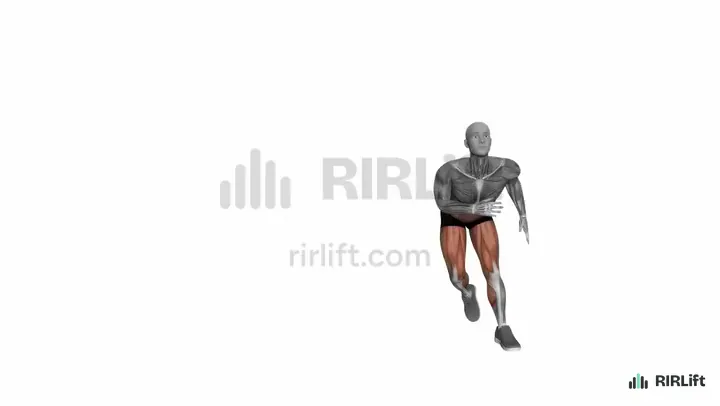
Skater Hop

Glutes, Quads, Abductors

Skater hops bound you from one foot to the other, training sideways push-off and a stable single-leg landing. That is the movement of covering the court and stopping to set up a shot.

How to do it

  1. Stand on one leg knee just unlocked.
  2. Push off sideways and jump to land on the other foot.
  3. Land softly in a slight squat and hold it for a moment.
  4. Bound back the other way and keep alternating.

Cues

  • Push sideways, not up
  • Stick every landing
  • Knee over toes on landing

Common mistakes

  • Landing stiff-legged: absorb with the hip and knee.
  • Rushing so the landings wobble: pause until each one is still.

Swap for: Dumbbell Lateral Lunge, Jump Squat

Rotational power

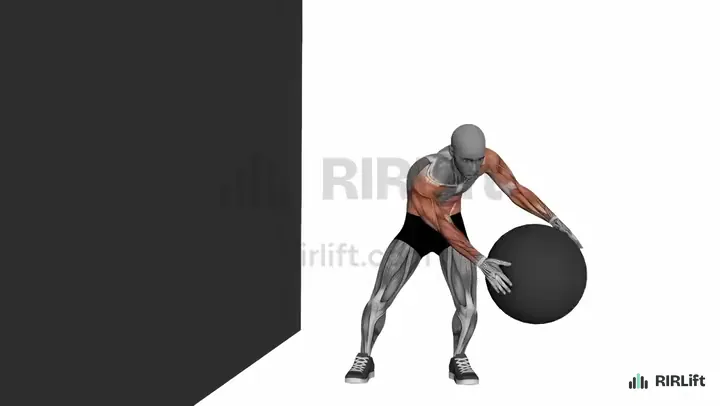
Med Ball Rotational Throw

Abs

A groundstroke is the hips turning first and the trunk and arms following fast. Throwing a medicine ball sideways into a wall trains that sequence at full speed, without the limits of holding a heavy weight.

How to do it

  1. Stand side-on to a wall about an arm's length or two away, a medicine ball at your hip.
  2. Load into your back hip by turning away from the wall.
  3. Rotate hard from the hips through the trunk and release the ball into the wall.
  4. Catch the rebound, reset, and repeat. Finish one side, then switch.

Cues

  • Hips lead, arms follow
  • Throw through the wall
  • Reset every rep

Common mistakes

  • Throwing only with the arms: turn the back hip toward the wall.
  • Using a ball too heavy to throw fast: go lighter.

Swap for: Landmine Rotational Press, Cable Woodchop

Ground-to-hand rotation

Landmine Rotational Press

Shoulders, Abs

The landmine rotational press drives from the back foot, turns the hips and finishes with a press, which copies the force path of a serve or forehand. The angled bar keeps the shoulder in a comfortable position.

How to do it

  1. Stand side-on to a landmine and squat to grip the end of the bar low outside one hip.
  2. Stand up and turn your back foot and hip in toward the anchor.
  3. Rotate and press the bar up and across your body until the arm is straight.
  4. Lower the bar back to your hip under control. Finish the side, then switch.

Cues

  • Pivot the back foot
  • Hip turns before the arm presses
  • Finish long

Common mistakes

  • Pressing before the hips turn: let the rotation start the press.
  • Leaning back at the top: keep the trunk stacked.

Swap for: Med Ball Rotational Throw, Landmine Press

Trunk rotation and control

The trunk transfers force from the legs to the racket and stops the swing afterward. Train it both ways: turning under load with the woodchop, and refusing to turn with the Pallof press.

Resisting rotation

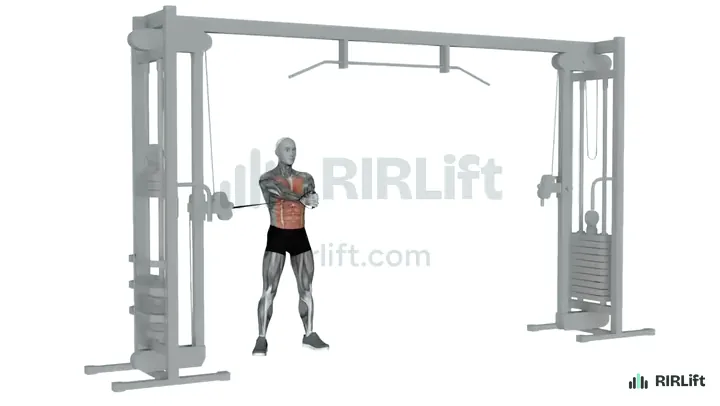
Pallof Press

Abs

Being strong at stopping rotation matters as much as producing it, because that is how you control your body at the end of a swing. The Pallof press trains the trunk to stay square while a cable pulls you sideways.

How to do it

  1. Set a cable handle at chest height and stand side-on to the machine, holding the handle at your chest.
  2. Step out until the cable has tension, feet about shoulder-width apart.
  3. Press the handle straight out in front of your chest without letting your body turn.
  4. Hold for a second, bring it back to your chest, and repeat. Switch sides.

Cues

  • Nothing turns
  • Ribs down
  • Hold at full reach

Common mistakes

  • Letting the hips rotate toward the machine: step in until you can stay square.
  • Pressing upward: push straight out from the chest.

Swap for: Dead Bug, Side Plank

Loaded rotation under control

Cable Woodchop

Abs

The woodchop trains the hips and trunk to turn together under load, from high to low across your body like an overhead or high backhand. Use a weight you can control on the way back.

How to do it

  1. Set a cable high and stand side-on, both hands on the handle up near the pulley.
  2. Sweep the handle diagonally past your torso to the outside of your opposite knee, turning through your hips and pivoting the back foot.
  3. Keep your arms long and let the trunk do the work.
  4. Return slowly to the start and repeat. Switch sides.

Cues

  • Rotate the hips, not just the arms
  • Pivot the back foot
  • Slow return

Common mistakes

  • Bending the arms to pull: they stay long and simply hold the handle.
  • Letting the cable yank you back: control the return.

Swap for: Med Ball Woodchop, Pallof Press

Shoulder and upper back

Your hitting shoulder gets plenty of speed work on court; what it needs from the gym is the strength to slow the arm down. Rows, external rotations and Y raises build the back of the shoulder and the shoulder blade muscles that do that.

Upper-back strength

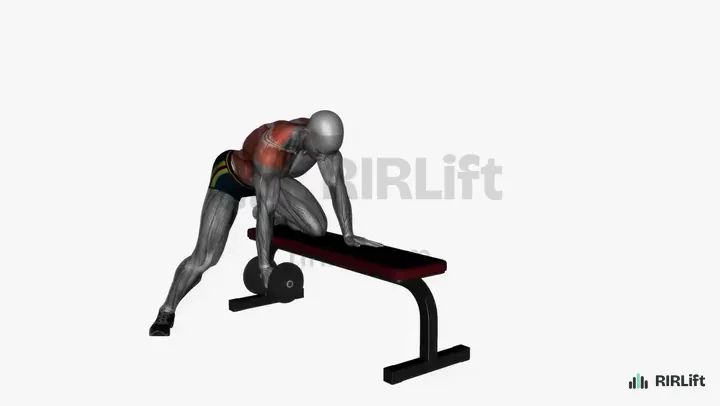
One-Arm Dumbbell Row

Lats, Upper Back

The upper back slows the arm after every forehand and serve, and it is often weak next to a strong hitting side. One-arm rows train each side alone so the non-hitting side keeps up.

How to do it

  1. Brace one hand and knee on a flat bench, back flat.
  2. Hold a dumbbell in the free hand with the arm long.
  3. Row the dumbbell toward your hip, keeping the elbow close.
  4. Lower to a full stretch, finish the set, then switch sides.

Cues

  • Elbow to hip
  • Square shoulders
  • Full stretch at the bottom

Common mistakes

  • Twisting to lift: keep the torso still.
  • Shrugging the weight: pull with the elbow.

Swap for: Seated Cable Row, Dumbbell Lawnmower Row

Rotator cuff strength

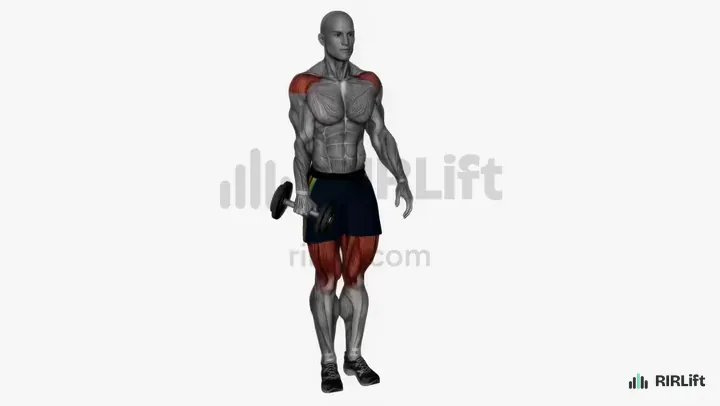
Dumbbell External Rotation

Shoulders
The small muscles that turn your upper arm outward also slow the arm down after a serve. Light external rotations keep them strong enough to do that job set after set.

How to do it

  1. Stand holding a light dumbbell, elbow bent to 90 degrees and tucked against your side, forearm across your stomach.
  2. Keep the elbow pinned to your side.
  3. Rotate your forearm outward as far as you can without the elbow moving.
  4. Return slowly and repeat. Finish one arm, then switch.

Cues

  • Elbow glued to your side
  • Slow both ways
  • Light weight

Common mistakes

  • Letting the elbow drift away from the body: tuck a small towel under it.
  • Going heavy and twisting the trunk: this is a light, strict exercise.

Swap for: Dumbbell Lying External Rotation, Face Pull

Lower traps and shoulder blades

Dumbbell Chest-Supported Y Raise

Shoulders

Serving puts your arm overhead hundreds of times a match, and the lower traps keep the shoulder blade rotating up and staying flat under it. Chest-supported Y raises train them without any cheating.

How to do it

  1. Lie face down on a bench set to about 45 degrees, light dumbbells hanging below your shoulders.
  2. Turn your thumbs up.
  3. Raise your arms forward and up in a Y shape until they line up with your body.
  4. Hold a second at the top, then lower slowly.

Cues

  • Thumbs up
  • Shoulders away from ears
  • Very light weight

Common mistakes

  • Shrugging the dumbbells up: pull the shoulder blades down first.
  • Swinging from the hips: keep your chest on the pad.

Swap for: Cable Y Raise, Plank IYTW

Forearms and grip

Long rallies ask the forearm to hold the racket and steady the wrist on every contact. Two light high-rep exercises at the end of a session are enough.

Forearm flexor endurance

Wrist Curl

Forearms

Holding the racket through long rallies uses the muscles on the inside of your forearm constantly. Wrist curls train them directly with a light bar.

How to do it

  1. Kneel beside a flat bench and rest your forearms on it, palms up, wrists just past the edge.
  2. Hold a light barbell with your hands about shoulder-width apart.
  3. Let the bar roll down toward your fingers, then curl it back up by bending your wrists.
  4. Squeeze at the top and lower slowly.

Cues

  • Forearms stay on the bench
  • Full range of the wrist
  • Slow and controlled

Common mistakes

  • Lifting the forearms off the bench: only the wrists move.
  • Going too heavy: high reps with a light bar.

Swap for: Kettlebell Wrist Curl, Reverse Wrist Curl

Forearm extensor endurance

Reverse Wrist Curl

Forearms

The muscles on the back of the forearm hold the wrist steady at contact, especially on one-handed backhands. Reverse wrist curls train them with very light dumbbells.

How to do it

  1. Take a seat on a bench, forearms resting along your thighs, palms facing down, wrists just past your knees.
  2. Hold a light dumbbell in each hand.
  3. Raise the backs of your hands toward the ceiling by bending your wrists.
  4. Lower slowly to a full stretch and repeat.

Cues

  • Forearms stay planted
  • Lift with the knuckles
  • Slow lowering

Common mistakes

  • Using the elbows to lift: forearms stay still on your legs.
  • Heavy weight with short reps: go light and use the full range.

Swap for: Cable Wrist Extension, Kettlebell Wrist Extension

Put them together: example sessions

Each session below picks from the exercises above for one situation, with the sets, reps, rest and RIR filled in. Open one in the session builder to change a pick, price it from a recent set, and add it to RIRLift.

Session 1

Off-season or pre-season, two gym days

Open in the session builder
  • Workouts2× a week
  • Working sets34 a week
  • Per workout~45 min
  • EquipmentDumbbells, Adjustable Cable, Barbells, Medicine Ball +1

You play three or four times a week, have no tournaments for a while, and want to build strength and power before the season.

With no matches to peak for, the strength lifts go to 1 to 2 reps in reserve to actually build strength, while the power drills stay far from failure so every rep is fast. Two full-body days cover every quality, with the hitting-arm accessories last. Day A has 17 working sets and Day B has 17, about 60 minutes each.

Day A
ExerciseSets × repsRIRRest
Skater HopPer side. Stick each landing. 3 × 5–6 3 1 min
Goblet Squat1 warm-up set first 3 × 6–10 2 2 min
Single-Leg RDLPer leg. 3 × 8–10 2 90 s
Pallof PressPer side. 3 × 10–12 2 1 min
One-Arm Dumbbell RowPer arm. 3 × 8–12 1 1 min
Wrist Curl 2 × 15–20 1 45 s

Open Day A in the session builder

Day B
ExerciseSets × repsRIRRest
Med Ball Rotational ThrowPer side. Throw hard. 3 × 5–6 3 1 min
Dumbbell Lateral LungePer side. 3 × 6–10 2 90 s
Step-UpPer leg. 3 × 8–10 1 90 s
Cable WoodchopPer side. 3 × 10–12 2 1 min
Dumbbell External RotationPer arm. 3 × 12–15 1 45 s
Reverse Wrist Curl 2 × 15–20 1 45 s

Open Day B in the session builder

How to run it
Lift on days you do not play, or before a light hitting session rather than after a hard match. Keep at least one day between the two sessions.
How to progress
Add weight when every set reaches the top of the rep range at the target reps in reserve. Power drills progress by distance or speed, not load: hop a little farther or throw a little harder while keeping clean landings.

Session 2

Playing tournaments most weekends

Open in the session builder
  • Workouts2× a week
  • Working sets21 a week
  • Per workout~25 min
  • EquipmentMedicine Ball, Dumbbells, Adjustable Cable, Barbells

You compete most weekends and practice during the week, and you want to stay strong and keep your shoulder fresh without heavy legs on match day.

Matches supply the speed and court movement, so the gym holds strength with two sets per lift at 2 to 3 reps in reserve and keeps the shoulder work, because that is what fades over a long season. The one full session goes early in the week, and a short shoulder session can go on any day. The main session has 13 working sets and the short one 8.

Full session
ExerciseSets × repsRIRRest
Med Ball Rotational ThrowPer side. 2 × 5 3 1 min
Goblet Squat 2 × 6–8 3 2 min
Single-Leg RDLPer leg. 2 × 6–8 3 90 s
Single-Leg Calf RaisePer leg. 2 × 10–15 2 1 min
Pallof PressPer side. 2 × 10–12 2 1 min
One-Arm Dumbbell RowPer arm. 3 × 8–10 2 1 min

Open Full session in the session builder

Shoulder and forearm
ExerciseSets × repsRIRRest
Dumbbell External RotationPer arm. 2 × 12–15 2 45 s
Dumbbell Chest-Supported Y Raise 2 × 10–15 2 45 s
Wrist Curl 2 × 15–20 2 45 s
Reverse Wrist Curl 2 × 15–20 2 45 s

Open Shoulder and forearm in the session builder

How to run it
Do the full session two or three days after your last match. Do the shoulder session on any light day, even before hitting, since it is light and short.
How to progress
Hold the loads you reached in the off-season. Add weight only if a set at the target reps in reserve feels clearly easy for two weeks running.

Session 3

Club player new to the gym

Open in the session builder
  • Workouts2× a week
  • Working sets30 a week
  • Per workout~35 min
  • EquipmentDumbbells, Flat Bench, Adjustable Cable

You play recreationally two or three times a week, have never lifted seriously, and want to move better and feel sturdier on court.

A new lifter gets stronger from almost any consistent program, so this plan keeps the list short and the exercises simple: a squat, a step-up, a row, a hinge on one leg and two trunk exercises, plus the shoulder work every player needs. Every set stays at 2 to 3 reps in reserve while you learn the movements. Each session has 15 to 16 working sets and takes about 45 minutes.

Session 1
ExerciseSets × repsRIRRest
Goblet Squat 3 × 8–12 3 90 s
One-Arm Dumbbell RowPer arm. 3 × 10–12 2 1 min
Step-UpPer leg. 3 × 8–10 2 1 min
Pallof PressPer side. 3 × 10–12 2 45 s
Dumbbell External RotationPer arm. 3 × 12–15 2 45 s

Open Session 1 in the session builder

Session 2
ExerciseSets × repsRIRRest
Single-Leg RDLPer leg. Hold a rack for balance at first. 3 × 8–10 3 1 min
Dumbbell Lateral LungePer side. 3 × 8–10 3 1 min
Cable WoodchopPer side. 3 × 10–12 2 45 s
Dumbbell Chest-Supported Y Raise 2 × 12–15 2 45 s
Single-Leg Calf RaisePer leg. 2 × 12–15 2 45 s
Reverse Wrist Curl 2 × 15–20 2 45 s

Open Session 2 in the session builder

How to run it
Train twice a week on non-playing days, alternating sessions. Start with weights that feel easy on the first day; you will add weight quickly.
How to progress
Add 5 pounds or one rep per set each week as long as the reps in reserve hold. After about two months, swap one session for Day B of the off-season plan to add the power drills.

Make it fit you

Questions

What exercises are best for tennis players?

Goblet squats, lateral lunges and single-leg RDLs for the legs, skater hops and medicine ball rotational throws for power, the Pallof press and woodchop for the trunk, and one-arm rows, external rotations and Y raises for the shoulder. Wrist curls in both directions cover the forearm.

Can tennis build muscle?

Tennis builds endurance and some leg and forearm strength, but not much muscle on its own. Strength training two days a week is what adds muscle and makes you more robust on court.

How many days a week should tennis players lift?

Two days fits most players who are on court three or four times a week. In a busy tournament stretch, drop to one full session plus a short shoulder session.

Should tennis players lift heavy?

Moderately heavy, yes, in the off-season: 6 to 10 reps with 1 to 2 reps in reserve builds strength without the fatigue of maximal lifts. In season, stay at 2 to 3 reps in reserve.

Is strength training good for tennis players?

Yes. Stronger legs make it easier to change direction and hold a low stance, a stronger trunk transfers more force into the ball, and a stronger upper back and rotator cuff help the shoulder slow the arm down after every swing.