
Ab and core exercises with dumbbells
Published October 19, 2026
The best ab exercises with dumbbells are the woodchop for rotation, the suitcase crunch and side bend for weighted crunching and bending, the weighted side plank and hip dip for the obliques, the renegade row for anti-rotation, and the suitcase, farmer's and overhead carries for bracing under load. A dumbbell lets you add weight once bodyweight moves get easy: do 2 to 4 sets of three or four of these, two or three times a week, stopping 1 to 2 reps short of failure, and go heavier when you reach the top of the rep range.
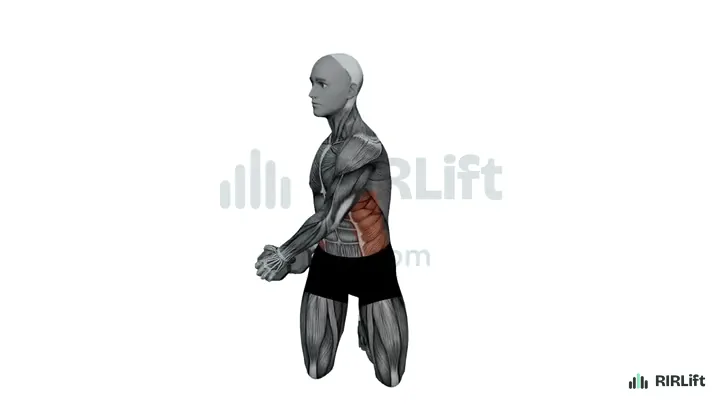
- Dumbbell Woodchop Abs
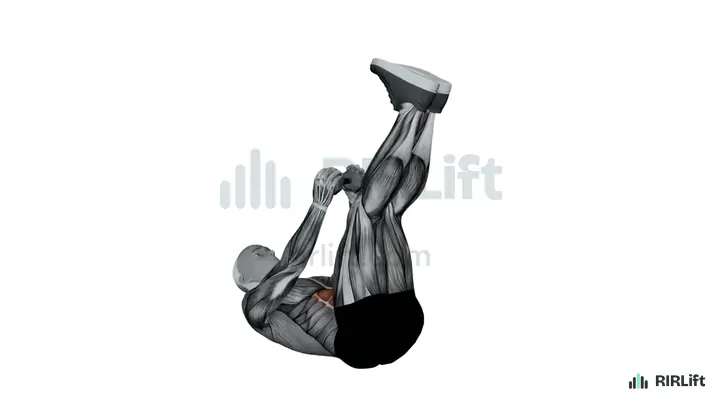
- Dumbbell Suitcase Crunch Abs
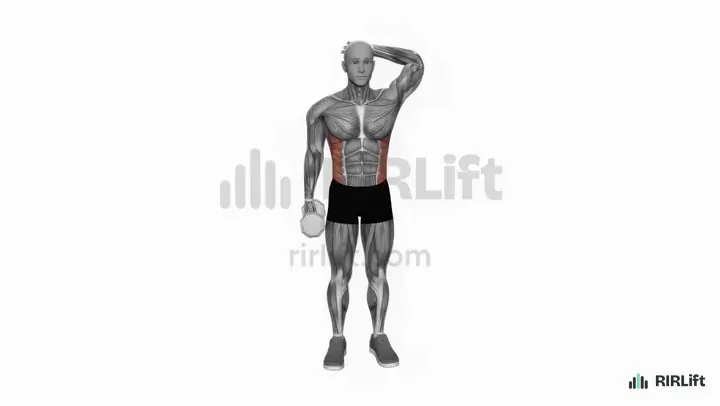
- Dumbbell Side Bend Abs
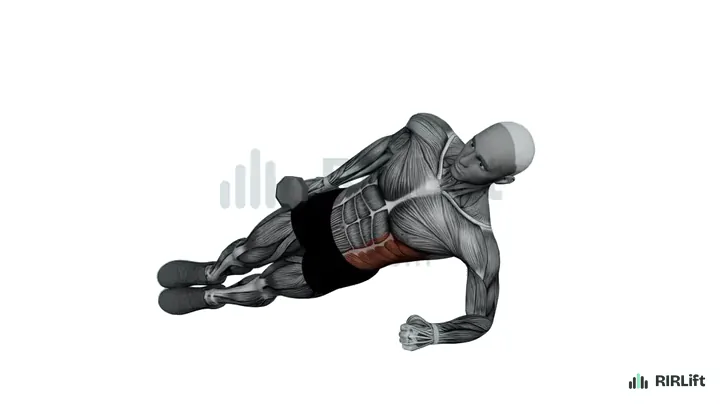
- Dumbbell Side Plank Abs
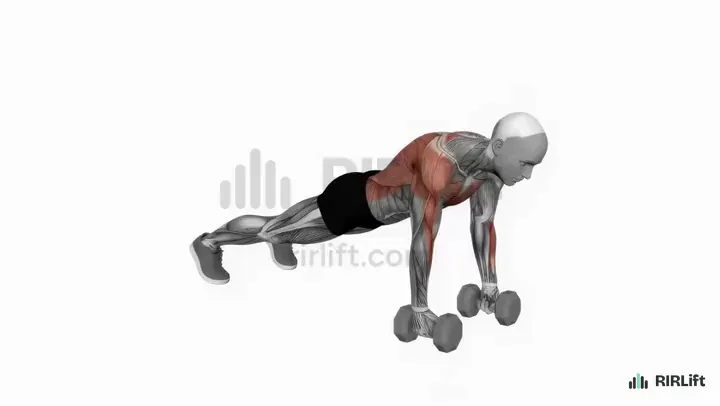
- Renegade Row Lats, Upper Back
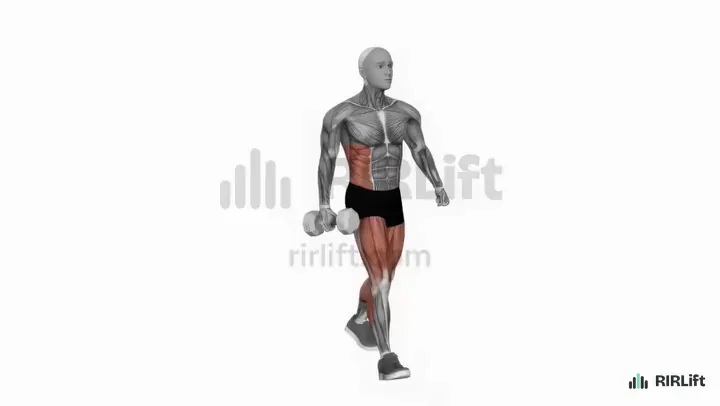
- Dumbbell Suitcase Carry Abs, Quads
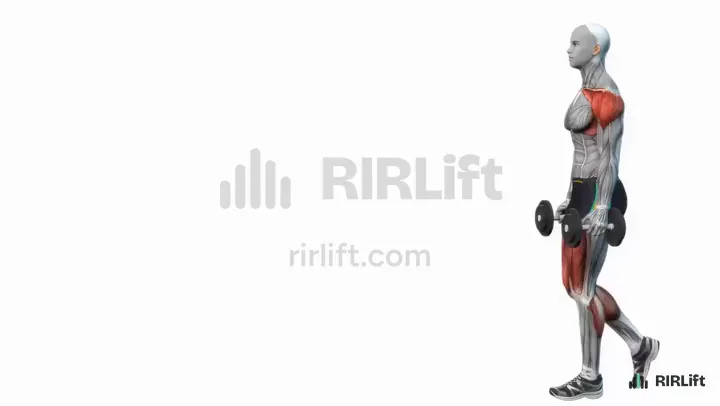
- Farmer's Walk Forearms, Traps, Shoulders
Put them together: example sessions
Each session below picks from the exercises above for one situation, with the sets, reps, rest and RIR filled in. Open one in the session builder to change a pick, price it from a recent set, and add it to RIRLift.
-
Session 1
One dumbbell, 15 minutes
You own a single dumbbell, maybe an adjustable one, and want an ab session you can do between other things.
2× a week · 24 sets a week · ~20 min
-
Session 2
A pair of heavy dumbbells, after your lifting session
You train full body or upper/lower with dumbbells and want core work that adds strength, not just burn.
2× a week · 12 sets a week · ~15 min
-
Session 3
Light dumbbells, new to core work
You have a pair of light dumbbells and have done little core training, so you want moves that are easy to set up and hard to do wrong.
2× a week · 16 sets a week · ~15 min
Session 1
One dumbbell, 15 minutes
- Workouts2× a week
- Working sets24 a week
- Per workout~20 min
- EquipmentDumbbells
You own a single dumbbell, maybe an adjustable one, and want an ab session you can do between other things.
One weight is enough for the four moves that need only one: the suitcase crunch for the front of the abs, the side bend for the obliques, and two one-handed carries that make each side of the trunk hold you up. That covers curling, bending and bracing. Twelve sets keeps it at 15 minutes, twice a week. Crunch and bend sets stop at 1 RIR; carries end when your grip or posture would fail within a few more steps.
| Exercise | Sets × reps | RIR | Rest |
|---|---|---|---|
| A1 Dumbbell Suitcase Crunch | 3 × 8–15 | 1 | 30 s |
| A2 Dumbbell Side BendPer side. | 3 × 10–15 | 1 | 1 min |
| Dumbbell Suitcase CarrySteps per hand. | 3 × 20–40 | 1 | 45 s |
| Dumbbell Single-Arm Overhead CarrySteps per hand. | 3 × 20–30 | 2 | 1 min |
- How to run it
- Do it twice a week. Superset the crunch with the side bend, then do the carries back to back.
- How to progress
- Add reps to the crunch and bend first. Once all sets reach the top of the range, carry farther, then use a heavier setting.
Session 2
A pair of heavy dumbbells, after your lifting session
- Workouts2× a week
- Working sets12 a week
- Per workout~15 min
- EquipmentDumbbells
You train full body or upper/lower with dumbbells and want core work that adds strength, not just burn.
When you already lift, the core grows from the same thing as any other muscle: load. The farmer's walk and renegade row let you use heavy dumbbells, and the woodchop and suitcase crunch take the trunk through the turning and curling the lifts skip. Nine to ten sets twice a week is enough on top of training. Keep the renegade row at 2 RIR so the hips stay square; take the chops and crunches to 1 RIR.
| Exercise | Sets × reps | RIR | Rest |
|---|---|---|---|
| Farmer's WalkSteps. Heavy. | 3 × 30–40 | 1 | 90 s |
| Dumbbell WoodchopPer side. | 3 × 8–12 | 1 | 1 min |
Open Core A in the session builder
| Exercise | Sets × reps | RIR | Rest |
|---|---|---|---|
| Renegade RowPer side. | 3 × 6–10 | 2 | 90 s |
| Dumbbell Suitcase Crunch | 3 × 8–15 | 1 | 1 min |
Open Core B in the session builder
- How to run it
- Add Core A and Core B to the end of two lifting days. Rest 60 to 90 seconds between sets.
- How to progress
- Go heavier on the farmer's walk whenever you finish 40 steps with good posture. Add reps to the rest before going heavier.
Session 3
Light dumbbells, new to core work
- Workouts2× a week
- Working sets16 a week
- Per workout~15 min
- EquipmentDumbbells
You have a pair of light dumbbells and have done little core training, so you want moves that are easy to set up and hard to do wrong.
Side planks and carries put the dumbbell where a beginner can control it: resting on the hip or hanging at your side. They teach bracing before the faster chop. The light weight is the right weight here, since side planks need only a few pounds, and the chop works with a light dumbbell as long as it moves slowly. All sets stay at 2 RIR for the first month so form leads.
| Exercise | Sets × reps | RIR | Rest |
|---|---|---|---|
| Dumbbell Side PlankSeconds per side. | 2 × 20–40 | 2 | 45 s |
| Dumbbell Side Plank Hip DipPer side. | 2 × 8–12 | 2 | 45 s |
| Dumbbell WoodchopPer side, slow. | 2 × 8–12 | 2 | 45 s |
| Dumbbell Suitcase CarrySteps per hand. | 2 × 20–30 | 2 | 1 min |
- How to run it
- Do the session twice a week. Count side-plank seconds as reps and stop each hold with a few good seconds left.
- How to progress
- Lengthen the holds and add hip-dip reps; when the top of each range is easy, move to the after-lifting plan.
Make it fit you
-
Abs are already strong
Spend most of your sets on the farmer's walk, suitcase carry and woodchop and push the weight up. The crunch and side bend are the moves to keep in higher reps.
-
Want to see your abs
Use the after-lifting plan and keep sets hard. A dumbbell builds the muscle; seeing it depends on losing body fat overall, which no ab exercise targets.
-
Side bends feel pointless
Check that only one hand holds a weight and that you come up past straight. If it still does little, use the hip dip instead, which loads the same side harder.
-
Lower back gets tired
Cut the suitcase crunch range and keep the weight higher over your chest, and rely on the side planks and carries, which train the trunk without bending it.
-
Short on time
Do one carry and one chop as a superset after your last lifting set. Four rounds take under ten minutes.
-
Log the RIR, not just the reps
Write down how many reps or steps you had left on each set. RIRLift logs RIR with every set and suggests the next weight from it, so you know when a chop or carry is ready for a heavier dumbbell.
Questions
Can you build abs with dumbbells?
Yes. Abs grow like any other muscle when you load them and take sets close to failure. Dumbbells add that load to crunches, chops, side bends and carries once bodyweight versions get too easy.
What is the no. 1 exercise for abs?
No single move does everything. With dumbbells, the woodchop and the suitcase carry come closest between them: one trains the trunk to turn, the other to stay level, and both load the deep core and obliques.
What are the big 3 core exercises?
The name usually refers to the curl-up, the side plank and the bird dog, a set chosen to train the trunk with little stress on the spine. A dumbbell version of the idea is the suitcase crunch, the weighted side plank and the renegade row.
Is 20 minutes of abs a day enough?
It is more than you need. Twenty minutes of hard sets two or three times a week covers it; daily sessions only work if they are short and leave you fresh for the next one.
Can I get a six-pack in 2 weeks?
Not unless you are already close to it. Weighted ab work builds the muscle over weeks, but seeing it depends on body fat, and that changes over months.
What weight dumbbell should I use for ab exercises?
Light for the crunch and side plank, often 5 to 15 lb, medium for chops and side bends, and as heavy as you can hold with good posture for carries. Pick a weight that leaves 1 to 2 reps in reserve at the top of the range.
Related templates
-
Dumbbell oblique exercises: bend, chop, plank and carry
More side-ab work with a dumbbell, chops and bends in depth.
-
Core exercises with weights, grouped by how they train your trunk
Core moves for plates, kettlebells and cables as well.
-
Ab exercises at home, with or without equipment
Floor, bar and ab wheel moves when you have no dumbbells.
-
Renegade row: how to row from a plank without twisting
The plank row step by step, with sets and reps.
-
The best workout for abs, for your situation
Full ab programs using gym equipment too.