
Dumbbell oblique exercises: bend, chop, plank and carry
Published October 19, 2026
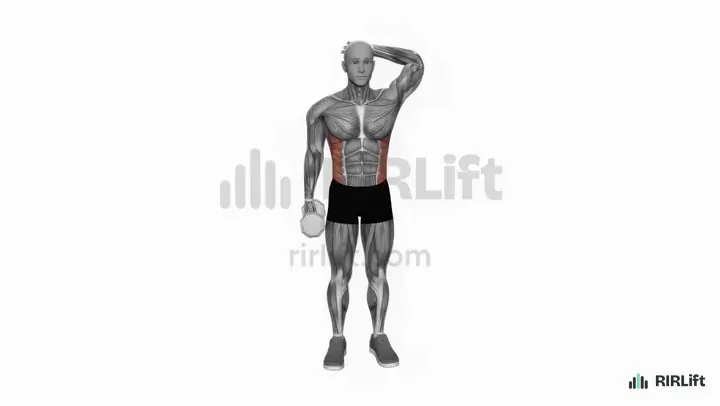
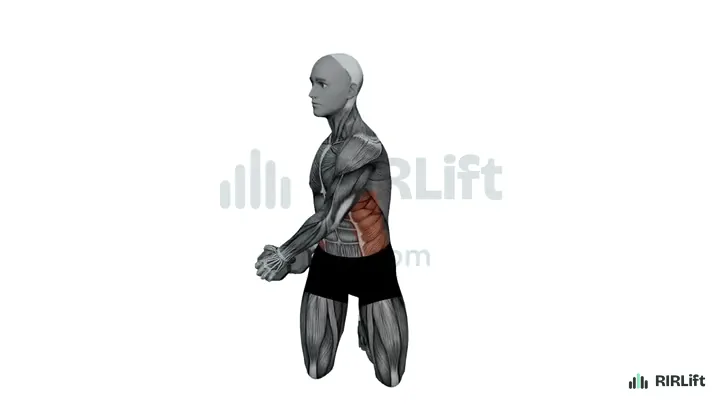
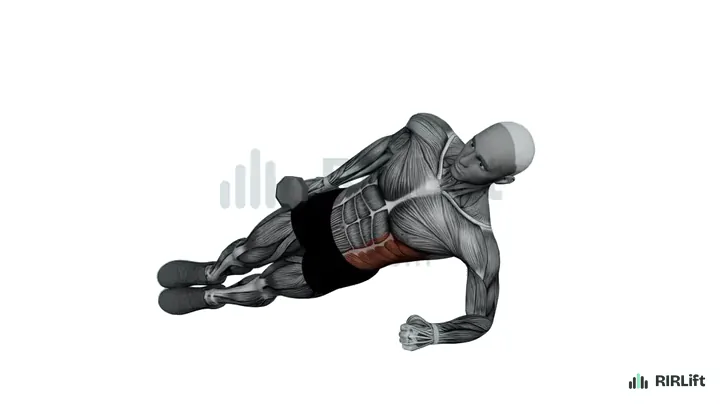
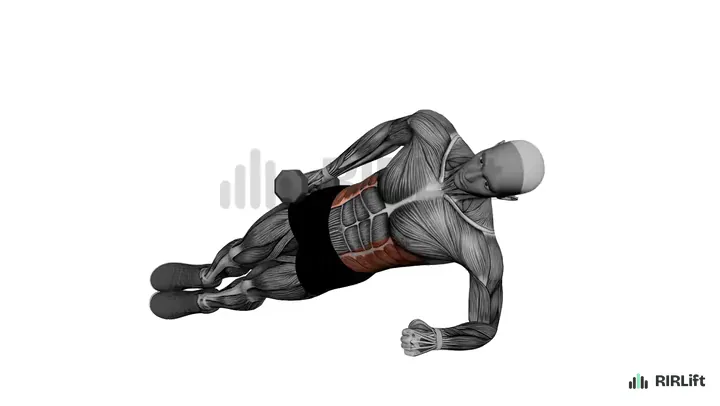
The best dumbbell oblique exercises are the dumbbell side bend, the kneeling dumbbell woodchop, the weighted side plank, the side plank hip dip and the suitcase carry. The side bend and the hip dip bend your torso sideways under load, the woodchop rotates it, and the side plank and carry make your obliques stop a dumbbell from pulling you over. One bending move, one rotation and one hold or carry trains your obliques completely, and all of it needs a single dumbbell.
- Dumbbell Side Bend Abs
- Dumbbell Woodchop Abs
- Dumbbell Side Plank Abs
- Dumbbell Side Plank Hip Dip Abs
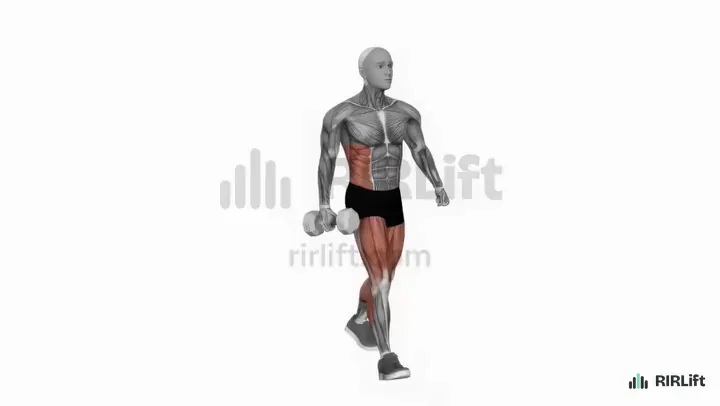
- Dumbbell Suitcase Carry Abs, Quads
Put them together: example sessions
Each session below picks from the exercises above for one situation, with the sets, reps, rest and RIR filled in. Open one in the session builder to change a pick, price it from a recent set, and add it to RIRLift.
-
Session 1
One dumbbell, ten minutes after a workout
You train at home or in a gym corner and want to finish two workouts a week with obliques using whatever single dumbbell is nearby.
2× a week · 16 sets a week · ~20 min
-
Session 2
Your back prefers you not bend under load
Bending sideways or twisting with a weight irritates your back, or you're new to training your core and want to build up first.
2× a week · 16 sets a week · ~20 min
-
Session 3
A set of dumbbells and two core days a week
You have a range of dumbbells and want obliques to grow, not just get a finisher.
2× a week · 18 sets a week · ~25 min
Session 1
One dumbbell, ten minutes after a workout
- Workouts2× a week
- Working sets16 a week
- Per workout~20 min
- EquipmentDumbbells
You train at home or in a gym corner and want to finish two workouts a week with obliques using whatever single dumbbell is nearby.
After a workout your trunk is already tired, so this finisher uses the two moves that take your obliques through range and are easy to judge: the side bend and the woodchop, at 1 rep in reserve. The carry closes the session because it uses the heaviest load and the least technique. Each side gets 8 sets in about ten minutes.
| Exercise | Sets × reps | RIR | Rest |
|---|---|---|---|
| Dumbbell Side BendPer side. Free hand behind the head. | 3 × 10–15 | 1 | 1 min |
| Dumbbell WoodchopPer side. Kneeling. 2 s each way. | 3 × 10–15 | 1 | 1 min |
| Dumbbell Suitcase CarrySeconds per hand. | 2 × 30–40 | 1 | 90 s |
- How to run it
- Do this after two of your weekly workouts. Use the same dumbbell for the bend and chop and the heaviest one you have for the carry.
- How to progress
- Add reps on the side bend and woodchop until you hit the top of the range at 1 rep in reserve, then move up 5 lb. On the carry, add distance first and weight second.
Session 2
Your back prefers you not bend under load
- Workouts2× a week
- Working sets16 a week
- Per workout~20 min
- EquipmentDumbbells
Bending sideways or twisting with a weight irritates your back, or you're new to training your core and want to build up first.
Holds and carries train your obliques without bending your spine under load, so this plan uses only the weighted side plank, the hip dip at a short range, and the suitcase carry. Holds stop 1 to 2 seconds before your form breaks, which counts as 1 to 2 in reserve, and the sets stay at 2 to 3 so the volume builds slowly. That is 8 sets per side.
| Exercise | Sets × reps | RIR | Rest |
|---|---|---|---|
| Dumbbell Side PlankSeconds per side. Dumbbell on top hip. | 3 × 20–40 | 2 | 1 min |
| Dumbbell Side Plank Hip DipPer side. Short range. | 2 × 8–12 | 2 | 1 min |
| Dumbbell Suitcase CarrySeconds per hand. Walk tall. | 3 × 30–45 | 1 | 90 s |
- How to run it
- Do this session twice a week. The holds and the carry are timed: log the seconds as reps.
- How to progress
- Add 5 seconds to each hold until you reach the top of the range, then use a heavier dumbbell. After four weeks without trouble, try one set of side bends with a light dumbbell.
Session 3
A set of dumbbells and two core days a week
- Workouts2× a week
- Working sets18 a week
- Per workout~25 min
- EquipmentDumbbells
You have a range of dumbbells and want obliques to grow, not just get a finisher.
Each session leads with one loaded range-of-motion move at 0 to 1 reps in reserve: the side bend in A, the woodchop in B, so each gets your freshest effort once a week. A hold or carry follows at 1 to 2 so you don't add more bending to a tired trunk. Every session is 8 to 9 sets per side, at heavier loads than the other plans.
| Exercise | Sets × reps | RIR | Rest |
|---|---|---|---|
| Dumbbell Side BendPer side. Heavy. Full stretch. | 4 × 8–12 | 0 | 75 s |
| Dumbbell Side PlankSeconds per side. Dumbbell pressed up. | 3 × 20–30 | 1 | 1 min |
| Dumbbell Suitcase CarrySeconds per hand. Heaviest dumbbell. | 2 × 30–40 | 1 | 90 s |
Open Obliques A in the session builder
| Exercise | Sets × reps | RIR | Rest |
|---|---|---|---|
| Dumbbell WoodchopPer side. Kneeling. | 4 × 8–12 | 1 | 75 s |
| Dumbbell Side Plank Hip DipPer side. Dumbbell on hip. | 3 × 10–15 | 1 | 1 min |
| Dumbbell Side BendPer side. Lighter, slow. | 2 × 15–20 | 1 | 1 min |
Open Obliques B in the session builder
- How to run it
- Do Obliques A and B on separate days at least 48 hours apart, either alone or after a workout.
- How to progress
- On the side bend and woodchop, move up a dumbbell when you hit the top of the rep range at 1 in reserve on every set. Hold the carry for the same time with a heavier dumbbell each time you can walk straight.
Make it fit you
-
You only have light dumbbells
Go to the top of every rep range and slow the lowering on the side bend to three seconds. For the side plank, press the dumbbell to arm's length instead of resting it on your hip.
-
You want your waist narrow, not wider
Oblique training builds some muscle, but it takes years of heavy side bends to add noticeable width. If that's your concern, keep the side bend for 2 sets and give more of the session to side planks and carries.
-
Your grip runs out on the carry
Use the carry as a grip test and drop the time rather than the weight. If your obliques still need more, add a set of the weighted side plank instead.
-
You do this at the gym
The same plans work at the gym. Use the dumbbell rack for heavier side bends and carries, and use a bench or mat for the side planks.
-
You want visible obliques
How much your obliques show depends on body fat. Train them two days a week and let your eating and overall training handle the rest.
-
Write down the reps in reserve
After each set, note how many more reps or seconds you had in you. If you log in RIRLift, that number tells it when to suggest a heavier dumbbell for your side bends and chops.
Questions
What is the most effective oblique exercise?
With dumbbells, the side bend: it loads the obliques through a full stretch and you can keep adding weight. Pair it with one rotation, the woodchop, and one hold like the weighted side plank or the suitcase carry, and your obliques are covered.
Can you train obliques with one dumbbell?
Yes. Every exercise on this page uses one dumbbell. Side bends, side planks and carries are done one side at a time anyway, and the woodchop is held with both hands.
Do obliques give you a blocky waist?
Not quickly. Muscle grows slowly and side bends with heavy dumbbells for a long time are what would widen your waist. Most of what makes a waist look wide is body fat. If you're concerned, favor side planks and carries over heavy side bends.
Are obliques hard to grow?
They grow like other muscles: train them with hard sets in a range of 8 to 20 reps, close to failure, a couple of times a week, and add weight over time. They get worked during heavy squats and carries too, so many people need only a few direct sets.
Can walking help tone your stomach?
Walking burns calories, which helps lower body fat and lets your abs and obliques show. It doesn't build them. A suitcase carry is walking that also trains your obliques.
Can I get a six pack in two weeks?
Not unless you're very lean already. Abs show when body fat is low, which takes months of eating and training, not two weeks of ab exercises.
How many sets of oblique exercises should I do?
Six to ten hard sets per side per week, spread over two sessions, is plenty for most people. Every plan on this page sits in that range.
Related templates
-
Side plank: how to do it, how long to hold, and how to make it harder
The bodyweight side plank in detail, before you add a dumbbell.
-
Ab and core exercises with dumbbells
Front abs and obliques with dumbbells for a full ab session.
-
Standing ab exercises that load your core, with sessions for home, the gym and sport
More standing core work if you'd rather not get on the floor.
-
Core exercises with weights, grouped by how they train your trunk
Loaded core work beyond dumbbells, with kettlebells and plates.
-
The best workout for abs, for your situation
Complete ab programs for the gym and home.