Core exercises with weights, grouped by how they train your trunk

The weighted core exercises worth doing cover four jobs: curling your spine (plate sit-up, cable crunch), resisting an arch (barbell rollout), turning and resisting a turn (woodchops, landmine twist, Pallof press) and holding still under a load (suitcase and overhead carries, side bends). With one dumbbell you can do the woodchop, side bend, side plank dip and suitcase carry. A gym adds cables and plates, which let you load a crunch in small steps like any other lift.

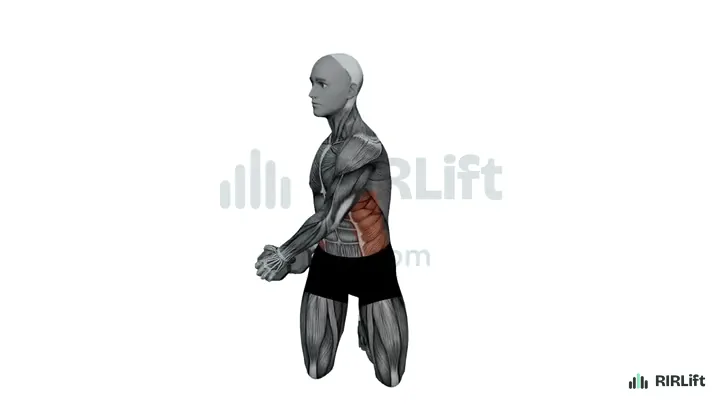
  1. Dumbbell Woodchop Abs
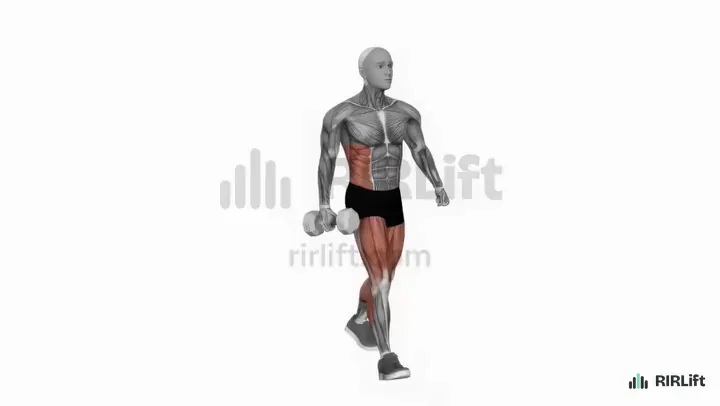
  2. Dumbbell Suitcase Carry Abs, Quads
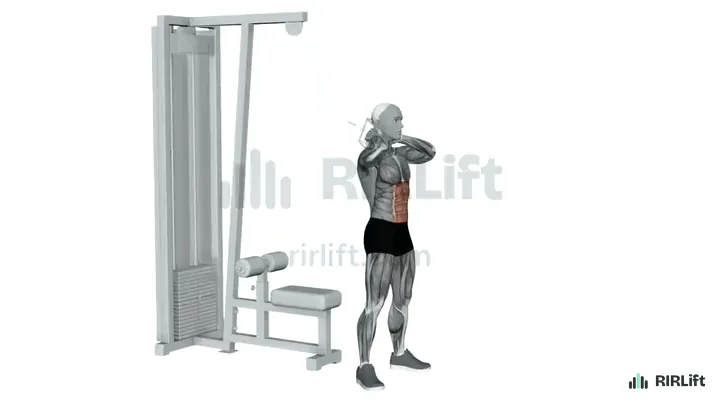
  3. Cable Crunch Abs
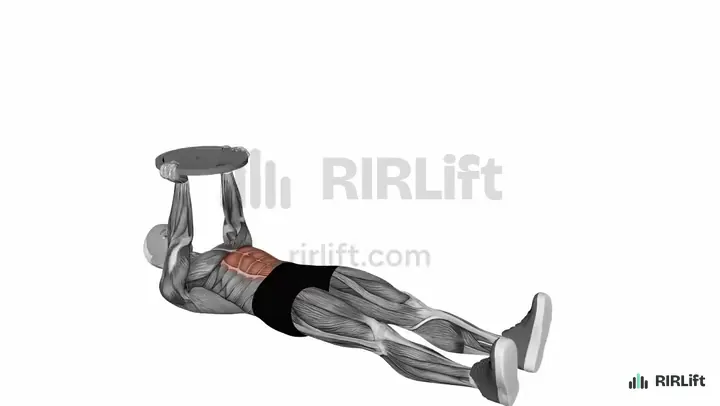
  4. Plate Sit-Up Abs
  5. Pallof Press Abs
  6. Dumbbell Side Bend Abs
  7. Barbell Rollout Abs

Weighted crunches, sit-ups and rollouts for the abs

These train the six-pack muscle directly: the plate sit-up and cable crunch by curling your spine under load, the barbell rollout by resisting the arch as you reach out. Use reps you can count and add weight once you pass 15.

Abs, weighted flexion

Plate Sit-Up

Abs

A plate held at your chest turns the sit-up into a lift you can progress like any other: when 15 reps get easy, grab the next plate. It is the simplest weighted ab exercise in a gym.

How to do it

  1. Lie on your back with knees bent and feet flat, hooked under something heavy if they lift.
  2. Hug a weight plate flat against your chest.
  3. Curl your head and shoulders up, then keep rolling until your torso is upright.
  4. Pause for a moment at the top.
  5. Roll back down slowly, one part of your spine after another.

Cues

  • Plate stays glued to your chest
  • Roll up, roll down
  • Exhale on the way up

Common mistakes

  • Throwing the plate forward to get up: the plate should not leave your chest. Use a lighter one.
  • Dropping back to the floor fast: the lowering is half the work.

Swap for: Barbell Sit-Up, Cable Crunch

Abs, heavy flexion

Cable Crunch

Abs

The cable stack lets you load a crunch in small steps and keeps tension on your abs through the whole rep. It is the weighted ab exercise to use when you want sets of 10 to 15 that are actually hard.

How to do it

  1. Attach a rope to a high cable and stand with your back to the stack, a step forward.
  2. Hold the rope ends behind your head with your knees soft and hips over your feet.
  3. Curl your ribs down toward your hips, rounding your back.
  4. Stop when your elbows near your thighs.
  5. Uncurl slowly until your spine is long again, keeping your hips still.

Cues

  • Ribs to hips
  • Hips stay put
  • Round, then lengthen

Common mistakes

  • Pushing your hips back to move the weight: that is a hip hinge. Keep your hips over your feet.
  • Pulling with your arms: your hands stay fixed beside your head.

Swap for: Plate Sit-Up, Standing Cable Hip Flexion

Abs, anti-extension

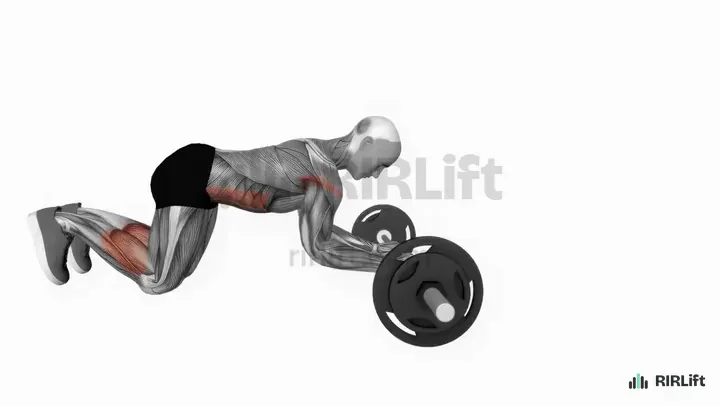
Barbell Rollout

Abs

Rolling a loaded barbell out on its plates trains your abs to stop your lower back from sagging, which is their main job when you lift. It is the hardest exercise on this page per rep.

How to do it

  1. Load the bar with round plates and kneel behind it on a mat.
  2. Hold the bar with hands about shoulder width and your hips extended over your knees.
  3. Roll the bar forward slowly, letting your hips and arms move together.
  4. Stop at the point just before your lower back dipping.
  5. Pull the bar back under you by pressing it down toward the floor.

Cues

  • Ribs tucked, glutes tight
  • Arms and hips move together
  • Stop before your back arches

Common mistakes

  • Letting the hips sag at the far end: shorten the roll until you own the position.
  • Pulling back with the hips first: the bar and hips return together.

Swap for: Ab Wheel Rollout, Plate Sit-Up

Weighted rotation and anti-rotation exercises for the obliques

Your obliques turn your torso and stop it from turning. Woodchops and the landmine twist train the turn; the Pallof press trains holding still; the rotational throw trains turning fast. A dumbbell covers the first, a cable station covers the rest.

Obliques, rotation

Dumbbell Woodchop

Abs

One dumbbell is all the woodchop needs, which makes it the rotation exercise for a home setup. Kneeling on one knee locks the hips, so the turn has to come from your trunk.

How to do it

  1. Kneel on one knee and hold one dumbbell with both hands beside the hip of your down leg.
  2. Keep your chest up and hips square to the front.
  3. Lift the dumbbell diagonally across your body to above the opposite shoulder.
  4. Let your torso turn with the weight, arms nearly straight.
  5. Bring it back down the same line under control.

Cues

  • Hips face forward
  • Turn through your ribs
  • Same line up and down

Common mistakes

  • Swinging the dumbbell: if it pulls you off balance at the top, it is too heavy.
  • Bending the arms to lift it: keep them long and let your trunk do the turning.

Swap for: Cable Woodchop, Med Ball Woodchop, Plate Woodchop

Obliques, rotation under constant tension

Cable Woodchop

Abs

The cable pulls sideways at every point of the chop, so your obliques work through the whole rotation instead of only at the end. Change the pulley height to chop high to low or low to high.

How to do it

  1. Set a handle at the top of the cable and stand side-on to the stack, feet wider than your hips.
  2. Hold the handle two-handed above the near shoulder.
  3. Bring it diagonally down to the far hip, rotating your torso and pivoting the back foot.
  4. Keep your arms long as the handle passes in front of you.
  5. Return slowly along the same diagonal.

Cues

  • Arms long, trunk turns
  • Pivot the back foot
  • Slow return

Common mistakes

  • Pulling with your arms instead of turning: lock the elbows and let the cable move with your chest.
  • Rushing the return: resist the cable on the way back too.

Swap for: Dumbbell Woodchop, Pallof Press, Landmine Twist

Obliques and deep abs, anti-rotation

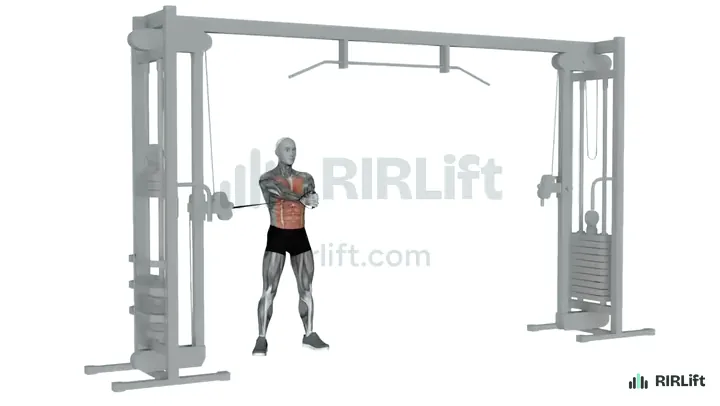
Pallof Press

Abs

The Pallof press asks your trunk to resist turning while the cable tries to twist you. It trains the core the way it works during heavy carries, rows and presses, without bending or rotating the spine.

How to do it

  1. Set a handle at chest height and stand side-on to the cable, a step away.
  2. Hold the handle at the middle of your chest with both hands.
  3. Brace and press the handle straight out in front of you.
  4. Hold your arms out for two seconds without letting your torso turn.
  5. Bring it back to your chest and repeat, then switch sides.

Cues

  • Press straight, do not drift
  • Hips and shoulders square
  • Breathe behind the brace

Common mistakes

  • Standing too close: you need enough tension that holding still is hard.
  • Letting the hands drift toward the stack: that means the cable won. Step in or lighten it.

Swap for: Cable Woodchop, Landmine Twist

Obliques, loaded rotation

Landmine Twist

Abs

With one end of the bar fixed, you can swing a heavier load from hip to hip than any dumbbell rotation allows. It suits lifters and athletes who want rotation work they can add weight to.

How to do it

  1. Wedge one end of a barbell in a landmine or corner and stand facing the free end.
  2. Hold the end of the bar with both hands at chest height, arms straight.
  3. Turn your torso and pivot your feet to bring the bar down toward one hip.
  4. Rise back to center and continue to the other hip.
  5. Keep each rep slow enough that you control where the bar stops.

Cues

  • Straight arms, rainbow path
  • Pivot your feet
  • Control the stop

Common mistakes

  • Bending the elbows to muscle the bar over: lighten it.
  • Letting the bar drop low at each side: stop at hip height.

Swap for: Cable Woodchop, Pallof Press

Obliques, power

Med Ball Rotational Throw

Abs

The rotational throw trains your trunk to turn fast and then let go, which is what a golf swing, a tennis forehand or a throw asks. Do it fresh, for low reps, before slower work.

How to do it

  1. Stand side-on to a solid wall, about an arm's length plus a step away.
  2. Hold a medicine ball at your back hip.
  3. Load into your back leg, then turn your hips and chest toward the wall and throw.
  4. Catch the rebound and absorb it back to your hip.
  5. Finish the set and switch sides.

Cues

  • Hips lead, arms follow
  • Throw through the wall
  • Fast, then reset

Common mistakes

  • Throwing with the arms only: your hips should turn before the ball leaves.
  • Doing so many reps that the throws slow down: stop the set when speed drops.

Swap for: Dumbbell Woodchop, Landmine Twist

Side bends and side planks with weight

Bending sideways under load works the obliques through a range rotation does not reach. All three need only one dumbbell or kettlebell.

Obliques, side flexion

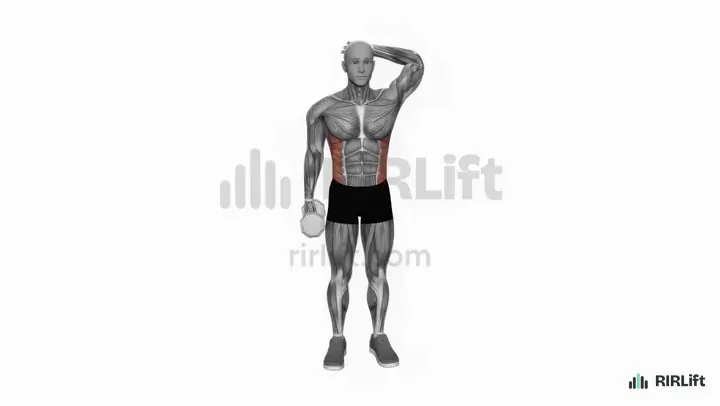
Dumbbell Side Bend

Abs

Holding one dumbbell and bending sideways works the obliques on the opposite side through a full range. It is the side-ab exercise most people can load at home.

How to do it

  1. Stand tall with one dumbbell hanging at your side and your other hand on your hip or behind your head.
  2. Lean toward the dumbbell, letting it slide down your thigh.
  3. Bend down your side until you feel the far side stretch, without turning.
  4. Pull your torso back up with the opposite side.
  5. Finish the set, then switch hands.

Cues

  • Bend sideways, not forward
  • Slide down the leg
  • Pull up with the far side

Common mistakes

  • Twisting as you bend: keep your chest facing forward.
  • Holding a dumbbell in each hand: the weights cancel out. Use one.

Swap for: Dumbbell Side Plank Hip Dip, Kettlebell Windmill

Obliques, side plank with load

Dumbbell Side Plank Hip Dip

Abs

Adding hip dips and a dumbbell on the top hip turns the side plank from a timed hold into a set you can count. That makes it possible to progress it by reps and weight.

How to do it

  1. Set up in a side plank on your forearm, elbow under your shoulder, feet stacked.
  2. Rest a light dumbbell on your top hip, holding it in place with your top hand.
  3. Lower your hip toward the floor without touching down.
  4. Lift it back up past straight until your side is fully squeezed.
  5. Do all reps, then switch sides.

Cues

  • Elbow under shoulder
  • Hips forward, not back
  • Lift past straight

Common mistakes

  • Letting the hips drift backward: keep your body in one line from head to heels.
  • Dropping the hip all the way to the floor: stop an inch short and lift.

Swap for: Dumbbell Side Bend, Kettlebell Windmill

Obliques and shoulders, hip hinge to the side

Kettlebell Windmill

Abs, Shoulders

The windmill bends your trunk sideways while one arm holds a bell overhead, so your obliques, shoulder and hips all work in one slow rep. It belongs at the start of a session, light and controlled.

How to do it

  1. Press a kettlebell overhead with one arm and turn both feet about 45 degrees away from that arm.
  2. Keep your eyes on the bell.
  3. Push your hips toward the bell side and reach your free hand down the inside of your front leg.
  4. Go as low as you can while the top arm stays vertical.
  5. Drive your hips back under you to stand.

Cues

  • Eyes on the bell
  • Hips push out
  • Top arm stays vertical

Common mistakes

  • Bending the knees to get low: the depth should come from the hip shift.
  • Letting the overhead arm drift forward: if it moves, the bell is too heavy.

Swap for: Kettlebell Turkish Get-Up, Dumbbell Side Bend

Loaded carries and get-ups

Carries hand your core a weight and ask it to keep your body still while you walk. They load the trunk heavier than any crunch and train grip and shoulders at the same time.

Obliques and grip, anti-side-bend

Dumbbell Suitcase Carry

Abs, Quads

Walking with a heavy dumbbell in one hand forces the obliques on the other side to keep you upright. It is the most direct way to train your core with weight while barely moving your spine.

How to do it

  1. Pick up a heavy dumbbell in one hand like a suitcase.
  2. Stand tall with your shoulders level and the free arm relaxed.
  3. Walk forward with short, steady steps.
  4. Keep your torso from leaning toward the weight.
  5. Set it down after the distance or time, then carry it in the other hand.

Cues

  • Shoulders level
  • Stand taller than normal
  • Short, even steps

Common mistakes

  • Leaning away from the weight to balance it: you should look like you carry nothing.
  • Going so heavy that your grip gives out before your core does: shorten the walk instead.

Swap for: Dumbbell Single-Arm Overhead Carry, Dumbbell Side Bend

Core and shoulders, overhead

Dumbbell Single-Arm Overhead Carry

Shoulders, Abs

Holding a dumbbell locked out overhead while walking makes your trunk keep your ribs down and stack under the weight. It also builds shoulder stability that pressing alone does not.

How to do it

  1. Press a dumbbell overhead with one arm until your elbow locks.
  2. Keep your bicep beside your ear and your ribs tucked down.
  3. Walk forward with slow, controlled steps.
  4. Hold the arm vertical the whole way.
  5. Lower the weight carefully at the end, then switch arms.

Cues

  • Lock the elbow
  • Ribs down, do not arch
  • Weight over your heel

Common mistakes

  • Arching your lower back to hold the weight up: lighten it until you can keep your ribs down.
  • Letting the arm drift forward: keep it stacked over your shoulder.

Swap for: Kettlebell Turkish Get-Up, Plate Overhead Carry, Dumbbell Suitcase Carry

Whole core and shoulder, slow

Kettlebell Turkish Get-Up

Shoulders, Abs

The get-up takes you from lying to standing and back while a bell stays overhead. Every position along the way loads your trunk from a different angle, so it covers in one exercise what takes several elsewhere.

How to do it

  1. Lie on your back with a kettlebell pressed up in one hand, the same-side knee bent.
  2. Roll onto your opposite forearm, then up onto that hand.
  3. Lift your hips, sweep the straight leg under you and kneel.
  4. Stand up from the kneel with the bell still overhead.
  5. Reverse each step slowly back down to the floor.

Cues

  • Eyes on the bell until you kneel
  • Arm locked the whole way
  • One position at a time

Common mistakes

  • Rushing through the steps: each position should be still before the next one.
  • Using a bell that is hard to hold overhead: a get-up is not a heavy lift. Practice with a shoe on your fist first.

Swap for: Kettlebell Windmill, Dumbbell Single-Arm Overhead Carry

Weighted lower back exercise

The spinal erectors are core muscles too. One loaded extension a week, or deadlifts in your main program, covers them.

Lower back and glutes

Weighted Back Extension

Lower Back

Your core includes the muscles along your spine, and most ab routines leave them out. Holding a plate on a back extension bench gives them direct work you can progress.

How to do it

  1. Set the pad of the back extension bench just below your hip bones.
  2. Hook your heels under the foot pads and hold a plate against your chest.
  3. Lower your torso by bending at the hips until you feel a stretch in your hamstrings.
  4. Raise yourself until your body is in a straight line.
  5. Pause briefly, then lower again.

Cues

  • Hinge at the hips
  • Stop at a straight line
  • Plate tight to your chest

Common mistakes

  • Arching past straight at the top: that pinches the lower back without extra work for it.
  • Swinging up from the bottom: lower slowly and lift without a bounce.

Swap for: Dumbbell Good Morning, Kettlebell Good Morning

Put them together: example sessions

Each session below picks from the exercises above for one situation, with the sets, reps, rest and RIR filled in. Open one in the session builder to change a pick, price it from a recent set, and add it to RIRLift.

Session 1

One pair of dumbbells at home

Open in the session builder
  • Workouts3× a week
  • Working sets33 a week
  • Per workout~25 min
  • EquipmentDumbbells

You train at home with dumbbells and want a core routine you can run after your main session or on its own.

Every pick needs a single dumbbell: the woodchop for rotation, the side bend and side plank dip for side flexion, and the suitcase carry as the heaviest load your core will hold. There is no weighted crunch here because home dumbbells are awkward to hold for one, so flexion comes from the side plank and the carry does the bracing work. Sets end at 1 to 2 reps in reserve because these are small muscles that recover fast.

Core
ExerciseSets × repsRIRRest
Dumbbell WoodchopPer side. 3 × 8–12 2 1 min
Dumbbell Side BendPer side. 3 × 10–15 1 1 min
Dumbbell Side Plank Hip DipPer side. 2 × 8–15 1 1 min
Dumbbell Suitcase CarrySteps per hand. 3 × 20–40 2 90 s
How to run it
Add it to the end of two or three sessions a week, or run it alone in about 20 minutes. Use your heaviest dumbbell for the carry and a light one for the side plank.
How to progress
Add reps until every set reaches the top of the range, then move to the next dumbbell. On the carry, add 10 meters per week until you reach 40 meters each hand, then go heavier.

Session 2

Gym with cables and plates, abs as a priority

Open in the session builder
  • Workouts2× a week
  • Working sets19 a week
  • Per workout~20 min
  • EquipmentAdjustable Cable, Barbells, Hyperextension

You train at a gym, already lift heavy, and want your abs to grow and show, not just work.

The cable crunch and plate sit-up are the two exercises here you can load like a curl, so they take the most sets at 8 to 15 reps and 1 rep in reserve. The rollout adds anti-extension, the cable woodchop covers the obliques, and the back extension balances the front. Two sessions a week give each lift enough rest to add load.

Abs A
ExerciseSets × repsRIRRest
Cable Crunch 4 × 8–15 1 1 min
Barbell RolloutStop before your back sags. 3 × 6–12 2 90 s
Cable WoodchopPer side. 3 × 10–15 1 1 min

Open Abs A in the session builder

Abs B
ExerciseSets × repsRIRRest
Plate Sit-Up 3 × 8–15 1 1 min
Pallof PressPer side. Hold two seconds. 3 × 10–12 2 1 min
Weighted Back Extension 3 × 10–15 2 90 s

Open Abs B in the session builder

How to run it
Run Abs A and Abs B on separate days, after your main lifts or on a lighter day. Rest at least a day between them.
How to progress
Add a plate or a cable pin when all sets of a lift reach the top of the range at the target reps in reserve. On the rollout, roll a little farther each week before adding reps.

Session 3

Rotational sport: golf, tennis, throwing

Open in the session builder
  • Workouts2× a week
  • Working sets26 a week
  • Per workout~40 min
  • EquipmentMedicine Ball, Landmine, Adjustable Cable, Kettlebells +1

You play a sport where you turn and hit or throw, and want your core trained for speed and control rather than size.

The rotational throw comes first, fresh, for a few fast reps, because speed drops when you are tired. The landmine twist and Pallof press train controlled rotation and resisting it, and the get-up and overhead carry build the shoulder and trunk stability a swing depends on. Reps are low and reps in reserve are higher than in the other plans so the session sharpens instead of drains.

Rotation
ExerciseSets × repsRIRRest
Med Ball Rotational ThrowPer side. Max speed. 3 × 5–6 3 90 s
Landmine TwistPer side. 3 × 6–10 2 90 s
Pallof PressPer side. 3 × 8–10 2 1 min
Kettlebell Turkish Get-UpPer side. Slow. 2 × 2–3 3 2 min
Dumbbell Single-Arm Overhead CarrySteps per arm. 2 × 20–30 2 90 s
How to run it
Run it twice a week, not the day before a match. You need a medicine ball and a wall, a landmine or barbell corner, a cable, a kettlebell and a dumbbell.
How to progress
Throw harder before you throw heavier. Add load to the twist and Pallof press when every set feels smooth at the top of the range; on the get-up, move up a bell size only when every step is still and controlled.

Make it fit you

Questions

What dumbbell exercises work the core?

The woodchop, the side bend, the side plank with a hip dip and the suitcase carry all need a single dumbbell. Together they cover rotation, side bending and bracing. The overhead carry adds a shoulder-stability version.

Should you use weights for core exercises?

Yes, once bodyweight versions stop being hard in under 15 to 20 reps. Abs respond to load like other muscles, and weight lets you keep sets in a rep range where they grow instead of doing ever-longer sets.

Will weighted ab exercises make my waist wider?

Your obliques can grow a little, as any trained muscle does, but waist size is mostly set by body fat and frame. Most people who train obliques with weight see a firmer waist, not a wider one.

How often should you train core with weights?

Two or three times a week is enough. The abs recover quickly, so you can add a few sets to the end of your regular sessions rather than giving them their own day.

Is 20 minutes of abs a day enough?

It is more than most people need. Ten to fifteen hard sets of core work a week, spread over two or three sessions, is a solid amount. Daily ab sessions tend to turn into easy sets that do little.

Can I get a six pack in two weeks?

Not from training alone. Whether abs show depends on body fat, which changes slowly. Weighted ab work makes the muscles thicker so they show sooner as fat comes down, but it does not burn the fat over them.