Apple Watch hockey workout: off-ice strength you log on your wrist

Apple's Workout app has a Hockey type, indoor or outdoor, for your time on the ice. The off-ice strength work is a different session: run it in RIRLift on the Watch, log the weight, reps and reps left for every set, and it is saved to Apple Health as Traditional Strength Training. Below are plans for a summer block, a week with weekend games, and dryland in the garage.

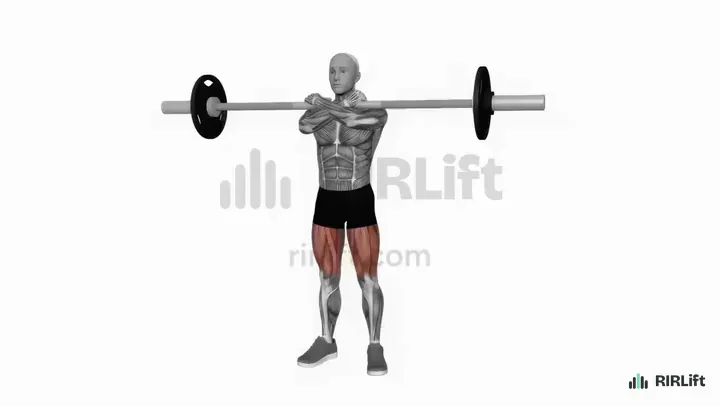
  1. Front Squat Quads, Glutes, Adductors
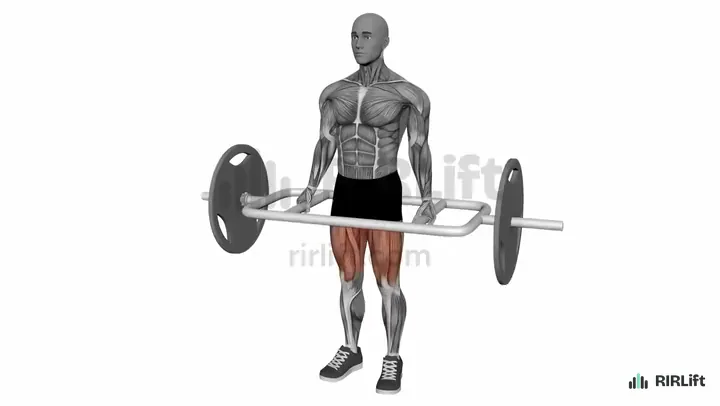
  2. Trap Bar Deadlift Quads, Glutes
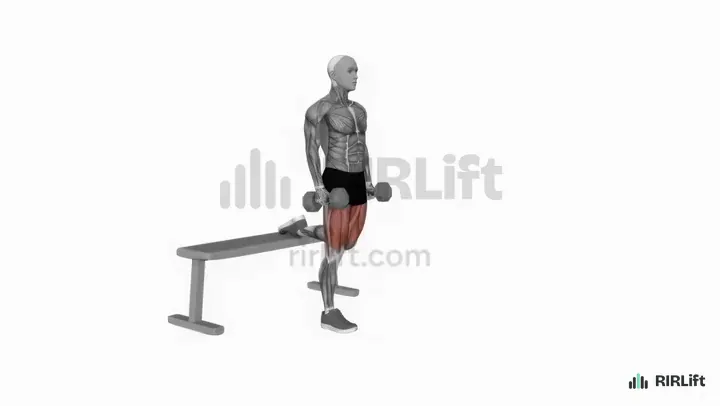
  3. Bulgarian Split Squat Quads, Glutes
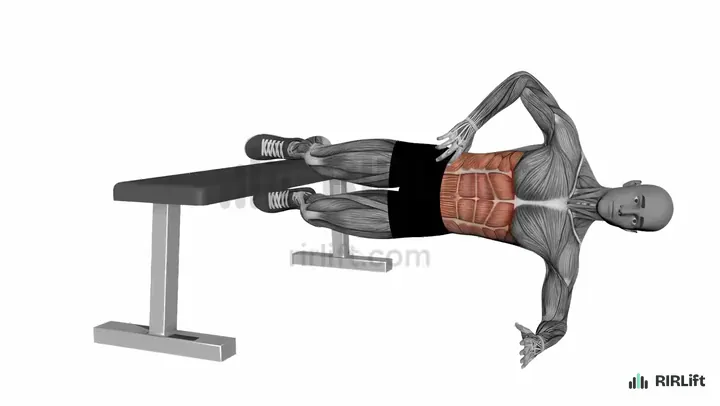
  4. Copenhagen Plank Adductors, Abs
  5. Lateral Box Jump Quads, Glutes, Abductors
  6. Pull-Up Lats
  7. Pallof Press Abs

Stride power

Sideways jumps and hops that push off the way a skate does. A few fast reps at the start of the session.

Sideways power

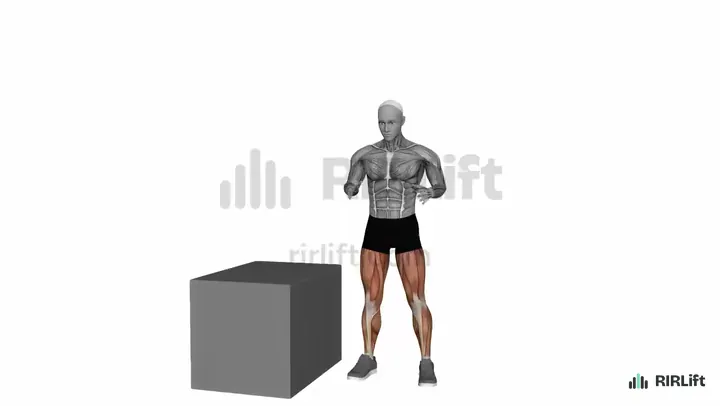
Lateral Box Jump

Quads, Glutes, Abductors

Jumping onto a box from the side is the push of a crossover stride. Log three to five reps a side and step down.

How to do it

  1. Stand side-on next to a low box with feet about hip width.
  2. Dip into a quarter squat and swing your arms.
  3. Jump up and sideways, landing softly with both feet on top of the box.
  4. Step down and reset before each rep, then switch the side you face.

Cues

  • Quiet landing
  • Full reset each rep
  • Explode sideways

Common mistakes

  • Using a box so tall you land in a deep squat: pick a height you land on with knees barely bent.
  • Chaining reps without a reset: power drops fast, so treat every jump as one rep.

Swap for: Skater Hop, Box Jump, Jump Squat

Stride on dry land

Skater Hop

Glutes, Quads, Abductors

Bound from one leg to the other and stick the landing. Log the hops for one side.

How to do it

  1. Stand on one leg with the knee softly bent.
  2. Push sideways off that leg and jump to the other side.
  3. Land on the opposite leg, absorb with your hip and knee, and let the free leg swing behind.
  4. Hold the landing a moment, then bound back the other way.

Cues

  • Push long, land soft
  • Stick it
  • Knee over toes on landing

Common mistakes

  • Landing with a straight leg: bend the hip and knee to soak up the bound.
  • Knee caving in on the landing: shorten the bound until it stays lined up.

Swap for: Lateral Box Jump, Dumbbell Lateral Lunge, Jumping Lunge

Legs

A heavy squat or deadlift, then work on one leg and in a wide stance, where skating actually happens.

Main leg strength

Front Squat

Quads, Glutes, Adductors

The bar in front keeps you upright, close to a skating crouch. The heavy lift of the off-season days.

How to do it

  1. Set the bar across the front of your shoulders with your elbows pointing forward and your fingers under the bar.
  2. Brace your trunk, then sit straight down between your heels.
  3. Go as deep as you can while the elbows stay high and the back stays flat.
  4. Drive up through the whole foot, leading with your elbows.

Cues

  • Elbows high
  • Sit between your heels
  • Brace before you descend

Common mistakes

  • Elbows dropping so the bar rolls forward: lighten the load and lift the elbows.
  • Cutting depth short: a skating stride needs strength low in the squat.

Swap for: Goblet Squat, Dumbbell Front Squat, Barbell Back Squat

Heavy pull

Trap Bar Deadlift

Quads, Glutes

The heaviest lift of the in-season Tuesday. The handles at your sides make it easy to load and easy to recover from.

How to do it

  1. Step into the center of the trap bar so the handles line up with the middle of your feet.
  2. Sit your hips down and back, grip both handles, and flatten your back with your chest up.
  3. Push the floor away until you stand tall with your hips fully forward.
  4. Lower the bar by sending your hips back first, then bending the knees, and set it down.

Cues

  • Push the floor away
  • Chest up, back flat
  • Stand tall at the top

Common mistakes

  • Yanking the bar off the floor: squeeze the slack out of your arms before each pull.
  • Leaning back at the top: finish by squeezing your glutes, not by arching.

Swap for: Barbell Deadlift, Kettlebell Deadlift, Sumo Deadlift

Squat in the garage

Goblet Squat

Quads, Glutes

One dumbbell at your chest. Log its weight and go up 5 lb when every set reaches the top of the range.

How to do it

  1. Cup the top end of one dumbbell in both hands and hold it upright at your chest.
  2. Set your feet a bit wider than your hips, toes turned slightly out.
  3. Sit down between your heels until your elbows brush the insides of your knees.
  4. Stand up by pushing the floor away, chest staying tall.

Cues

  • Elbows inside the knees
  • Chest proud the whole way

Common mistakes

  • Letting the heels lift at the bottom: widen your stance or squat to a depth your ankles allow.

Swap for: Dumbbell Front Squat, Front Squat, Leg Press

Single-leg strength

Bulgarian Split Squat

Quads, Glutes

Most of the load on the front leg, the way a stride loads one skate. Log the reps for one leg.

How to do it

  1. Rest your rear foot, laces down, on a bench behind you and hold dumbbells at your sides.
  2. Find a front-foot position where you can sink with the heel staying flat.
  3. Lower until the front thigh reaches about parallel.
  4. Stand back up through the front foot and finish one side before the other.

Cues

  • Front leg works, back leg balances
  • Straight down
  • Heel flat

Common mistakes

  • Pushing off the back foot: keep it relaxed on the bench.
  • Bouncing at the bottom: control the turnaround.

Swap for: Dumbbell Split Squat, Barbell Bulgarian Split Squat, Dumbbell Reverse Lunge

Hamstrings and balance

Single-Leg RDL

Hamstrings, Glutes

A hinge on one leg for the back of the hip. Log the reps for one leg and keep both sides even.

How to do it

  1. Hold one dumbbell in the hand opposite your standing leg.
  2. Hinge forward and let the free leg float straight back as the dumbbell lowers.
  3. Stop when your torso nears parallel, hips still level.
  4. Return to tall by driving the standing hip forward.

Cues

  • Level hips
  • Long line from head to heel
  • Control the wobble

Common mistakes

  • Twisting open toward the free leg: keep both hip bones facing the floor.
  • Bending the standing knee into a squat: keep a soft, fixed bend.

Swap for: Dumbbell B-Stance RDL, Dumbbell Romanian Deadlift, Kettlebell Deadlift

Hips and groin

The inner thigh pulls the leg back under you after every stride. These three keep it strong at home, in the gym and on a short day.

Wide-stance strength

Cossack Squat

Quads, Adductors

A deep side-to-side squat that loads the hip in the position of a wide stride. Log the reps for one side.

How to do it

  1. Take a very wide stance with your toes turned slightly out.
  2. Shift your weight to one side and sit down over that heel while the other leg straightens with its toes pointing up.
  3. Stay upright with the bent knee in line with its foot.
  4. Push back to the middle and go to the other side.

Cues

  • Sit into one hip
  • Heel of the bent leg stays down
  • Straight leg stays long

Common mistakes

  • Lifting the heel of the working leg: go only as deep as you can with it flat.
  • Folding forward: hold your arms out in front for balance and stay upright.

Swap for: Dumbbell Lateral Lunge, Kettlebell Lateral Lunge, Barbell Lateral Lunge

Groin strength

Copenhagen Plank

Adductors, Abs

A side plank with the top leg on a bench. Start each side from the Watch so the hold is timed.

How to do it

  1. Lie on your side next to a bench and place the inside of your top knee or ankle on it.
  2. Prop yourself up on the bottom elbow.
  3. Lift your hips until your body is straight, with the bottom leg hanging free or lifted toward the bench.
  4. Hold for the planned time, then switch sides.

Cues

  • Top leg presses into the bench
  • Hips high
  • Breathe steadily

Common mistakes

  • Starting with the ankle on the bench: begin with the knee version and earn the long lever.
  • Letting the hips drop: stop when you lose the straight line.

Swap for: Side Plank, Hip Adduction Machine, Band Hip Adduction

Inner thigh with load

Hip Adduction Machine

Adductors

The gym version of the groin work, easy to load in small steps. Log the pin weight.

How to do it

  1. Set the range lever so the pads start wide enough to give your inner thighs a stretch you can hold without strain, and pick the weight on the stack.
  2. Sit with your back and hips pressed into the back pad, put your feet on the footrests and place the inside of your knees against the pads.
  3. Hold the side handles and brace your stomach lightly so your hips stay planted.
  4. Squeeze your knees together in a smooth arc until the pads meet or nearly meet, and hold the squeeze for a moment.
  5. Let your legs open slowly back to the starting stretch, stopping just before the plates touch, then start the next rep.

Cues

  • Hips glued to the seat
  • Squeeze, pause, open slowly
  • Stop the stack from resting

Common mistakes

  • Setting the start too wide: if your hips lift or your groin pinches at the bottom, bring the range lever in a notch and add depth over a few weeks.
  • Slamming the pads together: close at a steady speed and pause, so the adductors do the work rather than momentum.
  • Letting the legs fly open: control the return for about two seconds; that stretch is where most of the work happens.

Inner thigh at home

Band Hip Adduction

Adductors

The garage version, with a band anchored low. Log the reps for one leg.

How to do it

  1. Anchor a band low on a door or table leg and loop it around the ankle nearest the anchor.
  2. Step away until the band pulls your leg out to the side, and stand tall with a hand on a wall or chair.
  3. Sweep the banded leg across the front of your standing leg, keeping the knee straight and toes forward.
  4. Let the band draw the leg back out slowly, stopping before the band goes slack, then repeat. Switch sides.

Cues

  • Sweep, do not swing
  • Torso stays upright
  • Slow return

Common mistakes

  • Leaning your whole body away from the band to finish the rep: only the leg moves.
  • Standing so close to the anchor that the band has no tension at the start: step out until it pulls from the first inch.

Swap for: Copenhagen Plank, Sumo Squat, Cossack Squat

Upper body and trunk

Pulling and pressing for battles along the boards, a carry for grip, and a trunk that stays square when you are hit.

Back and grip

Pull-Up

Lats

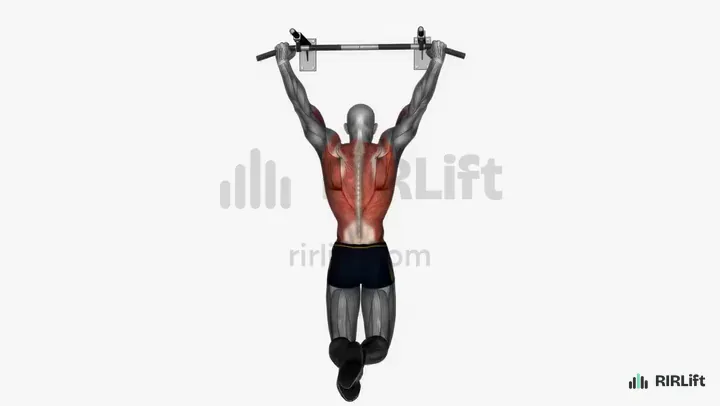
Pulling strength for board battles. Log the reps, and the added weight once you wear a belt.

How to do it

  1. Hang from the bar with hands a bit wider than your shoulders and palms facing away.
  2. Pull your shoulder blades down, then drive your elbows toward your ribs.
  3. Pull until your chin clears the bar.
  4. Lower all the way to straight arms under control.

Cues

  • Elbows to your pockets
  • Chest up to the bar
  • Full hang each rep

Common mistakes

  • Kicking the legs to finish reps: stop the set or use a band.
  • Half reps at the bottom: straighten your arms every time.

Swap for: Chin-Up, Band-Assisted Pull-Up, Lat Pulldown

Upper back

Dumbbell Pendlay Row

Lats, Upper Back

Each rep starts from a dead stop, so the back has to produce force fast.

How to do it

  1. Hinge until your torso is close to level with the floor and put two dumbbells on the floor below your shoulders.
  2. Grip them, set a flat back and brace.
  3. Row both to your lower ribs in one fast pull.
  4. Set them back down fully, reset, and pull again.

Cues

  • Floor to ribs fast
  • Flat back
  • Reset between reps

Common mistakes

  • Bouncing the weights off the floor: let them settle each rep.
  • Standing up as you pull: the torso angle stays fixed.

Swap for: One-Arm Dumbbell Row, Barbell Row, Pendlay Row

Upper back with one dumbbell

One-Arm Dumbbell Row

Lats, Upper Back

The row for the garage plan. Log the weight in one hand and the reps for one arm.

How to do it

  1. Brace one hand and knee on a flat bench, back flat.
  2. Hold a dumbbell in the free hand with the arm long.
  3. Row the dumbbell toward your hip, keeping the elbow close.
  4. Lower to a full stretch, finish the set, then switch sides.

Cues

  • Elbow to hip
  • Square shoulders
  • Full stretch at the bottom

Common mistakes

  • Twisting to lift: keep the torso still.
  • Shrugging the weight: pull with the elbow.

Swap for: Seated Cable Row, Dumbbell Lawnmower Row

Pressing strength

Incline Dumbbell Press

Chest

Pressing on an incline is kinder to the shoulders than a flat bench. Log the weight in one hand.

How to do it

  1. Set a bench to a low incline and lie back with a dumbbell resting on each thigh.
  2. Kick the dumbbells up and hold them above your upper chest with palms turned toward your feet.
  3. Lower them to the sides of your chest with elbows a little below shoulder height.
  4. Press up and slightly in until your arms are straight.

Cues

  • Shoulder blades pinned
  • Elbows slightly tucked
  • Control the bottom

Common mistakes

  • Flaring the elbows straight out: tuck them to roughly 45 degrees.
  • Dropping the weights too deep: stop where your shoulders still feel solid.

Swap for: Flat Dumbbell Press, Landmine Press, Push-Up

Pressing with no bench

Push-Up

Chest

The press for the garage plan. Raise your feet when sets of 20 come easily.

How to do it

  1. Set your hands slightly wider than your shoulders with your body straight from head to heels.
  2. Lower until your chest nearly touches the floor, elbows at about 45 degrees.
  3. Press back up to straight arms.

Cues

  • One straight line
  • Elbows angled back

Common mistakes

  • Flaring the elbows straight out: tuck them toward your ribs.

Swap for: Kneeling Push-Up, Incline Push-Up, Push-Up Plus

Trunk under contact

Pallof Press

Abs

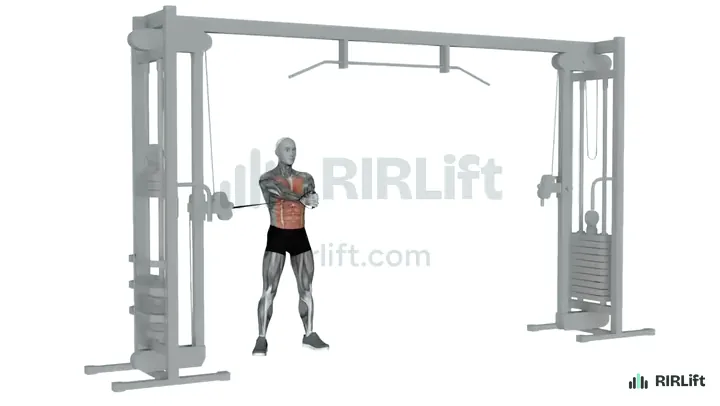
Holding a band or cable straight out trains the trunk to resist being turned. Log the reps for one side.

How to do it

  1. Set a cable handle at chest height and stand side-on to the machine.
  2. Hold the handle at your chest with both hands and step away until the cable is tight.
  3. Press your hands straight out in front of your chest without letting your body turn.
  4. Hold for a second, bring the hands back, and repeat before facing the other way.

Cues

  • Hands stay on the midline
  • Ribs down
  • Stand tall

Common mistakes

  • Letting the hands drift toward the machine: step closer or lighten the stack.
  • Rotating the hips to cheat: keep your belt buckle pointed forward.

Swap for: Cable Woodchop, Side Plank, Dead Bug

Grip and side trunk

Dumbbell Suitcase Carry

Abs, Quads

One heavy dumbbell carried at your side. Log its weight and one walk as one rep.

How to do it

  1. Pick up one heavy dumbbell and stand tall with it at your side.
  2. Walk with short, steady steps without leaning toward or away from it.
  3. Set it down, switch hands and walk back.

Cues

  • Shoulders level
  • Tall walk
  • Grip hard

Common mistakes

  • Leaning away from the weight to balance it.
  • Picking a dumbbell so light that nothing has to work.

Swap for: Farmer's Walk, Dumbbell Single-Arm Overhead Carry

Put them together: example sessions

Each session below picks from the exercises above for one situation, with the sets, reps, rest and RIR filled in.

Session 1

Summer: three days, off the ice

  • Workouts3× a week
  • Working sets48 a week
  • Per workout~45 min
  • EquipmentPlyo Box, Barbells, Dumbbells, Hip Adductor +3

The season ended, you are off the ice until late summer, and you have a full gym.

Two days alternate. Day A is the squat day with sideways jumps, split squats, the adductor machine and a press, 16 working sets. Day B is the pulling day with hops, single-leg RDLs, Copenhagen holds and the Pallof press, 16 working sets.

Day A: Squat and press
ExerciseSets × repsRIRRest
Lateral Box JumpPer side. Step down. 3 × 3–5 3 90 s
Front Squat2 warm-up sets first 4 × 5–8 2 3 min
Bulgarian Split SquatPer leg. 3 × 6–10 2 2 min
Hip Adduction Machine 3 × 10–15 1 1 min
Incline Dumbbell Press 3 × 8–12 2 90 s
Day B: Hinge and pull
ExerciseSets × repsRIRRest
Skater HopPer side. 3 × 4–6 3 1 min
Single-Leg RDLPer leg. 3 × 8–12 2 90 s
Pull-Up 4 × 5–10 2 2 min
Copenhagen PlankPer side. 3 × 20–30 s 2 45 s
Pallof PressPer side. 3 × 10–12 2 1 min
How to run it
Alternate A and B three times a week. Import it, switch to it in My Programs, and its routines show up on the Watch ready to start. Jumps first, while you are fresh, then log each set on the Watch before you rest.
How to progress
Double progression, judged on your weakest set. Front squat at 155 lb with a target of 7: you log 8, 8, 7, 7, the weakest set hit 7, so the bar stays at 155 lb and the target becomes 8. Log 8, 8, 8, 8 and every set is at the top of 5 to 8, so the next session opens at 160 lb for 5.

Session 2

Games on the weekend: a Tuesday lift and a Thursday hip session

  • Workouts2× a week
  • Working sets16 a week
  • Per workout~20 min
  • EquipmentTrap Bar, Dumbbells, Incline Bench, Adjustable Cable +1

You play Friday and Saturday or Saturday and Sunday, skate twice in the week, and want to keep your strength through the season.

Tuesday carries the strength: a deadlift, rows, a press and the Pallof press, 10 working sets in about 30 minutes. Thursday is 15 minutes of hips and groin and nothing heavy, because that is what a long season wears down and the games are a day or two away.

Tuesday: Strength
ExerciseSets × repsRIRRest
Trap Bar Deadlift2 warm-up sets first 2 × 3–5 3 3 min
Dumbbell Pendlay Row 3 × 6–8 2 90 s
Incline Dumbbell Press 2 × 6–10 3 90 s
Pallof PressPer side. 3 × 8–10 2 1 min
Thursday: Hips and groin
ExerciseSets × repsRIRRest
Cossack SquatPer side. 2 × 6–8 3 1 min
Copenhagen PlankPer side. 2 × 20–25 s 3 45 s
Hip Adduction Machine 2 × 12–15 3 1 min
How to run it
Tuesday after a rest day, Thursday before or after practice. Import it, switch to it in My Programs, and its routines show up on the Watch ready to start. If you play Sunday night and Tuesday feels heavy, slide the lift to Wednesday and drop Thursday that week.
How to progress
Hold the weight you built in the summer. Trap-bar deadlift at 275 lb for 3 to 5: log 5 and 5 and the next Tuesday opens at 280 lb for 3. Log 4 and 3 after a hard weekend and you are inside the range, so the bar holds. The Thursday groin work moves only when every set reaches the top of its range.

Session 3

Garage dryland: dumbbells and a band, 25 minutes

  • Workouts2× a week
  • Working sets24 a week
  • Per workout~20 min
  • EquipmentDumbbells, Resistance Bands

You have a pair of dumbbells, a band and a bench in the garage, and 25 minutes after work or school.

Two short sessions with three supersets each, so one rest covers two exercises and 12 working sets fit into 25 minutes. Each session has a hop or squat, a hinge, the groin work and an upper-body pair.

Garage A
ExerciseSets × repsRIRRest
A1 Skater HopPer side. 2 × 5–6 3 90 s
A2 Goblet Squat 2 × 10–15 2 0 s
B1 Single-Leg RDLPer leg. 2 × 8–12 2 75 s
B2 Band Hip AdductionPer leg. 2 × 12–15 2 0 s
C1 One-Arm Dumbbell RowPer arm. 2 × 10–12 2 75 s
C2 Push-Up 2 × 10–20 2 0 s
Garage B
ExerciseSets × repsRIRRest
A1 Cossack SquatPer side. 2 × 6–10 2 90 s
A2 Bulgarian Split SquatPer leg. 2 × 8–12 2 0 s
B1 Copenhagen PlankPer side. 2 × 15–25 s 2 75 s
B2 Dumbbell Suitcase CarryWalk 30 yards per hand. 2 × 1 2 0 s
C1 One-Arm Dumbbell RowPer arm. 2 × 10–12 2 75 s
C2 Push-Up 2 × 10–20 2 0 s
How to run it
Twice a week, alternating A and B, on days you do not skate hard. Import it, switch to it in My Programs, and its routines show up on the Watch ready to start. On the Watch a superset reads Superset 1 of 2 with the round: log the first exercise, go straight to the second, and the rest starts after it.
How to progress
Dumbbells are logged per hand. One-arm row with a 50 lb dumbbell, target 10: you log 12 and 10 for one arm, the weakest set hit 10, so the weight stays and the target becomes 11. At 12 and 12 the next session opens at 55 lb for 10.

Make it fit you

Questions

Does Apple Watch have a hockey workout?

Yes. Apple's Workout app lists Hockey, indoor or outdoor, for time on the ice. Off-ice lifting logged in RIRLift is saved separately, as Traditional Strength Training.

Should I log dryland jumps as a workout?

Log them inside the strength session. A session of only jumps and hops is saved as Cross Training; with any lift in it, the whole session is Traditional Strength Training.

How often should hockey players lift in season?

Twice a week fits most players: one strength day early in the week and one short hip and groin day, both well away from game day.

Can I log the session with my phone in the bag?

Yes. The session runs on the Watch and each set is saved there as you log it, then syncs to the iPhone later.