
Adductor exercises at home: direct squeezes, side lunges and deep squats
Published October 19, 2026
The best adductor exercises at home are the Copenhagen plank and band hip adduction for direct inner-thigh work, the Cossack squat and dumbbell lateral lunge for strength in a deep stretch, and the sumo squat and goblet squat for heavy loading. You need nothing more than a couch, a resistance band and one or two dumbbells. Pick one direct exercise and one side lunge or wide squat each session, and train them twice a week.
- Copenhagen Plank Adductors, Abs
- Cossack Squat Quads, Adductors
- Band Hip Adduction Adductors
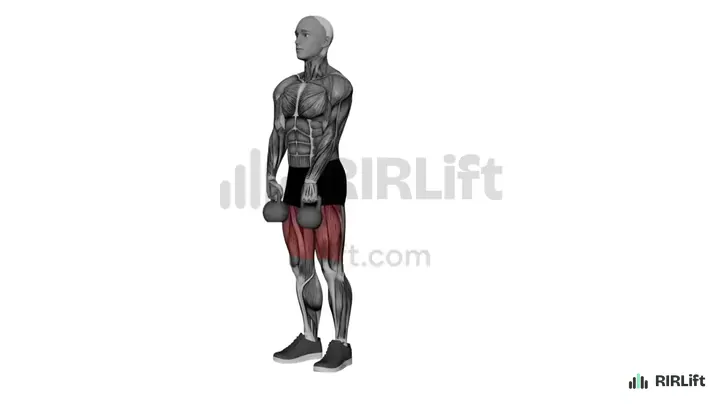
- Dumbbell Lateral Lunge Quads, Glutes, Adductors
- Sumo Squat Quads, Glutes, Adductors
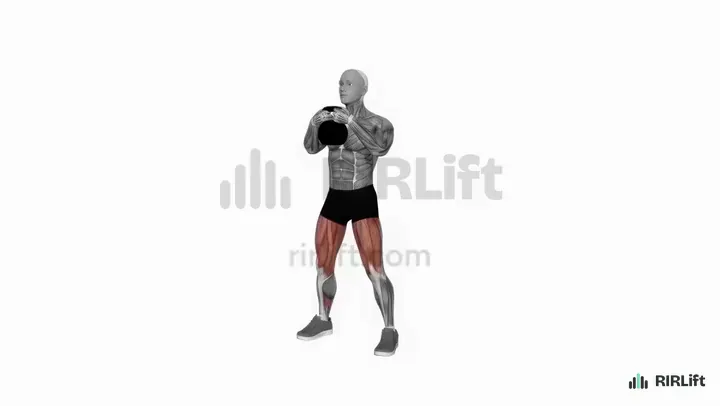
- Kettlebell Lateral Lunge Quads, Glutes
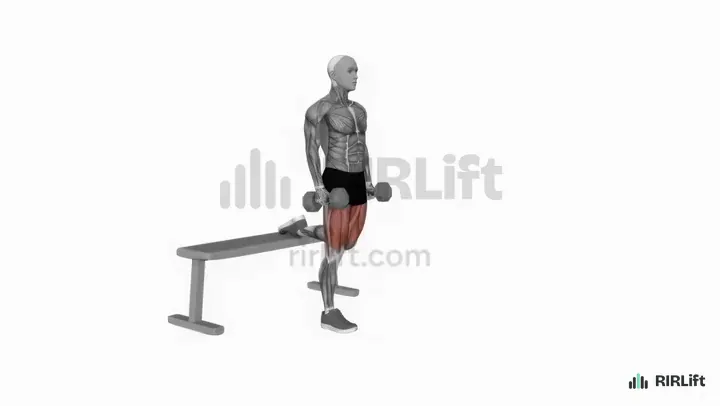
- Bulgarian Split Squat Quads, Glutes
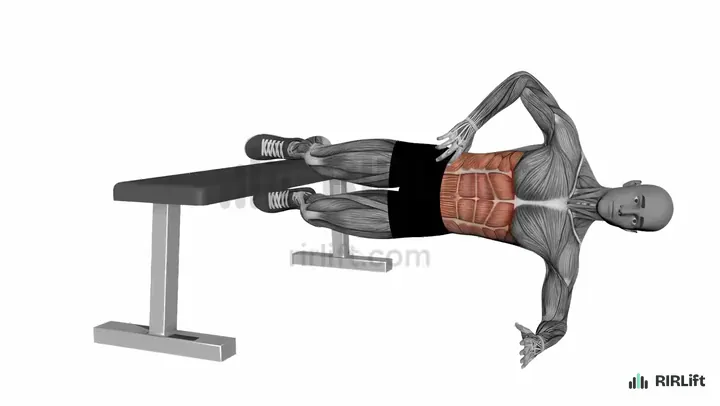
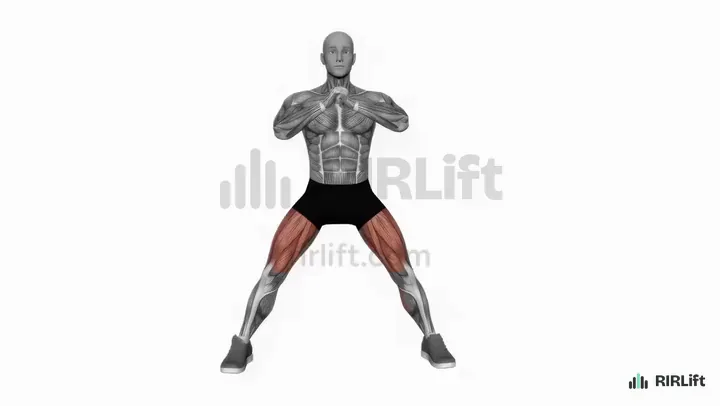
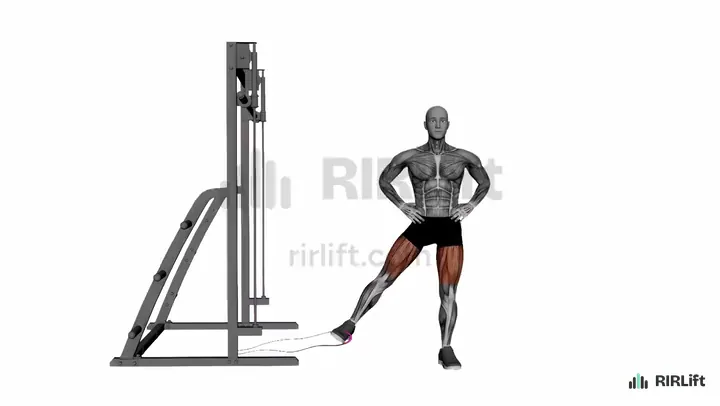
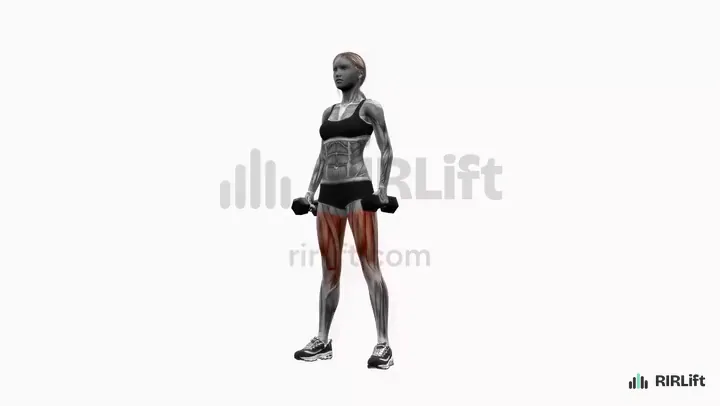
Put them together: example sessions
Each session below picks from the exercises above for one situation, with the sets, reps, rest and RIR filled in. Open one in the session builder to change a pick, price it from a recent set, and add it to RIRLift.
-
Session 1
No equipment, just a couch and floor
You have no weights or bands at home and want to train your inner thighs with bodyweight and furniture.
2× a week · 22 sets a week · ~25 min
-
Session 2
Dumbbells or a kettlebell plus a band
You have adjustable dumbbells or a kettlebell, a resistance band and a door anchor, and you want the inner thighs to grow, not just get stronger.
2× a week · 21 sets a week · ~30 min
-
Session 3
Soccer, hockey or tennis season add-on
You play a sport with lots of cutting, kicking or skating, and you want a short adductor routine you can keep doing in season without being sore for games.
2× a week · 16 sets a week · ~20 min
Session 1
No equipment, just a couch and floor
- Workouts2× a week
- Working sets22 a week
- Per workout~25 min
- EquipmentDumbbells
You have no weights or bands at home and want to train your inner thighs with bodyweight and furniture.
Without load, the two hardest adductor exercises carry the session: the Copenhagen plank for direct adduction and the Cossack squat for strength in a long stretch. The bodyweight sumo squat and split squat use high reps to come close to failure, ending 1 rep short, while the plank and Cossack stay at 2 because form breaks before muscles do. About 11 working sets, done twice a week.
| Exercise | Sets × reps | RIR | Rest |
|---|---|---|---|
| Copenhagen PlankReps per side. Knee on the seat. | 3 × 6–12 | 2 | 1 min |
| Cossack SquatPer side. Pause at the bottom. | 3 × 6–10 | 2 | 90 s |
| Sumo SquatBodyweight. 3 s down. | 3 × 15–25 | 1 | 1 min |
| Bulgarian Split SquatBodyweight. Per leg. Go deep. | 2 × 10–20 | 1 | 1 min |
- How to run it
- Do the session twice a week with at least two days between. Hold a water bottle or backpack as a counterweight on the Cossack squat if you tip backward.
- How to progress
- Add reps each week. When the Copenhagen plank reaches 12 reps per side with the knee on the seat, move the support toward your ankle. On the sumo squat, slow the lowering to four seconds once 25 reps is easy.
Session 2
Dumbbells or a kettlebell plus a band
- Workouts2× a week
- Working sets21 a week
- Per workout~30 min
- EquipmentDumbbells, Resistance Bands, Kettlebells
You have adjustable dumbbells or a kettlebell, a resistance band and a door anchor, and you want the inner thighs to grow, not just get stronger.
Loading lets you put heavy, lower-rep work first: the lateral lunge and sumo squat at 8 to 12 reps with 1 to 2 in reserve, the main drivers of size. The band adduction adds higher-rep direct work at 0 to 1 in reserve, and the goblet squat and Copenhagen plank round out the second day. Each session is about 12 sets.
| Exercise | Sets × reps | RIR | Rest |
|---|---|---|---|
| Dumbbell Lateral Lunge1 warm-up set firstPer side. | 3 × 8–12 | 2 | 90 s |
| Sumo SquatHeaviest weight. Knees out. | 3 × 8–12 | 1 | 90 s |
| Band Hip AdductionPer leg. 2 s back out. | 3 × 12–20 | 0 | 45 s |
| Copenhagen PlankReps per side. | 2 × 8–12 | 2 | 1 min |
Open Adductors A in the session builder
| Exercise | Sets × reps | RIR | Rest |
|---|---|---|---|
| Goblet Squat1 warm-up set firstFull depth. | 3 × 8–12 | 2 | 2 min |
| Kettlebell Lateral LungePer side. Bell at the chest. | 3 × 8–12 | 1 | 90 s |
| Bulgarian Split SquatPer leg. | 2 × 8–12 | 1 | 90 s |
| Band Hip AdductionPer leg. | 2 × 15–20 | 0 | 45 s |
Open Adductors B in the session builder
- How to run it
- Run Adductors A and B once each per week. Put them at the end of a lower-body day or on their own short day.
- How to progress
- Double progression: once every set reaches the top of the rep range at the target reps in reserve, go up one dumbbell step. On the band, step one foot farther from the anchor or switch to a stronger band.
Session 3
Soccer, hockey or tennis season add-on
- Workouts2× a week
- Working sets16 a week
- Per workout~20 min
- EquipmentResistance Bands
You play a sport with lots of cutting, kicking or skating, and you want a short adductor routine you can keep doing in season without being sore for games.
In-season work keeps the strength you have without leaving you sore, so the volume is low and every set stops 2 to 3 reps short of failure. The Copenhagen plank and band adduction train the squeeze; the balance-board squat and Cossack squat train control in a stretch. Eight working sets, about 15 minutes.
| Exercise | Sets × reps | RIR | Rest |
|---|---|---|---|
| Copenhagen PlankReps per side. Knee support. | 2 × 6–10 | 3 | 1 min |
| Band Hip AdductionPer leg. | 2 × 12–15 | 2 | 45 s |
| Balance Board Lateral SquatReps per side. | 2 × 8–12 | 2 | 1 min |
| Cossack SquatPer side. Partial depth. | 2 × 5–8 | 3 | 1 min |
- How to run it
- Do it twice a week, at least two days before a game. Skip the Cossack squat the day before a match.
- How to progress
- Keep the reps and RIR fixed. Progress only the Copenhagen plank, from knee to ankle support, and the band tension, and only in weeks with one game or fewer.
Make it fit you
-
Start the plank short
The Copenhagen plank is hard on the groin. Begin with the knee on the support and short holds, and move the support toward the ankle only after a few weeks of clean reps.
-
No band? Use a pillow
Squeezing a firm pillow or ball between your knees while lying on your back is a fine warm-up for the adductors. It is not hard enough to grow them, so keep the plank or a loaded side lunge as your main work.
-
Balance the inside and outside
If you also train the outer hips, give the inner thighs a similar number of sets each week. Both sides steady your knee and pelvis, and lopsided training shows up as a knee that wanders on lunges.
-
Use depth as your progression
On the Cossack squat and lateral lunges, add depth before load. A few centimeters lower each week is real progress, and you can track it by the height of a box or step you touch.
-
Track your sets with RIR
Log every set's reps in reserve in RIRLift. Home loads change in big jumps, and the RIR you record tells you whether a set was hard enough and when to step up a dumbbell size.
Questions
How do you train adductors at home without equipment?
Use the Copenhagen plank on a couch or chair for direct inner-thigh work, then the Cossack squat and bodyweight sumo squat for strength through a deep range. Take each set within 1 to 2 reps of failure.
How do you get big adductors?
The same way you grow any muscle: hard sets, enough of them, and more load or reps over time. Ten to fifteen weekly sets across a direct exercise and a loaded side lunge or wide squat is a good target.
What are the benefits of training the adductors?
Strong adductors help steady your knee and pelvis in squats, lunges and quick changes of direction, add size to the upper inner thigh, and give you more control in deep positions such as a wide squat.
How do you stretch the adductors?
The Cossack squat and lateral lunge stretch the inner thigh of the straight leg under load, which builds range and strength together. Spend a breath in the bottom of each rep and go a little deeper over weeks.
Do sumo squats work the inner thighs?
Yes. A wide stance with the toes out puts the adductors in a good position to help extend your hip, especially in the bottom half. Go deep and push your knees out over your toes.
How often should you train adductors?
Twice a week works well. They recover quickly, so you can pair them with your leg days or add a short block on a separate day.
Related templates
-
Inner thigh exercises at home, no machine needed
More floor and band options for the inner thighs.
-
Hip exercises at home: glutes, outer hips, inner thighs and balance
Adductors alongside glutes, side hips and single-leg work.
-
Lateral lunge: how to do a side lunge with dumbbells or bodyweight
Form, programming and variations of the main side lunge.
-
Sumo squat: how to do it with a kettlebell or dumbbell
Stance, depth and loading for the wide-stance squat.
-
Hip adduction machine: how to set it up, use it, and program it
The gym version when you have access to one.