Hockey workout: strength and power for the ice

A good hockey workout starts with a few low-rep jumps for power, then a heavy lower-body lift such as the trap bar deadlift or front squat, a single-leg exercise like the Bulgarian split squat, a pull and a press for the upper body, and adductor and anti-rotation core work like the Copenhagen plank and Pallof press. Off season, add shift-length intervals on the air bike. In season, lift twice a week, keep 2 to 3 reps in reserve and cut the sets, so you stay strong without dragging tired legs onto the ice.

  1. Trap Bar Deadlift Quads, Glutes
  2. Front Squat Quads, Glutes, Adductors
  3. Bulgarian Split Squat Quads, Glutes
  4. Cossack Squat Quads, Adductors
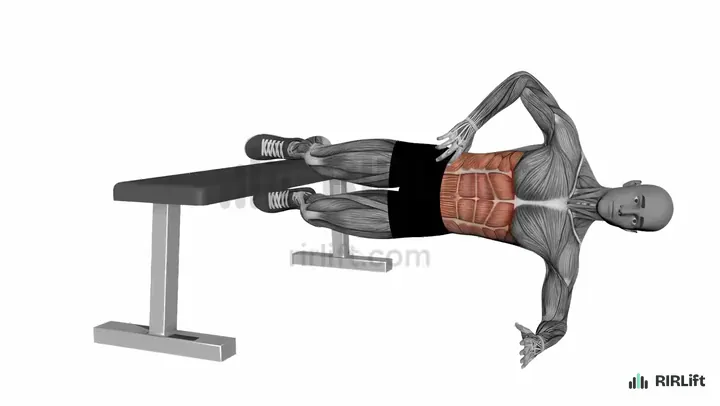
  5. Copenhagen Plank Adductors, Abs
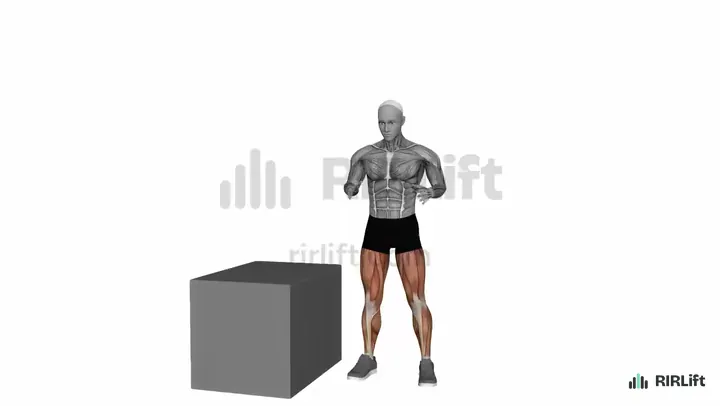
  6. Lateral Box Jump Quads, Glutes, Abductors
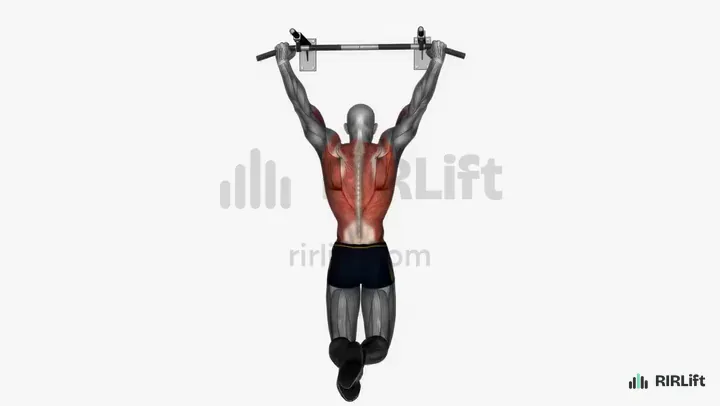
  7. Pull-Up Lats
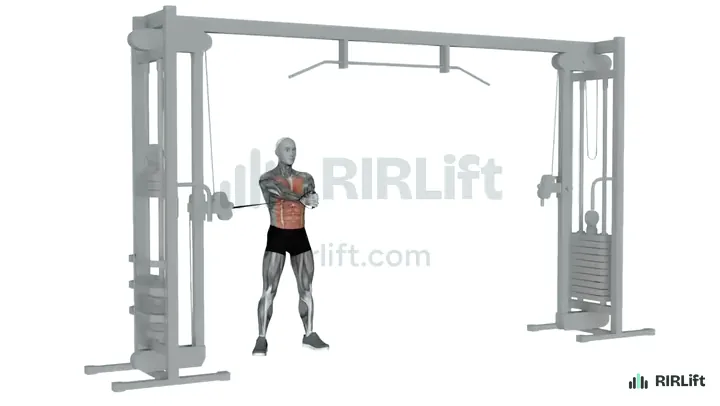
  8. Pallof Press Abs
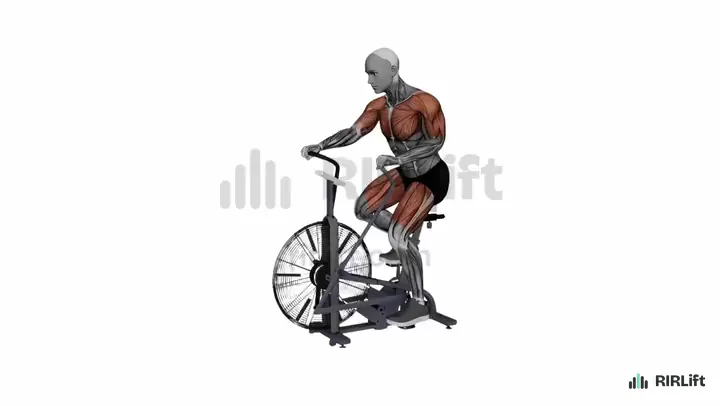
  9. Air Bike Quads, Hamstrings, Glutes
Exercises for skating stride strength

A powerful stride comes from strong hips and legs, trained both with two legs heavy and one leg at a time. Pick a heavy lift and a single-leg exercise each session.

Total lower-body strength

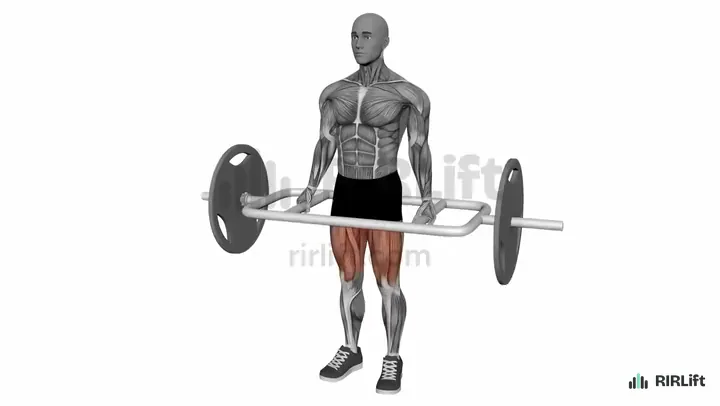
Trap Bar Deadlift

Quads, Glutes

The trap bar lets you pull heavy with a more upright torso than a straight bar, so it builds the hips and legs that drive a skating stride with less strain on the lower back. It is the main strength lift in every plan below.

How to do it

  1. Step into the center of the trap bar so the handles line up with the middle of your feet.
  2. Sit your hips down and back, grip both handles, and flatten your back with your chest up.
  3. Push the floor away until you stand tall with your hips fully forward.
  4. Lower the bar by sending your hips back first, then bending the knees, and set it down.

Cues

  • Push the floor away
  • Chest up, back flat
  • Stand tall at the top

Common mistakes

  • Yanking the bar off the floor: squeeze the slack out of your arms before each pull.
  • Leaning back at the top: finish by squeezing your glutes, not by arching.

Swap for: Barbell Deadlift, Kettlebell Deadlift, Sumo Deadlift

Quad strength for a low skating stance

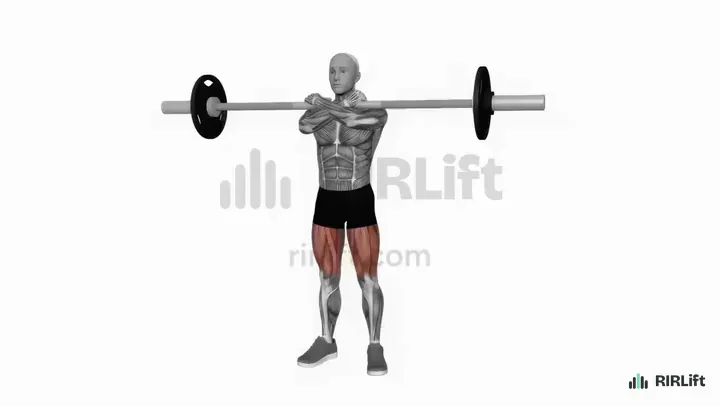
Front Squat

Quads, Glutes, Adductors

Skating happens in a deep knee bend, and the front squat trains the quads in exactly that position while forcing an upright, braced trunk. Racking the bar on your shoulders also punishes any slouch, which helps posture on the ice.

How to do it

  1. Set the bar across the front of your shoulders with your elbows pointing forward and your fingers under the bar.
  2. Brace your trunk, then sit straight down between your heels.
  3. Go as deep as you can while the elbows stay high and the back stays flat.
  4. Drive up through the whole foot, leading with your elbows.

Cues

  • Elbows high
  • Sit between your heels
  • Brace before you descend

Common mistakes

  • Elbows dropping so the bar rolls forward: lighten the load and lift the elbows.
  • Cutting depth short: a skating stride needs strength low in the squat.

Swap for: Goblet Squat, Dumbbell Front Squat, Barbell Back Squat

Single-leg drive

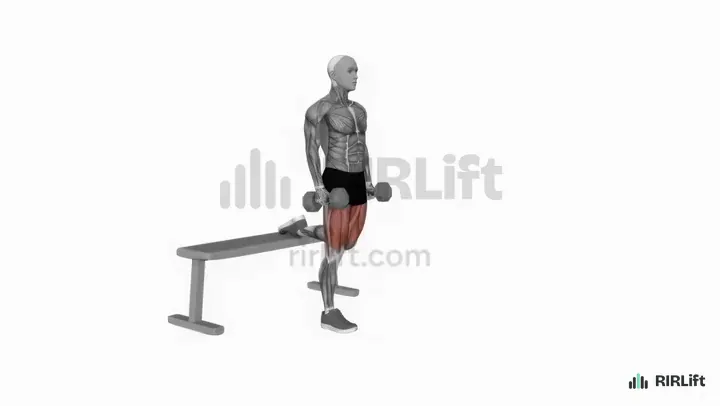
Bulgarian Split Squat

Quads, Glutes

A stride pushes off one leg at a time, so split squats build each leg on its own and expose a weaker side. With the rear foot raised, the front leg carries almost the whole load.

How to do it

  1. Rest your rear foot, laces down, on a bench behind you and hold dumbbells at your sides.
  2. Find a front-foot position where you can sink with the heel staying flat.
  3. Lower until the front thigh reaches about parallel.
  4. Stand back up through the front foot and finish one side before the other.

Cues

  • Front leg works, back leg balances
  • Straight down
  • Heel flat

Common mistakes

  • Pushing off the back foot: keep it relaxed on the bench.
  • Bouncing at the bottom: control the turnaround.

Swap for: Dumbbell Split Squat, Barbell Bulgarian Split Squat, Dumbbell Reverse Lunge

Hip and hamstring control on one leg

Single-Leg RDL

Hamstrings, Glutes

Hockey players spend the game balancing on a blade. The single-leg Romanian deadlift trains the hamstring and the hip stabilizers of the standing leg, which also helps you hold a strong position through contact.

How to do it

  1. Hold one dumbbell in the hand opposite your standing leg.
  2. Hinge forward and let the free leg float straight back as the dumbbell lowers.
  3. Stop when your torso nears parallel, hips still level.
  4. Return to tall by driving the standing hip forward.

Cues

  • Level hips
  • Long line from head to heel
  • Control the wobble

Common mistakes

  • Twisting open toward the free leg: keep both hip bones facing the floor.
  • Bending the standing knee into a squat: keep a soft, fixed bend.

Swap for: Dumbbell B-Stance RDL, Dumbbell Romanian Deadlift, Kettlebell Deadlift

Exercises for lateral power and the groin

Skaters push sideways, so the adductors and the outside of the hips need direct work. Lateral jumps and bounds turn that strength into speed, and the Copenhagen plank keeps the groin strong.

Lateral strength and groin mobility

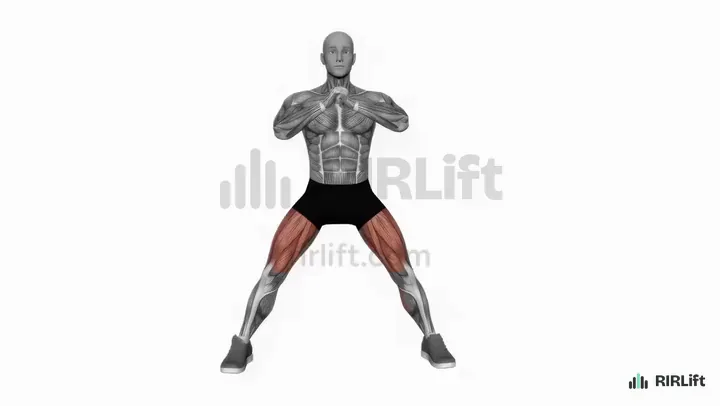
Cossack Squat

Quads, Adductors

Skaters push sideways, and the adductors on the inside of the thigh both drive and absorb that push. Shifting deep to one side builds strength through the wide range a crossover demands.

How to do it

  1. Take a very wide stance with your toes turned slightly out.
  2. Shift your weight to one side and sit down over that heel while the other leg straightens with its toes pointing up.
  3. Stay upright with the bent knee in line with its foot.
  4. Push back to the middle and go to the other side.

Cues

  • Sit into one hip
  • Heel of the bent leg stays down
  • Straight leg stays long

Common mistakes

  • Lifting the heel of the working leg: go only as deep as you can with it flat.
  • Folding forward: hold your arms out in front for balance and stay upright.

Swap for: Dumbbell Lateral Lunge, Kettlebell Lateral Lunge, Barbell Lateral Lunge

Adductor strength for the groin

Copenhagen Plank

Adductors, Abs

The adductors work hard in every stride and every crossover, and they are often the weak link at the hip. This side plank on the top leg loads them directly with no equipment but a bench.

How to do it

  1. Lie on your side next to a bench and place the inside of your top knee or ankle on it.
  2. Prop yourself up on the bottom elbow.
  3. Lift your hips until your body is straight, with the bottom leg hanging free or lifted toward the bench.
  4. Hold for the planned time, then switch sides.

Cues

  • Top leg presses into the bench
  • Hips high
  • Breathe steadily

Common mistakes

  • Starting with the ankle on the bench: begin with the knee version and earn the long lever.
  • Letting the hips drop: stop when you lose the straight line.

Swap for: Side Plank, Hip Adduction Machine, Band Hip Adduction

Lateral power

Lateral Box Jump

Quads, Glutes, Abductors

Jumping sideways onto a box trains the explosive sideways push of a skating stride and a quick change of direction. Keep the reps low and the landings quiet; this is speed work, not conditioning.

How to do it

  1. Stand side-on next to a low box with feet about hip width.
  2. Dip into a quarter squat and swing your arms.
  3. Jump up and sideways, landing softly with both feet on top of the box.
  4. Step down and reset before each rep, then switch the side you face.

Cues

  • Quiet landing
  • Full reset each rep
  • Explode sideways

Common mistakes

  • Using a box so tall you land in a deep squat: pick a height you land on with knees barely bent.
  • Chaining reps without a reset: power drops fast, so treat every jump as one rep.

Swap for: Skater Hop, Box Jump, Jump Squat

Stride rhythm and landing control

Skater Hop

Glutes, Quads, Abductors

Bounding from one leg to the other copies the skating stride on dry land and trains you to land and push off a single leg. Stick each landing for a beat before you hop back.

How to do it

  1. Stand on one leg with the knee softly bent.
  2. Push sideways off that leg and jump to the other side.
  3. Land on the opposite leg, absorb with your hip and knee, and let the free leg swing behind.
  4. Hold the landing a moment, then bound back the other way.

Cues

  • Push long, land soft
  • Stick it
  • Knee over toes on landing

Common mistakes

  • Landing with a straight leg: bend the hip and knee to soak up the bound.
  • Knee caving in on the landing: shorten the bound until it stays lined up.

Swap for: Lateral Box Jump, Dumbbell Lateral Lunge, Jumping Lunge

Lateral leg drive and conditioning

Lateral Sled Drag

Abductors, Glutes, Quads

Dragging a sled sideways loads the push-off leg in a crossover pattern and builds the inside and outside of the hips. Heavy and short is strength, lighter and longer is conditioning.

How to do it

  1. Stand facing the sled and hold its handles in both hands at hip height, arms long.
  2. Sink into a low athletic stance with your chest up.
  3. Step sideways in small, quick steps, pushing hard with the trailing leg so the sled keeps moving.
  4. Cover the planned distance, then lead with the other side.

Cues

  • Low athletic stance
  • Push with the trailing leg
  • Arms long, handles steady

Common mistakes

  • Standing up tall: stay low like you are on the ice.
  • Pulling with the arms: let the legs move the sled.

Swap for: Lateral Band Walk, Sled Push, Cossack Squat

Upper body exercises for hockey players

Pulling and pushing strength helps you hold your ground in board battles and get more behind a shot. Keep a pull for every press to balance the hunched skating posture.

Upper-back strength for battles and puck protection

Pull-Up

Lats

Pull-ups build the lats and upper back that let you win board battles, hold position and protect the puck. They also balance all the hunched-over time in a skating stance.

How to do it

  1. Hang from the bar with hands a bit wider than your shoulders and palms facing away.
  2. Pull your shoulder blades down, then drive your elbows toward your ribs.
  3. Pull until your chin clears the bar.
  4. Lower all the way to straight arms under control.

Cues

  • Elbows to your pockets
  • Chest up to the bar
  • Full hang each rep

Common mistakes

  • Kicking the legs to finish reps: stop the set or use a band.
  • Half reps at the bottom: straighten your arms every time.

Swap for: Chin-Up, Band-Assisted Pull-Up, Lat Pulldown

Build a session with Pull-Up

Upper-back strength from a dead stop

Dumbbell Pendlay Row

Lats, Upper Back

Each rep starts from the floor, so the row has to be pulled hard and fast, the way you fight off a check. It strengthens the whole upper back and the hip hinge that holds the position.

How to do it

  1. Hinge until your torso is close to level with the floor and put two dumbbells on the floor below your shoulders.
  2. Grip them, set a flat back and brace.
  3. Row both to your lower ribs in one fast pull.
  4. Set them back down fully, reset, and pull again.

Cues

  • Floor to ribs fast
  • Flat back
  • Reset between reps

Common mistakes

  • Bouncing the weights off the floor: let them settle each rep.
  • Standing up as you pull: the torso angle stays fixed.

Swap for: One-Arm Dumbbell Row, Barbell Row, Pendlay Row

Pushing strength for contact and shooting

Incline Dumbbell Press

Chest

A press builds the chest, shoulders and triceps used to push off opponents and finish a shot. The incline angle and separate dumbbells are easier on the shoulders than a heavy flat bar.

How to do it

  1. Set a bench to a low incline and lie back with a dumbbell resting on each thigh.
  2. Kick the dumbbells up and hold them above your upper chest with palms turned toward your feet.
  3. Lower them to the sides of your chest with elbows a little below shoulder height.
  4. Press up and slightly in until your arms are straight.

Cues

  • Shoulder blades pinned
  • Elbows slightly tucked
  • Control the bottom

Common mistakes

  • Flaring the elbows straight out: tuck them to roughly 45 degrees.
  • Dropping the weights too deep: stop where your shoulders still feel solid.

Swap for: Flat Dumbbell Press, Landmine Press, Push-Up

Shoulder health for shooting and contact

Dumbbell External Rotation

Shoulders

The small rotator cuff muscles hold the shoulder in place during slap shots, falls and collisions. A light external rotation keeps them strong next to all the pressing and shooting.

How to do it

  1. Stand holding a light dumbbell, elbow bent to 90 degrees and tucked against your side, forearm across your belly.
  2. Keep the elbow pinned to your ribs.
  3. Rotate the forearm out to the side as far as you can without the elbow moving.
  4. Return slowly and repeat, then switch arms.

Cues

  • Elbow glued to your side
  • Slow both ways
  • Light weight

Common mistakes

  • Lifting the elbow off the ribs: keep it fixed so the rotation does the work.
  • Going heavy and swinging: this is a slow, light exercise.

Swap for: Band Face Pull, Face Pull, Dumbbell Lying External Rotation

Core exercises for hockey

Your trunk mostly resists twisting and bending when you get hit or shoot off one leg, so anti-rotation work beats crunches.

Anti-rotation trunk strength

Pallof Press

Abs

The trunk in hockey mostly resists getting twisted, whether you are taking a hit or shooting off one leg. The Pallof press trains that resistance directly with a cable trying to turn you.

How to do it

  1. Set a cable handle at chest height and stand side-on to the machine.
  2. Hold the handle at your chest with both hands and step away until the cable is tight.
  3. Press your hands straight out in front of your chest without letting your body turn.
  4. Hold for a second, bring the hands back, and repeat before facing the other way.

Cues

  • Hands stay on the midline
  • Ribs down
  • Stand tall

Common mistakes

  • Letting the hands drift toward the machine: step closer or lighten the stack.
  • Rotating the hips to cheat: keep your belt buckle pointed forward.

Swap for: Cable Woodchop, Side Plank, Dead Bug

Hockey conditioning

Shifts are short and hard with rest between them, so train intervals rather than long steady sessions. Keep conditioning after lifting or on a separate day from heavy legs.

Shift-length conditioning

Air Bike

Quads, Hamstrings, Glutes
A hockey shift is a short, all-out burst followed by rest on the bench. Air bike intervals copy that pattern without any pounding on the legs, and the arms work too.

How to do it

  1. Set the seat so your knee is slightly bent at the bottom of the pedal stroke.
  2. Pedal easily for a few minutes while working the handles both ways.
  3. For each interval, go all out with arms and legs for the planned time.
  4. Pedal slowly through the rest period, then repeat.

Cues

  • All out, then all easy
  • Drive the handles both ways
  • Sit tall

Common mistakes

  • Pacing the hard intervals: they should be close to maximal.
  • Stopping dead during rest: keep pedaling gently.

Swap for: Stationary Bike, Rowing Machine, Sled Push

Build a session with Air Bike

Put them together: example sessions

Each session below picks from the exercises above for one situation, with the sets, reps, rest and RIR filled in. Open one in the session builder to change a pick, price it from a recent set, and add it to RIRLift.

Session 1

In-season maintenance

Open in the session builder
  • Workouts2× a week
  • Working sets23 a week
  • Per workout~30 min
  • EquipmentPlyo Box, Trap Bar, Pull-Up Bar, Dumbbells +2

You play games every weekend and practice two or three times a week.

In season the goal is to keep the strength you built without carrying soreness onto the ice. Two short sessions with 2 to 3 sets per exercise at 2 to 3 reps in reserve maintain strength, and the jumps stay low in reps to keep you fast. No conditioning is added because practice and games cover it.

Lift A
ExerciseSets × repsRIRRest
Lateral Box Jump 3 × 3 3 90 s
Trap Bar Deadlift2 warm-up sets first 3 × 3–5 3 2:30 min
Pull-Up 3 × 5–8 2 2 min
Copenhagen PlankSeconds per side. 2 × 20–30 2 1 min

Open Lift A in the session builder

Lift B
ExerciseSets × repsRIRRest
Skater HopFour bounds per side. 3 × 4 3 1 min
Bulgarian Split Squat 2 × 6–8 2 90 s
Incline Dumbbell Press 3 × 6–8 2 2 min
Pallof Press 2 × 8–10 2 1 min
Dumbbell External Rotation 2 × 10–12 2 45 s

Open Lift B in the session builder

How to run it
Lift two or three days before your first game of the week and again right after the last one, never the day before a game.
How to progress
Hold the same weights or add a little when sets feel easy. Drop to one session in weeks with three games.

Session 2

Off-season strength block

Open in the session builder
  • Workouts3× a week
  • Working sets51 a week
  • Per workout~40 min
  • EquipmentPlyo Box, Trap Bar, Dumbbells, Pull-Up Bar +5

Your season is over and you have three gym days a week to get bigger and stronger before tryouts.

Off season is when you can tolerate more soreness, so volume rises to 14 to 16 working sets per day at 1 to 2 reps in reserve and heavier loads. Day three adds conditioning and lateral work so the engine doesn't fade.

Lower
ExerciseSets × repsRIRRest
Lateral Box Jump 3 × 3 3 90 s
Trap Bar Deadlift2 warm-up sets first 4 × 3–6 2 3 min
Bulgarian Split Squat 3 × 6–10 1 90 s
Single-Leg RDL 3 × 8–10 2 90 s
Copenhagen PlankSeconds per side. 2 × 30 2 1 min

Open Lower in the session builder

Upper
ExerciseSets × repsRIRRest
Pull-Up 4 × 5–8 1 2 min
Incline Dumbbell Press 4 × 6–10 1 2 min
Dumbbell Pendlay Row 3 × 6–10 1 90 s
Dumbbell External Rotation 2 × 10–15 2 45 s
Pallof Press 3 × 10 2 1 min

Open Upper in the session builder

Power and Conditioning
ExerciseSets × repsRIRRest
Skater HopFive bounds per side. 3 × 5 3 1 min
Front Squat2 warm-up sets first 3 × 4–6 2 2:30 min
Cossack Squat 3 × 6–8 2 90 s
Lateral Sled Drag20 meters each way. 3 × 1 2 90 s
Air BikeSeconds. 8 × 10 0 50 s

Open Power and Conditioning in the session builder

How to run it
Train Monday, Wednesday and Friday. Keep light skating or stickhandling on other days.
How to progress
Add weight to the trap bar deadlift and front squat whenever all sets hit the top of the range. Every fourth week cut sets in half and keep the weights.

Session 3

Strong hips and groin

Open in the session builder
  • Workouts2× a week
  • Working sets24 a week
  • Per workout~30 min
  • EquipmentTrap Bar, Adjustable Cable, Sled, Dumbbells +1

Your hips and groin feel tight or tired after games and you want them stronger without adding a third gym day.

Groin trouble in hockey usually comes from adductors that are weaker than the push-off muscles around them. This plan puts the adductor and side-hip work first in both sessions while you are fresh, keeps total volume to about 12 sets a day, and stops every set 2 reps short.

Hips A
ExerciseSets × repsRIRRest
Copenhagen PlankSeconds per side. 3 × 20–45 2 1 min
Cossack Squat 3 × 6–8 2 90 s
Trap Bar Deadlift2 warm-up sets first 3 × 5–6 2 2:30 min
Pallof Press 3 × 10 2 1 min

Open Hips A in the session builder

Hips B
ExerciseSets × repsRIRRest
Lateral Sled Drag15 meters each way. 3 × 1 2 90 s
Single-Leg RDL 3 × 8–10 2 90 s
Bulgarian Split Squat 3 × 6–10 2 90 s
Pull-Up 3 × 5–8 2 2 min

Open Hips B in the session builder

How to run it
Do both sessions each week next to your normal hockey. Keep them away from the day before a game.
How to progress
Increase the Copenhagen hold by 5 seconds a week up to 45 seconds, then move from the knee to the ankle. Add load to the Cossack squat once 8 reps per side feel smooth.

Make it fit you

Questions

How do NHL players work out?

Professional players train year-round with an off-season focused on heavy strength, power and conditioning, and an in-season schedule of shorter lifts that maintain strength between games. The basics are the same as the plans above: heavy legs, single-leg work, lateral power, a pull and a press, and trunk work.

How many days a week should a hockey player lift?

Two in season, three or four off season. In season, keep sessions under an hour and away from the day before a game.

Does ice hockey build muscle?

Skating builds endurance and some leg size, but it won't add much muscle on its own. Lifting with enough load and sets close to failure is what builds muscle, which is why the off-season plan uses 1 to 2 reps in reserve.

What are the best exercises for hockey players?

The trap bar deadlift, front squat and Bulgarian split squat for stride strength, the Cossack squat and Copenhagen plank for the groin and lateral push, lateral jumps for power, pull-ups and incline presses for the upper body, and the Pallof press for the trunk.

Should hockey players do cardio?

Yes, but mostly as intervals that match a shift: short all-out efforts with longer rest. Long slow cardio helps recovery between shifts in small doses, but intervals carry over more.

Should I lift the day before a game?

No. Lift two or three days before and the day after a game so the soreness falls on practice days, not game days.