Apple Watch pregnancy workout: strength sessions you log on your wrist

To lift while pregnant with an Apple Watch, run the session in a lifting app on the Watch and log each set's weight, reps and how many reps you had left, so an easier day shows up as a lighter number instead of a guess. ACOG says that in a healthy, normal pregnancy it is safe to continue or start regular exercise, and the sessions below follow its precautions. One for lifters in the first and second trimester, one for the third trimester with every press seated or inclined, and one for starting out at home.

  1. Goblet Squat Quads, Glutes
  2. Incline Dumbbell Press Chest
  3. Seated Cable Row Upper Back, Lats
  4. Dumbbell Romanian Deadlift Hamstrings, Glutes
  5. Machine Chest Press Chest
  6. Pallof Press Abs
  7. Lat Pulldown Lats

Squat, hinge and step

Standing lower-body lifts with dumbbells and a machine. The step-up is only in the earlier session: as the bump grows, your balance shifts and a fall gets more likely, so the third-trimester session leaves it out.

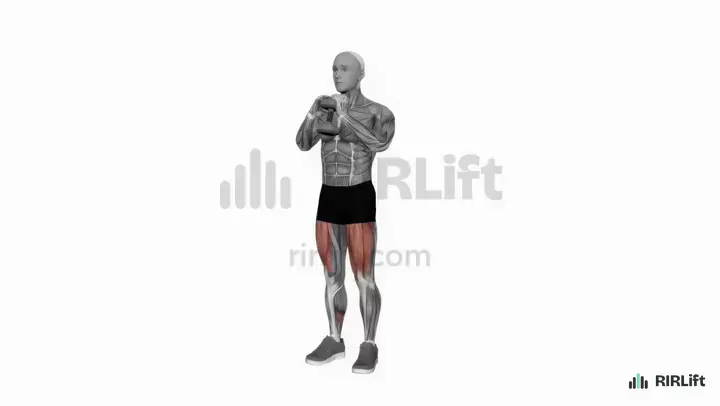
Quads and glutes, dumbbell squat

Goblet Squat

Quads, Glutes

The weight sits in front of you as a counterbalance, so you stay upright as the bump grows. Squat to a bench if depth gets awkward.

How to do it

  1. Hold a dumbbell or kettlebell vertically against your chest.
  2. Sit down between your knees, elbows inside them at the bottom.
  3. Stand up tall.

Cues

  • Elbows nudge the knees out at the bottom.
  • Chest stays up behind the weight.

Common mistakes

  • Letting the weight pull you forward.

Swap for: Bodyweight Squat, Barbell Back Squat

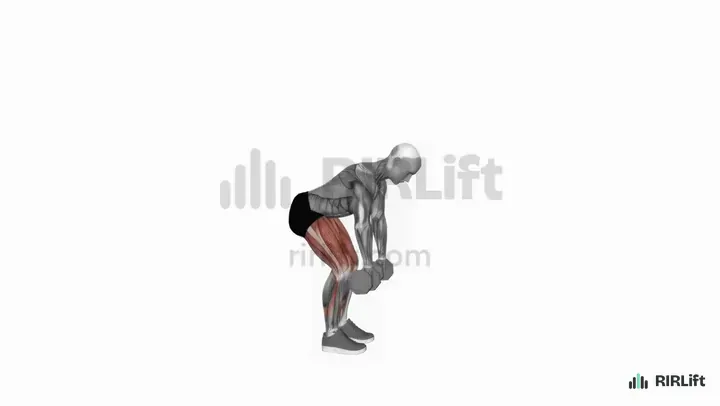
Hamstrings and glutes, hip hinge

Dumbbell Romanian Deadlift

Hamstrings, Glutes

Trains the hips and back of the legs standing, with no floor work. Widen your stance as the belly grows.

How to do it

  1. Stand hip-width apart with a dumbbell in each hand resting against the front of your thighs, palms facing you.
  2. Push your hips straight back and let your torso fold forward, knees softly bent, the dumbbells brushing your legs.
  3. Lower until the dumbbells pass your knees and you feel a strong stretch in your hamstrings, with your back still flat.
  4. Drive your hips forward to stand back up, squeezing your glutes at the top, and repeat.

Cues

  • Hips back, not down
  • Dumbbells slide down your legs
  • Flat back, chin tucked

Common mistakes

  • Bending the knees into a squat so the dumbbells go lower: the depth comes from the hips, and most people stop just past the knees.
  • Rounding the lower back at the bottom: end the rep where your back stays flat, and lighten the load if that is high.

Swap for: Single-Leg RDL, Dumbbell Good Morning, Kettlebell Deadlift

Quads and glutes, one leg at a time

Step-Up

Quads, Glutes

A low box and a hand on the rack if you want one. Log the reps of one leg.

How to do it

  1. Stand facing the bench with two dumbbells.
  2. Place one whole foot on the bench.
  3. Lean forward a little and push through the top foot to stand up on the bench.
  4. Bring the other foot up only to touch, then lower it back to the floor.
  5. Finish all reps on one leg before switching.

Cues

  • Whole foot on the bench
  • Push through the top heel
  • Lower slowly, do not drop

Common mistakes

  • Pushing off the floor with the back foot: that halves the work. Keep the trailing foot light.
  • Using a bench so high that your knee is far above your hip: you will rock instead of step.

Swap for: Barbell Step-Up

Outer hips, seated machine

Hip Abduction Machine

Abductors

Seated, supported, and loaded with a pin: the hip work for a day when standing lifts feel like too much.

How to do it

  1. Sit with the outside of your knees against the pads and set the start so your legs are close together.
  2. Lean your torso forward slightly and hold the handles.
  3. Push your knees apart as far as the machine allows.
  4. Pause at the widest point, return slowly without letting the stack touch, and repeat.

Cues

  • Lean forward a little
  • Pause at the widest point
  • Do not let the plates rest

Common mistakes

  • Bouncing the pads out and letting them slam back: count two seconds on the way in.
  • Using so much weight that the range shrinks to a few inches: full range with less load works better.

Swap for: Lateral Band Walk, Band Seated Hip Abduction, Standing Side Leg Raise

Presses, seated or inclined

Every press here keeps you upright or on an incline bench, so none of them puts you flat on your back.

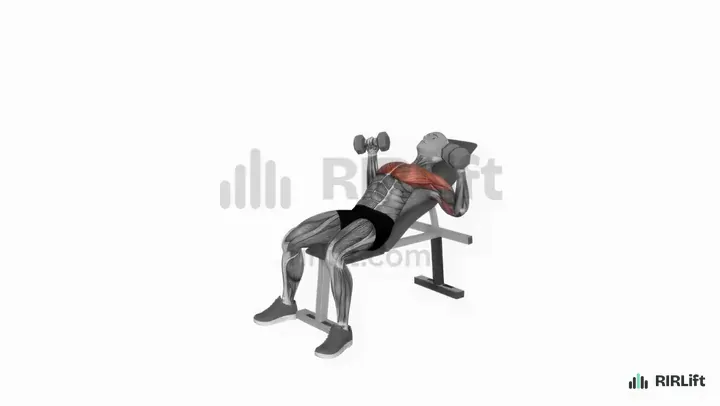
Chest, shoulders and triceps, incline press

Incline Dumbbell Press

Chest

Replaces the flat bench press: the incline keeps you off your back.

How to do it

  1. Set the backrest to about 30 to 45 degrees and sit with the dumbbells on your thighs.
  2. Lean back and bring the weights to the outside of your shoulders as your back meets the pad.
  3. Squeeze your shoulder blades back and keep your hips on the seat.
  4. Press up and slightly in until your arms are straight over your upper chest.
  5. Lower under control until your elbows are just below the bench line.

Cues

  • Low incline, not a shoulder press
  • Wrists stacked over elbows
  • Touch the stretch, then press

Common mistakes

  • Setting the bench steeper than about 45 degrees: the front delts take over. Drop it a notch if you mostly feel your shoulders.
  • Lifting your hips off the seat to finish a rep: that turns it back into a flat press.

Swap for: Single-Arm Incline Dumbbell Press, Incline Dumbbell Squeeze Press, Incline Barbell Bench Press

Chest, shoulders and triceps, seated machine

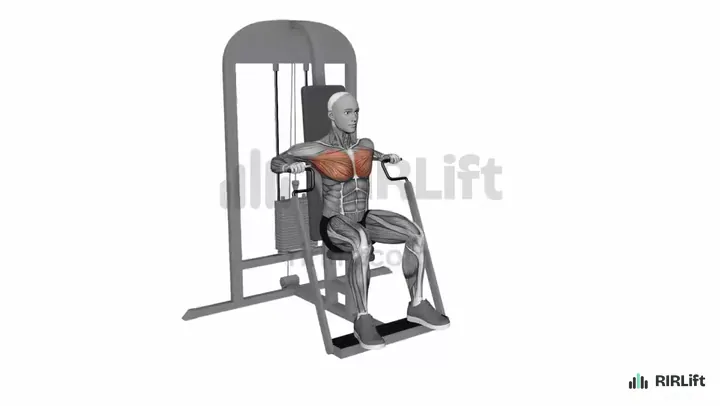
Machine Chest Press

Chest

Upright, supported, and loaded with a pin, the press for the third trimester.

How to do it

  1. Raise or lower the seat until the handles line up with the middle of your chest, then sit with your back on the pad.
  2. Take the handles with straight wrists and your shoulder blades pressed back.
  3. Push forward until your arms are nearly straight.
  4. Return slowly until your hands are level with your chest, then press again.

Cues

  • Handles at mid-chest
  • Back stays on the pad
  • Slow on the way back

Common mistakes

  • Seat too high, so your shoulders take over: lower it until the handles meet your mid-chest.
  • Stopping the handles short of your chest: let them come all the way back each rep.

Swap for: Flat Dumbbell Press, Incline Push-Up, Dumbbell Floor Press

Shoulders and triceps, seated press

Dumbbell Shoulder Press

Shoulders

Seated with the bench upright, so the lower back stays on the pad and out of the lift.

How to do it

  1. Set a bench upright or one notch back from vertical, sit with your feet flat, and rest a dumbbell on each thigh.
  2. Kick one knee up at a time to bring the dumbbells to shoulder height, then set your back against the pad.
  3. Turn your elbows slightly forward so they sit a little in front of your torso, palms facing forward or angled in.
  4. Drive both weights overhead on a slight inward arc until your elbows are straight, keeping your ribs down and your back on the pad.
  5. Lower slowly until the dumbbells are around ear height or a bit below, then press again.

Cues

  • Ribs down, back on the pad
  • Elbows a little forward
  • Press up and slightly in

Common mistakes

  • Arching your lower back off the pad to finish reps: that turns it into an incline press, so lighten the weight and keep your ribs stacked over your hips.
  • Flaring the elbows straight out at shoulder height: bring them a little forward so the shoulder joint stays comfortable at the bottom.
  • Stopping each rep well above your ears: lower to around ear height so the delts work through a full range.

Swap for: Machine Shoulder Press, Arnold Press, Landmine Press

Chest, shoulders and triceps, hands raised

Incline Push-Up

Chest

Hands on a counter or bench: the higher the hands, the easier the rep, and no bar or bench press needed at home.

How to do it

  1. Put your hands on a bench, box or counter, a little wider than shoulder width.
  2. Walk your feet back until your body is a straight line from head to heels.
  3. Lower your chest to the edge, elbows angled about 45 degrees from your sides.
  4. Press back up until your arms are straight.

Cues

  • Body like a plank
  • Elbows at about 45 degrees
  • Higher surface, easier rep

Common mistakes

  • Hips sagging toward the floor: squeeze your glutes and brace as if you were about to be poked in the stomach.
  • Flaring the elbows straight out: tuck them back at about 45 degrees.

Swap for: Kneeling Push-Up, Close-Grip Push-Up, Bench Dip

Side shoulders, light dumbbells

Dumbbell Lateral Raise

Shoulders

Light, standing, and easy to stop mid-set. Pairs with the seated presses in the machine session.

How to do it

  1. Pick light dumbbells you can raise for 12 clean reps, and stand with your feet hip width apart, the weights hanging by your thighs.
  2. Lean your chest forward a few degrees, pull your shoulders down away from your ears and soften your elbows.
  3. Sweep the weights out and slightly forward, leading with your elbows, until your upper arms are level with your shoulders.
  4. Hold that top position for a beat, then take two to three seconds to lower until the dumbbells are a hand's width from your thighs.
  5. Start the next rep from there without resting at the bottom or bouncing out of it.

Cues

  • Elbows lead, hands follow
  • Shoulders down, neck long
  • Push the weights out, not up

Common mistakes

  • Shrugging the weight up: if your shoulders rise toward your ears, drop to lighter dumbbells and stop each rep where your upper arm is level.
  • Swinging the torso to start each rep: brace, stand still and keep the first inch of the lift as slow as the rest.
  • Bending the elbows more and more as the set goes on: set the bend on rep one and keep it, or the lever shortens and the set gets easier without you noticing.

Swap for: Cable Lateral Raise, Band Lateral Raise, Machine Lateral Raise

Rows and pulldowns

Seated or supported pulls for the upper back, which carries more as the bump grows.

Lats and upper back, cable pulldown

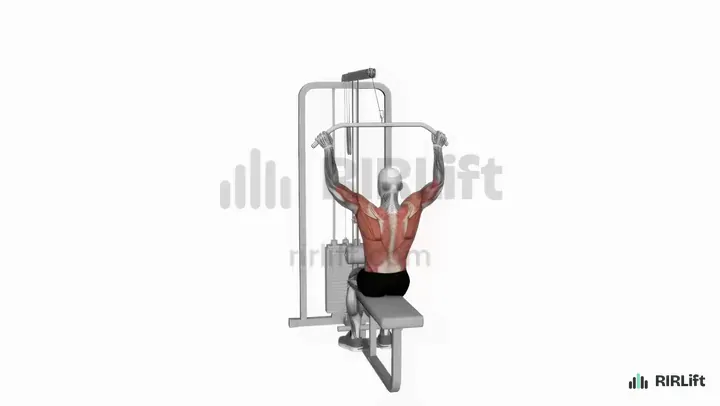
Lat Pulldown

Lats

Seated with the thighs locked under the pad: a pull that needs no balance.

How to do it

  1. Set the thigh pad so your legs are locked under it, then stand up and take the bar a little wider than your shoulders, palms forward.
  2. Sit down with your arms fully stretched overhead and lean back only slightly.
  3. Pull the bar to your upper chest by driving your elbows down toward your hips.
  4. Let the bar rise until your arms are straight and your shoulders lift toward your ears, then pull again.

Cues

  • Elbows to your back pockets
  • Bar to the top of the chest
  • Let the stack lift you at the top

Common mistakes

  • Leaning far back and rowing the bar to your stomach: stay nearly upright so it remains a vertical pull.
  • Stopping with the arms still bent at the top: the stretch overhead is half of what makes the pulldown work.

Swap for: Pull-Up, Neutral-Grip Lat Pulldown, Single-Arm Lat Pulldown

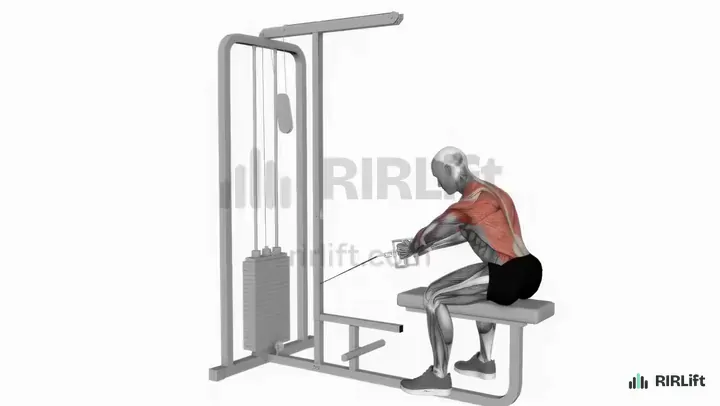
Upper back and lats, cable row

Seated Cable Row

Upper Back, Lats

Sitting upright, feet on the platform, with the stack set by a pin.

How to do it

  1. Sit at the cable row with your feet on the platform and knees slightly bent, holding a close-grip handle with your arms straight.
  2. Sit tall with your chest up and let the cable pull your shoulder blades forward a little.
  3. Row the handle to your lower ribs, driving your elbows back past your torso.
  4. Return it under control until your arms are straight and your shoulders reach forward, then repeat.

Cues

  • Sit tall, no rocking
  • Handle to the belly button
  • Shoulders reach at the front

Common mistakes

  • Rocking back and forth to move the stack: your torso should stay close to upright throughout.
  • Shrugging the handle up toward your neck: pull your shoulders down before the elbows bend.

Swap for: Chest-Supported Row, Single-Arm Cable Row, Barbell Row

Upper back and lats, one arm

One-Arm Dumbbell Row

Lats, Upper Back

Hand on a bench or chair seat with a staggered stance, so nothing presses on the belly. Log the reps of one arm.

How to do it

  1. Put one hand and the same-side knee on a bench, or your hand on a chair seat with both feet on the floor, so your back is flat.
  2. Hold a dumbbell in the other hand with your arm hanging straight.
  3. Pull your elbow back toward your hip until the dumbbell reaches your ribs.
  4. Lower it until your arm is straight again, finish all reps, then switch sides.

Cues

  • Elbow to your hip
  • Back flat as a table
  • Full stretch at the bottom

Common mistakes

  • Twisting your chest open to lift the dumbbell higher: keep both shoulders level.
  • Shrugging the shoulder up toward your ear: pull the elbow back, not the shoulder up.

Swap for: Band Bent-Over Row, Dumbbell Bent-Over Row, Seated Cable Row

Standing core

Trunk work done standing, with the cable pulling you sideways and the body resisting it.

Trunk, anti-rotation

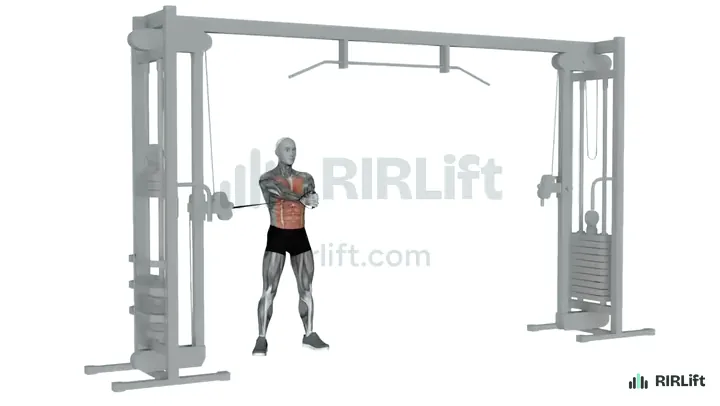
Pallof Press

Abs

Core work standing, with no crunching and no lying down. Log each side as its own set.

How to do it

  1. Set a cable at chest height, stand side-on to it and grip the handle two-handed at your chest.
  2. Step away until the cable pulls, feet hip-width.
  3. Press the handle straight out, hold for two seconds without turning, then bring it back.

Cues

  • Hands on the midline
  • Don't turn
  • Hold it out

Common mistakes

  • Standing too close, so the cable barely pulls.
  • Letting the arms drift toward the stack.

Swap for: Cable Woodchop, Landmine Twist

Put them together: example sessions

Each session below picks from the exercises above for one situation, with the sets, reps, rest and RIR filled in.

Session 1

Already lifting, first and second trimester, gym 3 days

  • Workouts3× a week
  • Working sets33 a week
  • Per workout~30 min
  • EquipmentDumbbells, Incline Bench, Lat Pulldown, Adjustable Cable +2

You lifted before pregnancy and want to keep training in the gym three times a week.

Two full-body days alternate. The flat bench is out from the start: presses are inclined or seated, and every lift stops with two reps left. Rests run to two minutes on the bigger lifts so you are not rushing into the next set warm.

Day A: Squat and incline press
ExerciseSets × repsRIRRest
Goblet Squat 3 × 8–12 2 2 min
Incline Dumbbell Press 3 × 8–12 2 2 min
Lat Pulldown 3 × 10–12 2 90 s
Pallof PressPer side. 2 × 10–12 2 1 min
Day B: Hinge and row
ExerciseSets × repsRIRRest
Dumbbell Romanian Deadlift 3 × 8–12 2 2 min
Dumbbell Shoulder Press 3 × 8–12 2 90 s
Seated Cable Row 3 × 10–12 2 90 s
Step-UpPer leg. Low box. 2 × 8–10 2 90 s
How to run it
Import it, save it, and switch to it in My Programs; only the active program's routines reach the Watch. Alternate A and B, three days a week. Drink between sets, and on a warm day tap +15 s on the Watch when the rest feels short.
How to progress
Goblet squat at 40 lb, target 9: you log 10, 10, 9, the weakest set hit 9, so the dumbbell stays and the next target is 10. Within a session, a set that falls below 8 brings the next set's weight down unless you had more reps left than planned, so a tired day corrects itself as you log it.

Session 2

Third trimester: seated and standing lifts only

  • Workouts2× a week
  • Working sets30 a week
  • Per workout~35 min
  • EquipmentDumbbells, Chest Press, Cable Row, Hip Abductor +1

Your balance has shifted and lying back is uncomfortable, but you still want two strength days a week.

Everything is done seated on a machine or standing on two feet: no lying flat, no step-ups, no single-leg balance. Three reps left on every set, and 10 to 15 reps, so the loads stay moderate. 15 working sets in about 35 minutes.

Seated and standing day
ExerciseSets × repsRIRRest
Goblet SquatSquat to a bench. 3 × 10–15 3 2 min
Machine Chest Press 3 × 10–15 3 90 s
Seated Cable Row 3 × 10–15 3 90 s
Hip Abduction Machine 2 × 12–15 3 1 min
Lat Pulldown 2 × 10–15 3 90 s
Dumbbell Lateral Raise 2 × 12–15 3 1 min
How to run it
Twice a week. Set Pace to Steady in RIRLift for smaller, surer steps. When the gym is busy and the machine you need is taken, swap it from the Watch; if you have never logged the replacement, its first weight is worked out from the lift it replaces.
How to progress
Cable stacks move in 10 lb steps. Seated row at 70 lb for 15, 15, 15 tops 10 to 15 on every set, so the next session opens at 80 lb for 10. If that jump feels like too much, change the weight on the Watch; the engine carries on from what you logged.

Session 3

New to lifting, home dumbbells, 2 short days

  • Workouts2× a week
  • Working sets16 a week
  • Per workout~20 min
  • EquipmentDumbbells

You did not lift before pregnancy and want to start at home with a pair of light dumbbells and a sturdy chair.

ACOG's advice for anyone new to exercise in pregnancy is to start slowly and build up. Four lifts, two sets each, about 20 minutes: a squat, an incline push-up against the counter, a row and a hinge.

Home day
ExerciseSets × repsRIRRest
Goblet Squat 2 × 10–15 3 90 s
Incline Push-Up 2 × 8–15 3 75 s
One-Arm Dumbbell RowPer arm. Hand on a chair seat. 2 × 10–15 3 1 min
Dumbbell Romanian Deadlift 2 × 10–15 3 90 s
How to run it
Twice a week with at least a day between. Add a third set to each lift once two sets feel routine. The phone can stay in the kitchen; the session runs on the Watch.
How to progress
The first time you do each lift it opens at a light estimate, and the first set is as many reps as you can do with good form. That set sets the next weight. After that, every set at the top of 10 to 15 moves the dumbbell up one 5 lb step, and the target resets to 10.

Make it fit you

Questions

Can I lift weights while pregnant?

ACOG says yes for a healthy, normal pregnancy, whether you are continuing or starting. Its precautions that matter in the gym: stay off your back, avoid overheating and drink plenty of water, skip jerky or high-impact moves, and choose lifts you cannot fall from.

What does Apple Watch do for pregnancy?

Once you log a pregnancy in Health on iPhone, the Cycle Tracking app on Apple Watch shows your gestational age and due date. Apple also asks you to review a high heart rate notification threshold set below 120 bpm, and recommends turning off Cardio Fitness notifications during pregnancy and for 12 weeks after.

When should I stop a workout?

ACOG lists these signs: vaginal bleeding, feeling dizzy or faint, shortness of breath before starting, chest pain, headache, muscle weakness, calf pain or swelling, regular painful contractions, or fluid leaking from the vagina. If you have any of them, stop and call your ob-gyn.

How much exercise does ACOG recommend in pregnancy?

At least 150 minutes of moderate-intensity aerobic activity a week, such as brisk walking. Strength sessions like these sit alongside it.

What workout type does a lifting session save as?

When it runs in RIRLift, a session with lifts in it is saved to Apple Health as Traditional Strength Training, with heart rate recorded while it runs.

Sources