Arm exercises at the gym, station by station

The best arm exercises at the gym are the barbell curl and preacher curl for the biceps, the close-grip bench press, cable pressdown and overhead cable extension for the triceps, and the reverse curl and farmer's walk for the forearms. For a full arm workout, pick two biceps, two triceps and one forearm exercise, 2 to 4 sets each, ending each set 0 to 2 reps short of failure. The gym's main advantage over home is the cable column and the preacher bench, so use them.

  1. Close-Grip Bench Press Triceps, Chest
  2. Barbell Curl Biceps
  3. Cable Triceps Pressdown Triceps
  4. Preacher Curl Biceps
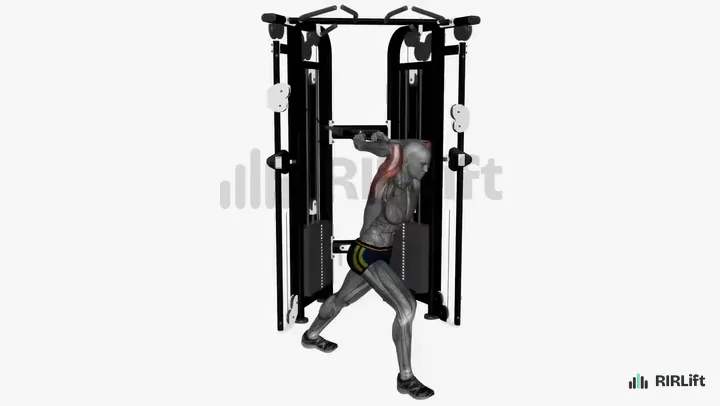
  5. Overhead Cable Triceps Extension Triceps
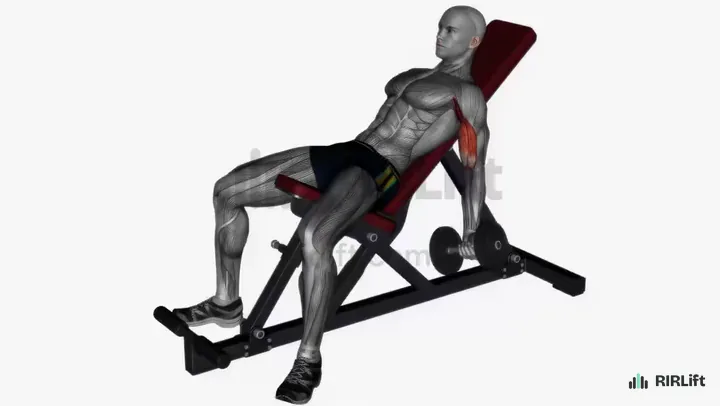
  6. Incline Dumbbell Curl Biceps
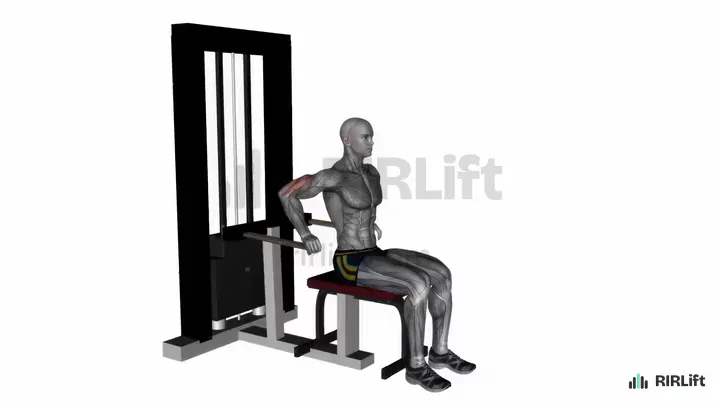
  7. Machine Triceps Dip Triceps
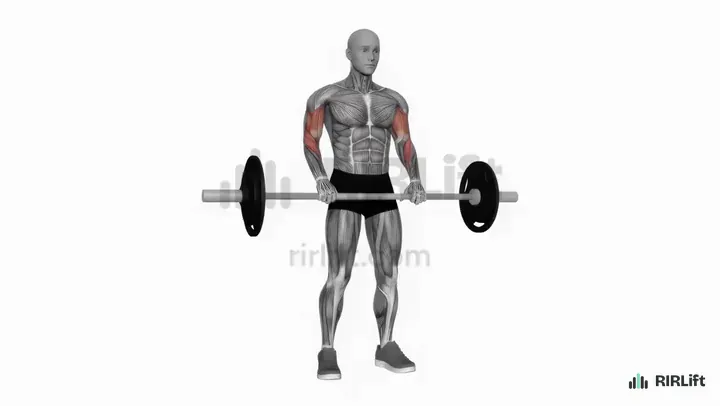
  8. Reverse Curl Biceps, Forearms

Arm exercises with a barbell and EZ bar

Bars let your arms move the most weight, so put these first in a session. The straight barbell suits curls and the close-grip press; the EZ bar's angled grips make the skullcrusher easier on your wrists. Keep 1 to 2 reps in reserve on the heavy sets so your elbows stay fresh for the rest of the workout.

Biceps, heavy straight-bar curl

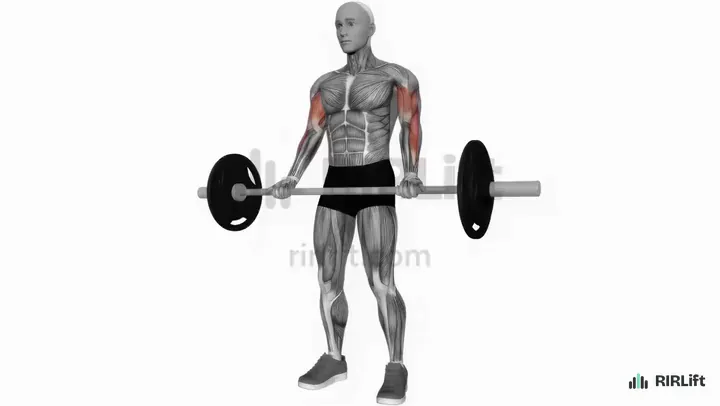
Barbell Curl

Biceps

A straight barbell lets both arms curl the most weight they can together, and it locks your palms fully up, the position where the biceps is strongest. It is the curl that builds raw biceps strength.

How to do it

  1. Stand tall, barbell in your hands palms up at shoulder-width, arms straight against your thighs.
  2. Set your elbows just in front of your hips.
  3. Curl the bar up in an arc until your forearms are nearly vertical.
  4. Lower it back to straight arms over two to three seconds.

Cues

  • Elbows stay just in front of the hips
  • No hip thrust
  • Straight arms between reps

Common mistakes

  • Swinging the bar up with your lower back: if you need the swing, drop 5 kg.
  • Stopping halfway down to keep tension: lowering to straight arms is part of the work.

Swap for: EZ-Bar Curl, Cable Curl, Dumbbell Curl

Triceps, heavy barbell press

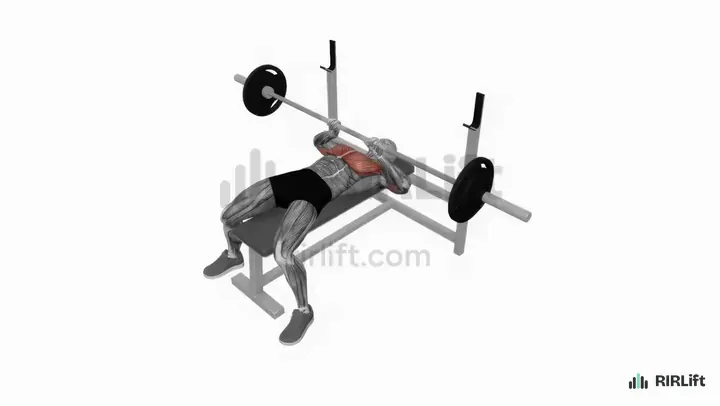
Close-Grip Bench Press

Triceps, Chest

Bringing your hands in on the bench press makes the triceps the main mover, so they can handle more weight here than in any isolation lift. It opens an arm day well, when you are fresh enough to push heavy.

How to do it

  1. Lie back on a flat bench under the racked bar and take a grip just inside shoulder-width.
  2. Unrack and hold the bar above your shoulders.
  3. Lower it to your lower chest, elbows tucked in.
  4. Press it back up until your elbows are straight.

Cues

  • Elbows brush your sides
  • Bar to the lower chest
  • Drive through to lockout

Common mistakes

  • Grip so narrow that your hands touch: it strains the wrists without adding triceps work.
  • Letting the elbows flare wide as you press: that shifts the lift to your chest.

Swap for: JM Press, Machine Triceps Dip, Dumbbell Floor Press

Triceps, lying EZ-bar extension

EZ-Bar Skullcrusher

Triceps

The EZ bar's bends set your wrists at an angle most people find comfortable, so you can load a lying triceps extension heavier than with dumbbells. Bringing the bar behind your head instead of to your forehead adds stretch for the long head.

How to do it

  1. Lie back on a flat bench holding an EZ bar on its narrow angled grips, arms straight over your shoulders.
  2. Let your upper arms tip back a little toward your head and hold them there.
  3. Bend your elbows to lower the bar just behind the top of your head.
  4. Extend your elbows to return to the start.

Cues

  • Upper arms angled back
  • Elbows narrow
  • Smooth, slow lowering

Common mistakes

  • Pulling the bar over your face with your shoulders: only the elbows bend.
  • Going heavy for low reps: this lift is kinder to the elbows at 8 to 15.

Swap for: Dumbbell Skullcrusher, JM Press, Overhead Cable Triceps Extension

Brachialis and forearms, overhand barbell curl

Reverse Curl

Biceps, Forearms

Curling with your palms facing down hands the work to the brachialis and the forearm muscle on the thumb side, which thicken the arm from the side. It needs much less weight than a regular curl.

How to do it

  1. Take the barbell palms down at shoulder-width, bar hanging against your thighs.
  2. Tuck your elbows in and hold your wrists straight.
  3. Curl the bar up toward your shoulders with your knuckles leading.
  4. Lower it under control to straight arms.

Cues

  • Knuckles up all the way
  • Wrists flat
  • Light bar, strict reps

Common mistakes

  • Letting your wrists bend back under the load: lower the weight until they stay straight.
  • Swinging the bar up: overhand curls are easy to cheat, so keep the tempo slow.

Swap for: Zottman Curl, Hammer Curl, EZ-Bar Curl

Forearm flexors, barbell wrist curl

Wrist Curl

Forearms

Kneeling behind a bench with your forearms on it, you can curl a barbell with your wrists alone, which isolates the muscles on the palm side of the forearm. Those muscles build the thickness near the elbow and the grip for every other pull.

How to do it

  1. Kneel behind a flat bench and lay your forearms across it, palms up, wrists just past the edge.
  2. Take a barbell palms up and let it roll toward your fingertips.
  3. Close your hands and curl your wrists up as high as they go.
  4. Lower slowly to the fingertips and repeat.

Cues

  • Forearms stay on the bench
  • Let the bar roll to your fingers
  • Pause at the top

Common mistakes

  • Lifting your forearms off the bench: only the wrists move.
  • Bouncing at the bottom: control the bar at full stretch.

Swap for: Reverse Wrist Curl, Kettlebell Wrist Curl, Farmer's Walk

Arm exercises on the cable machine

One cable column trains both sides of the arm: low pulley for curls, high pulley for pressdowns and overhead extensions. The cable keeps tension at the ends of each rep where free weights go light, which makes these the best exercises to take to failure at the end of a session.

Biceps, low-pulley cable curl

Cable Curl

Biceps

The cable pulls from below and in front, so the biceps has load at the bottom and at the top, unlike a barbell, which goes light near the shoulders. It is the curl to finish with when you want sets to failure without swinging.

How to do it

  1. Clip a straight bar onto a low pulley and take it with an underhand grip.
  2. Stand a step back from the stack so the cable has tension at the bottom.
  3. Curl the bar to your upper chest, elbows at your sides.
  4. Lower back to straight arms against the pull of the cable.

Cues

  • Elbows locked at your sides
  • Squeeze at the top
  • Control the way down

Common mistakes

  • Leaning back to finish the last reps: once you lean, stop the set.
  • Standing so close the stack never leaves the bottom: step back until it does.

Swap for: Barbell Curl, EZ-Bar Curl, Machine Preacher Curl

Biceps, high-pulley double curl

Overhead Cable Curl

Biceps

With both high pulleys pulling your arms wide at shoulder level, the biceps works with your arms raised, a position few other curls load. It is a good second biceps exercise when the free-weight curls are done.

How to do it

  1. Stand centered between two high pulleys, one handle per hand, palms up.
  2. Lift your arms wide until they are level with your shoulders.
  3. Bend your elbows to bring the handles toward your ears without dropping your upper arms.
  4. Straighten your arms back out against the cables and repeat.

Cues

  • Upper arms stay level
  • Handles toward your ears
  • Slow return

Common mistakes

  • Letting your elbows sink as you tire: keep them level or end the set.
  • Pulling with your shoulders and chest: keep your torso still and bend only at the elbows.

Swap for: Cable Curl, Bayesian Cable Curl, Incline Dumbbell Curl

Triceps outer head, high-pulley pressdown

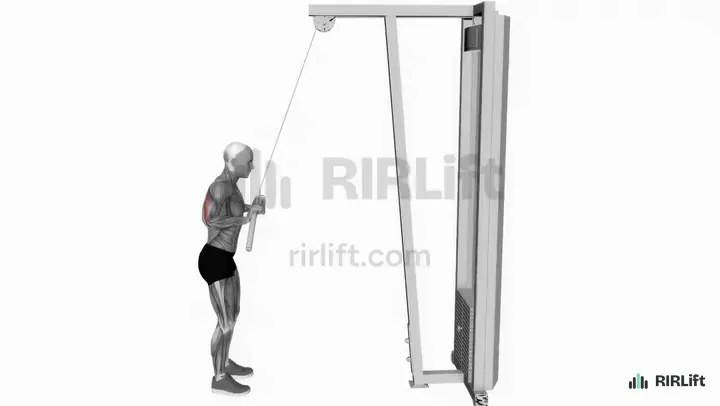
Cable Triceps Pressdown

Triceps

The pressdown is the triceps exercise every gym can offer, with weight that changes in small steps and constant tension from the cable. Pair it with a curl for the classic arm superset.

How to do it

  1. Clip a straight bar to a high pulley and take it palms down, hands about shoulder-width.
  2. Stand close, tuck your elbows to your sides and tip forward slightly.
  3. Press the bar down until your elbows are straight.
  4. Let it come up only until your forearms are level with the floor, then press again.

Cues

  • Elbows don't move
  • Full lockout
  • Stand tall

Common mistakes

  • Leaning over the bar to push with your bodyweight: stand up taller and use less weight.
  • Elbows drifting up as the bar rises: stop the bar at forearm level.

Swap for: Machine Triceps Extension, Cable Triceps Kickback, Close-Grip Push-Up

Triceps long head, rope behind the head

Overhead Cable Triceps Extension

Triceps

Extending a rope from behind your head trains the long head while it is stretched, and that head makes up much of the back of the arm. Cable tension stays on near lockout, which is why this beats the dumbbell version when a column is free.

How to do it

  1. Attach a rope to a high pulley, take an end in each hand and turn away from the machine.
  2. Step forward into a split stance with your hands behind your head and elbows pointing forward.
  3. Extend your elbows until your arms are straight out in front of your head.
  4. Let your hands return behind your head for a full stretch.

Cues

  • Upper arms stay high
  • Long stretch every rep
  • Brace your trunk

Common mistakes

  • Bringing your elbows down to push: keep them up and still.
  • Shortening the stretch as the set gets hard: reduce the weight instead.

Swap for: Seated Dumbbell Overhead Triceps Extension, EZ-Bar Skullcrusher, Kettlebell Overhead Triceps Extension

Gym machines for arms

The preacher bench and the seated dip machine hold your body in place so the target muscle does all the work, which makes them the best arm machines for beginners and for anyone who wants to finish sets close to failure safely. Load the preacher curl with an EZ bar or run it from a low pulley.

Biceps, EZ bar on the preacher bench

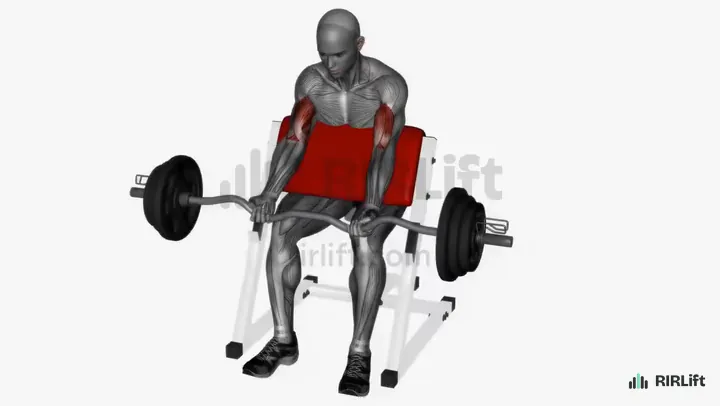
Preacher Curl

Biceps

Laying the backs of your arms over the angled pad stops any cheating and makes the bottom of the curl, with your arms nearly straight, the hardest part. Training the biceps hard while stretched is one of the strongest signals for growth, and the preacher bench is built for it.

How to do it

  1. Sit down at the preacher station, armpits snug against the top of the pad.
  2. Hold an EZ bar on its angled grips, palms up, with your arms almost straight down the pad.
  3. Curl the bar up until your forearms are close to vertical.
  4. Lower slowly until your elbows are almost straight, then curl again.

Cues

  • Armpits on the pad
  • Three-second lowering
  • Stop just short of locking out

Common mistakes

  • Letting the bar drop fast at the bottom: that is where elbows get hurt. Control every inch.
  • Lifting your elbows off the pad at the top: keep the upper arms down and stop the curl earlier.

Swap for: Machine Preacher Curl, Spider Curl, Kettlebell Preacher Curl

Biceps, cable preacher curl

Machine Preacher Curl

Biceps

Running a straight bar from the low pulley over a preacher pad keeps tension on the biceps at every point of the curl, including the top, where a free-weight preacher curl goes light. The stack also changes in small jumps, which beginners and lifters chasing reps both need.

How to do it

  1. Set a preacher bench in front of a low pulley and clip a straight bar on.
  2. Sit with the back of your upper arms flat on the pad and take the bar palms up.
  3. Curl the bar toward your chin, keeping your arms on the pad.
  4. Let it return until your arms are nearly straight and repeat.

Cues

  • Arms flat on the pad
  • Squeeze at the top
  • Slow return

Common mistakes

  • Sitting so far from the pulley that the cable pulls you forward: move the bench close enough that you stay seated.
  • Rounding your shoulders to help the curl: keep your chest up against the pad.

Swap for: Preacher Curl, Cable Curl, Concentration Curl

Triceps, seated dip machine

Machine Triceps Dip

Triceps

The dip machine lets you press down with the weight on a pin instead of hauling your whole body up, so anyone can do a heavy dip at the right load. It is the easiest strong triceps exercise to start with.

How to do it

  1. Sit on the machine and set the handles beside your lower ribs.
  2. Take the handles with your chest up and elbows pointing back.
  3. Press down until your arms are straight.
  4. Let the handles rise until your elbows are at about 90 degrees, then press again.

Cues

  • Elbows point behind you
  • Hips stay on the seat
  • Full lockout

Common mistakes

  • Elbows flaring out: keep them tucked so the triceps does the work.
  • Coming off the seat to move the stack: lower the pin.

Swap for: Bench Dip, Close-Grip Bench Press, Machine Triceps Extension

Dumbbell arm exercises from the rack

A gym's dumbbell rack goes much heavier than a home set, and its adjustable benches unlock the incline curl. Heavy dumbbells also make the farmer's walk the fastest grip and forearm finisher you can do.

Biceps long head, incline bench curl

Incline Dumbbell Curl

Biceps

Leaning back on an incline bench lets your arms hang behind your body, which stretches the long head of the biceps before every rep. It builds the peak, and it needs the adjustable bench and the dumbbell rack a gym has.

How to do it

  1. Tilt an adjustable bench back to about 45 to 60 degrees and sit back holding a pair of dumbbells.
  2. Let your arms hang straight down behind your torso with your palms forward.
  3. Curl both dumbbells up without letting your elbows travel forward.
  4. Lower all the way until your arms hang fully stretched again.

Cues

  • Head and shoulders on the pad
  • Elbows point at the floor
  • Full stretch at the bottom

Common mistakes

  • Bringing the elbows forward to make the curl easier: that removes the stretch that makes this exercise worth doing.
  • Choosing your usual curl weight: this angle is harder, so start a little lighter.

Swap for: Spider Curl, Cable Curl, Dumbbell Curl

Forearms and grip, heavy carry

Farmer's Walk

Forearms, Traps, Shoulders

Picking up the heaviest dumbbells you can hold and walking trains your grip and forearms with loads no wrist curl can match. It is the quickest forearm work in the gym and finishes an arm day in two or three trips.

How to do it

  1. Stand between two heavy dumbbells, squat down and grab the middle of each handle.
  2. Stand up tall with your shoulders down and your arms straight at your sides.
  3. Walk with short, steady steps for the set distance or time.
  4. Set the dumbbells down under control before your grip opens.

Cues

  • Crush the handles
  • Shoulders down, chest tall
  • Short quick steps

Common mistakes

  • Letting the dumbbells swing into your legs: walk slower and keep your trunk braced.
  • Holding the handles near the plates so they tip: grip the middle.

Swap for: Dumbbell Suitcase Carry, Trap Bar Shrug, Kettlebell Row

Put them together: example sessions

Each session below picks from the exercises above for one situation, with the sets, reps, rest and RIR filled in. Open one in the session builder to change a pick, price it from a recent set, and add it to RIRLift.

Session 1

New to the gym, guided machines first

Open in the session builder
  • Workouts2× a week
  • Working sets24 a week
  • Per workout~30 min
  • EquipmentDip Machine, Preacher Curl Machine, Adjustable Cable

You have just joined a gym and want arm exercises you can set up on your own without feeling lost on the floor.

Every exercise here has a fixed path or a pad that holds your arm, so you can focus on effort rather than balance. The dip machine and cable preacher curl are the heavier moves; the pressdown and cable curl use the same column one after the other to save walking around. Sets stop at 2 RIR because new lifters misjudge how close to failure they are, and the margin keeps form clean while you learn. Each muscle gets 6 sets per session.

Machine Arms
ExerciseSets × repsRIRRest
Machine Triceps Dip1 warm-up set first 3 × 10–15 2 90 s
Machine Preacher Curl1 warm-up set first 3 × 10–15 2 90 s
Cable Triceps Pressdown 3 × 10–15 2 75 s
Cable Curl 3 × 10–15 2 75 s
How to run it
Do the routine twice a week, either on its own or after your main lifts. Rest about a minute and a half between sets.
How to progress
Add a rep to every set until all reach the top of the range, then move the pin up one step. After eight weeks, try the arm-day plan.

Session 2

Arm finisher after push or pull, 20 minutes

Open in the session builder
  • Workouts2× a week
  • Working sets20 a week
  • Per workout~15 min
  • EquipmentAdjustable Cable, Cable Crossover

You train push, pull and legs, and want to add arm work at the end of a session at one cable crossover.

Presses and rows have already worked your arms through the middle of their range, so this finisher uses the positions they leave out: the triceps stretched overhead, and the biceps working with your arms raised. A pressdown and a low cable curl follow as the high-rep finish. Pairing biceps and triceps back to back lets one rest while the other works, which keeps the finisher to 20 minutes, and sets go to 0 to 1 RIR because the loads are moderate and the cables keep form safe.

Cable Finisher
ExerciseSets × repsRIRRest
A1 Overhead Cable Triceps Extension 3 × 10–15 1 0 s
A2 Overhead Cable Curl 3 × 10–15 1 1 min
B1 Cable Triceps Pressdown 2 × 12–20 0 0 s
B2 Cable Curl 2 × 12–20 0 1 min
How to run it
Add it to the end of one push and one pull day each week. Go from the first move in a pair to the second with no rest, then rest 60 seconds.
How to progress
Add reps first, then move up one pin. Keep the last set of each pair at 0 RIR.

Session 3

Full gym, one or two arm days a week

Open in the session builder
  • Workouts2× a week
  • Working sets27 a week
  • Per workout~35 min
  • EquipmentBarbells, Flat Bench, EZ Bar, Dumbbells +4

You lift regularly, your arms lag behind the rest of you, and you are willing to give them a session of their own.

A dedicated day lets you start with the heavy lifts while you are fresh: the close-grip bench and barbell curl in the 6 to 10 range at 2 RIR. The second half of each session moves to the stretched-position exercises, the incline curl, preacher curl and skullcrusher, at 1 RIR. The reverse curl, wrist curl and farmer's walk give forearms their own work, since heavy arm days tire the grip first. Two routines let you repeat the week without repeating the same session.

Arm Day A
ExerciseSets × repsRIRRest
Close-Grip Bench Press2 warm-up sets first 3 × 6–10 2 2:30 min
Barbell Curl1 warm-up set first 3 × 6–10 2 2 min
EZ-Bar Skullcrusher 3 × 8–12 1 90 s
Incline Dumbbell Curl 3 × 8–12 1 90 s
Farmer's WalkSeconds, not reps. 2 × 30–45 1 90 s

Open Arm Day A in the session builder

Arm Day B
ExerciseSets × repsRIRRest
Overhead Cable Triceps Extension 3 × 10–15 1 75 s
Preacher Curl 3 × 8–12 1 90 s
Machine Triceps Dip 3 × 8–12 1 90 s
Reverse Curl 2 × 10–15 1 75 s
Wrist Curl 2 × 15–20 0 1 min

Open Arm Day B in the session builder

How to run it
Run Arm Day A and Arm Day B on separate days, at least two days apart. If you only have one arm day, alternate them week to week.
How to progress
On the barbell lifts, add 2.5 kg when every set reaches the top of the range at 2 RIR. On everything else, add reps before weight.

Make it fit you

Questions

What gym machines are best for arms?

The cable machine is the most useful, since one column trains biceps and triceps with a curl, a pressdown and an overhead extension. The preacher bench, alone or in front of a low pulley, is the best biceps machine, and the seated dip machine and triceps extension machine are the best triceps machines.

What exercises work the arm muscles?

Curls work the biceps, presses and extensions work the triceps, and reverse curls, wrist curls and carries work the forearms. Pick at least one from each group, and give the triceps as many sets as the biceps, since it is the larger muscle.

Are 4 exercises enough for arm day?

Yes. Two biceps and two triceps exercises at 3 sets each give each muscle 6 hard sets, which is plenty for one session. Add a forearm exercise if your grip or forearms lag.

Should I train arms on their own day?

If your arms lag, yes. Otherwise, adding two or three arm exercises to your push and pull days is enough, because pressing and rowing already train the triceps and biceps.

How many sets per week do arms need?

Most people grow on 8 to 14 hard sets per muscle per week, counting presses for the triceps and rows and pull-ups for the biceps, split over at least two sessions.