Bicep exercises at the gym: bars, cables, benches and the chin-up bar

The best bicep exercises at the gym are the EZ-bar curl and barbell curl for heavy loading, the cable curl and overhead cable curl for tension through the whole rep, the preacher curl and incline dumbbell curl for the stretched position, and the hammer curl for arm thickness. Pick one heavy bar curl, one cable curl and one curl done on a bench or pad, and you have used what the gym offers that a home setup usually does not. Add chin-ups on back day and they count toward your biceps too.

  1. EZ-Bar Curl Biceps
  2. Cable Curl Biceps
  3. Preacher Curl Biceps
  4. Incline Dumbbell Curl Biceps
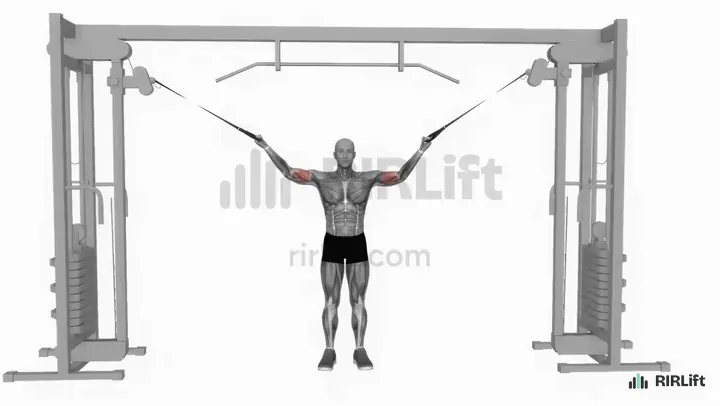
  5. Overhead Cable Curl Biceps
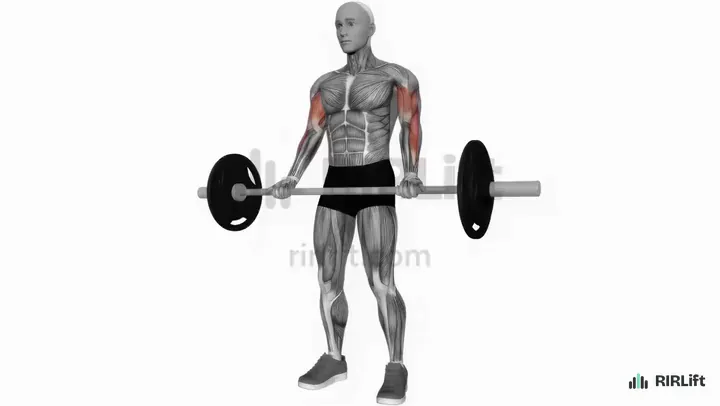
  6. Barbell Curl Biceps
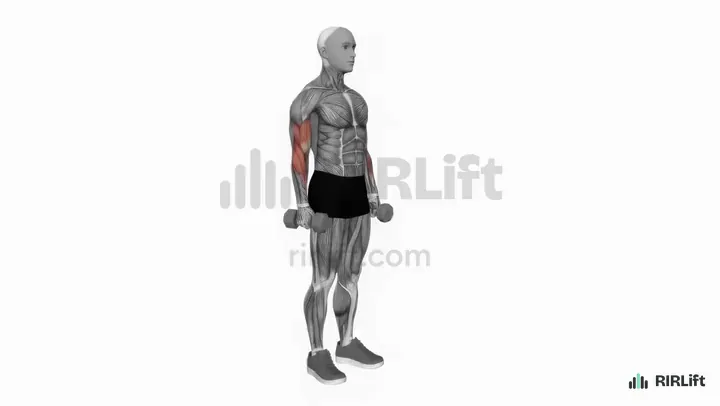
  7. Hammer Curl Biceps, Forearms
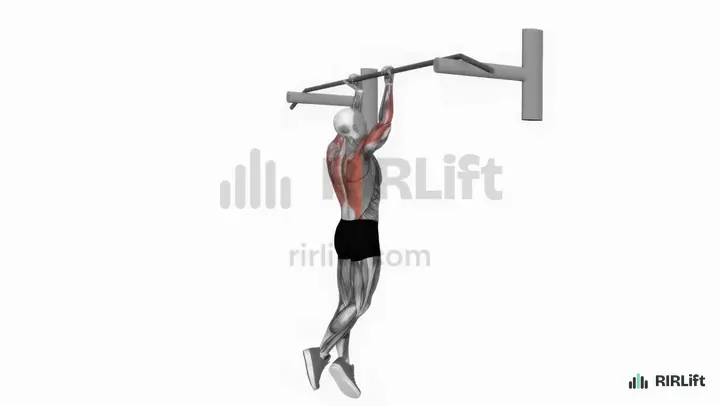
  8. Chin-Up Lats

Barbell and EZ-bar curls for heavy biceps work

The bar curls are where the gym beats any home setup: plates go up in small steps and you can keep adding load for a long time. Start your bicep day with one of these while you are fresh, in the 6 to 12 rep range, then move to the lighter, more targeted curls below.

Biceps, heavy two-arm curl

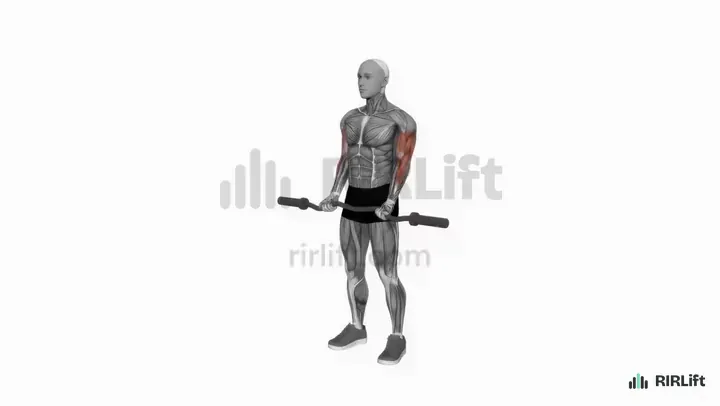
EZ-Bar Curl

Biceps

The angled grip sits your wrists halfway between palms-up and thumbs-up, which most people find kinder to the wrists and elbows than a straight bar. That comfort lets you load it heavy and keep adding small plates for months, so it is the curl to build a gym routine around.

How to do it

  1. Grab the EZ bar on the inner or outer bends, whichever lets your wrists sit without strain, and stand tall with the bar against your thighs.
  2. Park your elbows just in front of your hips and brace your stomach so your torso stays still.
  3. Curl the bar in an arc until your forearms are close to vertical, without letting your elbows drift up toward your shoulders.
  4. Lower over about two seconds until your arms are fully straight again before the next rep.

Cues

  • Elbows parked by your ribs
  • Squeeze the bar, not just hold it
  • Full lockout at the bottom

Common mistakes

  • Rocking the hips forward to start each rep: drop the weight until the first inch moves with the arms alone.
  • Cutting the bottom short: the stretched half is where the set does its best work, so straighten your arms every time.

Swap for: Barbell Curl, Preacher Curl, Cable Curl

Biceps, heaviest standing curl

Barbell Curl

Biceps

A straight bar locks your hands fully palms-up, which puts the biceps in its strongest pulling position and lets you move more weight than any other curl here. Use it when you want a low-rep strength block for your arms or when the EZ bars are all taken.

How to do it

  1. Take a shoulder-width underhand grip on a straight barbell and stand up with it hanging at arm's length.
  2. Set your shoulders down and back with both elbows tucked in by your sides.
  3. Curl the bar up until it reaches upper-chest height, keeping your wrists straight rather than curled in.
  4. Lower it slowly to a full arm extension, reset your stance if needed, and go again.

Cues

  • Thumbs around the bar
  • Ribs down, glutes tight
  • Control the last inch down

Common mistakes

  • Grip much wider than your shoulders: it shortens the range and shifts work off the biceps, so keep hands about shoulder width.
  • Shrugging the bar up at the top: stop when your forearms are near vertical and keep the shoulders out of it.

Swap for: EZ-Bar Curl, Barbell Drag Curl, Cable Curl

Biceps, short-range curl for the top

Barbell Drag Curl

Biceps

Instead of swinging out in an arc, the bar slides straight up your torso while your elbows travel behind you. That keeps tension on the biceps where the standard curl gets easy, so it pairs well as a second barbell movement once the heavy curl is done.

How to do it

  1. Hold a barbell with a shoulder-width underhand grip, arms straight, bar touching your thighs.
  2. Pull your elbows back behind your body as you bend them, so the bar rides up against your stomach.
  3. Keep sliding it upward until it touches the bottom of your chest and your elbows point behind you.
  4. Lower the bar the same way, keeping it in contact with your body, until your arms are straight.

Cues

  • Bar stays on your shirt
  • Elbows go back, not forward
  • Chest up, shoulders down

Common mistakes

  • Letting the bar drift away from your body: that turns it back into a regular curl, so keep contact the whole rep.
  • Going too heavy and leaning back: use about two thirds of your barbell curl weight.

Swap for: Barbell Curl, EZ-Bar Curl, Spider Curl

Cable bicep exercises

Cables keep pulling at the bottom of the curl, where dumbbells go quiet, and the pin lets you change weight in seconds for drop sets. The crossover station adds the arms-out curl, which you cannot copy with free weights.

Biceps, constant-tension curl

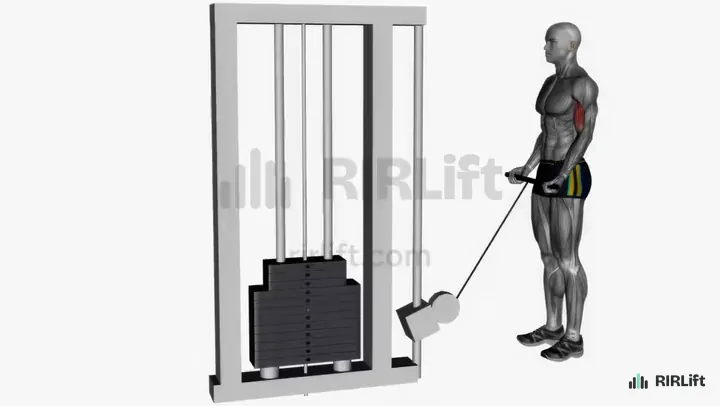
Cable Curl

Biceps

A cable pulls on your hands through the whole rep, including the bottom where a free weight hangs straight down and does almost nothing. The weight stack also moves in small, easy jumps, which makes it the simplest curl to progress for anyone new to the gym floor.

How to do it

  1. Clip a straight or EZ handle to the low pulley, take an underhand grip, and step back until the stack lifts slightly.
  2. Stand tall with your elbows at your sides and a soft bend in your knees.
  3. Curl the handle toward your shoulders until your forearms are close to vertical.
  4. Let the cable pull your hands back down slowly until your arms are straight and the weight is just off the stack.

Cues

  • Step back for tension at the bottom
  • Elbows fixed at your sides
  • Slow on the way down

Common mistakes

  • Standing too close to the pulley: the cable goes slack at the bottom, so take a step or two back.
  • Leaning back as the set gets hard: keep your torso upright and end the set when you cannot.

Swap for: EZ-Bar Curl, Cable Twisting Curl, Overhead Cable Curl

Biceps, arms-out curl on the crossover

Overhead Cable Curl

Biceps

Standing between two high pulleys arms spread wide, you curl both handles toward your head. Your upper arms stay up at shoulder height, which trains the biceps from a different angle than every curl with your arms down and gives a strong squeeze at the end.

How to do it

  1. Set both pulleys of a crossover station at the top and attach single handles.
  2. Stand in the middle, take a handle in each hand palms-up, and lift your arms sideways to roughly shoulder height.
  3. Bend your elbows to bring the handles toward your ears while your upper arms stay still.
  4. Straighten your arms back out under control until the elbows are nearly locked, then repeat.

Cues

  • Upper arms stay level
  • Hands toward your temples
  • Pause at the squeeze

Common mistakes

  • Letting the elbows drop as you curl: keep the upper arms at shoulder height or the angle disappears.
  • Going so heavy that you get pulled off balance: stand with one foot slightly ahead and use a weight you can hold still.

Swap for: Cable Curl, Spider Curl, Cable Twisting Curl

Biceps, curl with forearm twist

Cable Twisting Curl

Biceps

Your biceps does two jobs: it bends the elbow and it turns the palm up. This cable curl starts with a neutral grip and twists to palms-up as you lift, so it trains both jobs in one rep and the cable keeps resistance on through the turn.

How to do it

  1. Attach a single handle to a low pulley and hold it in one hand with your palm facing in.
  2. Stand side-on or facing the pulley, elbow by your side, arm straight.
  3. Curl the handle up and rotate your hand so your palm faces the ceiling as you finish.
  4. Untwist back to a neutral grip as you lower to a straight arm, then repeat and switch sides.

Cues

  • Turn the pinky up at the top
  • Elbow stays put
  • One arm, full focus

Common mistakes

  • Rushing the twist at the very end: start rotating early and finish it as your forearm reaches vertical.
  • Swinging the body to finish reps: a single handle is light work, so pick a stack weight you can control.

Swap for: Cable Curl, Overhead Cable Curl, Incline Dumbbell Curl

Preacher, incline and spider curls

These three use a pad or an angled bench to hold your upper arm in place. The preacher and incline curls load the biceps hardest where it is stretched, the spider curl where it is shortened, so one of each across a week covers the whole range.

Biceps, supported curl

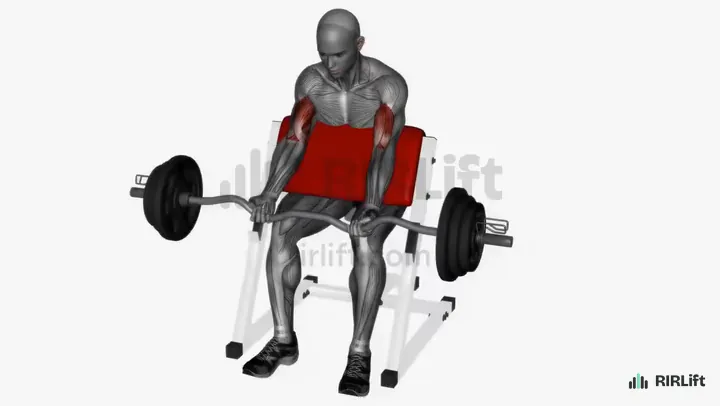
Preacher Curl

Biceps

The angled pad holds your upper arms still, so you cannot swing or lean to finish a rep, and the biceps works hardest near the bottom where it is stretched. It is the curl that tells you honestly how strong your arms are, and a good one to take close to failure safely.

How to do it

  1. Adjust the preacher seat so the top of the pad sits under your armpits with your upper arms flat on it.
  2. Take the EZ bar palms-up, arms nearly straight down the pad.
  3. Curl the bar up until your forearms are just short of vertical, keeping your elbows on the pad.
  4. Lower slowly to a nearly straight arm, stopping a hair before the elbows fully lock under load.

Cues

  • Armpits snug on the pad
  • Lower for a slow two count
  • Stop short of vertical at the top

Common mistakes

  • Dropping fast into the bottom: the stretch is where strain builds, so lower under control every rep.
  • Lifting your elbows off the pad to finish: end the set instead.

Swap for: Spider Curl, EZ-Bar Curl, Incline Dumbbell Curl

Biceps, stretched-position curl

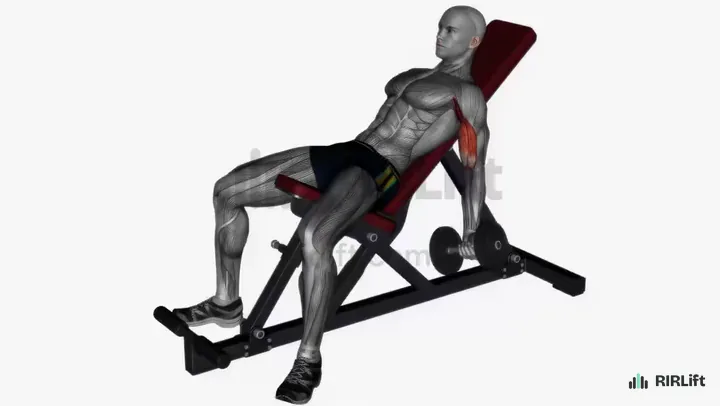
Incline Dumbbell Curl

Biceps

Lying back on an incline bench lets your arms hang behind your body, which puts the biceps on a long stretch before each curl. The bench is the gym piece most home setups lack at the right angle, and lighter dumbbells still make this one hard.

How to do it

  1. Tilt an adjustable bench to about 45 to 60 degrees and lean back on it holding one dumbbell per hand.
  2. Hang your arms straight beside the bench, palms facing forward.
  3. Curl both dumbbells up without moving your upper arms forward.
  4. Lower slowly until your arms are straight and you feel the stretch at the front of the shoulder, then repeat.

Cues

  • Head and back on the bench
  • Arms hang behind your torso
  • Curl without the elbows swinging forward

Common mistakes

  • Setting the bench too upright: it removes the stretch, so start around 45 to 60 degrees.
  • Using your usual standing-curl weight: expect to drop a few pounds.

Swap for: Preacher Curl, Spider Curl, Cable Curl

Biceps, chest-supported curl for the top

Spider Curl

Biceps

You lie chest-down on an incline bench with your arms hanging straight below you. Gravity now resists hardest in the top part of the curl, the opposite of the incline curl, and the bench stops any body English, so the two make a matched pair.

How to do it

  1. Set a bench to about 45 degrees and lie face-down on it with your chest on the pad and feet on the floor.
  2. Hold the dumbbells so they hang toward the floor, palms forward.
  3. Curl both dumbbells up and squeeze hard at the top for a moment.
  4. Lower under control until your arms are straight down again.

Cues

  • Chest stays on the pad
  • Upper arms point at the floor
  • Hold the squeeze one second

Common mistakes

  • Letting the elbows travel forward toward your face: keep the upper arms vertical.
  • Shortening the bottom of each rep: straighten your arms fully before the next one.

Swap for: Preacher Curl, Barbell Drag Curl, Overhead Cable Curl

Hammer and reverse curls for thicker arms

The muscle under your biceps, the brachialis, and the top of the forearm get more of the load once your palms turn in or down. Two to four sets a week of either is enough, and they give your elbows a rest from the palms-up curls.

Brachialis and forearms, neutral-grip curl

Hammer Curl

Biceps, Forearms

With your thumbs pointing up, more of the work moves to the brachialis under the biceps and to the brachioradialis on the forearm. Those muscles add width to the arm when seen from the front, and most people can hammer curl heavier than they can regular curl.

How to do it

  1. Stand with one dumbbell per hand at your sides, palms facing your thighs.
  2. Keep that grip and curl one or both dumbbells up until your forearm is close to vertical.
  3. Keep your wrist straight and your elbow just in front of your hip.
  4. Lower under control to a straight arm and repeat.

Cues

  • Thumbs to the ceiling
  • Wrists locked straight
  • No hip swing

Common mistakes

  • Turning the hammer curl into a cross-body swing: curl in a straight line unless you are doing that variation on purpose.
  • Letting the elbow drift back: it shortens the range and lets the shoulder help.

Swap for: Reverse Curl, EZ-Bar Curl, Cable Curl

Brachialis and forearms, overhand barbell curl

Reverse Curl

Biceps, Forearms

Turning your palms down on a barbell takes much of the load off the biceps and hands it to the brachialis and the top of the forearm. Use it lighter and for higher reps as the last curl of the day when your elbows need a break from palms-up work.

How to do it

  1. Hold a barbell or EZ bar palms down, hands about shoulder width.
  2. Stand tall with your elbows tucked and your wrists in line with your forearms.
  3. Curl the bar up until your forearms are close to vertical, knuckles leading.
  4. Lower slowly to straight arms and repeat.

Cues

  • Knuckles to the ceiling
  • Wrists flat, not bent back
  • Lighter than you think

Common mistakes

  • Letting the wrists bend backward at the top: keep them straight, or switch to an EZ bar for comfort.
  • Leaning back to finish: drop the weight a plate.

Swap for: Hammer Curl, Barbell Curl, EZ-Bar Curl

Chin-ups that count as bicep work

An underhand pull loads your biceps with your bodyweight, so a few hard sets on back day already add real bicep volume. Count them when you plan your weekly sets and cut a curl if your elbows complain.

Biceps and lats, bodyweight pull

Chin-Up

Lats

An underhand pull-up makes your biceps lift your whole body, which is more load than most people ever curl. If you train back and arms on the same day, a few hard sets of chin-ups count toward both, and the assisted machine at most gyms lets you build up to them.

How to do it

  1. Hang from the bar with a shoulder-width underhand grip and your arms straight.
  2. Draw the shoulder blades toward your back pockets, then drive your elbows toward your ribs to lift your chest to the bar.
  3. Get your chin over the bar without craning your neck forward.
  4. Lower all the way to a dead hang and pause briefly before the next rep.

Cues

  • Chest to the bar
  • Elbows down to your pockets
  • Full hang every rep

Common mistakes

  • Half reps from a bent-arm start: a rep begins from straight arms.
  • Kicking the legs to get the last reps: if you need it, switch to the assisted machine and keep the form.

Swap for: Close-Grip Chin-Up, EZ-Bar Curl, Cable Curl

Build a session with Chin-Up

Biceps and lats, narrow underhand pull

Close-Grip Chin-Up

Lats, Biceps

Bringing your hands closer than shoulder width lets your elbows travel farther and keeps them in front of you, which shifts more of the pull to the biceps than a standard chin-up does. Use it as the heavy bodyweight pull on an arm-focused day.

How to do it

  1. Grip the bar underhand with your hands about a fist or two apart.
  2. Hang with straight arms and knees a little bent or ankles crossed.
  3. Pull until your chin passes the bar, keeping your elbows in front of your body.
  4. Lower slowly to a full hang before starting the next rep.

Cues

  • Hands close, elbows forward
  • Lower for two seconds
  • Straight arms at the bottom

Common mistakes

  • Gripping so close the wrists ache: widen until the wrists are comfortable.
  • Dropping straight from the top: control the descent, it is half the work.

Swap for: Chin-Up, Preacher Curl, Barbell Curl

Put them together: example sessions

Each session below picks from the exercises above for one situation, with the sets, reps, rest and RIR filled in. Open one in the session builder to change a pick, price it from a recent set, and add it to RIRLift.

Session 1

New to the gym, two short sessions a week

Open in the session builder
  • Workouts2× a week
  • Working sets13 a week
  • Per workout~15 min
  • EquipmentAdjustable Cable, EZ Bar, Preacher Bench, Dumbbells

You have joined a gym recently, the free-weight area still feels busy, and you want a bicep routine you can run on the cable stack and the preacher station without guessing.

Cables and a preacher pad guide the movement, so your form holds while you learn how a hard set feels. Three exercises per session keeps it short, and every set stops 2 reps short of failure because judging reps in reserve takes a few weeks of practice. The two sessions total 13 working sets a week, enough to grow from in your first months.

Arms A
ExerciseSets × repsRIRRest
Cable CurlStraight bar. Step back for tension. 3 × 10–15 2 75 s
Preacher CurlEZ bar. Slow on the way down. 2 × 8–12 2 90 s
Hammer CurlBoth arms at once. 2 × 10–15 2 1 min

Open Arms A in the session builder

Arms B
ExerciseSets × repsRIRRest
EZ-Bar CurlElbows by your ribs. 3 × 8–12 2 90 s
Cable Twisting CurlPer arm. Twist palm up at the top. 3 × 10–15 2 1 min

Open Arms B in the session builder

How to run it
Do Arms A and Arms B on different days, at the end of whatever else you train, or as two short sessions of their own.
How to progress
Use the pin: once every set reaches the top of the rep range at 2 reps in reserve, move the pin down one plate next time. After about six weeks, start taking the last set of each exercise to 1 rep in reserve.

Session 2

Full gym access, dedicated arm day

Open in the session builder
  • Workouts2× a week
  • Working sets17 a week
  • Per workout~20 min
  • EquipmentBarbells, Dumbbells, Incline Bench, Cable Crossover +1

You have trained for a year or more, have the whole gym available, and run a split with an arm day plus a back or pull day each week.

The arm day leads with a heavy barbell curl while you are fresh, then covers the stretched position with the incline curl and the shortened one with the spider curl, finishing on the crossover. The pull day adds close-grip chin-ups and a reverse curl, so biceps get about 17 hard sets a week across two days. Isolation sets go to 0 to 1 reps in reserve because cables and pads keep a failed rep safe; the heavy barbell curl and the chin-ups stay at 1 to 2 so form holds.

Biceps Day
ExerciseSets × repsRIRRest
Barbell Curl2 warm-up sets firstShoulder-width grip. 3 × 6–10 1 2 min
Incline Dumbbell CurlBench at 45 to 60 degrees. 3 × 8–12 1 90 s
Spider CurlHold the top one second. 2 × 10–15 0 1 min
Overhead Cable CurlUpper arms level with shoulders. 3 × 12–15 0 1 min

Open Biceps Day in the session builder

Pull Day Biceps
ExerciseSets × repsRIRRest
Close-Grip Chin-UpFull hang each rep. 3 × 6–10 2 2:30 min
Reverse CurlEZ bar if wrists complain. 3 × 10–15 1 1 min

Open Pull Day Biceps in the session builder

How to run it
Run Biceps Day as its own session or after triceps. Add the Pull Day Biceps block to the end of your back session, at least two days after Biceps Day.
How to progress
Add a rep per set each week until you hit the top of the range at the target reps in reserve, then add the smallest plate or one pin. On chin-ups, add a few pounds on a belt once you get 8 clean reps on every set.

Session 3

Peak hours, one cable station and an EZ bar

Open in the session builder
  • Workouts1× a week
  • Working sets11 a week
  • Per workout~20 min
  • EquipmentEZ Bar, Adjustable Cable, Barbells

You train after work when the benches and racks are taken, and you can usually claim one cable column and an EZ bar for half an hour.

Everything happens in one spot, so you never wait for equipment. The EZ-bar curl is the one heavy movement; after it, the cable curl and twisting curl are paired with the drag curl back to back to save time, and the drag curl uses the same EZ bar. Supersets of two curls tire the same muscle, so the rests stay at 60 to 75 seconds and the targets sit at 1 rep in reserve to keep reps clean. It is 11 working sets in about 25 minutes.

Biceps Express
ExerciseSets × repsRIRRest
EZ-Bar CurlFirst while fresh. 3 × 8–12 1 90 s
A1 Cable CurlThen straight into the drag curl. 3 × 10–15 1 1 min
A2 Barbell Drag CurlUse the EZ bar. Bar on your torso. 3 × 10–15 1 1 min
Cable Twisting CurlPer arm. Finish here. 2 × 12–15 0 45 s
How to run it
Do this once or twice a week. Set up the cable with a straight handle, keep the EZ bar beside you, and do each superset pair back to back before resting.
How to progress
When all sets reach the top of their range at 1 rep in reserve, add 5 pounds to the EZ bar or one pin on the stack. If the gym is quieter one day, swap the drag curl for a preacher curl.

Make it fit you

Questions

What bicep exercises should I do at the gym?

One heavy bar curl (EZ bar or straight barbell), one cable curl, and one curl on a pad or bench (preacher or incline). Those three load the biceps at different points in the range, and a gym has the equipment for all of them. Chin-ups on back day add more.

What is the best bicep exercise at the gym?

For most people it is the EZ-bar curl, because it loads heavy, it is easy on the wrists, and you can add small plates for months. The preacher curl comes next for the stretched position, which a standing curl does not load as hard.

Is a 20 kg bicep curl good?

It depends on the bar and the reps. A 20 kg barbell or EZ curl for 8 to 12 clean reps is solid for most people after some months of training. Two 20 kg dumbbells is a lot more. What matters more is that the number goes up over time at the same reps in reserve.

How many bicep exercises should I do in a gym workout?

Two or three. One heavy bar curl plus one or two others that load different parts of the range covers it, at 6 to 10 total sets. More exercises just spreads the same effort thinner.

Should I train biceps on back day or arm day?

Either works. Rows and chin-ups already work the biceps, so curls after back day are efficient. A separate arm day lets you train them fresh and heavier. If you train biceps twice a week, do one of each.