
Dumbbell arm exercises for biceps, triceps and forearms
Published October 19, 2026
The best dumbbell arm exercises are the curl and the hammer curl for the biceps and brachialis, the overhead extension, skullcrusher and kickback for the triceps, and the Zottman curl and farmer's walk for the forearms. A complete arm session uses one or two biceps moves, one or two triceps moves and one forearm move, 2 to 4 hard sets each, ending 0 to 2 reps short of failure. Give the triceps at least as many sets as the biceps, since it is the larger muscle.
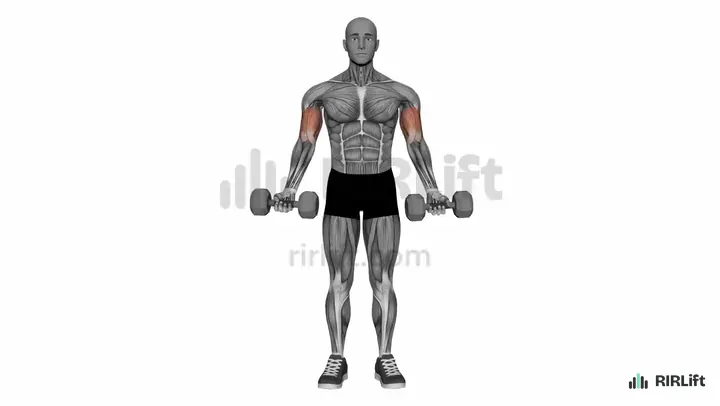
- Dumbbell Curl Biceps
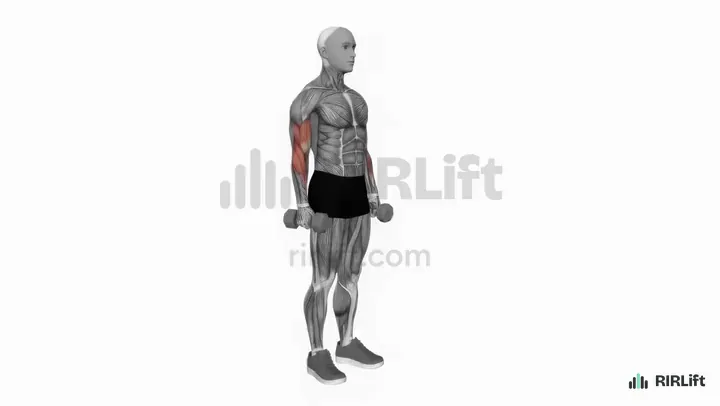
- Hammer Curl Biceps, Forearms
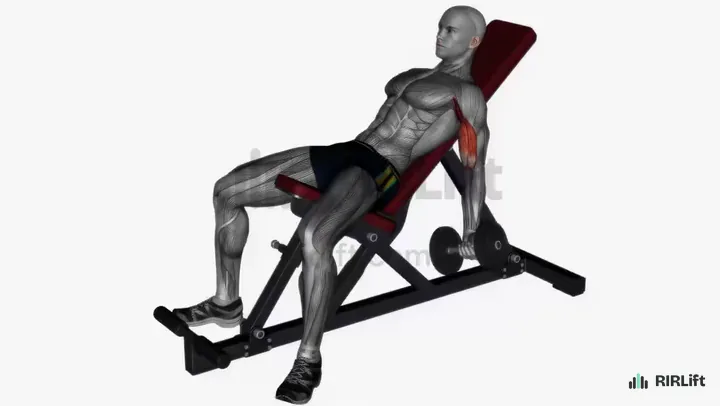
- Incline Dumbbell Curl Biceps
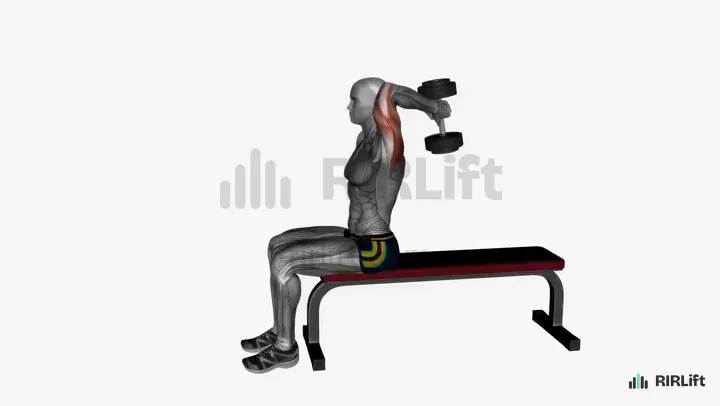
- Seated Dumbbell Overhead Triceps Extension Triceps
- Dumbbell Skullcrusher Triceps
- Triceps Kickback Triceps
- Single-Arm Dumbbell Floor Press Chest
- Zottman Curl Biceps, Forearms
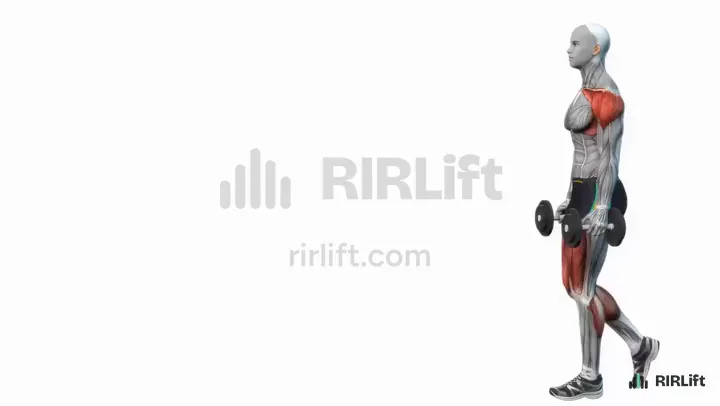
- Farmer's Walk Forearms, Traps, Shoulders
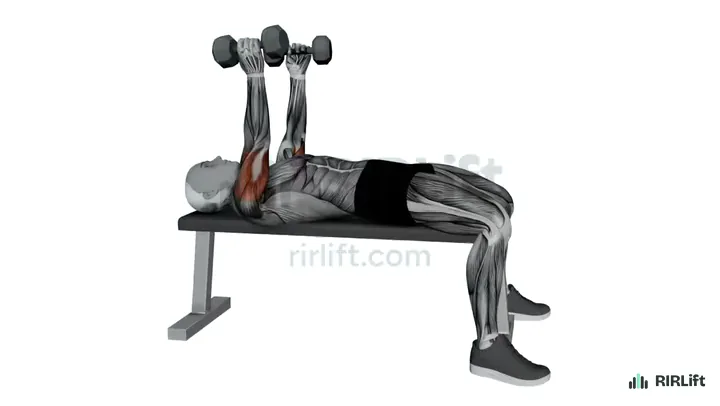
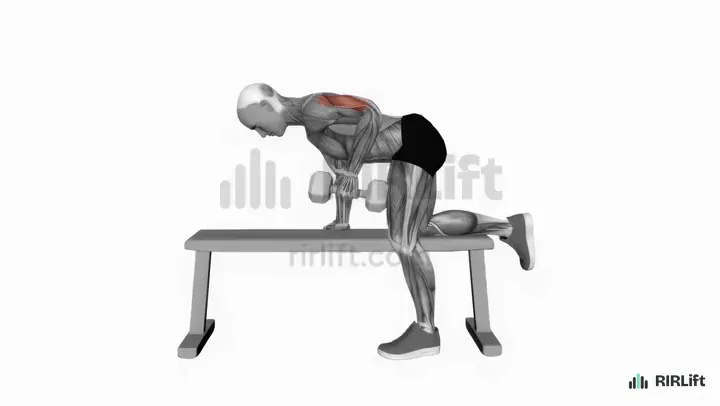
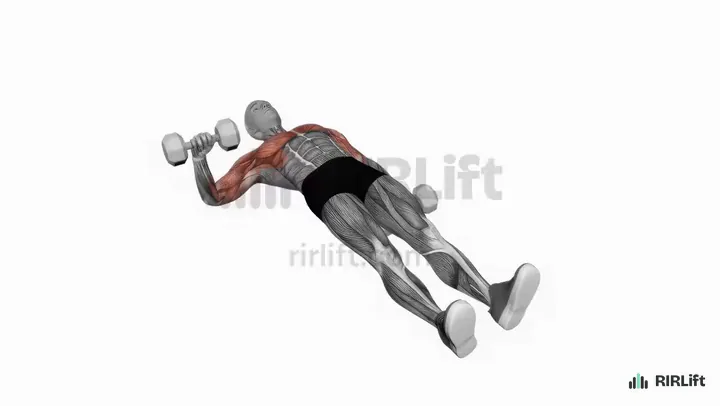
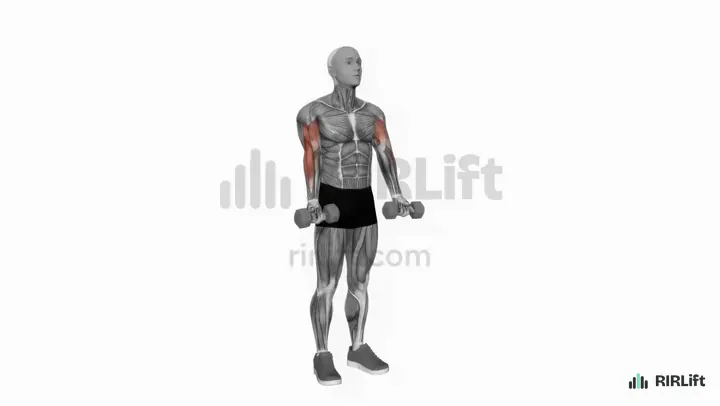
Put them together: example sessions
Each session below picks from the exercises above for one situation, with the sets, reps, rest and RIR filled in. Open one in the session builder to change a pick, price it from a recent set, and add it to RIRLift.
-
Session 1
One pair of dumbbells, no bench, 30 minutes
You train at home with one pair and a chair, and want both arms done in half an hour.
2× a week · 24 sets a week · ~20 min
-
Session 2
Bench and a full set of dumbbells, dedicated arm day
You have an adjustable bench and dumbbells in small jumps, and want one session a week built around arms.
1× a week · 19 sets a week · ~45 min
-
Session 3
New to lifting, two short sessions a week
You are starting out with a few dumbbells and want to learn the basic arm moves before adding more.
2× a week · 16 sets a week · ~15 min
Session 1
One pair of dumbbells, no bench, 30 minutes
- Workouts2× a week
- Working sets24 a week
- Per workout~20 min
- EquipmentDumbbells
You train at home with one pair and a chair, and want both arms done in half an hour.
Without a bench, each session supersets a curl with a triceps move that also works standing or on the floor: the floor press for heavy triceps work, the overhead extension on a chair, the kickback braced on its seat. Supersetting opposite muscles saves time without hurting either one, since the biceps rests while the triceps works. A pair that does not get heavier calls for higher reps and sets taken to 0 to 1 RIR. Each session has 12 sets, 6 for each muscle.
| Exercise | Sets × reps | RIR | Rest |
|---|---|---|---|
| A1 Single-Arm Dumbbell Floor PressPer arm. Elbow tucked. | 3 × 8–15 | 1 | 30 s |
| A2 Dumbbell CurlAlternate arms. | 3 × 8–15 | 1 | 75 s |
| B1 Seated Dumbbell Overhead Triceps ExtensionOn a chair. | 3 × 10–20 | 0 | 30 s |
| B2 Hammer CurlStrict. | 3 × 10–20 | 0 | 75 s |
Open Arms A in the session builder
| Exercise | Sets × reps | RIR | Rest |
|---|---|---|---|
| A1 Triceps KickbackPer arm. Hand on a chair. | 3 × 12–20 | 0 | 30 s |
| A2 Zottman Curl3 s down, palms down. | 3 × 8–15 | 1 | 75 s |
| B1 Seated Dumbbell Overhead Triceps ExtensionDeep stretch. | 3 × 10–20 | 1 | 30 s |
| B2 Dumbbell Curl3 s down. | 3 × 10–20 | 0 | 75 s |
Open Arms B in the session builder
- How to run it
- Do Arms A and Arms B on two separate days each week. Go from the first exercise in a pair to the second with a short rest, then rest longer before the next round.
- How to progress
- Add reps until all sets reach the top of their range at the target RIR, then slow the lowering to three seconds. Buy a heavier pair when that also tops out.
Session 2
Bench and a full set of dumbbells, dedicated arm day
- Workouts1× a week
- Working sets19 a week
- Per workout~45 min
- EquipmentDumbbells, Incline Bench, Flat Bench
You have an adjustable bench and dumbbells in small jumps, and want one session a week built around arms.
A bench adds the moves that load each muscle at its longest: the incline curl for the biceps and the skullcrusher and squeeze press for the triceps. The session starts with the heavy squeeze press while you are fresh, then alternates between triceps and biceps so each gets rest. Presses stop at 1 to 2 RIR; isolation work goes to 0 to 1. That is 17 sets, about 8 for biceps and 9 for triceps, plus forearm work. If you also train push and pull days, that is a full week of arm work in one session.
| Exercise | Sets × reps | RIR | Rest |
|---|---|---|---|
| Incline Dumbbell Squeeze Press2 warm-up sets firstDumbbells touching. | 3 × 6–12 | 1 | 2 min |
| Incline Dumbbell Curl45° bench. Arms behind you. | 3 × 8–12 | 1 | 90 s |
| Dumbbell SkullcrusherTo the ears. | 3 × 8–15 | 1 | 90 s |
| Concentration CurlPer arm. | 3 × 10–15 | 0 | 1 min |
| Triceps KickbackPer arm. Hold the lockout. | 3 × 12–20 | 0 | 1 min |
| Hammer Curl | 2 × 8–12 | 1 | 1 min |
| Reverse Wrist Curl | 2 × 15–25 | 0 | 45 s |
- How to run it
- Do it once a week on its own day, two or more days away from your heaviest pressing and pulling.
- How to progress
- Once the squeeze press reaches 12 reps at 1 RIR, go up a dumbbell size. On the curls and extensions, add reps until you reach the top of each range, then add weight.
Session 3
New to lifting, two short sessions a week
- Workouts2× a week
- Working sets16 a week
- Per workout~15 min
- EquipmentDumbbells
You are starting out with a few dumbbells and want to learn the basic arm moves before adding more.
A beginner grows from fewer exercises done well, so each session has only three: one biceps curl, one triceps move and one forearm move, learned at 2 RIR so form holds on every rep. Sets are moderate, 8 per session, and rest is generous. The farmer's walk is in because it teaches you to hold heavy weight, which helps with everything else.
| Exercise | Sets × reps | RIR | Rest |
|---|---|---|---|
| Dumbbell CurlAlternate arms. | 3 × 10–15 | 2 | 75 s |
| Seated Dumbbell Overhead Triceps ExtensionOne dumbbell, both hands. | 3 × 10–15 | 2 | 75 s |
| Farmer's WalkReps are steps. | 2 × 20–30 | 2 | 90 s |
Open Session 1 in the session builder
| Exercise | Sets × reps | RIR | Rest |
|---|---|---|---|
| Hammer Curl | 3 × 10–15 | 2 | 75 s |
| Triceps KickbackPer arm. | 3 × 10–15 | 2 | 1 min |
| Reverse Wrist Curl | 2 × 15–20 | 2 | 45 s |
Open Session 2 in the session builder
- How to run it
- Do Session 1 and Session 2 twice a week each, alternating, with a day off between. Use a weight you could lift for two more reps at the end of every set.
- How to progress
- Add reps each session. When all sets hit the top of the range at 2 RIR, go up the smallest dumbbell step. After 6 to 8 weeks, move to 1 RIR or to one of the other plans.
Make it fit you
-
Only light dumbbells
Do every exercise one arm at a time, take the isolation sets to 0 RIR, and lower each rep over three seconds. The floor press and kickback are the two that make a light pair feel heavier.
-
Want toned arms
Use the one-pair plan and keep the sets hard. Arm training builds the muscle; seeing its shape depends on body fat, which comes down from diet across your whole body, not from extra arm reps.
-
Biceps grow, triceps don't
Start each session with the triceps exercise and give it one extra set. Most people need more triceps sets than biceps sets, not fewer.
-
Elbows sore
Drop the skullcrusher and keep the overhead extension and kickback in the 12 to 20 range. Warm up with a set of hammer curls and a light press before any extension.
-
Also training shoulders and back
Presses and rows already work your arms. Cut the arm plans to one session a week, or use only the second half of the bench arm day as a finisher.
-
Log the RIR, not just the weight
Write down how many reps you had left on each set. In RIRLift you log the RIR with the reps and it suggests the next weight from it, so you know which curl or extension is ready for a heavier dumbbell.
Questions
Which dumbbell exercise is best for arms?
No single one covers the whole arm. If you had to pick, the hammer curl does the most for the front of the arm and forearm, and the overhead extension does the most for the triceps. Do both and you have trained most of your arm.
Can I build arms with just dumbbells?
Yes. Dumbbells cover every arm movement: curls with three grips, extensions overhead, lying and bent over, close-grip presses and carries. As long as you take your sets close to failure and add reps or weight over time, your arms will grow. The limit is how heavy your dumbbells go.
What are the 5 best arm exercises with dumbbells?
The incline curl, the hammer curl, the overhead triceps extension, the skullcrusher and the farmer's walk. That covers the biceps, the brachialis, the triceps in two positions and the forearms.
Are 4 exercises enough for arm day?
Yes: two for biceps and two for triceps, 3 sets each, gives you 6 hard sets per muscle in one session. Do that twice a week, or add a forearm exercise and more sets if arms are a single weekly session.
How heavy should dumbbells be for arm exercises?
Heavy enough that you finish each set with 0 to 2 reps left in the rep range. That is usually lighter than people expect: 10 to 25 lb for curls and extensions for most lifters, less for kickbacks and wrist curls, much more for carries.
How often should I train arms with dumbbells?
Two sessions a week, 6 to 10 hard sets per muscle each time, works for most people. If you also do pushing and pulling, one arm session a week is often enough.
Related templates
-
The best workout for arms: biceps, triceps and forearms together
Arm programs that use cables, barbells and machines too.
-
Dumbbell bicep exercises: curls for the stretch, the squeeze and arm thickness
Every dumbbell curl in more depth, with biceps-only plans.
-
Dumbbell tricep exercises: extensions, kickbacks and close-grip presses
More triceps presses and extensions, with triceps-only plans.
-
Forearm exercises with dumbbells: wrist curls, hammer curls and carries
Wrist curls, rotation and carries for forearm size and grip.
-
Arm exercises at home: biceps, triceps and grip with whatever you have
Arm training with bands and bodyweight when there are no dumbbells.