Arm exercises for seniors: biceps, triceps and the upper body

The best arm exercises for seniors are dumbbell and hammer curls for the biceps, the kickback and seated overhead extension for the triceps, plus three upper-body moves that train the arms with the shoulders and back: the incline push-up, seated shoulder press and one-arm row. Do 4 to 6 of them twice a week, 2 to 3 sets of 10 to 15 reps with light dumbbells of 2 to 10 pounds or a band, and stop each set with 2 or 3 reps left. Firmer upper arms come from the muscle these build.

  1. Dumbbell Curl Biceps
  2. Hammer Curl Biceps, Forearms
  3. Triceps Kickback Triceps
  4. Incline Push-Up Chest
  5. Neutral-Grip Dumbbell Shoulder Press Shoulders
  6. Seated Dumbbell Overhead Triceps Extension Triceps
  7. One-Arm Dumbbell Row Lats, Upper Back
  8. Dumbbell Lateral Raise Shoulders
Biceps: the front of the arm

Lifting a bag, a pan or a grandchild starts with the biceps. Curls with palms up train the biceps most; palms facing in brings in the forearm and is often easier on the elbows.

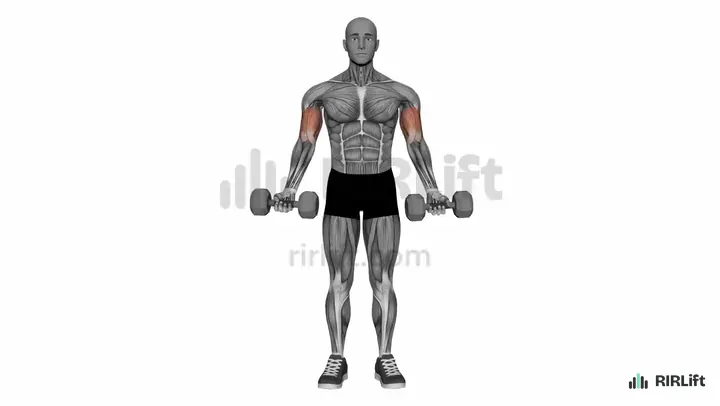
Biceps, curl

Dumbbell Curl

Biceps

The standing dumbbell curl is the simplest way to strengthen the front of the arm, and alternating arms lets you focus on one side at a time. Three to eight pounds is a common start.

How to do it

  1. Stand tall with one or two dumbbells, palms facing forward.
  2. Curl the weight toward your shoulder, keeping your upper arm still.
  3. Squeeze the biceps hard when your forearm is upright.
  4. Lower until your elbow is straight.

Cues

  • Upper arm still
  • Squeeze at the top
  • Straight elbow at the bottom

Common mistakes

  • Rocking your body: brace against a wall.
  • Stopping short at the bottom: lower all the way.

Swap for: Kettlebell Curl, EZ-Bar Curl

Biceps and forearms, neutral-grip curl

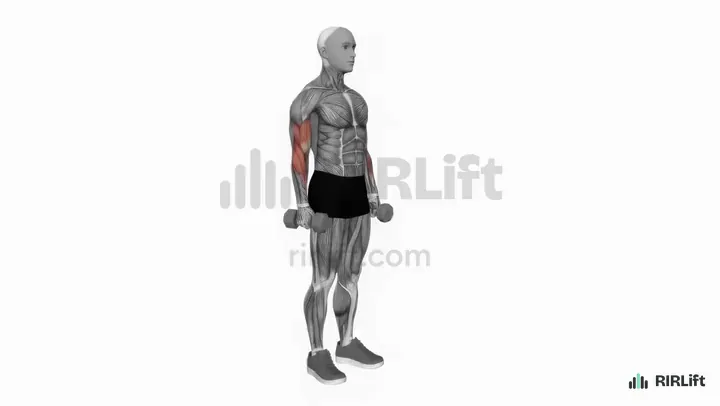
Hammer Curl

Biceps, Forearms

Holding the dumbbells with palms facing in works the biceps and the thick forearm muscle together, the same grip you use to carry a bucket or a bag. Many people with sore elbows find it the most comfortable curl.

How to do it

  1. Hold the dumbbells at your sides with your palms facing your thighs.
  2. Bend one elbow to bring that dumbbell up, thumb leading.
  3. Keep the dumbbell vertical the whole way, then lower it slowly to the start.
  4. Curl the other arm, and keep alternating until the set is done.

Cues

  • Thumbs lead
  • Dumbbells vertical
  • Elbows by your sides

Common mistakes

  • Swinging heavier weight with your back: keep your torso still.
  • Curling across your body: keep each dumbbell in line with its shoulder.

Swap for: Band Hammer Curl, Alternating Hammer Curl

Biceps, cable

Cable Curl

Biceps

The cable keeps tension on the biceps through the whole curl and the stack moves up in small steps. At a gym it is a smooth, easy-to-progress option.

How to do it

  1. Attach a bar to a low pulley and grip it palms up.
  2. Stand close and curl the bar toward your chest.
  3. Lower until your arms are straight, keeping tension on the cable.

Cues

  • Elbows pinned
  • Straight arms at the bottom

Common mistakes

  • Stepping too far from the stack: stand close so the cable pulls straight up.

Swap for: EZ-Bar Curl, Dumbbell Curl, Band Hammer Curl

Biceps, band

Band Hammer Curl

Biceps

A light band under your feet gives you curls anywhere you can stand, one arm at a time. It is a good start if even light dumbbells feel awkward to hold.

How to do it

  1. Stand on a light band and hold the ends with palms facing each other.
  2. Curl one hand up toward your shoulder, keeping the elbow beside your ribs.
  3. Lower slowly and alternate sides.

Cues

  • Elbows still
  • Squeeze, then lower slow

Common mistakes

  • Swinging the band up with your hips: use a lighter band.

Swap for: Hammer Curl, Bodyweight Bicep Curl, Dumbbell Curl

Triceps: the back of the arm

The triceps straighten your elbow to push up from a chair or bed. They are also the muscle people mean when they talk about the back of the arm looking loose, and they respond quickly to training.

Triceps, kickback

Triceps Kickback

Triceps

Bracing one hand and knee on a bench and straightening the other arm behind you isolates the triceps with very little weight. A one-second hold at the top does more than a heavier dumbbell swung up.

How to do it

  1. Brace one hand on a chair or bench and hinge forward with a flat back.
  2. Lift the dumbbell arm so your upper arm sits against your side, elbow bent.
  3. Push the dumbbell back until your arm is straight, and hold it for a second.
  4. Bend back to the start; finish the set, then change arms.

Cues

  • Upper arm stays level
  • Hold the lockout
  • Light weight

Common mistakes

  • Swinging the weight up: lighten it so you can pause at the top.
  • Upper arm sinking toward the floor: lift it back to your side.

Swap for: Cable Triceps Kickback, Seated Dumbbell Overhead Triceps Extension

Triceps, overhead

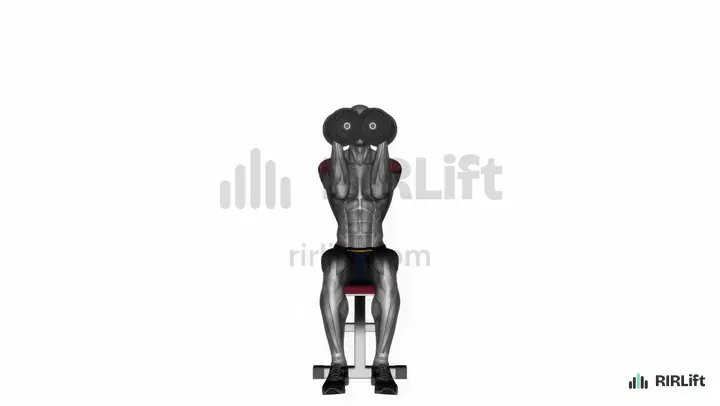
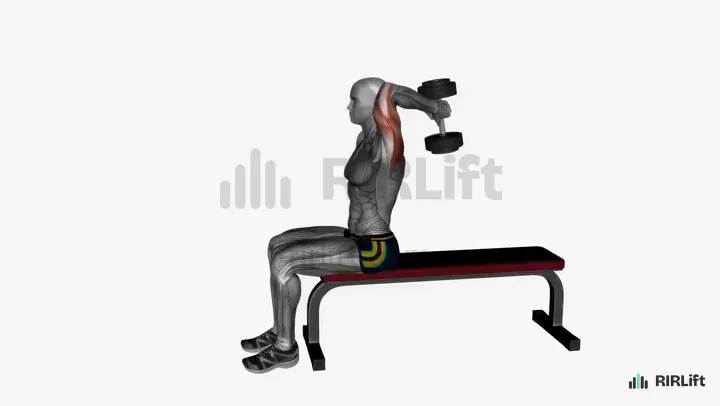
Seated Dumbbell Overhead Triceps Extension

Triceps

Lowering one dumbbell behind your head while seated stretches and loads the long part of the triceps, the part that sits along the back of the upper arm. Keep the weight light and the elbows close to your head.

How to do it

  1. Sit tall on a chair and lift one dumbbell overhead, both hands under the top plate.
  2. Bend your elbows to bring the weight down behind your neck, upper arms close to your head.
  3. Feel the stretch, then press it back up to straight arms.
  4. Keep your back from arching as you press.

Cues

  • Elbows forward
  • Weight behind your neck
  • Ribs stay down

Common mistakes

  • Elbows drifting out to the sides: keep them pointed ahead.
  • Short lowering: take it as deep as your shoulders allow.

Swap for: Kettlebell Overhead Triceps Extension, Overhead Cable Triceps Extension

Triceps, cable

Cable Triceps Pressdown

Triceps

Pressing a cable bar or rope down is the easiest triceps exercise to learn and to load. Your elbows stay at your sides, so the shoulders do almost nothing.

How to do it

  1. Attach a bar or rope to a high pulley and grip it with your elbows at your sides.
  2. Push down until your elbows are straight.
  3. Let the handle rise until your forearms are just past parallel, then push again.

Cues

  • Elbows stay pinned
  • Lock out at the bottom

Common mistakes

  • Letting the elbows rise and flare: keep them glued to your sides.

Swap for: Cable Cross Pushdown, Overhead Cable Triceps Extension, Close-Grip Push-Up

Upper body: pushing, pressing and pulling

These train the arms together with the chest, shoulders and back, in the movements you use daily. They give the most strength for the time, so put them first in a session.

Chest, shoulders and triceps, push

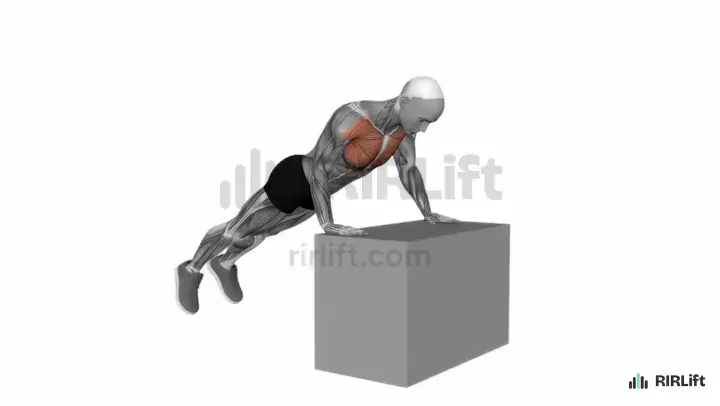
Incline Push-Up

Chest

Push-ups against a counter, bench or sturdy table train your arms to push your body weight, the strength you use to get up from the floor or a bed. Lower the surface over weeks to make it harder.

How to do it

  1. Put your hands on a bench, box or counter, a little wider than shoulder width.
  2. Walk your feet back until your body is a straight line from head to heels.
  3. Lower your chest to the edge, elbows angled about 45 degrees from your sides.
  4. Press back up until your arms are straight.

Cues

  • Body like a plank
  • Elbows at about 45 degrees
  • Higher surface, easier rep

Common mistakes

  • Hips sagging toward the floor: squeeze your glutes and brace as if you were about to be poked in the stomach.
  • Flaring the elbows straight out: tuck them back at about 45 degrees.

Swap for: Kneeling Push-Up, Close-Grip Push-Up, Bench Dip

Shoulders and triceps, press

Neutral-Grip Dumbbell Shoulder Press

Shoulders

Pressing dumbbells overhead with palms facing in strengthens the shoulders and triceps for reaching up to shelves and cupboards. Sitting with back support keeps it steady.

How to do it

  1. Sit against an upright bench with a dumbbell at each shoulder, palms turned in.
  2. Keep your elbows pointing slightly forward rather than straight out to the side.
  3. Press up to straight elbows.
  4. Lower under control to the starting point beside your shoulders.

Cues

  • Palms in
  • Elbows forward
  • Stack wrists over elbows

Common mistakes

  • Letting the dumbbells drift wide at the top: keep them right above your shoulders.
  • Rushing the bottom: the hardest part of the rep is the first few inches out of it.

Swap for: Dumbbell Shoulder Press, Machine Shoulder Press

Side shoulders, raise

Dumbbell Lateral Raise

Shoulders
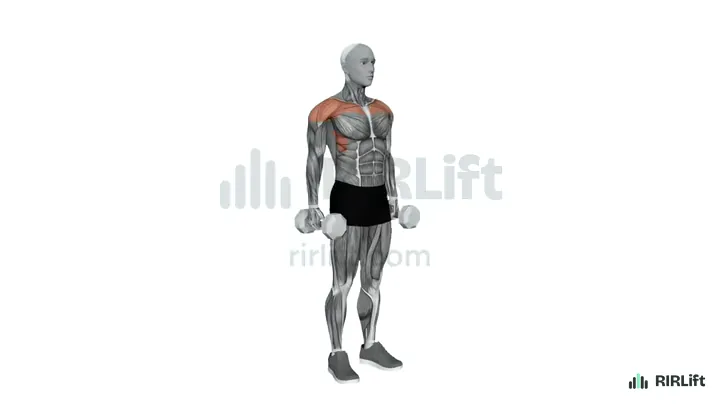
Raising light dumbbells out to the sides keeps the shoulders able to lift the arms away from the body. Stop at shoulder height, and use 2 to 5 pounds.

How to do it

  1. Pick light dumbbells you can raise for 12 clean reps, and stand with your feet hip width apart, the weights hanging by your thighs.
  2. Lean your chest forward a few degrees, pull your shoulders down away from your ears and soften your elbows.
  3. Sweep the weights out and slightly forward, leading with your elbows, until your upper arms are level with your shoulders.
  4. Hold that top position for a beat, then take two to three seconds to lower until the dumbbells are a hand's width from your thighs.
  5. Start the next rep from there without resting at the bottom or bouncing out of it.

Cues

  • Elbows lead, hands follow
  • Shoulders down, neck long
  • Push the weights out, not up

Common mistakes

  • Shrugging the weight up: if your shoulders rise toward your ears, drop to lighter dumbbells and stop each rep where your upper arm is level.
  • Swinging the torso to start each rep: brace, stand still and keep the first inch of the lift as slow as the rest.
  • Bending the elbows more and more as the set goes on: set the bend on rep one and keep it, or the lever shortens and the set gets easier without you noticing.

Swap for: Seated Dumbbell Lateral Raise, Band Lateral Raise

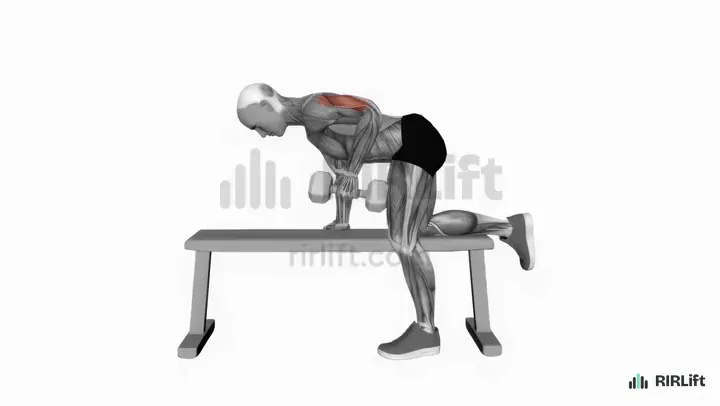
Back and biceps, row

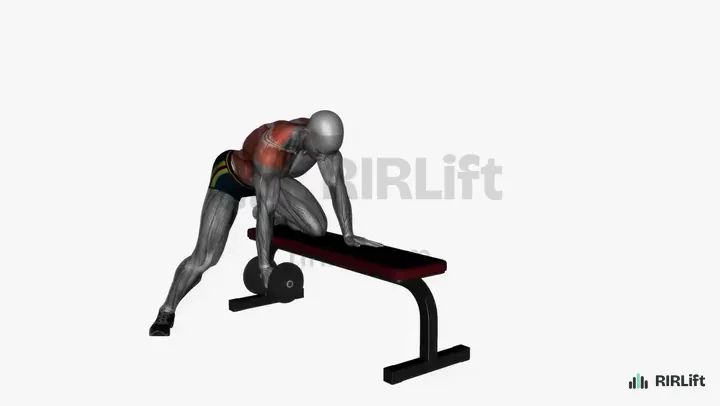
One-Arm Dumbbell Row

Lats, Upper Back

Rowing a dumbbell to your hip trains the back with the biceps as helpers. Pairing a row with every push keeps the shoulders balanced and the posture upright.

How to do it

  1. Put one hand and the same-side knee on a bench, or your hand on a chair seat with both feet on the floor, so your back is flat.
  2. Hold a dumbbell in the other hand with your arm hanging straight.
  3. Pull your elbow back toward your hip until the dumbbell reaches your ribs.
  4. Lower it until your arm is straight again, finish all reps, then switch sides.

Cues

  • Elbow to your hip
  • Back flat as a table
  • Full stretch at the bottom

Common mistakes

  • Twisting your chest open to lift the dumbbell higher: keep both shoulders level.
  • Shrugging the shoulder up toward your ear: pull the elbow back, not the shoulder up.

Swap for: Band Bent-Over Row, Dumbbell Bent-Over Row, Seated Cable Row

Wrists and grip

A weak grip makes jars, door handles and carrying harder. Wrist curls with the palms down strengthen the forearm muscles that lift and steady your wrist.

Forearms, wrist extension

Reverse Wrist Curl

Forearms

With forearms on your thighs and palms down, lifting the knuckles works the muscles on the top of the forearm that open jars and steady your wrist. One to three pounds is plenty.

How to do it

  1. Sit with your forearms resting on your thighs, palms down, hands hanging past your knees.
  2. Let the dumbbells tip your knuckles down.
  3. Lift your knuckles up as high as they go, moving only at the wrist.
  4. Lower slowly and repeat.

Cues

  • Forearms stay down
  • Only the wrist moves
  • Smooth reps

Common mistakes

  • Lifting your forearms off your legs: keep them pinned.
  • Going heavy: this small muscle does best with 15 to 25 reps.

Swap for: Cable Wrist Extension, Zottman Curl

Put them together: example sessions

Each session below picks from the exercises above for one situation, with the sets, reps, rest and RIR filled in.

Session 1

Light dumbbells at home

  • Workouts2× a week
  • Working sets21 a week
  • Per workout~20 min
  • EquipmentDumbbells

You have a few pairs of light dumbbells and a sturdy chair, and you want stronger, firmer arms and an easier time lifting and carrying.

Day A and Day B give the biceps 4 direct sets and the triceps 4 a week, with the rows and presses adding more work for both, plus 8 sets for the chest and shoulders. That is 21 working sets, all at 2 reps in reserve so the elbows and shoulders recover between sessions.

Day A: Push and pull
ExerciseSets × repsRIRRest
Incline Push-UpHands on a counter or bench. 3 × 8–12 2 75 s
One-Arm Dumbbell RowPer arm. 3 × 10–12 2 75 s
Dumbbell Curl 2 × 10–15 2 1 min
Triceps KickbackPer arm. 2 × 10–15 2 1 min
Day B: Press and arms
ExerciseSets × repsRIRRest
Neutral-Grip Dumbbell Shoulder Press1 warm-up set first 3 × 8–12 2 75 s
Hammer Curl 2 × 10–15 2 1 min
Seated Dumbbell Overhead Triceps Extension 2 × 10–15 2 1 min
Dumbbell Lateral Raise 2 × 12–15 2 1 min
Reverse Wrist Curl 2 × 12–15 2 45 s
How to run it
Do Day A on one day and Day B two or three days later, for example Monday and Thursday. Put them on the same days as your leg work or on separate days; both work.
How to progress
When all sets reach the top of the rep range with 2 reps left, use the next dumbbell, even if it is just 1 or 2 pounds more. If the jump is too big, add 2 to 3 reps beyond the range first.

Session 2

Gym with a cable station

  • Workouts2× a week
  • Working sets24 a week
  • Per workout~25 min
  • EquipmentDumbbells, Adjustable Cable

You go to a gym and want a quick arm and upper-body session where the weight goes up in small steps.

Cables keep tension on the arms through the whole rep and move up in small steps, so effort stays steady at 2 reps in reserve. Twelve sets per session and two sessions a week give the arms about 12 direct sets plus the help from rows and presses.

Cable arms
ExerciseSets × repsRIRRest
One-Arm Dumbbell Row1 warm-up set firstPer arm. 3 × 8–12 2 90 s
Neutral-Grip Dumbbell Shoulder Press 3 × 8–12 2 90 s
A1 Cable Curl 3 × 10–15 2 1 min
A2 Cable Triceps Pressdown 3 × 10–15 2 1 min
How to run it
Run it twice a week. Superset the curl and pressdown to save time: one set of each back to back, then rest.
How to progress
Add a rep each session until you reach the top of the range at the target reps in reserve, then move one plate on the stack.

Session 3

Sore shoulders or elbows

  • Workouts2× a week
  • Working sets20 a week
  • Per workout~20 min
  • EquipmentDumbbells, Resistance Bands

Overhead pressing or straight-bar curls bother your shoulders or elbows, but you want to keep your arms strong.

Every exercise uses a neutral grip or a short lever and nothing goes overhead: five exercises, 10 sets a session, 20 a week, all at 3 reps in reserve. That keeps the muscles working while the joints stay in comfortable positions.

Joint-friendly
ExerciseSets × repsRIRRest
Incline Push-UpHigh surface, such as a counter. 2 × 8–12 3 75 s
One-Arm Dumbbell RowPer arm. 2 × 10–12 3 75 s
Hammer Curl 2 × 10–15 3 1 min
Triceps KickbackPer arm. 2 × 12–15 3 1 min
Band Hammer CurlAlternate arms. 2 × 12–15 3 1 min
How to run it
Do it twice a week. Use the lightest weights that still make the last reps of each set feel hard, and move slowly, about 2 seconds up and 2 down.
How to progress
Add reps up to the top of the range before you add weight. If an exercise starts to bother a joint, keep the weight and shorten the range for a week.

Make it fit you

Questions

What is the best exercise for sagging arms?

Triceps work, such as the kickback and overhead extension, builds the muscle at the back of the arm. Firmer-looking arms come from that muscle plus overall fat loss, which no single exercise targets.

How many days a week should a 60 year old lift weights?

Two or three days. Two full sessions are enough to get stronger, and arms recover well with a day between.

Can an 80 year old regain arm strength?

Yes. Strength training works at 80 and beyond, and arms respond within weeks. Start with a band or 1 to 3 pound dumbbells and add reps before weight.

What are good arm exercises for seniors without weights?

Incline push-ups against a counter, band curls and band rows. Household items like water bottles also work for curls and kickbacks while you are starting.

What weight dumbbells should seniors use for arms?

Most start with 2 to 5 pounds for raises and triceps and 5 to 10 for curls, rows and presses. Choose the weight that leaves 2 or 3 reps in reserve at the end of each set.