Dumbbell exercises for seniors: a full body with one rack

The best dumbbell exercises for seniors are the goblet squat, Romanian deadlift and step-up for the legs; the one-arm row and farmer's walk for the back and grip; the incline or floor press and seated shoulder press for pushing; and curls and kickbacks for the arms. Two or three full-body sessions a week of 5 or 6 of these, 2 to 3 sets of 8 to 12 reps, is enough. Pick a weight that leaves 2 or 3 reps in reserve at the end of each set. For many people over 70 that is 3 to 10 pounds for arms and 10 to 20 for legs.

  1. Goblet Squat Quads, Glutes
  2. Dumbbell Romanian Deadlift Hamstrings, Glutes
  3. One-Arm Dumbbell Row Lats, Upper Back
  4. Neutral-Grip Dumbbell Shoulder Press Shoulders
  5. Step-Up Quads, Glutes
  6. Farmer's Walk Forearms, Traps, Shoulders
  7. Dumbbell Curl Biceps
  8. Incline Dumbbell Press Chest

Legs: squat, hinge and step

Your legs are your biggest muscles and do the work of standing up, climbing stairs and walking, so start every session with one of these. One heavier dumbbell for squats and a pair for hinges and step-ups is all the gear you need.

Quads and glutes, squat

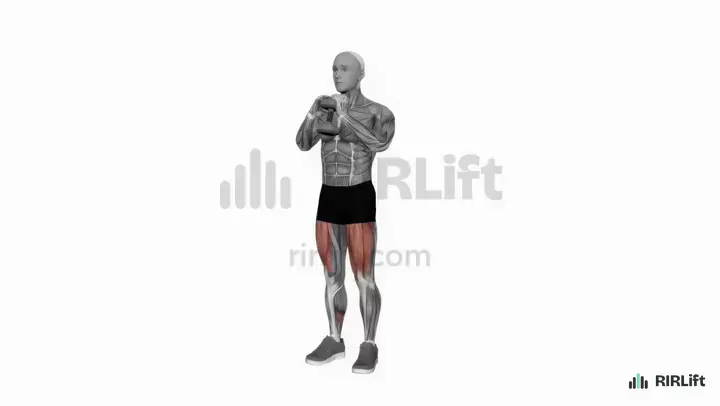
Goblet Squat

Quads, Glutes

Holding one dumbbell at your chest keeps you upright and balanced as you squat, which makes it the easiest loaded squat to learn. Squat to a chair or bench at first so you always know where the bottom is.

How to do it

  1. Hold a dumbbell or kettlebell vertically against your chest.
  2. Sit down between your knees, elbows inside them at the bottom.
  3. Stand up tall.

Cues

  • Elbows nudge the knees out at the bottom.
  • Chest stays up behind the weight.

Common mistakes

  • Letting the weight pull you forward.

Swap for: Bodyweight Squat, Barbell Back Squat

Hamstrings and glutes, hinge

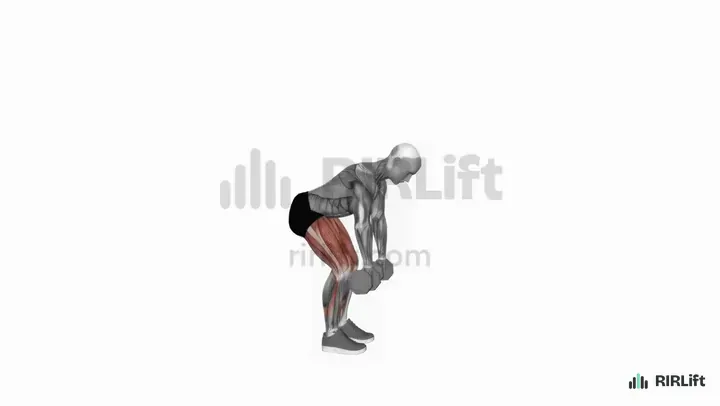
Dumbbell Romanian Deadlift

Hamstrings, Glutes

This is the lift that teaches you to pick something up with your hips instead of your lower back. Dumbbells hang naturally at your sides, so you can stop the range wherever your back stays flat.

How to do it

  1. Stand hip-width apart with a dumbbell in each hand resting against the front of your thighs, palms facing you.
  2. Push your hips straight back and let your torso fold forward, knees softly bent, the dumbbells brushing your legs.
  3. Lower until the dumbbells pass your knees and you feel a strong stretch in your hamstrings, with your back still flat.
  4. Drive your hips forward to stand back up, squeezing your glutes at the top, and repeat.

Cues

  • Hips back, not down
  • Dumbbells slide down your legs
  • Flat back, chin tucked

Common mistakes

  • Bending the knees into a squat so the dumbbells go lower: the depth comes from the hips, and most people stop just past the knees.
  • Rounding the lower back at the bottom: end the rep where your back stays flat, and lighten the load if that is high.

Swap for: Single-Leg RDL, Dumbbell Good Morning, Kettlebell Deadlift

Quads and glutes, single leg

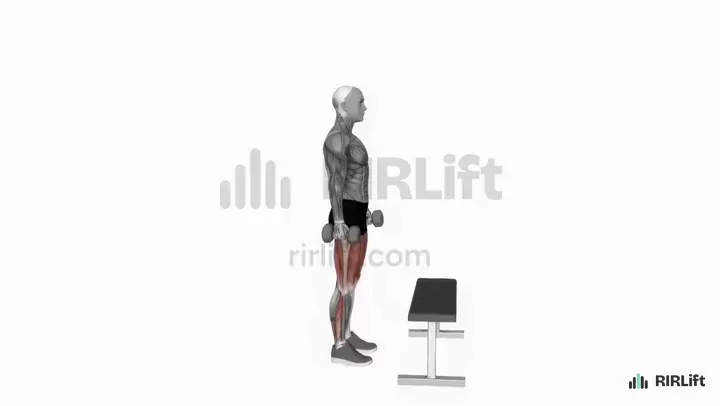
Step-Up

Quads, Glutes

With a dumbbell in each hand, the step-up becomes real leg strength for stairs and curbs. Begin on a low step and without weights, holding a rail.

How to do it

  1. Stand facing the bench with two dumbbells.
  2. Place one whole foot on the bench.
  3. Lean forward a little and push through the top foot to stand up on the bench.
  4. Bring the other foot up only to touch, then lower it back to the floor.
  5. Finish all reps on one leg before switching.

Cues

  • Whole foot on the bench
  • Push through the top heel
  • Lower slowly, do not drop

Common mistakes

  • Pushing off the floor with the back foot: that halves the work. Keep the trailing foot light.
  • Using a bench so high that your knee is far above your hip: you will rock instead of step.

Swap for: Barbell Step-Up

Calves

Dumbbell Standing Calf Raise

Calves

Calf raises with dumbbells build the push-off and ankle strength you use to walk briskly and climb stairs. Rest one hand on a wall and hold a single dumbbell until balance improves.

How to do it

  1. With a dumbbell hanging from each hand, put the balls of both feet on a step or two stacked books, hip-width apart.
  2. Let your heels sink below the step until the calves are fully stretched, and pause.
  3. Press up onto your toes as high as you can with straight knees, and hold the top briefly.
  4. Lower slowly back into the stretch and repeat.

Cues

  • Tall body, straight knees
  • Slow down, quick up
  • Weight over the big toes

Common mistakes

  • Cutting the bottom short because the step feels unstable: use a wider step or touch the wall with a fingertip.
  • Bending the knees to help at the end of a set: that turns it into a little jump and stops loading the calf.

Swap for: Single-Leg Calf Raise, Kettlebell Calf Raise

Back and grip

Rows build the upper back that keeps you upright, and carrying heavy dumbbells trains grip and posture together. Use the heaviest dumbbells in your set for these.

Upper back and lats, row

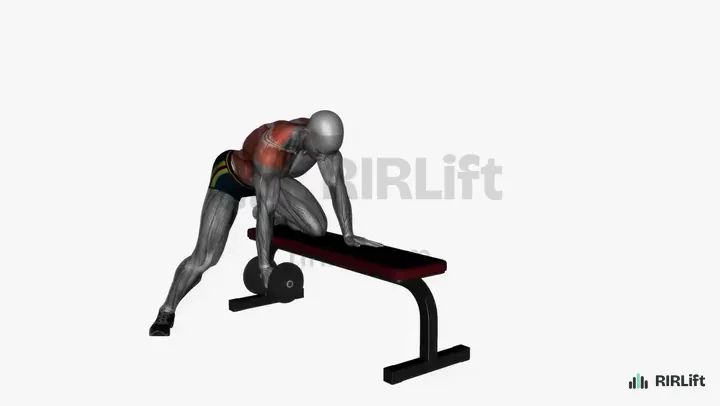
One-Arm Dumbbell Row

Lats, Upper Back

Bracing one hand and knee on a bench supports your back while you pull a dumbbell to your hip. It is the best single back exercise you can do with dumbbells, and one side at a time keeps the weight manageable.

How to do it

  1. Put one hand and the same-side knee on a bench, or your hand on a chair seat with both feet on the floor, so your back is flat.
  2. Hold a dumbbell in the other hand with your arm hanging straight.
  3. Pull your elbow back toward your hip until the dumbbell reaches your ribs.
  4. Lower it until your arm is straight again, finish all reps, then switch sides.

Cues

  • Elbow to your hip
  • Back flat as a table
  • Full stretch at the bottom

Common mistakes

  • Twisting your chest open to lift the dumbbell higher: keep both shoulders level.
  • Shrugging the shoulder up toward your ear: pull the elbow back, not the shoulder up.

Swap for: Band Bent-Over Row, Dumbbell Bent-Over Row, Seated Cable Row

Grip, traps and posture, carry

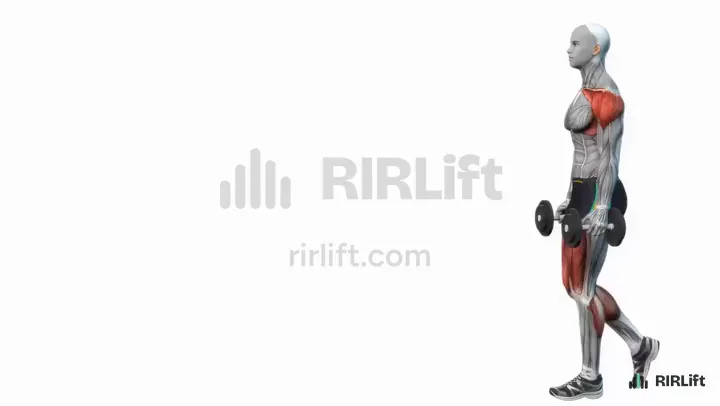
Farmer's Walk

Forearms, Traps, Shoulders

Walking with a heavy dumbbell in each hand trains your grip, posture and walking steadiness at once. It is the most practical exercise in the set: it is exactly how you carry groceries.

How to do it

  1. Pick up two heavy dumbbells with your back flat.
  2. Stand tall with your ribs down and walk with short, quick steps.
  3. Set the weights down with a flat back when the time or distance is up.

Cues

  • Ribs down
  • Crush the handles
  • Quick steps

Common mistakes

  • Letting the shoulders round forward.
  • Walking so slowly the dumbbells start to swing.

Swap for: Dumbbell Suitcase Carry, Dumbbell Single-Arm Overhead Carry

Chest and shoulders

Pressing exercises keep you able to push yourself up from the floor or a chair and to lift things overhead. Press from a bench or the floor so your back is supported.

Chest and shoulders, incline press

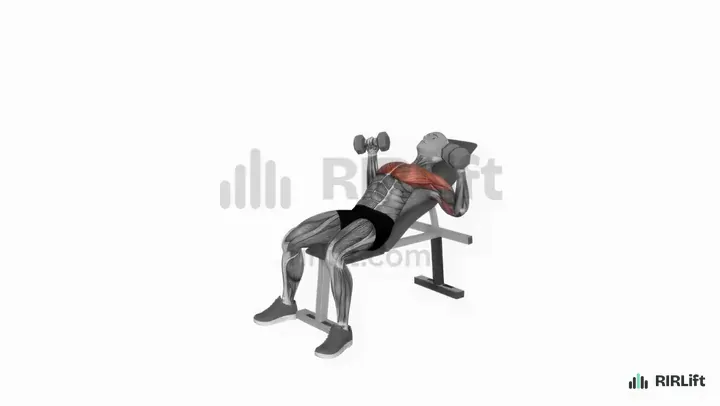
Incline Dumbbell Press

Chest

An incline bench supports your back and keeps the shoulders in a comfortable angle while you press. It builds the pushing strength for getting up off the floor or out of a deep chair.

How to do it

  1. Set the backrest to about 30 to 45 degrees and sit with the dumbbells on your thighs.
  2. Lean back and bring the weights to the outside of your shoulders as your back meets the pad.
  3. Squeeze your shoulder blades back and keep your hips on the seat.
  4. Press up and slightly in until your arms are straight over your upper chest.
  5. Lower under control until your elbows are just below the bench line.

Cues

  • Low incline, not a shoulder press
  • Wrists stacked over elbows
  • Touch the stretch, then press

Common mistakes

  • Setting the bench steeper than about 45 degrees: the front delts take over. Drop it a notch if you mostly feel your shoulders.
  • Lifting your hips off the seat to finish a rep: that turns it back into a flat press.

Swap for: Single-Arm Incline Dumbbell Press, Incline Dumbbell Squeeze Press, Incline Barbell Bench Press

Chest and triceps, floor press

Dumbbell Floor Press

Chest, Triceps

Pressing from the floor needs no bench, and the floor stops your elbows before the shoulder stretches too far. It is the chest exercise for home training.

How to do it

  1. Sit on the floor with a dumbbell on each thigh, then lie back with your knees bent and pull the weights in to your chest.
  2. Press both dumbbells straight up over your chest until your arms are straight.
  3. Lower them until your upper arms touch the floor, elbows angled about 45 degrees from your sides.
  4. Let the arms rest for a moment on the floor, then press again.

Cues

  • Elbows touch down softly
  • Weights over your chest at the top
  • Knees bent, feet flat

Common mistakes

  • Dropping the elbows hard into the floor: lower slowly and land them gently.
  • Elbows flared straight out to the sides: point them toward your hips a little.

Swap for: Flat Dumbbell Press, Incline Push-Up

Shoulders, seated press

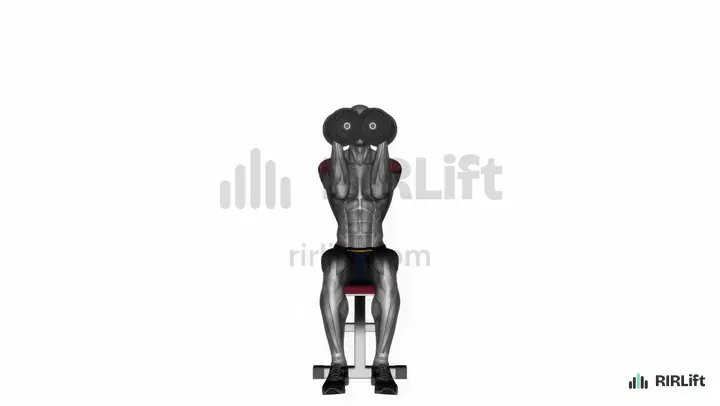
Neutral-Grip Dumbbell Shoulder Press

Shoulders

Pressing with palms facing in is the most comfortable way for most older shoulders to work overhead. Sitting against a bench back keeps the lower back still.

How to do it

  1. Sit against an upright bench with a dumbbell at each shoulder, palms turned in.
  2. Keep your elbows pointing slightly forward rather than straight out to the side.
  3. Press up to straight elbows.
  4. Lower under control to the starting point beside your shoulders.

Cues

  • Palms in
  • Elbows forward
  • Stack wrists over elbows

Common mistakes

  • Letting the dumbbells drift wide at the top: keep them right above your shoulders.
  • Rushing the bottom: the hardest part of the rep is the first few inches out of it.

Swap for: Dumbbell Shoulder Press, Machine Shoulder Press

Side shoulders, raise

Dumbbell Lateral Raise

Shoulders

Light lateral raises work the side of the shoulder that lifts your arm out to the side. Two to five pounds is plenty to start.

How to do it

  1. Pick light dumbbells you can raise for 12 clean reps, and stand with your feet hip width apart, the weights hanging by your thighs.
  2. Lean your chest forward a few degrees, pull your shoulders down away from your ears and soften your elbows.
  3. Sweep the weights out and slightly forward, leading with your elbows, until your upper arms are level with your shoulders.
  4. Hold that top position for a beat, then take two to three seconds to lower until the dumbbells are a hand's width from your thighs.
  5. Start the next rep from there without resting at the bottom or bouncing out of it.

Cues

  • Elbows lead, hands follow
  • Shoulders down, neck long
  • Push the weights out, not up

Common mistakes

  • Shrugging the weight up: if your shoulders rise toward your ears, drop to lighter dumbbells and stop each rep where your upper arm is level.
  • Swinging the torso to start each rep: brace, stand still and keep the first inch of the lift as slow as the rest.
  • Bending the elbows more and more as the set goes on: set the bend on rep one and keep it, or the lever shortens and the set gets easier without you noticing.

Swap for: Seated Dumbbell Lateral Raise, Band Lateral Raise

Arms

Biceps and triceps already work in rows and presses, but one set of each at the end adds arm strength for lifting and carrying with very little time.

Biceps, curl

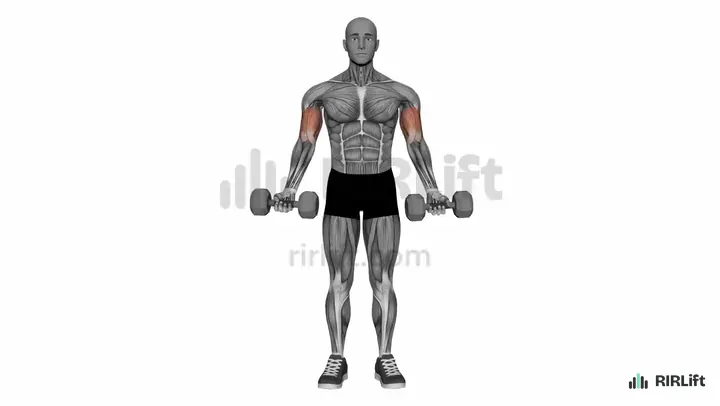
Dumbbell Curl

Biceps

Curls build the front of the arm you use to lift bags, pots and grandchildren. Alternate arms if holding both dumbbells at once feels tiring.

How to do it

  1. Stand tall with one or two dumbbells, palms facing forward.
  2. Curl the weight toward your shoulder, keeping your upper arm still.
  3. Squeeze the biceps hard when your forearm is upright.
  4. Lower until your elbow is straight.

Cues

  • Upper arm still
  • Squeeze at the top
  • Straight elbow at the bottom

Common mistakes

  • Rocking your body: brace against a wall.
  • Stopping short at the bottom: lower all the way.

Swap for: Kettlebell Curl, EZ-Bar Curl

Triceps, kickback

Triceps Kickback

Triceps

With one hand on a chair, the kickback trains the back of the arm, which straightens your elbow to push up from a chair. A light dumbbell and a pause at the top make it work.

How to do it

  1. Brace one hand on a chair or bench and hinge forward with a flat back.
  2. Lift the dumbbell arm so your upper arm sits against your side, elbow bent.
  3. Push the dumbbell back until your arm is straight, and hold it for a second.
  4. Bend back to the start; finish the set, then change arms.

Cues

  • Upper arm stays level
  • Hold the lockout
  • Light weight

Common mistakes

  • Swinging the weight up: lighten it so you can pause at the top.
  • Upper arm sinking toward the floor: lift it back to your side.

Swap for: Cable Triceps Kickback, Seated Dumbbell Overhead Triceps Extension

Put them together: example sessions

Each session below picks from the exercises above for one situation, with the sets, reps, rest and RIR filled in.

Session 1

At home with a few pairs of dumbbells

  • Workouts2× a week
  • Working sets24 a week
  • Per workout~30 min
  • EquipmentDumbbells, Flat Bench

You are starting strength training at home with a small set of dumbbells, such as 5, 10 and 15 pounds, and a sturdy chair.

Two full-body sessions give each major muscle 3 to 6 sets a week, about 24 working sets in total, which builds strength well for adults new to lifting. Every set stops 2 or 3 reps short so the next session starts fresh.

Day A
ExerciseSets × repsRIRRest
Goblet Squat1 warm-up set firstSquat to a chair to start. 3 × 8–12 3 90 s
One-Arm Dumbbell RowPer arm. Hand on a chair seat. 3 × 8–12 2 75 s
Neutral-Grip Dumbbell Shoulder Press 2 × 8–12 2 75 s
Dumbbell Curl 2 × 10–12 2 1 min
Dumbbell Standing Calf Raise 2 × 10–15 2 1 min
Day B
ExerciseSets × repsRIRRest
Dumbbell Romanian Deadlift1 warm-up set first 3 × 8–12 3 90 s
Dumbbell Floor Press 3 × 8–12 2 75 s
Step-UpPer leg. Low step. 2 × 6–10 3 75 s
Triceps KickbackPer arm. 2 × 10–12 2 1 min
Farmer's WalkSeconds of walking. 2 × 30–40 2 75 s
How to run it
Alternate Day A and Day B on two days a week, two or three days apart. Each takes about 35 minutes including the warm-up set.
How to progress
Use double progression: when every set reaches the top of the rep range with 2 reps still in reserve, use the next dumbbell up and drop back to the bottom of the range. If the next dumbbell is too big a jump, add reps beyond the range first.

Session 2

Gym dumbbell rack, three days a week

  • Workouts3× a week
  • Working sets34 a week
  • Per workout~30 min
  • EquipmentDumbbells, Incline Bench, Flat Bench

You have been lifting for a few months, you train at a gym, and you are ready for more sets and heavier dumbbells.

Three sessions bring the legs to about 11 sets a week and the back, chest and shoulders to 5 or 6 each, around 34 sets in total. That is enough to keep building muscle at this stage, with enough spacing for recovery.

Day 1: Squat and press
ExerciseSets × repsRIRRest
Goblet Squat2 warm-up sets first 3 × 6–10 2 2 min
Incline Dumbbell Press 3 × 8–10 2 90 s
One-Arm Dumbbell RowPer arm. 3 × 8–10 2 90 s
Dumbbell Lateral Raise 2 × 10–15 2 1 min
Day 2: Hinge and shoulders
ExerciseSets × repsRIRRest
Dumbbell Romanian Deadlift2 warm-up sets first 3 × 6–10 2 2 min
Neutral-Grip Dumbbell Shoulder Press 3 × 8–10 2 90 s
Dumbbell Curl 2 × 10–12 2 1 min
Triceps KickbackPer arm. 2 × 10–12 2 1 min
Day 3: Single leg and carry
ExerciseSets × repsRIRRest
Step-Up1 warm-up set firstPer leg. 3 × 8–10 2 90 s
One-Arm Dumbbell RowPer arm. 3 × 10–12 2 75 s
Incline Dumbbell Press 2 × 10–12 2 75 s
Dumbbell Standing Calf Raise 2 × 10–15 2 1 min
Farmer's WalkSeconds of walking. 3 × 30–45 2 90 s
How to run it
Train on three non-consecutive days, such as Monday, Wednesday and Friday, doing Day 1, 2 and 3 in order.
How to progress
Add reps until all sets hit the top of the range at 2 reps in reserve, then move to the next dumbbell. On the farmer's walk, add 10 seconds before adding weight.

Session 3

Over 75 or unsteady on your feet

  • Workouts2× a week
  • Working sets22 a week
  • Per workout~25 min
  • EquipmentDumbbells, Incline Bench

Balance is your main worry, and you want every dumbbell exercise done sitting, lying on a bench or holding on to something.

Five supported exercises cover legs, back, chest and shoulders with 11 working sets per session, 22 a week, all at 3 reps in reserve. Nothing requires standing free with weights in both hands.

Supported full body
ExerciseSets × repsRIRRest
Goblet SquatSit down to a chair each rep. 3 × 6–10 3 90 s
Incline Dumbbell Press 2 × 8–12 3 75 s
One-Arm Dumbbell RowPer arm. Knee and hand on the bench. 2 × 8–12 3 75 s
Neutral-Grip Dumbbell Shoulder Press 2 × 8–12 3 75 s
Dumbbell Standing Calf RaiseHold a counter, one dumbbell. 2 × 10–15 3 1 min
How to run it
Do it twice a week next to a sturdy bench or chair. Squat down to the chair behind you on every rep, and hold a counter for the calf raise.
How to progress
Add reps first, then weight in the smallest jumps you have, 1 to 2 pounds if possible. For the squat, move to a lower chair before adding a heavier dumbbell.

Make it fit you

Questions

What size weights should a 70 year old woman use?

Usually 2 to 5 pounds for shoulder raises and kickbacks, 5 to 10 for curls, rows and presses, and 10 to 20 for squats and deadlifts. The right weight is the one that leaves 2 or 3 reps in reserve at the end of a set of 8 to 12.

What exercises should the elderly do?

A squat, a hinge such as the Romanian deadlift, a row, a press and a carry cover the movements of daily life. Do them twice a week and add walking on other days.

What are the best strength training exercises for seniors?

The goblet squat, dumbbell Romanian deadlift, one-arm row and farmer's walk give the most for the time. Each trains several muscles at once and copies something you do every day.

How often should seniors lift dumbbells?

Two or three days a week, with a rest day between sessions. Two days is enough to get stronger; a third adds more muscle once the first two feel easy.

Can you build muscle after 60 with dumbbells?

Yes. Muscle grows at any age when the last few reps of a set are hard and the weight goes up over time. A full set of dumbbells is enough for years of progress.