
Arm exercises for women over 50: biceps, triceps and shoulders
Published October 29, 2026
The best arm exercises for women over 50 are the dumbbell curl and hammer curl for the biceps, the seated overhead triceps extension, kickback and cable pressdown for the back of the arm, the lateral raise and dumbbell shoulder press for the shoulders, and the one-arm row and incline push-up, which work the arms alongside the back and chest. Do two or three of them two or three days a week, 2 to 3 sets of 10 to 15 reps, with a weight that leaves 2 or 3 reps in the tank. Most women start with 5 to 8 pound dumbbells and move up as the reps get easy.
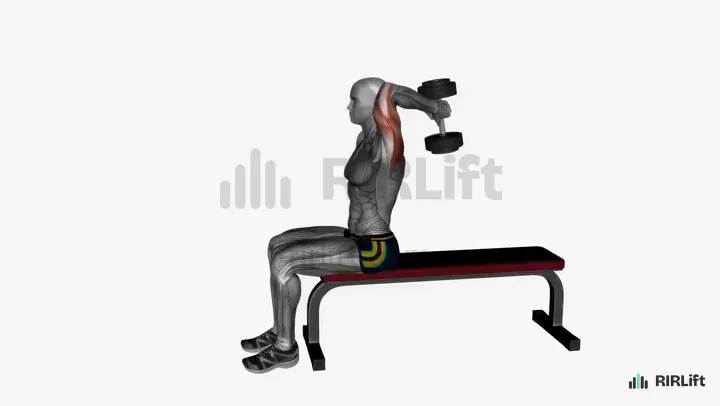
- Seated Dumbbell Overhead Triceps Extension Triceps
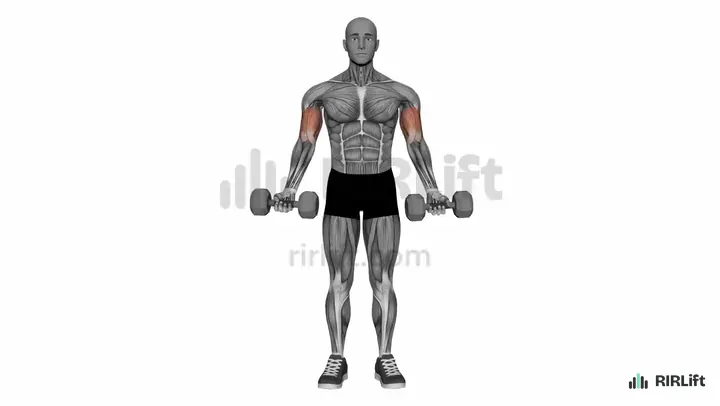
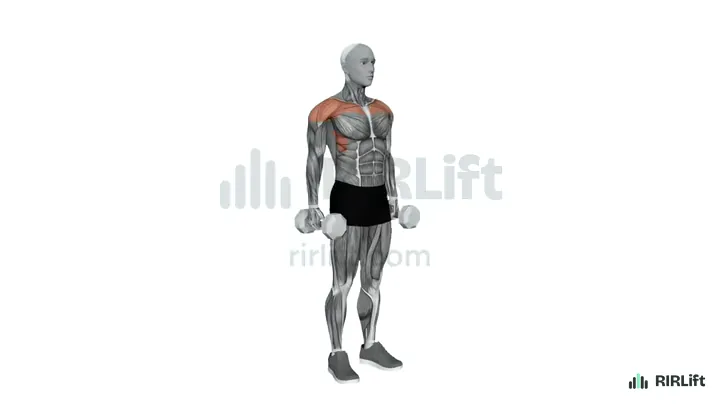
- Dumbbell Curl Biceps
- Triceps Kickback Triceps
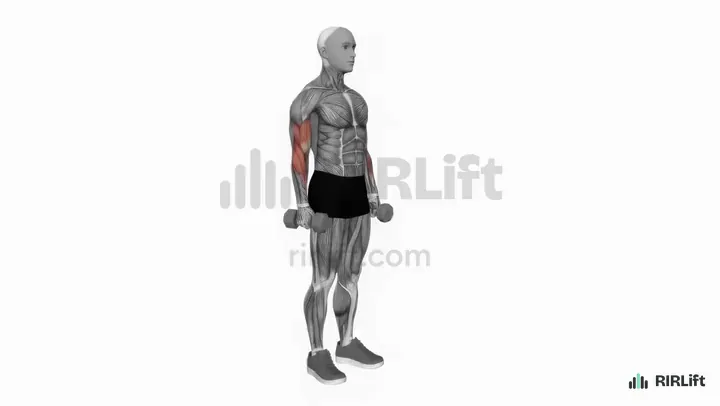
- Hammer Curl Biceps, Forearms
- Dumbbell Lateral Raise Shoulders
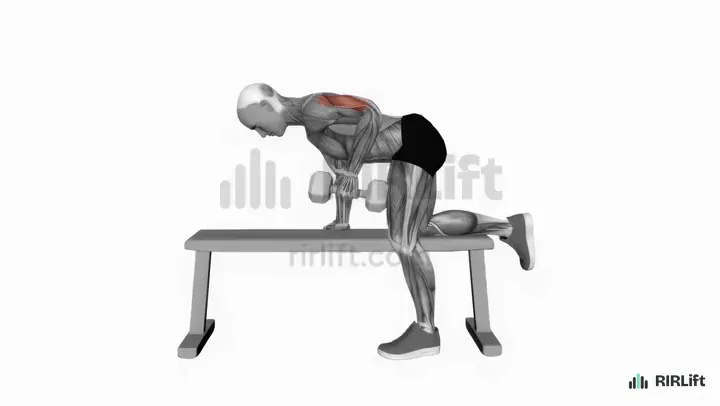
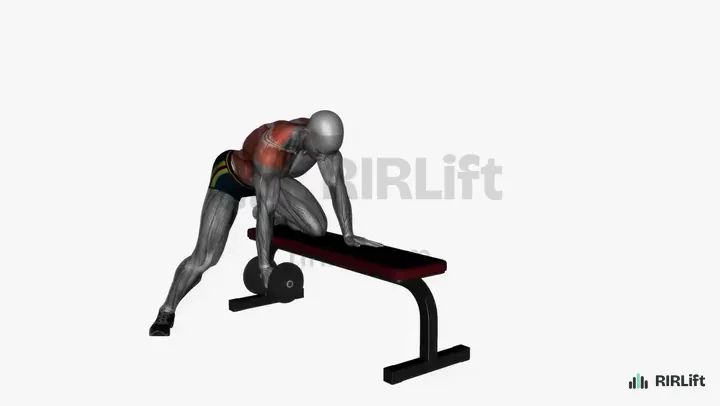
- One-Arm Dumbbell Row Lats, Upper Back
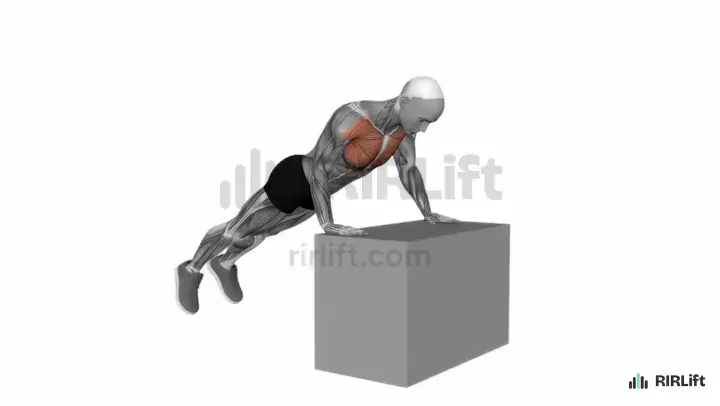
- Incline Push-Up Chest
Put them together: example sessions
Each session below picks from the exercises above for one situation, with the sets, reps, rest and RIR filled in.
-
Session 1
Two days at home with a few pairs of dumbbells
You have light and medium dumbbells at home, maybe 5, 8 and 12 pounds, and want firmer, stronger arms without a gym.
2× a week · 26 sets a week · ~30 min
-
Session 2
Gym: arms after your main workout
You already train legs and full body at a gym twice a week and want to give your arms dedicated work at the end.
2× a week · 28 sets a week · ~25 min
-
Session 3
Shoulders that ache when you reach overhead
Raising your arms high is uncomfortable, or you are brand new to lifting, and you want to build arm strength while keeping your hands below shoulder height.
3× a week · 39 sets a week · ~25 min
Session 1
Two days at home with a few pairs of dumbbells
- Workouts2× a week
- Working sets26 a week
- Per workout~30 min
- EquipmentDumbbells
You have light and medium dumbbells at home, maybe 5, 8 and 12 pounds, and want firmer, stronger arms without a gym.
Two sessions that each hit biceps, triceps, shoulders and back give every arm muscle about 4 to 6 sets a week, enough to see change in 8 to 12 weeks at 2 reps in reserve. Each session has 13 working sets and takes about 30 minutes.
| Exercise | Sets × reps | RIR | Rest |
|---|---|---|---|
| Dumbbell Shoulder Press1 warm-up set first | 3 × 8–12 | 2 | 90 s |
| One-Arm Dumbbell RowPer arm. | 3 × 10–12 | 2 | 75 s |
| Dumbbell Curl | 2 × 10–15 | 2 | 1 min |
| Seated Dumbbell Overhead Triceps Extension | 3 × 10–15 | 2 | 1 min |
| Incline Push-Up | 2 × 8–12 | 2 | 1 min |
| Exercise | Sets × reps | RIR | Rest |
|---|---|---|---|
| One-Arm Dumbbell RowPer arm. | 3 × 10–12 | 2 | 75 s |
| Incline Push-Up | 3 × 8–12 | 2 | 75 s |
| Hammer Curl | 3 × 10–15 | 2 | 1 min |
| Triceps Kickback | 2 × 12–15 | 2 | 1 min |
| Dumbbell Lateral Raise | 2 × 12–15 | 2 | 1 min |
- How to run it
- Do Day 1 and Day 2 on non-consecutive days, for example Monday and Thursday. If you also do leg or full-body work, put it on the same days or in between.
- How to progress
- Use double progression: stay at a weight until every set reaches the top of the rep range with 2 reps still in the tank, then move up to the next dumbbell and start again at the bottom of the range.
Session 2
Gym: arms after your main workout
- Workouts2× a week
- Working sets28 a week
- Per workout~25 min
- EquipmentDumbbells, Adjustable Cable
You already train legs and full body at a gym twice a week and want to give your arms dedicated work at the end.
Arms recover quickly, so one short block of 14 sets, done after your main lifts twice a week, adds 6 direct sets for the biceps and 10 for the triceps without lengthening your gym visit by more than 25 minutes. Pairing the curl and pressdown saves time.
| Exercise | Sets × reps | RIR | Rest |
|---|---|---|---|
| Dumbbell Shoulder Press1 warm-up set first | 3 × 8–10 | 2 | 90 s |
| A1 Hammer Curl | 3 × 10–12 | 2 | 1 min |
| A2 Cable Triceps Pressdown | 3 × 10–15 | 1 | 1 min |
| Seated Dumbbell Overhead Triceps Extension | 2 × 10–12 | 2 | 1 min |
| Dumbbell Lateral Raise | 3 × 12–15 | 2 | 1 min |
- How to run it
- Tack it onto the end of both weekly gym sessions. On a day your main session ran long, do only the superset.
- How to progress
- Cables and machines move in small steps, so add one plate as soon as all sets reach the top of the range at 1 to 2 reps in reserve. For the dumbbell moves, add reps first and weight second.
Session 3
Shoulders that ache when you reach overhead
- Workouts3× a week
- Working sets39 a week
- Per workout~25 min
- EquipmentResistance Bands, Dumbbells
Raising your arms high is uncomfortable, or you are brand new to lifting, and you want to build arm strength while keeping your hands below shoulder height.
Nothing in this session goes overhead, and every set stops 3 reps short of hard, so you can do it three times a week and still feel fresh. Three short sessions of 13 sets build the habit and give each arm muscle 6 to 9 sets a week.
| Exercise | Sets × reps | RIR | Rest |
|---|---|---|---|
| Band Pull-Apart | 2 × 12–20 | 3 | 45 s |
| One-Arm Dumbbell RowPer arm. | 3 × 10–15 | 3 | 1 min |
| Incline Push-Up | 3 × 8–12 | 3 | 1 min |
| Band Hammer Curl | 3 × 10–15 | 3 | 45 s |
| Triceps Kickback | 2 × 12–15 | 3 | 45 s |
- How to run it
- Do it on three non-consecutive days, about 20 minutes each. Start every session with the band pull-aparts as a warm-up for the shoulders.
- How to progress
- Add 2 reps per set before adding weight or a thicker band. When all sets reach the top of the range at 3 reps in reserve for two sessions in a row, take the next step up.
Make it fit you
-
Picking your first dumbbells
For curls and triceps work, start where 12 reps feel hard but clean, usually 5 to 8 pounds. Lateral raises take about half that. Rows and presses take more, often 10 to 15 pounds. A set of three pairs covers almost every exercise on this page.
-
No equipment at all
Incline push-ups on a kitchen counter train the triceps and chest, and filled water bottles or a band can stand in for dumbbells on curls, kickbacks and raises. Move to real weights once you can do 20 reps.
-
Sore elbows
Switch overhead extensions to the cable pressdown with a rope, use hammer curls instead of palms-up curls, and slow the lowering to three seconds. A lighter weight for more reps still works the muscle hard while the elbow handles less load.
-
Log the reps you had left
Write down how many more reps you could have done on each set. RIRLift uses that number to set your next weight, so your arms keep getting a challenge without guessing when to move up.
-
Pair arms with legs
Arm work alone does not change much else. If you have time for a third session, add squats, step-ups or glute bridges, which train the biggest muscles in your body.
Questions
How do women over 50 get toned arms?
Toned arms come from building muscle in the triceps, biceps and shoulders and having less fat over it. Train the arms two or three times a week with weights that leave only 2 or 3 reps in reserve, add weight as you get stronger, and let your overall eating set the fat side.
Can a woman over 60 or 70 tone flabby arms?
Yes. Muscles respond to strength training at any age, and older beginners often gain strength quickly in the first few months. Start with the seated overhead extension, curls and incline push-ups, light weights and slow lowering.
How many days a week should I train my arms after 50?
Two or three days a week with a day off in between is plenty. Arms also get work from rows and push-ups, so a full-body plan twice a week plus one short arm session covers them.
What weight dumbbells should a woman over 50 use for arms?
Pick the weight you can lift for the planned reps with 2 or 3 left. For most women that means 5 to 8 pounds for curls and triceps, 2 to 5 for lateral raises and 10 to 15 for rows and presses, rising over time.
What is the 3-3-3 rule for workouts?
It is a loose label online, most often meaning three exercises, three sets each, three days a week. For arms that would be one triceps, one biceps and one shoulder exercise, which is a reasonable starting point.
Related templates
-
Arm exercises for women: firm, strong arms at home or at the gym
The full arm list for any age, with heavier gym options.
-
Arm exercises for seniors: biceps, triceps and the upper body
Seated and lighter arm work for 65 and older.
-
Exercises to tone arms: triceps, biceps and shoulders
More on what toning means and how to train for it.
-
Strength exercises for women over 60: legs, hips, back and arms
Full-body strength plans that include the legs and back.
-
How to use reps in reserve (RIR)
Gauging when a curl or kickback has only 2 or 3 good reps left.