
Arm exercises for women: firm, strong arms at home or at the gym
Published October 19, 2026
The best arm exercises for women are incline and kneeling push-ups and bench dips for the backs of your arms, the cable pressdown and overhead extension when you have a gym, alternating hammer curls and cable curls for the front of the arm, and the Arnold press, one-arm row and assisted pull-up for the shoulders and back that frame the arms. "Toned" arms are arms with more muscle and a defined shape, so the goal is the same as for anyone: a few exercises, done for hard sets that end 1 to 3 reps short of failure, and a little more weight or reps every couple of weeks.
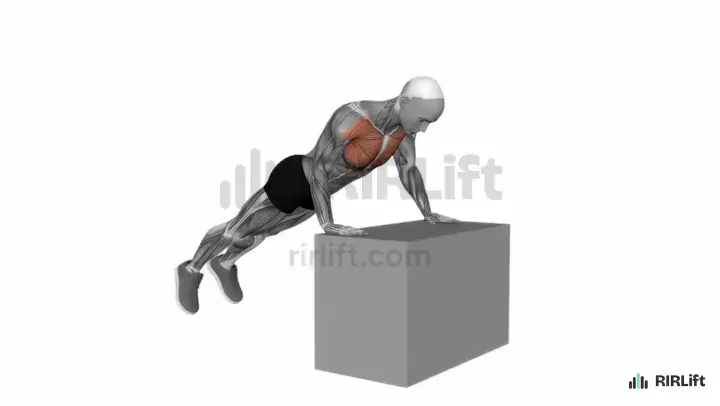
- Incline Push-Up Chest
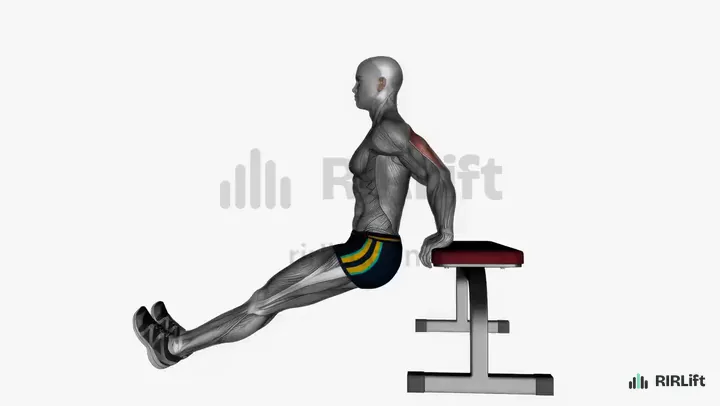
- Bench Dip Triceps
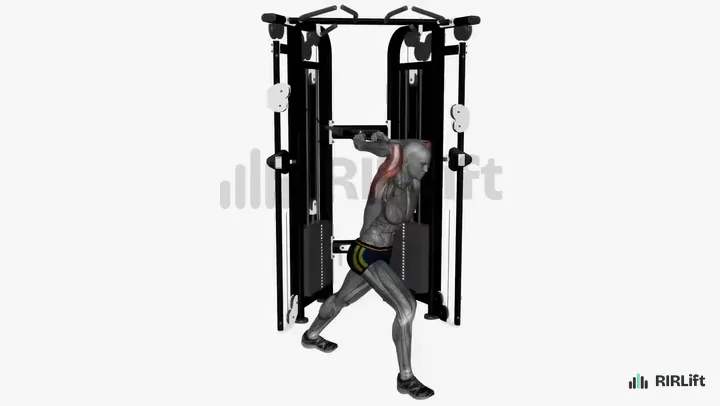
- Overhead Cable Triceps Extension Triceps
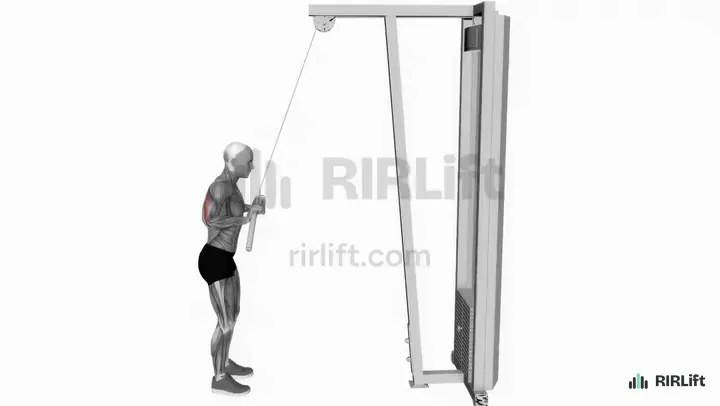
- Cable Triceps Pressdown Triceps
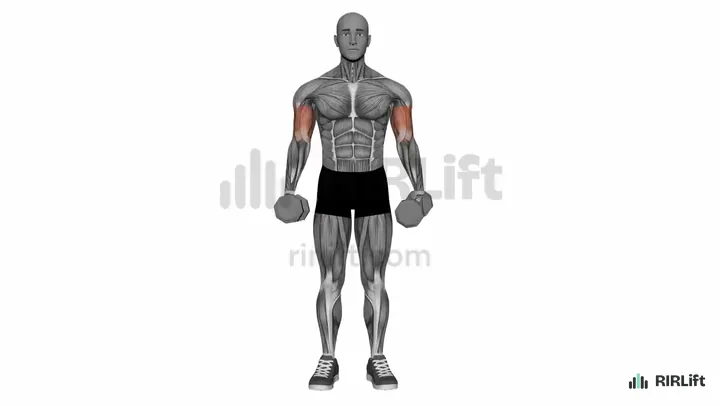
- Alternating Hammer Curl Biceps
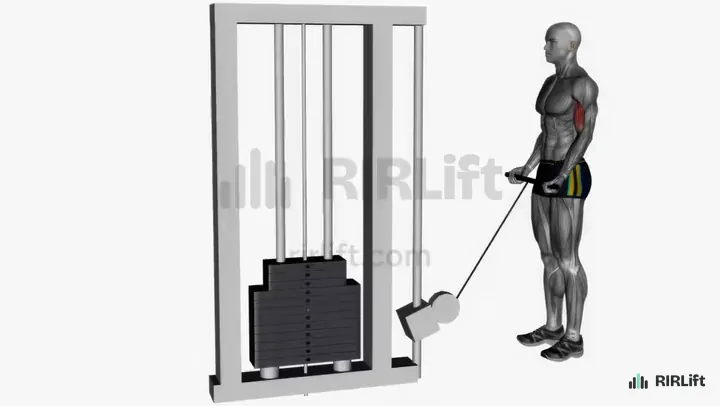
- Cable Curl Biceps
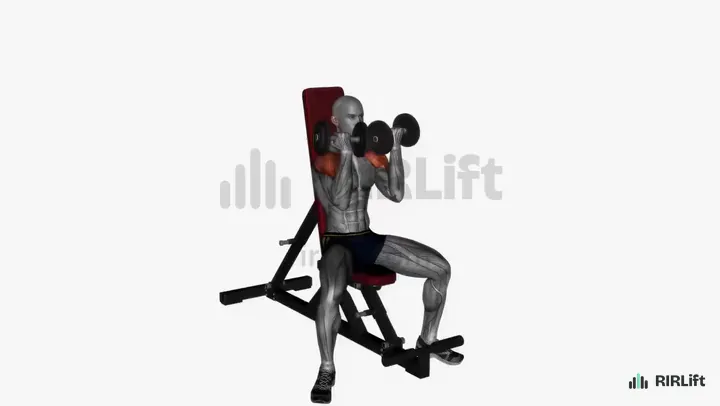
- Arnold Press Shoulders
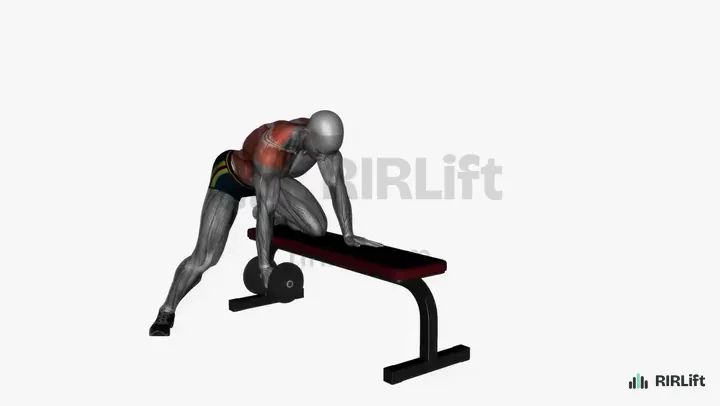
- One-Arm Dumbbell Row Lats, Upper Back
Put them together: example sessions
Each session below picks from the exercises above for one situation, with the sets, reps, rest and RIR filled in. Open one in the session builder to change a pick, price it from a recent set, and add it to RIRLift.
-
Session 1
At home with light dumbbells and a band, 25 minutes
You train at home with one light pair of dumbbells, a resistance band and a sturdy chair or bench, and you have about 25 minutes, twice a week.
2× a week · 23 sets a week · ~25 min
-
Session 2
Gym with cables and an assisted pull-up machine
You train at a gym, want arms that look defined and feel strong, and are working toward your first unassisted pull-up and push-up.
2× a week · 25 sets a week · ~30 min
-
Session 3
Starting again after years away, or in your 40s and up
You have not lifted in a long time, or ever, and want firmer arms without sore elbows or a long workout, at home or at a gym.
2× a week · 16 sets a week · ~20 min
Session 1
At home with light dumbbells and a band, 25 minutes
- Workouts2× a week
- Working sets23 a week
- Per workout~25 min
- EquipmentDumbbells, Flat Bench, Resistance Bands
You train at home with one light pair of dumbbells, a resistance band and a sturdy chair or bench, and you have about 25 minutes, twice a week.
Without a cable or heavier weights, body weight does the heavy lifting for the triceps and the light dumbbells cover the shoulders, back and biceps. Each session opens with a push-up variation, the hardest arm exercise you can do at home, then alternates pushing and pulling so one muscle rests while the next works. Light loads only build muscle when you get close to failure, so the curls and rows end at 1 rep in reserve; the push-ups and dips stop at 2 because form breaks suddenly when they go to failure. Arms A has 12 working sets and Arms B has 11.
| Exercise | Sets × reps | RIR | Rest |
|---|---|---|---|
| Incline Push-UpLowest surface that gives you 8 reps. | 3 × 8–15 | 2 | 90 s |
| One-Arm Dumbbell RowPer arm. Hand on a chair seat. | 3 × 10–20 | 1 | 1 min |
| Bench DipKnees bent to start. | 3 × 8–15 | 2 | 75 s |
| Alternating Hammer CurlCount each arm. | 3 × 10–20 | 1 | 1 min |
Open Arms A in the session builder
| Exercise | Sets × reps | RIR | Rest |
|---|---|---|---|
| Kneeling Push-UpStraight line from knees to head. | 3 × 8–15 | 2 | 90 s |
| Arnold PressSeated, back supported. | 3 × 10–15 | 1 | 75 s |
| Close-Grip Push-UpFrom the knees or a raised surface if needed. | 2 × 6–15 | 2 | 75 s |
| Band Hammer CurlTwo seconds down. | 3 × 12–20 | 1 | 1 min |
Open Arms B in the session builder
- How to run it
- Do Arms A and Arms B on two different days with at least one day between. Use the incline push-up surface that lets you hit the bottom of the rep range, and lower it as you get stronger.
- How to progress
- When every set reaches the top of its rep range at the target reps in reserve, make the exercise harder: a lower surface or the kneeling version for push-ups, straighter legs for dips, a wider stance on the band, or three seconds of lowering on the curls and rows.
Session 2
Gym with cables and an assisted pull-up machine
- Workouts2× a week
- Working sets25 a week
- Per workout~30 min
- EquipmentAssisted Machine, Dumbbells, Adjustable Cable
You train at a gym, want arms that look defined and feel strong, and are working toward your first unassisted pull-up and push-up.
A gym adds the cables that load the triceps and biceps in small steps and the assisted pull-up machine, so each session leads with a big pull or push for strength and then finishes the arms directly. The assisted pull-up and the push-up stop at 2 reps in reserve with a warm-up set because you are chasing strength on them, and the cable moves go to 1 or 0, where a cable is easy to stop safely. Session A has 13 working sets and session B has 12, which with the pulling and pressing in each gives your arms plenty of hard work twice a week.
| Exercise | Sets × reps | RIR | Rest |
|---|---|---|---|
| Assisted Pull-Up1 warm-up set firstFull hang between reps. | 4 × 6–10 | 2 | 2 min |
| Arnold Press | 3 × 8–12 | 2 | 90 s |
| Cable Triceps PressdownElbows at your sides. | 3 × 10–15 | 1 | 1 min |
| Cable CurlFull stretch at the bottom. | 3 × 10–15 | 0 | 1 min |
Open Upper A in the session builder
| Exercise | Sets × reps | RIR | Rest |
|---|---|---|---|
| Close-Grip Push-Up1 warm-up set firstFrom the toes when you can. | 3 × 6–12 | 2 | 2 min |
| One-Arm Dumbbell RowPer arm. Knee on the bench. | 3 × 8–12 | 1 | 90 s |
| Overhead Cable Triceps ExtensionRope. Elbows forward. | 3 × 10–15 | 1 | 1 min |
| Alternating Hammer Curl | 3 × 10–15 | 0 | 1 min |
Open Upper B in the session builder
- How to run it
- Do Upper A and Upper B on different days with two or three days between, alongside your lower-body days.
- How to progress
- On the assisted pull-up, take off one step of assistance each time every set reaches 10 reps at 2 in reserve. On the cables and dumbbells, reach the top of the rep range on every set, then move one pin or one dumbbell up.
Session 3
Starting again after years away, or in your 40s and up
- Workouts2× a week
- Working sets16 a week
- Per workout~20 min
- EquipmentDumbbells
You have not lifted in a long time, or ever, and want firmer arms without sore elbows or a long workout, at home or at a gym.
Coming back, the arms respond quickly, but joints and tendons adapt more slowly than muscle, so this plan uses fewer exercises, moderate reps and 2 to 3 reps in reserve so you finish each set knowing you could do more. Four exercises cover the backs of the arms, the biceps, the shoulders and the back, in 8 working sets that take about 20 minutes. Once the last rep of each set feels steady for two weeks, the plan moves you toward 1 to 2 in reserve, where most of the muscle-building happens.
| Exercise | Sets × reps | RIR | Rest |
|---|---|---|---|
| Incline Push-UpCounter height to start. | 2 × 8–15 | 3 | 90 s |
| One-Arm Dumbbell RowPer arm. Hand on a chair seat. | 2 × 10–15 | 2 | 75 s |
| Arnold PressSeated. Light pair. | 2 × 10–15 | 3 | 75 s |
| Alternating Hammer CurlSlow on the way down. | 2 × 10–15 | 2 | 1 min |
- How to run it
- Do this session twice a week on non-consecutive days. Start the incline push-up on a counter or wall-height surface and the dumbbells at a weight you could lift 20 times.
- How to progress
- For the first four weeks, add one rep per set each week and keep 2 to 3 in reserve. After that, lower the target to 1 to 2 reps in reserve and move to the next dumbbell or a lower push-up surface when every set reaches the top of its range.
Make it fit you
-
Worried about bulky arms
Keep training hard. Building visible muscle takes months of steady progression for anyone, so the arms you get from these sessions are firmer and more defined, not oversized. If you ever want to slow growth, hold the weights where they are; it does not happen by accident.
-
Want less jiggle on the backs of the arms
Give the triceps the first slot of every session and do one push or dip and one overhead or pushdown move. Muscle under the skin firms that area; how much you see of it also depends on your overall body fat, which training alone changes slowly.
-
Wrists hurt on push-ups and dips
Do push-ups gripping dumbbell handles so your wrists stay straight, or swap the bench dip for the cable pressdown at the gym. On curls, the hammer grip is usually the most comfortable on the wrist.
-
Shoulders pinch on overhead pressing
Swap the Arnold press for a seated press with a neutral grip, and press slightly in front of your face rather than straight up. The rows and pull-ups still train the shoulders from behind.
-
Only one day a week
Run Upper A from the gym plan or Arms A from the home plan once a week and add one extra set to each exercise. One hard session still builds arms; two simply builds them faster.
-
Log the RIR, not just the weight
Write down how many reps you had left on every working set. If you log in RIRLift, it uses that number to suggest your next weight, so you know when the light pair has done its job and it is time to move up.
Questions
What are the best arm exercises for women?
Push-ups or bench dips for the backs of the arms, a curl for the front, and a shoulder press plus a row for the shoulders and back. At a gym, add the cable pressdown and overhead extension for the triceps and the assisted pull-up. The exercises are the same ones men use; what changes the result is hard sets and steady progress.
Are 4 exercises enough for arm day?
Yes. A push for the triceps, a curl, a press and a row, each for 2 to 3 hard sets, covers every muscle of the arms and shoulders. More exercises only help once you are adding more sets than four can hold, which for most women is well past the first year of training.
Can a 50 year old woman tone her arms?
Yes. Muscle keeps responding to training at 50, 60 and beyond. Start with lighter weights and 2 to 3 reps in reserve to give your joints time to adapt, then move closer to failure and add weight over months. The back-after-a-break plan on this page is built for exactly that start.
How long does it take to get toned arms for a female?
You will usually feel stronger within a few weeks, as your body learns the movements. Visible change in muscle shape takes longer, often a few months of training twice a week with steady progression, and how much you see also depends on body fat. Logging your sets lets you see the progress before the mirror does.
Which exercise is best for arms at home?
The push-up, in whatever version you can do for 8 to 15 good reps: incline, kneeling, or from the floor. It works the triceps, chest and shoulders together and gets harder as you get stronger. Add a curl with a band or light dumbbells and a one-arm row, and you have a full home arm session.
Should women lift heavy for arms?
Heavy enough that the set ends 1 to 3 reps short of failure, whether that is at 8 reps or 20. Light weights work as long as you push the set that close; a weight you could lift 40 times builds little. Pick the weight from how many reps you had left, not from a number someone else uses.
How often should women train arms?
Two sessions a week, with a day or more between them, suits most women. The plans on this page each spread the arm work across two days so every muscle gets worked twice without any session running long.
Related templates
-
Tricep exercises for women: firmer, stronger arms at the gym or at home
More options for the backs of the arms, the area most women want to firm.
-
Bicep exercises for women: toned, strong arms at home or at the gym
Every curl worth knowing for the front of the arm.
-
Upper body exercises for women: back, chest, shoulders and arms
Chest, back and shoulders built around the same arm work.
-
Arm exercises at home: biceps, triceps and grip with whatever you have
More arm moves for a living room with little or no gear.
-
Dumbbell arm exercises for biceps, triceps and forearms
When a pair of dumbbells is all you want to use.