Back extension alternatives: no hyperextension bench needed

The best back extension alternative with no bench is the Romanian deadlift: the same hip hinge, with a bar in your hands instead of a pad under your hips. In the gym, a glute ham raise on the lat pulldown or a cable pull-through also works. At home, an exercise ball back extension is the closest copy, a band reverse hyperextension on a flat bench trains the same muscles from the leg end, and the superman needs nothing at all. If you do back extensions for your glutes, a hip thrust loads them harder.

What a back extension alternative has to replace

A back extension on a hyperextension bench trains your lower back, glutes and hamstrings by folding over the pad at your hips and lifting your torso back to a straight line. Your legs are locked in, so the work is all in lifting your upper body, and it is hardest as you rise toward straight.

A replacement has to keep that hip hinge against a load, or the lower-back work of holding your spine straight.

In the gym

No hyperextension bench, or it is taken: these train the same hinge with a barbell, a cable or the lat pulldown.

Closest swap with a barbell

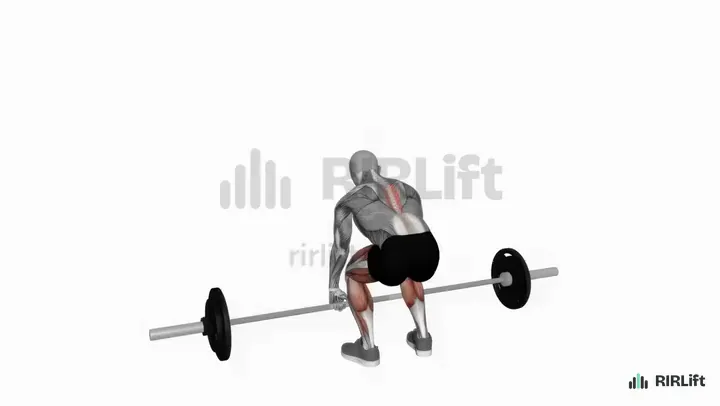
Romanian Deadlift

Hamstrings, Glutes

The same hinge at the hips, but standing, with the load in your hands instead of your body over a pad. You can load it far heavier than a back extension, so use moderate reps.

How to do it

  1. Stand with a barbell at your thighs, hands just outside your legs, feet under your hips.
  2. Soften your knees and push your hips back, sliding the bar down your thighs.
  3. Stop when your hamstrings are fully stretched, usually just below the knee, with your back flat.
  4. Push your hips forward to stand up, glutes tight at the top.

Cues

  • Hips back
  • Bar stays on your legs
  • Back flat

Common mistakes

  • Bending the knees into a squat: keep them soft and still.
  • Reaching for the floor: stop where your back would round.

Gym swap on the lat pulldown

Glute Ham Raise

Hamstrings, Glutes

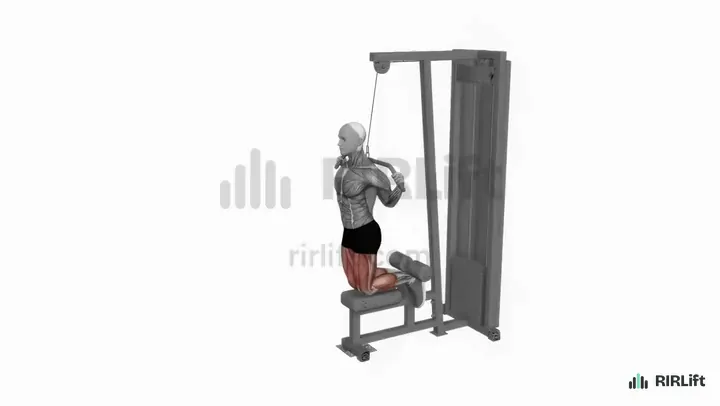
Kneeling on a pulldown seat with your calves under the pads, you lean forward and pull yourself back up. It trains your hamstrings and glutes harder than a back extension and your lower back less.

How to do it

  1. Face away from a lat pulldown and kneel on its seat, calves locked under the thigh pads.
  2. Hold the pulldown bar across the back of your shoulders; a heavier stack gives you more help.
  3. Keep your hips straight and lean your body forward as one piece until it is close to level with the floor.
  4. Curl yourself back up by pulling your heels into the pads.

Cues

  • Hips locked straight
  • Lean as one piece
  • Heavier stack if form breaks

Common mistakes

  • Folding at the hips on the way up: add assistance until you can rise in one straight line.
  • Falling through the bottom: control the lowering just as much as the lift.

Glute-focused swap on a cable

Cable Pull-Through

Glutes, Hamstrings

A rope between your legs pulls your hips back, and your glutes drive them through. Pick it when you did back extensions for your glutes and want little on your lower back.

How to do it

  1. Attach a rope to a low pulley, turn your back to the stack and take the rope ends between your legs.
  2. Walk forward until the stack lifts, feet a bit wider than your hips.
  3. Hinge back, letting the rope pull your hands between your thighs, back flat and knees softly bent.
  4. Drive your hips forward to stand tall and squeeze your glutes at the top.

Cues

  • Hips back, then hips through
  • Arms just hold the rope
  • Squeeze your glutes to finish

Common mistakes

  • Squatting down instead of hinging: keep your shins near vertical and move your hips back.
  • Pulling with your arms or leaning back at the top: stand tall and stop.

Bodyweight or barbell hinge for the lower back

Good Morning

Hamstrings, Glutes

Your lower back has to hold your spine flat as you hinge forward, the same job it does on the bench. Start with your hands behind your head; once that is easy, put a light bar across your upper back and keep the reps high.

How to do it

  1. Lace your fingers behind your head and stand with your feet roughly hip width, knees slightly bent.
  2. Push your hips back and lower your chest toward the floor, keeping your back flat, until you feel a strong pull in your hamstrings.
  3. Push your hips through to stand up again.
  4. When bodyweight reps get easy, set a light bar across your upper back as for a squat and do the same hinge.

Cues

  • Hips back, not chest down
  • Back flat the whole way
  • Soft knees, fixed

Common mistakes

  • Rounding your lower back to reach further: stop each rep where your back would start to bend.
  • Turning it into a squat by bending your knees more as you go down: keep the knee bend the same throughout.

Best swap for glutes

Hip Thrust

Glutes

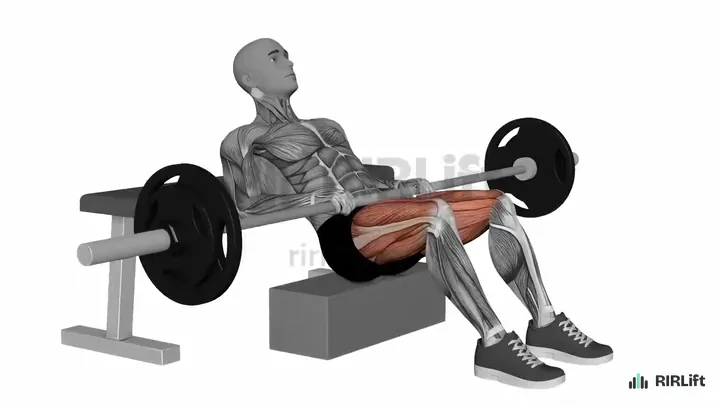
If you round your upper back on back extensions to hit your glutes, a hip thrust loads them harder, at full hip extension, with your back on a bench.

How to do it

  1. Sit with your shoulder blades against the long side of a flat bench and roll a padded bar over your hips.
  2. Plant your feet flat about hip width apart, close enough that your shins are vertical at the top.
  3. Drive through your heels and lift your hips until your torso and thighs form a straight line.
  4. Hold the top for a second with your chin tucked, then lower your hips most of the way down and repeat.

Cues

  • Chin tucked, ribs down
  • Shins vertical at the top
  • One-second squeeze

Common mistakes

  • Arching your lower back to get higher: stop when your hips are level with your knees and squeeze your glutes there.
  • Feet too far out, which turns it into a hamstring exercise: bring them in until your shins are vertical at lockout.

Dumbbells and kettlebells

With a dumbbell or kettlebell, hinge standing up and keep your back flat the whole way down.

Best swap with dumbbells

Dumbbell Good Morning

Hamstrings, Lower Back

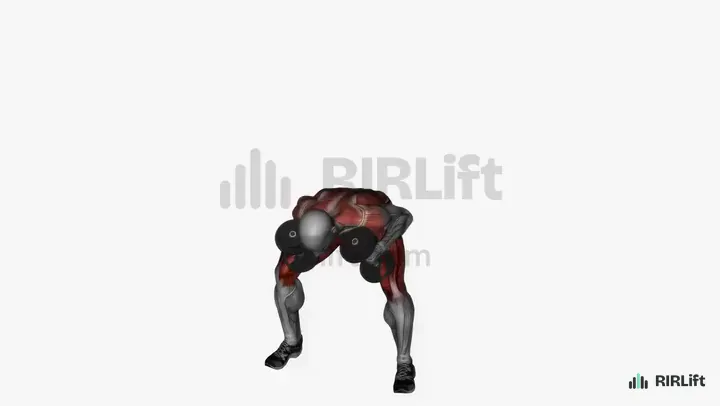
A dumbbell at each shoulder puts the weight high on your body, much like holding a plate on the back extension bench. Your lower back and hamstrings do the lifting.

How to do it

  1. Stand hip-width apart holding a dumbbell at each shoulder, elbows pointing forward.
  2. Push your hips back and hinge forward, knees softly bent, back flat.
  3. Lower until your torso is close to parallel to the floor or your hamstrings stop you.
  4. Drive your hips forward to stand up tall and repeat.

Cues

  • Hips back first
  • Dumbbells pinned to the shoulders
  • Stop where the back stays flat

Common mistakes

  • Bending at the waist so your back rounds: imagine closing a door behind you with your hips.
  • Going heavier than you can hold at your shoulders: a light pair for 10 to 15 reps works your lower back plenty.

Fast hinge with a kettlebell

Kettlebell Swing

Glutes, Hamstrings

A fast hip hinge that hits your glutes and hamstrings hard, while your lower back holds your spine straight. Use it for sets of 15 to 20.

How to do it

  1. Stand with your feet a little wider than your hips, the bell about a foot in front of you.
  2. Hinge down, grip the handle with both hands, and hike the bell back between your thighs.
  3. Snap your hips forward to stand tall, letting the bell float up to shoulder height on straight arms.
  4. Let it fall back between your legs as you hinge again, and go straight into the next rep.

Cues

  • Hips snap, arms just hold on
  • Stand tall at the top
  • Bell passes high between the thighs

Common mistakes

  • Squatting the swing by bending your knees deeply: push your hips back and keep your shins nearly vertical.
  • Lifting the bell with your shoulders: if your arms are working, your hips are not driving it.

One leg, dumbbell or none

Single-Leg RDL

Hamstrings, Glutes

Hinging on one leg loads that side's glute and hamstring with little or no weight. Hold a wall with your free hand until your balance catches up.

How to do it

  1. Stand on your left leg with a dumbbell in your left hand and the standing knee softly bent.
  2. Hinge forward at the left hip while your right leg extends straight behind you, keeping your hips level.
  3. Lower until your torso and back leg are close to parallel to the floor or the standing hamstring stops you.
  4. Drive the left hip forward to come back up, then finish the set before switching sides.

Cues

  • Back leg and torso move as one
  • Hips level, back toes down
  • Slow on the way down

Common mistakes

  • Opening the hip so the back leg rotates out: point the back toes at the floor the whole time.
  • Touching the free foot down between reps to rebalance: slow down and hold a wall with your free hand if needed.

At home: a ball, a bench, a band or the floor

These copy the back extension most closely, with your body over a ball, your legs off a bench, or face down on the floor, plus a floor glute move for no-gear days.

RIRLift's swap with a home gym

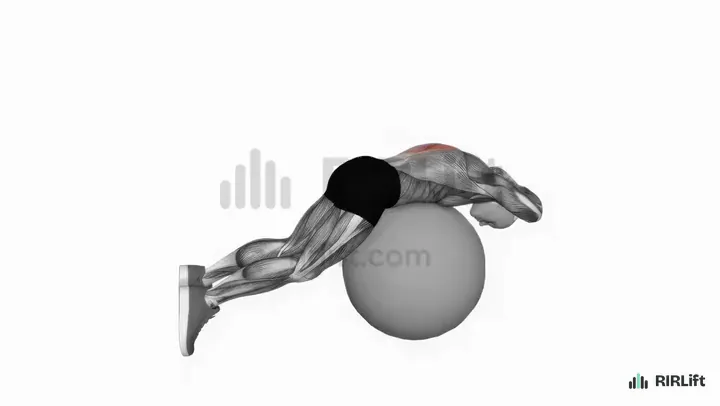
Exercise Ball Back Extension

Lower Back

With your hips over the ball and feet braced on a wall, you fold and lift exactly as on the bench, with a shorter range. This is what RIRLift puts in the back extension's place with a home gym.

How to do it

  1. Lie face down over an exercise ball with the ball under your hips and your feet braced against a wall.
  2. Put your hands lightly behind your head and let your chest round down over the ball.
  3. Lift your chest until your body is straight from head to heels.
  4. Pause a second at the top, then lower under control.

Cues

  • Feet pinned to the wall
  • Lift to straight
  • No overarch

Common mistakes

  • Arching far past straight at the top: stop when your body is in one line.
  • Letting the ball roll because your feet are loose: wedge your feet against the wall before the first rep.

Reverse hyper on a flat bench

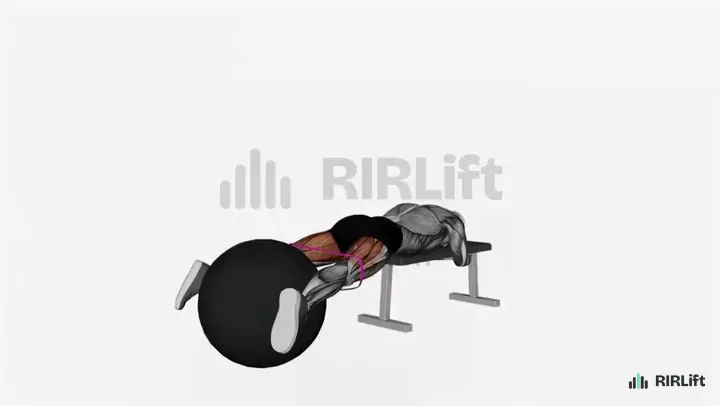
Band Reverse Hyperextension

Glutes, Hamstrings

You lie on a bench and lift your legs instead of your torso, which works your glutes, hamstrings and lower back from the other end. The band and the ball between your feet add the load.

How to do it

  1. Put a mini band around your legs just above the knees and squeeze an exercise ball between your feet.
  2. Lie face down on a flat bench with your hips at the end and your legs hanging off it, hands holding the bench edges.
  3. Squeeze your glutes and raise your straight legs, ball and all, until they line up with your body.
  4. Hold a moment, then lower your legs slowly and repeat.

Cues

  • Chest down, legs up
  • Squeeze the ball, push the band
  • Stop at straight

Common mistakes

  • Swinging the legs above level: stop when your legs line up with your torso.
  • Bending your knees to lift higher: keep them straight so your hips do the work.

Best swap with a band

Band Good Morning

Hamstrings, Lower Back

Stand on a band with it over your shoulders and hinge. It trains your lower back and hamstrings with no weights, best for high reps.

How to do it

  1. Stand on the band with your feet hip-width, loop or handles held at the fronts of your shoulders.
  2. Soften your knees and keep that bend.
  3. Push your hips back and tip your chest forward with a flat back until you feel your hamstrings stretch.
  4. Drive your hips forward to come back to standing.

Cues

  • Hips go back first
  • Spine stays long
  • Stop at the hamstring stretch

Common mistakes

  • Rounding your upper back: keep your chest open and the handles pinned to your shoulders.
  • Bending your knees more and more: the hips move, the knees stay where they started.

RIRLift's swap with no equipment

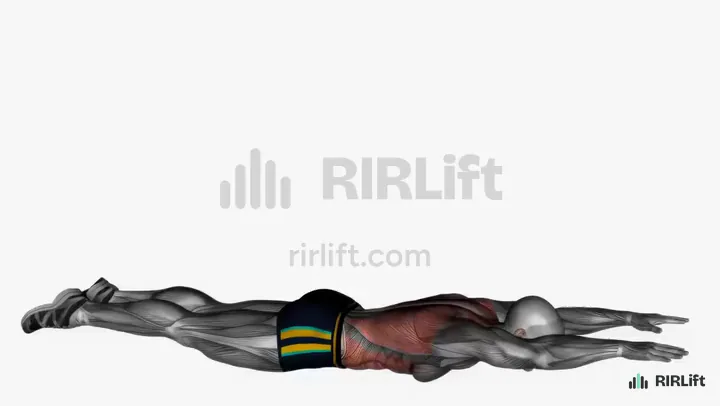
Superman

Lower Back

Lying face down, you raise everything off the mat at once, so your back and glutes do the work with no gear. This is what RIRLift puts in the back extension's place with dumbbells or bodyweight only.

How to do it

  1. Lie face down on a mat, arms reaching past your head, legs long.
  2. Squeeze your glutes and raise your arms, upper chest and legs a few inches off the mat together.
  3. Hold the top for two to three seconds, looking at the floor.
  4. Lower slowly back to the mat and repeat.

Cues

  • Long body, reach away
  • Glutes tight first
  • Gaze at the floor

Common mistakes

  • Throwing your head back to lift higher: keep your neck long; the height comes from your back and hips.
  • Rushing through reps: the pause at the top is what makes the set work.
Build a session with Superman

Glutes on the floor, no gear

Donkey Kick

Glutes

On hands and knees, each rep drives one hip into full extension against your leg's weight, the glute half of a back extension with nothing on your spine. Pair it with supermans for the lower back.

How to do it

  1. Get on hands and knees with your wrists under your shoulders and knees under your hips.
  2. Keep one knee bent at a right angle and lift that foot toward the ceiling.
  3. Stop when your thigh is level with your back and squeeze for a second.
  4. Lower the knee back under your hip without touching the floor, finish the set, then switch legs.

Cues

  • Foot to the ceiling
  • Flat back
  • Squeeze at the top

Common mistakes

  • Arching your lower back to kick higher: the lift should come from your hip.
  • Swinging the leg: if momentum is moving it, slow down and pause at the top.

Example sessions without the back extension

Session 1

Gym, no hyperextension bench

Open in the session builder
  • Workouts2× a week
  • Working sets24 a week
  • Per workout~35 min
  • EquipmentBarbells, Glute-Ham Bench, Adjustable Cable, Flat Bench

You train in a gym with a barbell, cables and a lat pulldown, but no back extension bench.

The Romanian deadlift takes over the heavy hinge, the glute ham raise on the pulldown adds the lean-and-lift, and the pull-through and hip thrust finish your glutes with little load on your lower back. 12 working sets.

Hinge and glutes
ExerciseSets × repsRIRRest
Romanian Deadlift1 warm-up set first 3 × 8–12 2 2:30 min
Glute Ham Raise 3 × 6–10 2 2 min
Cable Pull-Through 3 × 12–15 2 75 s
Hip Thrust 3 × 8–12 2 2 min
How to run it
Run it as your hinge and glute day once or twice a week, away from your heaviest deadlift or squat day.
How to progress
When every set reaches the top of its rep range at the RIR shown, add the smallest weight jump next session and start again at the bottom. On the glute ham raise, take weight off the stack as you get stronger, since the stack is helping you.

Session 2

Home, dumbbells, a bench, a ball and a band

Open in the session builder
  • Workouts2× a week
  • Working sets20 a week
  • Per workout~20 min
  • EquipmentDumbbells, Exercise Ball, Flat Bench, Resistance Bands

You have a home setup with dumbbells, a flat bench, an exercise ball and a mini band.

Dumbbell good mornings give you a loaded hinge, the ball back extension copies the bench movement, and the band reverse hyper works the same muscles from the leg end. The lighter loads mean higher reps. 10 working sets.

Hinge and glutes
ExerciseSets × repsRIRRest
Dumbbell Good Morning1 warm-up set first 4 × 10–15 2 90 s
Exercise Ball Back Extension 3 × 12–20 1 1 min
Band Reverse Hyperextension 3 × 15–20 1 1 min
How to run it
Twice a week on non-consecutive days. Pause one second at the top of every ball extension and reverse hyper.
How to progress
Add reps until every set reaches the top of its range, then move up a dumbbell on the good morning, hold a light plate at your chest on the ball extension, or use a thicker band.

Session 3

No equipment, or one band

Open in the session builder
  • Workouts3× a week
  • Working sets33 a week
  • Per workout~20 min
  • EquipmentResistance Bands

You train at home or while travelling with your bodyweight and maybe one long band.

With no weights, supermans and band good mornings use high reps and a pause to make your lower back work, and donkey kicks finish your glutes one hip at a time. 11 working sets.

Lower back and glutes
ExerciseSets × repsRIRRest
SupermanHold the top two seconds. 4 × 10–15 1 45 s
Band Good Morning 4 × 15–20 1 1 min
Donkey KickSets are per leg. 3 × 15–25 1 45 s
How to run it
Two or three times a week. Hold the top of each superman for two seconds.
How to progress
Add reps until you hit the top of each range. Then hold the superman's top for three seconds, use a thicker band, and pause two seconds at the top of each donkey kick.

Make it fit you

Questions

What can I substitute for back extensions?

A Romanian deadlift is the closest swap in a gym, and a glute ham raise on the lat pulldown or a cable pull-through work too. At home, use an exercise ball back extension, a band reverse hyperextension or the superman.

How do I do back extensions at home without a machine?

Lie with your hips on an exercise ball and your feet braced against a wall, then lift your chest until your body is straight. With no ball, do supermans on the floor.

How do you do a reverse hyperextension without a machine?

Lie face down on a flat bench with your hips at the edge, hold the sides, and lift your straight legs until they line up with your body. A mini band above your knees and a ball between your feet add load.

Is the hyperextension bad for your lower back?

Not when you lift only to a straight line and control the lowering. Swinging up and arching hard past straight is what to avoid.

Are back extensions better than RDLs?

Neither is better; they work the same muscles differently. RDLs take far more weight, while back extensions are easier to do for high reps without much fatigue, so many lifters use both.

What is a good back extension alternative for glutes?

The hip thrust loads your glutes the most, and the cable pull-through and band reverse hyperextension also favor your glutes over your lower back.