
Lower back exercises at home, with or without weights
Published October 19, 2026
The best lower back exercises at home are the superman and the ball back extension when you have no weights, the Romanian deadlift and good morning with dumbbells, the deadlift, good morning and swing with a kettlebell, and the band deadlift and reverse hyper with a resistance band. Each one makes the muscles along your spine hold your back flat while your hips move. Start with the bodyweight pair and add a loaded hinge once 15 to 20 clean reps come easily.
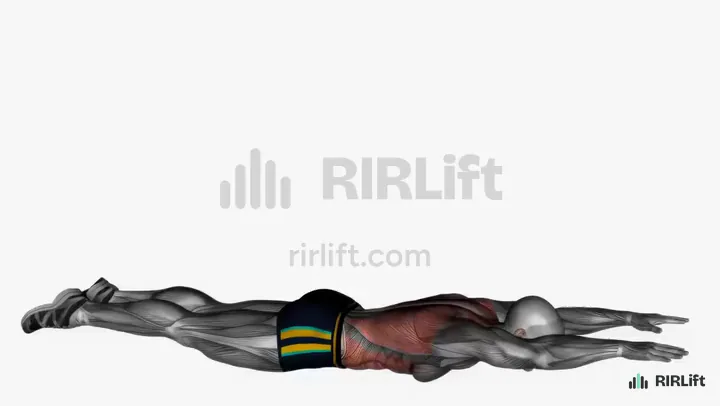
- Superman Lower Back
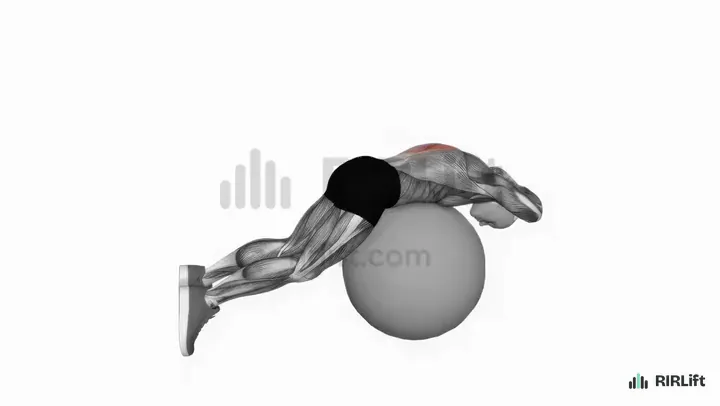
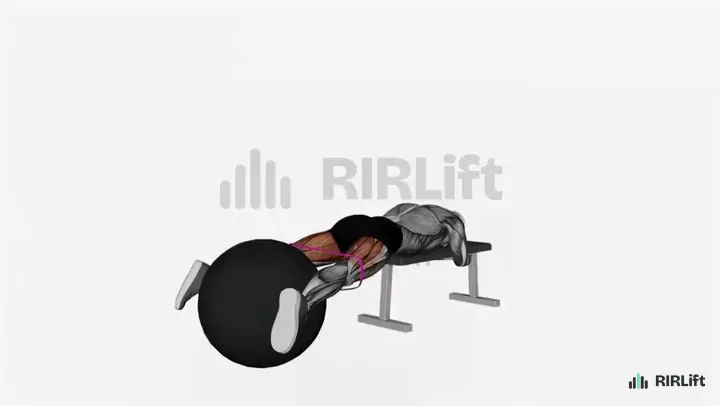
- Exercise Ball Back Extension Lower Back
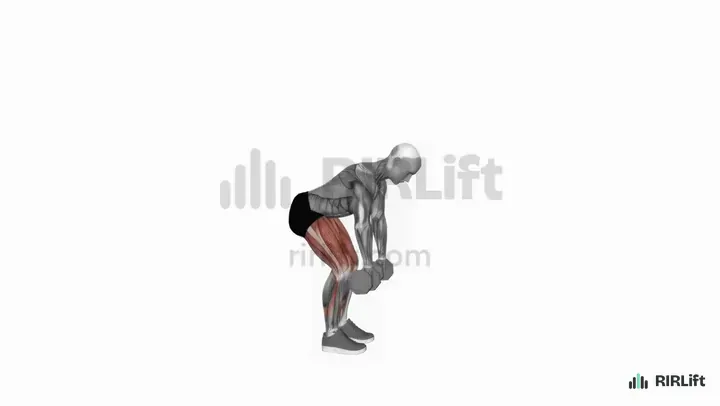
- Dumbbell Romanian Deadlift Hamstrings, Glutes
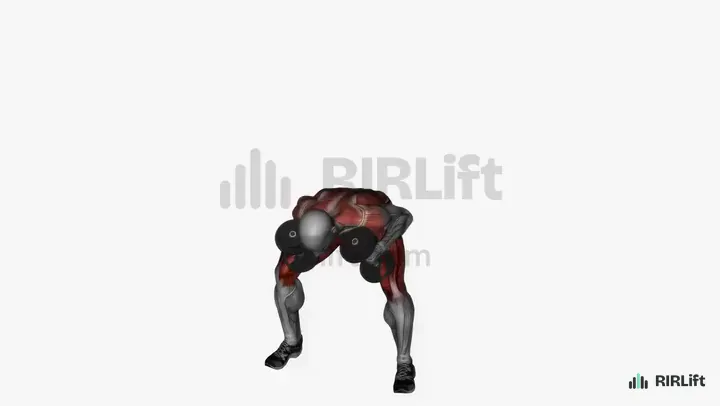
- Dumbbell Good Morning Hamstrings, Lower Back
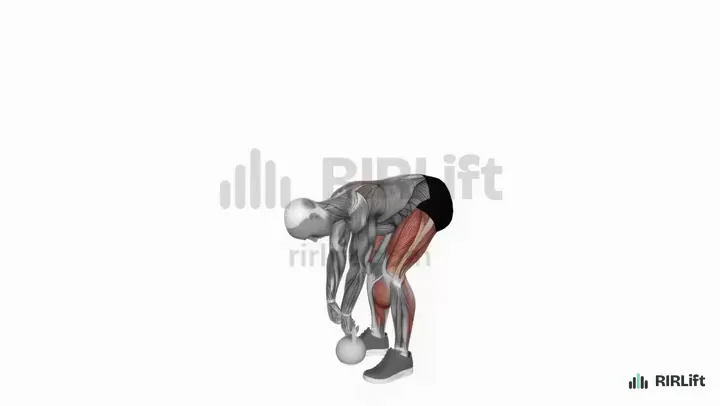
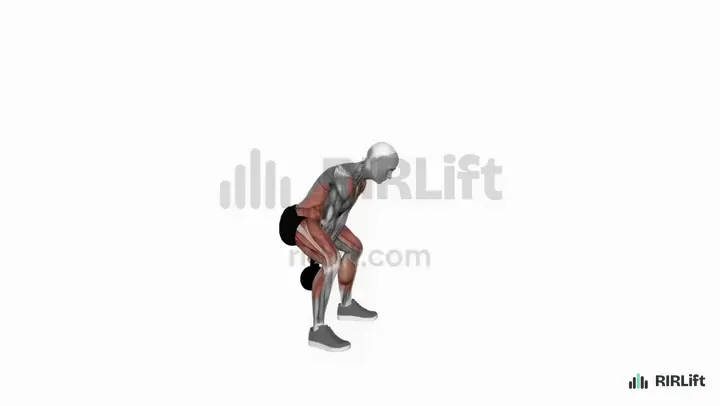
- Kettlebell Deadlift Glutes, Hamstrings, Lower Back
- Kettlebell Swing Glutes, Hamstrings
- Band Reverse Hyperextension Glutes, Hamstrings
Put them together: example sessions
Each session below picks from the exercises above for one situation, with the sets, reps, rest and RIR filled in. Open one in the session builder to change a pick, price it from a recent set, and add it to RIRLift.
-
Session 1
No weights: floor space and a stability ball
You have no weights at home, or you are new to training your lower back and want to start with body weight before adding load.
3× a week · 18 sets a week · ~10 min
-
Session 2
One kettlebell
You have a single kettlebell, around 12 to 24 kg, and want lower-back strength and some conditioning in a short session.
2× a week · 18 sets a week · ~20 min
-
Session 3
Dumbbells, a bench and a band
You train at home with adjustable or a few fixed dumbbells, a flat bench and a loop band, and you want to grow your lower back and hamstrings, not just maintain them.
2× a week · 17 sets a week · ~20 min
Session 1
No weights: floor space and a stability ball
- Workouts3× a week
- Working sets18 a week
- Per workout~10 min
- EquipmentExercise Ball
You have no weights at home, or you are new to training your lower back and want to start with body weight before adding load.
The superman teaches you to lift with your back and glutes together; the ball back extension adds range once that is easy. With body weight only, the sets use long holds and high reps and stop 2 reps short, because the goal in this phase is clean reps you can add to each week, not exhausting sets. Three short sessions a week gives the muscles frequent practice. Each session has 6 working sets.
| Exercise | Sets × reps | RIR | Rest |
|---|---|---|---|
| SupermanHold 3 s at the top. | 3 × 8–15 | 2 | 45 s |
| Exercise Ball Back ExtensionFeet against a wall. Pause at the top. | 3 × 10–20 | 2 | 1 min |
- How to run it
- Do the session three times a week, for example Monday, Wednesday and Friday. It takes about ten minutes and fits after any other workout.
- How to progress
- Add a rep or a second of hold each week. When you reach 20 ball extensions at 2 reps in reserve, hold a water bottle or a light dumbbell at your chest, or move to one of the loaded plans.
Session 2
One kettlebell
- Workouts2× a week
- Working sets18 a week
- Per workout~20 min
- EquipmentKettlebells
You have a single kettlebell, around 12 to 24 kg, and want lower-back strength and some conditioning in a short session.
The deadlift trains the hinge heavy, the good morning makes the same bell harder with a longer lever, and the swing adds fast, repeated hip extension that slow lifts miss. The deadlift and good morning stop 2 reps short to keep your back flat on every rep; swings stop well before your form fades. Session A has 9 working sets and session B has 9.
| Exercise | Sets × reps | RIR | Rest |
|---|---|---|---|
| Kettlebell DeadliftBell between your ankles. | 3 × 8–15 | 2 | 2 min |
| Kettlebell SwingStop the set if your hips stop snapping. | 4 × 12–20 | 2 | 75 s |
| SupermanHold 2 s. | 2 × 10–15 | 1 | 45 s |
Open Kettlebell A in the session builder
| Exercise | Sets × reps | RIR | Rest |
|---|---|---|---|
| Kettlebell Good MorningBell on your chest. | 3 × 10–15 | 2 | 90 s |
| Kettlebell Swing | 3 × 15–20 | 2 | 75 s |
| Kettlebell Deadlift3 s lowering. | 3 × 10–15 | 1 | 90 s |
Open Kettlebell B in the session builder
- How to run it
- Alternate the two sessions, twice a week, with at least two days between them. Put session A first in the week if you also train legs.
- How to progress
- Add reps until every set hits the top of its range at the target RIR. With only one bell, slow the lowering on deadlifts to three seconds, then pause at the bottom of each good morning, before you buy a heavier kettlebell.
Session 3
Dumbbells, a bench and a band
- Workouts2× a week
- Working sets17 a week
- Per workout~20 min
- EquipmentDumbbells, Resistance Bands, Flat Bench
You train at home with adjustable or a few fixed dumbbells, a flat bench and a loop band, and you want to grow your lower back and hamstrings, not just maintain them.
The dumbbell Romanian deadlift is the heaviest hinge here and leads session A. The dumbbell good morning leads session B because it works the back harder with less weight. The band reverse hyper finishes each session lying on the bench, adding back and glute volume without more load on your spine. Main lifts stop 1 to 2 reps short; the reverse hyper goes to 1. Session A has 9 working sets and session B has 8.
| Exercise | Sets × reps | RIR | Rest |
|---|---|---|---|
| Dumbbell Romanian Deadlift1 warm-up set first3 s down. Stop below the knees. | 4 × 8–12 | 2 | 2:30 min |
| Band Good Morning | 2 × 15–20 | 1 | 1 min |
| Band Reverse HyperextensionHold 1 s at the top. | 3 × 12–20 | 1 | 1 min |
Open Hinge A in the session builder
| Exercise | Sets × reps | RIR | Rest |
|---|---|---|---|
| Dumbbell Good Morning1 warm-up set firstDumbbells on your shoulders. | 3 × 8–12 | 2 | 2 min |
| Band Deadlift | 2 × 12–20 | 1 | 1 min |
| Band Reverse Hyperextension | 3 × 12–20 | 1 | 1 min |
Open Hinge B in the session builder
- How to run it
- Train twice a week with two or three days between sessions. On weeks you train legs hard elsewhere, keep only session A.
- How to progress
- Use double progression: when every set of a lift reaches the top of the range at the target RIR, add 2 to 5 lb per dumbbell and drop back to the bottom of the range.
Make it fit you
-
Back feels tight after sitting all day
Start any session with two easy sets of supermans before the loaded hinges, and keep the first hinge at 3 reps in reserve that day. Add load only once the warm-up sets feel smooth.
-
Only light dumbbells
Pick the good morning over the Romanian deadlift. The weight sits at your shoulders, so the same pair is much harder for your lower back, and you can slow the lowering to three seconds once reps pile up.
-
Lower back gets tired before your hamstrings
Swap one standing hinge each week for the band reverse hyper or the ball back extension. Both train the back with your torso supported, so you can add sets without the fatigue that standing hinges bring.
-
Training legs at home too
Squats and lunges already work your lower back a little. On leg days, keep one hinge from this page and put it after the squats, or move your lower-back session to a separate day.
-
Want it as part of a full back day
Do your rows and pull-ups first, then one lower-back exercise for three sets at the end. The muscles along your spine help stabilize every bent-over row, so tiring them first weakens the rest of the session.
-
Log the RIR on every hinge
Note how many reps you had left on each set, not only the weight. If you log in RIRLift, the reps in reserve tell it whether to keep the weight or go up next time, which matters on hinges, where a set that went too close to failure shows up as a rounded back.
Questions
What exercises can I do to build my lower back?
Hinges. The Romanian deadlift, good morning and kettlebell deadlift make the muscles along your spine hold your back flat while you bend at the hips, and adding weight over time is what builds them. Back extensions over a ball and supermans do the same with body weight and are where to start if you have no weights.
What muscles support the lower back?
The erector spinae run along both sides of your spine and do most of the work of keeping it straight. Your glutes and hamstrings extend your hips, and your abs and obliques brace your trunk from the front and sides. The hinges on this page train the erectors, glutes and hamstrings together.
Can you strengthen your lower back without equipment?
Yes. Supermans work with no gear at all, and a stability ball turns them into back extensions with a bigger range. Hold each rep for two to three seconds at the top and add reps each week. Once 20 clean reps are easy, hold a weight at your chest or move to a loaded hinge.
How often should I train my lower back at home?
Two or three times a week works for most people. Bodyweight work recovers quickly and can go three times a week; heavy hinges like the Romanian deadlift need two or three days between sessions. If you also squat or deadlift elsewhere, count those as lower-back work too.
Are supermans or back extensions better?
Back extensions over a ball train a bigger range and can be loaded, so they build more strength once you are past the beginning. Supermans need no equipment and are easier to learn, which makes them the better start. Many people do both: supermans to warm up, extensions as the main set.
Is the kettlebell swing a lower back exercise?
It mostly works your glutes and hamstrings, but your lower back holds your spine rigid through every rep. That makes it good for lower-back endurance. For pure strength, pair it with a slow hinge such as the kettlebell deadlift or good morning.
Related templates
-
The best workout for a stronger lower back
Full lower-back programs, including the gym versions with back extension benches and barbells.
-
Lower back exercises at the gym: machines, deadlifts and hinges
The gym version of this page, with machines and barbells a home lacks.
-
Back exercises at home: with a bar, weights, bands or no equipment
Rows and pull-ups for the upper back to pair with these hinges.
-
Hamstring exercises at home: curls, hinges and bridges with no machine
The hinges here double as hamstring work; this page fills in the rest.
-
Kettlebell swing: how to do it, what it works, and what to swap it for
Swing variations and how to program them.
-
How to use reps in reserve (RIR)
How to judge the 1 to 2 reps in reserve targets on hinges.