
Barbell arm exercises: biceps, triceps and forearms with one bar
Published October 19, 2026
The best barbell arm exercises are the barbell curl and EZ-bar curl for the biceps, the close-grip bench press and EZ-bar skullcrusher for the triceps, and the reverse curl and wrist curl for the forearms. A bar lets you load both arms at once and add weight in small plates, so it is the heaviest way to train arms. One curl, one close-grip press and one extension, 3 or 4 hard sets each and 1 to 2 reps short of failure, make a complete barbell arm workout.
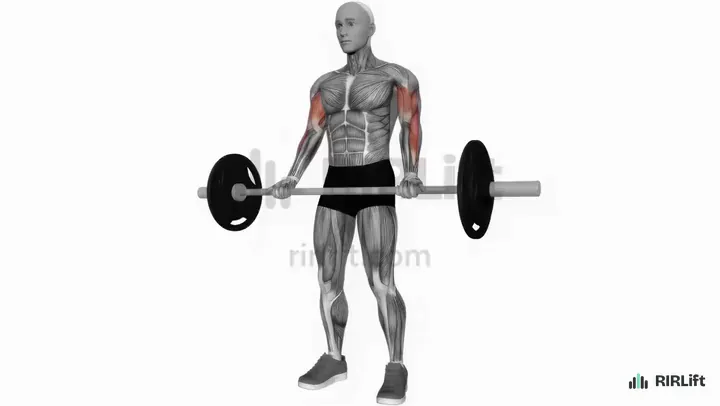
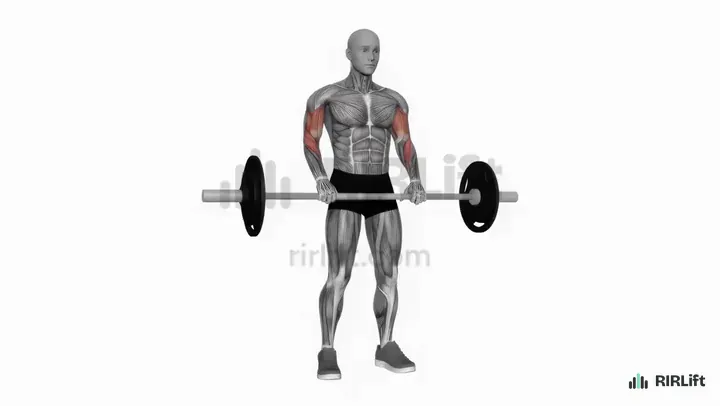
- Barbell Curl Biceps
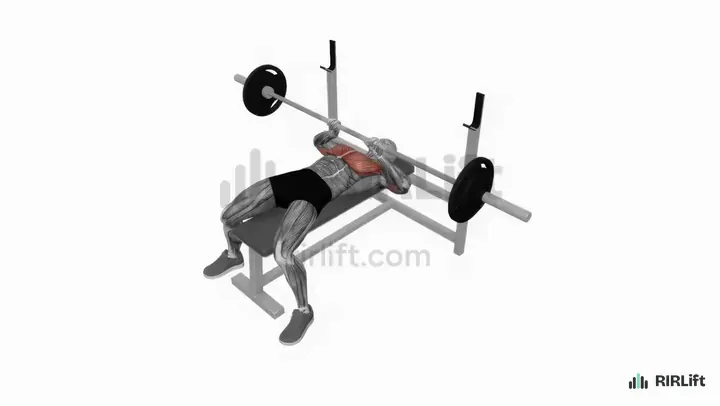
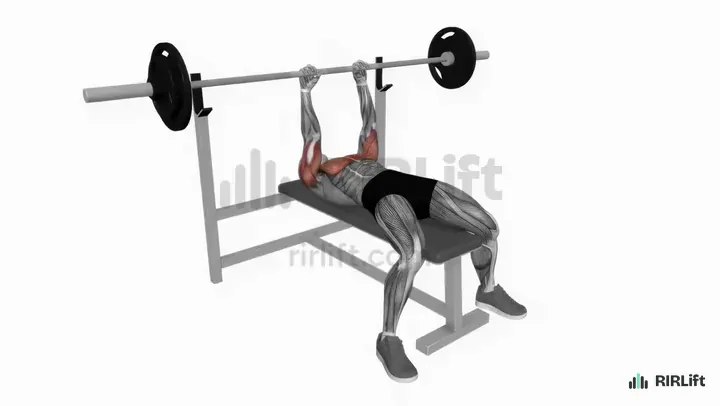
- Close-Grip Bench Press Triceps, Chest
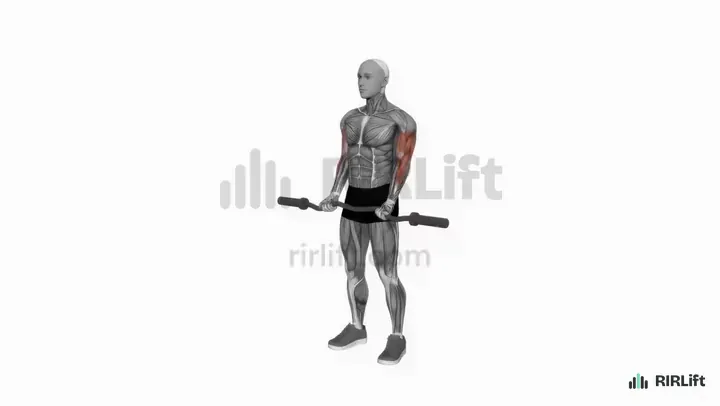
- EZ-Bar Curl Biceps
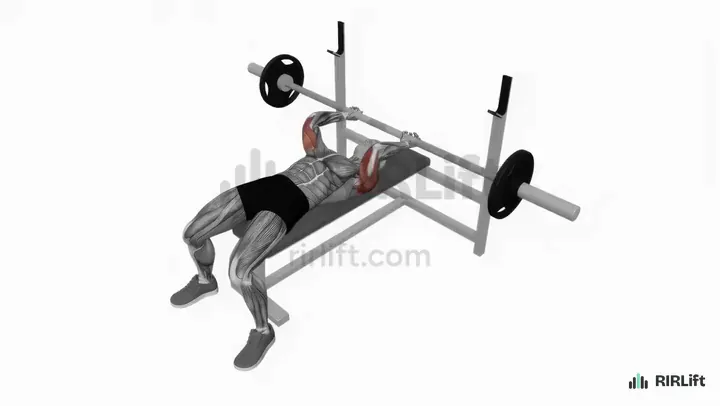
- EZ-Bar Skullcrusher Triceps
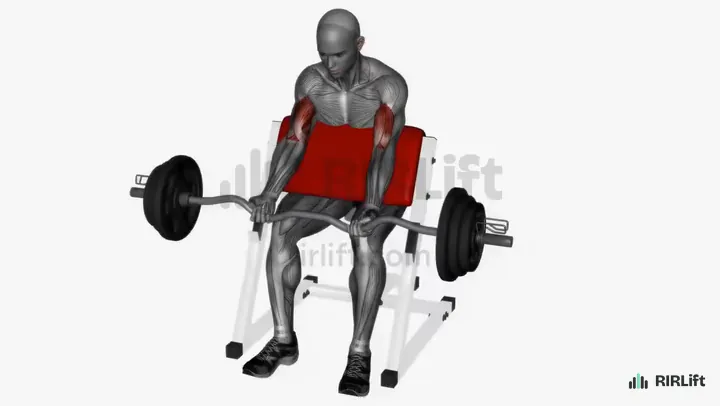
- Preacher Curl Biceps
- JM Press Triceps
- Reverse Curl Biceps, Forearms
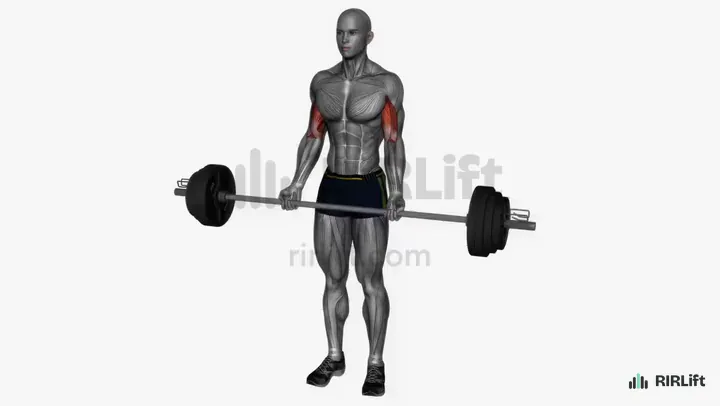
- Barbell Drag Curl Biceps
Put them together: example sessions
Each session below picks from the exercises above for one situation, with the sets, reps, rest and RIR filled in. Open one in the session builder to change a pick, price it from a recent set, and add it to RIRLift.
-
Session 1
One straight barbell and a rack, no extras
You train in a garage or home gym with a barbell, plates and a rack, but no EZ bar or preacher bench.
2× a week · 22 sets a week · ~30 min
-
Session 2
EZ bar, flat bench and preacher bench
You train at a gym with an EZ bar, a flat bench and a preacher station, and want an arm day built around them.
1× a week · 17 sets a week · ~30 min
-
Session 3
Strength block, arms after the main lift
You are running a strength program with heavy squats, bench and deadlifts, and want a little direct arm work without hurting recovery.
2× a week · 12 sets a week · ~15 min
Session 1
One straight barbell and a rack, no extras
- Workouts2× a week
- Working sets22 a week
- Per workout~30 min
- EquipmentBarbells, Flat Bench
You train in a garage or home gym with a barbell, plates and a rack, but no EZ bar or preacher bench.
A straight bar still covers every part of the arm: the barbell curl and drag curl for biceps, the close-grip bench press and floor press for triceps, and the reverse curl for forearms. The presses lead each session at 2 reps in reserve because they are the heaviest and most taxing; the curls follow at 1, since they are safe to push close to failure. Each session is 11 working sets.
| Exercise | Sets × reps | RIR | Rest |
|---|---|---|---|
| Close-Grip Bench Press2 warm-up sets firstHands just inside shoulder width. | 4 × 6–10 | 2 | 2:30 min |
| Barbell CurlStrict. Start from straight arms. | 4 × 8–12 | 1 | 90 s |
| Reverse CurlPalms down. Wrists flat. | 3 × 10–15 | 1 | 1 min |
Open Arms A in the session builder
| Exercise | Sets × reps | RIR | Rest |
|---|---|---|---|
| Floor Press1 warm-up set firstPause with elbows on the floor. | 4 × 6–10 | 2 | 2:30 min |
| Barbell Drag CurlBar touching your torso. | 4 × 8–12 | 1 | 75 s |
| Barbell CurlLighter. Two-second lowering. | 3 × 10–15 | 1 | 75 s |
Open Arms B in the session builder
- How to run it
- Do Arms A and Arms B once each per week with at least two days between. If you also bench press that week, keep the close-grip press on a different day from your main bench.
- How to progress
- Double progression: when every set hits the top of its range at the target reps in reserve, add 2.5 to 5 pounds. Small fractional plates help on the curls, where a 5-pound jump is a big step.
Session 2
EZ bar, flat bench and preacher bench
- Workouts1× a week
- Working sets17 a week
- Per workout~30 min
- EquipmentBarbells, Flat Bench, EZ Bar, Preacher Bench +1
You train at a gym with an EZ bar, a flat bench and a preacher station, and want an arm day built around them.
The EZ bar's angled grip lets you train curls and skullcrushers hard with less wrist strain, and the preacher bench adds stretched-position biceps work. The JM press opens the session as the heavy triceps lift, then the session alternates biceps and triceps in two supersets to keep it under 45 minutes. Isolation sets end at 1 rep in reserve; the JM press stops at 2.
| Exercise | Sets × reps | RIR | Rest |
|---|---|---|---|
| JM Press1 warm-up set firstElbows forward. Bar toward the chin. | 3 × 8–12 | 2 | 2 min |
| A1 EZ-Bar CurlSuperset with skullcrushers. | 3 × 8–12 | 1 | 75 s |
| A2 EZ-Bar SkullcrusherUpper arms tilted back. | 3 × 8–12 | 1 | 75 s |
| B1 Preacher CurlSuperset with lying extensions. | 3 × 10–15 | 1 | 1 min |
| B2 Landmine Lying Triceps ExtensionElbows pointing up. | 3 × 10–15 | 1 | 1 min |
| Wrist CurlForearms on your thighs. | 2 × 15–25 | 0 | 45 s |
- How to run it
- Run this as a dedicated arm day once a week in a body-part or upper/lower split. Pair the supersets as written: one set of each exercise, then rest.
- How to progress
- Add reps first. When all sets reach the top of the range at the target reps in reserve, add the smallest plate. If your elbows feel the skullcrushers, move them to 12 to 15 reps rather than going heavier.
Session 3
Strength block, arms after the main lift
- Workouts2× a week
- Working sets12 a week
- Per workout~15 min
- EquipmentBarbells, Flat Bench, EZ Bar
You are running a strength program with heavy squats, bench and deadlifts, and want a little direct arm work without hurting recovery.
Heavy pressing already loads your triceps hard, so this plan uses only 2 or 3 short exercises and leaves 2 reps in reserve on everything. The JM press uses a lighter bar than your bench but trains the triceps directly, and the curls are kept to moderate reps so your elbows stay fresh for pulling. Five to eight sets total per day.
| Exercise | Sets × reps | RIR | Rest |
|---|---|---|---|
| JM PressLighter than your bench. | 3 × 8–10 | 2 | 2 min |
| EZ-Bar CurlStrict. | 2 × 8–10 | 2 | 90 s |
Open Arms 1 in the session builder
| Exercise | Sets × reps | RIR | Rest |
|---|---|---|---|
| Barbell CurlHeaviest curl of the week. | 3 × 6–10 | 2 | 90 s |
| EZ-Bar SkullcrusherModerate weight, smooth reps. | 2 × 10–12 | 2 | 90 s |
| Reverse CurlGrip work for deadlifts. | 2 × 10–15 | 2 | 1 min |
Open Arms 2 in the session builder
- How to run it
- Add Arms 1 after your heavy bench day and Arms 2 after your deadlift or row day. Skip it on a deload week.
- How to progress
- Keep the rep target fixed and add weight only when all sets reach the top of the range at 2 reps in reserve. When the main lifts stall, cut each exercise by one set before anything else.
Make it fit you
-
Only a straight bar and wrists hurt on curls
Grip the bar a little outside shoulder width, which lets your wrists rotate a little, or swap the barbell curl for the reverse curl until they settle. If you can borrow an EZ bar, that usually solves it.
-
Elbows ache from skullcrushers
Switch to the landmine lying extension or the JM press, keep reps between 10 and 15, and warm up with one light set. Avoid pairing skullcrushers with heavy close-grip presses in the same session.
-
Triceps lag behind biceps
Move the close-grip press or JM press to the start of every session and give the triceps one more set than the biceps. The triceps are the bigger muscle and usually need it.
-
No spotter for close-grip bench
Press inside a rack with the safety pins set just below chest height, or use the floor press, which ends on the floor and can be done with the bar in low pins.
-
Want bigger arms fast
Run the EZ-bar day and one session from the straight-bar plan in the same week, for 10 to 14 sets per muscle. Do not add more than that until those sessions stop progressing.
-
Log the RIR, not just the weight
Record the reps you had left on each set, not just the plates on the bar. If you log in RIRLift, it reads those numbers and suggests when to add the next plate, which matters on curls where every jump is a big one.
Questions
What is the best barbell exercise for arms?
For the triceps, the close-grip bench press, because it moves the most weight. For the biceps, the barbell curl. Between them they cover most of the upper arm; add a skullcrusher and a reverse curl to round it out.
What workout gives you bigger arms?
One that trains biceps and triceps two times a week with 10 to 15 hard sets each, mixing a heavy compound press, a heavy curl and an extension, and adds weight over time. The barbell plans above are built that way.
Can you build arms with only a barbell?
Yes. A barbell covers curls, reverse curls, wrist curls, close-grip presses and skullcrushers, which is every arm movement that matters. The only real gap is overhead triceps work, which a landmine or a single plate can fill.
EZ bar or straight bar for curls?
Both build the biceps equally. A straight bar puts your palms fully up, which is a little harder on the wrists for some people; the EZ bar angles them slightly. Use whichever lets you curl pain-free with good form.
How do you train the short head of the biceps?
Curls with your arms in front of your body, like the preacher curl, are commonly used to bias the short head, and a slightly wider grip on a straight bar is another common choice. In practice, any curl trains both heads; picking one preacher-style and one standing curl covers them.
How heavy should barbell curls be?
Heavy enough that each set ends 1 to 2 reps short of failure in your target range, usually 8 to 12 reps. If you have to swing your hips to finish, the bar is too heavy.
How often should I do barbell arm exercises?
Two sessions a week works well. Each session needs only 3 to 5 exercises, and your other pressing and pulling days add indirect arm work on top.
Related templates
-
Barbell tricep exercises: close-grip presses, extensions and overhead lockouts
Every barbell triceps option, for a deeper triceps focus.
-
Barbell exercises: the 18 lifts worth learning, and how to put them together
The full barbell directory for building a whole-body session.
-
Dumbbell arm exercises for biceps, triceps and forearms
One-arm curls and extensions to pair with the bar work.
-
The best workout for arms: biceps, triceps and forearms together
Complete arm programs with weekly set targets.
-
How to use reps in reserve (RIR)
How to judge 1 or 2 reps left on a heavy curl or press.