Baseball warm up: everything to do before you pick up a ball

A good baseball warm up takes about 15 minutes before the first throw: 4 minutes of jogging and butt kicks, 4 minutes of arm circles, walkouts and cossack squats, 4 minutes of band pull-aparts, face pulls and side-lying external rotations for the throwing arm, then med ball woodchops, skater hops and two or three sprints of 20 to 30 yards at rising speed. Then start a throwing progression at short distance and stretch it out, so the arm is warm before it is asked to throw hard.

  1. Running Quads, Hamstrings, Calves
  2. Arm Circles Shoulders
  3. Walkout Abs, Shoulders, Chest
  4. Cossack Squat Quads, Adductors
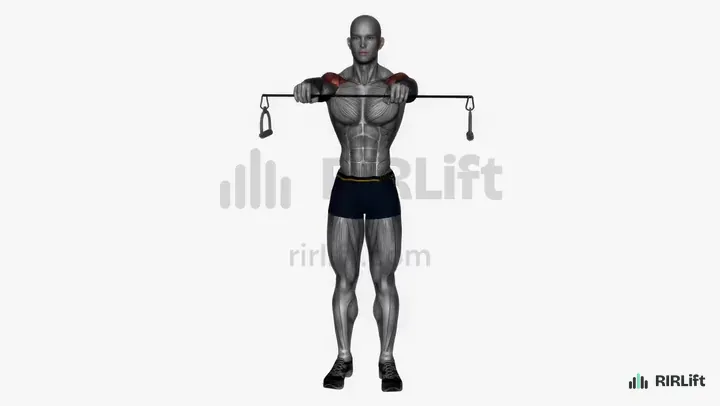
  5. Band Pull-Apart Shoulders, Upper Back
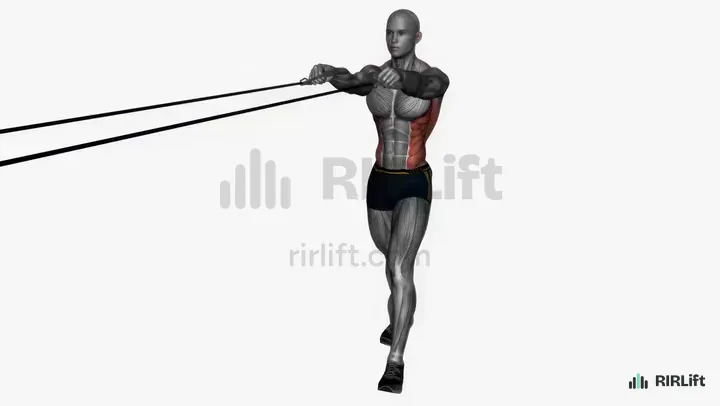
  6. Band Face Pull Shoulders, Upper Back
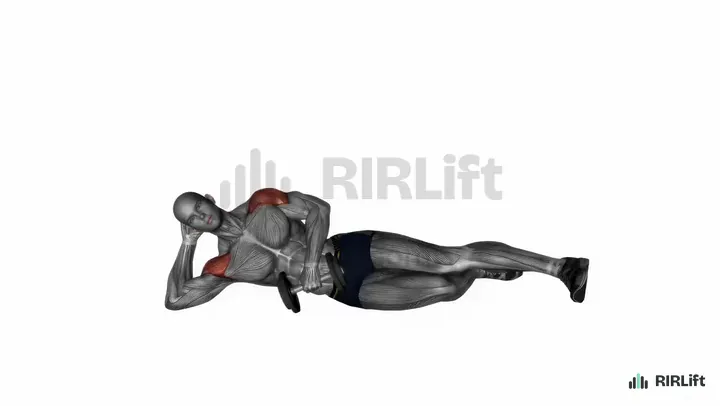
  7. Dumbbell Lying External Rotation Shoulders
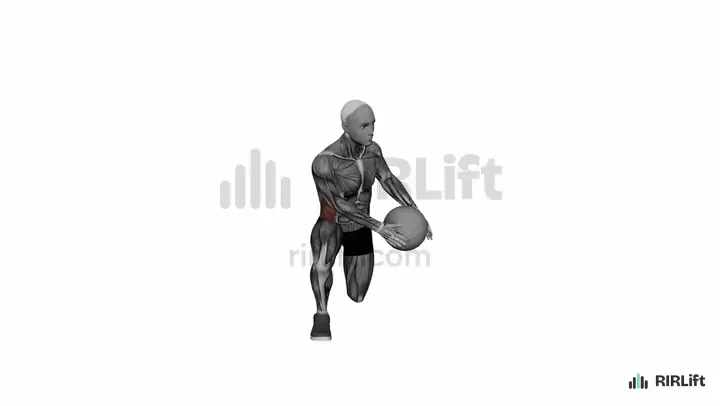
  8. Med Ball Woodchop Abs

Raise: jog and butt kicks

Start the way most teams do: a jog from the foul line to center and back, or a few minutes around the field, then butt kicks over 20 yards. Easy pace. You want to break a light sweat before any arm work.

Raise, easy jog

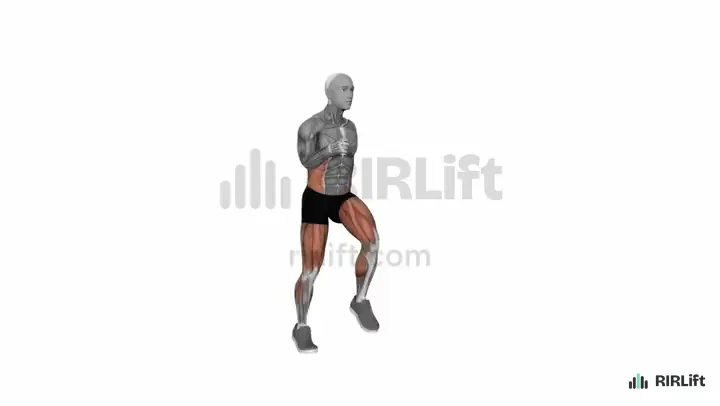
Running

Quads, Hamstrings, Calves

A few minutes of jogging warms the legs and raises body temperature before anything quick. Keep it at talking pace.

How to do it

  1. Jog easily around the field, court or a lap of the area you have.
  2. Mix in some backward jogging and side shuffles if you have room.
  3. Keep the arms swinging forward and back, not across your body.
  4. Finish the block a little faster than you started.

Cues

  • Easy and loose
  • Arms forward and back
  • Build gradually

Common mistakes

  • Turning the jog into a race with teammates: save speed for the primers.
  • Running with your chin up and shoulders tight: let the shoulders drop.

Swap for: High Knees, Jump Rope, Stationary Bike

Build a session with Running

Raise, quads

Butt Kicks

Hamstrings

Butt kicks take the knee through a full bend and warm up the quads before sprints and stealing.

How to do it

  1. Jog on the spot with short, quick steps.
  2. Snap each heel back and up behind you as you push off.
  3. Let your arms swing in rhythm and keep your hips under you.
  4. Speed up over the last ten seconds.

Cues

  • Snap the heel back
  • Hips stay under you
  • Light feet

Common mistakes

  • Kicking out to the side: heels travel straight back.
  • Stomping the landings: land quietly on the forefoot.

Swap for: High Knees, Skipping in Place, Running

Mobility: shoulders, hips and hamstrings

Throwing and hitting both start at the hips and travel up through the trunk to the arm. Arm circles, walkouts and cossack squats move the shoulders, the hamstrings and the hips through the range a stride and a throw need, in about four minutes.

Shoulder mobility

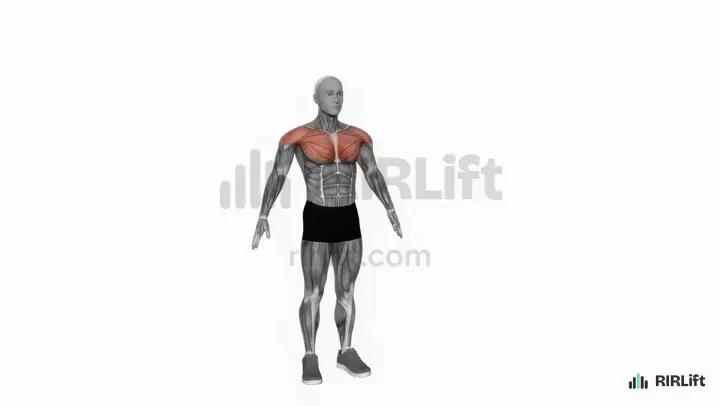
Arm Circles

Shoulders

Big circles in both directions move the throwing shoulder through its range before any ball is thrown. Start small, finish wide.

How to do it

  1. Raise both arms wide to your sides with your palms facing down.
  2. Draw circles with your hands, starting the size of a plate and finishing as wide as you can reach.
  3. Switch direction halfway through.
  4. Finish with a few full-range circles, one arm at a time if you like.

Cues

  • Long arms
  • Grow the circle
  • Both directions

Common mistakes

  • Bending the elbows as the arms tire: keep them long or shorten the set.
  • Swinging so fast the shoulders jerk: smooth circles only.

Swap for: Band Pull-Apart, Plate Halo, Dumbbell Around the World

Hamstrings and trunk

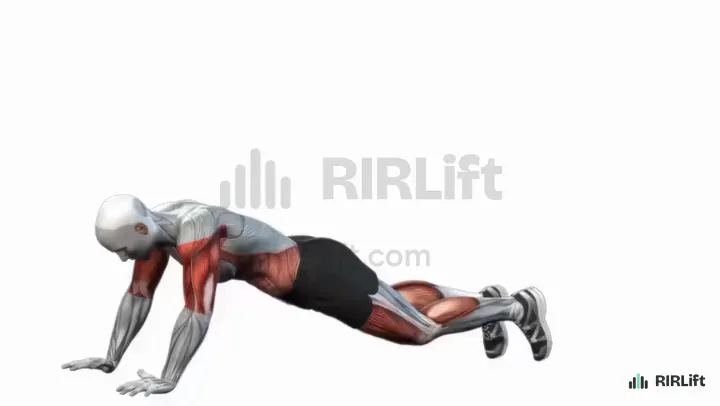
Walkout

Abs, Shoulders, Chest

Walkouts loosen the hamstrings for running and switch on the trunk and shoulders in the plank position.

How to do it

  1. From standing, fold forward and plant your hands in front of your feet.
  2. Crawl your hands out until your shoulders are over your wrists.
  3. Pause, then crawl them back in and roll up to standing.
  4. Move steadily through the reps, reaching a little farther each time.

Cues

  • Shoulders over wrists at the end
  • Brace your middle
  • Roll up slowly

Common mistakes

  • Walking out so far your lower back arches: stop at a straight plank.
  • Jumping the feet in to save time: walk the hands back.

Swap for: Bear Crawl, Plank to Push-Up, Leg Swings

Build a session with Walkout

Hip mobility for stride and stance

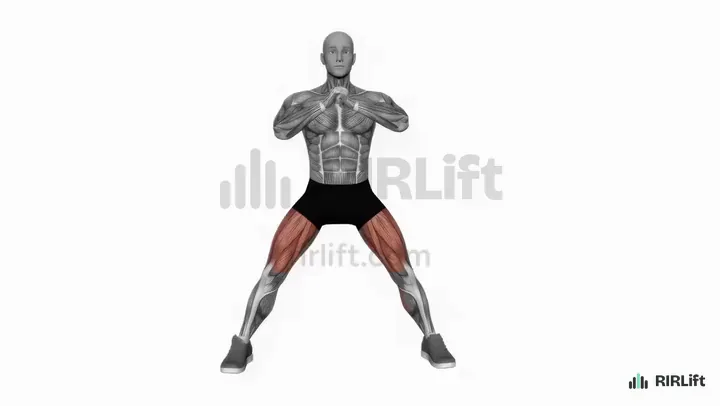
Cossack Squat

Quads, Adductors

A long stride when throwing and a wide fielding stance both need side-to-side hip range. The cossack squat works that range one side at a time.

How to do it

  1. Stand with your feet about twice shoulder width apart, toes turned out slightly.
  2. Shift your weight to one side and sit down into that hip while the other leg stays straight.
  3. Let the toes of the straight leg point up as you sink as low as you comfortably can.
  4. Push back through the bent leg to the middle and go to the other side.

Cues

  • Sit into the hip
  • Heel of the bent leg stays down
  • Chest up

Common mistakes

  • Lifting the heel of the working foot: only go as low as you can with the foot flat.
  • Collapsing the knee inward: keep it over your toes.

Swap for: Dumbbell Lateral Lunge, Barbell Lateral Lunge, Kettlebell Lateral Lunge

Activation: the throwing shoulder

The back of the shoulder and upper back slow the arm down after every throw. A set of band pull-aparts, a set of band face pulls and a light set of side-lying external rotations per arm wake them up before the first toss. This replaces sitting in long stretches, which can wait until after the game.

Upper-back activation

Band Pull-Apart

Shoulders, Upper Back

Pull-aparts work the muscles between the shoulder blades that steady the shoulder when you throw.

How to do it

  1. Grip a light band in front of you, palms down, arms straight.
  2. Spread your arms wide until your hands line up with your shoulders.
  3. Hold for a second with the band against your chest.
  4. Return under control without letting the band snap.

Cues

  • Hands finish level with shoulders
  • Ribs down
  • Control both ways

Common mistakes

  • Arching the back to finish the rep: keep your ribs stacked over your hips.
  • Letting the band snap back: two seconds on the way in.

Swap for: Band Face Pull, Band Scapular Retraction, Dumbbell Rear Delt Fly

Rear shoulder activation

Band Face Pull

Shoulders, Upper Back

Face pulls work the back of the shoulder and the external rotators together, with the elbows up near throwing height.

How to do it

  1. Anchor a light band at about head height and hold one end in each hand.
  2. Step back until the band is taut with your arms straight ahead of you.
  3. Pull the hands toward your face, elbows high and out, finishing with your hands beside your ears.
  4. Pause, then return slowly.

Cues

  • Elbows high
  • Hands finish by your ears
  • Pause at the end

Common mistakes

  • Pulling to your chest with low elbows: keep the elbows at shoulder height.
  • Leaning back to move the band: stand tall and use a lighter band.

Swap for: Face Pull, Band Pull-Apart, TRX Face Pull

Rotator cuff activation

Dumbbell Lying External Rotation

Shoulders

Lying on your side lets you isolate the muscles that slow the arm down after release. Use a very light dumbbell, two to five pounds.

How to do it

  1. Lie on one side with a very light dumbbell in the top hand and that elbow bent to 90 degrees against your ribs.
  2. Rotate the forearm up toward the ceiling, keeping the elbow on your side.
  3. Pause at the top of your range.
  4. Lower slowly and repeat, then switch sides.

Cues

  • Elbow stays on the ribs
  • Slow down
  • Small weight

Common mistakes

  • Rolling your body back to lift higher: stay stacked on your side.
  • Dropping the weight on the way down: take two seconds.

Swap for: Dumbbell External Rotation, Band Face Pull, Band Pull-Apart

Rotation and speed primers

Finish with the two things the game asks for on short notice: rotation and a burst. Kneeling med ball woodchops rehearse turning the trunk, skater hops get the legs pushing sideways like a first step, and two or three sprints at 70, 80 and 90 percent ready you to run out a ground ball. Then pick up a ball.

Trunk rotation

Med Ball Woodchop

Abs

Woodchops rehearse the turn from hip to shoulder that powers a swing and a throw, at a light weight and steady speed.

How to do it

  1. Kneel on one knee and hold a light medicine ball with both hands beside the hip on the down-knee side.
  2. Lift and rotate the ball diagonally across your body to above the opposite shoulder.
  3. Bring it back down the same diagonal under control.
  4. Finish the reps, then switch knees.

Cues

  • Diagonal path
  • Turn from the trunk
  • Stay tall on the knee

Common mistakes

  • Leaning to the side to reach higher: keep your torso upright.
  • Moving only the arms: let your chest turn with the ball.

Swap for: Cable Woodchop, Dumbbell Woodchop, Plate Woodchop

Primer, lateral first step

Skater Hop

Glutes, Quads, Abductors

Skater hops get the legs pushing sideways, the same push as a fielder's first step or a lead off first base.

How to do it

  1. Stand on one leg with a slight bend in the knee.
  2. Leap sideways to land on the opposite foot, letting the trailing leg sweep behind you.
  3. Stick the landing for a moment, then push back to the other side.
  4. Start with short hops and go wider as you warm up.

Cues

  • Stick each landing
  • Push off sideways
  • Knee over the toes

Common mistakes

  • Landing with a stiff leg: absorb through the hip and knee.
  • Going for distance right away: widen the hop over the set.

Swap for: Lateral Box Jump, Single-Leg Jump, Fast Feet

In the weight room: ramp up the first lift

On lift days after practice, the trap bar deadlift trains the legs and hips behind every throw and swing without loading the shoulder. Climb to the working weight through a few lighter sets of the lift itself. RIRLift logs those lighter sets as warm-up sets, separate from your working sets.

Lower-body strength without loading the arm

Trap Bar Deadlift

Quads, Glutes

On lift days after practice, the trap bar deadlift trains the legs and hips behind every throw and swing without loading the shoulder.

How to do it

  1. Step inside the trap bar with the handles beside your feet.
  2. Push your hips back, bend your knees, and grip the handles.
  3. Flatten your back, take the slack out, and stand up by pushing the floor away.
  4. Lower under control. Each warm-up set adds weight toward your working sets.

Cues

  • Push the floor away
  • Flat back
  • Slack out before you pull

Common mistakes

  • Yanking the bar off the floor: pull the slack out first.
  • Rounding the back as the weight climbs: hold the ramp until the setup is solid.

Swap for: Barbell Deadlift, Romanian Deadlift, Kettlebell Deadlift

Put them together: example sessions

Each session below picks from the exercises above for one situation, with the sets, reps, rest and RIR filled in. Open one in the session builder to change a pick, price it from a recent set, and add it to RIRLift.

Session 1

Game day, before the team throws

Open in the session builder
  • Workouts2× a week
  • Working sets26 a week
  • Per workout~15 min
  • EquipmentResistance Bands, Dumbbells, Medicine Ball

You have 15 minutes before the team's throwing progression starts.

This runs the page in order, all at 3 to 5 reps in reserve: raise, mobility, arm care, then rotation and speed. The arm care sits right before throwing so the shoulder is switched on when the first ball goes, and the sprints at the end cover the running you will need for the first ground ball.

Game Warm-Up
ExerciseSets × repsRIRRest
RunningSeconds. Easy jog. 3 × 60 5 0 s
Butt KicksSeconds. 1 × 20 4 10 s
Arm CirclesEach direction. 1 × 10 5 0 s
Walkout 1 × 4 4 0 s
Cossack SquatPer side. 1 × 6 4 15 s
Band Pull-Apart 1 × 15 4 15 s
Band Face Pull 1 × 12 4 15 s
Dumbbell Lying External RotationPer arm. Very light. 1 × 12 4 15 s
Med Ball WoodchopPer side. 1 × 8 4 15 s
Skater HopPer side. 2 × 5 3 20 s
How to run it
Start an hour before first pitch, finish, then begin the throwing progression at short distance.
How to progress
Keep the same routine all season. Add a second set of face pulls on days the arm feels tight before throwing.

Session 2

Practice with a lift afterward

Open in the session builder
  • Workouts2× a week
  • Working sets16 a week
  • Per workout~15 min
  • EquipmentResistance Bands, Dumbbells, Trap Bar, Medicine Ball

You practice most days and lift two or three times a week after practice.

Before practice you run the warm-up, minus the sprints. In the gym afterward the arm care gets its own working sets at 2 to 3 reps in reserve, then the trap bar deadlift opens with ramp-up sets logged as warm-up sets. The deadlift trains the legs and hips that drive both throwing and hitting without loading the shoulder.

Pre-Practice
ExerciseSets × repsRIRRest
RunningSeconds. 2 × 60 5 0 s
Arm CirclesEach direction. 1 × 10 5 0 s
Cossack SquatPer side. 1 × 6 4 15 s
Band Pull-Apart 1 × 15 4 15 s
Band Face Pull 1 × 12 4 15 s

Open Pre-Practice in the session builder

Post-Practice Lift
ExerciseSets × repsRIRRest
Dumbbell Lying External RotationPer arm. 2 × 12–15 2 30 s
Band Face Pull 2 × 15 2 30 s
Trap Bar Deadlift3 warm-up sets firstWorking sets after the ramp-up. 3 × 5 2 2:30 min
Med Ball WoodchopPer side. 3 × 8 2 45 s

Open Post-Practice Lift in the session builder

How to run it
Do the first routine before practice and the second after it on lifting days.
How to progress
Add 5 to 10 pounds to the deadlift when every working set reaches 5 reps at 2 or more in reserve. Add reps to the arm care before adding resistance.

Session 3

Cold early-season game

Open in the session builder
  • Workouts2× a week
  • Working sets28 a week
  • Per workout~15 min
  • EquipmentResistance Bands, Dumbbells

It is early spring and under 50 degrees at first pitch.

Cold weather makes the arm slower to warm up, so this version doubles the jog and puts two rounds of arm circles and pull-aparts in before any throwing. Everything stays light, 4 to 5 reps in reserve, because the goal is heat, not fatigue.

Cold-Day Warm-Up
ExerciseSets × repsRIRRest
RunningSeconds. Easy jog. 6 × 60 5 0 s
Arm CirclesEach direction. 2 × 10 5 0 s
Walkout 1 × 5 4 0 s
Band Pull-Apart 2 × 15 4 15 s
Dumbbell Lying External RotationPer arm. 1 × 12 4 15 s
Skater HopPer side. 2 × 5 4 20 s
How to run it
Wear a jacket through the jog and arm work. Start throwing with the jacket on and take it off when the throws get longer.
How to progress
When it warms up, drop back to the game-day plan.

Make it fit you

Questions

What is a good warm-up routine for baseball?

Jog for a few minutes, move the shoulders and hips with arm circles, walkouts and cossack squats, wake up the throwing shoulder with band work, then do a few rotations and sprints. Finish with a throwing progression that starts short and stretches out.

How do you warm up an arm for baseball?

Get the body warm first, then do arm circles, band pull-aparts, face pulls and light external rotations. Only then start throwing, short and easy, adding distance and effort over several minutes.

How long should a baseball warm-up take?

About 15 minutes before throwing, plus the throwing progression. Many teams start an hour before first pitch to fit warm-up, throwing, batting practice and fielding.

Should baseball players stretch before a game?

Move rather than hold before the game, and keep the long static holds for after.

Why do baseball pitchers warm up with a football?

A football is longer and heavier in the hand, and throwing a spiral rewards a clean, on-top arm path. Some coaches use it as a drill for arm action. It does not replace the warm-up that comes before throwing.