Pitching warm up: get the body ready before the first throw

A good pitching warm up starts 20 to 30 minutes before you take the mound: 3 minutes of jump rope or jumping jacks, 4 minutes of arm circles, plate halos, cossack squats and leg swings, 5 minutes of band face pulls, pull-aparts, side-lying external rotations, push-up pluses and plank IYTWs for the shoulder, then med ball woodchops and overhead throws. Only then pick up a ball and start a throwing progression short and easy, building distance and intent before you go to the mound.

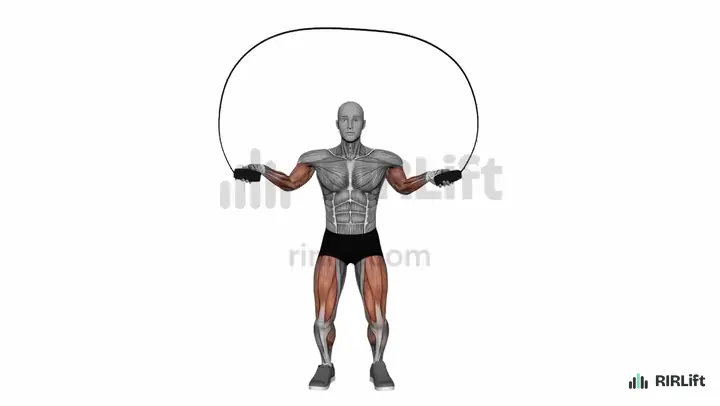
  1. Jump Rope Calves, Quads
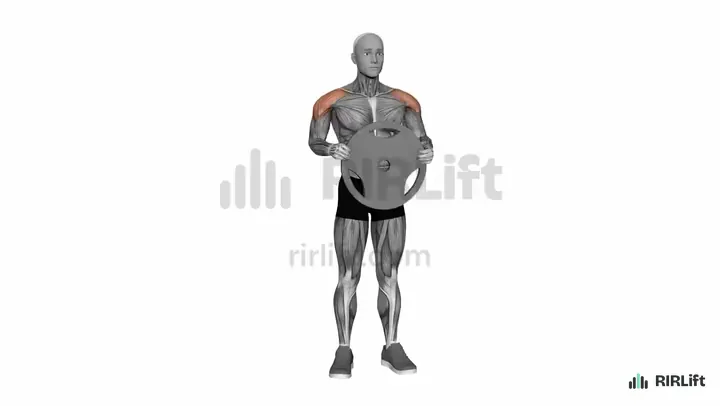
  2. Plate Halo Shoulders
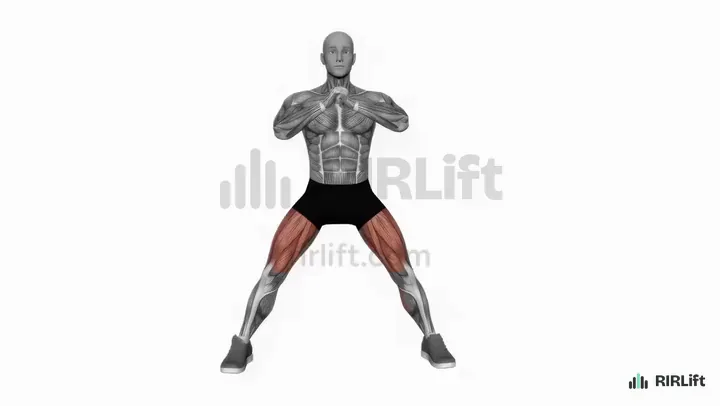
  3. Cossack Squat Quads, Adductors
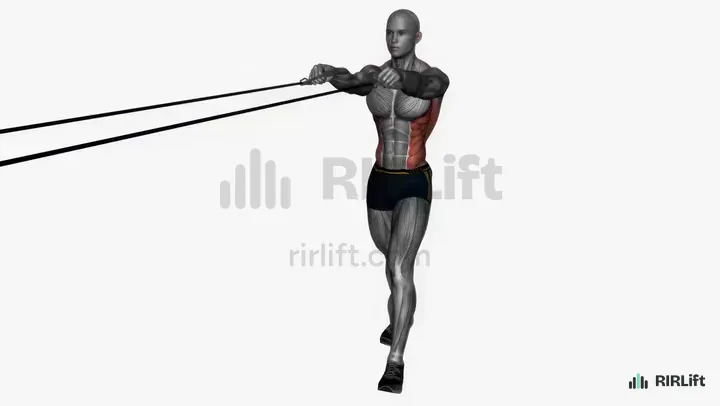
  4. Band Face Pull Shoulders, Upper Back
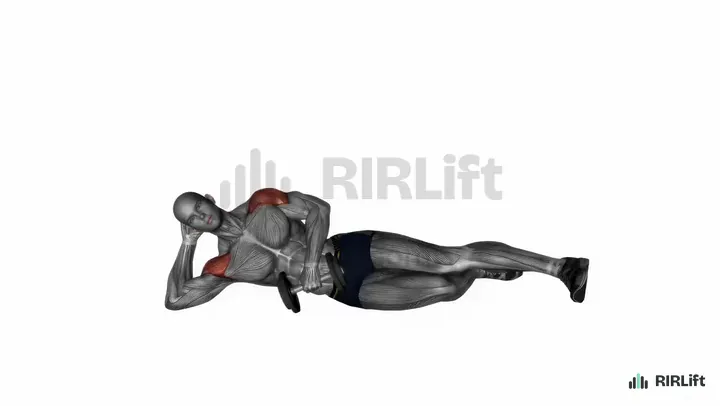
  5. Dumbbell Lying External Rotation Shoulders
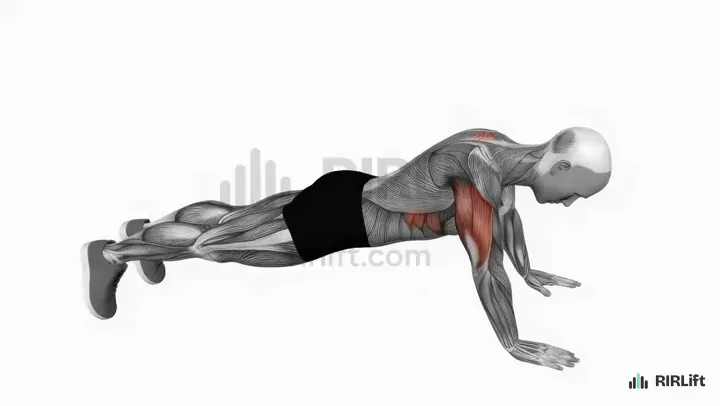
  6. Push-Up Plus Chest
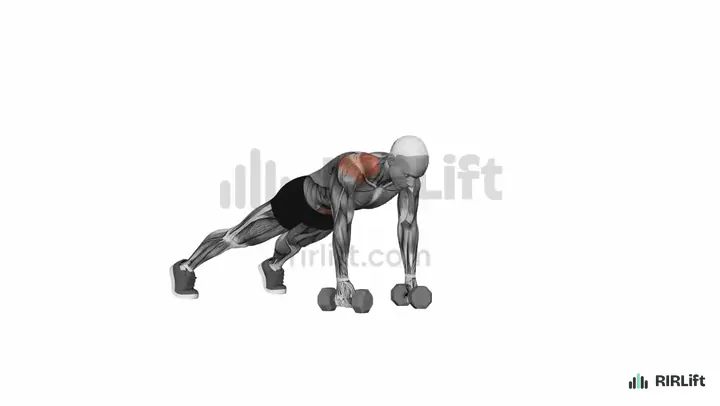
  7. Plank IYTW Abs, Upper Back
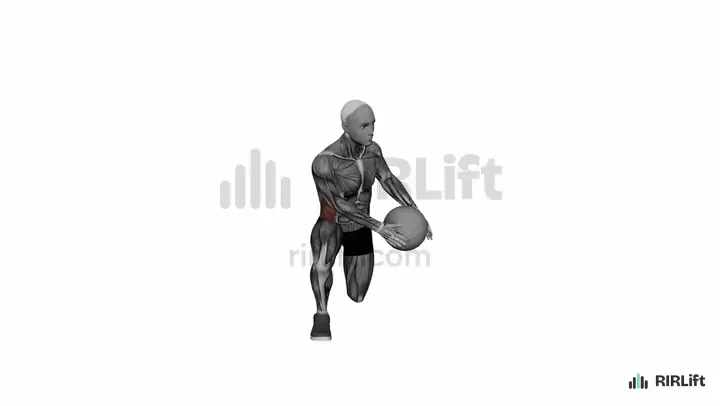
  8. Med Ball Woodchop Abs

Raise: rope or jacks

Pitchers often go straight to long toss. Warm the whole body first: three minutes of jump rope, or jumping jacks if you have no rope, gets you sweating lightly and takes the arms overhead.

Raise, whole body

Jump Rope

Calves, Quads

Rope raises your temperature in a few minutes with light contacts, so the legs are warm for a strong drive off the rubber.

How to do it

  1. Hold the handles at hip height with your elbows near your ribs and the rope resting behind your heels.
  2. Turn the rope with small circles from your wrists, not big arm swings.
  3. Hop just high enough for the rope to pass, landing softly on the balls of your feet.
  4. Keep the rhythm easy for the first minute, then pick the pace up slightly.

Cues

  • Wrists turn, arms stay quiet
  • An inch off the ground
  • Quiet landings

Common mistakes

  • Jumping high and landing flat-footed: keep each hop low and stay on the front of your feet.
  • Swinging the rope from the shoulders: tuck the elbows and let the wrists do it.

Swap for: Jumping Jack, Skipping in Place, High Knees

Build a session with Jump Rope

Raise, no-rope option

Jumping Jack

Calves, Quads

Jacks get you warm and take the arms through big overhead arcs, a gentle first move for the shoulder.

How to do it

  1. Start tall with feet together and hands at your thighs.
  2. Jump the feet apart and sweep your arms out to the sides and overhead in one motion.
  3. Jump back together, bringing the arms down along the same path.
  4. Settle into a pace you can hold without getting out of breath.

Cues

  • Wide arcs with the arms
  • Land on the balls of the feet
  • Breathe easily

Common mistakes

  • Racing through it: this is to warm you, not wind you.
  • Letting the feet slap down: stay springy.

Swap for: Star Jump, Jump Rope, Skipping in Place

Mobility: shoulder, upper back and hips

A pitch needs a big stride, a hip that turns hard, and an upper back and shoulder that let the arm lay back. Arm circles and plate halos open the shoulder and upper back; cossack squats and leg swings open the hips. About four minutes.

Shoulder mobility

Arm Circles

Shoulders

Circles move the throwing shoulder through its range before any load. Start small and finish as wide as you can.

How to do it

  1. Raise both arms wide to your sides with your palms facing down.
  2. Draw circles with your hands, starting the size of a plate and finishing as wide as you can reach.
  3. Switch direction halfway through.
  4. Finish with a few full-range circles, one arm at a time if you like.

Cues

  • Long arms
  • Grow the circle
  • Both directions

Common mistakes

  • Bending the elbows as the arms tire: keep them long or shorten the set.
  • Swinging so fast the shoulders jerk: smooth circles only.

Swap for: Band Pull-Apart, Plate Halo, Dumbbell Around the World

Upper back and shoulder mobility

Plate Halo

Shoulders

Circling a light plate around your head moves the upper back and shoulders together, helping the arm reach layback without forcing it.

How to do it

  1. Hold a light plate by its sides at chest height.
  2. Circle it around your head, passing it close behind your neck.
  3. Bring it back to the front and go the other direction next.
  4. Keep your ribs down and your hips still.

Cues

  • Close around the head
  • Both directions
  • Still hips

Common mistakes

  • Arching the lower back as the plate passes behind: brace your middle.
  • Using a heavy plate: light enough for a smooth circle.

Swap for: Dumbbell Around the World, Arm Circles, Band Pull-Apart

Hip mobility for the stride

Cossack Squat

Quads, Adductors

A long stride and a turning lead hip need side-to-side hip range. The cossack squat works that one side at a time.

How to do it

  1. Take a very wide stance with your hands together in front of your chest.
  2. Bend one knee and slide your hips over that foot, keeping the opposite leg long.
  3. Pause at the bottom of your range for a moment.
  4. Rise and shift across to the other side, alternating each rep.

Cues

  • Long leg, toes up
  • Slide the hips sideways
  • Pause at the bottom

Common mistakes

  • Bouncing into the bottom: lower slowly and own the position.
  • Folding the chest onto the thigh: stay as upright as you can.

Swap for: Dumbbell Lateral Lunge, Barbell Lateral Lunge, Kettlebell Lateral Lunge

Hip flexor and hamstring mobility

Leg Swings

Hamstrings, Glutes

Swings loosen the front and back of the hips for the leg lift and stride.

How to do it

  1. Hold a support with one hand and stand on the leg nearest it.
  2. Swing the free leg straight forward and back with a relaxed knee.
  3. Keep your standing knee soft and your hips pointing ahead.
  4. Increase the range gradually, then switch legs.

Cues

  • Relaxed knee
  • Hips face forward
  • Grow the range

Common mistakes

  • Twisting the hips with each swing: keep them square.
  • Rushing the rhythm: smooth swings, no jerks.

Swap for: Standing Cable Hip Flexion, Walkout, Cossack Squat

Activation: cuff and shoulder blade

This is the block that sets a pitching warm-up apart. Face pulls, pull-aparts and light side-lying external rotations switch on the back of the shoulder that slows the arm down after release. Push-up pluses and plank IYTWs get the shoulder blade moving and stable. Light weight, crisp reps, about five minutes.

Back of the shoulder

Band Face Pull

Shoulders, Upper Back

Face pulls work the rear shoulder and the external rotators with the elbows high, close to the arm slot.

How to do it

  1. Anchor a light band at about head height and hold one end in each hand.
  2. Step back until the band is taut with your arms straight ahead of you.
  3. Pull the hands toward your face, elbows high and out, finishing with your hands beside your ears.
  4. Pause, then return slowly.

Cues

  • Elbows high
  • Hands finish by your ears
  • Pause at the end

Common mistakes

  • Pulling to your chest with low elbows: keep the elbows at shoulder height.
  • Leaning back to move the band: stand tall and use a lighter band.

Swap for: Face Pull, Band Pull-Apart, TRX Face Pull

Upper back

Band Pull-Apart

Shoulders, Upper Back

Pull-aparts switch on the muscles that hold the shoulder blades steady while the arm whips through.

How to do it

  1. Grip a light band in front of you, palms down, arms straight.
  2. Spread your arms wide until your hands line up with your shoulders.
  3. Hold for a second with the band against your chest.
  4. Return under control without letting the band snap.

Cues

  • Hands finish level with shoulders
  • Ribs down
  • Control both ways

Common mistakes

  • Arching the back to finish the rep: keep your ribs stacked over your hips.
  • Letting the band snap back: two seconds on the way in.

Swap for: Band Face Pull, Band Scapular Retraction, Dumbbell Rear Delt Fly

Rotator cuff

Dumbbell Lying External Rotation

Shoulders

The side-lying version isolates the muscles that slow the arm down after release. Two to five pounds is plenty.

How to do it

  1. Lie on one side with a very light dumbbell in the top hand and that elbow bent to 90 degrees against your ribs.
  2. Rotate the forearm up toward the ceiling, keeping the elbow on your side.
  3. Pause at the top of your range.
  4. Lower slowly and repeat, then switch sides.

Cues

  • Elbow stays on the ribs
  • Slow down
  • Small weight

Common mistakes

  • Rolling your body back to lift higher: stay stacked on your side.
  • Dropping the weight on the way down: take two seconds.

Swap for: Dumbbell External Rotation, Band Face Pull, Band Pull-Apart

Shoulder blade control

Push-Up Plus

Chest

The extra push at the top works the muscle that keeps the shoulder blade flat against the ribs as the arm moves.

How to do it

  1. Set up in a push-up position with hands under your shoulders.
  2. Do a push-up, and at the top push the floor away a little further so your upper back rounds slightly.
  3. Let the shoulder blades slide back together before the next rep.
  4. Keep your body in a straight line throughout.

Cues

  • Push the floor away at the top
  • Blades spread, then return
  • Straight body

Common mistakes

  • Skipping the extra push at the top: that last bit is the point.
  • Hips sagging: brace as you would in a plank.

Swap for: Push-Up, Plank to Push-Up, Kneeling Push-Up

Shoulder blade in many positions

Plank IYTW

Abs, Upper Back

The I, Y, T and W positions move the arm through overhead, diagonal and side positions while the shoulder blade has to hold steady.

How to do it

  1. Start in a high plank, then lift one arm forward in line with your ear to make an I.
  2. Return it and lift it at a diagonal to make a Y, then out to the side for a T.
  3. Finish with the elbow bent and pulled back for a W.
  4. Do the sequence with the other arm, keeping the hips square.

Cues

  • I, Y, T, W
  • Thumb up
  • Hips square to the floor

Common mistakes

  • Twisting the body to raise the arm higher: keep both hips level.
  • Rushing the letters: hold each for a moment.

Swap for: Band Pull-Apart, Dumbbell Chest-Supported Y Raise, Plank Shoulder Tap

Primers: rotation and med ball throws

Finish by putting the hips and trunk behind a throw before a ball is in your hand: a set of kneeling woodchops per side, then a few overhead med ball throws with a step. Then start the throwing progression: short, easy throws, building distance and effort over several minutes. Long static holds belong after the outing.

Trunk rotation

Med Ball Woodchop

Abs

Woodchops rehearse turning from the hips through the trunk, the engine of the pitch, at a controlled speed.

How to do it

  1. Kneel on one knee and hold a light medicine ball with both hands beside the hip on the down-knee side.
  2. Lift and rotate the ball diagonally across your body to above the opposite shoulder.
  3. Bring it back down the same diagonal under control.
  4. Finish the reps, then switch knees.

Cues

  • Diagonal path
  • Turn from the trunk
  • Stay tall on the knee

Common mistakes

  • Leaning to the side to reach higher: keep your torso upright.
  • Moving only the arms: let your chest turn with the ball.

Swap for: Cable Woodchop, Dumbbell Woodchop, Plate Woodchop

Whole-body throw

Medicine Ball Overhead Throw

Shoulders, Abs

An overhead throw with a step lets the legs and trunk drive the ball before you load the arm with a baseball or softball.

How to do it

  1. Hold a light medicine ball with both hands and stand facing a wall or open space.
  2. Take the ball behind your head while stepping forward with one foot.
  3. Throw it forward hard, finishing with your arms pointing at the target.
  4. Retrieve or catch it and reset.

Cues

  • Step and throw
  • Whip from overhead
  • Light ball

Common mistakes

  • Throwing only with the arms: let the step and trunk start the throw.
  • Using a heavy ball: light enough to move fast.

Swap for: Medicine Ball Slam, Med Ball Chest Throw, Wall Ball

In the weight room: ramp up the first lift

Between outings, pitchers lift too. The trap bar deadlift builds the legs that drive off the rubber while leaving the throwing shoulder alone. Ramp up to your working weight with lighter sets first. RIRLift logs those lighter sets as warm-up sets, separate from your working sets.

Leg drive for pitchers

Trap Bar Deadlift

Quads, Glutes

Between outings, pitchers lift too.

How to do it

  1. Step inside the trap bar with the handles beside your feet.
  2. Push your hips back, bend your knees, and grip the handles.
  3. Flatten your back, take the slack out, and stand up by pushing the floor away.
  4. Lower under control. Each warm-up set adds weight toward your working sets.

Cues

  • Push the floor away
  • Flat back
  • Slack out before you pull

Common mistakes

  • Yanking the bar off the floor: pull the slack out first.
  • Rounding the back as the weight climbs: hold the ramp until the setup is solid.

Swap for: Barbell Deadlift, Romanian Deadlift, Kettlebell Deadlift

Put them together: example sessions

Each session below picks from the exercises above for one situation, with the sets, reps, rest and RIR filled in. Open one in the session builder to change a pick, price it from a recent set, and add it to RIRLift.

Session 1

Starting pitcher before a start

Open in the session builder
  • Workouts1× a week
  • Working sets14 a week
  • Per workout~15 min
  • EquipmentJump Rope, Barbells, Resistance Bands, Dumbbells +1

You start today and have 30 to 40 minutes before first pitch.

Starters have time to do it all: raise, mobility, the full arm-care block and the med ball throws, every set at 3 to 5 reps in reserve. Light and crisp is the target. The arm care should leave the shoulder warm and awake, never tired, because the real work is the 80 or so pitches to come.

Pre-Start Warm-Up
ExerciseSets × repsRIRRest
Jump RopeSeconds. 3 × 60 4 0 s
Arm CirclesEach direction. 1 × 10 5 0 s
Plate HaloEach direction. Light plate. 1 × 6 4 0 s
Cossack SquatPer side. 1 × 6 4 10 s
Leg SwingsPer leg. 1 × 10 5 0 s
Band Face Pull 1 × 12 4 15 s
Band Pull-Apart 1 × 15 4 15 s
Dumbbell Lying External RotationPer arm. 2 to 5 lb. 1 × 12 4 15 s
Push-Up Plus 1 × 8 4 15 s
Plank IYTWRounds per arm. 1 × 2 4 15 s
Med Ball WoodchopPer side. 1 × 6 4 15 s
Medicine Ball Overhead ThrowLight ball. 1 × 5 3 20 s
How to run it
Begin about 40 minutes before first pitch. After the med ball throws, start your throwing progression, then your bullpen.
How to progress
Keep the routine the same every start so you can tell when something feels off. Adjust the throwing progression, not the warm-up.

Session 2

Reliever in the bullpen

Open in the session builder
  • Workouts4× a week
  • Working sets20 a week
  • Per workout~10 min
  • EquipmentResistance Bands, Dumbbells, Barbells, Medicine Ball

You might be called in any inning and need to be ready in a few minutes.

Relievers do the body warm-up early and keep it warm, then need only a short arm-care touch before the quick throwing ramp. This version is front-loaded: do it before the game and hold the rest of the bullpen time for throwing. Effort stays at 4 to 5 reps in reserve.

Pre-Game Prep
ExerciseSets × repsRIRRest
Jumping JackSeconds. 2 × 45 4 0 s
Arm CirclesEach direction. 1 × 10 5 0 s
Leg SwingsPer leg. 1 × 10 5 0 s
Band Pull-Apart 1 × 15 4 10 s
Dumbbell Lying External RotationPer arm. 1 × 12 4 10 s
Plank IYTWRounds per arm. 1 × 2 4 10 s

Open Pre-Game Prep in the session builder

Call to the Pen
ExerciseSets × repsRIRRest
Plate HaloEach direction. 1 × 5 5 0 s
Band Face Pull 1 × 10 4 0 s
Med Ball WoodchopPer side. 1 × 5 4 0 s

Open Call to the Pen in the session builder

How to run it
Do the routine before the game begins. When the phone rings, do the face pulls and halos again, then throw.
How to progress
If you are used often, keep the pull-aparts and external rotations even on days you do not pitch.

Session 3

Bullpen or lifting day between outings

Open in the session builder
  • Workouts1× a week
  • Working sets8 a week
  • Per workout~15 min
  • EquipmentJump Rope, Barbells, Resistance Bands, Dumbbells +2

You are between starts, throwing a bullpen and lifting the same day.

On non-game days the arm-care block becomes a training set: two sets at 2 to 3 reps in reserve with a little more resistance. After the bullpen, the lift opens with trap bar deadlifts and their ramp-up sets logged as warm-up sets, then woodchops, so the legs and trunk get strong without loading the throwing shoulder.

Before the Bullpen
ExerciseSets × repsRIRRest
Jump RopeSeconds. 2 × 60 4 0 s
Plate HaloEach direction. 1 × 6 4 0 s
Cossack SquatPer side. 1 × 6 4 10 s
Band Face Pull 2 × 15 2 30 s
Dumbbell Lying External RotationPer arm. 2 × 12–15 2 30 s
Push-Up Plus 2 × 10 3 30 s

Open Before the Bullpen in the session builder

Lift After
ExerciseSets × repsRIRRest
Trap Bar Deadlift3 warm-up sets firstWorking sets after the ramp-up. 3 × 5 2 2:30 min
Med Ball WoodchopPer side. 3 × 8 2 45 s

Open Lift After in the session builder

How to run it
Arm care and mobility before the bullpen, then the lift after it with at least a short break.
How to progress
Add reps to the cuff work before adding weight. Add 5 to 10 pounds to the deadlift when every set reaches 5 reps at 2 or more in reserve.

Make it fit you

Questions

How should a pitcher warm up before a game?

Warm the whole body first with rope or jacks, then open the hips and shoulder, activate the cuff and shoulder blade with band and light dumbbell work, do some rotation and med ball throws, and only then start a throwing progression that builds to the bullpen.

How long should a pitching warm-up take?

About 15 minutes of body and arm prep before throwing, then the throwing progression and bullpen. Starters usually begin 30 to 40 minutes before first pitch.

Should you throw to warm up as a pitcher?

Warm up first, then throw. Throwing is the last part of the warm-up, starting short and easy, not the way you get warm.

Why do pitchers warm up with a football?

Some coaches use a football because a spiral needs a clean arm path. It is a throwing drill, not a replacement for warming up the body and shoulder first.

What are the best arm care exercises for pitchers?

Face pulls, band pull-aparts, side-lying external rotations, push-up pluses and plank IYTWs. Use light resistance before throwing and a bit more on non-game days.