
Bent over row: how to do it, what it works, and what to do instead
Published October 17, 2026
The bent over row is a barbell pulled from straight arms to your lower ribs while you hold a hip hinge, torso leaned well forward. It trains your lats and the muscles across your upper and middle back, with your biceps and rear delts helping. It works when your torso angle stays the same from the first rep to the last; once you stand taller to finish reps, the row gets shorter and your hips do the lifting.
- WorksUpper Back, Lats
- AlsoBiceps, Lower Back
- EquipmentBarbells
- Start with3 × 8–12, 2 in reserve, 2 min rest
How to do the barbell row
The bent over row loads your whole back at once with a barbell you can add weight to in small steps, and it needs nothing but a bar and plates. It keeps your lower back working to hold the hinge, so put it on a day away from your heaviest deadlifts or Romanian deadlifts.
Steps
- Set your feet about hip width and grab the bar with an overhand grip, hands just outside your legs.
- Unlock your knees and push your hips back until your torso is about 45 degrees to the floor or lower, back flat and the bar hanging just below your knees.
- Brace your trunk, then drive your elbows back and up until the bar touches your lower ribs, squeezing your shoulder blades together.
- Lower the bar under control until your arms are straight and your shoulder blades spread apart, keeping the same torso angle.
- Repeat without standing up between reps, and set the bar down when the set is over.
Cues
- Torso angle stays fixed
- Elbows back, bar to your ribs
- Reach long at the bottom
Common mistakes
- Standing taller every rep so the row gets shorter: set your torso angle before the first rep and end the set when you can no longer hold it.
- Heaving the bar with your hips: if your torso rises as the bar comes up, take weight off.
- Pulling the bar to your chest with flared elbows: aim for the lower ribs so your lats share the work with your upper back.
- Cutting the bottom short: let your arms straighten fully on every rep, since the stretch at the bottom is part of the row.
Swap for: Pendlay Row, Underhand Barbell Row, Incline Dumbbell Row
Muscles the barbell row works
The bent over row trains your lats and the muscles between and above your shoulder blades: the traps, rhomboids and rear delts. Your biceps help bend the elbow, and your lower back and hamstrings hold the hinge for the whole set. Your lats are stretched at the bottom with your arms straight, and your upper back works hardest at the top as your shoulder blades squeeze together.
Sets, reps and reps in reserve for the barbell row
| Goal | Sets × reps | RIR | Rest |
|---|---|---|---|
| Build muscle | 3 × 8–12 | 2 | 2 min |
| The session builder starts you here; once every set reaches 12 reps with 2 still in the tank, add weight. | |||
| Strength | 3–5 × 5–8 | 1–2 | 2–3 min |
| Use heavier sets when the row is your main pull of the day, and stop each set while your torso angle still holds. | |||
| Second row in a session | 2–3 × 10–15 | 1–2 | 90 s |
| After a heavy row or deadlift, go lighter so your lower back can still hold the hinge to the last rep. | |||
| Beginners | 2–3 × 8–12 | 2–3 | 2 min |
| Leave a few reps in the tank while you learn to keep your torso still and bring the bar to the same spot every rep. | |||
Barbell row variations
-
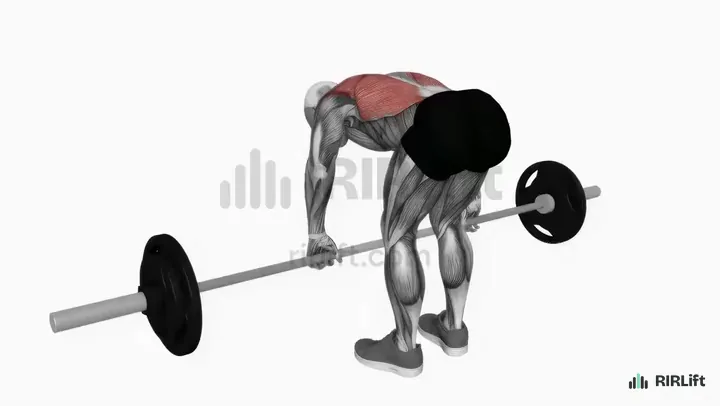
Pendlay Row
Pick this when your lower back tires before your upper back: the bar goes back to the floor every rep, so you are not holding the hinge between reps.
Build a session with it -
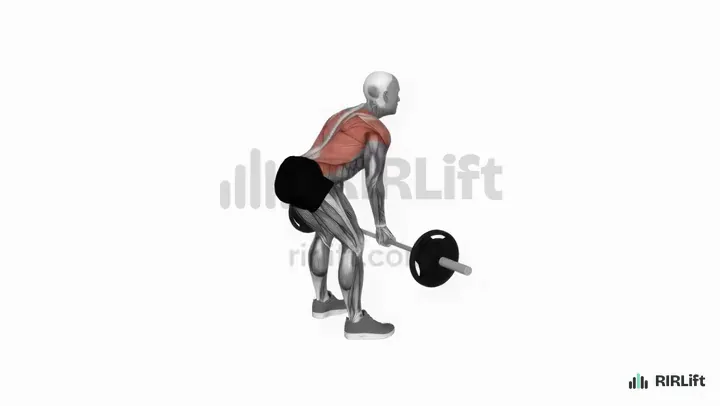
Underhand Barbell Row
Pick this to bring in more biceps: palms facing forward, elbows tucked, the bar travels to your belly button.
Build a session with it -
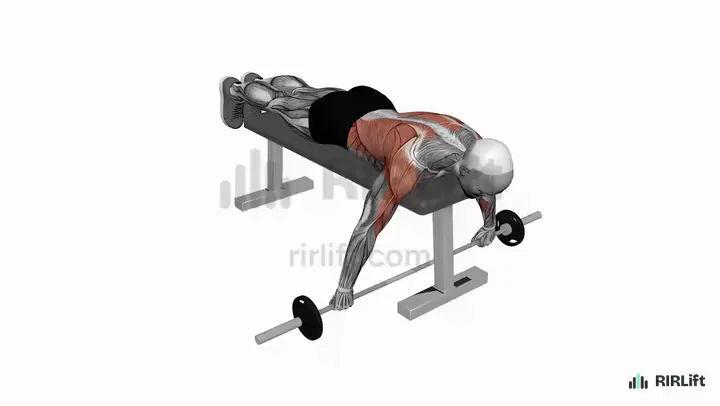
Seal Row
Pick this when you want the barbell without the hinge: you lie face down on a raised bench, so only your back and arms can finish the rep.
Build a session with it -
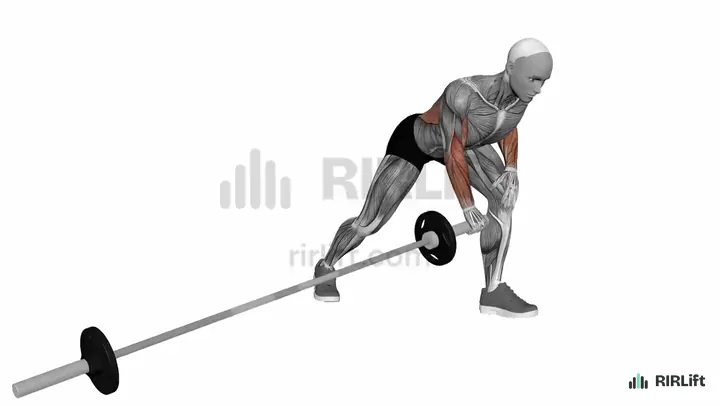
Meadows Row
Pick this when one side lags: you row one end of a landmine-mounted bar with one arm and get a long stretch at the bottom.
Build a session with it
Barbell row alternatives
No barbell
-
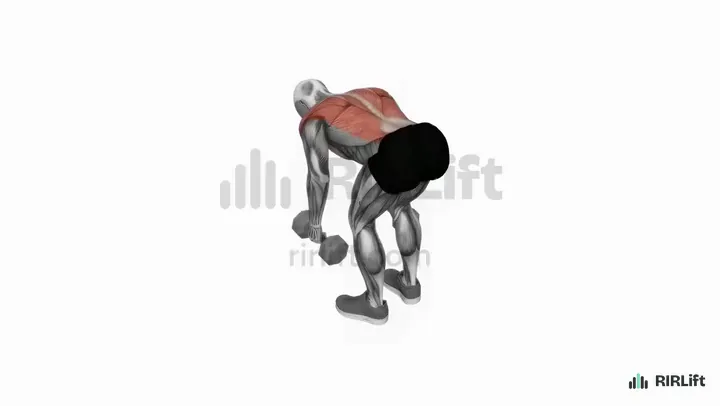
Dumbbell Bent-Over Row
The same hinge with a dumbbell in each hand, so each arm pulls its own share and your hands can turn inward.
Build a session with it -
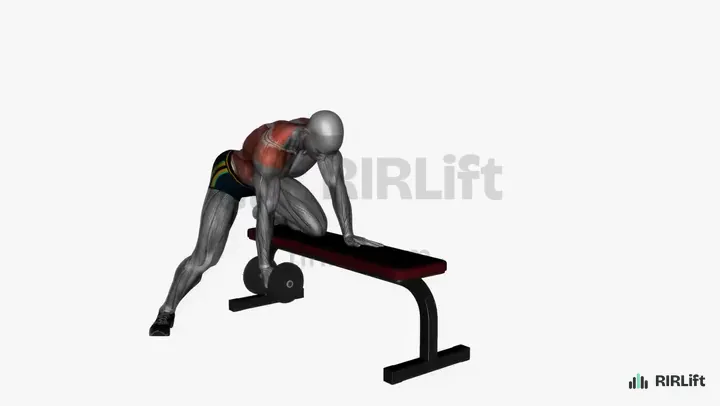
One-Arm Dumbbell Row
Brace one hand on a bench and row one dumbbell at a time, so the hinge costs you nothing and you can push each side harder.
Build a session with it -
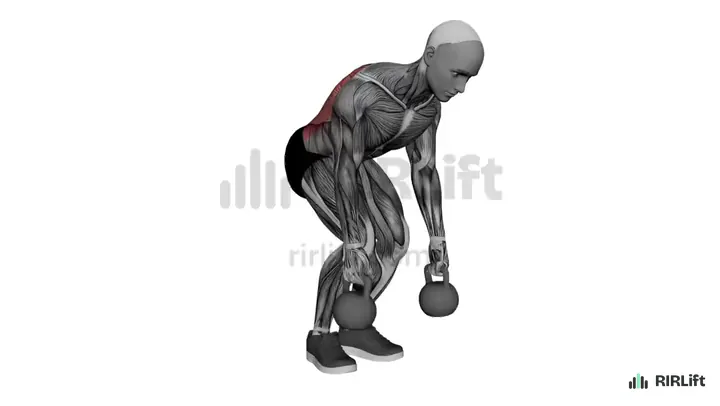
Kettlebell Row
The same hinge with a kettlebell in each hand, for home gyms that have bells but no barbell.
Build a session with it
When your lower back tires first
-
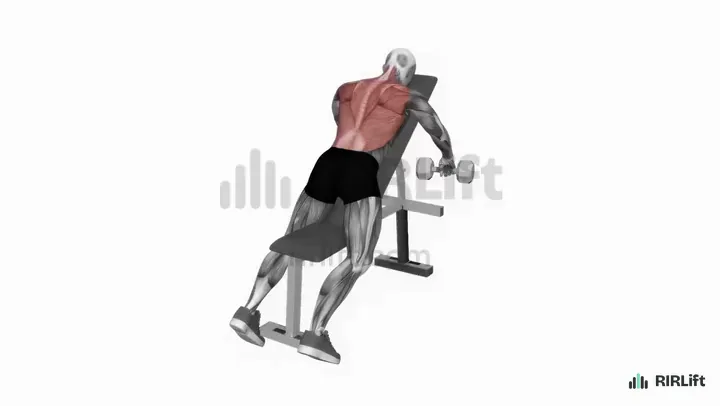
Incline Dumbbell Row
Lie chest-down on an incline bench so the only thing that ends the set is your back, and take it closer to failure.
Build a session with it -
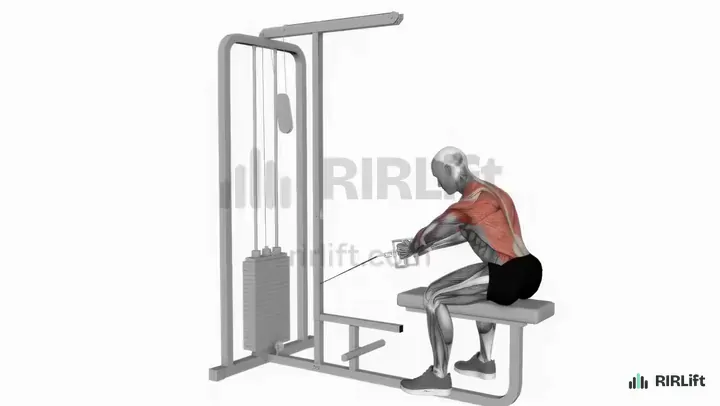
Seated Cable Row
Sit with your feet braced and row the handle to your stomach, adding load in small stack steps.
Build a session with it -
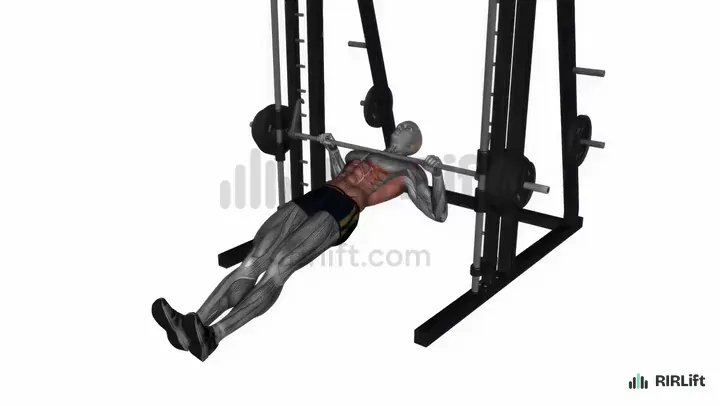
Inverted Row
Row your bodyweight up to a bar set at hip height, and make it harder by lowering the bar or putting your heels on a bench.
Build a session with it
Cables and machines
-
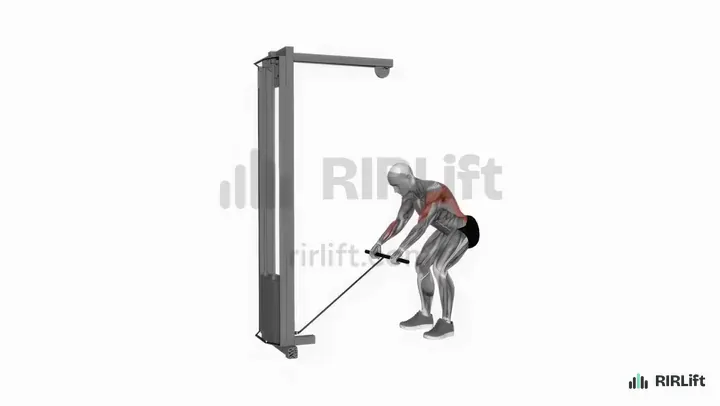
Standing Cable Row
Hinge in front of a low pulley and row the handle, keeping tension on your back at the bottom where a barbell goes slack.
Build a session with it -
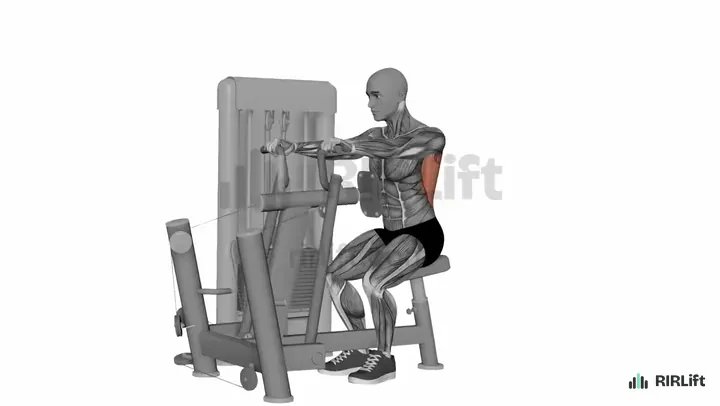
Machine Row
Brace against the chest pad and push each set to its last rep without a hinge to hold.
Build a session with it
At home with no weights
-
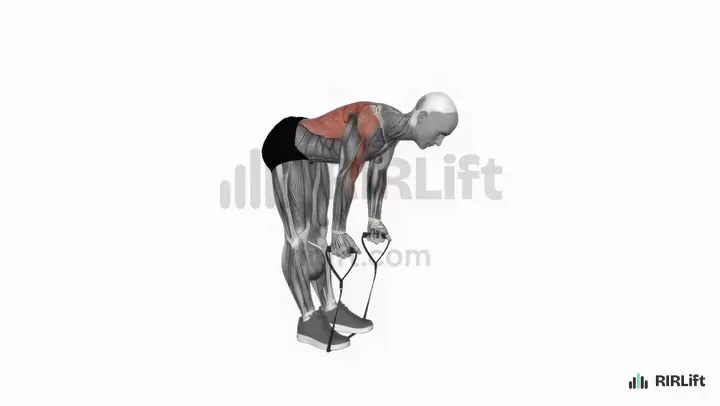
Band Bent-Over Row
Stand on a band and row it exactly like the barbell, holding the top a beat longer since the band is hardest there.
Build a session with it -
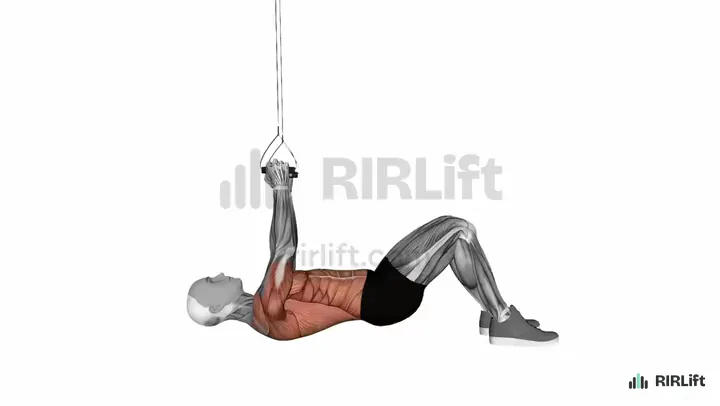
TRX Row
Lean back from a suspension trainer and row yourself up; step your feet closer to the anchor to make it harder.
Build a session with it
How far to bend over
The flatter your torso, the more your lats and upper back have to lift and the less you can cheat with your hips. Lean to about 45 degrees for heavier sets, and closer to parallel with the floor when you want a longer pull and can hold the hinge.
Pick one angle for the whole training block. If you row at 45 degrees one week and 30 the next, the bar weight stops telling you whether you got stronger.
Bent over row vs Pendlay row
Both are barbell rows from a hinge. In the bent over row the bar stays in your hands for the whole set, so your lower back holds the position from the first rep to the last. In the Pendlay row the bar returns to the floor and stops on every rep, you row with a flat, level torso, and each pull starts from zero.
Use the bent over row when you want the continuous tension of a set without a pause, and the Pendlay row when your lower back is what ends your sets or you want every rep to start strict.
Barbell or dumbbell bent over row
The barbell lets you load in small, exact steps and pull both arms at once. Dumbbells let each arm move on its own path and let your palms face each other, which suits lifters who find a straight bar awkward on the wrists or elbows.
If you train at home with a pair of dumbbells, the dumbbell bent over row is the closest match. The setup and cues are the same.
Questions
What muscles does the bent over row work?
It trains your lats, traps, rhomboids and rear delts, with your biceps helping. Your lower back and hamstrings work to hold the hinge for the whole set.
Do bent over rows work the whole back?
They cover most of it: the lats, the upper and middle back, and the rear delts in one movement, while your lower back holds the position. Add a vertical pull like the lat pulldown or pull-up to round out your back training.
Should I use an overhand or underhand grip?
Overhand is the standard bent over row and spreads the work across your upper back and lats. Underhand keeps your elbows tucked and brings in more biceps. Pick one per training block so the weights stay comparable.
How heavy should bent over rows be?
Heavy enough that you finish each set with about 2 reps left while your torso stays at the same angle. If your torso rises to finish reps, the weight is too heavy.
What machine can replace a bent over row?
A chest-supported machine row or a seated cable row trains the same muscles without a hinge to hold. Standing in front of a low pulley and rowing a handle is the closest cable version.
Can I do bent over rows without equipment?
Yes. Row yourself up to a sturdy table edge or a suspension trainer, or stand on a resistance band and row it the way you would a barbell.
Is the bent over row the same as a Pendlay row?
No. In a Pendlay row the bar returns to the floor and stops between reps, and you row with a flat, level torso. In a bent over row the bar stays in your hands for the whole set.
Related templates
-
The best workout for back: width, thickness and traps
Puts the bent over row in a full back session with a vertical pull and rear-delt work.
-
Barbell exercises: the 18 lifts worth learning, and how to put them together
Every barbell lift to pair with the row on the same day.
-
Back exercises with dumbbells: lats, upper back, traps and lower back
The dumbbell rows to use when there is no barbell.
-
Lat pulldown: form, grip width and the best alternatives
The vertical pull that completes a back day built around rows.
-
How to use RIR
How to tell when a row set has 2 reps left before your torso starts to rise.