Bicep curl alternatives for every setup, from a full gym to no weights

The best bicep curl alternative is the incline dumbbell curl: the same dumbbells, but leaning back stretches your biceps further and stops the swing. For heavier loading, use an EZ-bar or barbell curl; for a stricter curl, a preacher or concentration curl. With no weights, close-grip chin-ups load your biceps the heaviest, and door-frame curls or a band fill in the rest.

What a dumbbell curl alternative has to replace

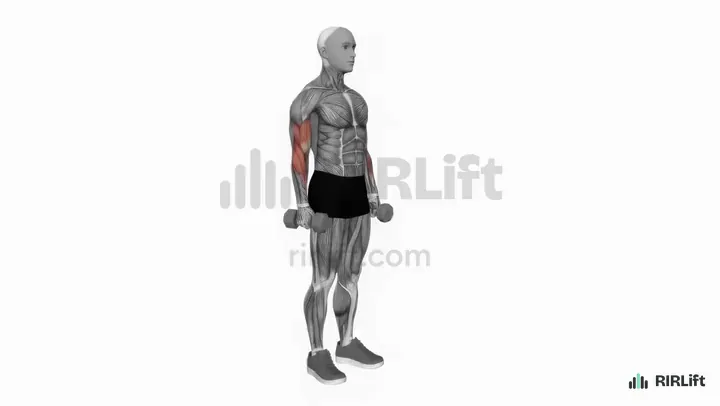
The dumbbell curl trains your biceps, with some help from the brachialis underneath and the forearm. Each arm works on its own, and your palms turn up as you lift, which is the biceps' main job along with bending the elbow.

A good swap keeps your elbows still and your palms turned up for at least the top half of the rep.

How to do the dumbbell curl

Barbell, EZ bar and cables

In a gym, a bar lets you load heavier and a cable keeps the tension on. The preacher bench makes either one strict.

Heaviest standard swap

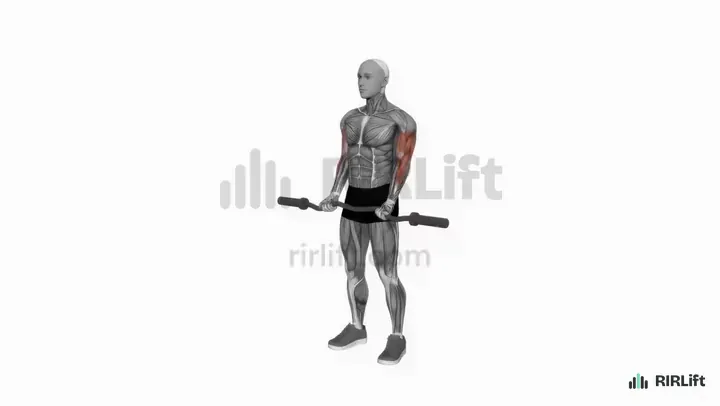
EZ-Bar Curl

Biceps

The angled grip is easier on your wrists than a straight bar, and with both hands on one bar you can load more than with dumbbells. Make it your first curl of the session.

How to do it

  1. Load the bar, stand tall with your feet hip-width apart, and take the inner angled grips with your palms facing up and slightly in.
  2. Let the bar hang against your thighs with your arms straight and your elbows tucked by your ribs.
  3. Bend at the elbows to bring the bar up in an arc until your forearms point roughly at the ceiling and the bar sits near your upper chest.
  4. Pause for a moment at the top without letting your elbows drift forward.
  5. Lower the bar under control for about two seconds until your arms are fully straight, then start the next rep.

Cues

  • Elbows glued to your sides
  • Ribs down, no lean back
  • All the way down every rep

Common mistakes

  • Swinging the hips to get the bar moving: if the first inch needs a hip snap, the weight is too heavy for the rep target.
  • Letting the elbows travel forward at the top: that turns the end of the curl into a front raise and takes tension off the biceps.
  • Cutting the bottom short: half reps let you lift more but skip the stretched part of the curl. Straighten your arms fully before each rep.

Barbell swap

Barbell Curl

Biceps

A straight bar puts your palms fully up, which is the biceps' strongest position. Pick it over the EZ bar if your wrists are fine with it.

How to do it

  1. Stand tall with your feet hip-width apart and hold the bar with an underhand grip, hands a little wider than your hips.
  2. Let the bar hang at your thighs with your arms straight and your elbows touching your sides.
  3. Curl the bar up in an arc by bending your elbows, with your upper arms still and your wrists straight.
  4. Stop when your forearms are vertical and the bar is in front of your shoulders, and squeeze your biceps for a moment.
  5. Lower the bar under control until your arms are completely straight, then start the next rep.

Cues

  • Elbows pinned to your ribs
  • Ribs down, no lean back
  • Straight arms at the bottom of every rep

Common mistakes

  • Leaning back and using the hips: brace your stomach and squeeze your glutes; if the bar only moves with a swing, it is too heavy.
  • Letting the elbows drift forward at the top: that brings the shoulders in and takes tension off the biceps; stop when the forearms are vertical.
  • Half reps that never straighten the arms: lower all the way every time, or the weight on the bar overstates what your biceps can do.

Strictest swap

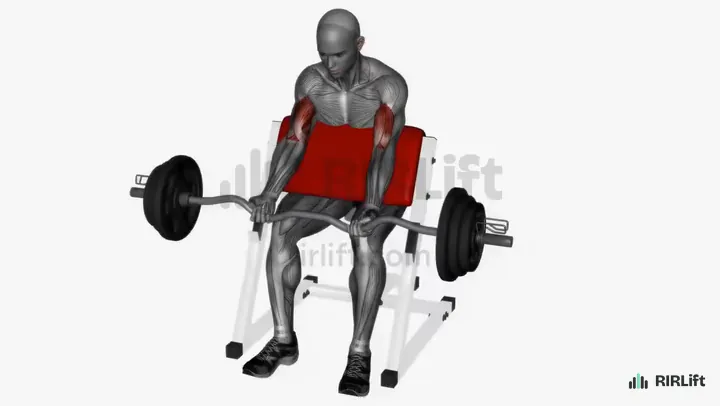
Preacher Curl

Biceps

The pad holds your upper arms still, so no swing can help, and the bottom half of the rep is the hardest. Use it if your standing curls have turned into a body lean.

How to do it

  1. Set the seat so your armpits rest on the top edge of the pad and the backs of your upper arms lie flat on it.
  2. Take the EZ bar on its inner angled grips, palms turned up, and sit down with your feet planted.
  3. Bend your elbows and bring the bar up until your forearms are just short of vertical.
  4. Lower for about three seconds until your arms are nearly straight, without letting the bar drop the last few inches.
  5. Curl the next rep from there, with your upper arms still flat on the pad.

Cues

  • Armpits jammed into the pad
  • Slow on the way down
  • Stop before your forearms stand straight up

Common mistakes

  • Sitting too low so only your elbows touch the pad: raise the seat until the whole back of your upper arm is in contact.
  • Dropping the last part of each rep and bouncing out of it: lower at the same slow speed right to the bottom, and take a lighter bar if you cannot.
  • Lifting your shoulders and leaning back to finish the rep: stop where your forearms are near vertical, since past that point the biceps get a rest anyway.

Cable swap

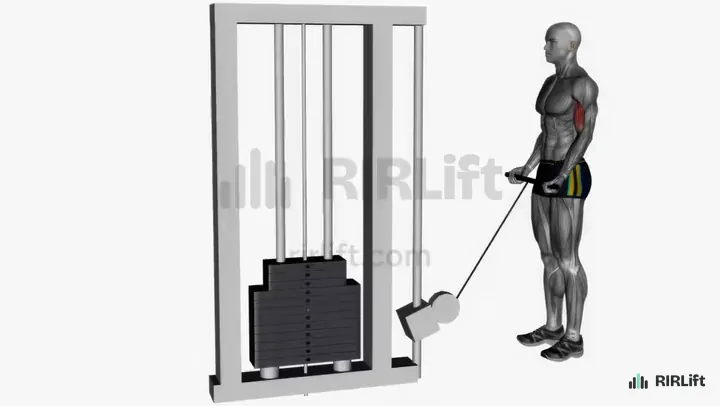
Cable Curl

Biceps

The cable keeps pulling at the top, where a dumbbell curl goes light. Use it for higher-rep sets late in a session.

How to do it

  1. Set the pulley to its lowest position and clip on a straight bar or EZ bar.
  2. Take the bar with your palms up, hands about shoulder-width, and step back far enough that the stack lifts slightly with your arms straight.
  3. Stand tall with soft knees and your elbows just in front of your sides.
  4. Bend your elbows to curl the bar toward your shoulders, keeping your upper arms still and your torso upright.
  5. Squeeze at the top, then let the bar back down slowly until your arms are straight again.

Cues

  • Elbows stay put
  • No leaning back
  • Slow on the way down

Common mistakes

  • Swinging your body to start the rep: soften your knees, stay tall, and drop the weight if you need momentum.
  • Elbows drifting forward at the top: keep them near your sides so the biceps, not the shoulders, finish the rep.
  • Stopping short at the bottom: straighten your arms fully between reps so you train the whole range.

Different dumbbell curls

Same dumbbells, different angle: lean back for the stretch, lean forward for the squeeze, brace your elbow for strictness, or turn your grip to bring in the forearms.

Best dumbbell swap for growth

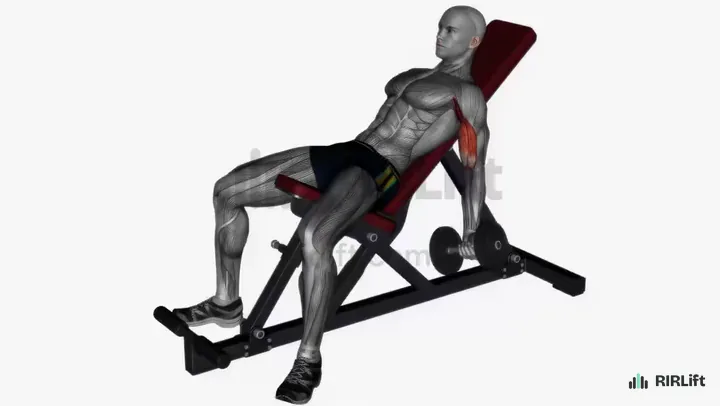
Incline Dumbbell Curl

Biceps

Leaning back on an incline bench puts your arms behind your body, so your biceps are stretched at the bottom of every rep. Expect to use lighter dumbbells than for standing curls.

How to do it

  1. Angle an adjustable bench at roughly 45 to 60 degrees and sit back with your head and shoulders against the pad.
  2. Your arms hang straight toward the floor with two dumbbells and your palms turned forward.
  3. Curl both dumbbells up, keeping your upper arms hanging and your elbows pointed at the floor.
  4. Stop when the dumbbells are near your shoulders, squeezing the biceps without letting your elbows drift forward.
  5. Lower slowly until your arms are fully straight again before starting the next rep.

Cues

  • Shoulders stay on the pad
  • Elbows point at the floor
  • Full stretch every rep

Common mistakes

  • Elbows swinging forward as you curl: keep the upper arm hanging; when it moves, the shoulders take over.
  • Half reps that stop short of straight arms: the stretch at the bottom is why you are doing this curl.
  • Using your standing-curl weight: start about a third lighter and add weight only when reps stay clean.

Dumbbell swap for the squeeze

Spider Curl

Biceps

Chest-down on an incline bench, your arms hang in front of you and the curl is hardest at the top. It pairs well with the incline curl, which loads the bottom.

How to do it

  1. Set an incline bench to about 45 degrees and lie face down on it with your chest on the top of the pad and your feet planted on the floor behind.
  2. Hold one dumbbell per hand with your palms facing forward and let both arms drop vertically toward the floor.
  3. Curl both dumbbells toward your shoulders by bending only at the elbows, with your upper arms pointing at the floor.
  4. Squeeze hard at the top for a moment, with your pinkies turned slightly up toward your shoulders.
  5. Lower slowly until your arms are straight again, and start the next rep without letting the dumbbells swing.

Cues

  • Upper arms stay pointing at the floor
  • Chest glued to the pad
  • Squeeze, then lower slowly

Common mistakes

  • Pulling the elbows back as you curl: that turns it into a row and takes load off the biceps; keep your elbows directly under your shoulders and use lighter dumbbells.
  • Cutting the bottom short: let your arms go fully straight on every rep, or you lose half of the range.
  • Lifting your chest off the pad to get the last rep: once your chest moves, the set is over; record the rep you got cleanly.

One-arm swap, no cheating

Concentration Curl

Biceps

Your elbow braces against your thigh, so the biceps do all the work. Training one arm at a time also shows you which arm is weaker.

How to do it

  1. Sit on the end of a bench with your feet wider than your hips and flat on the floor.
  2. Pick up a dumbbell, lean forward slightly from the hips and set the back of your working upper arm against the inside of the same-side thigh, just above the knee.
  3. Let the arm hang straight with the dumbbell near the floor, palm facing the other leg, and rest your free hand on your other knee.
  4. Curl the dumbbell up toward your shoulder while your upper arm stays pressed against your leg, and squeeze for a second at the top.
  5. Lower slowly until your arm is straight again, finish the set, then switch sides.

Cues

  • Arm stays on the thigh
  • Pinky turns up at the top
  • Slow on the way down

Common mistakes

  • Lifting the elbow off the thigh: once the arm leaves your leg the shoulder starts to help. Keep the contact for the whole set.
  • Rocking the torso up to finish the rep: if you have to sit up to complete it, stop the set there or use a lighter dumbbell.
  • Stopping short of a straight arm: the bottom of the rep counts, so let the elbow open fully before each curl.

Thumbs-up swap

Hammer Curl

Biceps, Forearms

Curling with your thumbs up moves work to the brachialis and forearm, and usually lets you lift more. Pick it if palms-up curls bother your wrists.

How to do it

  1. Stand tall with the dumbbells hanging by your thighs, thumbs pointing forward and palms facing your thighs.
  2. Pin your upper arms against your ribs and let your arms hang fully straight.
  3. Curl one dumbbell up until its top end sits just in front of your shoulder, keeping your thumb up the whole way.
  4. Hold the top for a beat with your forearm vertical, then lower for about two seconds until the arm is straight again.
  5. Curl the other arm, and keep alternating sides until the set is done.

Cues

  • Thumbs to the ceiling
  • Elbows glued to your ribs
  • Straight arm at the bottom of every rep

Common mistakes

  • Leaning back and swinging the hips to get the dumbbells moving: stand with your back against a wall or drop the weight until the first inch of each rep comes from your elbows.
  • Letting the elbows drift forward near the top: once they leave your sides your shoulders take over, so stop the rep where your forearms are vertical.
  • Cutting the bottom short and bouncing out of a half-bent arm: lower all the way until your elbows are straight, then curl.

Biceps and forearms in one

Zottman Curl

Biceps, Forearms

Curl up with your palms up, then lower slowly with your palms down. One exercise covers both your biceps and your forearms.

How to do it

  1. Stand with one dumbbell per hand, arms straight at your sides, palms facing forward.
  2. Keeping your upper arms still at your sides, curl both dumbbells up to your shoulders.
  3. At the top, turn your wrists so your palms face down.
  4. Lower the dumbbells slowly, taking about three seconds, with your palms still facing down and your wrists straight.
  5. At the bottom, turn your palms forward again and start the next curl.

Cues

  • Palms up to lift, palms down to lower
  • Three seconds on the way down
  • Elbows stay at your sides

Common mistakes

  • Rushing the lowering: the slow overhand descent is the point of the exercise; if you can't take three seconds, the dumbbells are too heavy.
  • Turning the wrists halfway down instead of at the top: finish the rotation at shoulder height so the whole descent is palms down.
  • Letting the wrists bend back while lowering: keep your knuckles in line with your forearm so the forearm muscles do the work.

Kettlebells and bands

No dumbbells: a kettlebell or a band does the same curl.

Kettlebell swap

Kettlebell Curl

Biceps

Holding one kettlebell by the handle with both hands, the weight hangs below your grip. Use it when kettlebells are what you have.

How to do it

  1. Stand tall and hold the handle with both hands, palms up, the bell hanging in front of your thighs.
  2. Pin your elbows to your sides.
  3. Curl the bell up toward your chest until your forearms are close to vertical.
  4. Lower it slowly until your arms are straight again.

Cues

  • Elbows stay at your ribs
  • Lower for a slow count of three
  • Stand still, no hip drive

Common mistakes

  • Swinging the bell up with a hip thrust: if you need the hips, the bell is too heavy for curls.
  • Letting the elbows travel forward at the top, which unloads the biceps: stop the curl when the forearms are vertical.

Band swap

Band Hammer Curl

Biceps

Standing on a band and curling one arm at a time with your thumbs up gets close to failure with no weights. The band is hardest at the top, so slow the lowering.

How to do it

  1. Stand on the middle of a band, feet about hip-width, an end in each hand with palms facing in.
  2. Keep your elbows at your sides and curl one hand up toward your shoulder, thumb up.
  3. Hold the top for a second, then lower slowly to a straight arm.
  4. Curl the other arm, and keep alternating until the set is done.

Cues

  • Thumbs up the whole rep
  • Elbows still
  • Control the band down

Common mistakes

  • Rushing the lowering: let the band pull for two seconds.
  • Too little tension: shorten the band by stepping wider.

No weights at all

Your bodyweight on a bar or a door frame trains your biceps without curls.

Best swap with only a pull-up bar

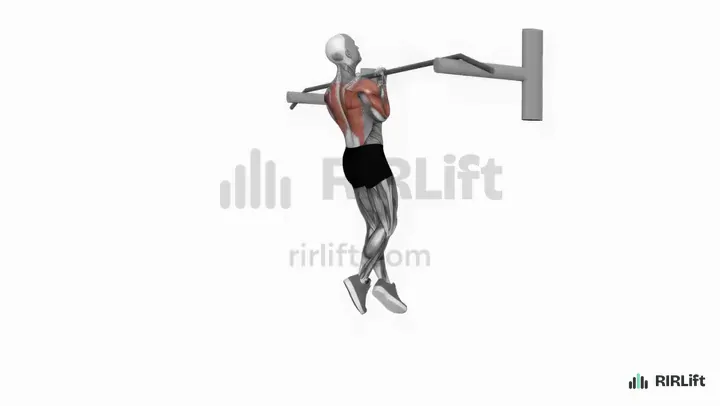
Close-Grip Chin-Up

Lats, Biceps

A palms-up chin-up with your hands close puts your whole bodyweight on your biceps.

How to do it

  1. Grab the bar palms-up with your hands about a fist's width apart.
  2. From a straight-arm hang, pull until your upper chest nears the bar.
  3. Squeeze at the top with your elbows tight to your body.
  4. Lower slowly to a full hang.

Cues

  • Hands close
  • Chest to the bar
  • Three seconds down

Common mistakes

  • Shrugging your shoulders to your ears at the bottom: keep a little tension so the shoulders stay set.
  • Swinging between reps: pause in the hang until your body is still.

No-equipment swap

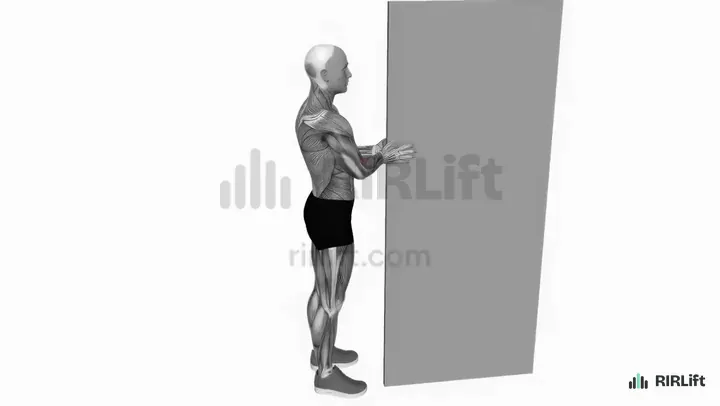
Bodyweight Bicep Curl

Biceps

Gripping a door frame and leaning back, you curl your body toward it. Step your front foot closer to the door to make it harder.

How to do it

  1. Face an open door frame and take hold of both sides, hands level with your hips.
  2. Step one foot forward and lean back until your arms are straight and your body weight hangs on your hands.
  3. Keep your elbows pinned to your sides and bend them to pull your body toward the frame.
  4. Straighten your arms slowly to lean back out, then repeat.

Cues

  • Elbows pinned to your sides
  • Body stays straight
  • Front foot closer to make it harder

Common mistakes

  • Pulling your elbows back like a row: keep them fixed at your sides so only your forearms move.
  • Bending at the hips to finish the rep: tense your glutes and keep your body in one line.

Triceps to pair with them

Each example session ends with one triceps exercise, so it works as a full arm day.

Triceps, to pair in the gym

Cable Triceps Pressdown

Triceps

The gym session ends with a pressdown, so one visit covers both sides of your arm.

How to do it

  1. Clip a rope, straight bar or V-bar to a pulley set above head height and pick a weight you could move for about 15 reps.
  2. Grab the attachment, take a small step back and lean your chest slightly forward with your knees soft, so the cable runs just in front of your face.
  3. Pull your upper arms against your sides with your elbows bent and your hands around chest height. This is where every rep starts.
  4. Press the attachment down by straightening your elbows until your arms are fully locked out by your thighs. With a rope, spread the ends apart as your hands pass your hips.
  5. Let your hands rise back to chest height over about two seconds, keeping your elbows in the same spot, then press again.

Cues

  • Elbows glued to your ribs
  • Lock out hard at the bottom
  • Only your forearms move

Common mistakes

  • Leaning over the stack and pushing with your body weight: if your shoulders roll forward to finish a rep, drop the weight until your torso stays still for the whole set.
  • Letting the elbows drift forward on the way up: your shoulders take over and the rep turns into a press. Stop your hands at chest height and keep your upper arms vertical.
  • Cutting the bottom short: the last few inches before lockout are where the triceps work hardest, so finish every rep with straight arms.
  • Letting the stack yank your hands back up: control the return, since a dropped weight gives you half a rep.

Triceps, to pair at home

Dumbbell Skullcrusher

Triceps

The triceps half of a home arm day with dumbbells and a bench.

How to do it

  1. Lie back on a flat bench and press two dumbbells up over your chest, palms turned in.
  2. Tilt your upper arms slightly back toward your head and lock them there.
  3. Bend only at the elbows, lowering the dumbbells beside your ears.
  4. Straighten your elbows to bring the weights back up.
  5. Stop just short of lockout to keep the triceps working.

Cues

  • Upper arms still
  • Lower beside your ears
  • Straighten, do not press

Common mistakes

  • Letting the elbows drift and pressing the weight up: that is a close-grip press. Keep the upper arms fixed.
  • Elbows flaring wide: keep them about shoulder width.

Triceps, to pair with no weights

Floor Triceps Dip

Triceps

Sitting on the floor with your hands behind you, you press your hips up with your triceps.

How to do it

  1. Sit with your knees bent and your hands flat behind you, fingers facing forward.
  2. Lift your hips slightly off the floor by straightening your arms.
  3. Bend your elbows to bring your hips down toward the floor, stopping just short of it.
  4. Push back up to straight arms.

Cues

  • Fingers face your feet
  • Hover the hips
  • Elbows straight back

Common mistakes

  • Sitting all the way down between reps: keep the tension on.
  • Letting the feet do the lifting: press from the hands.

Example sessions without the dumbbell curl

Session 1

Gym, bored of dumbbell curls

Open in the session builder
  • Workouts2× a week
  • Working sets24 a week
  • Per workout~25 min
  • EquipmentEZ Bar, Preacher Bench, Adjustable Cable

You train in a gym and your dumbbell curls have stopped going anywhere.

The EZ-bar curl goes first because it carries the most load. The preacher curl adds a strict, hard bottom half, the cable curl finishes with constant tension, and a pressdown covers the triceps. 12 working sets.

Arms
ExerciseSets × repsRIRRest
EZ-Bar Curl1 warm-up set first 3 × 6–10 2 2 min
Preacher Curl 3 × 8–12 2 90 s
Cable Curl 3 × 12–15 1 1 min
Cable Triceps Pressdown 3 × 10–15 1 1 min
How to run it
Once or twice a week, on a day that doesn't follow heavy back work.
How to progress
When every set reaches the top of its range at the RIR shown, add the smallest jump next session and start again at the bottom of the range.

Session 2

Home, dumbbells and a bench

Open in the session builder
  • Workouts2× a week
  • Working sets24 a week
  • Per workout~25 min
  • EquipmentDumbbells, Incline Bench, Flat Bench

You train at home with adjustable dumbbells and a bench that inclines.

Hammer curls go first because they move the most weight. The incline curl adds the stretched position, the concentration curl finishes one arm at a time, and dumbbell skull crushers cover the triceps. Light dumbbells mean higher reps and shorter rest. 12 working sets.

Arms
ExerciseSets × repsRIRRest
Hammer Curl1 warm-up set firstCount each arm. 3 × 10–15 1 1 min
Incline Dumbbell Curl 3 × 12–15 1 1 min
Concentration CurlSets are per arm. 3 × 15–20 0 45 s
Dumbbell Skullcrusher 3 × 12–15 1 1 min
How to run it
Twice a week on non-consecutive days. Rest 60 seconds or less so light dumbbells still make each set hard.
How to progress
Add reps until every set reaches the top of its range, then move up one dumbbell. At your heaviest pair, lower each rep over three seconds.

Session 3

No weights, pull-up bar or doorway

Open in the session builder
  • Workouts3× a week
  • Working sets39 a week
  • Per workout~30 min
  • EquipmentPull-Up Bar, Resistance Bands

You train at home with a pull-up bar, a door frame and maybe a band.

Close-grip chin-ups are the heaviest biceps work you can do without weights, so they go first. Door-frame curls and band curls push the same muscles to failure, and floor dips cover the triceps. 13 working sets.

Arms
ExerciseSets × repsRIRRest
Close-Grip Chin-Up 4 × 5–10 2 2 min
Bodyweight Bicep Curl 3 × 10–20 1 1 min
Band Hammer CurlCount each arm. 3 × 15–25 1 45 s
Floor Triceps Dip 3 × 15–25 1 45 s
How to run it
Two or three times a week. Take the door-frame and band sets within one rep of failure.
How to progress
On chin-ups, add a rep a week until you reach 10 on every set, then lower each rep over four seconds. On the rest, add reps, then step your front foot closer to the door or step wider on the band.

Make it fit you

Questions

What can I replace bicep curls with?

Incline, preacher, concentration and hammer curls all train the biceps from a different angle. With no weights, close-grip chin-ups are the best replacement.

How can I grow my biceps without doing curls?

Close-grip chin-ups train your biceps hard with your bodyweight. They work your back too, so if bigger arms are the goal, keep at least one curl in your week.

Are banded bicep curls good?

Yes, as long as you take them close to failure. The band is light at the bottom and heavy at the top, so lower slowly and step wider on it for more tension.

What are the top 3 bicep exercises?

A heavy curl like the EZ-bar curl, a stretched curl like the incline dumbbell curl, and a strict curl like the preacher curl cover the biceps well.

What are some alternatives to incline dumbbell curls?

The preacher curl is the closest, because it also makes the bottom of the curl the hardest part. A cable curl with a slow lowering works too.

What is a good bicep curl alternative at home?

With dumbbells, try incline, concentration or hammer curls. With no weights, close-grip chin-ups, door-frame curls and band curls.