
Incline dumbbell curl: how to do it and what angle to use
Published October 19, 2026
An incline dumbbell curl is a biceps curl done sitting back on a bench set to about 45 to 60 degrees, so your arms hang behind your body. That puts the biceps on a long stretch at the bottom of every rep. Start with straight arms, curl without letting your elbows swing forward, and lower all the way.
- WorksBiceps
- AlsoForearms
- EquipmentDumbbells, Incline Bench
- Start with3 × 10–15, 2 in reserve, 90 s rest
How to do the incline dumbbell curl
Leaning back puts your shoulders behind your torso, which stretches the biceps more at the bottom than a standing curl. Training a muscle hard at long lengths is a strong growth signal, and the bench stops you from swinging the weight, so lighter dumbbells feel much heavier.
Steps
- Angle an adjustable bench at roughly 45 to 60 degrees and sit back with your head and shoulders against the pad.
- Your arms hang straight toward the floor with two dumbbells and your palms turned forward.
- Curl both dumbbells up, keeping your upper arms hanging and your elbows pointed at the floor.
- Stop when the dumbbells are near your shoulders, squeezing the biceps without letting your elbows drift forward.
- Lower slowly until your arms are fully straight again before starting the next rep.
Cues
- Shoulders stay on the pad
- Elbows point at the floor
- Full stretch every rep
Common mistakes
- Elbows swinging forward as you curl: keep the upper arm hanging; when it moves, the shoulders take over.
- Half reps that stop short of straight arms: the stretch at the bottom is why you are doing this curl.
- Using your standing-curl weight: start about a third lighter and add weight only when reps stay clean.
Swap for: Dumbbell Curl, Spider Curl, Preacher Curl
Muscles the incline dumbbell curl works
The incline curl works your biceps, with the long head on the outside of the arm under the most stretch because your arm sits behind your body. The brachialis under the biceps and the forearm flexors help.
Sets, reps and reps in reserve for the incline dumbbell curl
| Goal | Sets × reps | RIR | Rest |
|---|---|---|---|
| Build the biceps | 3 × 8–12 | 1–2 | 60–90 s |
| Go up in weight only when every rep reaches straight arms. | |||
| Light dumbbells or home | 3 × 12–20 | 0–1 | 60 s |
| Slow the lowering to 3 seconds before adding weight. | |||
| Paired with a standing curl | 2 × 10–15 | 1 | 60 s |
| Do it after a heavier standing curl to finish with a stretch. | |||
Incline dumbbell curl variations
-
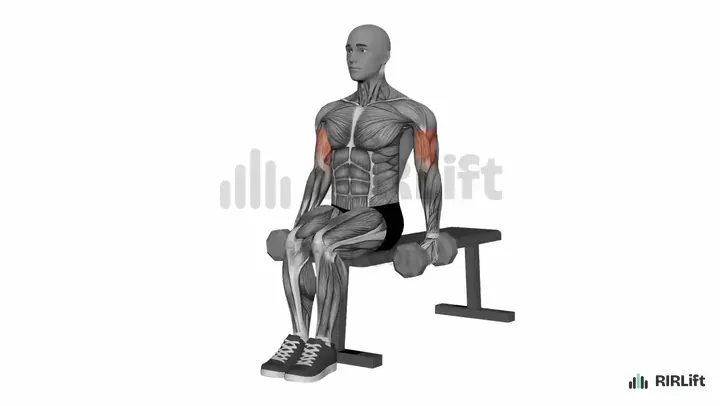
Seated Dumbbell Hammer Curl
Turn your palms in when you want more forearm and brachialis.
Build a session with it -
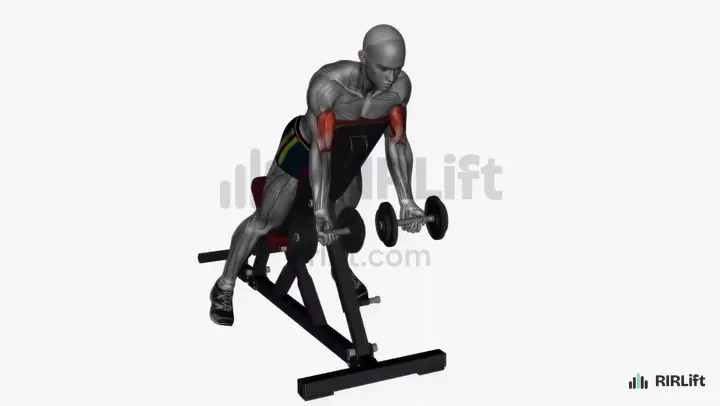
Spider Curl
Lie chest-down on the incline when you want the opposite: hardest at the top.
Build a session with it -
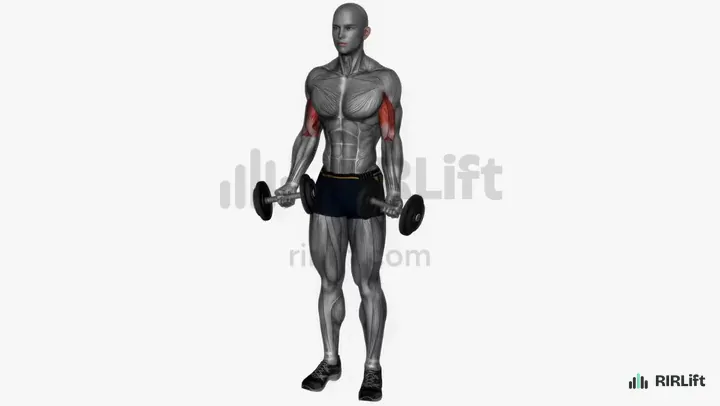
Dumbbell Drag Curl
Drag the bells up your body with the elbows moving back for a peak contraction.
Build a session with it
Incline dumbbell curl alternatives
Standing and supported curls
-
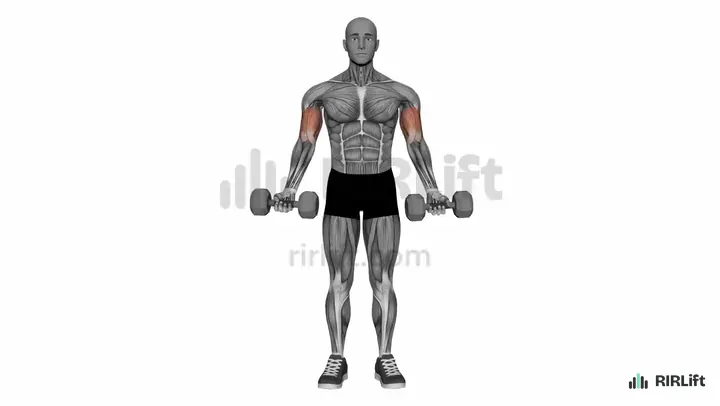
-
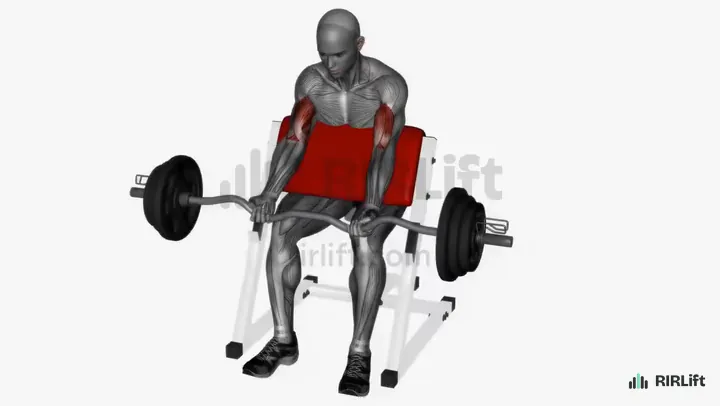
Preacher Curl
Use a preacher bench when you want the arm fixed in front of you.
Build a session with it
Cable curls
-
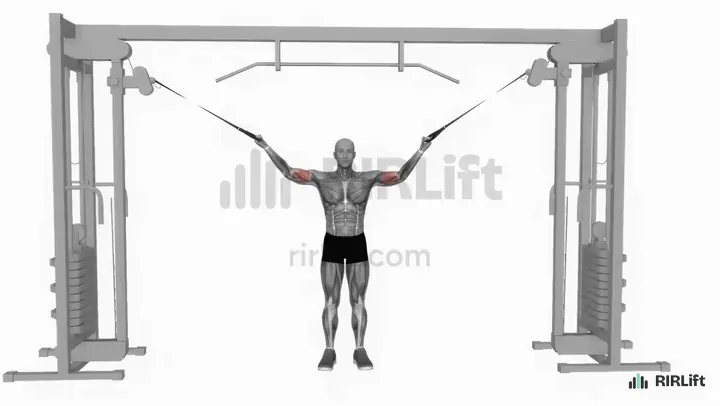
Overhead Cable Curl
Curl between two high cables with your arms out to the sides when you want the biceps loaded at a different angle with steady tension.
Build a session with it -
What angle for incline dumbbell curls: 45 or 60 degrees?
Both work. At 45 degrees your arms sit farther behind you, so the stretch is bigger and the weight feels heavier. At 60 degrees the stretch is smaller and the shoulders are more comfortable, which suits people whose shoulders complain at the lower angle. Pick the lowest angle you can do without your shoulders rolling forward off the pad, and use the same one each session so your weights stay comparable.
Why incline curls feel so hard
The bottom of the curl, where the biceps is stretched, is where the incline curl is hardest, and the bench takes away the body swing that helps you on a standing curl. So expect to use noticeably lighter dumbbells. That is normal and it is part of why the exercise works.
Questions
Are incline dumbbell curls effective?
Yes. They train the biceps at a long length, which is a strong signal for growth, and the bench keeps you from cheating.
Is an incline curl better at 30 or 45 degrees?
Most people use 45 to 60. Lower angles stretch more but push the shoulder far back; go only as low as your shoulders stay comfortable.
Is a 20 lb dumbbell good for incline curls?
For many lifters, yes. Incline curls use much less weight than standing curls; judge the weight by your reps and RIR, not the number.
How do you do incline dumbbell curls correctly?
Sit back on a 45 to 60 degree bench, arms hanging straight, curl without moving your elbows forward, and lower all the way every rep.
What does the incline dumbbell curl work?
The biceps, especially the long head, plus the brachialis and forearm flexors.
Should you alternate arms?
Either works. Curling both arms together keeps the set shorter; alternating lets you focus on one arm and rest the other briefly.
Related templates
-
Dumbbell bicep exercises: curls for the stretch, the squeeze and arm thickness
More dumbbell curls to pair with the incline curl.
-
Spider curl: how to do it on an incline bench, and what it does for your biceps
The chest-down curl that is hardest at the top.
-
Hammer curl: how to do it, what it works, and what to swap it for
A neutral-grip curl for the forearms and brachialis.
-
Preacher curl: how to do it, what it works, and what to swap it for
A supported curl with the arms in front of you.
-
The best workout for biceps, matched to your setup
A full biceps session with sets and RIR targets.