
Dumbbell curl: how to do it, alternating or together, and how heavy to go
Published October 19, 2026
A dumbbell curl is the basic biceps exercise: you stand holding two dumbbells, palms facing forward, and bend your elbows to bring the weights up to your shoulders. Keep your elbows by your sides, lift without swinging, and lower slowly to straight arms. You can curl both arms together or alternate one arm at a time.
- WorksBiceps
- AlsoForearms
- EquipmentDumbbells
- Start with3 × 10–15, 1 in reserve, 90 s rest
How to do the dumbbell curl
Dumbbells let each arm work on its own, so your stronger side can't cover for the weaker one, and they let you turn your palm up as you lift, which is one of the biceps' main jobs. All you need is a pair of dumbbells, at home or in the gym.
Steps
- Stand tall holding two dumbbells, arms straight at your sides, and turn your palms to face forward.
- Brace your stomach and pin your upper arms to your sides.
- Bend one elbow and bring the dumbbell up toward your shoulder, keeping the palm turned up the whole way.
- Pause briefly at the top with your forearm vertical, then lower slowly until the arm is straight again.
- Repeat with the other arm, or curl both arms together if you prefer.
Cues
- Elbows stay at your sides
- Pinkie turns up
- Slow on the way down
Common mistakes
- Swinging your hips and back to get the weight up: take a lighter pair and keep your torso still for the whole set.
- Letting the elbows drift forward at the top: that hands the work to your shoulders; stop the curl when your forearm is vertical.
- Stopping short of straight arms at the bottom: lower all the way so the biceps work through their full length.
Swap for: Hammer Curl, Incline Dumbbell Curl, Concentration Curl
Muscles the dumbbell curl works
The dumbbell curl works your biceps, which bend the elbow and turn the palm up. The brachialis underneath the biceps and the brachioradialis on the forearm help, and your grip and forearm muscles hold the dumbbell. Your front shoulders and abs keep your upper arm and torso still.
Sets, reps and reps in reserve for the dumbbell curl
| Goal | Sets × reps | RIR | Rest |
|---|---|---|---|
| Build muscle | 3–4 × 8–12 | 1–2 | 60–90 s |
| Add weight once you hit 12 reps on every set with clean form. | |||
| Higher reps | 2–3 × 12–20 | 0–1 | 60 s |
| Good as the last arm exercise of the day or when heavy dumbbells are not available. | |||
| Beginner | 2–3 × 10–12 | 2–3 | 60 s |
| Use a weight you can curl without any body swing and learn the slow lowering first. | |||
Dumbbell curl variations
-
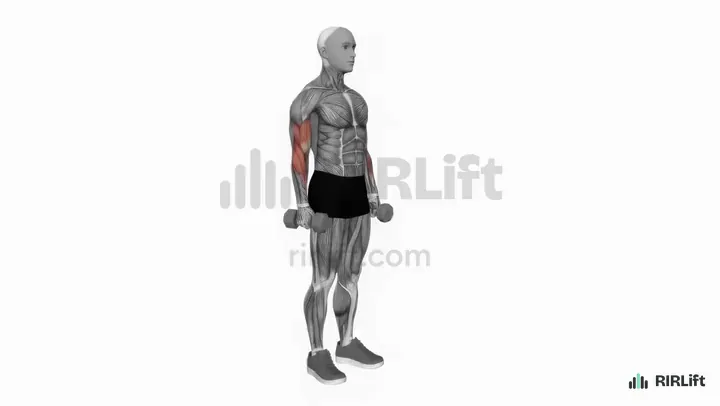
Hammer Curl
Turn your palms to face each other when you want more forearm and brachialis work.
Build a session with it -
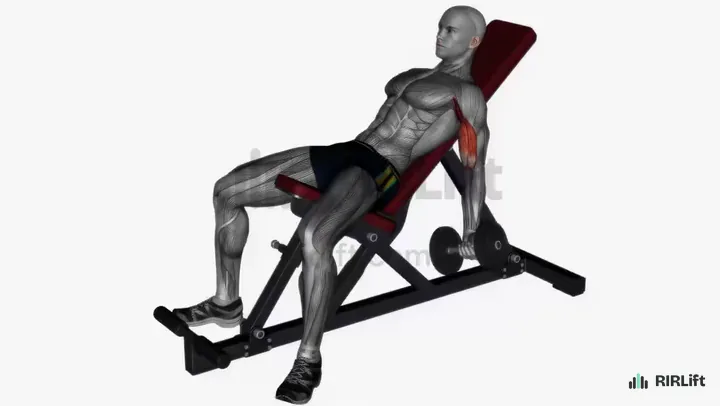
Incline Dumbbell Curl
Sit back on an incline bench when you want the biceps stretched more at the bottom.
Build a session with it -
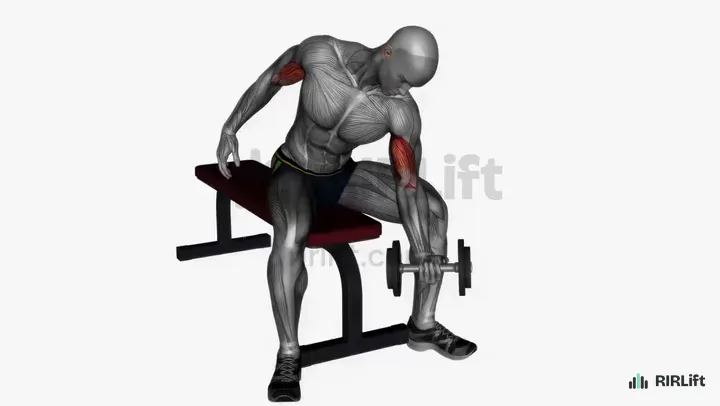
Concentration Curl
Brace your elbow on your thigh when you want to remove any chance of swinging.
Build a session with it -
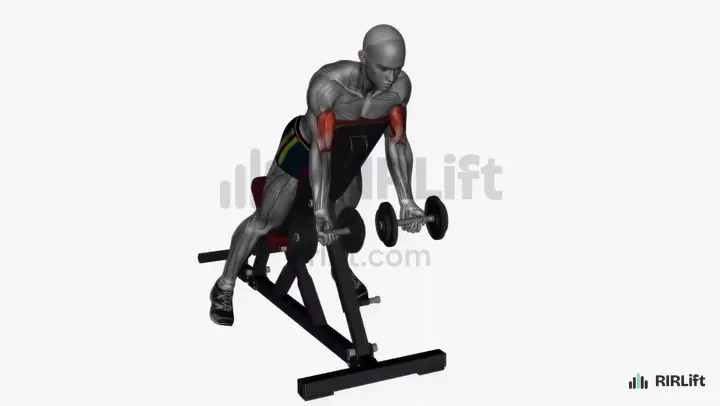
Spider Curl
Lie chest-down on an incline bench when you want the hardest squeeze at the top.
Build a session with it
Dumbbell curl alternatives
Bar curls
-
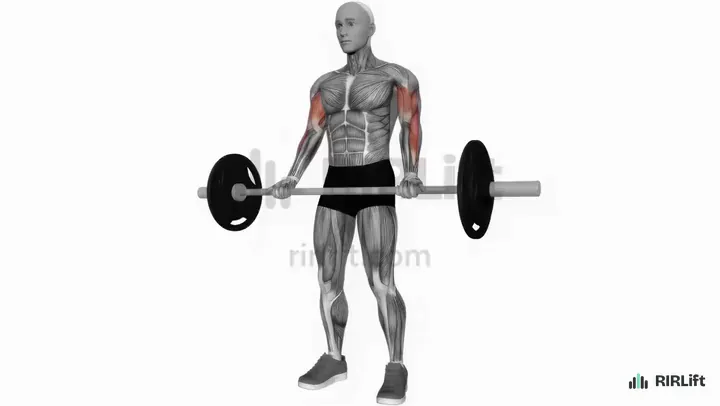
Barbell Curl
Use a barbell when you want both arms lifting heavier together.
Build a session with it -
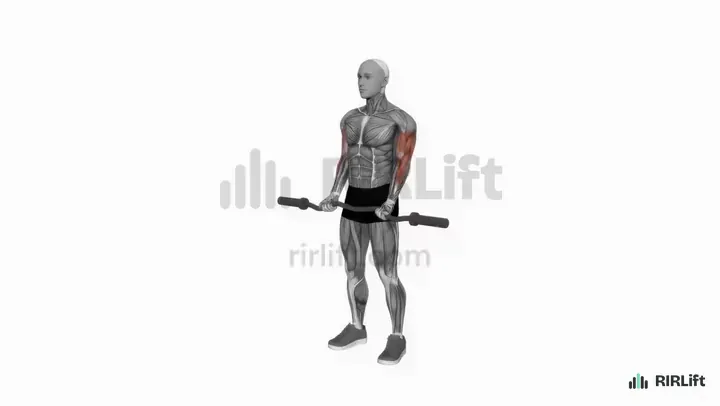
Cable and kettlebell
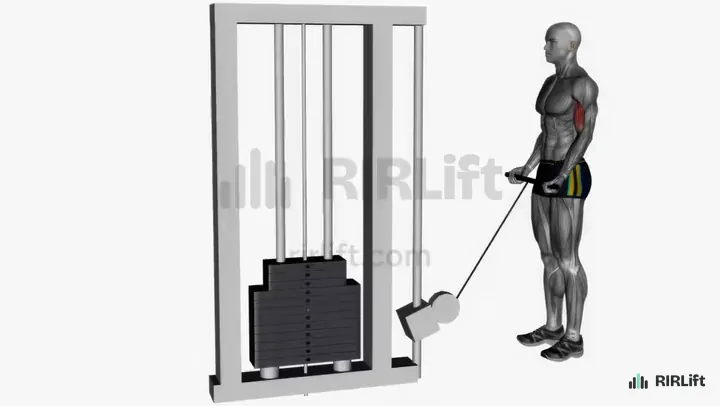
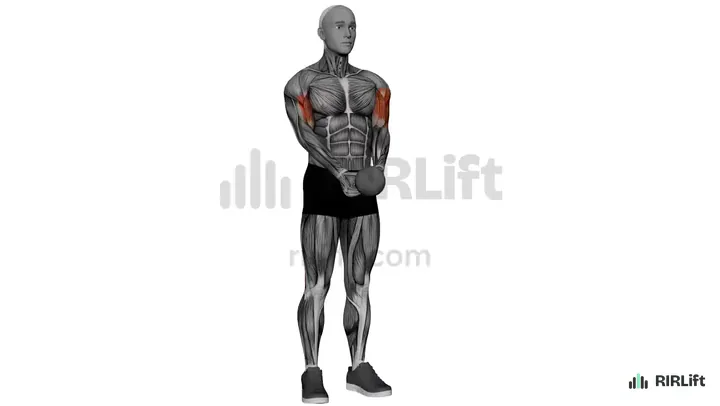
Alternating or both arms together?
Curling both arms at once is faster and keeps both biceps working for the whole set. Alternating gives each arm a short rest between reps, which often lets you use a bit more weight and focus on one side at a time, but it doubles the length of the set. Either builds the same muscle; pick one and log it the same way each week so your numbers compare.
How heavy should your dumbbell curl be?
There is no single good number: what counts is a weight you can curl for 8 to 12 strict reps, stopping one or two reps before you would need to swing. For many beginners that is 10 to 20 pounds per hand; trained lifters often use 30 to 50. Add weight when every set reaches the top of your rep range.
Questions
What do dumbbell curls work?
Mainly the biceps, with the brachialis and the brachioradialis on the forearm helping. Your grip and core work to hold the weight and keep you still.
Which dumbbell curl is the most effective?
The standard dumbbell curl and the incline dumbbell curl are both excellent; doing the standard curl with a full range and controlled lowering matters more than picking a special version.
Is a 20-pound dumbbell curl good?
For a beginner, curling 20 pounds per hand for 8 to 12 strict reps is a solid start. What matters more is that the number goes up over the weeks.
Is a 40-pound dumbbell curl heavy?
Yes, curling 40 pounds per arm for strict reps is strong for most lifters. Many people use less on a strict curl than they expect, which is fine.
How many reps of dumbbell curls should I do?
Three or four sets of 8 to 12 reps, stopping one or two reps short of failure, works well for growth.
Should you curl standing or seated?
Both work. Seated makes it harder to swing your body; standing lets you use slightly more weight. The muscles worked are the same.
Related templates
-
Hammer curl: how to do it, what it works, and what to swap it for
The neutral-grip curl for forearms and brachialis.
-
Preacher curl: how to do it, what it works, and what to swap it for
A supported curl that removes any swing.
-
Dumbbell bicep exercises: curls for the stretch, the squeeze and arm thickness
More dumbbell curls to round out an arm day.
-
The best workout for biceps, matched to your setup
A full biceps session built around curls.
-
How to use RIR
How to stop each set with the right reps left.