
Dumbbell bicep exercises: curls for the stretch, the squeeze and arm thickness
Published October 19, 2026
The best dumbbell bicep exercises are the standard curl, the incline curl, the hammer curl and the concentration or spider curl. The incline curl works the biceps hardest when stretched, the spider and concentration curls when fully shortened, and the hammer curl builds the brachialis underneath, which adds thickness. A good biceps session uses one curl from each of two of those groups, 3 to 4 sets each, ending 0 to 1 reps short of failure.
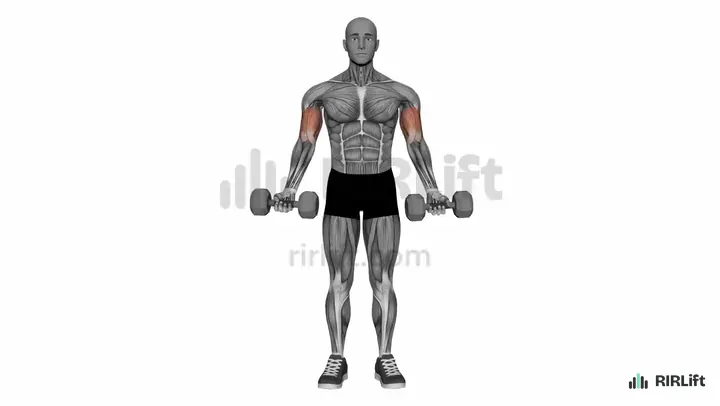
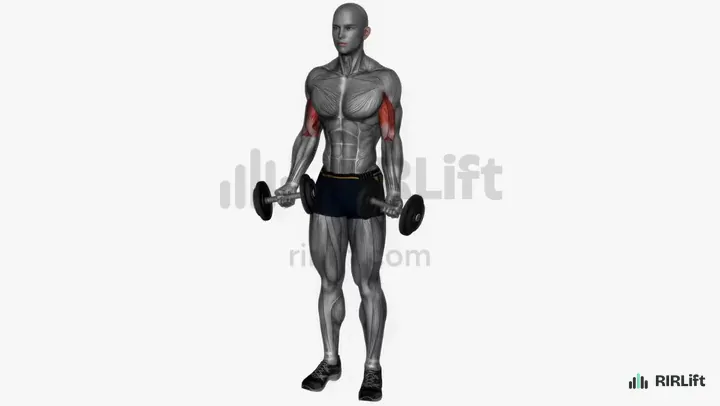
- Dumbbell Curl Biceps
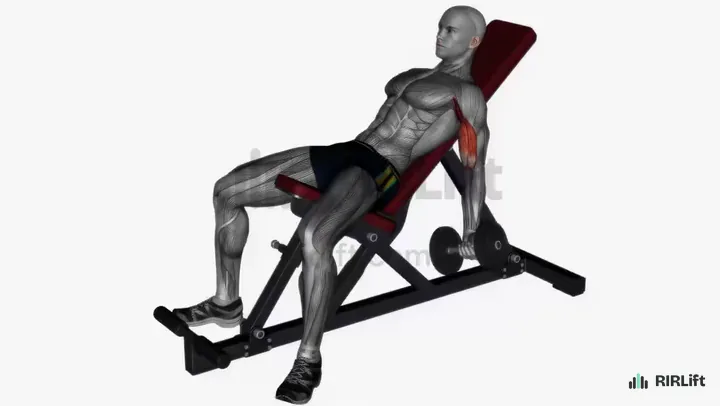
- Incline Dumbbell Curl Biceps
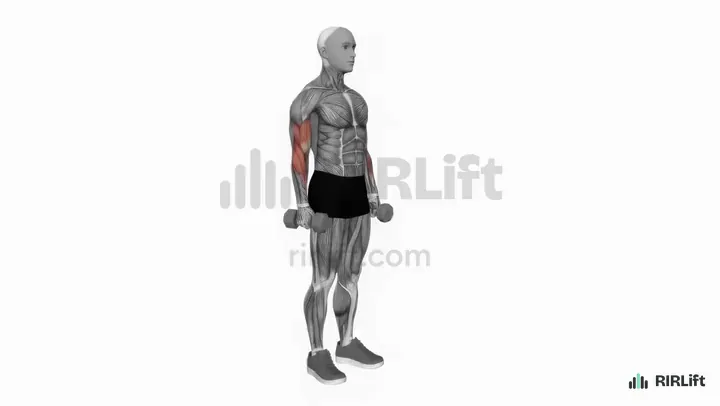
- Hammer Curl Biceps, Forearms
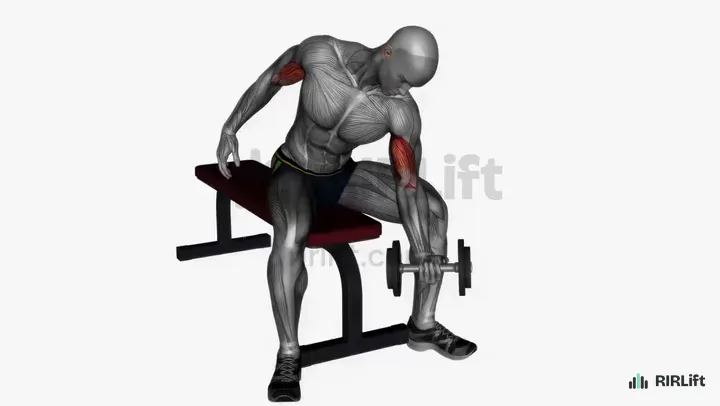
- Concentration Curl Biceps
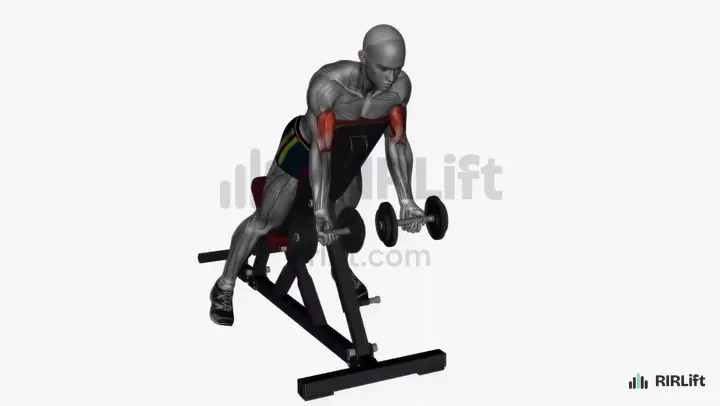
- Spider Curl Biceps
- Dumbbell Drag Curl Biceps
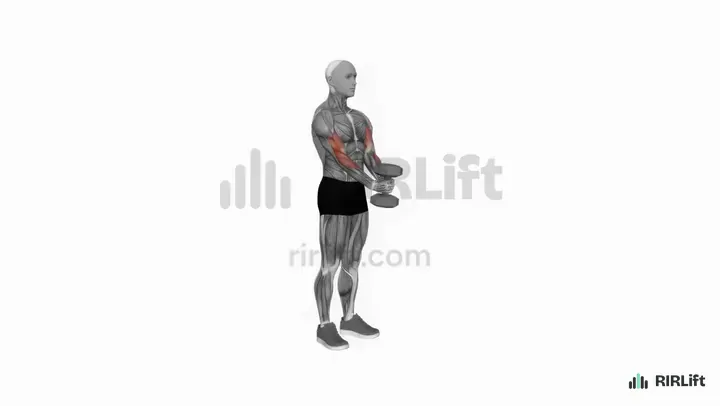
- Waiter Curl Biceps
Put them together: example sessions
Each session below picks from the exercises above for one situation, with the sets, reps, rest and RIR filled in. Open one in the session builder to change a pick, price it from a recent set, and add it to RIRLift.
-
Session 1
One pair of dumbbells, standing only
You have a pair of dumbbells and no bench, and train in a spare room or garage.
2× a week · 18 sets a week · ~20 min
-
Session 2
Adjustable bench, dumbbells you can load
You have an incline bench and a range of dumbbells, at home or in a gym, and want the most out of biceps sessions.
2× a week · 20 sets a week · ~20 min
-
Session 3
Biceps inside one pull workout a week
You train full-body or upper/lower, have about 30 minutes for pulling, and want your biceps to grow without a separate arm day.
1× a week · 10 sets a week · ~25 min
Session 1
One pair of dumbbells, standing only
- Workouts2× a week
- Working sets18 a week
- Per workout~20 min
- EquipmentDumbbells
You have a pair of dumbbells and no bench, and train in a spare room or garage.
Without a bench, every curl here is done standing. The alternating curl is the main lift, the drag curl takes the shoulder out of the same movement, the alternating hammer curl adds brachialis work, and the waiter curl uses one dumbbell held in both hands when the pair feels light. A pair that never gets heavier calls for high reps, so isolation sets end 0 to 1 short of failure. Each session is 9 sets, 18 per week.
| Exercise | Sets × reps | RIR | Rest |
|---|---|---|---|
| Dumbbell CurlAlternate arms. Straight arm each rep. | 3 × 8–15 | 1 | 75 s |
| Alternating Hammer CurlThumbs up. Count each arm. | 3 × 10–20 | 1 | 1 min |
| Waiter CurlOne dumbbell, palms under the plate. | 3 × 12–20 | 0 | 1 min |
Open Biceps A in the session builder
| Exercise | Sets × reps | RIR | Rest |
|---|---|---|---|
| Dumbbell Drag CurlDumbbells slide up your body. | 3 × 10–15 | 1 | 75 s |
| Dumbbell Curl3 s down. | 3 × 10–20 | 0 | 1 min |
| Alternating Hammer CurlNo swing. | 3 × 10–20 | 0 | 1 min |
Open Biceps B in the session builder
- How to run it
- Do Biceps A and Biceps B on different days, two or more days apart. Either fits at the end of an upper-body or pull workout.
- How to progress
- Add reps until all sets reach the top of the range at the target RIR. Then lower every rep over three seconds. When that also tops out, buy the next pair up.
Session 2
Adjustable bench, dumbbells you can load
- Workouts2× a week
- Working sets20 a week
- Per workout~20 min
- EquipmentDumbbells, Incline Bench
You have an incline bench and a range of dumbbells, at home or in a gym, and want the most out of biceps sessions.
The bench opens up the two curls that load the extremes of the range: the incline curl, which stretches the biceps, and the spider curl, which is hardest at the top. Each session uses one of each kind plus a seated hammer curl or concentration curl. The incline curl stops at 1 RIR since it pulls on the front of the shoulder at the bottom; the rest can go to 0. Ten sets per session gives about 20 per week, enough for most people who want their arms to be the priority.
| Exercise | Sets × reps | RIR | Rest |
|---|---|---|---|
| Incline Dumbbell Curl1 warm-up set firstBench at 45°. Elbows back. | 4 × 8–12 | 1 | 90 s |
| Seated Dumbbell Hammer CurlSit tall. | 3 × 8–12 | 1 | 75 s |
| Spider CurlHold the top 1 s. | 3 × 12–20 | 0 | 1 min |
Open Biceps Stretch in the session builder
| Exercise | Sets × reps | RIR | Rest |
|---|---|---|---|
| Spider CurlChest on the pad. | 3 × 10–15 | 1 | 75 s |
| Concentration CurlPer arm. Elbow on the thigh. | 3 × 10–15 | 0 | 1 min |
| Incline Dumbbell Curl3 s down. | 4 × 10–15 | 1 | 75 s |
Open Biceps Squeeze in the session builder
- How to run it
- Run Biceps Stretch and Biceps Squeeze on two different days, ideally not the day after a heavy pull session.
- How to progress
- Use double progression: once every set reaches the top of its range, go up the smallest dumbbell step and start again at the bottom of the range.
Session 3
Biceps inside one pull workout a week
- Workouts1× a week
- Working sets10 a week
- Per workout~25 min
- EquipmentDumbbells
You train full-body or upper/lower, have about 30 minutes for pulling, and want your biceps to grow without a separate arm day.
Rows already give the biceps work, so this session starts with heavy one-arm rows and adds only two curls: the hammer curl for size from the brachialis and the concentration curl for the top of the range. The rows stop at 1 to 2 RIR so your back has something left; the curls go close to failure because they are last. Counting rows at half, that is about 9 biceps sets in one session.
| Exercise | Sets × reps | RIR | Rest |
|---|---|---|---|
| One-Arm Dumbbell Row1 warm-up set firstPer arm. Free hand on a bench. | 4 × 8–12 | 1 | 90 s |
| Hammer CurlBoth arms together. | 3 × 8–12 | 1 | 75 s |
| Concentration CurlPer arm. 1 s squeeze. | 3 × 10–15 | 0 | 1 min |
- How to run it
- Use it as your one pull day per week, or swap it in for the pull session of a program you already follow.
- How to progress
- Add weight to the row when every set reaches 12 reps at 1 RIR. Add reps to the curls first, then weight.
Make it fit you
-
Only light dumbbells
Curl one arm at a time, take every set to 0 RIR, and stretch the lowering to three seconds. The waiter curl lets two hands share one dumbbell, but on the others a light pair lasts longest with slow, single-arm reps.
-
Front of the shoulder aches on incline curls
Raise the bench closer to upright, which shortens the stretch, or swap the incline curl for the drag curl until the ache settles.
-
Forearms give out before biceps
Move hammer curls to the end of the session and use the waiter curl, where your palms support the dumbbell instead of your grip.
-
Want a bigger biceps peak
How tall the biceps peaks is set by your genetics, but a bigger muscle shows more of whatever shape you have. Add a set of spider or concentration curls and keep the incline curl in the plan, so you train both ends of the range.
-
Already doing heavy rows and chin-ups
Your biceps gets a lot of work from pulling. Cut each plan to two curls and 6 to 8 sets a week, and add more only if your arms stop growing.
-
Log the RIR, not just the weight
Write down how many reps you had left after every set. In RIRLift you log that RIR next to the reps, and it suggests the next weight from it, so a curl that felt easy at 1 RIR gets a heavier dumbbell next time.
Questions
What is the best dumbbell bicep workout?
One that pairs a curl in the stretched position, like the incline curl, with one that is hardest at the top, like the spider or concentration curl, plus a hammer curl. Do 3 to 4 sets of each, close to failure, twice a week. The bench plan on this page is built that way.
Which 3 exercises are best for biceps?
The incline dumbbell curl, the hammer curl and the concentration curl. Together they load the biceps when stretched, train the brachialis underneath for thickness, and finish the biceps fully shortened. Without a bench, use the standard alternating curl instead of the incline curl and do the concentration curl on a chair.
Are 25 lb dumbbells enough to build biceps?
Yes for most people for a long time. A 25 lb dumbbell is heavy for incline, spider and concentration curls. If 25 lb gets easy for 20 reps, slow the lowering or use single-arm curls before you buy heavier.
How many sets of biceps per week?
About 8 to 16 hard sets per week grows the biceps for most people, split over two sessions. If you also row and do chin-ups, count those sets at about half.
Should I do hammer curls or regular curls?
Both. Regular palms-up curls train the biceps most, and hammer curls shift work to the brachialis and forearm. One of each per session covers all three elbow flexors.
Related templates
-
The best workout for biceps, matched to your setup
Biceps programs that add cables, barbells and chin-ups to dumbbell curls.
-
Dumbbell arm exercises for biceps, triceps and forearms
Add triceps and forearms to make it a full dumbbell arm day.
-
Bicep exercises at home: chin-ups, bands and curls with one weight
Biceps training with bands, towels and bodyweight when dumbbells are missing.
-
Hammer curl: how to do it, what it works, and what to swap it for
The neutral-grip curl in depth, with variations and programming.
-
Incline dumbbell curl: how to do it and what angle to use
How to set the bench and load the stretch on the incline curl.