
Bicep exercises for women: toned, strong arms at home or at the gym
Published October 19, 2026
The best bicep exercises for women are the dumbbell curl, the alternating hammer curl and the concentration curl at home, and the cable curl, EZ-bar curl and preacher curl at the gym, with an underhand pulldown or assisted pull-up for heavier pulling. The biceps respond the same way in everyone: 2 or 3 exercises, 6 to 12 hard sets a week, each ending 1 to 3 reps short of failure. That builds the firm, defined look most people mean by toned arms; the definition you see also depends on body fat.
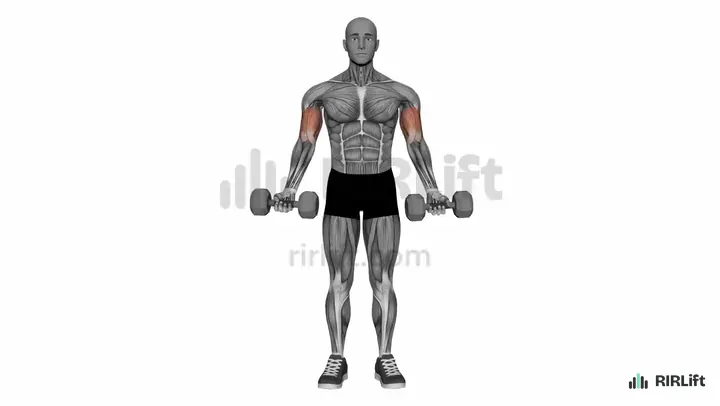
- Dumbbell Curl Biceps
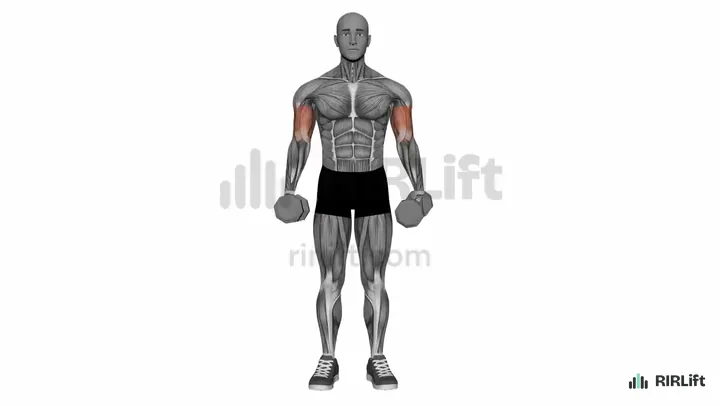
- Alternating Hammer Curl Biceps
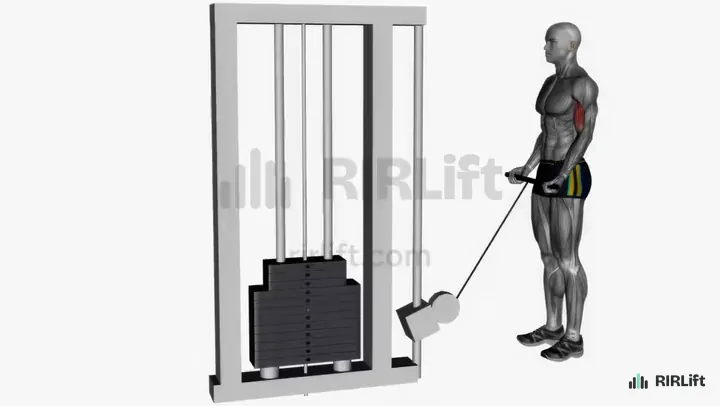
- Cable Curl Biceps
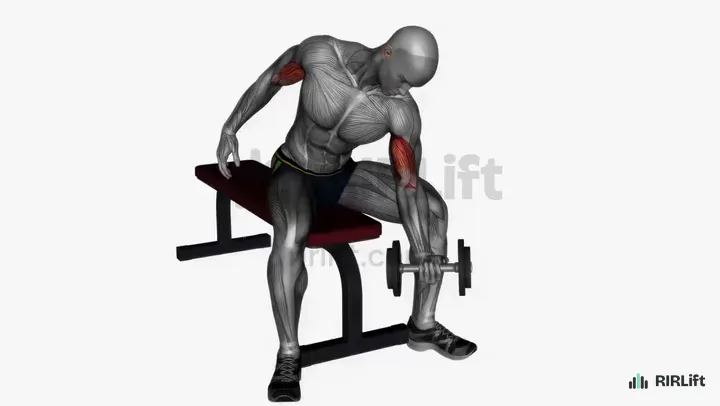
- Concentration Curl Biceps
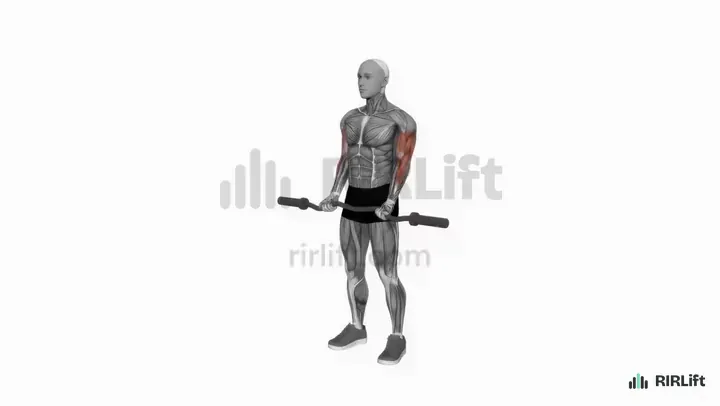
- EZ-Bar Curl Biceps
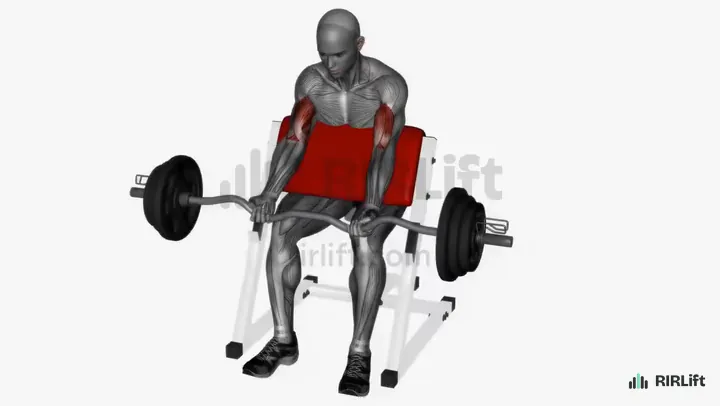
- Preacher Curl Biceps
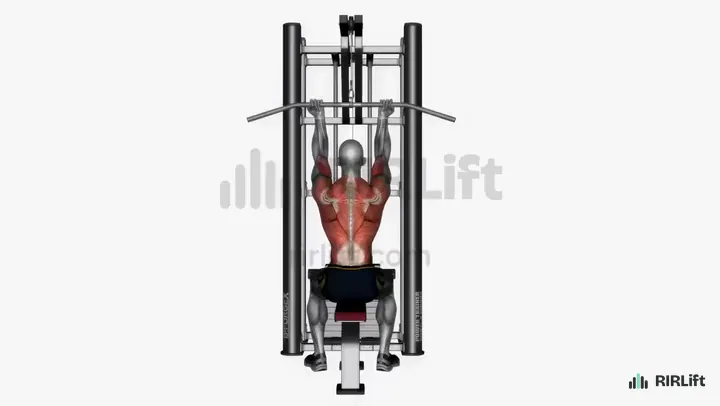
- Reverse-Grip Lat Pulldown Lats
Put them together: example sessions
Each session below picks from the exercises above for one situation, with the sets, reps, rest and RIR filled in. Open one in the session builder to change a pick, price it from a recent set, and add it to RIRLift.
-
Session 1
At home with light dumbbells and a band
You train at home, own a pair of light to medium dumbbells and a resistance band, and want firmer, stronger arms without going to a gym.
2× a week · 18 sets a week · ~20 min
-
Session 2
Gym back and biceps day
You train at a gym on an upper/lower or body-part split, and back and biceps share a day.
1× a week · 12 sets a week · ~30 min
-
Session 3
Biceps in a busy upper-body day
You train upper body at the gym once or twice a week and only have room for two quick biceps exercises at the end.
2× a week · 12 sets a week · ~10 min
Session 1
At home with light dumbbells and a band
- Workouts2× a week
- Working sets18 a week
- Per workout~20 min
- EquipmentDumbbells, Resistance Bands
You train at home, own a pair of light to medium dumbbells and a resistance band, and want firmer, stronger arms without going to a gym.
Three curls with three different grips cover the biceps and the brachialis, and the band adds tension where the dumbbells feel easy. Light dumbbells only work if the sets are hard, so the ranges go up to 20 reps and the target is 1 rep in reserve. The session is 9 working sets, short enough to do after a lower-body or full-body workout.
| Exercise | Sets × reps | RIR | Rest |
|---|---|---|---|
| Dumbbell CurlBoth arms together. Pause at the top. | 3 × 10–20 | 1 | 75 s |
| Alternating Hammer CurlCount each arm. | 3 × 10–20 | 1 | 1 min |
| Concentration CurlElbow on your thigh. | 2 × 12–20 | 1 | 1 min |
| Band Hammer CurlLast set to failure. Wide stance. | 1 × 15–25 | 0 | 1 min |
- How to run it
- Do the session twice a week, on non-consecutive days. Add it to the end of whatever else you train that day, or do it alone in about 20 minutes.
- How to progress
- Add reps each session. When every set reaches 20 at 1 rep in reserve, slow the lowering to three seconds; when that gets easy too, move to a heavier dumbbell.
Session 2
Gym back and biceps day
- Workouts1× a week
- Working sets12 a week
- Per workout~30 min
- EquipmentAssisted Machine, Lat Pulldown, Adjustable Cable, EZ Bar +1
You train at a gym on an upper/lower or body-part split, and back and biceps share a day.
The pulldown and assisted pull-up are your heaviest biceps work of the week, so they open the session while you are fresh, at 2 reps in reserve with longer rests. Two curls follow: the cable for constant tension and the preacher for the stretched bottom, at 1 rep in reserve because isolation moves are safe to push hard. That is 6 hard pulling sets and 6 direct biceps sets.
| Exercise | Sets × reps | RIR | Rest |
|---|---|---|---|
| Assisted Pull-Up1 warm-up set firstUnderhand or neutral grip if possible. | 3 × 6–10 | 2 | 2:30 min |
| Reverse-Grip Lat PulldownPalms facing you. | 3 × 8–12 | 2 | 2 min |
| Cable CurlLow pulley. Elbows still. | 3 × 10–15 | 1 | 75 s |
| Preacher CurlSlow stretch at the bottom. | 3 × 8–12 | 1 | 75 s |
- How to run it
- Do this once a week on your back day. If your split has two back days, repeat it, or swap the preacher for the EZ-bar curl on the second.
- How to progress
- Double progression: when every set hits the top of its range at the target reps in reserve, add the smallest weight step. On the assisted pull-up, lower the assistance by one step instead.
Session 3
Biceps in a busy upper-body day
- Workouts2× a week
- Working sets12 a week
- Per workout~10 min
- EquipmentEZ Bar, Dumbbells
You train upper body at the gym once or twice a week and only have room for two quick biceps exercises at the end.
Two exercises are enough if they are different shapes: a heavy palms-up curl on the EZ bar and a palms-in curl for the brachialis. Your rows and pulldowns earlier in the session already worked the biceps, so 5 direct sets per session, twice a week, adds up to a solid weekly total. They are done as a superset to save time, with 1 rep in reserve.
| Exercise | Sets × reps | RIR | Rest |
|---|---|---|---|
| A1 EZ-Bar CurlSuperset with hammer curls. | 3 × 8–12 | 1 | 1 min |
| A2 Alternating Hammer CurlCount each arm. | 3 × 10–15 | 1 | 1 min |
- How to run it
- Add this to the end of each upper-body day. Do one set of each exercise back to back, rest a minute, and repeat.
- How to progress
- Add reps until all sets hit the top of the range at 1 rep in reserve, then add weight. Every few weeks, switch the EZ-bar curl for the cable curl to keep progressing.
Make it fit you
-
You want toned arms
Follow either the home or gym plan at the written reps in reserve. Tone is muscle you can see, so the goal is to build a little muscle; the light-weight, high-rep circuits that skip close-to-failure sets build very little.
-
Worried about getting bulky
Biceps grow slowly, a little at a time over months, and you control how far you take it. Most women who train this way see firmer, more defined arms long before anything that looks bulky.
-
Your forearms burn before your biceps
Loosen your grip slightly on palms-up curls and keep your wrists straight. Move the hammer curls to the end of the session so tired forearms do not cut the main curls short.
-
Also training back the same day
Count the pulldowns and pull-ups as biceps work. If you do the gym back and biceps day, you do not need the finisher plan as well that week.
-
Elbows ache on curls
Switch to the EZ bar or the hammer curl, both of which put your wrists in a more natural angle, and keep the preacher curl lighter with a slower bottom. Drop any curl that still hurts and add a set to one that does not.
-
Log the RIR, not just the weight
Write down how many reps you had left on each set. If you log in RIRLift, it uses that number to suggest your next weight, so you can see your curls actually getting stronger week to week.
Questions
What is the best bicep exercise for women?
There is no women-only best. The cable curl and the EZ-bar curl are hard to beat at the gym, and the dumbbell curl is the best single choice at home. Pair any of them with a hammer curl and you cover both the biceps and the brachialis.
How do women get toned biceps?
Build a little muscle and keep body fat in a range where it shows. For the muscle, do 2 or 3 bicep exercises, 6 to 12 hard sets a week split over two sessions, ending each set 1 to 3 reps short of failure, and add weight or reps over time.
Is 2 or 3 bicep exercises better?
Both work. Two exercises with different grips, such as a palms-up curl and a hammer curl, are enough for most people, especially if you also do rows and pulldowns. A third, like a preacher or concentration curl, is worth adding once two stop progressing.
How long should you rest between bicep sets?
About 60 to 90 seconds for curls, and 2 to 2.5 minutes for heavier pulling moves like the pulldown and assisted pull-up. Rest long enough that you can hit your reps on the next set; cutting rest short just costs reps.
Can women build biceps with light dumbbells?
Yes. A light dumbbell builds muscle if the set ends close to failure, even if that takes 15 to 25 reps. When you can do more than 25 with reps left over, slow the lowering or move to a heavier pair.
Should women train biceps differently from men?
No. The exercises, rep ranges and reps-in-reserve targets that build biceps are the same for everyone. What changes from person to person is the starting weight and how much weekly volume you recover from, so begin at the low end of the set counts and add sets only when progress stalls.
How often should women train biceps?
Twice a week works well. Each session needs only 3 to 6 direct sets, and your rows and pulldowns add more on top.
Related templates
-
Arm exercises for women: firm, strong arms at home or at the gym
Biceps, triceps and shoulders together for a full arm day.
-
Tricep exercises for women: firmer, stronger arms at the gym or at home
The back of the arm, which makes up most of its size.
-
Dumbbell bicep exercises: curls for the stretch, the squeeze and arm thickness
More curl variations if you train with dumbbells only.
-
The best workout for biceps, matched to your setup
Full bicep programs with weekly set targets.
-
How to use reps in reserve (RIR)
How to judge 1 or 2 reps left on a curl.