
Tricep exercises for women: firmer, stronger arms at the gym or at home
Published October 19, 2026
The best tricep exercises for women are the same ones that work for anyone: the cable pressdown, an overhead extension with a cable, dumbbell or kettlebell, the kickback and the close-grip or kneeling push-up. The triceps is the largest muscle in the upper arm, so building it is what makes the back of the arm look firmer and more defined. Pick two or three, do 2 to 4 sets of 10 to 15 reps each twice a week, and stop each set 1 to 2 reps short of failure, adding weight as they get easier.
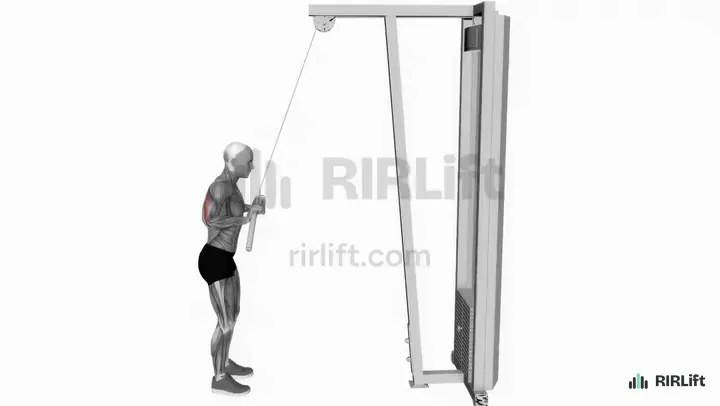
- Cable Triceps Pressdown Triceps
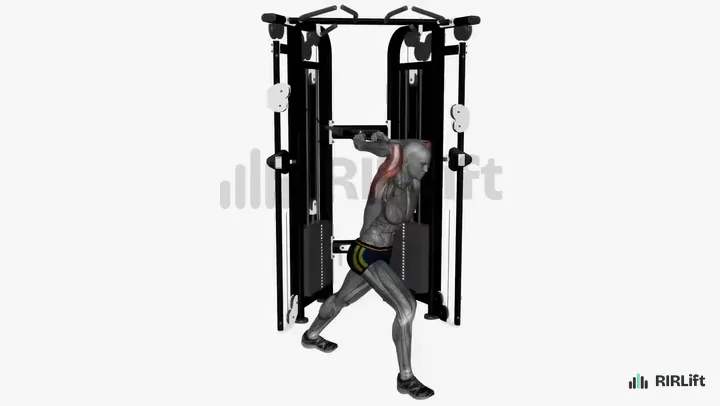
- Overhead Cable Triceps Extension Triceps
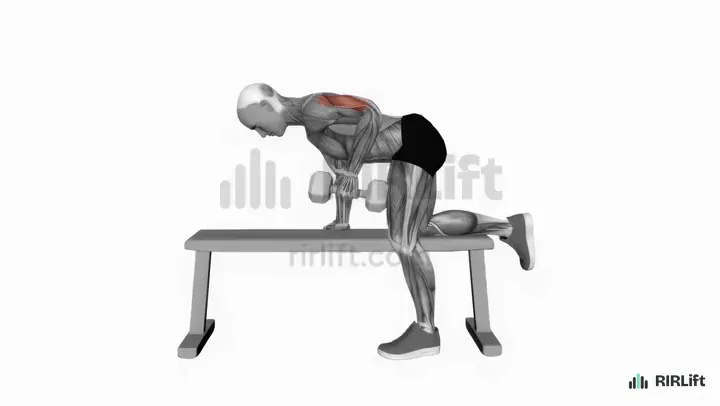
- Triceps Kickback Triceps
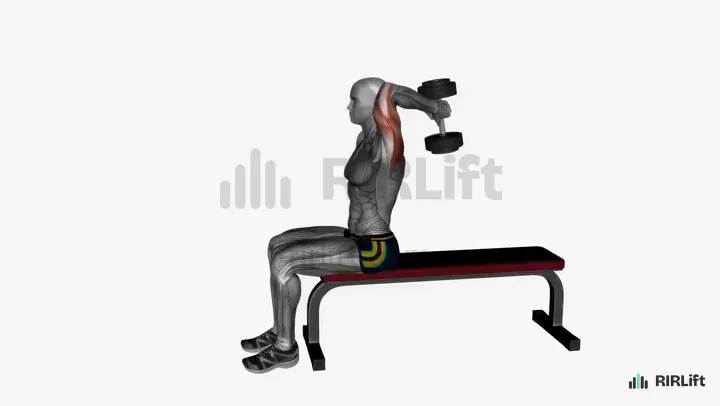
- Seated Dumbbell Overhead Triceps Extension Triceps
- Kneeling Push-Up Chest
- Machine Triceps Dip Triceps
- Kettlebell Overhead Triceps Extension Triceps
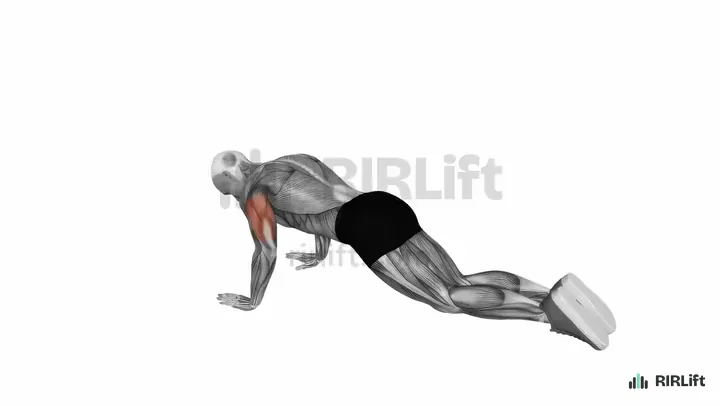
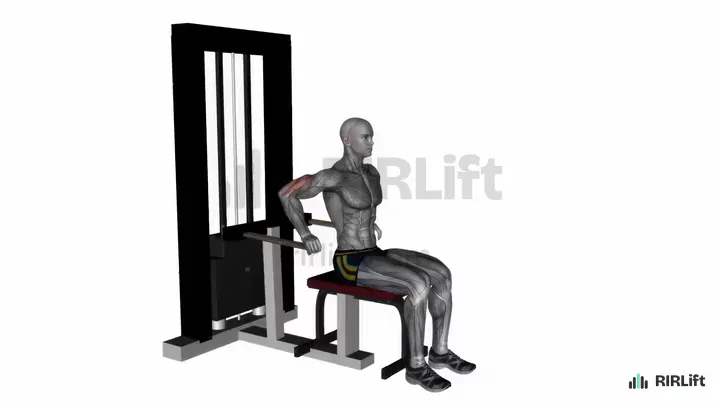
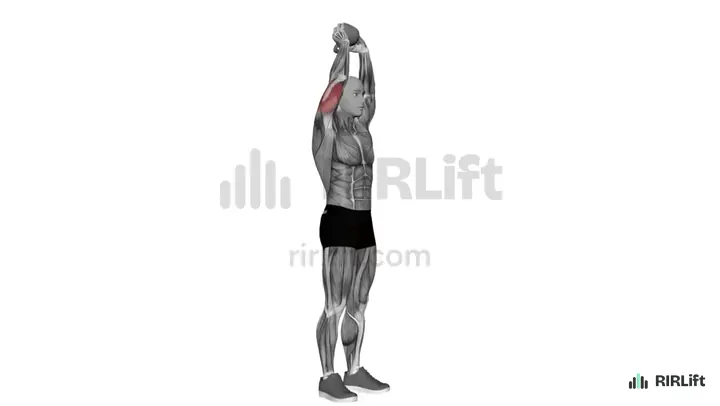
Put them together: example sessions
Each session below picks from the exercises above for one situation, with the sets, reps, rest and RIR filled in. Open one in the session builder to change a pick, price it from a recent set, and add it to RIRLift.
-
Session 1
At the gym, new to weights
You have a gym membership and want firmer arms, but free weights and dip bars feel unfamiliar.
2× a week · 16 sets a week · ~20 min
-
Session 2
At home with a few dumbbells and a bench or sturdy chair
You train at home with a small set of dumbbells and want the back of your arms stronger and better defined.
2× a week · 17 sets a week · ~20 min
-
Session 3
One kettlebell, already training upper body
You do upper-body or full-body workouts with a kettlebell and want a short triceps block after them.
2× a week · 12 sets a week · ~10 min
Session 1
At the gym, new to weights
- Workouts2× a week
- Working sets16 a week
- Per workout~20 min
- EquipmentDip Machine, Adjustable Cable
You have a gym membership and want firmer arms, but free weights and dip bars feel unfamiliar.
Machines and cables make the first months simple: the dip machine is the heavy press, the pressdown trains all three heads, and the overhead cable extension stretches the long head. Three exercises and 8 sets keep it short, and every set stops 2 reps before failure while you learn how hard close to failure feels. The machine adds weight in small steps, so progress is easy to see.
| Exercise | Sets × reps | RIR | Rest |
|---|---|---|---|
| Machine Triceps Dip1 warm-up set firstShoulders down. | 3 × 10–15 | 2 | 90 s |
| Cable Triceps PressdownElbows by your sides. | 3 × 10–15 | 2 | 75 s |
| Overhead Cable Triceps ExtensionRope, split stance. | 2 × 10–15 | 2 | 75 s |
- How to run it
- Add this to the end of two upper-body or full-body gym days a week, or do it on its own in about 20 minutes.
- How to progress
- When every set reaches 15 reps at 2 RIR, raise the pin one step and drop back to 10 reps. After six weeks, take the last set of each exercise to 1 RIR.
Session 2
At home with a few dumbbells and a bench or sturdy chair
- Workouts2× a week
- Working sets17 a week
- Per workout~20 min
- EquipmentDumbbells, Flat Bench
You train at home with a small set of dumbbells and want the back of your arms stronger and better defined.
The overhead extension and skullcrusher are the main lifts because they use one or two dumbbells through a long range. The kickback finishes the triceps when it is shortened, and kneeling push-ups add a press that needs no weight. Isolation sets go to 1 RIR, push-ups to 1 to 2. Two different routines spread about 10 sets each across the week.
| Exercise | Sets × reps | RIR | Rest |
|---|---|---|---|
| Seated Dumbbell Overhead Triceps ExtensionOne dumbbell, deep stretch. | 3 × 10–15 | 1 | 90 s |
| Triceps KickbackPer arm. Pause when straight. | 3 × 12–20 | 1 | 1 min |
| Kneeling Push-UpHands under shoulders. | 3 × 8–15 | 2 | 75 s |
Open Home A in the session builder
| Exercise | Sets × reps | RIR | Rest |
|---|---|---|---|
| Dumbbell SkullcrusherBench or floor. | 3 × 10–15 | 1 | 90 s |
| Bench DipKnees bent to start. | 3 × 8–15 | 2 | 75 s |
| Triceps KickbackPer arm. | 2 × 12–20 | 0 | 1 min |
Open Home B in the session builder
- How to run it
- Do Home A and Home B on two different days, two or more days apart. Each takes about 25 minutes.
- How to progress
- Add reps up to the top of each range, then use the next dumbbell. When kneeling push-ups pass 15 reps, move to full close-grip push-ups.
Session 3
One kettlebell, already training upper body
- Workouts2× a week
- Working sets12 a week
- Per workout~10 min
- EquipmentKettlebells
You do upper-body or full-body workouts with a kettlebell and want a short triceps block after them.
Pressing and push-ups already work your triceps, so this block is small: the standing kettlebell extension for the long head, then close-grip push-ups to train the triceps with body weight. Two exercises, 6 sets, taken to 1 RIR because they come after other work and you want quality reps. It adds about 12 minutes to a session.
| Exercise | Sets × reps | RIR | Rest |
|---|---|---|---|
| Kettlebell Overhead Triceps ExtensionHold the horns. Elbows up. | 3 × 10–15 | 1 | 75 s |
| Close-Grip Push-UpFrom the knees if needed. | 3 × 5–15 | 1 | 75 s |
- How to run it
- Add it to the end of two upper-body or full-body sessions a week.
- How to progress
- When the extension reaches 15 reps on every set, slow the lowering to three seconds; when that tops out, use a heavier bell. Add push-up reps each week.
Make it fit you
-
Want the back of the arms firmer
Firmness comes from a bigger, stronger triceps plus lower overall body fat. Keep lifting heavier over time, and keep an overhead extension in every week, since it trains the long head at the back of the arm.
-
Worried about getting bulky
Building visible muscle takes years of hard training and eating for it. Two short triceps sessions a week will make your arms stronger and better shaped, not suddenly bigger.
-
Elbows ache on overhead work
Swap the overhead extension for the pressdown or kickback for a few weeks, and keep the reps in the 12 to 20 range.
-
Also doing chest and shoulder presses
Your triceps already works in every press. Do one triceps exercise after those days instead of two, and count the presses toward your weekly volume.
-
Short on time
Superset a triceps exercise with a biceps curl, alternating sets with no rest between, to train both in the time of one.
-
Track your RIR to keep progressing
After each set, note how many reps you had left. RIRLift saves that RIR with the set and suggests your next weight from it, so a pressdown that felt easy at 2 RIR moves up a pin next session.
Questions
What is the best tricep exercise for women?
An overhead extension, done with a cable, dumbbell or kettlebell. It trains the long head, the biggest part of the triceps at the back of the arm, in a stretch. Pair it with a pressdown or kickback to cover the rest.
Do women need different tricep exercises than men?
No. The triceps works the same way in everyone. Choose exercises by the equipment you have and your experience, then load them progressively.
How do I hit all three tricep heads?
All three heads straighten the elbow, so every triceps exercise works them. The long head also crosses the shoulder, so it gets the most work when your arms are overhead. One overhead extension plus one pressdown, kickback or push-up covers all three.
Can I train triceps every day?
It is better not to. The triceps recovers and grows between hard sessions, so two or three a week, with a day off between, gives better results than daily light work.
How long does it take to tone triceps?
Most people notice stronger arms within four to six weeks and visible changes after two to three months of consistent training. How defined the arm looks also depends on body fat, which training a single muscle does not change.
What exercises work my triceps without weights?
Kneeling and close-grip push-ups and bench dips. Start from your knees or with bent legs and progress to full versions.
Related templates
-
Arm exercises for women: firm, strong arms at home or at the gym
Add biceps and shoulder work for a complete arm session.
-
Tricep exercises at home: from push-ups and dips to one dumbbell
More home options with dumbbells, bands and body weight.
-
Upper body exercises for women: back, chest, shoulders and arms
Chest, back and shoulder moves to pair with triceps.
-
Triceps kickback: how to do it right and when it is worth doing
The kickback in depth, with setup and variations.
-
Overhead triceps extension: how to do it on a cable and why it hits the long head
How to set up the overhead stretch with cables, dumbbells or a kettlebell.